Understand the Blended Family Timeline (So You Stop Wondering What's Wrong)
Strengthening your marriage in a blended family requires intentional communication, a unified parenting approach, and protected couple time — all built on realistic expectations about how long blending truly takes.
In this article
You're building something genuinely hard. According to the Pew Research Center, more than 40% of American adults have at least one step-relative, and roughly 1 in 6 children in the U.S. lives in a blended family. Yet research consistently shows that second marriages involving children carry a higher divorce risk than first marriages — not because the love isn't real, but because the complexity is underestimated.
The good news: couples who approach blending with clear expectations, strong communication, and mutual support don't just survive — they build something deeply meaningful. This guide will help you do exactly that.
By the end of this article, you'll understand:
1. Understand the Blended Family Timeline (So You Stop Wondering What's Wrong)
The single most important thing you can do for your marriage is reset your expectations about how long this takes. Research by family therapist Patricia Papernow, Ed.D., who has studied stepfamily development for over three decades, identifies a typical integration timeline of 4 to 7 years — not months. Couples who expect harmony by year one are setting themselves up for unnecessary despair.
The Three Stages You'll Move Through
Early stage (Years 1–2): Fantasy meets reality. Children may be withdrawn, hostile, or clingy. You and your partner may disagree more than you expected. This is normal.
Middle stage (Years 2–5): Roles begin to clarify. Stepparent-stepchild relationships develop slowly. Conflict may actually peak here before it eases.
Later stage (Years 5–7+): A genuine family identity emerges. Children and stepparents often report feeling like "real" family by this point — but only if the groundwork was laid.


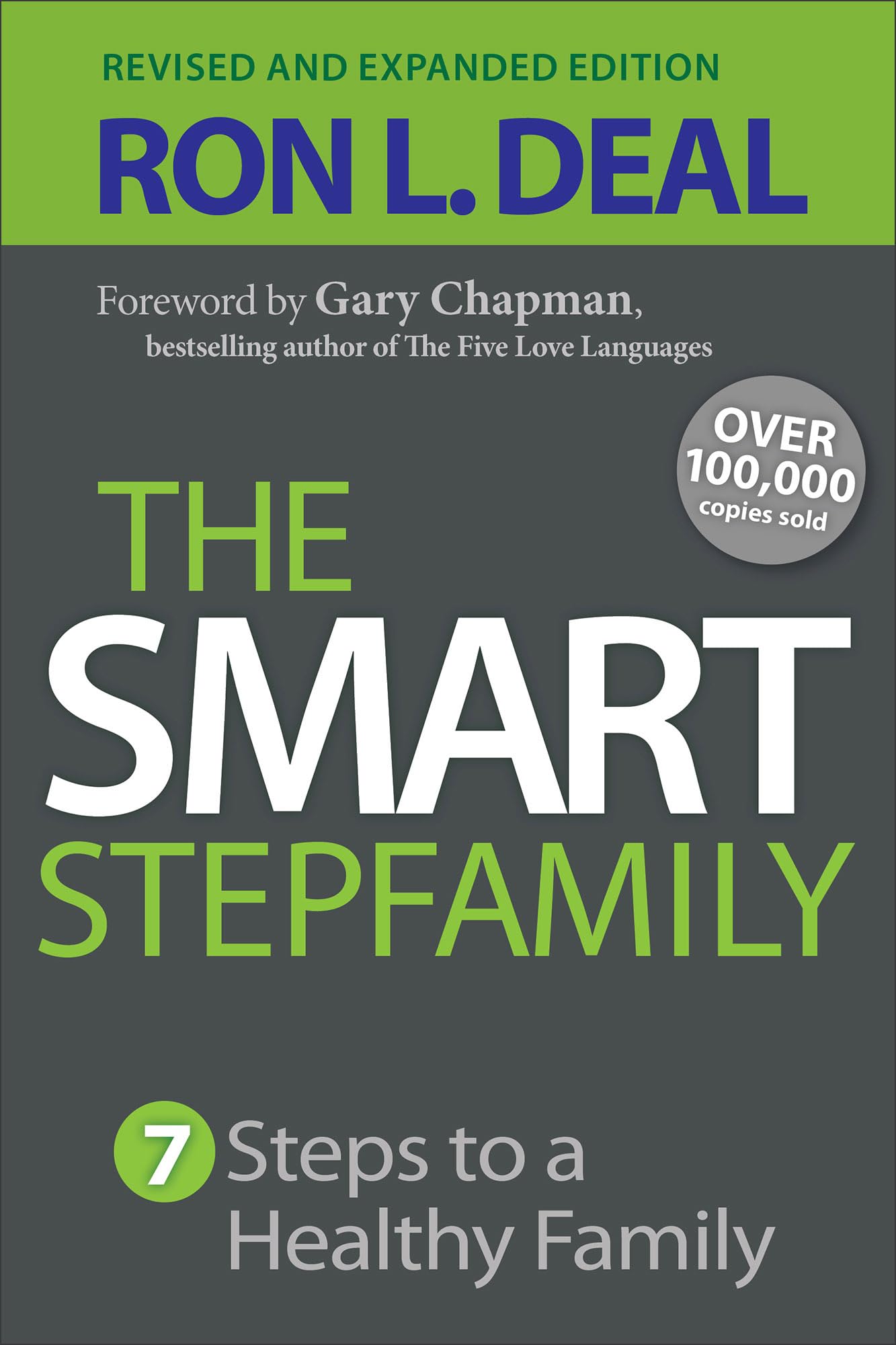
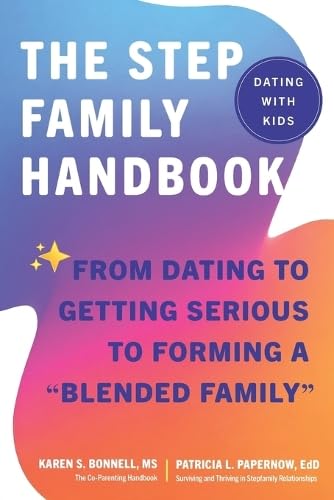
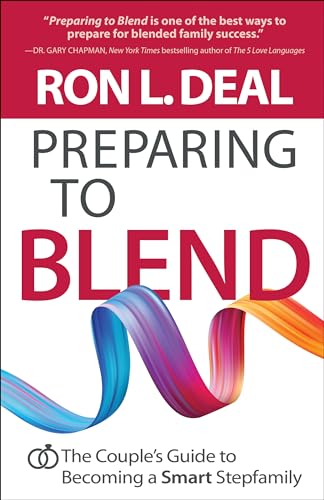
Preparing to Blend (Smart Stepfamily)
- Religion & Spirituality
- Christian Books & Bibles
- Christian Living
2. Protect Your Marriage First — Without Guilt
Your marriage is not competing with your children — it is the structure that holds them. When couples in blended families invest in their relationship, children report feeling more secure, not less. This isn't selfishness; it's architecture.
What "Protecting Your Marriage" Looks Like in Practice
Date nights with intention: Not just dinner — use the time to talk about something other than logistics. Ask: What's been hardest for you this week? What's one thing I did that helped?
A weekly 15-minute couple check-in: Before the week gets away from you, sit down and name one challenge and one win from the previous seven days. No phones, no kids.
Physical affection in front of the children: Research published in Family Relations (2018) found that children in stepfamilies reported higher wellbeing when they observed warmth between their parent and stepparent. Holding hands at dinner sends a message: this family is safe.


The Smart Stepfamily Marriage: Keys to Success in the Blended Family
- Religion & Spirituality
- Christian Books & Bibles
- Christian Living
3. Build a Unified Parenting Approach (Without Forcing It)
Disagreements about parenting are the number-one source of conflict in blended families. You and your partner came from different households with different rules, different tolerances, and different histories. That's not a flaw — it's just the reality you're working with.
The goal is not identical parenting styles. It's a shared framework with agreed-upon non-negotiables.
The Stepparent's Role: Start as a Warm Authority Figure, Not a Disciplinarian
Family researchers Ron Deal and Gary Chapman recommend that stepparents begin in a "supportive" role — building relationship first, introducing authority gradually. Biological parents carry primary discipline responsibility in the early years. This isn't permanent; it's a starting position.
Practical Steps for a Unified Approach
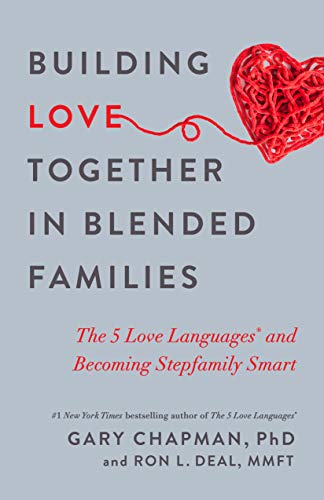
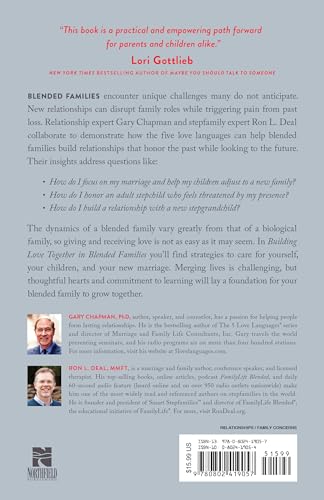
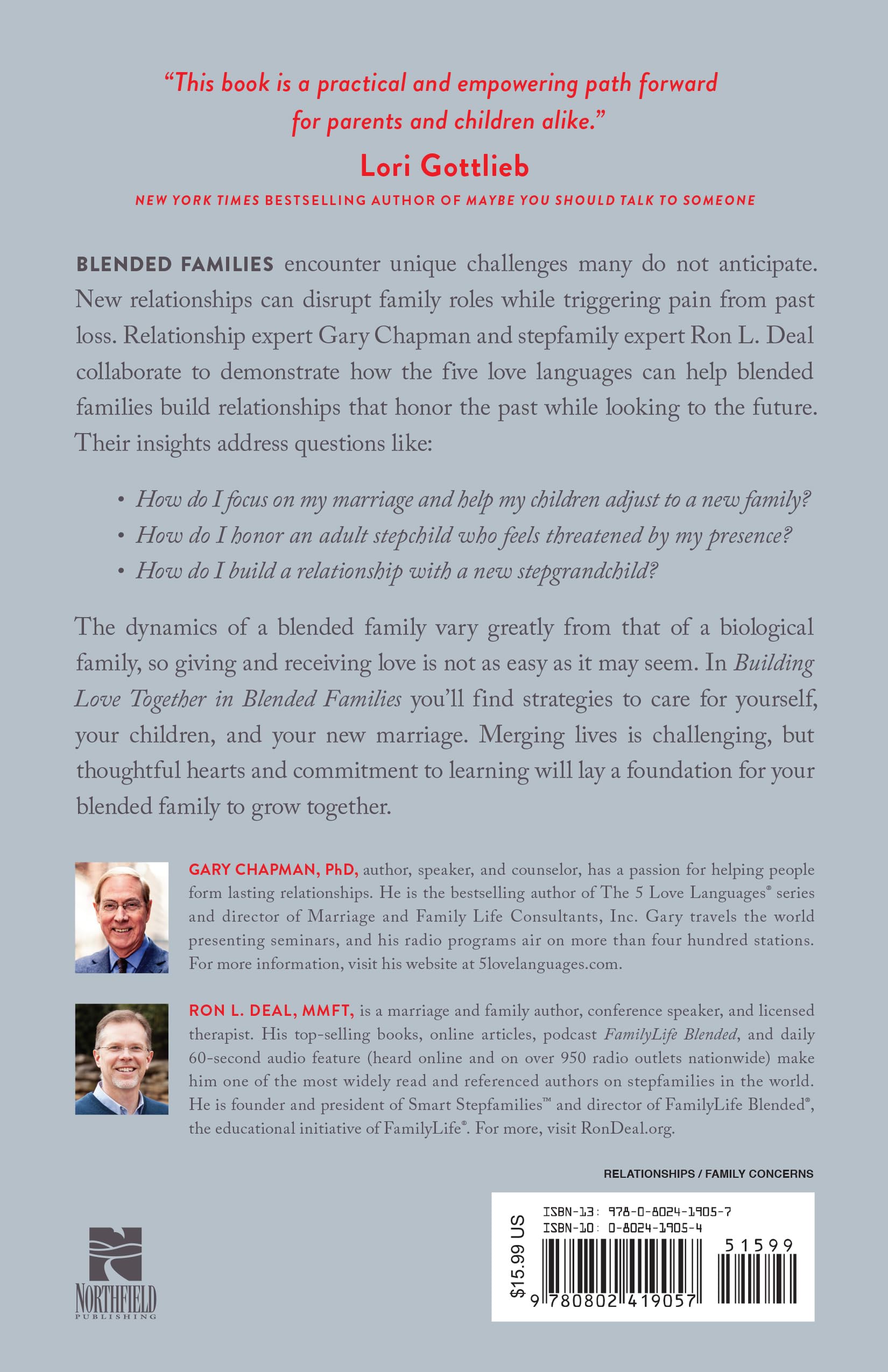
Building Love Together in Blended Families: The 5 Love Languages and Becoming Stepfamily Smart
- Religion & Spirituality
- Christian Books & Bibles
- Christian Living
4. Communicate Like the Stakes Are High — Because They Are
Open communication is the lifeline of any marriage, but in a blended family, the channels are more complex. You're not just communicating with your partner — you're navigating co-parents, extended family, and children who are watching every interaction for clues about their security.
Communication Habits That Actually Work
Name feelings before solutions. When your partner says "I feel invisible when you side with your kids," resist the urge to defend. Reflect first: "That sounds really lonely. Tell me more."
Use structured check-ins. The Gottman Institute recommends a daily "stress-reducing conversation" — 20–30 minutes where each partner talks about something outside the relationship while the other listens without offering advice. This builds emotional intimacy without adding to the problem pile.
Agree on a "pause word." When a conversation is escalating, either partner can call a 20-minute break. You come back — you don't abandon the conversation.


Beautifully Blended: 101 Devotions to Encourage Couples in Blended Families
- Religion & Spirituality
- Christian Books & Bibles
- Christian Living
5. Navigate Co-Parenting and Loyalty Conflicts With Children
Children in blended families often feel torn between loving a stepparent and feeling disloyal to their other biological parent. This loyalty conflict is one of the most painful and least-discussed challenges in stepfamily life — and how you handle it directly affects both your children and your marriage.
What Loyalty Conflicts Look Like by Age
Ages 0–5: Young children may cling to the biological parent, cry when the stepparent tries to comfort them, or regress (bedwetting, sleep disruption) during transitions.
Ages 6–10: School-age children may openly compare ("My dad doesn't make me do that") or withdraw affection from the stepparent after visits with the other parent.
Ages 11–17: Adolescents may become openly hostile, test boundaries, or disengage from family life altogether. This is developmentally normal — and manageable.
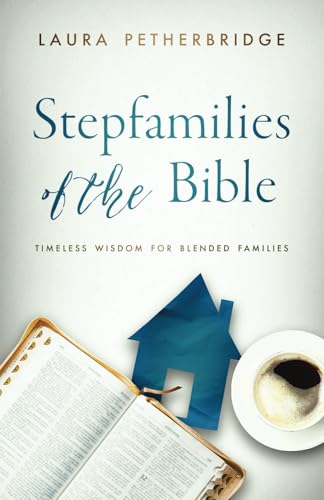



Stepfamilies of the Bible: Timeless Wisdom for Blended Families
- Religion & Spirituality
- Christian Books & Bibles
- Christian Living
6. Manage Co-Parenting Relationships to Protect Your Home
Your relationship with your partner's ex — and theirs with yours — is one of the most underestimated variables in blended family success. High-conflict co-parenting is consistently linked to poorer child outcomes and higher marital stress.
The Three Co-Parenting Styles (and Which to Aim For)
Conflicted co-parenting: Frequent arguments, children caught in the middle, inconsistent rules across households. Associated with anxiety and behavioural problems in children.
Parallel co-parenting: Minimal direct contact, each parent operates independently. Reduces conflict but can leave children feeling fragmented. Useful when direct communication is genuinely harmful.
Cooperative co-parenting: Respectful, child-focused communication. Consistent rules where possible. The gold standard — not always achievable, but worth working toward.
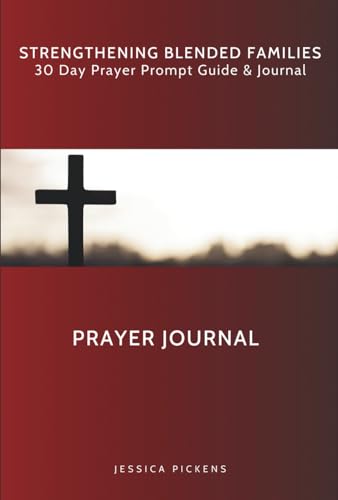
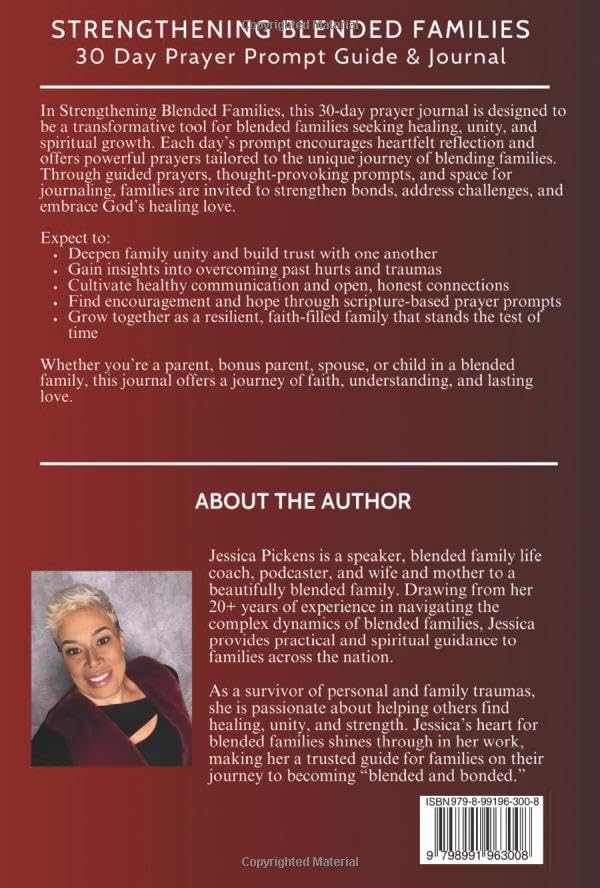
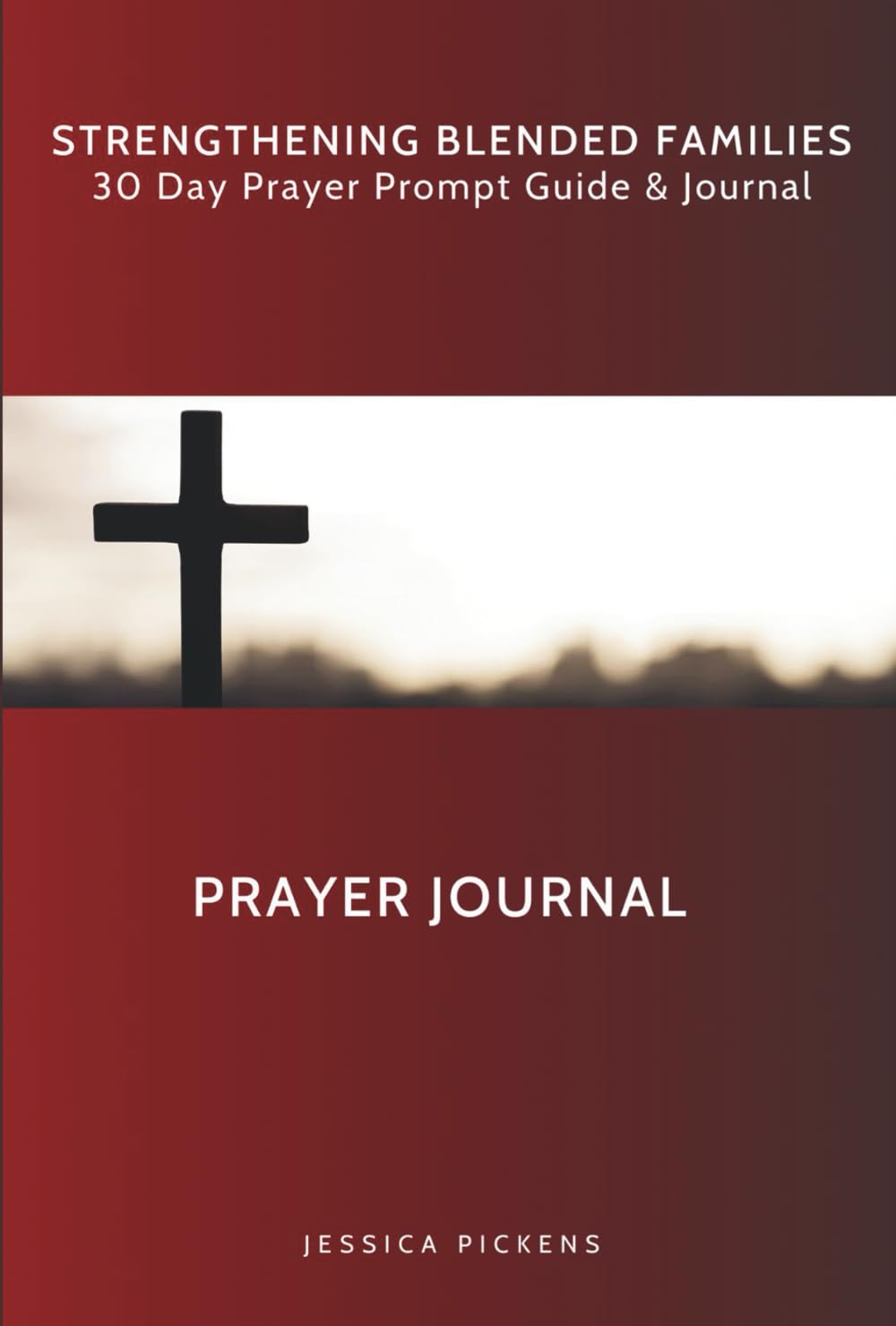

Strengthening Blended Families: 30 Day Prayer Prompt Guide and Journal
- Religion & Spirituality
- Christian Books & Bibles
- Christian Living
Blended Family Resource Comparison
| Resource Type | Best For | Primary Benefit | Main Limitation | Recommended Product | Price |
|---|---|---|---|---|---|
| Couples devotional | Faith-based couples wanting daily connection | Short, consistent touchpoints for busy couples | Explicitly Christian framework | Beautifully Blended Devotions | $9.90 |
| Pre-blend preparation guide | Couples planning to merge households | Sets realistic expectations before the wedding | Less useful once already blended | Preparing to Blend | $10.07 |
| Love languages for stepfamilies | Couples struggling to connect with stepchildren | Translates Chapman's framework to stepfamily context | Requires both partners to engage | Building Love Together in Blended Families | $9.90 |
| Marriage-focused stepfamily guide | Established blended couples in conflict | Deep dive into marriage dynamics specific to stepfamilies | More intensive reading commitment | The Smart Stepfamily Marriage | $16.79 |
| Prayer & journaling guide | Individuals wanting a reflective daily practice | Builds personal resilience and spiritual grounding | Solo practice — not couples-facing | 30 Day Prayer Prompt Guide | N/A |
| Bible-based stepfamily wisdom | Couples seeking historical and spiritual perspective | Reframes blended family challenges through scripture | Narrow audience (faith-based) | Stepfamilies of the Bible | N/A |
Expert Insights
Conclusion
Blending a family is one of the most ambitious things two people can attempt together. It asks you to love children who didn't choose you, to share the person you love with a complicated history, and to build something new while everyone is still grieving something old. That is genuinely hard — and genuinely worth it.
The families that make it aren't the ones who never struggled. They're the ones who kept showing up: for the weekly check-in, the low-key Saturday activity with a resistant stepchild, the honest conversation at 10pm when everyone was tired. They kept choosing each other and the family they were building.
The strongest blended families aren't born — they're built, slowly, on purpose.
If this guide helped, save it, share it with your partner, or pass it to a friend who's in the thick of it. You're not alone in this.
Sources & References
- Pew Research Center. "Parenting in America: The American Family Today." 2015. https://www.pewresearch.org/social-trends/2015/12/17/1-the-american-family-today/
- Papernow, Patricia L. "Surviving and Thriving in Stepfamily Relationships: What Works and What Doesn't." Routledge, 2013.
- Deal, Ron L. "The Smart Stepfamily: Seven Steps to a Healthy Family." Bethany House Publishers, 2014.
- Chapman, Gary, and Deal, Ron L. "Building Love Together in Blended Families: The 5 Love Languages and Becoming Stepfamily Smart." Northfield Publishing, 2020.
- Gottman, John, and Silver, Nan. "The Seven Principles for Making Marriage Work." Harmony Books, 2015.
- Sweeney, Megan M. "Remarriage and Stepfamilies: Strategic Sites for Family Scholarship in the 21st Century." Journal of Marriage and Family, 2010. https://doi.org/10.1111/j.1741-3737.2010.00724.x
- King, Valarie, and Heard, Holly E. "Nonresident Father Visitation, Parental Conflict, and Mother's Satisfaction." Journal of Marriage and Family, 1999.
- Ganong, Lawrence, and Coleman, Marilyn. "Stepfamily Relationships: Development, Dynamics, and Interventions." Springer, 2017.
Frequently Asked Questions
How long does it take for a blended family to feel normal?
Should the stepparent discipline the stepchildren?
What do I do when my child refuses to accept my new spouse?
How do we keep our marriage strong when the kids are always the priority?
Is it normal to feel jealous of my partner's relationship with their biological children?
How do we handle different rules between our house and the other parent's house?
When should a blended family seek professional help?
Was this helpful?
Thanks — your feedback helps us pick what to write next.