What Edutainment Really Means for Preschoolers (It's Not Just Screen Time)
Edutainment — the blend of education and entertainment — is one of the most effective tools available to preschoolers (ages 3–5) right now, combining play-based learning with hands-on materials and age-appropriate digital tools to build early literacy, maths, and social skills.

In this article
Picture this: your four-year-old ignores the expensive tablet game you downloaded and instead spends 45 minutes threading coloured beads onto a lace, counting each one out loud. That's not a failure of modern edutainment — that is edutainment working exactly as the science says it should.
According to the American Academy of Pediatrics (AAP), the preschool years (ages 3–5) represent one of the most rapid periods of brain development in a human lifetime, with children forming up to 1 million new neural connections every single second. How children play during these years directly shapes the cognitive architecture they'll carry into school and beyond.
In this guide you'll understand:
1. What Edutainment Really Means for Preschoolers (It's Not Just Screen Time)
Edutainment is any learning experience deliberately designed to be engaging enough that a child doesn't realise they're being taught. For preschoolers, that means the learning happens through the fun — not after it.
The concept isn't new. Sesame Street, which launched in 1969, was the original edutainment experiment, designed by researchers at the Children's Television Workshop specifically to close the school-readiness gap for low-income children. What's changed in the 2020s is the range of delivery: interactive apps, augmented reality, adaptive digital platforms, and a renaissance of beautifully designed physical toys all compete for your child's attention.
The Two Pillars: Digital and Hands-On
Modern edutainment broadly falls into two camps:
- Digital edutainment — apps, videos, interactive platforms (ABCmouse, Khan Academy Kids, YouTube Kids) - Hands-on edutainment — physical toys, puzzles, art materials, and manipulatives designed around learning goals
Neither is superior in isolation. The evidence strongly suggests the most effective approach combines both, with hands-on play forming the larger share for 3–5 year olds.
A simple example: a child sorting coloured wooden shapes onto a puzzle board is simultaneously practising colour recognition, spatial reasoning, hand-eye coordination, and early maths — all at once, with zero batteries required.


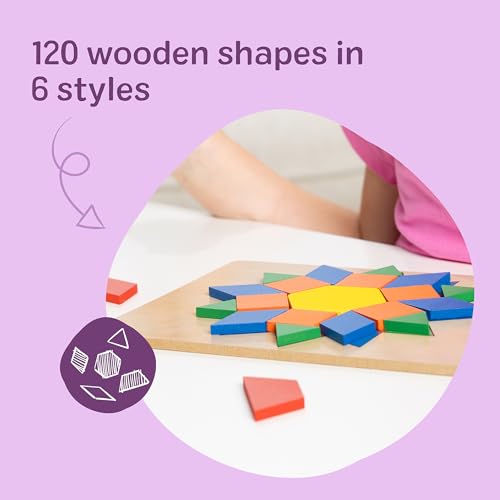
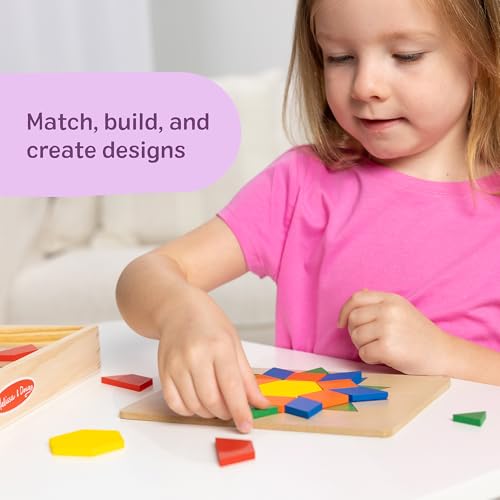
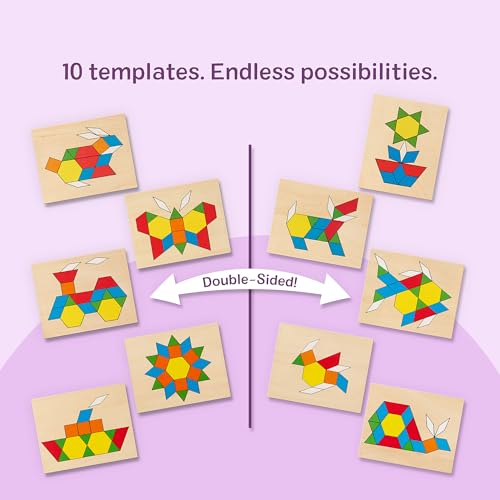
Melissa & Doug Pattern Blocks and Boards with 120 Multi-Colored Wooden Shape Tiles, 5 Double-Sided Puzzle Boards, Tangram Puzzles, Montessori Toys for Girls & Boys
- Skill-Building Pattern Play: Kids sort & stack wooden shaped tiles, to fill 5 unique patterns allowing them to
- Montessori Learning Activity: Includes 120 wooden tiles in various shapes, sizes & colors, 5 double-sided puzz
- Open-Ended, Screen-Free Play: Develop spatial awareness, hand-eye coordination, and early math skills through
2. The Developmental Science: Why Play Is the Work of Childhood
Play-based learning is the most evidence-supported approach to preschool education we have. Understanding why helps you make smarter choices about the tools you bring home.
The landmark LEGO Foundation report "The Science of Learning Through Play" (2017, updated guidance through 2023) synthesised findings from hundreds of studies and concluded that playful learning — characterised by joy, active engagement, iteration, and social connection — produces measurably better outcomes in literacy, numeracy, and executive function than direct instruction alone for children under six.
Play is not a break from learning — it is the primary vehicle through which young children learn.
— LEGO Foundation, The Science of Learning Through Play (2023)
What's Happening in Your Preschooler's Brain
Between ages 3 and 5, children are developing:
- Executive function — the ability to plan, focus attention, and regulate impulses - Symbolic thinking — understanding that a block can "be" a car, or that the letter A represents a sound - Numeracy foundations — one-to-one correspondence, counting, basic patterns - Language explosion — vocabulary grows from roughly 1,000 words at age 3 to 2,000+ by age 5 (WHO developmental milestones)
Edutainment tools that target these specific windows are working with the brain's natural developmental trajectory, not against it.
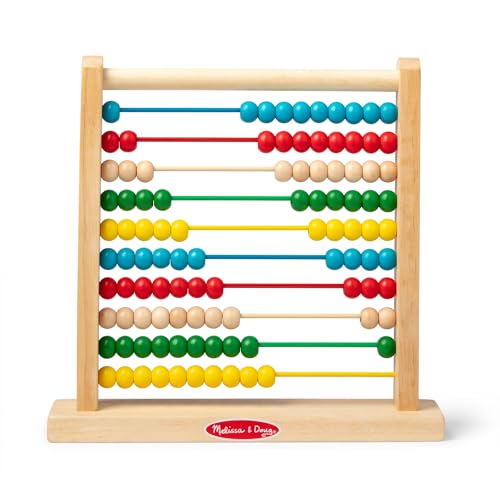


Melissa & Doug Abacus Classic Wooden Toy with 100 Beads - Preschool Learning Activities and Math Games for Kids, Homeschool Essentials for Ages 3+
- Classic Counting Tool This traditional wooden toy abacus features 10 rows of 10 brightly colored wooden beads,
- Math Manipulatives An essential for homeschool essentials and preschool learning activities, this abacus makes
- Sturdy Wooden Construction Made from solid wood with a smooth finish, this durable learning toy is built to wi
3. Hands-On Edutainment: The Physical Toys That Deliver Real Learning
The best physical edutainment toys share three qualities: they're open-ended enough to grow with the child, they require active manipulation, and they embed a learning goal so naturally the child never feels "taught."
Fine Motor Skills and Early Maths
Threading activities are a perfect example of stealth learning. When a 3-year-old works with a lacing bead set, they're developing the pincer grip essential for writing, practising colour and shape recognition, and often counting without prompting.

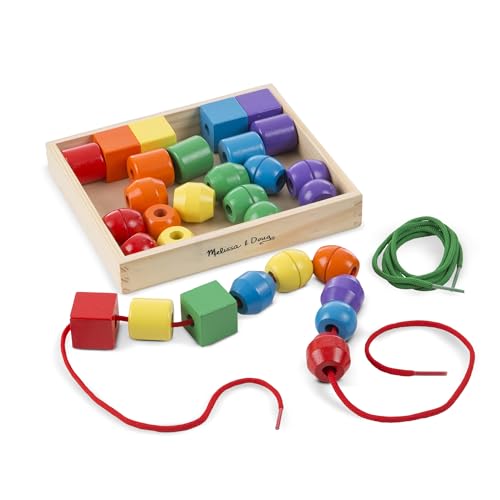
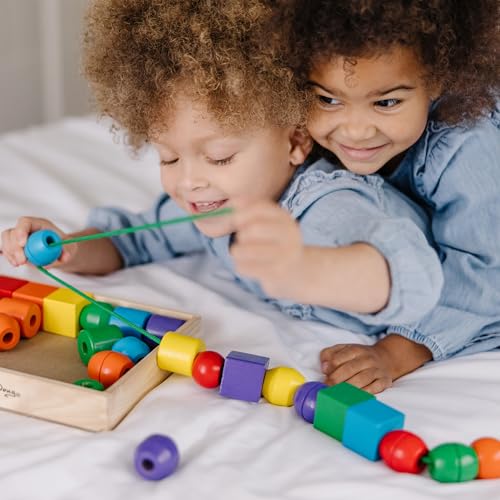
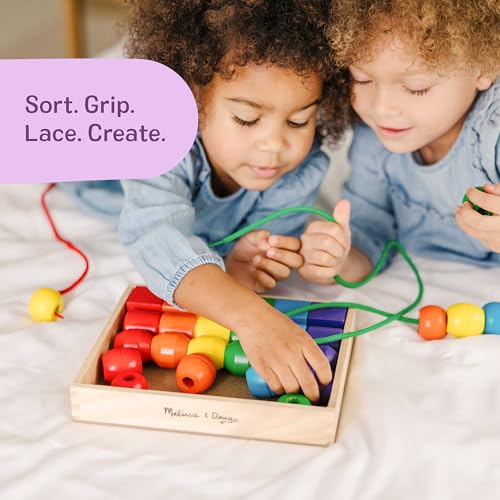
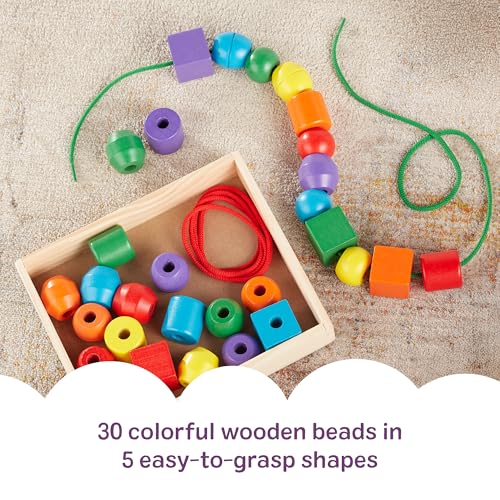
Melissa & Doug Primary Lacing Beads - Educational Toy with 30 Wooden Beads and 2 Laces for Toddlers, Fine Motor Skills Lacing Toys for Toddlers and Kids Ages 3+
- Brightly Colored Wooden Craft Beads: The Melissa & Doug Primary Lacing Beads set includes 30 colorful wooden b
- Easy-to-Use Bead Kit for Kids: Features 5 fun bead shapes that are easy for little hands to grasp and thread.
- Develops Fine Motor Skills: These kids craft beads help build fine motor, cognitive, and visual perception ski
The Melissa & Doug Primary Lacing Beads are a classic for good reason — 30 wooden beads in five shapes, two laces, and a storage case that keeps the activity self-contained. At $13.99 with a 4.8-star rating from over 20,000 parents, it's one of the most cost-effective fine motor tools available.
Spatial Reasoning and Pattern Recognition
Pattern block activities are backed by a substantial body of research linking spatial reasoning in early childhood to later mathematical ability. A 2017 study published in Psychological Science found that children's spatial skills at age 5 predicted their maths achievement through secondary school.
The Melissa & Doug Pattern Blocks and Boards give children 120 wooden tiles and five double-sided puzzle boards — enough variety to stay challenging for years, not weeks.
Number Sense and Early Arithmetic
Abstract numbers mean nothing to a 4-year-old until they're made concrete. That's the entire logic behind Montessori-style number manipulatives.
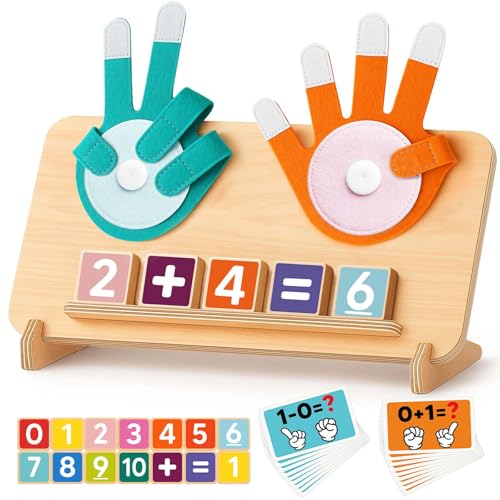
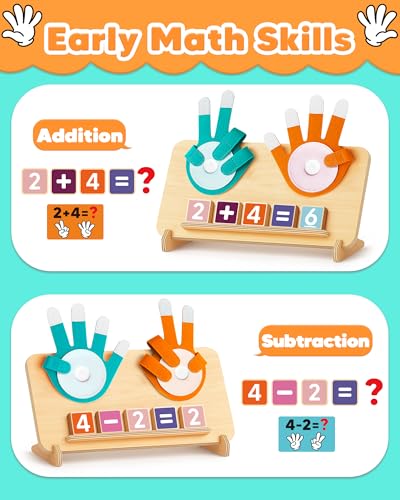
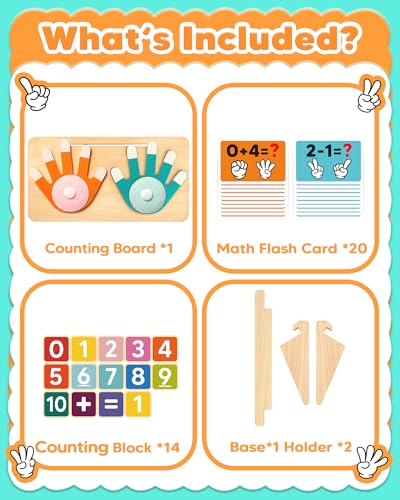
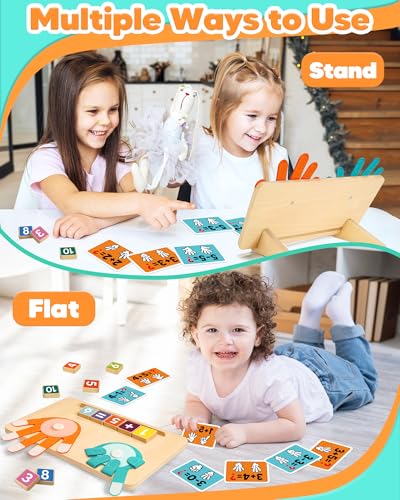
Montessori Educational Learning Toys for 3 4 5 Year Old Boys Girls Birthday Gifts, Toddler Preschool Learning Activities, Number Counting Blocks Toys for Kids, Math Manipulatives Counting Toy for 3-5
- Number Counting Toys for Kids: Educational math manipulatives toys including: 1*wooden finger counting board,
- Developing Basic Math Skills: Designed to little hands, the finger counting board makes addition and subtracti
- Montessori Educational Toys for 3 4 5 year old: This is a truly meaningful educational toy! Designed to engage
The Gagule Montessori Number Counting Blocks set includes a finger counting board, number blocks, and maths flash cards — a complete early numeracy toolkit for under $14.
4. Making Learning Irresistible: Games, Colour, and Playful Challenges
The "entertainment" half of edutainment matters. If a learning activity isn't genuinely engaging, preschoolers vote with their feet — and they're right to.
Game-based formats are particularly powerful because they introduce rules, turn-taking, and goal-directed behaviour alongside academic content. This combination builds executive function and social skills simultaneously.
Colour Sorting and Vocabulary Building
Colour recognition seems simple, but it's actually a gateway skill — children who can reliably name and categorise colours show stronger pre-reading and early maths performance. The MUONE Montessori Busy Book takes this further by pairing each colour with a word and a picture, naturally building vocabulary alongside colour mastery.
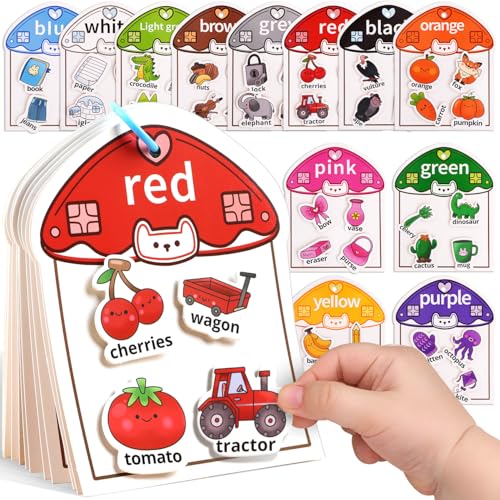
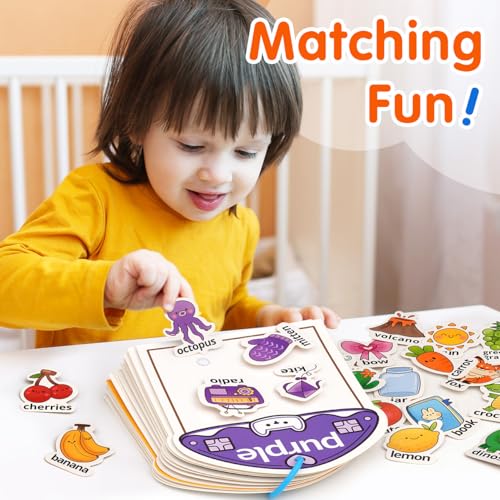
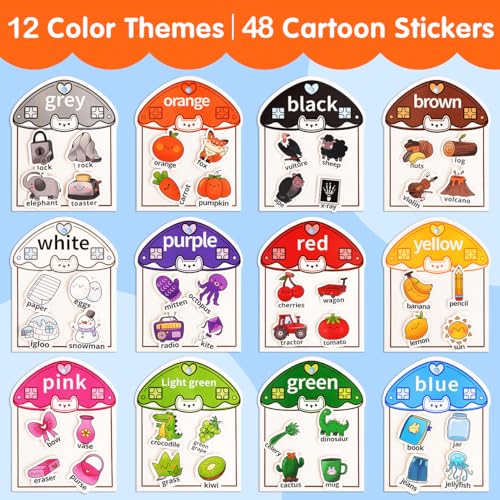
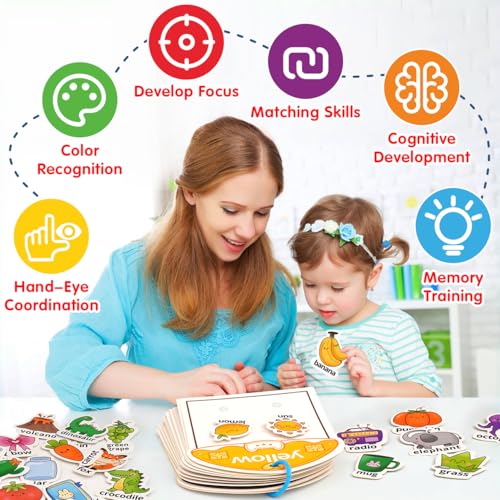
Montessori Busy Book Color Sorting Toys for Toddlers 2-4, Educational Preschool Learning Activities for Kids, Sensory Fine Motor Matching Games for 3 Year Old Boys Girls Gifts
- Matching Color Busy Book: Your toddlers will adore mastering 12 colors with our interactive busy book. They'll
- Build Essential Skills: Watch your child's mind grow! This engaging activity is far more than a sorting toys—i
- Spark Joyful Connections & Teamwork: "Wow, you found the red tomato! Great job, sweetie!" This busy book is de
At $8.95, this hook-and-loop matching book is one of the most affordable entry points into structured edutainment play.
The Fishing Game Format: Letters, Numbers, and Motor Skills at Once
A well-designed fishing game is a masterclass in layered learning. Children are working on hand-eye coordination (using the magnetic pole), letter and number recognition (reading the fish), colour differentiation, and turn-taking — all wrapped in a format that feels purely like play.
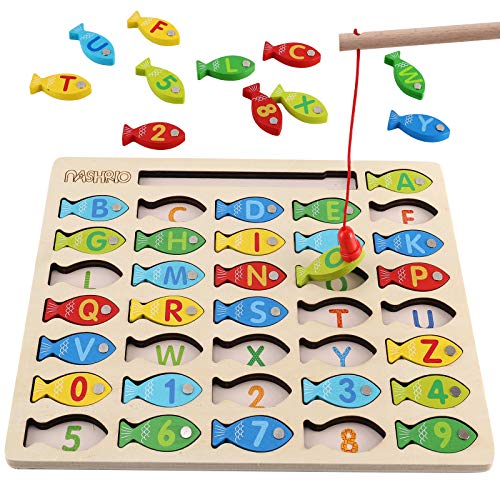


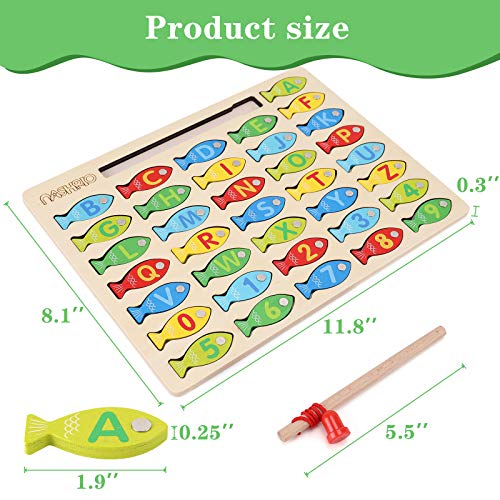
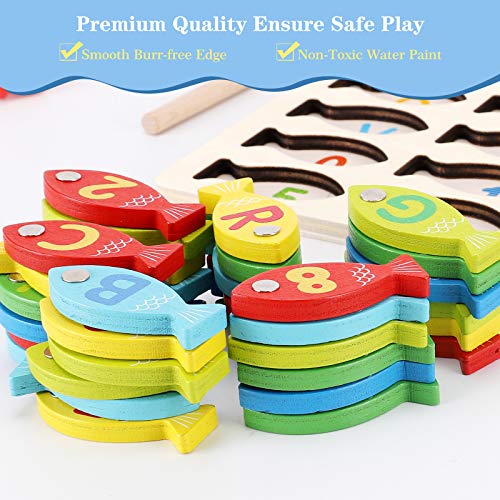
Magnetic Wooden Fishing Game Toy for Toddlers, Alphabet Fish Catching Counting Games Puzzle with Numbers and Letters, Preschool Learning ABC Math Educational Toys 3 4 5 Years Old Girl Boy Kids
- DESIGNED FOR KIDS: Fun never stops with our wooden fishing game! This interactive fishing toy is a great learn
- HOW IT WORKS: Our fishing game puzzle consists of a wooden board with a multitude of colorful fish pieces with
- HIGH STANDARDS: The motor skills toys for toddlers 3-5 are made entirely out of well-polished wood. It feature
The NASHRIO Magnetic Wooden Fishing Game covers the alphabet and numbers in a single set, made from smooth, non-toxic wood. At $8.99, it's an exceptional value for what it delivers developmentally.
5. Digital Edutainment: Screens Done Right for Ages 3–5
Screen time for preschoolers is one of the most anxiety-inducing topics in modern parenting — and the anxiety is partly justified, but also partly overblown when the quality of screen time is considered.
The AAP's current guidance (2023) recommends that for children ages 2–5, screen time be limited to one hour per day of high-quality programming, with a caregiver watching alongside whenever possible.
For children ages 2 through 5 years, limit screen use to 1 hour per day of high-quality programming. Co-view with your children to help them understand what they are seeing and apply it to the world around them.
— American Academy of Pediatrics (2023)
What Makes Digital Edutainment "High Quality"?
Apps Worth Knowing
- Khan Academy Kids — free, no ads, covers literacy, maths, social-emotional learning; widely recommended by early childhood educators - ABCmouse — subscription-based, highly adaptive, strong for ages 2–6 - Starfall — particularly strong for phonics and early reading
6. Your Role as a Caregiver: The Multiplier No App Can Replace
Here is the most important thing this article will tell you: you are the most powerful edutainment tool your preschooler has access to. Every piece of research on early childhood learning points to the same conclusion — warm, responsive adult interaction amplifies the benefit of every other learning experience.
This doesn't mean you need to be a teacher. It means:
7. Choosing Wisely: A Practical Comparison of Edutainment Approaches
Not every approach suits every child or every family. Here's a practical at-a-glance guide to help you match the tool to the need.
| Approach | Best For | Primary Skills Developed | Screen Required? | Recommended Product | Price Range |
|---|---|---|---|---|---|
| Lacing & threading beads | Ages 3–5, fine motor focus | Fine motor, colour/shape recognition, counting | No | Melissa & Doug Lacing Beads | $13–15 |
| Pattern blocks & boards | Ages 3–5, spatial thinkers | Spatial reasoning, early maths, problem-solving | No | Melissa & Doug Pattern Blocks | $15–18 |
| Counting manipulatives | Ages 3–5, early numeracy | Number sense, addition/subtraction, fine motor | No | Gagule Counting Blocks | $13–15 |
| Colour/matching busy book | Ages 2–4, sensory learners | Colour recognition, vocabulary, fine motor | No | MUONE Busy Book | $8–10 |
| Classic abacus | Ages 3+, maths foundation | Counting, patterns, addition/subtraction | No | Melissa & Doug Abacus | $13–15 |
| Magnetic fishing game | Ages 3–5, game-lovers | Letters, numbers, hand-eye coordination | No | NASHRIO Fishing Game | $8–10 |
Expert Insights
There's a quiet magic in watching a preschooler lose themselves in a task — counting beads, fitting a shape into exactly the right space, "catching" a fish with a letter they recognise. In those moments, they're not thinking about learning. They're just completely, joyfully in it. That's what edutainment, at its best, looks like.
The research is reassuring: you don't need a high-tech setup or a large budget to give your 3–5 year old a genuinely enriching learning environment. You need thoughtful tools, a little time alongside them, and the confidence to let play do what it has always done — build brilliant, curious, capable humans.
The best edutainment tool in your home is a present, curious caregiver who plays alongside their child.
If this guide was useful, save it for later or share it with another parent in the preschool trenches — the more we understand about how young children actually learn, the better equipped we all are.
Sources & References
- American Academy of Pediatrics. "Media and Young Minds." Pediatrics, 2023. https://www.aap.org/en/patient-care/media-and-children/
- LEGO Foundation. "The Science of Learning Through Play." 2023. https://www.legofoundation.com/en/learn-how/knowledge-base/the-science-of-learning-through-play/
- National Association for the Education of Young Children (NAEYC). "Developmentally Appropriate Practice (DAP) Position Statement." 2022. https://www.naeyc.org/resources/position-statements/dap
- Shonkoff, Jack P. & Phillips, Deborah A. (Eds.). "From Neurons to Neighborhoods: The Science of Early Childhood Development." National Academies Press, 2000. (Foundational reference, Harvard Center on the Developing Child.)
- Verdine, Brian N. et al. "Deconstructing Building Blocks: Preschoolers' Spatial Assembly Performance Relates to Early Mathematical Skills." Child Development, 2014.
- Wai, Jonathan et al. "Spatial Ability for STEM Domains: Aligning Over 50 Years of Cumulative Psychological Knowledge Solidifies Its Importance." Journal of Educational Psychology, 2009.
- Diamond, Adele. "Executive Functions." Annual Review of Psychology, 2013. University of British Columbia.
- Suskind, Dana. "Thirty Million Words: Building a Child's Brain." Dutton, 2015. TMW Center for Early Learning + Public Health, University of Chicago.
- World Health Organization. "Guidelines on Physical Activity, Sedentary Behaviour and Sleep for Children Under 5 Years of Age." WHO, 2019. https://www.who.int/publications/i/item/9789241550536
- Children's Television Workshop / Sesame Workshop. "Sesame Street Research Archive." 1969–present. https://www.sesameworkshop.org/what-we-do/research
Frequently Asked Questions
What is edutainment and is it actually effective for preschoolers?
How much screen time is appropriate for a 3–5 year old using educational apps?
Are expensive edutainment toys better than cheap ones?
How do I know if an edutainment app or toy is actually educational and not just entertaining?
My child prefers free play to structured edutainment activities. Should I be concerned?
Can edutainment toys help a preschooler who seems behind in maths or reading?
How many edutainment toys does my preschooler actually need?
Was this helpful?
Thanks — your feedback helps us pick what to write next.