What Neurodiversity Really Means (And What It Doesn't)
Neurodiversity describes the natural variation in how human brains are wired — and raising a neurodivergent child is not a problem to solve, but a relationship to understand.

In this article
Imagine sitting in a paediatrician's waiting room, clutching a referral letter and wondering whether the word "neurodivergent" is going to define your child's entire future. Millions of parents have been exactly there. According to the US Centers for Disease Control and Prevention (CDC), approximately 1 in 6 children aged 3–17 has been diagnosed with a developmental disability — a figure that has risen steadily over the past two decades, largely because identification has improved, not because children have changed.
Neurodiversity is not a diagnosis. It is a framework — one that says autism, ADHD, dyslexia, dyspraxia, dyscalculia, Tourette syndrome, and other neurological variations are natural expressions of human brain diversity, not defects requiring correction. That shift in perspective changes everything about how you parent.
By the end of this guide, you will understand:
1. What Neurodiversity Really Means (And What It Doesn't)
Neurodiversity is a biological fact, not a buzzword. The term was coined in the late 1990s by sociologist Judy Singer, who argued that neurological differences deserve the same respect as any other form of human diversity. Today, clinicians, educators, and researchers use it to describe the full spectrum of brain wiring — including profiles that come with both significant challenges and remarkable strengths.
Common Neurodivergent Profiles
- Autism Spectrum Disorder (ASD): Affects social communication, sensory processing, and often brings intense, focused interests - ADHD: Affects attention regulation, impulse control, and executive function — but also often brings creativity and hyperfocus - Dyslexia: Affects reading fluency and phonological processing; associated with strong visual-spatial and narrative thinking - Dyspraxia / Developmental Coordination Disorder (DCD): Affects motor planning and coordination - Dyscalculia: Affects number sense and mathematical reasoning - Tourette Syndrome: Involves motor and/or vocal tics, often co-occurring with ADHD or OCD
Many children carry more than one profile — sometimes called "co-occurring" or "comorbid" conditions. A child with ADHD has roughly a 50% chance of also meeting criteria for another neurodevelopmental condition, according to research published in the Journal of Child Psychology and Psychiatry.

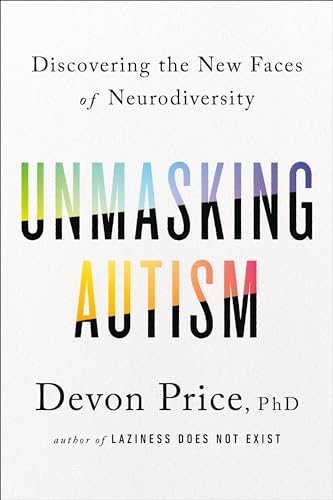


Unmasking Autism: Discovering the New Faces of Neurodiversity
- Health, Fitness & Dieting
- Children & Adolescent's Health
- Autism Spectrum
2. Age-by-Age Guide: Supporting Neurodivergent Children from Birth to Adolescence
Needs shift dramatically across development. Here is what to watch for — and what to do — at each stage.
Newborn to 18 Months: Noticing Early Differences
Some neurodivergent profiles are visible early. Babies who are later diagnosed with autism may show reduced eye contact, limited social smiling, or atypical responses to their name by 12 months. Babies with sensory processing differences may be unusually distressed by textures, sounds, or transitions.
Ages 2–5: The Preschool Years
This is often when ADHD, autism, and language-based differences become more apparent. Social play, language development, and emotional regulation are all under pressure in group settings.
Ages 6–11: School Age
School amplifies both challenges and strengths. Dyslexia and dyscalculia typically become visible here. ADHD affects homework, friendships, and self-esteem. This is also when many children begin to notice they are "different" from peers.
Ages 12–17: Adolescence
Adolescence intensifies everything. Identity formation, peer pressure, academic demands, and hormonal change all interact with a neurodivergent profile. Many teenagers — especially autistic girls and gender-diverse young people — are diagnosed for the first time in this window, often after years of exhausting "masking."


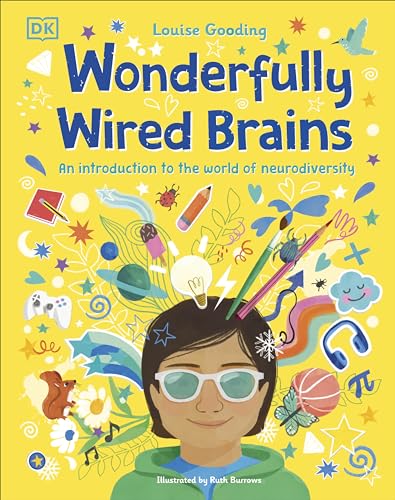
Wonderfully Wired Brains: An Introduction to the World of Neurodiversity
- Children's Books
- Growing Up & Facts of Life
- Friendship, Social Skills & School Life
3. Building a Strength-Based Home Environment
The single most protective factor for neurodivergent children is a home where they feel genuinely understood. Research consistently shows that parental acceptance — not just tolerance — predicts better mental health outcomes in neurodivergent children across all profiles.
When parents shift from 'what is wrong with my child' to 'what does my child need,' the entire therapeutic relationship changes — and so do outcomes.
— American Academy of Pediatrics, *Bright Futures* Guidelines (2023)
Practical Strategies That Work
Structured predictability: A consistent daily rhythm reduces anxiety for most neurodivergent children. Visual schedules (pictures for younger children, written lists for older ones) externalise the plan so your child does not have to hold it in working memory.
Sensory awareness: Learn your child's sensory profile. Some children are hypersensitive (overwhelmed by input) and some are hyposensitive (seeking more input). Occupational therapists can assess this formally, but you can start observing at home: what environments calm your child, and which ones dysregulate them?
Emotion coaching: Feelings charts, social stories, and "check-in" rituals at the start and end of the day help children name and process emotions before they escalate.
Strengths amplification: Every neurodivergent child has areas of genuine competence. Robotics clubs, art programmes, coding camps, drama groups — structured activities around real interests build confidence and social connection simultaneously.

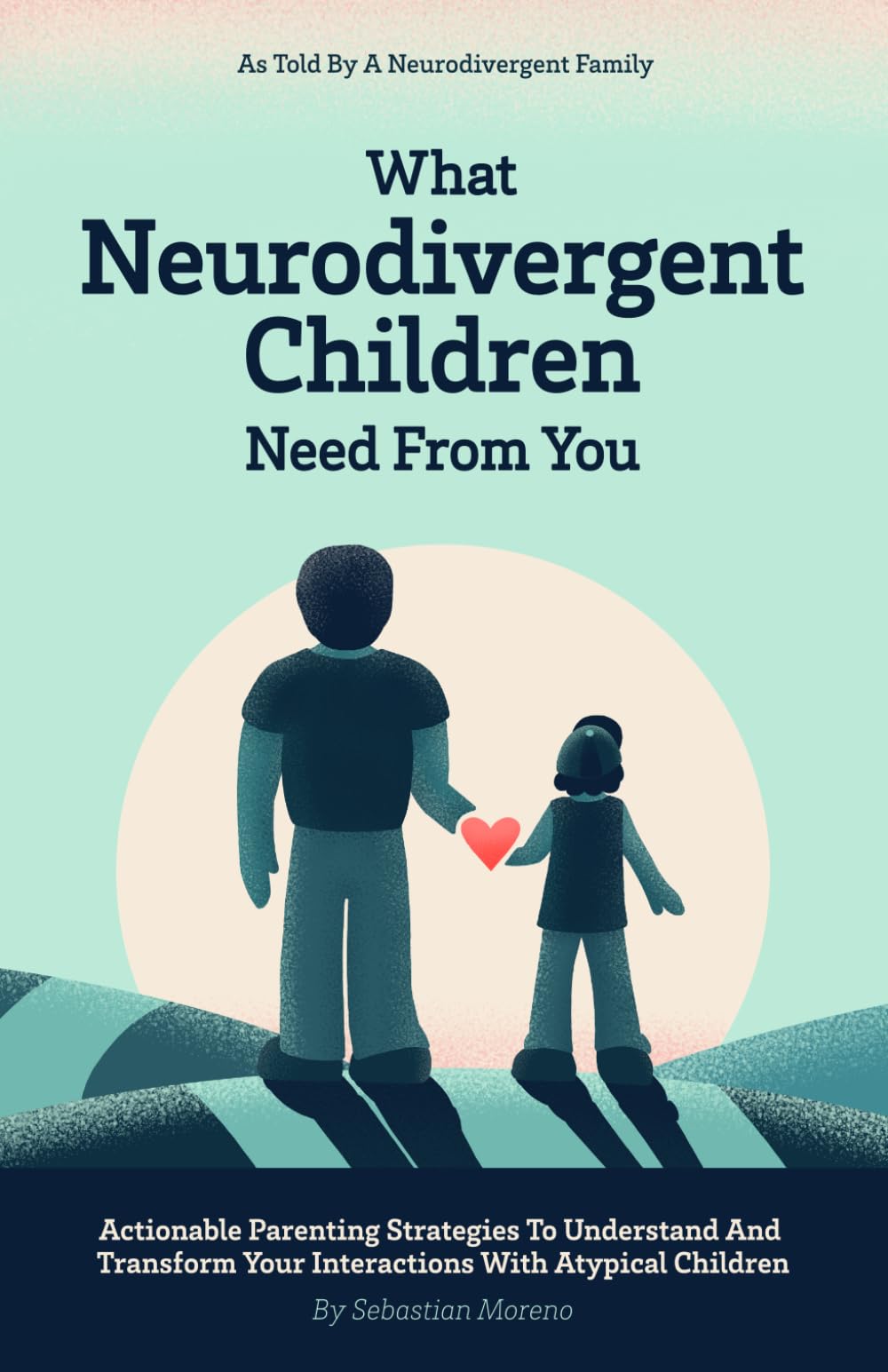

What Neurodivergent Children Need From You: Actionable Parenting Strategies to Understand and Transform Your Interactions with Atypical Children, As Told by a Neurodivergent Family
- Parenting & Relationships
- Family Health
- Image Unavailable Image not available forColor:
4. Navigating Schools, Assessments, and Educational Rights
Schools can be the site of your child's greatest breakthroughs — or their greatest struggles. Knowing your rights makes all the difference.
Understanding Your Child's Educational Plan
In the United States, children with disabilities are entitled to a Free Appropriate Public Education (FAPE) under IDEA. This typically takes the form of an Individualized Education Program (IEP) or a Section 504 Plan. In the UK, this is called an Education, Health and Care (EHC) Plan. In Australia, schools use Personalised Learning Plans (PLPs).
Common Reasonable Accommodations
- Extended time on tests - Preferential seating (near the teacher, away from windows) - Chunked instructions and written prompts - Assistive technology (text-to-speech, speech-to-text) - Sensory breaks built into the school day



I Am an Empowered Parent!: Creating the Best Education Experience for My Learning Different Child
- Education & Teaching
- Schools & Teaching
- Special Education
5. Building Your Professional Support Team
No single professional can meet all of your child's needs. Effective neurodivergent parenting is a team sport.
Core Team Members
Developmental paediatrician or child psychiatrist: Leads diagnosis and, where appropriate, medication management.
Occupational therapist (OT): Addresses sensory processing, motor skills, and activities of daily living.
Speech-language pathologist (SLP): Supports communication, language processing, and social pragmatics.
Educational psychologist: Conducts cognitive and academic assessments; informs school planning.
Child psychologist or therapist: Supports emotional regulation, anxiety, and family dynamics. Look for therapists trained in CBT adapted for neurodivergent children, Acceptance and Commitment Therapy (ACT), or PDA-informed approaches for pathological demand avoidance profiles.
Understanding and Supporting Neurodivergence: A Handbook of Practical Strategies to Help Autistic, ADHD, Dyslexic, and Other Unique Minds Thrive at Home, Work, and in Relationships (Neurodiversity)
- Education & Teaching
- Schools & Teaching
- Special Education
6. Caring for Yourself as a Neurodivergent Child's Parent
Caregiver burnout is real, common, and underreported. A 2019 study published in Autism Research found that mothers of autistic children reported stress levels comparable to combat veterans. That is not a metaphor — it is a measurement.
Parental wellbeing is not a luxury — it is a clinical variable. When parents are supported, children's outcomes improve.
— National Autistic Society (UK), Parent Support Report (2022)
Signs You Are Approaching Burnout
What Actually Helps
Parent support groups: Both in-person and online communities reduce isolation dramatically. Look for diagnosis-specific groups (e.g., CHADD for ADHD families, the Autism Society of America).
Respite care: Many states and countries fund respite programmes for families of disabled children. Ask your child's care coordinator or social worker about eligibility.
Your own therapy: Particularly if you suspect you may be neurodivergent yourself — a growing number of parents discover their own profile when their child is diagnosed.
Boundaries around information consumption: Limit late-night research spirals. Set a "good enough for today" threshold.
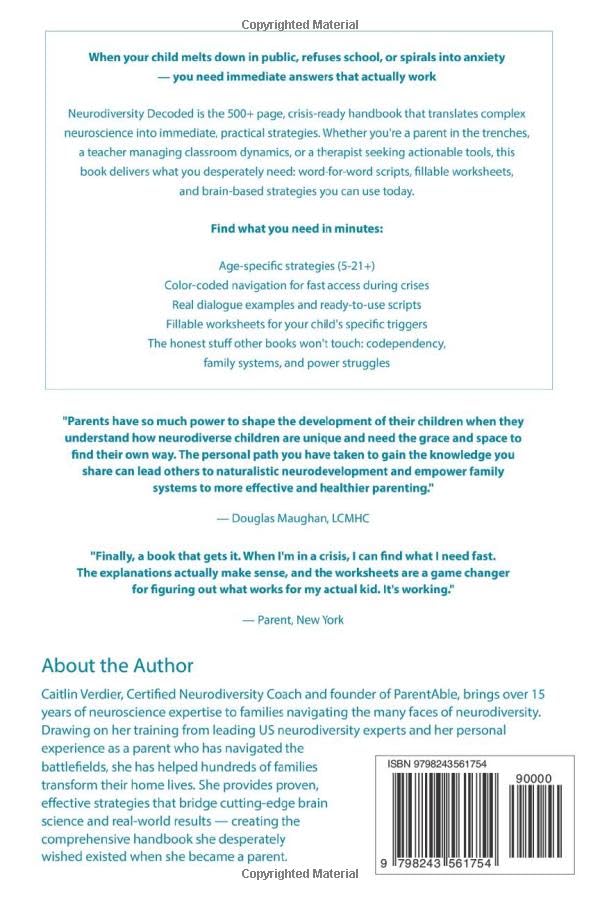
Neurodiversity Decoded: The Complete Handbook to Raising Neurodiverse Children
- Parenting & Relationships
- Disabilities & Hyperactivity
- Disabilities
7. Neurodivergent Profiles at a Glance: Choosing the Right Support Resources
| Profile | Key Strengths | Common Challenges | Best Support Starting Point | Recommended Resource |
|---|---|---|---|---|
| Autism (ASD) | Deep focus, pattern recognition, honesty, loyalty | Social communication, sensory overwhelm, transitions | OT + SLP assessment; strength-based family reading | Unmasking Autism |
| ADHD | Creativity, hyperfocus, energy, risk-taking | Attention regulation, impulse control, executive function | Behavioural paediatrician; structured home routines | Neurodiversity Decoded |
| Dyslexia | Strong verbal reasoning, big-picture thinking, storytelling | Reading fluency, spelling, phonological processing | Educational psychologist assessment; assistive tech | I Am an Empowered Parent! |
| Dyspraxia / DCD | Empathy, verbal skills, creative problem-solving | Motor coordination, handwriting, spatial organisation | Occupational therapy; movement-based learning | Understanding and Supporting Neurodivergence |
| Multiple / Co-occurring | Unique cross-profile strengths | Complex, overlapping support needs | Multidisciplinary team; whole-family approach | What Neurodivergent Children Need From You |
| Newly identified / Unsure | Unknown — assessment will reveal | Uncertainty, parental anxiety, school confusion | Start with accessible family introduction | Wonderfully Wired Brains |
8. Expert Insights on Raising Neurodivergent Children
Every child who has ever been told they are "too much" or "not enough" deserves at least one adult who sees them clearly — not despite their differences, but including them. That adult is most often you. The research does not lie: parental acceptance, early support, and genuine advocacy change trajectories. You do not need to have all the answers today. You need to stay curious, stay connected, and keep showing up.
The most powerful thing you can offer your neurodivergent child is not a perfect plan — it is the unshakeable message that their brain, exactly as it is, is worth understanding.
If this guide helped you, save it, share it with your co-parent or your child's teacher, and come back to it as your child grows. The journey changes — and so will you.
Sources & References
- Centers for Disease Control and Prevention (CDC). "Developmental Disabilities." 2023. https://www.cdc.gov/ncbddd/developmentaldisabilities/index.html
- Maenner MJ et al. "Prevalence and Characteristics of Autism Spectrum Disorder Among Children Aged 8 Years." MMWR Surveillance Summaries, CDC. 2023.
- Faraone SV et al. "The World Federation of ADHD International Consensus Statement: 208 Evidence-based Conclusions about the Disorder." Neuroscience & Biobehavioral Reviews. 2021.
- Tick B et al. "Heritability of autism spectrum disorders: a meta-analysis of twin studies." Journal of Child Psychology and Psychiatry. 2016.
- American Academy of Pediatrics. "Bright Futures: Guidelines for Health Supervision of Infants, Children, and Adolescents." 4th ed. 2023.
- National Autistic Society (UK). "The Autism Employment Gap." Parent Support Report. 2022. https://www.autism.org.uk
- Individuals with Disabilities Education Act (IDEA). US Department of Education. https://sites.ed.gov/idea/
- Singer, Judy. "NeuroDiversity: The Birth of an Idea." 2017.
- Lord C et al. "Autism spectrum disorder." Nature Reviews Disease Primers. 2020.
- Schreibman L et al. "Naturalistic Developmental Behavioral Interventions: Empirically Validated Treatments for Autism Spectrum Disorder." Journal of Autism and Developmental Disorders. 2015.
Frequently Asked Questions
What is the difference between neurodivergent and having a disability?
At what age can ADHD or autism be reliably diagnosed?
My child has been diagnosed — do they need medication?
How do I talk to my child about their diagnosis?
What if my child's school refuses to accommodate their needs?
Is neurodivergence hereditary?
How do I support my neurodivergent child's siblings?
Was this helpful?
Thanks — your feedback helps us pick what to write next.