
Design a Workspace That Signals "Work Mode" to Your Brain (and Your Kids)
Working moms can sustainably balance career and family by combining structured routines, clear boundaries, age-appropriate delegation, and consistent self-care — not by doing everything perfectly, but by doing the right things intentionally.

In this article
Picture this: it's 8:47 a.m. You're three minutes into a video call, your toddler is testing the structural integrity of your office door, and you've already answered six work emails — before breakfast. If that sounds familiar, you're not alone. According to the U.S. Bureau of Labor Statistics (2023), 70% of mothers with children under 18 are in the paid workforce, and the majority report that managing work and family responsibilities is their single greatest source of daily stress.
This guide won't promise you a perfect schedule or a magic morning routine. What it will give you is ten evidence-backed, clinically informed strategies that actually hold up across the chaos — from the newborn haze through the teenage years. Here's what you'll understand by the end:
1. Design a Workspace That Signals "Work Mode" to Your Brain (and Your Kids)
Your environment shapes your behaviour more than willpower does. Designating a specific physical space for work — even a corner of a bedroom — activates what psychologists call a context cue: your brain learns that this spot means focus, and your family learns it means boundaries.
What makes a workspace actually work
You don't need a home office with a door (though if you have one, use it). You need consistency. The same chair, the same lamp, the same start-up ritual. Research published in Frontiers in Psychology (2022) on remote-working parents found that those with a defined workspace reported significantly lower work-family conflict scores than those who worked from the sofa or kitchen table.
2. Build a Routine That Serves Both Roles — Not Just One
A consistent daily routine is one of the most robust findings in developmental psychology: children thrive on predictability, and so do working parents. The American Academy of Pediatrics (AAP) notes that regular routines reduce behavioural problems in children and lower parental stress simultaneously.
Age-banded routine anchors
Newborn–12 months: You can't schedule a newborn, but you can schedule yourself around their natural rhythms. Use nap windows for deep work. Keep a simple feeding/sleep log — it reveals patterns faster than you expect.
Toddler (1–3 years): Toddlers do best with visual schedules (picture cards of morning steps). Your work blocks should align with their longest predictable quiet period — usually post-lunch rest.
Pre-school & early school age (3–8 years): Introduce a shared family morning checklist. Children this age can manage 3–4 steps independently, which buys you 20–30 focused minutes.
Tweens & teens (9–17 years): Older children can manage their own morning routines almost entirely. Your role shifts to check-ins, not logistics. Use that reclaimed time for your highest-priority work tasks.
A structured planner is the fastest way to make a routine stick on paper before it becomes habit. The GoGirl Planner and Organizer is designed specifically for this — monthly vision-setting, weekly priorities, and a habit tracker that lets you see patterns over time.

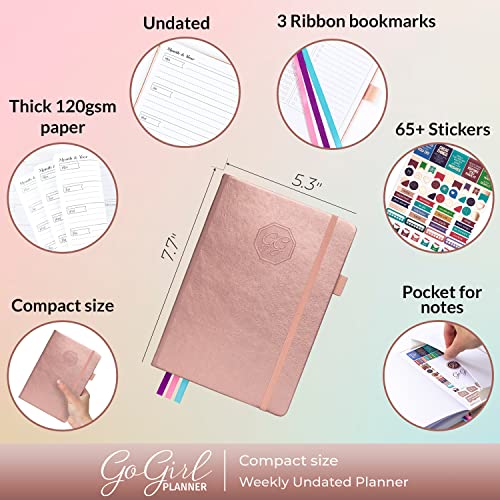
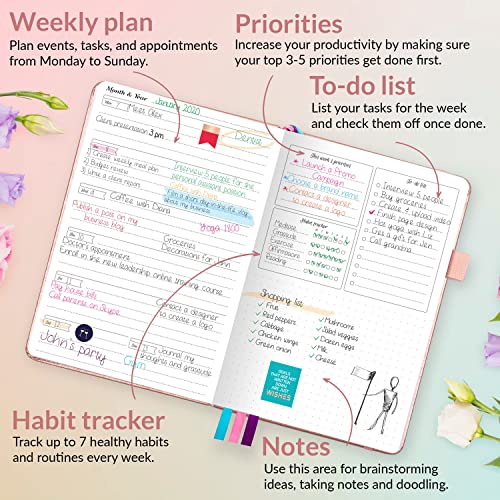
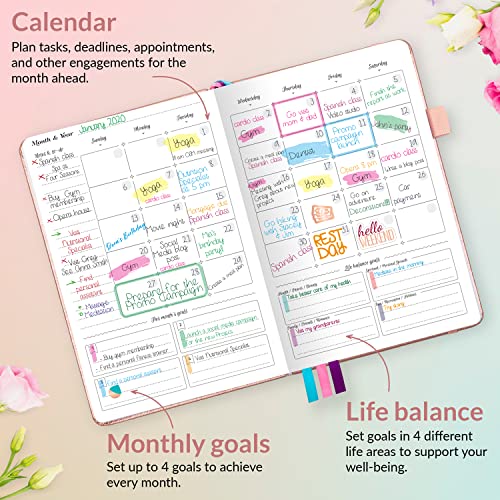
GoGirl Planner and Organizer for Women – Compact Size Weekly Planner, Goals Journal & Agenda to Improve Time Management, Productivity & Live Happier. Undated – Start Anytime, Lasts 1 Year – Rose Gold
- TAKE BACK CONTROL & ACHIEVE YOUR GOALS - GoGirl Planner will help you to create a vision for your life, define
- STAY FOCUSED, ORGANIZED & IMPROVE TIME MANAGEMENT - Use GoGirl Planner monthly and weekly priority sections to
- GET MORE DONE & FEEL HAPPIER - Bring more positive habits into your life by using the habit tracker section of
3. Master Your Task List Before Your Task List Masters You
Productivity research consistently shows that unwritten tasks consume more mental energy than written ones — a phenomenon called the Zeigarnik effect. When you capture everything in one trusted system, your brain stops cycling through reminders and frees up working memory for actual thinking.
A simple three-tier priority system
1. Must-do today — tasks with hard deadlines or direct impact on your child's wellbeing 2. Should-do this week — important but flexible 3. Would-do if time allows — useful but deferrable
Spend five minutes every Sunday evening allocating the coming week. This single habit — backed by time-management research from the American Psychological Association — reduces Monday-morning overwhelm significantly.
For parents who prefer hourly time-blocking, the GoGirl Weekly Schedule Planner maps your day from 6 AM to 9 PM in a vertical format — ideal for seeing at a glance where work ends and family time begins.
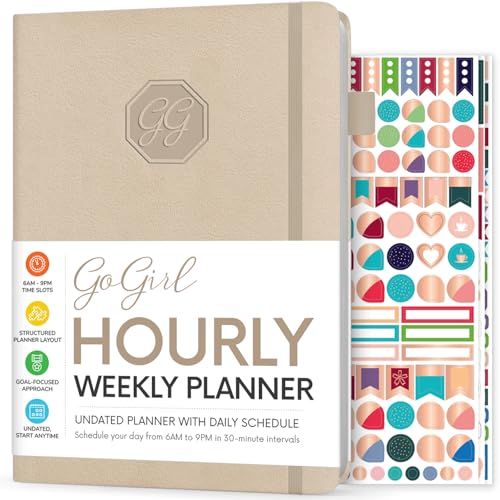

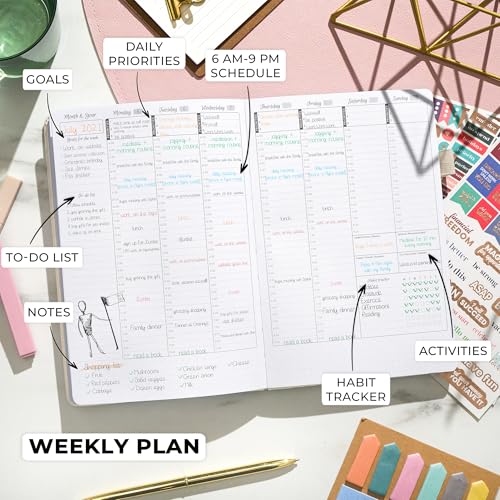
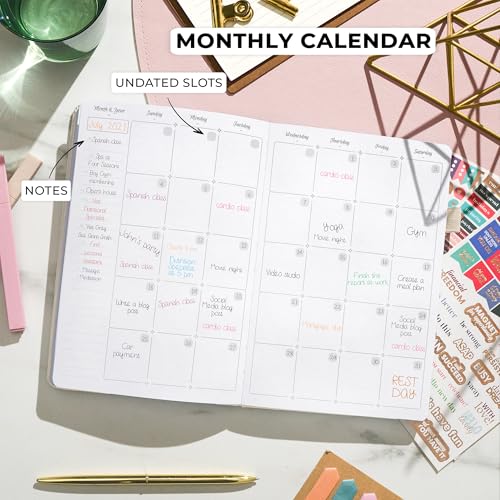
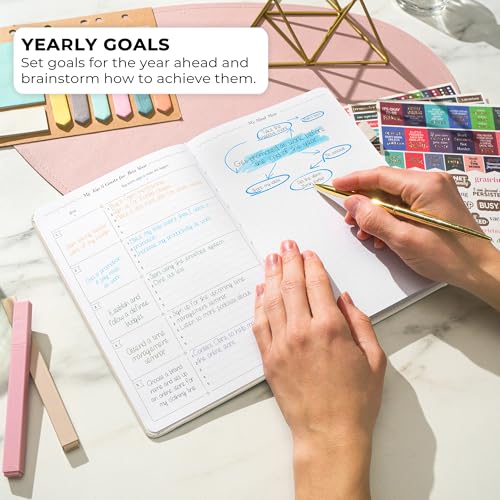
GoGirl Weekly Schedule Planner – Hourly Work & Life Planner with Time Slots – Vertical Agenda Organizer for Daily Productivity, A5 (Seashell)
- STAY FOCUSED, ORGANIZED & MOTIVATED: Plan your daily appointments, meetings, and other engagements using detai
- BOOST YOUR PRODUCTIVITY: At GoGirl, we wanted to provide you with the most efficient planning tool out there.
- SET & ACHIEVE LIFE GOALS: With this schedule weekly planner, you will create a vision for your life, define yo
4. Set Boundaries That Protect Both Your Career and Your Kids
Boundaries are the infrastructure of work-life balance. Without them, work bleeds into family time and family guilt bleeds into work time — and you're never fully present in either.
With your employer
The shift toward flexible and hybrid work has given many parents more negotiating room than they realise. A 2023 McKinsey & Company report found that 87% of employees offered flexibility take it, and those who do report higher job satisfaction and lower burnout. You don't need to apologise for a school pick-up or a paediatric appointment — you need a clear, professional communication of your availability.
With your family
5. Reduce Mental Load Through Delegation and Automation
Mental load — the invisible cognitive labour of tracking, planning, and anticipating everything a household needs — falls disproportionately on mothers. A 2021 study in Sex Roles journal found that even in dual-income households, mothers carried roughly 65% of household cognitive labour. That load is exhausting, and it directly impairs work performance and parenting quality.
Where to start delegating
Age-appropriate chores by stage: - Ages 2–3: Put toys away, place dirty clothes in hamper - Ages 4–6: Set the table, feed a pet, help sort laundry - Ages 7–10: Load dishwasher, pack their own school bag, help with younger siblings - Ages 11+: Cook simple meals, manage their own schedule, grocery list items
Automate the repetitive: - Grocery delivery or click-and-collect - Automatic bill payments - Batch-cooking on Sundays for three weeknight dinners
The Cute Daily Planner Undated is a compact, affordable option for tracking daily household tasks alongside work priorities — its half-hourly focus blocks work equally well for a school run schedule as for a work sprint.
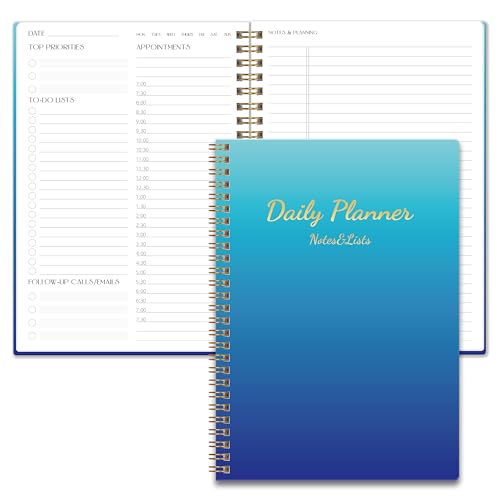
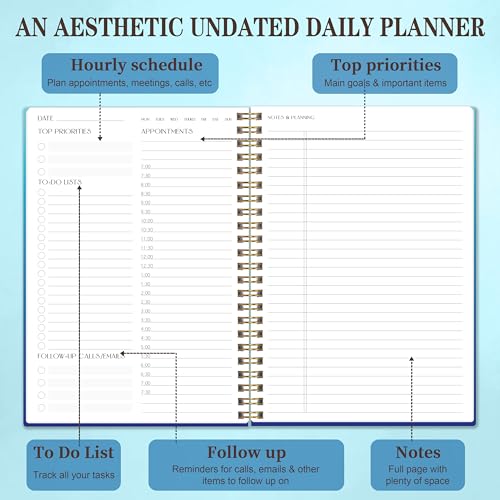

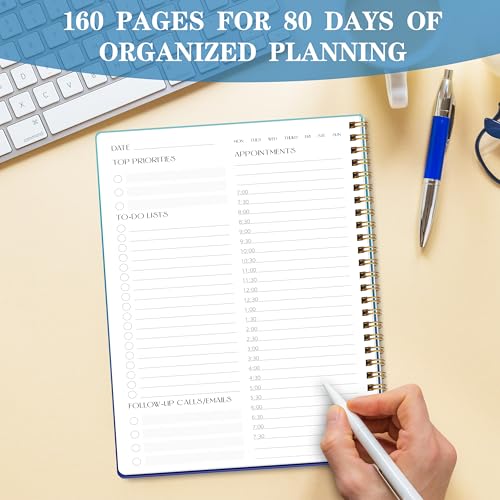
Cute Daily Planner Undated & To Do List Notebook for Work: With Hourly Schedule, 80 days Day on a Page Planner for Life Tasks - Day & Hour Agenda, Organizer Journal For Women or Men Purple
- Stay Organized & Make the Most of Your Day: This daily schedule planner is designed to help you stay on track,
- Plan Smart & Boost Productivity: Maximize your day with efficient half-hourly focus blocks. This hourly planne
- Ample Space for Planning: With its 9.3x6.3” inner pages, this planner offers plenty of room to organize 80 day
6. Protect Your Own Health Like It's Part of Your Job Description
It is. Caregiver burnout is a clinical reality, not a personal failing. The CDC defines burnout as a state of chronic stress leading to physical and emotional exhaustion, and studies consistently show that burned-out parents are less responsive, less patient, and more likely to experience anxiety and depression — all of which affect child development.
The non-negotiable basics
For parents who want to integrate self-care goals into their planning system, the PLANBERRY Weekly Planner Premium includes dedicated work-life balance areas and habit trackers alongside its scheduling pages — all in a premium gift-box format that makes it feel like a treat, not a chore.
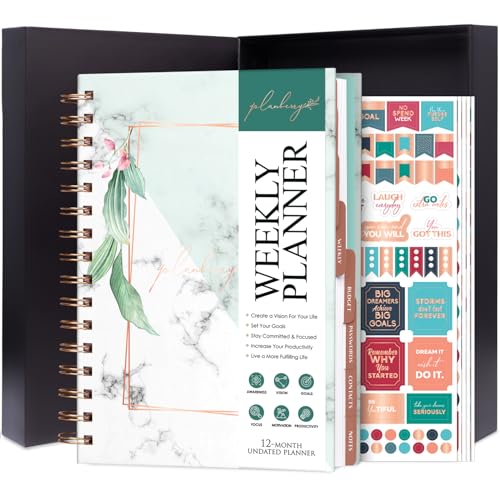
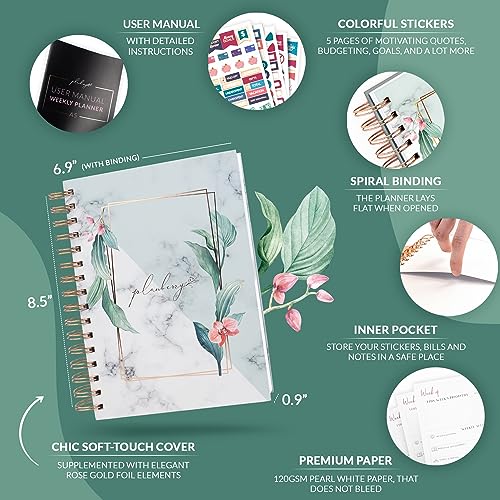
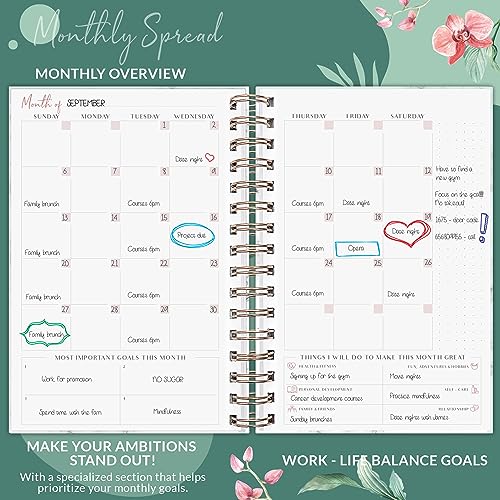
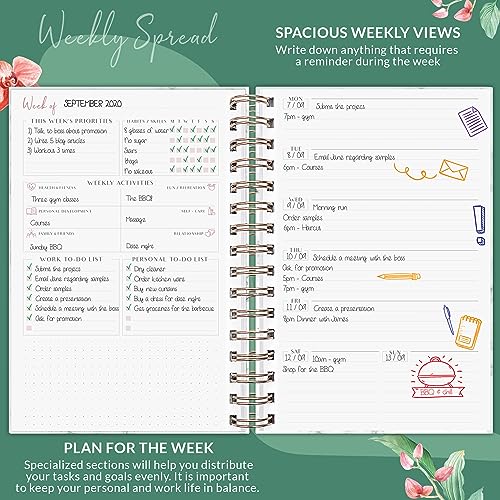
PLANBERRY Weekly Planner Premium – Undated Life Organizer & Budget Planner – Time Management, Goal Setting, To-Do List, Work-Life Balance & Habit Tracker – 6.9″ x 8.5″ (Natural Green)
- PLAN YOUR LIFE & FINANCES WITH ONE PLANNER - PLANBERRY Undated Weekly Planner is much more than a standard pla
- BUILD A BALANCED & FULFILLING LIFESTYLE – With this time management planner, you will be able to not only plan
- PREMIUM EDITION DESIGN, GIFT BOX & EXTRAS – This premium edition agenda planner is made using high-quality mat
7. Use Technology Intentionally — Not Reactively
Technology is the best and worst tool in a working parent's kit. Used proactively, it saves hours. Used reactively — responding to every ping as it arrives — it fragments attention and raises stress.
Tools worth using
For parents who prefer analogue planning alongside digital tools, the Peace of Mind Planner is a practical companion for organising the household's important information — contacts, wishes, financial affairs — so it's never lost in an email thread.
8. Build Your Village — Then Actually Use It
"It takes a village" is not a platitude; it's developmental science. Children who have relationships with multiple trusted adults — grandparents, neighbours, teachers, family friends — show stronger resilience and social development, according to research from the Harvard Center on the Developing Child.
Practical village-building
9. Embrace "Good Enough" Parenting — Science Backs It Up
Perfectionism is the enemy of sustainable work-life balance. The concept of the "good enough mother," introduced by British paediatrician and psychoanalyst Donald Winnicott, describes a parent who meets a child's needs adequately — not perfectly — and in doing so allows the child to develop resilience and frustration tolerance.
More recent research supports this: a 2019 study in Developmental Psychology found that maternal sensitivity, not maternal availability, predicted secure attachment. You do not need to be present every moment. You need to be genuinely present in the moments you have.
10. Review, Adjust, and Give Yourself Credit
Work-life balance is not a destination you arrive at; it's a practice you return to. What works when your child is four will need revision when they're nine, and again at fourteen. Building in a monthly review — even 20 minutes with a planner and a cup of coffee — lets you catch drift before it becomes crisis.
A simple monthly check-in framework
1. What worked well this month? 2. What created the most friction? 3. What is one thing I'll change next month? 4. What is one thing I'm proud of?
That last question matters. Research in positive psychology (Seligman, University of Pennsylvania) consistently shows that acknowledging progress — not just problems — sustains motivation over the long term.
The PLANBERRY Weekly Planner includes monthly review pages built into its layout, making this habit easy to maintain. For a more premium version with extra goal-setting depth, the PLANBERRY Weekly Planner Premium adds progress-review sections and a back pocket for loose notes.
Planner Comparison: Finding the Right Planning System for Your Season of Life
| Planning Style | Best For | Key Strength | Main Limitation | Recommended Product | Price |
|---|---|---|---|---|---|
| Goal-focused weekly planner | Moms setting monthly goals alongside daily tasks | Vision + habit tracker in one | Less hourly detail | GoGirl Planner and Organizer | $16.99 |
| Hourly vertical planner | Moms with back-to-back appointments or school runs | Time-slot visibility 6 AM–9 PM | No budget tracking | GoGirl Weekly Schedule Planner | $19.99 |
| Life + budget combined planner | Moms managing household finances alongside tasks | Work/personal split + budget | Slightly larger format | PLANBERRY Weekly Planner | $19.99 |
| Premium life organiser | Moms wanting a lasting, gift-quality system | 120gsm paper, goal-setting depth, gift box | Higher price point | PLANBERRY Weekly Planner Premium | $27.99 |
| Daily hourly planner (80 days) | Moms who prefer day-per-page detail | Half-hourly blocks, very affordable | Only 80 days | Cute Daily Planner Undated | $5.99 |
| Household information organiser | Moms managing complex family logistics | Centralises contacts, wishes, affairs | Not a daily planner | Peace of Mind Planner | $12.99 |
Expert Insights
Conclusion
Balancing work and family life will never be perfectly symmetrical — and that's not the goal. The goal is a life where your children feel seen, your work feels purposeful, and you have enough left over at the end of the day to be glad you showed up for both. Some days that looks like a smooth morning routine and a productive afternoon. Some days it looks like cereal for dinner and a long hug on the sofa. Both count.
The one sentence worth saving: You don't need to do it all — you need to do what matters, with intention.
If this guide helped you, save it, share it with a fellow working parent, or subscribe to tinymindsworld.com for more evidence-based guidance across every stage of your child's life. You're doing better than you think.
Sources & References
- U.S. Bureau of Labor Statistics. "Employment Characteristics of Families — 2023." U.S. Department of Labor, 2023. https://www.bls.gov/news.release/famee.nr0.htm
- American Academy of Pediatrics. "The Importance of Family Routines." HealthyChildren.org, 2023. https://www.healthychildren.org
- McKinsey & Company / LeanIn.Org. "Women in the Workplace 2023." McKinsey & Company, 2023. https://www.mckinsey.com/featured-insights/diversity-and-inclusion/women-in-the-workplace
- Seligman, M.E.P. "Flourish: A Visionary New Understanding of Happiness and Well-being." Free Press, 2011.
- Mueller, P.A. & Oppenheimer, D.M. "The Pen Is Mightier Than the Keyboard: Advantages of Longhand Over Laptop Note Taking." Psychological Science, 25(6), 2014.
- Ciciolla, L. & Luthar, S.S. "Invisible Household Labor and Ramifications for Adjustment: Mothers as Captains of Households." Sex Roles, 85, 2021.
- Harvard Business School. "Children of Working Mothers." Research by Kathleen L. McGinn et al., 2015. https://hbswk.hbs.edu
- Harvard Center on the Developing Child. "Supportive Relationships and Active Skill-Building Strengthen the Foundations of Resilience." 2015. https://developingchild.harvard.edu
- Goyal, M. et al. "Meditation Programs for Psychological Stress and Well-being." JAMA Internal Medicine, 174(3), 2014.
- National Sleep Foundation. "How Much Sleep Do We Really Need?" 2023. https://www.sleepfoundation.org
- World Health Organization. "Physical Activity Fact Sheet." WHO, 2022. https://www.who.int/news-room/fact-sheets/detail/physical-activity
- Winnicott, D.W. "The Theory of the Parent-Infant Relationship." International Journal of Psycho-Analysis, 41, 1960.
Frequently Asked Questions
How do I stop feeling guilty about working full-time?
What's the most important thing I can do for my child when I get home from work?
How do I handle a child who acts out more when I'm working from home?
Is it worth investing in a physical planner when I already use my phone?
How do I talk to my employer about needing more flexibility?
At what age can children start helping around the house meaningfully?
How do I know if I'm burned out versus just having a hard week?
Was this helpful?
Thanks — your feedback helps us pick what to write next.