
Parenting Stress and Feeling Judged: What Helps Parents
Feeling judged as a parent is common, and it raises stress, which can wear down your patience, sleep and mood. You cannot stop every opinion, but you can lower the load: spot the warning signs early, set simple boundaries with critics, agree a team approach with your partner, and

In this article
TL;DR: Quick summary
Feeling judged as a parent is common, and it raises stress, which can wear down your patience, sleep and mood. You cannot stop every opinion, but you can lower the load: spot the warning signs early, set simple boundaries with critics, agree a team approach with your partner, and ask for help sooner rather than later.
What you'll get
About 29 minutes to read. Short on time? Read the bold lines and the Key Takeaways near the end.
Picture this. You are in the supermarket queue and your three year old is melting down over a packet of crackers. A stranger gives you a look. Your face goes hot, you snap at your child, and then you feel worse for snapping.
If that sounds familiar, you are in very large company. In one national survey of parents of young children, nearly 9 in 10 said they feel judged. In another, nearly 70% of parents said parenting is more difficult now than it was 20 years ago, and children's use of technology and social media were the top two reasons.
This guide is for parents and caregivers of children from birth to age 12, with a short note on teens. I have written it the way I talk to parents in clinic: plainly, without blame. By the end you should know why the pressure builds, how to spot it in yourself, what to say when someone criticizes you, and when it is time to get support.
Why do so many parents feel judged all the time?
Because parenting now plays out in public. Social media, family group chats, school gates and even your own partner offer constant chances to compare. Surveys show most parents of young children feel judged, and the feeling is common across mothers and fathers, not a sign you are doing it wrong.
Think of judgment as a background hum rather than a single event. It is the comment about your baby's sleep, the raised eyebrow at the playground, the perfect lunchbox on your feed. None of it is dramatic on its own, but all of it adds up.
How common is it?
Very. In a survey of parents of young children, 90 percent of moms and 85 percent of dads said they feel judged. Almost half said they feel judged all the time or nearly all the time (46 percent of moms and 45 percent of dads).
Notice how close the mom and dad figures are. Dads feel it too, and in this survey the gap between mothers and fathers is small.
Pew Research asked a slightly different question: how often parents feel judged by other parents in their community. Among mothers, 41% said at least sometimes, compared with 27% of fathers. Different surveys use different wording, so do not line the numbers up side by side. The message is the same: most parents feel watched, and mothers feel it somewhat more often.
Where does the feeling come from?
It rarely has one source. For most parents it is a mix:
Why mothers feel it more, and why dads are not exempt
Surveys find mothers are generally more likely than fathers to feel judged. Moms are also more likely than dads to say being a parent is stressful and tiring all or most of the time.
Dads get their own version. Stay at home dads can feel judged too, even though fathers report it less often than mothers. Either way, the strain is real.
Common mistakes
How does feeling judged turn into parenting stress?
Parenting stress builds when the demands on you outrun the energy and support you have. Judgment adds demands (prove yourself, second guess yourself) while taking away support, because you hide your struggles. Over time that mix leaves you tired, tense and less patient with the people you love most.
A simple way to understand parenting stress
Researchers describe parental stress as something that often arises when parenting demands exceed the resources a parent has to meet them. That is a useful frame because it removes the idea that stress means weakness. It is arithmetic. Too much asked, too little available.
Judgment pushes both sides of the sum. It raises the demand, because now you are parenting for an audience as well as for your child. It lowers your resources, because judging and criticizing parents only causes them more stress.
Picture a mom who gets a comment from a relative about her toddler's eating. She says nothing, but she spends the next week cooking three separate dinners to prove a point. She is exhausted by Thursday, short with her child on Friday, and ashamed on Saturday. Nobody said anything cruel. The stress still did its work.
What the research says
ZERO TO THREE, which runs a national survey of parents of young children, puts the problem plainly:
The problem is that judging and criticizing parents only causes them more stress and makes it less likely they will be the best parent they can be.
ZERO TO THREE
Higher parenting stress is also linked with lower wellbeing and more depressive symptoms in parents. That is an association, not a sentence, but it is a good reason to take stress seriously rather than push through.
One study of dual earner families in China looked at what the authors called digital parenting intensity, which you can think of as being tethered to parenting through phones and apps. The more intense it was, the more emotionally exhausted parents were, partly through time pressure and parenting guilt. If your phone is where most of your guilt lives, you are not imagining the link.
How it reaches your children
Children are very good at reading adults. UNICEF notes that:
During times of stress and crisis, children will observe adults' behaviours and emotions for cues on how to manage their own.
UNICEF
Research on parental anxiety shows that higher anxiety in parents has been linked to higher anxiety in their children. In a study of low income families, how responsive parents were helped explain the link between parenting stress and children's thinking skills and kindness toward others, but not behavior problems.
None of this means you must be calm every minute. Most parents snap sometimes. What matters is the pattern, and whether you repair afterward.
Three steps to break the loop
- Notice. Catch the moment your body tightens after a comment or a scroll.
- Name. Say it to yourself in plain words: "I feel judged, and I'm getting tense."
- Narrow. Pick one small response instead of fixing everything: a breath, a glass of water, a sentence to your child.
Common mistakes
What are the signs that stress and judgment are getting to me?
Common signs include constant worry, a short temper, aches and tension, poor sleep, feeling flat or isolated, and snapping at your partner or children. One rough week is normal. A pattern that lasts, or one that is hurting daily life, is your cue to act.
Signs in your mind and mood
Parents often describe these first. Raising Children Network lists some of the common ones:
The U.S. Surgeon General's advisory adds anxiousness, loneliness and isolation, and reduced productivity at work to the list of warning signs of distress in parents and caregivers.
Signs in your body
Stress rarely stays in your head. Watch for:
Many parents tell me they have been blaming a sore neck or constant tiredness on "just being a parent" for months. Sometimes that is true. Sometimes it is stress asking for attention.
Signs hiding behind "I'm fine"
Some signs are quieter and do not appear on any list. You might over explain your parenting choices whenever someone asks a simple question. You might avoid the playground or the class group chat. You might check your phone for approval, or feel a jolt of dread when a relative visits.
These are not diagnoses. They are clues that judgment has moved from the outside to the inside.
Picture a dad who coaches his child's team, runs the evening routine and answers every work email, yet feels like he is faking it. He laughs it off, stops sleeping well, and notices he has gone quiet at dinner. That quiet is a signal, not a personality change.
A quick self check
Ask yourself three questions:
- Over the last two weeks, have I been sleeping and eating roughly as usual?
- Am I snapping more than I want to, or feeling numb or flat?
- Do I have at least one person I can be honest with?
If the answers worry you, read the section on getting help below. This is not a screening tool, only a nudge to look more closely.
If you want a structured read on this theme, Parenting Burnout is a book whose title promises ways to reduce overwhelm and regulate your nervous system without feeling guilty. A book is a support, not a treatment, but some parents find it a gentle place to start.


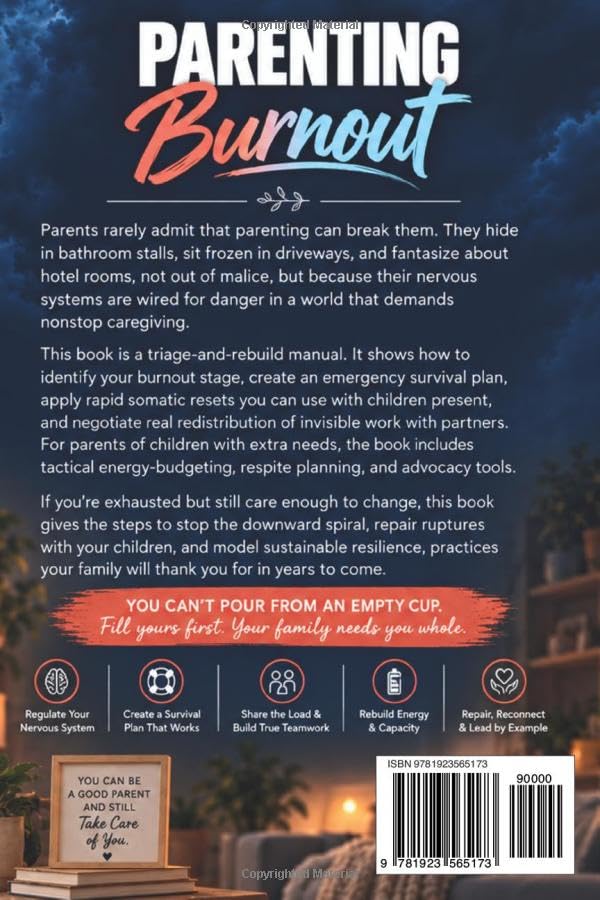
Parenting Burnout: Reduce Overwhelm, Regulate Your Nervous System & Rebuild Parental Capacity — Without Doing More or Feeling Guilty (The Burnout Reset Guides)
- Parenting & Relationships
- Family Relationships
- Dysfunctional Families
Common mistakes
What does judgment and stress look like at each age?
The source of the judgment changes as your child grows, but the pattern is the same: other people's opinions pile onto an already full plate. Knowing what to expect at your child's age lets you prepare your response, not just react.
Newborn to 12 months
New parents are judged on feeding, sleep, holding the baby "too much", visitors and how quickly life returns to normal. It lands hard because you are exhausted, your hormones are shifting and everything is new.
Your own mental health matters here too. The American Academy of Pediatrics and Bright Futures recommend screening for maternal postpartum depression at each child well visit from 1 month through 6 months, and caregiver emotional and mental health screening can continue from birth to age 21. If you want to read more, our guide to postpartum depression recovery reviews parenting books for this stage.
What helps:
Toddlers, ages 1 to 3
Toddlers have public meltdowns, and public meltdowns attract an audience. You may be judged for being too strict, too soft or "letting" your child act that way.
Your job in that moment is your child, not the audience. Get down to their level, keep your voice low, and say, "You're upset. I'm here. We'll leave in a minute." If a stranger comments, a simple "We're working on it" is enough.
Preschool, ages 3 to 5
Preschoolers bring questions about screens, daycare, bedtime battles and behavior. Other parents compare milestones and activities, which can leave you wondering whether you are doing enough.
Remember that children develop at different speeds, and a comparison with someone else's child tells you very little. If you have a real concern about development, take it to your child's doctor, not to a group chat.
School age, ages 6 to 12
School adds grades, sports, birthday party invitations and, increasingly, devices. Group chats can feel like a daily report card on your parenting. Nearly 70% of parents say parenting is harder than it was 20 years ago, and they name technology and social media as the top two reasons.
Kids notice how you talk about other families. If you want to practice what to say when big topics come up, the tough talk toolkit gives you language that keeps conversations calm.
What helps:
A note on teens
Teens judge parents out loud, which can sting more than silent comparison. They also see how you handle stress, and they tend to copy it.
Stay connected, apologize when you get it wrong, and keep your own support in place. A short, calm, regular check in often does more than a long talk.
For small daily steps at any age, Self Care for Moms: 5 Minute Mindfulness offers gentle practices, and it fits well when you have only a few quiet minutes.
Common mistakes
What can I do when my partner is judging my parenting?
Talk about it away from the kids, in a calm moment, and start with how it feels rather than what they did wrong. Agree on a few shared rules, treat each other as teammates, and give each other the benefit of the doubt. Criticism in front of the children makes things worse.
Why partner judgment hurts so much
About half of married or cohabiting parents (52%) say they feel judged by their spouse or partner at least some of the time, and 18% say they feel that way always or very often. That is a lot of households where the person who should feel like a teammate feels like a critic.
When criticism comes from someone you share a life with, it carries extra weight. It can feel personal, and it can leave you doubting your own instincts. If you want practical ideas for staying connected after kids, our relationship tips for married parents are a good place to start.
What to say instead of arguing
The Surgeon General's advisory on parental stress offers a line worth borrowing:
Listen with empathy and without judgment and be a steady, supportive presence.
HHS (2024)
Try these scripts:
Say the first sentence calmly, then stop talking and listen. The goal is not to win the point. It is to stop turning parenting into a courtroom.
A simple agreement to try
Many couples feel better with a short, shared list. Sit down together and agree on:
- Three or four must haves you both care about (for example, a regular bedtime and no hitting).
- A list of things that are flexible, where either of you can decide.
- A rule that disagreements happen in private, not in front of the children.
- A weekly 15 minute check in: what went well, what was hard, what we need.
Children pick up on tension between parents and can feel less secure when they see constant criticism. You do not need to agree on everything. You do need to look like you are on the same side.
When you are the one judging
It is worth turning the mirror around. Ask yourself whether you criticize because you are worried, tired or resentful. Replace "You always do it wrong" with "I felt anxious when he climbed that high; can we talk about it?"
If you ever find yourself wondering whether your children come first in a way that leaves your relationship behind, our piece on loving your kids more than your partner looks at what research says.
If anger is the sticking point, How to Stop Losing Your Sh*t with Your Kids is a practical audio guide on becoming a calmer, happier parent.
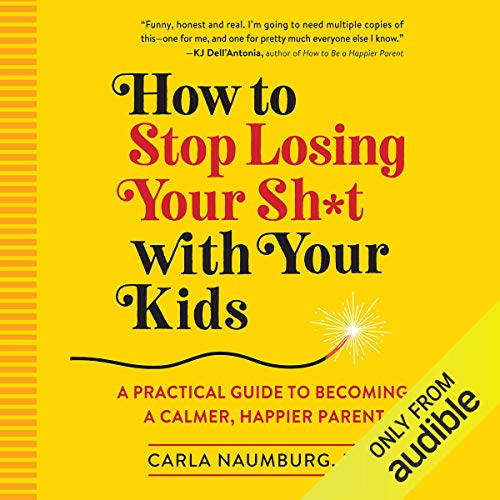
How to Stop Losing Your Sh*t with Your Kids: A Practical Guide to Becoming a Calmer, Happier Parent
- Audible Books & Originals
- Relationships, Parenting & Personal Development
- Personal Development
Common mistakes
How do I cope with judgment from family, strangers and social media?
Decide whose opinions count, thank the rest and move on, and limit the feeds that make you feel smaller. You do not owe everyone a defense of your parenting. A few ready sentences and a clean up of your phone can lower the pressure very quickly.
Relatives and friends
Advice from people who love you can still feel like criticism. A kind boundary protects the relationship and your peace.
If it keeps happening, say it once more, calmly, and then change the subject. Repeating yourself with more explanation usually invites more debate.
Other parents and strangers
Most comments from strangers say more about the speaker than about you. A short reply works best:
You are not required to educate anyone. Your child needs your attention more than the onlooker needs your answer.
Social media
Social media is a major source of comparison, and many parents say it makes parenting feel harder. A study of Chinese dual earner families found that intense digital parenting predicted emotional exhaustion, partly through time pressure and guilt. You do not have to live that way.
Try a quick clean up:
- Mute or unfollow accounts that leave you feeling worse.
- Follow a few accounts that are honest about the messy parts.
- Set a window for parenting content, not the last hour before bed.
- Leave group chats that raise your heart rate, or mute them.
If you want a broader look at how smart tools can help rather than hurt, see our article on using AI in parenting mindfully.
Mom guilt and the voice in your head
Guilt is often the echo of judgment, even when nobody is around. For many parents, guilt can feel like the hardest critic of all. Treat guilt as information, not a verdict: ask whether you can fix something small, apologize or learn from it, and then let it go.
Small acts of self care that actually fit a parent's day
Self care is not a spa day. It is anything that gives you a little back: a hot drink while it is still hot, a five minute walk, a text to a friend.
Self-Care for Moms offers many ways to care for yourself while caring for everyone else, which is handy if you have no idea where to begin.

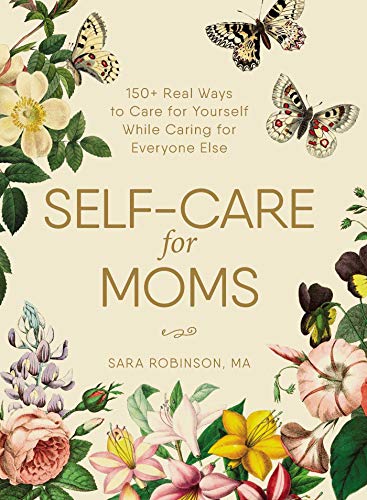
Self-Care for Moms: 150+ Real Ways to Care for Yourself While Caring for Everyone Else
- Parenting & Relationships
- Family Relationships
- Motherhood
For something quicker, Stress Relief for Busy Parents collects mindfulness techniques you can do in short breaks.
Common mistakes
For more ideas on raising kids without chasing perfection, our 50 parenting tips cover everyday habits that build confidence in both you and your child.
When should I ask for help, and who do I call?
Ask for help when stress is still high most days, your worry or anger is getting in the way of daily life or relationships, or you notice changes in sleep and eating that do not settle. You do not need to wait for a crisis. Start with your doctor.
How to tell stress from something more
Everyday stress comes and goes. Raising Children Network advises that if you are still feeling very stressed every day, it might help to talk to a health professional, and you could start by seeing your GP (in the US, your own doctor or your child's pediatrician, who can point you to the right place).
For anxiety, the guidance is to seek professional support as soon as you can if everyday tips are not helping, if you are having a lot of symptoms, or if those symptoms are interfering with your health, daily life or relationships.
Warning signs of distress in parents can include anxiousness, fatigue, anger, loneliness and isolation, reduced productivity at work, and changes in sleeping and eating patterns.
What to say when you ask for help
Many parents tell me they do not know how to start. Try one of these:
You do not have to describe it perfectly. A good clinician will ask the right questions, and you can bring a few notes to the visit.
Who can help
The American Academy of Pediatrics and Bright Futures recommend screening for maternal postpartum depression at each well child visit from 1 month through 6 months, and caregiver emotional and mental health screening can be part of visits from birth up to age 21. That means your child's regular visit is a legitimate place to bring up how you are doing.
Other places to start:
If you need support right now
If you are pregnant, a new mom, or a loved one of an expecting or new mom facing a mental health challenge, you can call or text the free Maternal Mental Health Hotline at 1-833-TLC-MAMA (852-6262) for 24/7 confidential support in English or Spanish.
If you are in a mental health crisis, call or text the free, multilingual and confidential 988 Suicide & Crisis Lifeline. These are US numbers. If you live elsewhere, ask your doctor or health visitor for your local line.
If you ever feel that you might harm yourself or someone else, call your local emergency number straight away.
What help looks like beyond the doctor's office
Support often includes talking therapy, practical help and small, steady routines. It might also be a friend who takes the kids for two hours, or a partner who does bedtime three nights a week. Books and audio guides can be a gentle add on for the days between appointments, such as Stress Relief for Busy Parents, but they do not replace care.
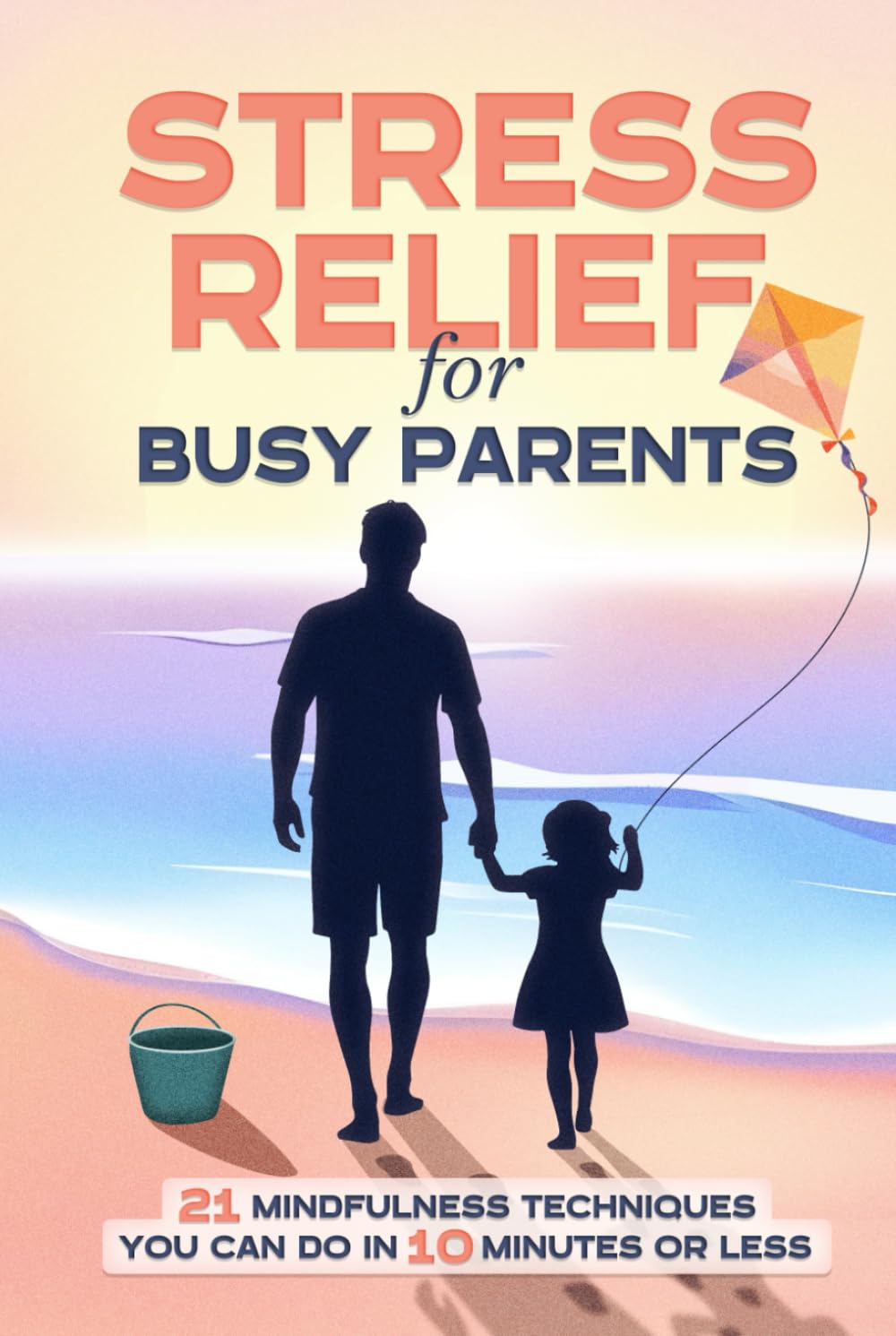
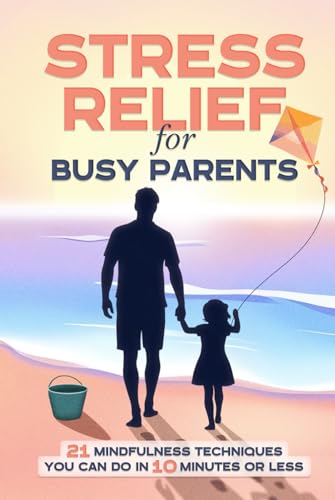
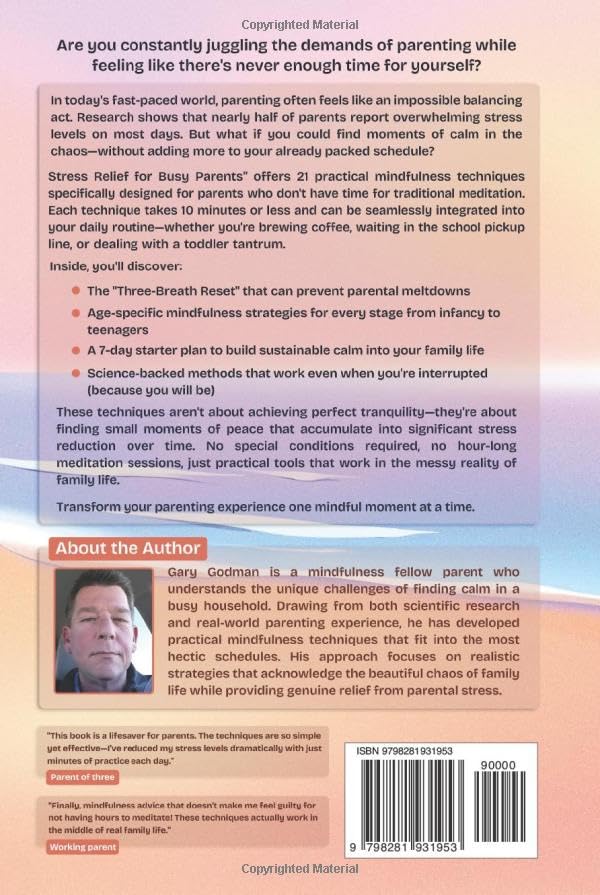
Stress Relief for Busy Parents: 21 Mindfulness Techniques You Can Do in 10 Minutes or Less
- Parenting & Relationships
- Single Parents
- Image Unavailable Image not available forColor
Common mistakes
How do the options for easing the strain compare?
Different tools suit different moments. This table matches the resources in this guide to what you might need, so you can pick one rather than try everything at once.
| Option | Best Age Range | Primary Benefits | Main Drawbacks | Recommended Product | Price Range |
|---|---|---|---|---|---|
| A long list of self care ideas | Any age of child | Many small ideas to choose from, good for building a habit | Easy to feel overwhelmed by too many options | Self Care for Moms: 150+ Real Ways | $4.24 |
| An audio guide for angry moments | Any age of child | Listen while you do chores or commute | Not a substitute for therapy if anger feels out of control | How to Stop Losing Your Sh*t with Your Kids | $0.99 |
| A book on burnout and overwhelm | Any age, especially when exhausted | Focuses on overwhelm and the nervous system | Needs quiet time to read | Parenting Burnout | Not listed |
| Five minute mindfulness | Any age, ideal for busy newborn days | Tiny practices that fit a packed day | May feel too gentle for severe stress | Self Care for Moms: 5 Minute Mindfulness | Not listed |
| Ten minute stress relief | Any age, good for single parents | Quick techniques for tense moments | Techniques need regular practice to help | Stress Relief for Busy Parents | Not listed |
Key Takeaways
- Feeling judged is common among parents of young children, and mothers and fathers both feel it.
- Judgment adds stress, which often arises when demands exceed the resources parents have, and elevated stress is linked to lower wellbeing.
- Watch for warning signs in your mood and body, such as constant worry, irritability, aches and poor sleep.
- With a partner, speak about feelings rather than faults, agree a few shared rules and keep disagreements private.
- With relatives, strangers and social media, a short script and a quick clean up of your feeds go a long way.
- Small steps and tools such as Self Care for Moms and Stress Relief for Busy Parents can help day to day, but they do not replace care.
- If stress or anxiety lasts or interferes with daily life, talk to a health professional, and use the hotlines if you need urgent help.
You are doing better than the voice in your head says
Every parent I know has stood in a queue, a kitchen or a school hall and felt like the whole world was grading them. You are not failing. You are carrying a lot, in public, with very little rest.
Be as kind to yourself as you would be to a friend in the same spot. A parent who feels supported is better placed to respond well than a parent who is judged, and judging parents only adds to their stress. If this guide helped, save it, share it with a friend who needs it, and come back whenever the voice gets loud.
Sources & References
- HHS. "2024 Parents Under Pressure: The U.S. Surgeon General's Advisory."
- NIH (National Library of Medicine). "We Can Take Action: Parents Under Pressure, NCBI Bookshelf."
- Pew Research Center. "Parenting in America Today: A Survey Report (2023)."
- Pew Research Center. "How U.S. mothers, fathers differ on parenting: Survey report (2023)."
- ZERO TO THREE. "Judgment."
- NIH (National Library of Medicine). "Parenting on a digital leash: time pressure, parenting guilt, and emotional exhaustion in Chinese dual-earner families."
- NIH (National Library of Medicine). "Parental stress and child stimulation practices: examining associations with child developmental outcomes over time in Kenya and Zambia."
- NIH (National Library of Medicine). "The Associations of Child's Clinical Conditions and Behavioral Problems with Parenting Stress among Families of Preschool Aged Children: 2018 to 2019 National Survey of Child Health."
- NIH (National Library of Medicine). "Managing childhood fever and pain: the comfort loop."
- NIH (National Library of Medicine). "Mothers' and Fathers' Parenting Stress, Responsiveness, and Child Wellbeing Among Low Income Families."
- UNICEF. "How to recognize signs of distress in children."
- Raising Children Network. "Parent stress: signs to watch for and coping strategies that work."
- Raising Children Network. "Parental anxiety: how to handle worries and feel better."
Frequently Asked Questions
Is it normal to feel judged as a parent?
Why do mothers feel judged more than fathers?
Can feeling judged cause depression or anxiety?
What should I say when my partner criticizes my parenting?
Does my stress affect my children?
When should I see a doctor about parenting stress?
Where can I get urgent help?
Was this helpful?
Thanks — your feedback helps us pick what to write next.