
How Fatherhood Has Changed in the Digital Era
Modern fathers can thrive in the digital age by using technology intentionally — staying connected when apart, supporting learning at home, and protecting their children online — while guarding against the screen-time creep and work-life blur that erode real family time.

In this article
Picture this: it's 7 p.m. on a Tuesday. You're physically home, sitting at the dinner table — but your phone is face-up beside your plate, pinging with Slack notifications. Your five-year-old is talking about something that happened at preschool. You catch maybe half of it. Sound familiar?
You're not alone. According to a 2023 Pew Research Center survey, 41% of U.S. parents say they are distracted by their phone during conversations with their children "at least sometimes." For fathers specifically, the tension between digital work demands and family presence is one of the defining parenting challenges of the decade.
This guide is built for dads — and any primary caregiver — navigating that tension. By the time you finish reading, you'll understand:
1. How Fatherhood Has Changed in the Digital Era
Modern fatherhood looks fundamentally different from what most of today's dads grew up seeing. The breadwinner-only model has given way to something richer — and more demanding.
According to the Pew Research Center (2019), fathers in two-parent U.S. households now spend an average of eight hours per week on child care, triple the rate recorded in 1965. Remote and hybrid work, accelerated by the COVID-19 pandemic, has made physical presence at home more possible than ever. But presence and attentiveness are not the same thing — and that gap is where digital-age fatherhood gets complicated.
The good news is that fathers who lean into active involvement produce measurable outcomes. Research published in the Journal of Family Psychology consistently links engaged fathering to better cognitive development, higher self-esteem, and reduced behavioural problems in children across all age groups.
What "Active Fathering" Looks Like in Practice
- ✓ Attending routine moments — bath time, school pick-up, bedtime — not just milestone events - ✓ Knowing your child's friends, teachers, and current obsessions - ✓ Having a working knowledge of what your child is doing online - ✓ Modelling the emotional regulation you want your child to develop
If you're a new dad looking for a grounded starting point, Digital Age Dad is a practical first-time father's guide that covers the newborn phase through early infancy with an honest eye on modern tech pressures.




Digital Age Dad: A First-Time Father’s Guide to Bringing Home Baby, Supporting Your Partner, and Understanding Your Newborn
- Kindle Store
- Kindle eBooks
- Parenting & Relationships
2. The Genuine Upside: How Technology Strengthens the Father-Child Bond
Technology is not the enemy — used with intention, it is one of the most powerful bonding tools a modern father has.
Staying Connected Across Distance
For fathers who travel for work, are co-parenting across households, or serve in the military, video calling has transformed what "being there" can mean. A dad deployed overseas can read a bedtime story on FaceTime. A father who works night shifts can send a voice note his toddler listens to in the morning. These micro-moments accumulate into secure attachment over time.
Supporting Learning Together
The internet gives fathers access to an extraordinary range of educational support. Platforms like Khan Academy (free, curriculum-aligned) let dads sit alongside a struggling nine-year-old and work through maths problems together — no tutoring degree required. Educational YouTube channels, coding games, and science experiment apps turn "screen time" into collaborative learning time.
Accessing Parenting Knowledge
Fathers today have unprecedented access to credible parenting information. The AAP's HealthyChildren.org, the CDC's developmental milestone resources, and evidence-based parenting communities have removed much of the mystery from child development. For tech-oriented dads who want to go deeper, Pregnancy Guide for Tech-Savvy Men and Parenting Guide for Dads With AI both explore how to use modern tools — including AI assistants — to make more confident parenting decisions.





Parenting Guide for Dads With AI: Be the Dad Your Kids Need (The Smart Parent Series)
- Parenting & Relationships
- Image Unavailable Image not available forColor:
- Transform the way you connect with your child, even during stressful or chaotic moments.
3. The Real Risks: Screen Time, Online Safety, and Work-Life Blur
Acknowledging the benefits honestly requires acknowledging the risks just as honestly. There are three that every father in 2026 needs to take seriously.
Risk 1: Excessive and Unstructured Screen Time
The World Health Organization (WHO) recommends no screen time for children under two (except video chatting), no more than one hour per day for children aged two to four, and consistent limits with content quality prioritised for older children. The evidence linking excessive recreational screen time to disrupted sleep, reduced physical activity, and attention difficulties in school-aged children is robust.
The issue isn't screens themselves — it's whether screen use is displacing sleep, physical activity, face-to-face interaction, and hands-on play.
— American Academy of Pediatrics, Media and Young Minds Policy Statement (2016)
Risk 2: Online Safety Threats
Cyberbullying, exposure to inappropriate content, and online predation are not hypothetical concerns. The CDC's 2023 Youth Risk Behavior Survey found that approximately 16% of U.S. high school students reported being cyberbullied in the past year. Fathers need to be informed rather than panicked — which means open conversations, parental controls used transparently, and keeping devices in shared household spaces.
Risk 3: The "Always-On" Work Culture
Flexible work is a gift that can become a trap. When the office is your kitchen table, the boundary between "at work" and "at home" dissolves. Children notice. A father who is physically present but mentally in his inbox is sending a clear message about what — and who — matters most.
For single fathers navigating digital discipline challenges specifically, The Single Dad's Guide to Digital Discipline offers a grounded, experience-led roadmap for rebuilding calm and connection in a tech-saturated household.

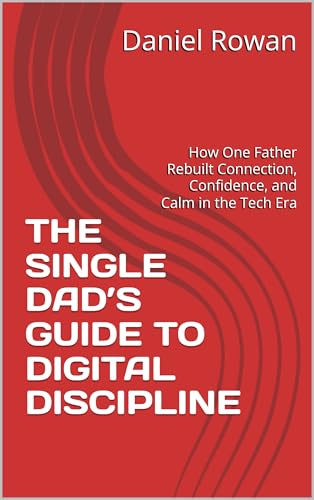

THE SINGLE DAD’S GUIDE TO DIGITAL DISCIPLINE: How One Father Rebuilt Connection, Confidence, and Calm in the Tech Era
- Kindle Store
- Kindle eBooks
- Children's eBooks
4. Age-by-Age Strategies: From Newborn to Teen
One framework does not fit all. Here is what intentional digital fathering looks like at each stage.
Newborn to 12 Months
Your baby does not need any screen time — but you can use technology wisely. Smart baby monitors, white-noise apps, and feeding-tracking apps reduce cognitive load so you can be more present when you are with your baby. Video calls with grandparents count as social interaction for the adult, not screen exposure for the infant.
For practical newborn care guidance built for dads, Baby Hacks for New Dads covers infant care essentials with the kind of no-nonsense, actionable tone that works well for fathers who learn by doing.


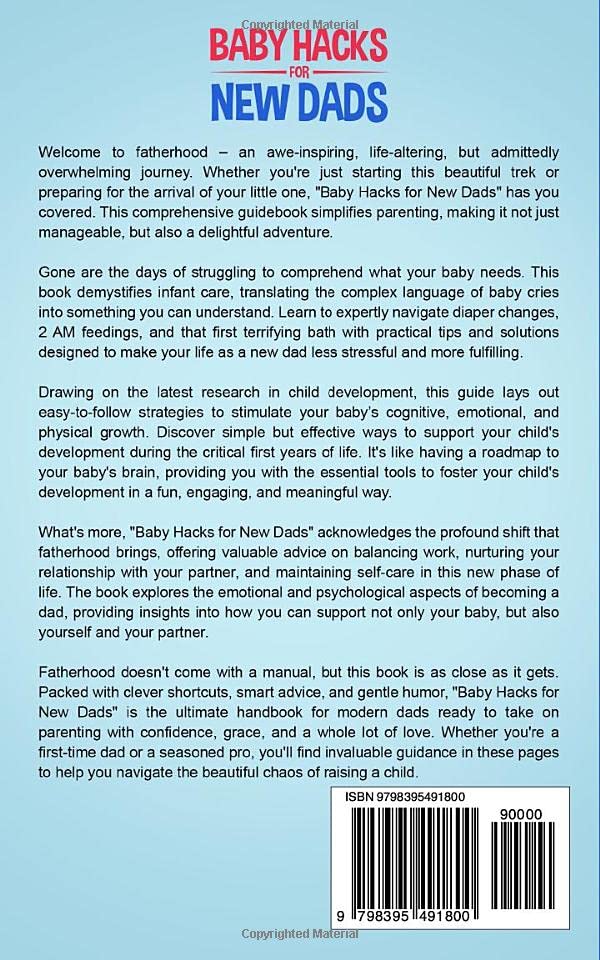


Baby Hacks for New Dads: The Comprehensive Guide to Effortless Parenting, Infant Care, and Baby Development (The Dad-to-Be Handbook: A Guide for First-Time Fathers)
- Parenting & Relationships
- Family Relationships
- Fatherhood
Toddlers (1–3 Years)
Limit recreational screen time to one hour maximum of high-quality, co-viewed content (think Sesame Street, not YouTube autoplay). Use video calls to maintain connection with relatives. Narrate what you're watching together — "Look, the character is feeling sad. How do you think he feels?" — to build language and emotional literacy simultaneously.
School Age (4–8 Years)
Introduce educational apps and games with purpose. Set up a family media plan (the AAP offers a free, customisable one at HealthyChildren.org). At this age, children begin asking for their own devices — the answer can be "not yet" paired with a clear, age-appropriate explanation.
Tweens (9–12 Years)
This is when the pressure for smartphones, gaming platforms, and social media begins in earnest. Delay social media as long as reasonably possible — the evidence on its impact on pre-teen mental health, particularly for girls, is concerning (per a 2023 report from the U.S. Surgeon General). For boys, online gaming communities carry both social benefits and risks that warrant ongoing, non-judgmental conversation.
Teens (13–17 Years)
Shift from rules to agreements. Teenagers who feel policed disengage; those who feel respected in collaborative boundary-setting are more likely to come to you when something goes wrong online. Know the platforms they use. Ask genuine questions. Stay curious rather than reactive.
5. Building a Family Tech Agreement That Actually Works
A family tech agreement is not a list of punishments — it is a shared set of values made visible.
The most effective agreements are co-created (children who help write the rules are more likely to follow them), specific (not "less screen time" but "devices off at 8 p.m. on school nights"), and reviewed regularly as children grow.
| Age Stage | Recommended Daily Screen Time | Key Boundaries | Primary Risk to Watch | Recommended Resource |
|---|---|---|---|---|
| 0–18 months | None (video calls excepted) | No solo screen time | Displacement of sleep & interaction | Baby Hacks for New Dads |
| 18 months–3 years | Up to 1 hr, co-viewed | High-quality content only | Passive consumption habits | Digital Age Dad |
| 4–8 years | 1–2 hrs, with purpose | Device-free meals & bedtime | Content quality & attention span | Pregnancy Guide for Tech-Savvy Men |
| 9–12 years | 2 hrs recreational max | Shared spaces, no private devices | Gaming addiction, cyberbullying | The Single Dad's Guide to Digital Discipline |
| 13–17 years | Agreed limits, not imposed | Collaborative family agreement | Social media & mental health | The Single Dad's Guide to Digital Discipline |
6. Modelling the Behaviour You Want to See
Children learn far more from what fathers do than from what they say. If you want your child to put their phone down at the dinner table, you have to put yours down first — every time, not just when you remember.
This is not about perfection. It is about direction.
Practical Modelling Habits Worth Building
- ✓ Charge your phone outside the bedroom overnight - ✓ Use "Do Not Disturb" during school pick-up and bedtime routines - ✓ Narrate your own tech use ("I'm checking the weather so we know what to wear") - ✓ Acknowledge when you've been too distracted and repair the moment: "I was on my phone just now — tell me again, I'm listening" - ✓ Show children what healthy work-life separation looks like by having a visible "end of work" ritual
Expert Insights
Fatherhood has never been more complex — or more full of possibility. The digital age hands you tools that previous generations of dads could not have imagined: the ability to read a bedtime story from a hotel room in another city, to find expert parenting guidance at midnight when you're worried about a fever, to bond with your teenager over a shared interest that you genuinely find fascinating together. None of those things replace the irreplaceable — your consistent, attentive, loving presence. But used with intention, they amplify it.
The fathers who thrive in this era are not the ones who get technology perfectly right every time. They are the ones who stay curious, repair quickly when they get it wrong, and keep showing up — phone down, eyes up, fully there.
If this guide was useful, save it, share it with a fellow dad, or subscribe to tinymindsworld.com for weekly, evidence-based parenting guidance built for real families.
Sources & References
- Pew Research Center. "Parenting in America: Parental distraction with technology." 2023. pewresearch.org
- Pew Research Center. "Modern Parenthood: Roles of Moms and Dads Converge as They Balance Work and Family." 2019. pewresearch.org
- American Academy of Pediatrics. "Media and Young Minds." Pediatrics, Vol. 138, No. 5. 2016. publications.aap.org
- World Health Organization. "Guidelines on Physical Activity, Sedentary Behaviour and Sleep for Children under 5 Years of Age." 2019. who.int
- Centers for Disease Control and Prevention. "Youth Risk Behavior Survey Data Summary & Trends Report 2023." cdc.gov
- U.S. Surgeon General. "Social Media and Youth Mental Health: The U.S. Surgeon General's Advisory." 2023. hhs.gov
- Lamb, Michael E. "The Role of the Father in Child Development." 5th ed. Wiley, 2010.
- Siegel, Daniel J. & Bryson, Tina Payne. "The Whole-Brain Child." Delacorte Press, 2011.
- Families and Work Institute. "National Study of the Changing Workforce." familiesandwork.org
- American Academy of Pediatrics. "HealthyChildren.org Family Media Plan." healthychildren.org
Frequently Asked Questions
How much screen time is too much for my toddler?
At what age should I give my child their first smartphone?
My child is being cyberbullied. What should I do first?
How do I balance working from home with being present for my kids?
Is gaming with my child actually beneficial, or just an excuse for screen time?
How do I talk to my teenager about social media without them shutting down?
Are there good resources specifically for first-time dads navigating technology?
Was this helpful?
Thanks — your feedback helps us pick what to write next.