Recognising the Signs: What Neurodiversity Looks Like at Ages 3–5
Between ages 3 and 5, many neurodevelopmental differences become clearly visible — and early, targeted support during the preschool years produces the strongest long-term outcomes for children with autism, ADHD, speech delays, and sensory processing differences.

In this article
Your 4-year-old just had their third meltdown this week over the tag in their shirt. Their preschool teacher has mentioned they seem "in their own world" during group time. You're not sure whether this is typical toddler behaviour or something worth exploring further — and the uncertainty is exhausting.
You're not alone. According to the U.S. Centers for Disease Control and Prevention (CDC), approximately 1 in 36 children in the United States is diagnosed with autism spectrum disorder, and ADHD affects roughly 9.8% of children aged 3–17. Many of these children are first identified — or first missed — during the preschool years.
This guide will help you:
1. Recognising the Signs: What Neurodiversity Looks Like at Ages 3–5
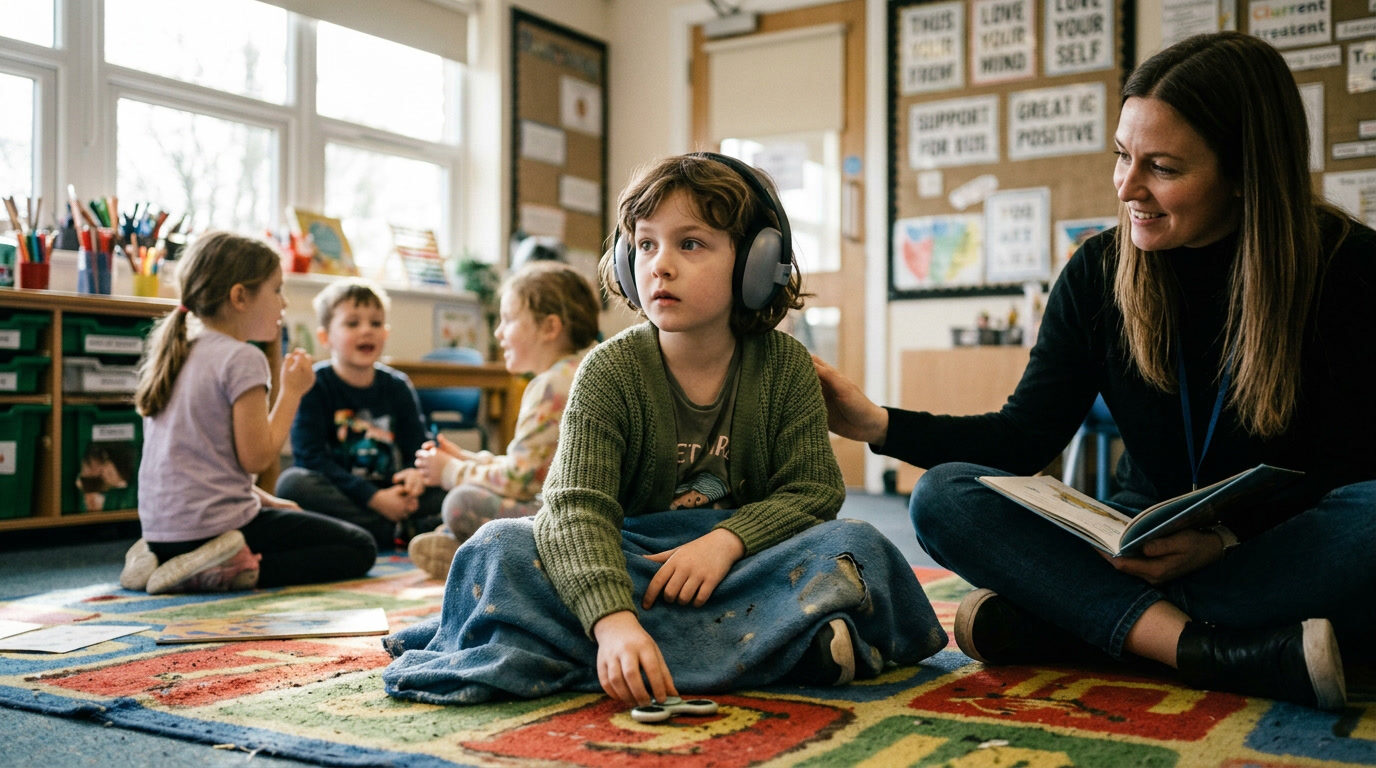
The preschool window is when many neurodevelopmental profiles come into sharper focus. Recognising early signs is not about labelling your child — it's about understanding how they experience the world so you can meet them there.
Autism Spectrum Disorder (ASD)
Signs that commonly emerge or become more noticeable between 3 and 5 include: - Limited or inconsistent eye contact - Preference for parallel play over interactive play - Delayed or atypical language (echolalia, scripting, or limited speech) - Intense, focused interests - Strong reactions to sensory input (textures, sounds, lights, smells) - Rigid routines and distress at transitionsADHD
- Difficulty sustaining attention during structured activities - Impulsivity that goes beyond typical preschool behaviour - Hyperactivity that is noticeably more intense or persistent than peers - Trouble following multi-step instructionsSensory Processing Differences
- Extreme sensitivity to clothing textures, food textures, or loud environments - Seeking intense sensory input (crashing, spinning, chewing on objects) - Difficulty transitioning between activitiesSpeech and Language Delays
- Not combining two words by age 2 (a red flag that may not be addressed until preschool) - Difficulty being understood by unfamiliar adults by age 3 - Limited vocabulary compared to peersAction today: Write down three to five specific behaviours you've noticed, with examples. This list will be invaluable when you speak to your paediatrician.



LESONG Sensory Toys Kids Toddlers-Social Emotional Feelings Toys Special Needs, Texture Shapes Learning Toy Preschool Fidget Classroom Must Haves, Calm Down Tools Autistic Children, Stocking Stuffers
- Texture Sensory Toys: Newest LESONG sensory fidget expression toys set includes 6 different fun faces expressi
- Social Emotional Learning Toys: This emotion-sensory bin set is designed to encourage discussion and conversat
- Calming Sensory Play Therapy Toys: through touching and feeling those 6differnt sensory texture, our Express Y
2. Getting a Diagnosis: How Evaluations Work for Preschoolers
An evaluation is the first step toward getting your child the right support — and in many countries, it costs you nothing.
In the United States
Under the Individuals with Disabilities Education Act (IDEA), every child aged 3–5 is entitled to a free, comprehensive developmental evaluation through their local school district if a disability is suspected. This is called an evaluation under Part B of IDEA. You do not need a doctor's referral — you can request it directly from your school district in writing.After evaluation, eligible children receive an Individualized Education Program (IEP), a legally binding document that outlines specific goals and services (speech therapy, occupational therapy, behavioural support) delivered at no cost to families.
In the UK
The National Health Service (NHS) and local authorities jointly provide the Education, Health and Care (EHC) needs assessment for children whose needs cannot be met through standard school support. The Royal College of Paediatrics and Child Health recommends that any concern about autism or developmental delay be referred promptly to a community paediatrician or specialist team.What Evaluations Typically Include
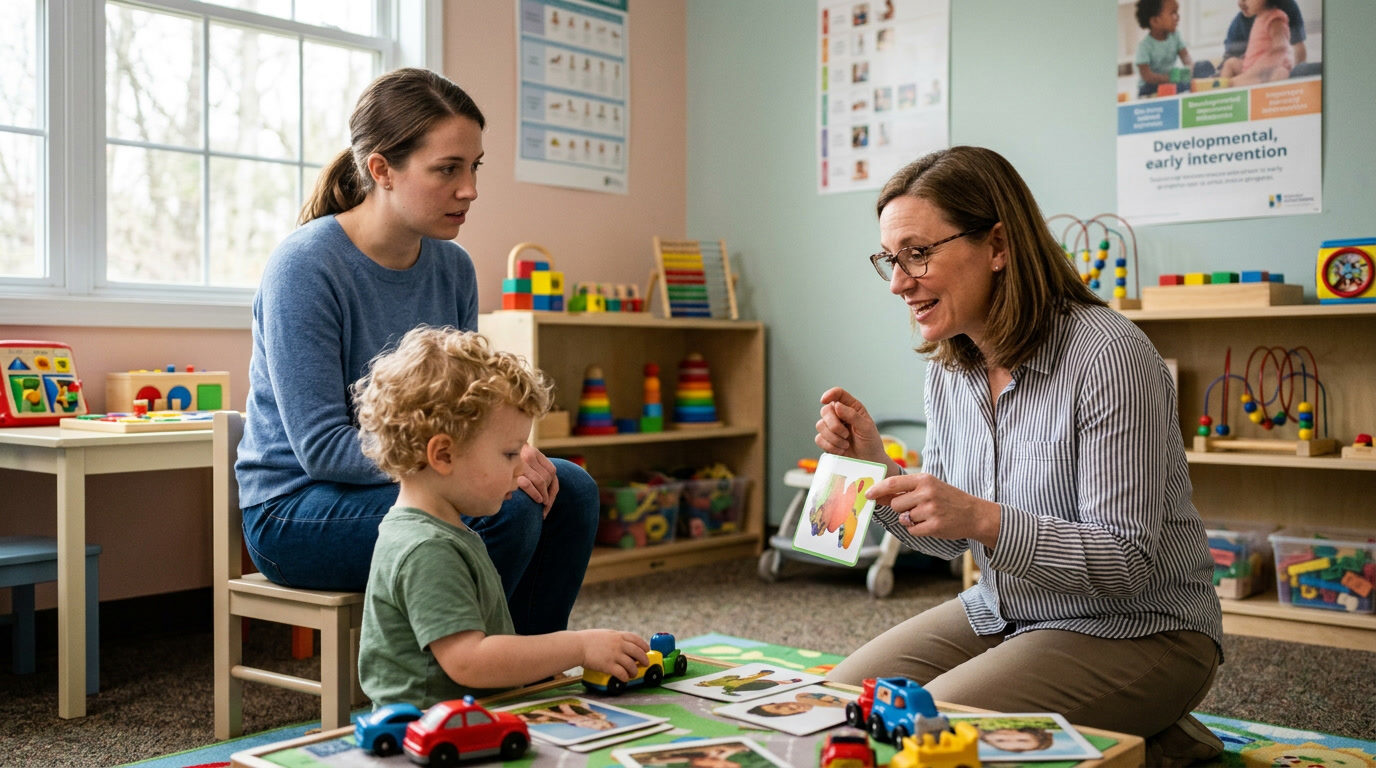
- Developmental history interview with parents - Direct observation of the child at play - Standardised assessments (cognitive, language, adaptive behaviour) - Input from preschool teachersAction today: Draft a brief letter to your school district requesting a special education evaluation under IDEA. The National Dissemination Center for Children with Disabilities (NICHCY/CPIR) has free template letters at cpir.org.
3. Sensory Regulation: Tools That Actually Help at Home
Sensory processing differences are among the most common — and most manageable — challenges for neurodivergent preschoolers. The goal isn't to eliminate sensory seeking or sensory avoidance; it's to give your child predictable, safe ways to regulate their nervous system.
Understanding the Sensory Diet
Occupational therapists often recommend a sensory diet — a personalised schedule of sensory activities built into the day. Think of it less like a meal plan and more like a movement and stimulation schedule that keeps your child's nervous system in a regulated state.Common sensory diet activities for 3–5 year olds include: - Proprioceptive input: jumping on a trampoline, carrying a heavy backpack, pushing/pulling heavy objects - Vestibular input: swinging, spinning in a chair, rolling on a yoga ball - Tactile input: play dough, kinetic sand, textured fidget toys, water play
Sensory processing is the foundation for all learning. When a child's sensory system is dysregulated, they cannot attend, engage, or connect.
— American Occupational Therapy Association (AOTA) (2020)
Fidget Tools for Focus and Calm
Fidget tools are not distractions — research supports their use for improving attention and reducing anxiety in children with sensory differences and ADHD. For preschoolers, the best tools are durable, safe, and offer varied tactile input.


Sensory Autism Toys for Kids - Textured Stretchy Fidget Toys for Stress - Sensory Toys Special Needs for Autistic Toddlers Boys Girls Easter Baskets Stuffers Gifts, Treasure Prizes Classroom
- Sensory Toys for Kids: This fidget pack includes Stretchy noodles that glow in the dark, shimmer in the light,
- Fidget Toys: With even better sensory stimulation than the original. Each string has a unique texture and tens
- Quantity & Colors: The string noodles fidget toy set includes 8 stretchy strings with 8 colors,Each unit is 10
The LESONG Stretchy Fidget Noodles are a practical starting point — the varied textures and resistance levels mean your child can find the input that works for them. Similarly, ZaxiDeel Squishy Sensory Fidget Toys offer six distinct textures and shapes that double as a colour and geometry learning tool, which is a nice bonus for preschool-age children.
For visual calming, the Learning Resources Sensory Trio Fidget Tubes — with glitter, flowing sand, and cascading beads — are particularly effective for children who need visual anchoring during transitions or emotional escalation.
Action today: Identify one sensory activity your child already gravitates toward (spinning, squeezing, chewing). Build one scheduled, five-minute session of that activity into your morning routine this week.
4. Emotional Regulation: Teaching Feelings When Words Are Hard
Many neurodivergent preschoolers experience emotions intensely but struggle to identify, name, or communicate them — a gap that drives much of the challenging behaviour families find most exhausting.
Why Preschoolers with Neurodevelopmental Differences Struggle with Emotions
The prefrontal cortex — responsible for emotional regulation — is immature in all 3–5 year olds. For children with autism or ADHD, this developmental lag is often more pronounced, and co-occurring anxiety is extremely common. The CDC notes that approximately 40% of children with autism also meet criteria for an anxiety disorder.Practical Strategies
Name it to tame it. Research by Dr. Dan Siegel, clinical professor of psychiatry at UCLA, supports the practice of labelling emotions in real time to help children regulate. "You're feeling really frustrated right now — your body needed that toy."
Visual supports. Emotion cards, visual schedules, and "feelings charts" reduce the language burden for children who process visually. Post a simple five-emotion chart at eye level in your home.
Sensory tools for emotional regulation. The LESONG Social Emotional Feelings Toys are designed specifically for this overlap — six textured faces representing different emotions help children connect physical sensation with emotional state, which is a meaningful bridge for sensory-seeking preschoolers.

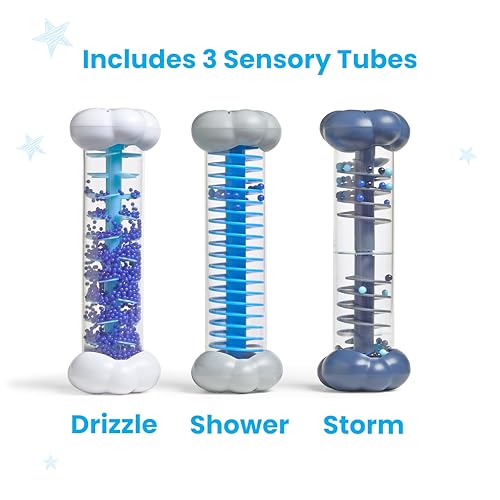
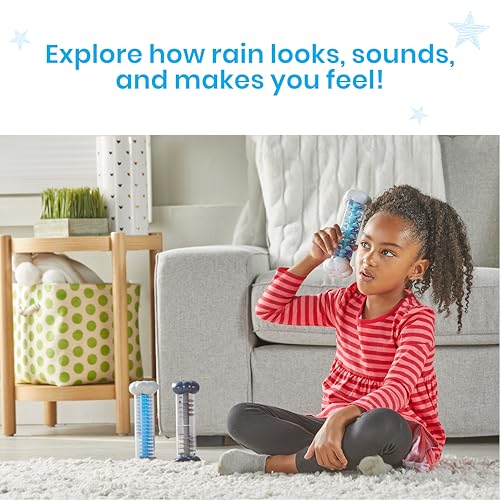
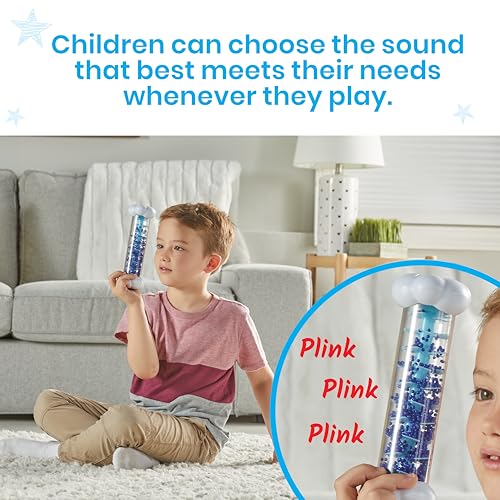
hand2mind Calming Sensory Tubes, Rain Sound Fidget Tubes, Rain Stick Instrument, Toddler Sensory Toys, Calm Down Corner Supplies, Science Classroom Weather Toys, Play Therapy Activities
- RAIN MAKER SENSORY TOY: Bring soothing rain sounds into calm down time with sensory tubes that invite kids to
- SENSORY SEEKING TOYS: Each tube produces a distinct rain pattern so children can choose the sound that meets t
- CALMING CORNER ITEMS: The relaxing audio and visual input promotes emotional regulation and deep breathing, gi
The hand2mind Calming Sensory Tubes bring an auditory dimension to calm-down time. The rain sounds support mindfulness and deep breathing — skills that, with repetition, become a child's self-regulation toolkit.
Action today: Create a simple "calm-down corner" in one room of your home — a beanbag, two sensory tools, and a feelings chart. Introduce it during a calm moment, not during a meltdown.
5. Navigating Preschool: Advocating for Your Child in the Classroom
The preschool classroom can be overwhelming for neurodivergent children — unpredictable noise, frequent transitions, unstructured social demands, and sensory environments that weren't designed with them in mind.
What Inclusive Preschool Support Looks Like
Under IDEA in the US, children with IEPs are entitled to services in the least restrictive environment (LRE) — which for most preschoolers means an inclusive classroom with supports, not a separate special education setting. Supports might include:Having Productive Conversations with Teachers
- Share your child's sensory profile in writing at the start of the year - Ask the teacher to identify two or three specific triggers they've observed - Request a brief weekly check-in (even a two-minute verbal update at pickup) - Bring the Learning Resources Sensory Trio Fidget Tubes or Goliath Jelly Blox to the classroom as tools the teacher can use during transitions or quiet time
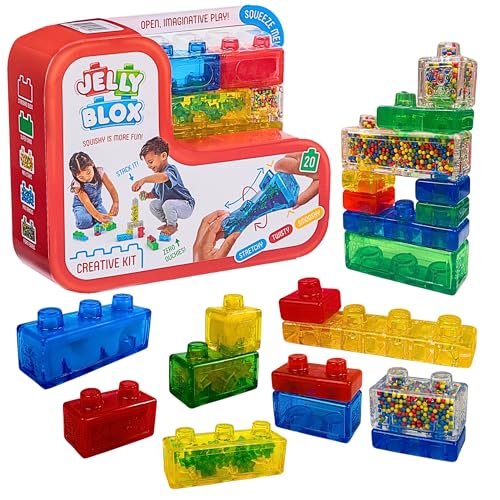


Goliath Jelly Blox Creative Kit | Includes 20 Blocks | Toddler & Preschool Building Blocks Kids Can Squeeze, Stretch, Squish | MESH ACCREDITED | Safety Tested & Ouch-Free | Sensory Play Toy Ages 2+
- CREATIVITY UNLEASHED: Jelly Blox are a unique building system featuring soft, safe, sensory construction that
- LEARN AND PLAY: Jelly Blox supports key developmental milestones and contains several special blocks filled wi
- COMPATIBILITY: Jelly Blox Creative Kit includes 20 colorful blocks for hours of construction fun, and it's com
Action today: Write a one-page "About Me" document for your child's teacher: what calms them, what triggers them, what they love, and how they communicate distress. Teachers consistently say this is the most useful thing a parent can provide.
6. Supporting the Whole Family: Avoiding Caregiver Burnout
Raising a neurodivergent preschooler is genuinely demanding. Studies published in the journal Autism (Bauminger & Kasari, 2010; Hayes & Watson, 2013) consistently show that parents of children with autism experience significantly higher rates of stress, anxiety, and depression than parents of neurotypical children. Acknowledging this is not weakness — it's clinical reality.
Building Your Support Network
Sibling Considerations
If you have other children, age-appropriate explanations matter. "Your brother's brain works differently — he sometimes needs more help with big feelings" is honest and accessible for a 5–8 year old sibling.Action today: Identify one thing you can hand off this week — a task, a school run, a therapy appointment — and ask for help with it. Practice saying: "I need support with ___."
7. Sensory Tool Comparison: Choosing the Right Fidget for Your Preschooler
| Sensory Tool Type | Best For | Sensory Input | Ease of Use (Age 3–5) | Classroom-Friendly? | Recommended Product | Price |
|---|---|---|---|---|---|---|
| Stretchy fidget strings | Tactile seekers, focus support | Proprioceptive + tactile | ✓ Easy | ✓ Yes | LESONG Stretchy Fidget Noodles | $13.99 |
| Emotion texture faces | Emotional regulation + sensory | Tactile + social-emotional | ✓ Easy | ✓ Yes | LESONG Emotion Sensory Toys | $12.99 |
| Squishy shape fidgets | Tactile + learning (shapes/colours) | Tactile + visual | ✓ Easy | ✓ Yes | ZaxiDeel Squishy Sensory Fidgets | $9.99 |
| Visual fidget tubes (glitter/sand/beads) | Visual seekers, transition support | Visual + vestibular | ✓ Easy | ✓ Yes | Learning Resources Sensory Trio Tubes | $17.59 |
| Soft building blocks (squeeze/squish) | Creative play + tactile input | Tactile + proprioceptive | ✓ Easy | ✓ Yes | Goliath Jelly Blox | $16.99 |
| Rain sound sensory tubes | Auditory regulation, mindfulness | Auditory + visual | ✓ Easy | ✓ Yes | hand2mind Calming Sensory Tubes | $14.49 |
Expert Insights
The preschool years can feel like a race against an invisible clock — you know something matters, you're not always sure what to do, and the systems designed to help can feel opaque and slow. But here's what the research keeps showing: the children who do best are the ones whose parents noticed, asked questions, and refused to wait.
You are already doing that. The fact that you're reading this, building your knowledge, and looking for tools — that is early intervention in action. Every calm-down corner you build, every fidget toy you try, every IEP meeting you walk into prepared — it compounds.
The most powerful thing a neurodivergent child can have is a parent who understands them. Save this guide, share it with your child's teacher, and come back to it when the next challenge arrives. You've got this.
Sources & References
- Centers for Disease Control and Prevention. "Data & Statistics on Autism Spectrum Disorder." 2023. https://www.cdc.gov/autism/data-research/index.html
- Centers for Disease Control and Prevention. "Attention-Deficit/Hyperactivity Disorder (ADHD): Data and Statistics." 2022. https://www.cdc.gov/adhd/data/index.html
- American Academy of Pediatrics. "Identifying Infants and Young Children with Developmental Disorders in the Medical Home: An Algorithm for Developmental Surveillance and Screening." Pediatrics, 2006; updated policy reaffirmed 2020. https://publications.aap.org
- American Academy of Pediatrics. "ADHD: Clinical Practice Guideline for the Diagnosis, Evaluation, and Treatment of Attention-Deficit/Hyperactivity Disorder in Children and Adolescents." Pediatrics, 2019. https://publications.aap.org
- American Occupational Therapy Association. "Sensory Integration and Processing Fact Sheet." 2020. https://www.aota.org
- U.S. Department of Education. "Individuals with Disabilities Education Act (IDEA), Part B." https://sites.ed.gov/idea/
- Royal College of Paediatrics and Child Health. "Autism Spectrum Disorder: Guidance for Clinicians." 2021. https://www.rcpch.ac.uk
- Hayes, S.A., & Watson, S.L. "The Impact of Parenting Stress: A Meta-Analysis of Studies Comparing the Experience of Parenting Stress in Parents of Children with and without Autism Spectrum Disorder." Journal of Autism and Developmental Disorders, 2013. https://doi.org/10.1007/s10803-012-1604-y
- Fedewa, A.L., & Erwin, H.E. "Stability Balls and Students with Attention and Hyperactivity Concerns: Implications for On-Task and In-Seat Behavior." American Journal of Occupational Therapy, 2011.
- Center for Parent Information and Resources (CPIR). "Writing a Letter Requesting a Special Education Evaluation." https://www.parentcenterhub.org
Frequently Asked Questions
What age can a child be diagnosed with autism?
What is the difference between an IEP and a 504 plan?
My child's preschool says they don't qualify for services — what can I do?
Are sensory fidget toys actually evidence-based?
How do I talk to my preschooler about their diagnosis?
What if I suspect ADHD but my child's paediatrician says they're too young to diagnose?
Can diet or supplements help neurodivergent preschoolers?
Was this helpful?
Thanks — your feedback helps us pick what to write next.