Understanding Your Highly Sensitive Child: Signs and Calm Support
A highly sensitive child is one who notices and feels more than most: sounds, textures, moods, changes. It is a temperament trait, not an illness, and it needs a calm, warm, predictable response rather than fixing. Get help if worries or avoidance start to take over daily life.
In this article
TL;DR: Quick summary
A highly sensitive child is one who notices and feels more than most: sounds, textures, moods, changes. It is a temperament trait, not an illness, and it needs a calm, warm, predictable response rather than fixing. Get help if worries or avoidance start to take over daily life.
What you'll get
About 30 minutes to read. Short on time? Read the bold lines and the Key Takeaways near the end.
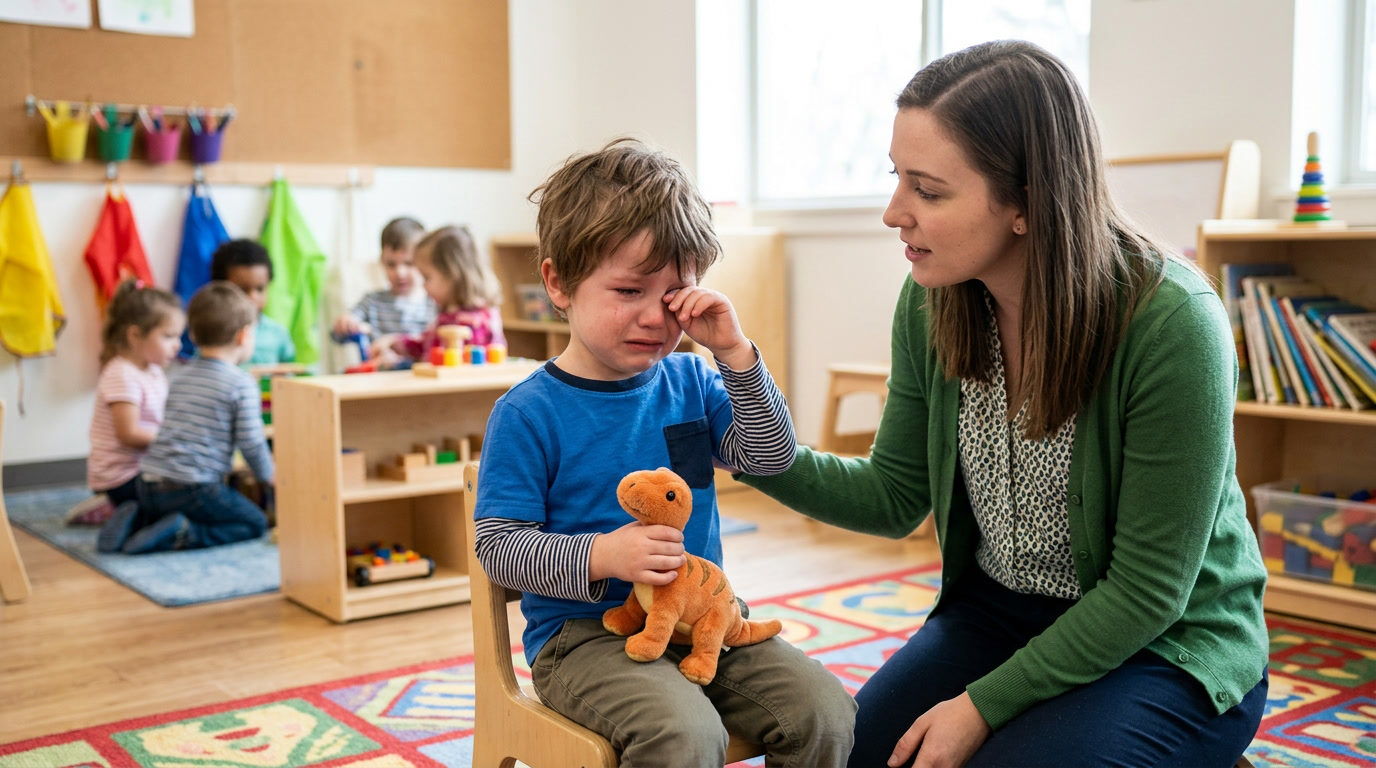
Picture a six year old who loves school but comes home and falls apart. The hand dryer in the toilets made her cry, the label in her jumper itched all day, and a classmate's sad story left her teary at bedtime. Someone has told you she is "too sensitive", and you are not sure whether to toughen her up, protect her or worry.
If that sounds familiar, this article is for you. It is written for parents and carers of children from babies up to age 12, and it is the kind of talk I would have with you across my desk in clinic.
By the end you will know what high sensitivity actually is and how to tell it apart from things that need extra support. You will have words to use during a meltdown, at the school gate and at bedtime. You will also know when it is time to ask for help.
Sensitivity is not something to cure. It is something to understand, and once you do, daily life usually gets a good deal calmer.
What does it mean to be a highly sensitive child?
A highly sensitive child takes in more of the world and feels it more deeply: sounds, textures, other people's moods, sudden changes. Researchers treat it as a temperament trait, not a problem to fix. Your child is wired to notice, and that has strengths as well as costs.
What the research says
Researchers have built questionnaires to measure this trait in children. One team developed the Highly Sensitive Child Scale and used it to identify sensitivity groups, with analyses across five studies and four UK samples of young people aged 8 to 19. In plain terms, sensitivity can be measured, and children really do sit at different points along a range.
A German team later tested a 21 item version of the same scale. They described how this trait is measured:
It is commonly measured through the temperament trait of Sensory Processing Sensitivity (SPS).
NIH National Library of Medicine, German study of the highly sensitive child scale
In everyday words, Sensory Processing Sensitivity means your child's brain processes sensory and emotional information more deeply. The word "temperament" matters here. It is the way a child is built to respond to the world, a bit like being naturally outgoing or naturally cautious.
It is a temperament trait, part of how the child is built, and it is not an illness.
What it can look like at different ages
The trait shows up differently as children grow, but the thread is the same: more input, bigger response, longer recovery.
No child ticks every box, and many children show some of these things without being highly sensitive. Think of the list as a pattern to look for, not a test to pass.
The strengths people forget
Sensitive children are often thoughtful, kind, observant and creative. They notice when a friend is left out. They often take real care over their work and feel deeply moved by music, nature and stories.
They also learn fast from a calm correction. A quiet word often does more than a raised voice.
The trade off is that they get overloaded sooner. Overload tends to look like crying, irritability, clinging or shutting down, and it is easy to mistake for bad behaviour.
Common mistakes
If you would like a full length book on the topic, The Highly Sensitive Child is one I would point parents to as a starting place.


The Highly Sensitive Child: Helping Our Children Thrive When The World Overwhelms Them
- Health, Fitness & Dieting
- Mental Health
- Image Unavailable Image not available forColor
How do I tell sensitivity from anxiety, autism or a sensory problem?
Sensitivity is a trait. Anxiety, autism and sensory processing difficulties are patterns that can get in the way of daily life. They can overlap, and a child can have more than one. The test is how much it limits your child, not which label fits best.
Sensitivity versus anxiety
A sensitive child reacts strongly, then recovers and gets on with things. An anxious child tends to worry ahead of time, avoid the thing they fear, and stay stuck.
Here is an example. One child cries at the fireworks, is clingy for the evening, and is playing happily the next day. Another refuses to go into the garden for weeks in case fireworks happen again. The first looks like sensitivity. The second is the kind of avoidance that deserves a closer look.
Duration and impact are what clinicians weigh. Anxiety in children is considered a disorder if worries or fears interfere with their life for more than six months. Another review puts it similarly: an anxiety disorder is considered when symptoms persist for at least 6 months, are highly intense, and cause harm to the individual.
Please do not use those lines to diagnose your child at the kitchen table. Use them to understand why a clinician will ask "how long?" and "what has your child stopped doing?"
Sensitivity versus sensory processing difficulties
Sensory processing difficulties describe a child who struggles to handle ordinary sensory input, such as lights, sounds, touch or movement, to a degree that disrupts life.
The labels can confuse parents. Child Mind Institute notes that many parents are confused when they learn their child has a diagnosis for something that isn't considered a disorder by psychiatrists and some others. My practical advice is to ask what a label means for support, rather than arguing about the label itself.
Sensitivity and autism
Some autistic children are very sensory sensitive, and some sensitive children are not autistic. Signs that need a proper assessment include differences in social communication, repetitive play or routines, and strong distress at change that is out of proportion.
If you want a clearer view of the early signs, what neurodiversity looks like at ages 3 to 5 is a good place to start. Autism can also look different from child to child, and some children hold it together at school and fall apart at home.
Five questions to ask yourself
- Does my child settle in a reasonable time after a hard moment?
- Is this limiting what they do, such as school, sleep, friends or play?
- Has it lasted for months rather than days or weeks?
- Does it happen in every setting, or only in particular places?
- Are there other differences, such as in speech, play or making friends?
If the answers point to limits, long duration or several settings, talk to your paediatrician. If the answers are mostly "yes, they settle" and "no, it's not limiting", you are most likely looking at temperament.
Common mistakes
What do sensory triggers look like day to day?
Triggers are the everyday things that feel too loud, bright, scratchy or sudden to your child: hand dryers, tags, crowded rooms, surprise touch. Reactions range from covering ears to refusing to go in. Spotting your child's pattern is the first step to easing it.
Sound
Noise is the trigger parents notice first. An NHS children's therapy leaflet lists example noise triggers including vacuum cleaners, hand dryers, hair dryers, fire alarms, noisy crowds, fireworks, and motorbikes, lorries and cars.
Child Mind Institute adds that some children cannot tolerate bright lights and loud noises like ambulance sirens. Others are distracted by background noises that other people don't seem to hear.
An NHS leaflet on sound sensitivity (hyperacusis) in children offers some reassurance:
This type of sensitivity to sound is common in children and usually disappears as they get older.
That is good news for many families, though it does not mean you should wait if the sensitivity is distressing or limiting your child.
Touch and clothes
Some children refuse clothing because it feels scratchy or irritating. Others are fearful of surprise touch and avoid hugs and cuddling, even with familiar adults.
That second point matters for relatives. A child who backs away from a hug is not being rude. Their body is saying "too much, too fast."
Here are some words you can use with a relative: "She's not ready for a hug right now. Would you like to wave, give a high five or blow a kiss instead?" Giving the child a choice protects them and keeps the relationship warm.
Food and smell
Many sensitive children are also fussy about textures, smells and mixed foods. It is not stubbornness. A soggy tomato really can feel unpleasant to them.
If mealtimes are a battle, picky eating has its own set of strategies that fit well alongside everything here.
Feelings and surprises
Not every trigger is physical. Many sensitive children are thrown by emotional input: a scary scene in a cartoon, an argument in the next room, a sudden change of plan, or a classmate in tears.
Because they absorb other people's moods, they can look moody themselves. Often they are simply carrying somebody else's feelings as well as their own.
What to look for
Common mistakes
Children's reactions to noise and touch are real responses to real input. Your job is not to argue with the reaction but to work out what lies behind it.
If you want a more structured guide, Empowering Your Highly Sensitive Child is a parent's guide that you can dip into a chapter at a time.
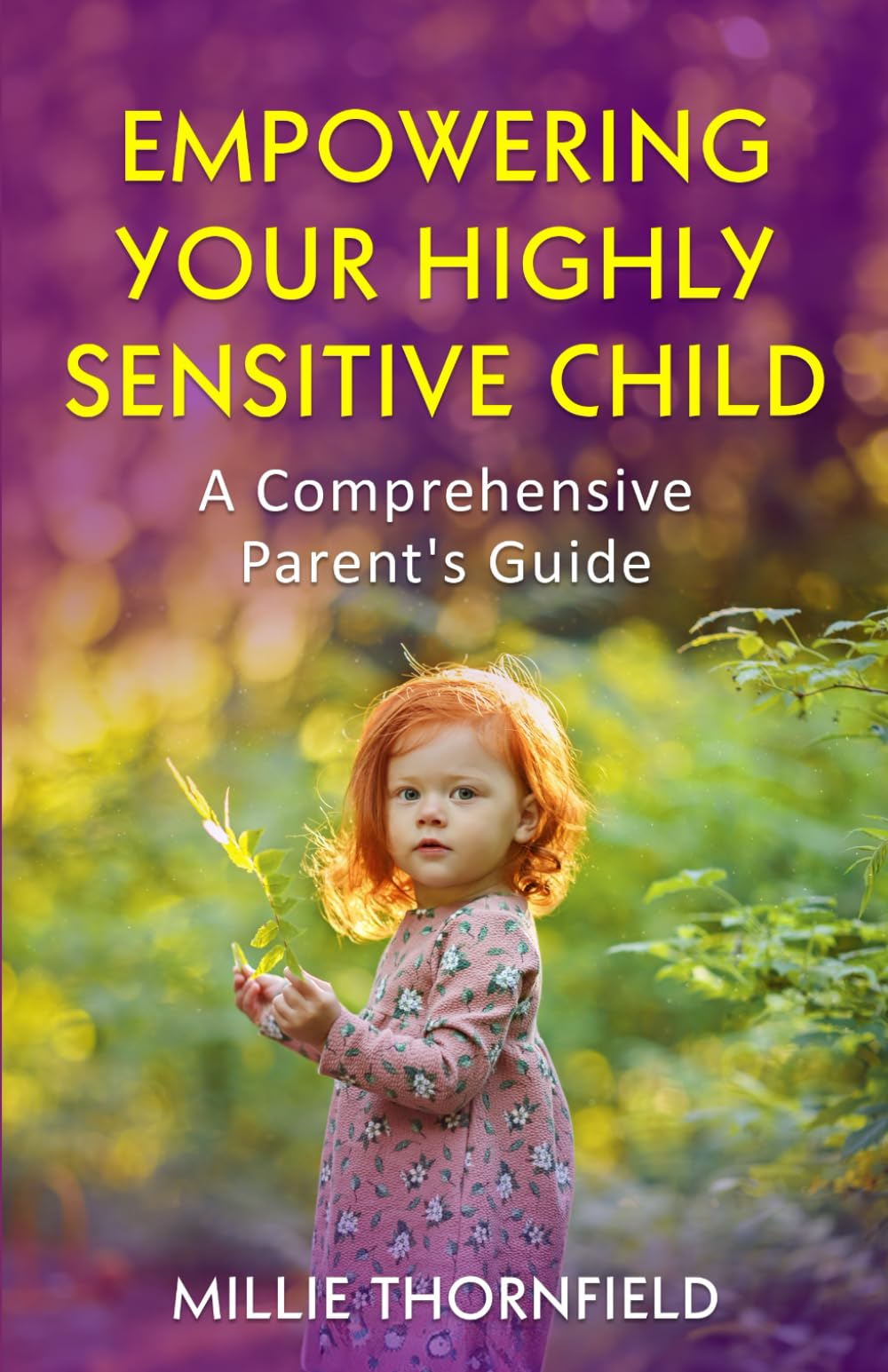

Empowering Your Highly Sensitive Child: A Comprehensive Parent's Guide (Parenting Skills)
- Education & Teaching
- Schools & Teaching
- Special Education
How can I make home calmer and handle big meltdowns?
Lower the load first, then support the feeling. Cut avoidable noise, light and surprises, keep routines predictable, and give your child a quiet place to reset. When a meltdown comes, stay close, speak softly, say little, and talk about it only once your child is calm.
Shape the environment
Child Mind Institute's advice is to pay attention to what your child is reacting to. For example, if he is sensitive to loud noises or bright lights, try to minimize them in his environment. You do not need to bubble wrap the house. You are simply removing the extra noise so there is room for the noise that cannot be avoided.
Some small changes make a surprising difference:
A note on ear defenders and ear plugs
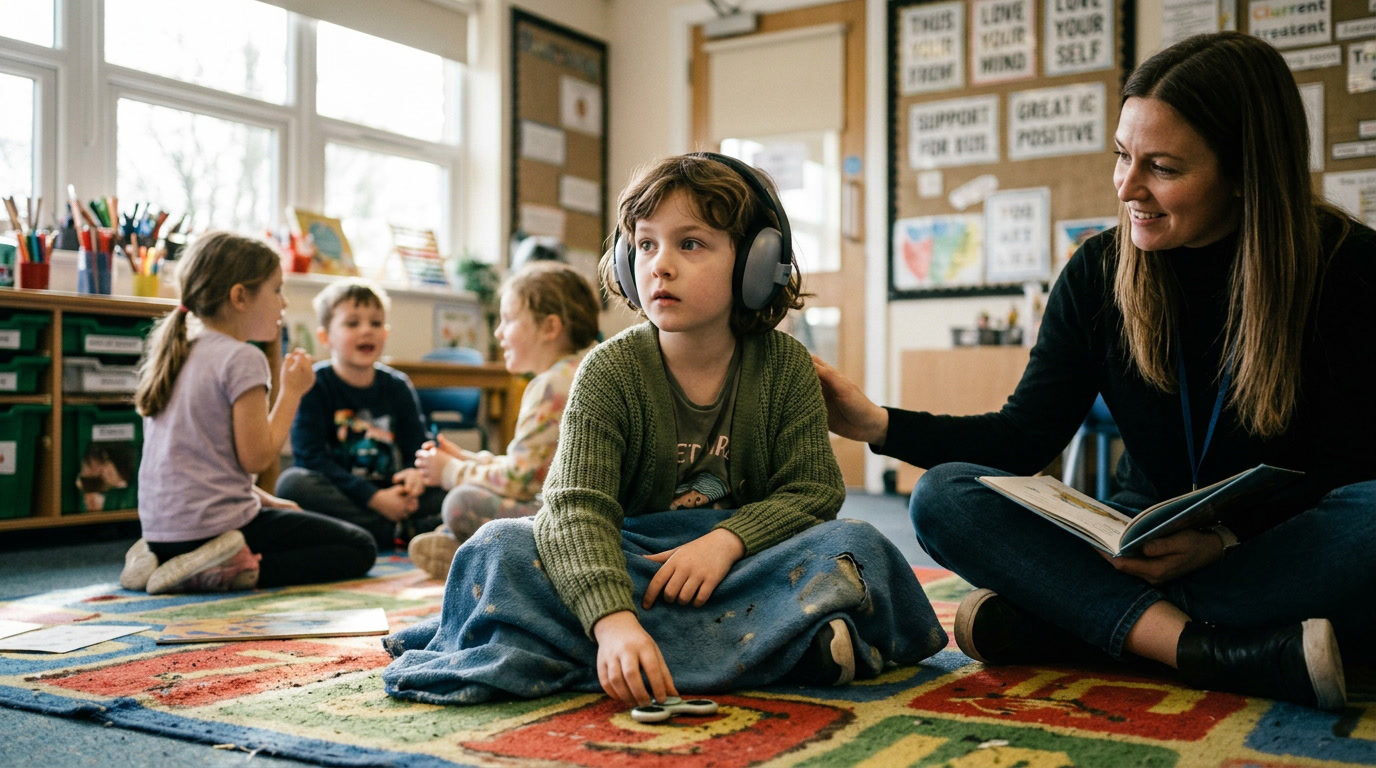
Parents often ask about ear defenders. The NHS leaflet on sound sensitivity advises trying to avoid giving your child ear plugs or ear defenders. Ask your doctor or an audiologist what makes sense for your child before buying any, especially for everyday use.
Give warning before changes
Sensitive children cope better when they know what is coming. Instead of "Shoes on, we're leaving!", try:
"In a few minutes we'll put our shoes on and go to the shops. It will be busy. Do you want to carry the list?"
Warning plus a small job gives your child a sense of control. That tends to cut down on resistance.
What to do during a meltdown
A meltdown is not a tantrum with a plan behind it. It is a nervous system flooded past what it can handle. Your child cannot reason, listen or learn in that moment. Try these steps:
- Make the space safer and quieter. Dim lights, switch off the TV, move away from the crowd if you can.
- Get down to their level and stay close, but do not crowd them.
- Use very few words, in a low, slow voice: "I'm here. You're safe. Take your time."
- Offer something simple when they are ready, such as water, a blanket or a squeeze.
- Wait. Do not ask questions or try to teach.
- When they are calm, say: "That was a big one. I'm proud of how you calmed down."
Talk about it later
Later, once everyone is calm, you can say: "Earlier the noise got too big. What was the hardest part?" Listen without fixing. Then ask: "Next time, what would help?"
Over time your child learns to spot overload early and ask for what they need. That is how they build real coping skills.
Common mistakes
If you want ideas for children who react strongly, Big Reactors is a practical parenting book written with that in mind.
Does the way I parent matter more for a sensitive child?
It seems to, yes. In one study, highly sensitive children managed feelings better than their peers when they pictured a warm, responsive parent, and worse when that picture was low in warmth. Your steady, kind response is your strongest tool.
What the study found
The study I am describing included 118 Italian children, with an average age of 6.5, who took part with their mothers. The researchers looked at how children's inner picture of their relationship with a parent related to how well they handled feelings.
When the picture was low in maternal warmth and responsiveness, highly sensitive children showed poorer emotion regulation. When it was shaped by a sensitive and empathic attachment representation, they showed better emotion regulation than less sensitive peers.
Please hold this loosely. It is a single, fairly small study, it involved mothers only, and it cannot prove cause and effect. The same idea may apply to fathers, grandparents and other caregivers, but this study did not test that.
A wider review of studies looked at differences in sensitivity to parenting depending on child temperament. It found that children with a more difficult temperament were more vulnerable to negative parenting than children with an easier temperament. That is about temperament in general, not only sensitivity, so treat it as a hint rather than a rule.
The takeaway is not "you must be perfect." It is that your responses count for sensitive children, and that is encouraging, because responding with warmth is something you can practise.
What sensitive responding looks like
In practice, it means noticing your child's cues, naming what you see, and staying steady. Here are some phrases:
"I can see that was too loud for you." "You're feeling a lot right now. I'm right here." "It's okay to need a break. Let's find a quiet spot."
Notice that none of these fix the problem. They tell your child their feelings make sense and that you can handle them.
Discipline still matters
Warmth does not mean no limits. Sensitive children need clear, predictable boundaries, delivered calmly. A raised voice or a harsh punishment can land far harder on them than on a child who shrugs it off.
Try: "I won't let you hit. I can see you're upset. Let's go and sit for a minute." Same boundary, calm delivery, no shame.
When you get it wrong
You will. Every parent shouts sometimes, and sensitive children can be exhausting. What matters is repair. Try: "I was too loud earlier. That wasn't your fault. I'm sorry, and I love you."
Repair shows your child that relationships can bend without breaking, which is one of the best lessons a sensitive child can learn.
Look after your own nervous system
Some parents of sensitive children may be sensitive themselves. A noisy, overstimulating day can leave you short tempered, and your child feels it.
If that rings true, The Highly Sensitive Parent speaks to you rather than to your child. For a gentler overall approach, Positive Parenting Solutions to Raise Highly Sensitive Children is another option.

The Highly Sensitive Parent: Be Brilliant in Your Role, Even When the World Overwhelms You
- Health, Fitness & Dieting
- Mental Health
- Join Audible Standard for only $0.99 a month for the first 3 months, and get a $20 bonus for Audible.com…
Common mistakes
How do I help my sensitive child at school and with friends?
Tell the teacher what helps in plain words, ask for a few small adjustments, and give your child scripts for tricky moments. Sensitive children often hold it together all day and fall apart at home, so expect an after school crash and plan a soft landing.
Talk to the teacher
Teachers meet many children and cannot guess what is happening inside yours. A short, friendly, specific message works best. For example:
"Hi, I wanted to share a few things about Maya. She is a very sensitive child. Loud noises, sudden changes and being corrected in front of others upset her. A quiet heads up before a fire drill and a private word when something goes wrong would help her a lot. She is thoughtful and tries hard, and she settles fast when she feels safe."
This does three useful things. It names the strengths, it explains what helps, and it avoids sounding like blame.
Small adjustments to ask for
If your child's behaviour at school is getting them into trouble, behaviour problems in class can have many causes, and sensory overload is one of them. It is worth sharing that with the teacher.
Scripts your child can use
Children often find it easier to speak up when they have practised the words. Role play these at home:
"I need a break. Can I go to the quiet corner?" "That's too loud for me. Can we play over there?" "I'm not ready to talk about it yet. Can I tell you later?"
Some children prefer a silent signal, such as a small card on the desk. Agree the system with the teacher in advance.
Friendships
Sensitive children are often slow to warm up. They watch before they join in. That is not shyness to be fixed. It is how they check that a situation feels safe.
Support one friend at a time rather than big groups. A quiet playdate at home usually works better than a loud party. If your child finds social situations hard, social skills groups can give them structured, low pressure practice.
The after school crash
Many children are quiet at school and then melt down at the door. It is not a sign that school is going badly. It means your child used all their energy to cope and has nothing left.
Try this: no questions for the first while, a snack, a quiet activity and some time alone. Ask "How was your day?" later, at the dinner table or at bedtime, when they have recharged.
Birthday parties and busy events
You do not have to avoid parties, but you can plan. Arrive early before the crowd, agree a signal for leaving, and pick a quiet corner to retreat to. Tell your child in advance: "If it gets too loud, we'll step outside for a few minutes. No problem."
Common mistakes
A short book can help you explain things to grandparents or teachers. Understanding the Highly Sensitive Child is a quick read you can pass on to others.

Understanding the Highly Sensitive Child: Seeing an Overwhelming World through Their Eyes (A Nutshell Guide)
- Health, Fitness & Dieting
- Psychology & Counseling
- Child Psychology
When should I get help, and who can help?
Get help when your child's reactions or worries stop them doing things they could otherwise do, such as sleeping, playing or going to school, or when they last for months. Start with your paediatrician or doctor; they can talk through your concerns with you and point you to the right support.
Signs it may be more than sensitivity
The American Academy of Pediatrics says that anxiety which gets in the way of normal activities, such as sleeping alone at night, playing outside or going to school, is a point at which to seek help. Cleveland Clinic adds that you should call your healthcare provider if your child shows signs of anxiety that don't go away, or they stop doing things you know they can do.
Here is a checklist you can use:
If speech is part of the picture, speech delay red flags by age can help you decide what to ask about. Trust your instincts. You know your child best.
Who can help
Different professionals look at different parts of the picture.
How to prepare for the appointment
- Bring your diary or notes: triggers, reactions, how long they lasted, what helped.
- List the things your child has stopped doing or avoids.
- Write down your top three worries and your top three hopes.
- Take your one page "about my child" profile.
- Ask questions such as: "What do you think is going on?", "Do we need an assessment?" and "What can we do at home and at school in the meantime?"
Recall that Child Mind Institute noted how confusing labels can be. It is perfectly reasonable to ask: "What does this label mean for the help my child will get?"
What help can look like
Support is rarely one dramatic step. It often means a few strategies at home and school, a few sessions with an occupational therapist, or short term counselling. Many families see real improvement with small, consistent changes.
You are not failing if you ask for help. You are doing precisely what a thoughtful parent should.
Common mistakes
How do the main support options compare?
Families often ask where to begin with reading and support. The table below compares the books in this article by what they offer. A book is a companion to real help, not a replacement for it.
| Option | Best Age Range | Primary Benefits | Main Drawbacks | Recommended Product | Price Range |
|---|---|---|---|---|---|
| Understanding the trait in depth | Parents of babies to age 12 | A full length overview of high sensitivity and how to help | Takes time to read | The Highly Sensitive Child | $10.75 |
| A practical parent's guide | Parents of babies to age 12 | A step by step parenting guide you can dip into | Not personalised to your child | Empowering Your Highly Sensitive Child | $10.75 |
| Looking after yourself | Any age | Helps you stay steady when you are overloaded too | Written for you, not your child | The Highly Sensitive Parent | $0.99 |
| A quick overview | Parents of babies to age 12 | A short read you can share with relatives and teachers | Less depth | Understanding the Highly Sensitive Child | Price not listed |
| Gentle emotional coaching | Parents of babies to age 12 | Focus on responding to feelings with compassion | Needs practice to put into action | Positive Parenting Solutions to Raise Highly Sensitive Children | $0.99 |
| Handling big reactions | Mostly school age children | Practical strategies for strong reactions | Fewer reviews so far | Big Reactors | Price not listed |
Key Takeaways
- High sensitivity is a temperament trait, not an illness, and with warm support it can come with real strengths such as better emotion regulation.
- Judge your child by how much their reactions limit daily life, not by labels. Duration and impact matter most.
- Lower the sensory load at home and school: reduce avoidable noise and light, cut itchy labels and give warnings before change.
- In a meltdown, stay close, speak softly, say little, and talk about it later when your child is calm.
- Your warmth and repair after hard moments matter. One study found highly sensitive children coped better with feelings when their inner picture of their mother was warm and responsive.
- Share a short profile with teachers, and give your child simple scripts to ask for breaks. A book such as The Highly Sensitive Child can help you feel less alone.
- Seek help if worries or avoidance affect sleep, play or school, or last for months. Occupational therapists can help with sensory challenges.
A last word
If you take away one thing, let it be this: your child is not too much. They are tuned in to a world that is sometimes too loud, too bright and too fast, and they need an adult who understands.
A sensitive child who feels understood is not a fragile child. It is a child who is learning, with your help, how to carry a big heart through a busy world.
If this article helped, save it for the next hard evening, share it with a partner or grandparent, and come back to tinymindsworld.com for more.
Sources & References
- NIH (National Library of Medicine). "Environmental sensitivity in children: Development of the Highly Sensitive Child Scale and identification of sensitivity groups."
- NIH (National Library of Medicine). "Psychometric properties of the German 21-item version of the highly sensitive child scale."
- Child Mind Institute. "Sensory Processing FAQ."
- NHS. "Sound sensitivities (hyperacusis) in children."
- Cleveland Clinic. "Anxiety in Children: Causes, Symptoms & Treatment."
- NIH (National Library of Medicine). "How to identify depression and anxiety in children and adolescents."
- NIH (National Library of Medicine). "The contribution of Sensory Processing Sensitivity and internalized attachment representations on emotion regulation competencies in school-age children."
- NIH (National Library of Medicine). "Differences in sensitivity to parenting depending on child temperament: A meta-analysis."
- NHS. "Children's Therapy Services Patient information Sensory Sensitivity."
- Understood. "5 tough situations for kids with sensory processing challenges."
- Understood. "Understanding sensory processing challenges in your child."
- American Academy of Pediatrics. "Help Your Child Manage Anxiety: Tips for Home & School."
Frequently Asked Questions
Is being highly sensitive a diagnosis?
Will my child grow out of it?
How do I know if my child is anxious rather than sensitive?
Should my child wear ear defenders or ear plugs?
Can a baby be highly sensitive?
Should I tell my child they are highly sensitive?
Can sensitive children do well at school?
Was this helpful?
Thanks — your feedback helps us pick what to write next.