Understanding the Teen Brain: Why Risk-Taking Is Biological, Not Defiance
Keeping your 13–17-year-old safe and healthy means staying ahead of the unique risks this stage brings — from mental health and sleep to road safety and substance use — with open conversations and practical tools, not panic.

In this article
Picture this: your 15-year-old breezes out the door at 10 p.m. to a friend's house, and you feel that familiar knot in your stomach. You're not being overprotective — you're responding to real data. According to the CDC, unintentional injuries account for nearly 40% of all teen deaths in the United States, with motor vehicle crashes topping the list. And yet, this is also the age group most likely to feel invincible.
The good news? Research consistently shows that teens with engaged, informed parents take fewer risks and recover faster from setbacks. This guide gives you the evidence-based framework to be that parent — without becoming the parent your teen stops talking to.
By the end of this article, you'll understand:
1. Understanding the Teen Brain: Why Risk-Taking Is Biological, Not Defiance
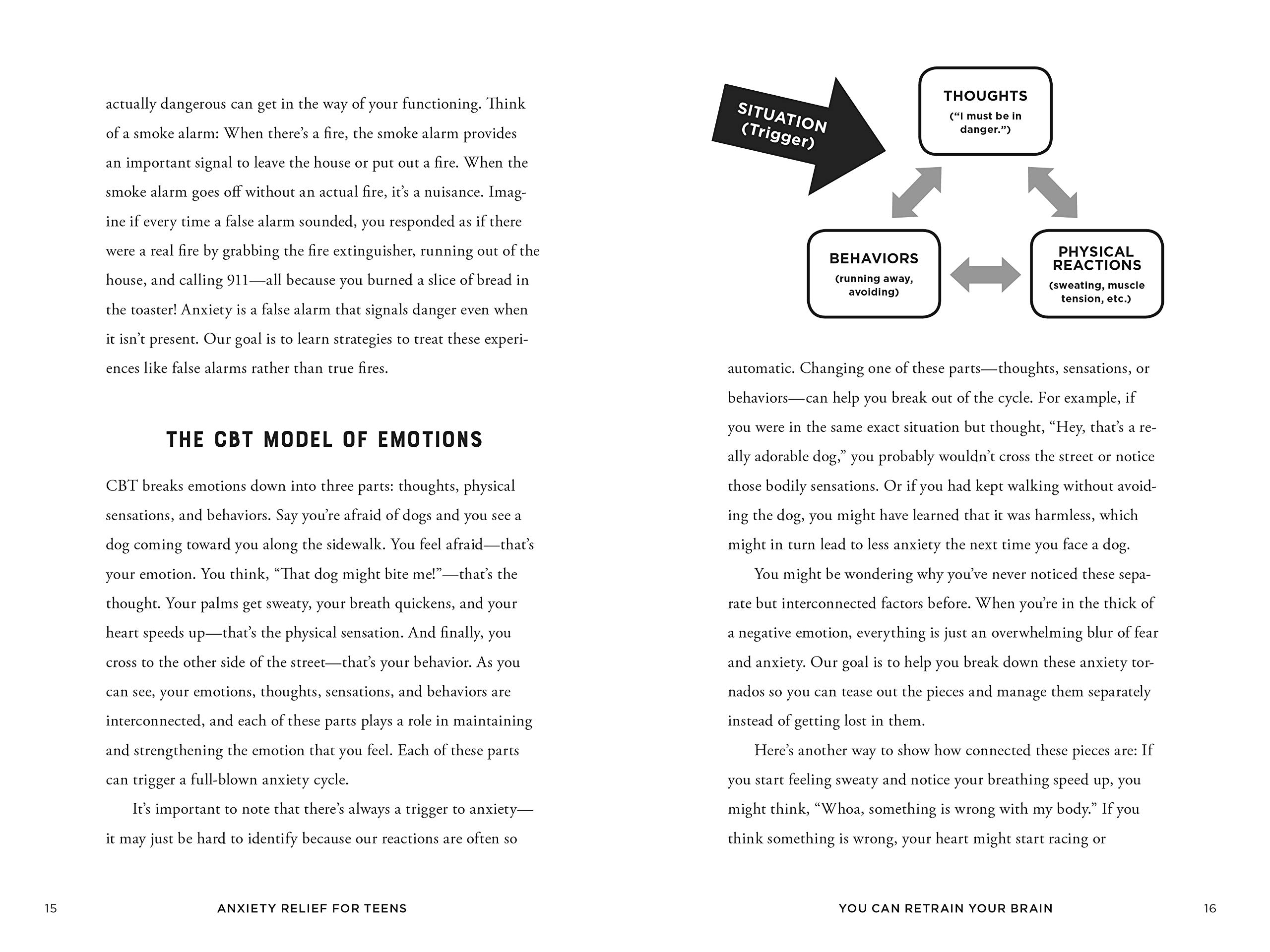
Your teenager is not broken — their prefrontal cortex is just unfinished. The prefrontal cortex, the brain region responsible for impulse control, consequence-weighing, and long-term planning, doesn't fully mature until the mid-20s. Meanwhile, the limbic system — the emotional, reward-seeking engine — is running at full throttle from puberty onward. This mismatch is why a smart, kind, capable 16-year-old can make a genuinely baffling decision.
Understanding this biology changes your approach. You're not trying to override stubbornness — you're providing the external scaffolding their brain hasn't yet built internally.
What This Means in Practice
- Novelty-seeking is normal. Channel it toward sport, creative projects, travel, or volunteering rather than fighting it head-on. - Peer influence peaks in mid-adolescence (14–16). The presence of friends literally increases risk-taking behaviour in MRI studies — this isn't weakness, it's neuroscience. - Fatigue amplifies impulsivity. A sleep-deprived teen has even less prefrontal brake power. Sleep is a safety issue (see Section 3).
2. Road Safety: The Highest-Stakes Skill Your Teen Will Learn
Motor vehicle crashes are the number-one cause of injury death among U.S. teenagers aged 16–19, according to the CDC. Newly licensed drivers are at highest risk in their first 12 months, particularly with passengers in the car and after 9 p.m.
Graduated Driver Licensing (GDL) — Use Every Stage
Most U.S. states and many countries have GDL systems that restrict night driving and passenger numbers for new teen drivers. Research from the Insurance Institute for Highway Safety (IIHS) shows GDL laws reduce fatal crash involvement by 10–30%. Use these restrictions even if your teen pushes back — they exist because the data is unambiguous.
The Conversations That Save Lives
- Distracted driving: The National Highway Traffic Safety Administration (NHTSA) reports that in 2021, distracted driving claimed 3,522 lives. Texting at 55 mph is equivalent to driving the length of a football field with your eyes closed. Make phone-in-the-glove-box a non-negotiable rule before they ever start the engine. - Passengers: Each additional teen passenger roughly doubles crash risk for a newly licensed driver (IIHS data). One passenger at a time is a reasonable early rule. - Impairment: Be explicit that you will always come and get them — no questions asked that night — rather than have them ride with an impaired driver.
3. Sleep: The Underrated Safety and Health Emergency
Fewer than 30% of U.S. high-school students get the recommended 8–10 hours of sleep per night, according to the American Academy of Sleep Medicine (AASM) and CDC data. This is not laziness. Puberty genuinely shifts the circadian clock by 1–2 hours, making it biologically harder for teens to fall asleep before 11 p.m. — and early school start times collide directly with this biology.
Insufficient sleep in adolescents is a public health epidemic. Sleep loss is associated with increased risk of obesity, diabetes, injuries, poor mental health, and problems with attention, behaviour, and academic performance.|American Academy of Sleep Medicine, 2014 Consensus Statement
How Sleep Deprivation Becomes a Safety Issue
- Drowsy driving is as dangerous as drunk driving at certain impairment levels (AAA Foundation for Traffic Safety) - Sleep-deprived teens show increased impulsivity, emotional reactivity, and susceptibility to peer pressure - Chronic sleep loss is linked to increased risk of depression and anxiety
What You Can Do
4. Mental Health: Recognising Warning Signs Before They Become Crises
One in five adolescents experiences a mental health condition in any given year, according to the World Health Organization (WHO). Depression and anxiety are the most common; suicide is the second leading cause of death among 10–24-year-olds in the U.S. (CDC). These numbers are not meant to frighten you — they're meant to remove any stigma around taking mental health as seriously as a broken bone.
Warning Signs to Watch For
How to Open the Door
The single most protective factor against teen suicide is connectedness — feeling that at least one adult cares and is paying attention. You don't need to be a therapist. You need to be present, non-reactive, and consistent.
Ask direct questions: "Are you having any thoughts of hurting yourself?" Research from the Suicide Prevention Resource Center confirms that asking directly does not plant the idea — it opens a conversation that may save a life.
5. Substances, Sex, and Online Safety: Having the Conversations That Matter
Avoiding these topics doesn't protect your teen — it just means they get their information elsewhere. Research from the American Academy of Pediatrics (AAP) consistently shows that teens whose parents talk openly and early about substances and sexual health make safer choices.
Substance Use
- Alcohol: The developing teen brain is significantly more vulnerable to alcohol's neurotoxic effects than the adult brain. Even moderate adolescent drinking is linked to long-term changes in memory and learning. - Cannabis: With increasing legalisation, teens perceive cannabis as low-risk. The AAP is clear: regular cannabis use before age 18 is associated with impaired memory, attention, and increased risk of psychosis in vulnerable individuals. - Vaping/e-cigarettes: The CDC reports that e-cigarettes remain the most commonly used tobacco product among U.S. teens. Nicotine at this stage disrupts brain development and creates rapid dependence.
Sexual Health
The AAP recommends that paediatricians discuss sexual health starting in early adolescence. As a parent, you can:
Online Safety
- Cyberbullying affects approximately 16% of high-school students (CDC) - Image-based abuse and "sexting" carry real legal and psychological consequences - Social media algorithms are designed to maximise engagement — not wellbeing
Agree on family digital norms together — teens are more likely to follow rules they helped shape.
6. Physical Health Checks and Vaccinations: What Shouldn't Be Missed
The AAP recommends annual well-child visits throughout adolescence. These appointments aren't just about sports physicals — they're a chance for confidential conversations between your teen and their doctor, and for catching issues early.
Vaccinations Your Teen Needs
Nutrition and Activity
The WHO recommends teens get at least 60 minutes of moderate-to-vigorous physical activity daily — yet most fall short. Bone density peaks in adolescence; inadequate calcium and vitamin D now has lifelong consequences. Teen girls are particularly at risk for iron-deficiency anaemia.
7. First Aid Readiness: Equipping Your Teen for Real Emergencies
Teenagers are increasingly independent — at sports practice, on camping trips, at part-time jobs, driving themselves places. A basic first-aid kit and the knowledge to use it is a practical safety tool, not an overreaction.
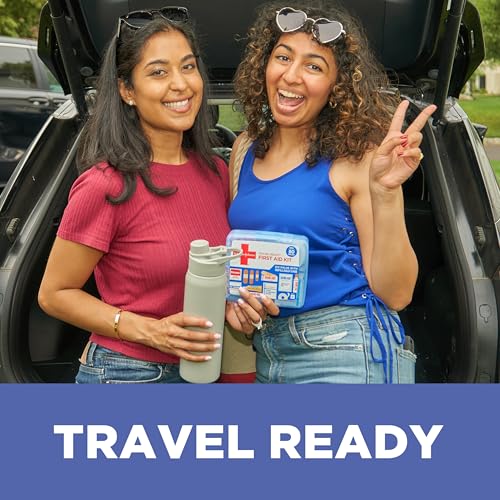

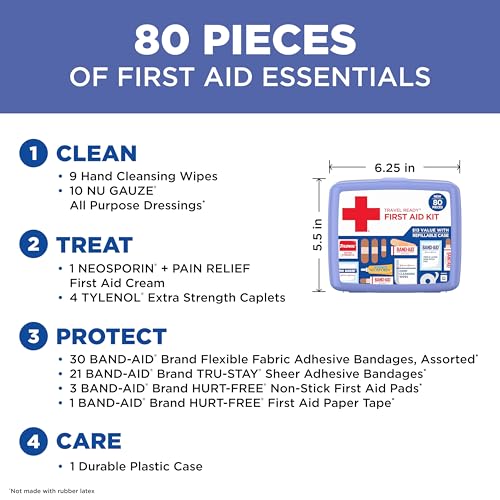
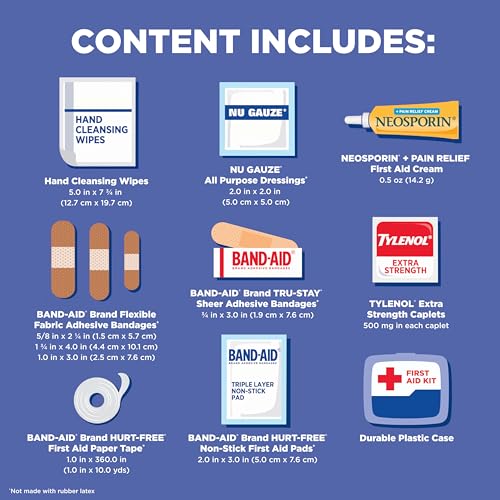
BAND-AID Brand Travel Ready Portable Emergency First Aid Kit for Minor Wound Care, Perfect for Home, Car, Travel, Camping Essentials & Outdoor Emergency Kit, 80 Pieces
- 80-piece BAND-AID Brand Travel Ready First Aid Kit for on-the-go first aid and minor wound care, ideal for hom
- Available in an easy-to-carry, organized case, this portable wound care kit contains 80 essential first aid it
- The mini first aid kit contains thirty BAND-AID Brand Flexible Fabric Adhesive Bandages in assorted sizes and
Every teen's bag, car, and bedroom should have accessible first-aid supplies. The Band-Aid Travel Ready First Aid Kit is a compact, 80-piece kit that fits in a backpack or glove compartment — ideal for the teen who's always on the move. For the family home, the TLIEAO 400-Piece All-Purpose First Aid Kit with its wall-mountable dual-layer design gives you a clear, organised station everyone can find in a rush.
Skills Every Teen Should Know


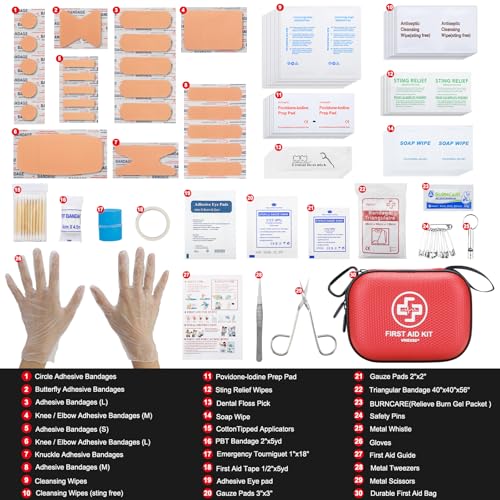


Mini First Aid Kit - 150 Piece Small Waterproof Hard Shell Medical Kit for Home, Car, Travel, Camping, Truck, Hiking, Sports, Office, Vehicle & Outdoor Emergencies- Small First Aid Medical Kit (Red)
- ESSENTIALS FOR EMERGENCY: Everything you need is in this first aid kit! Our kit includes over 150 professional
- PORTABLE DESIGN: 6.4" x 4.9" x 2.7" compact size, 0.73 lbs lightweight, features a compact, travel-friendly de
- SMART AREA CLASSIFICATION DESIGN: We've separated the whole emergency bag into small independent compartments,
For sports bags and outdoor adventures, the Vriexsd Mini First Aid Kit packs 150 pieces — including a tourniquet and tweezers — into a 0.73 lb waterproof case with a carabiner clip. If your teen's school, sports team, or workplace needs a larger supply, the DecorRack 500-Piece First Aid Kit (12-pack) provides organised, portable kits for every locker, car, and coach's bag.
8. Comparison: First Aid Kit Options for Teen Life Stages and Settings
| Setting | Best For | Key Features | Drawbacks | Recommended Product | Price Range |
|---|---|---|---|---|---|
| Teen's backpack / everyday carry | On-the-go minor injuries | Ultra-compact, lightweight, carabiner clip | Limited supplies for major injuries | Band-Aid Travel Ready Kit | ~$11 |
| Sports bag / outdoor adventures | Active teens, camping, hiking | 150 pcs, waterproof, tourniquet included | Small case, refilling can be fiddly | Vriexsd Mini First Aid Kit | ~$10 |
| Family home (wall-mounted) | Household hub, easy access | 400 pcs, dual-layer, burn gel, cold pack | Needs wall space | TLIEAO 400-Piece Kit | ~$33 |
| Teen's car / glove compartment | New drivers, road trips | 12-pack portable boxes, compact per unit | Bulk purchase; individual kits are small | DecorRack 500-Piece 12-Pack | ~$30 |
| School, sports club, workplace | Group settings, 75+ people | OSHA/ANSI compliant, 525 pcs, 3-shelf | Refill kit only; needs existing cabinet | Rapid Care 525-Piece Refill Kit | ~$90 |
| Large-scale events / multi-family | Community, field trips, camps | 4200 pcs across 100 individual boxes | Bulk quantity; overkill for single family | DecorRack 4200-Piece 100-Pack | ~$200 |
Expert Insights
We know that when parents are involved in their teen's healthcare — asking questions, attending appointments, following up — teens are more likely to complete vaccination series, maintain healthy behaviours, and seek help when they need it.|American Academy of Pediatrics, Bright Futures Guidelines, 4th Edition
The teenage years can feel like you've been handed a completely different child — one who simultaneously needs you desperately and wants you nowhere near them. That tension is real, and it's normal. Your job isn't to eliminate every risk; it's to make sure they have the knowledge, the skills, and the certainty that you're in their corner when things go sideways.
The most important thing research tells us about teen health and safety isn't a vaccine schedule or a curfew time — it's this: your relationship with your teenager is the single most powerful protective factor in their life. Keep the door open. Keep showing up. The rest follows.
If this guide helped you, save it for the moments you need it most — and share it with another parent navigating the same beautiful, terrifying journey.
Sources & References
- Centers for Disease Control and Prevention (CDC). "Teen Drivers: Get the Facts." 2023. https://www.cdc.gov/transportationsafety/teen_drivers/teendrivers_factsheet.html
- Centers for Disease Control and Prevention (CDC). "Youth Risk Behavior Survey Data Summary & Trends Report 2011–2021." 2023. https://www.cdc.gov/healthyyouth/data/yrbs/index.htm
- American Academy of Pediatrics (AAP). "Bright Futures: Guidelines for Health Supervision of Infants, Children, and Adolescents." 4th Edition. 2017.
- American Academy of Sleep Medicine (AASM). "Recommended Amount of Sleep for Pediatric Populations." Journal of Clinical Sleep Medicine, 2016.
- Insurance Institute for Highway Safety (IIHS). "Teenagers." 2023. https://www.iihs.org/topics/teenagers
- World Health Organization (WHO). "Adolescent Mental Health." 2021. https://www.who.int/news-room/fact-sheets/detail/adolescent-mental-health
- National Highway Traffic Safety Administration (NHTSA). "Distracted Driving 2021." Traffic Safety Facts Research Note. 2023.
- Suicide Prevention Resource Center. "Suicide Risk and Protective Factors." https://www.sprc.org/about-suicide/risk-protective-factors
- Jensen, Frances E., MD, and Amy Ellis Nutt. The Teenage Brain: A Neuroscientist's Survival Guide to Raising Adolescents and Young Adults. HarperCollins, 2015.
- Steinberg, Laurence. Age of Opportunity: Lessons from the New Science of Adolescence. Houghton Mifflin Harcourt, 2014.
- AAA Foundation for Traffic Safety. "Drowsy Driving." https://aaafoundation.org/drowsy-driving/
- American Academy of Pediatrics (AAP). "Policy Statement: School Start Times for Adolescents." Pediatrics, 2014. DOI: 10.1542/peds.2014-1697
Frequently Asked Questions
At what age should I stop going into doctor appointments with my teen?
How do I know if my teen's risk-taking is normal or dangerous?
My teen refuses to wear a seatbelt with friends. What can I do?
Should I drug-test my teen at home?
What should every teen know about mental health first aid?
How do I talk to my teen about sexual health without it being awkward?
What first aid items should my teen carry every day?
Was this helpful?
Thanks — your feedback helps us pick what to write next.