What Unstructured Play Actually Is — and Why the Definition Matters
Unstructured, child-led play is one of the most evidence-backed ways to build executive function, creative thinking, and long-term cognitive ability in children from birth through adolescence.
In this article
Picture this: your child is sitting on the kitchen floor surrounded by wooden blocks, an old cardboard box, and a handful of pasta shapes. They're not following instructions. Nobody gave them a goal. And yet, in the next 20 minutes, they'll make hundreds of micro-decisions, test and discard hypotheses, negotiate an imaginary narrative, and regulate their own frustration when the tower falls. That's not "just playing." That's the brain at full throttle.
The American Academy of Pediatrics (AAP) issued a landmark clinical report in 2018 confirming that play — especially free, child-directed play — is so essential to healthy brain development that paediatricians should prescribe it. Yet surveys consistently show that children today have up to 8 fewer hours of free play per week than children did in the 1980s, according to data reviewed by the Alliance for Childhood.
In this guide you'll understand:
1. What Unstructured Play Actually Is — and Why the Definition Matters
Unstructured play is any activity that is child-initiated, child-directed, and intrinsically motivated — meaning the child chose it, controls it, and does it for its own sake rather than for a reward or outcome set by an adult. There are no worksheets, no winning conditions, no coach calling plays.
This is different from: - Structured play (organised sport, board games with fixed rules, craft kits with step-by-step instructions) - Screen-based entertainment (passive consumption, even on "educational" apps) - Adult-led learning activities (flashcards, guided reading drills)
None of those are bad — but none of them are unstructured play, and they cannot substitute for it.
The key ingredients
The AAP's 2018 report, authored by paediatricians Michael Yogman and colleagues, describes play as "a singular opportunity to promote the social-emotional, cognitive, language, and self-regulation skills that build executive function and a prosocial brain." That's the clinical case in one sentence.
2. The Neuroscience: How Free Play Physically Builds a Smarter Brain
Free play boosts IQ not by teaching facts, but by strengthening the neural architecture that makes learning possible in the first place.
When a child engages in open-ended play, several things happen simultaneously in the brain:
Prefrontal cortex development
The prefrontal cortex (PFC) governs executive function — planning, impulse control, working memory, and flexible thinking. It is the last brain region to mature, not fully developed until the mid-20s. Unstructured play is one of the primary drivers of PFC development in childhood. A child deciding how to build a bridge from blocks, then revising the plan when it collapses, is doing PFC training as surely as a musician practising scales.The BDNF effect
Physical free play — running, climbing, rough-and-tumble games — triggers the release of Brain-Derived Neurotrophic Factor (BDNF), sometimes called "Miracle-Gro for the brain." BDNF promotes the growth of new neurons and strengthens synaptic connections. Research published in Neuroscience & Biobehavioral Reviews (2014) found that physical play in animal models consistently increased BDNF expression in the hippocampus, the region critical for memory consolidation.Neuroplasticity windows
The brain is most plastic — most receptive to being shaped — in the early years, but neuroplasticity continues throughout childhood and adolescence. Each unstructured play session is a low-stakes environment for the brain to wire new connections, prune inefficient ones, and rehearse responses to novel challenges.Play is not a break from learning. It is the primary vehicle through which children learn.
— American Academy of Pediatrics, Clinical Report on Play (2018)
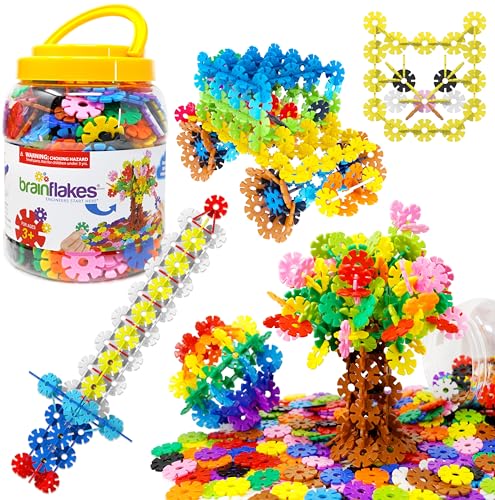


Brain Flakes 500 Piece Set, Ages 3+, Interlocking Plastic Disc Toy for Creative Building, Educational STEM Learning, Construction Block Play for Kids, Teens, Adults, Boys, and Girls
- The Signature Yellow Cap Storage Jar - Contains 500+ pcs in 12 colors; Includes an idea booklet with instructi
- For Ages 3 to 99 - BRAIN FLAKES discs click together easily for children ages 3+; Aids in the development of f
- Why BRAIN FLAKES - A great STEM toy for developing spatial intelligence and thinking; Construct large structur
3. Age-by-Age Guide: What Unstructured Play Looks Like From Birth to Teen
Free play doesn't look the same at every age — but it matters at every age. Here's your stage-by-stage roadmap.
Newborn to 12 months: Sensory exploration IS play
Babies explore the world through their senses. Tummy time on a textured mat, batting at a hanging object, mouthing a wooden ring — these are all unstructured play. Your job is to create a safe, stimulating environment and step back. Narrate what you see ("You grabbed it!") but don't redirect.Toddlers (1–3 years): Parallel play and cause-and-effect
Toddlers play alongside others before they play with them. They are obsessed with cause-and-effect: stacking, knocking down, filling and emptying. Open-ended toys are gold here. The Agirlgle Wooden Colour Sorting & Stacking Rings lets toddlers invent their own sorting rules — far more cognitively demanding than following an adult's instructions.Preschool (3–5 years): Imaginative and role play explodes
This is the golden age of pretend play. Children create elaborate narratives, assign roles, and negotiate rules — all without any adult input. This is where language, theory of mind (understanding that others have different thoughts), and early maths concepts (more/less, bigger/smaller) get turbocharged. A set of open-ended wooden pieces like the LiKee Wooden Shape Puzzles can become a city, a spaceship, or a bakery on the same afternoon.Early school age (6–8 years): Rule invention and peer negotiation
Children this age create complex games with self-invented rules, which requires logical thinking, fairness reasoning, and conflict resolution. Lego, building tiles, and outdoor construction are ideal. The PicassoTiles 120-Piece Hedgehog Building Blocks shine here — open-ended enough to spark invention, complex enough to hold an 8-year-old's attention.Middle childhood (9–12 years): Strategic risk-taking and identity play
Older children use free play to test identities, rehearse social roles, and take managed risks (climbing higher, trying harder tricks, writing stories with dark themes). Resist the urge to over-supervise. Their risk calibration is developing, and they need low-stakes failures to build resilience.Teenagers (13–17 years): Play doesn't stop — it evolves
Teen "play" looks like jamming with a band, building a gaming mod, designing clothes, or free-form skateboarding. It is still self-directed, intrinsically motivated, and cognitively rich. Protect this time from academic pressure. Research from the National Institute for Play (founded by psychiatrist Dr. Stuart Brown) links playful activity in adolescence to greater creativity and emotional resilience in adulthood.4. Unstructured Play and Creative Intelligence: Building the Innovator's Brain
Creativity is not a personality trait. It is a cognitive skill, and like all cognitive skills, it is built through practice. Unstructured play is the primary practice ground.
When a child invents a game, they are engaging in divergent thinking — generating multiple possible solutions to an open problem. When they hit a snag and adapt, they're practising cognitive flexibility. When they sustain a complex imaginary narrative over an hour, they're exercising working memory and narrative reasoning — the same skills that underpin essay writing, scientific hypothesis formation, and entrepreneurial thinking.
A landmark longitudinal study by researchers at the University of Minnesota, tracking children from preschool to adulthood, found that the quality of children's fantasy play at age 3–5 was one of the strongest predictors of creativity scores at age 10 — stronger than IQ scores at the same age.

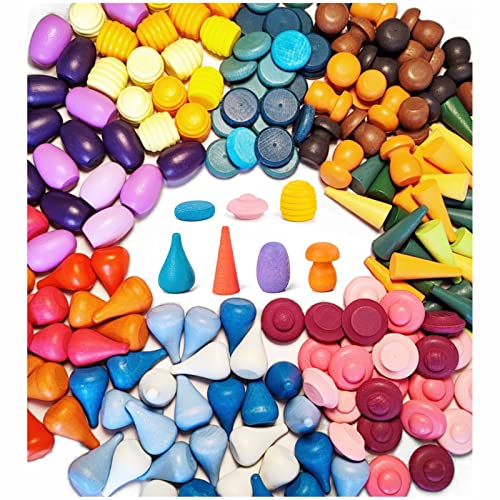
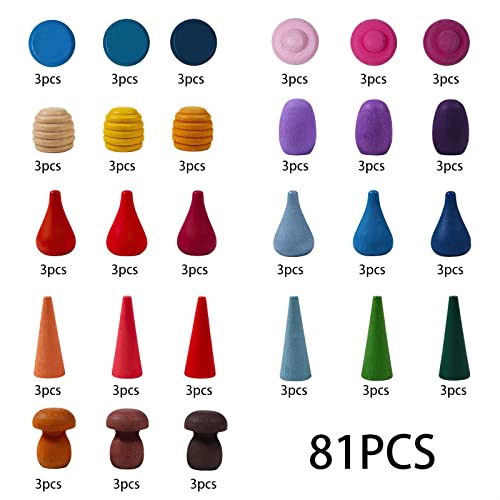
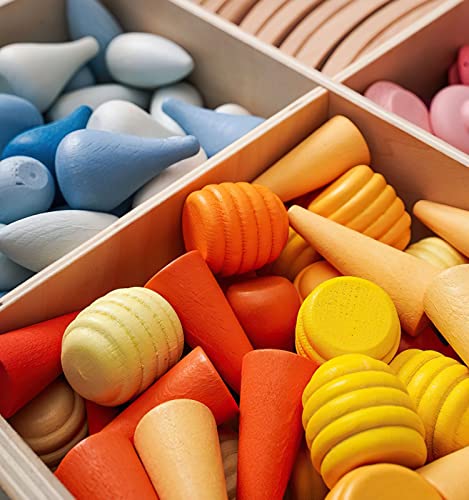
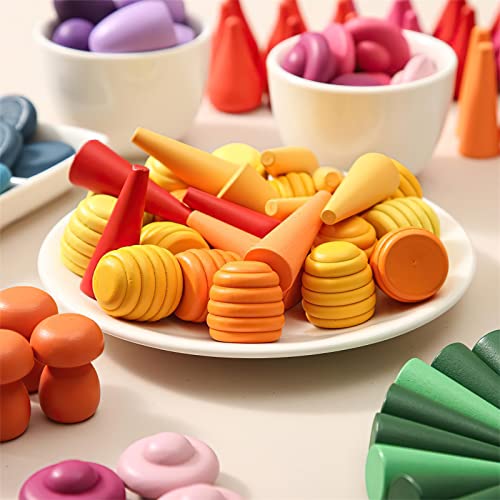
MIKNEKE 81 Wooden Loose Parts Sensory Bin Filler Toys, Mandala Rainbow Stacker Open Ended Toys, 27 Colors Sensory Training Educational Toys
- COLOR AND SHAPE RECOGNITION: 27 Colors 7 shapes Rainbow Mandala loose parts, allows children to design more cr
- OPEN-ENDED GAME: Let Kids give full play to their imagination and design various modelling without restriction
- ECO-FRIENDLY MATERIALS: Blocks are made from high-quality wood, all materials 100% non-toxic safety.
5. The Screen-Time and Over-Scheduling Problem — and How to Fix It
The single biggest threat to unstructured play in 2025 is not laziness. It is a culture of productivity applied to childhood — every hour scheduled, every skill formally coached, every free moment filled with a screen.
The data is stark. A 2023 report from the Centers for Disease Control and Prevention (CDC) found that children aged 8–12 spend an average of 4–6 hours per day on screens for entertainment. That's time directly displacing play, sleep, and physical activity.
Over-scheduling is the other culprit. Children in multiple after-school activities, tutoring sessions, and organised sports have genuinely less time for free play — and research from Columbia University's Mailman School of Public Health found that children with more structured time showed less self-directed executive function than those with more free time.
What parents can do today



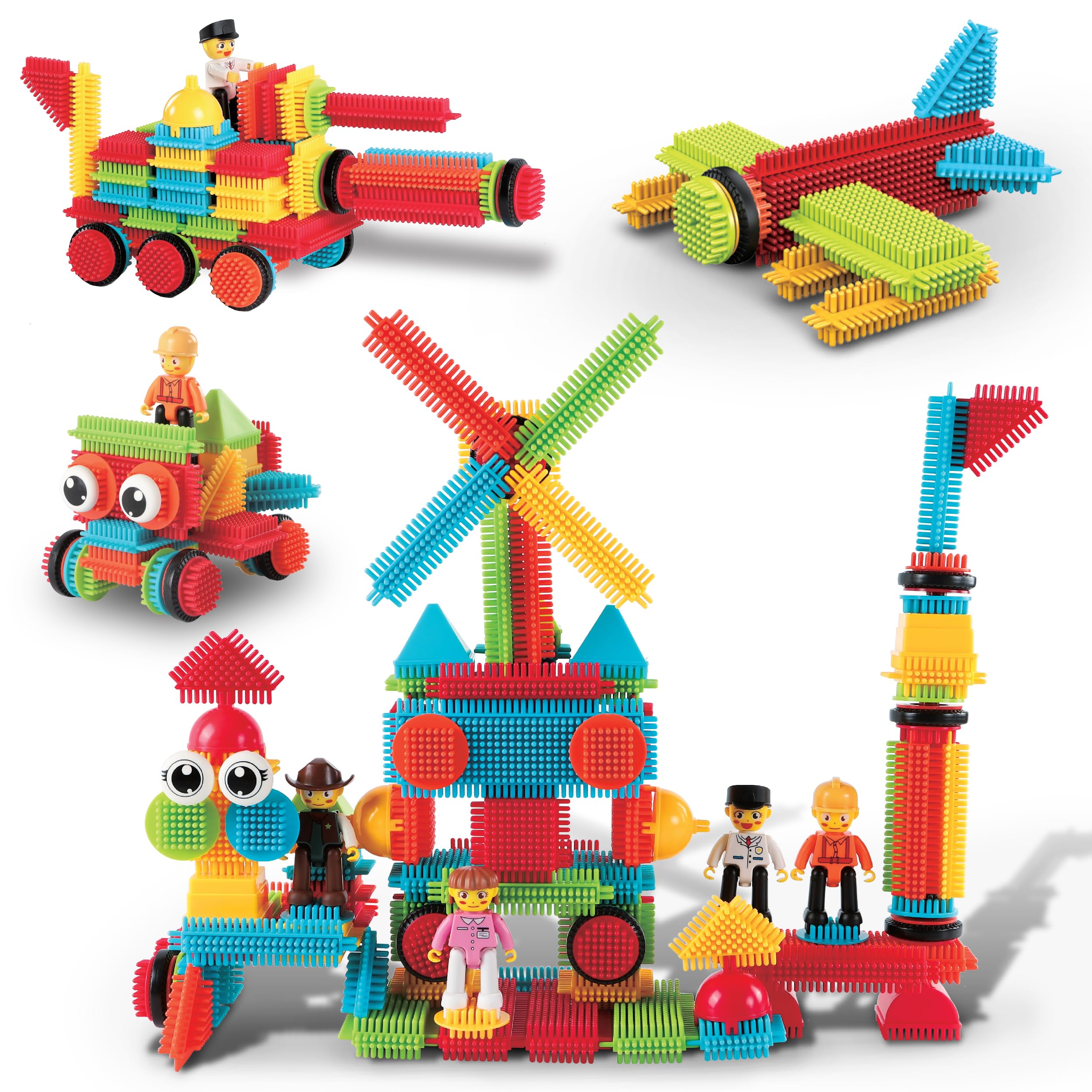
PicassoTiles 120pcs Hedgehog Interlocking Building Blocks Tiles Construction Toy Set Learning Playset STEAM Development Preschool Kindergarten Toy for Kids Age3+ PTB120
- FRUSTRATION-FREE BUILDING - PicassoTiles Hedgehog shape blocks offer easy connectivity and simple to disconnec
- EDUCATIONAL TOY - Never too early to start developing kids' creativity. Children can acquire strong sense of c
- LEARNING IS FUN - Encourage creativity for STEM (science, technology, engineering, art, and mathematics) educa
6. Choosing Toys That Support Unstructured Play (Without Wasting Money)
The best toys for unstructured play share one characteristic: they do less so the child can do more.
A toy that lights up, makes sounds, and "teaches" the alphabet when you press a button is doing the cognitive work for the child. An open set of wooden blocks, loose parts, or interlocking tiles hands that work back to the child's brain.
What to look for

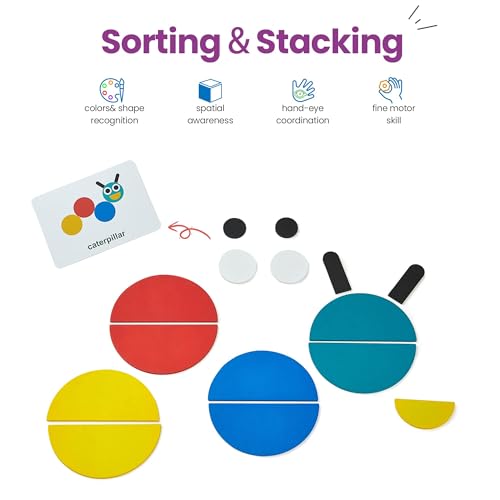
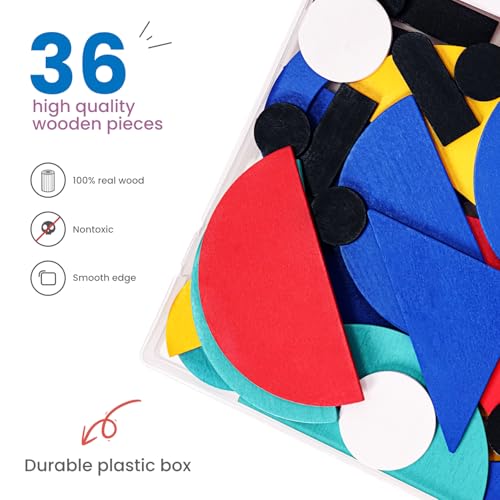
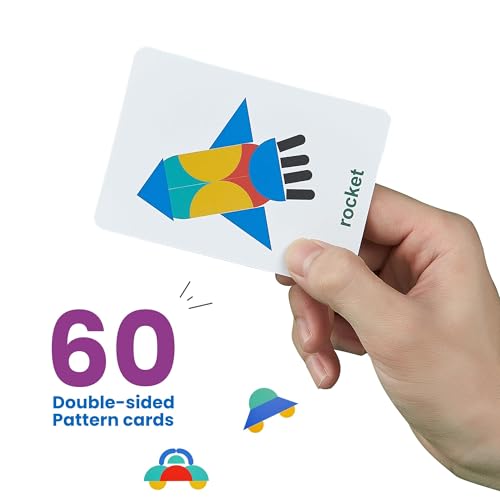
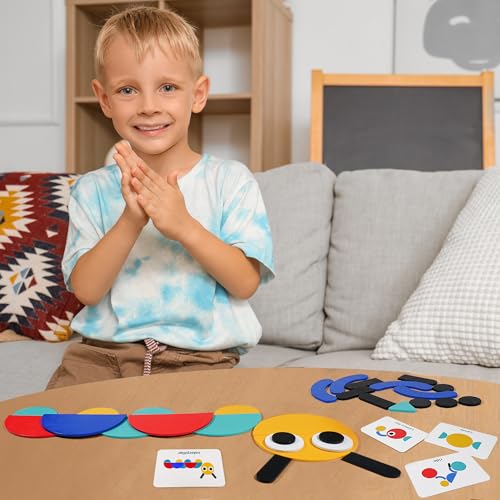
LiKee Open Ended Wooden Shape Puzzles (36 Blocks&60 Cards) for Toddlers 3+ Years Old, Montessori Development Toys Preschool Education Activity Travel Toy Board Games for Kids 4-8 Yrs
- Contains 36 wooden shape pieces, 60 pattern cards and 2 iron tins for storing the pieces
- kids can try to build what is shown on the cards or create their own designs
- Great for developing spatial awareness, color & shape recognition, hand-eye coordination, and problem-solving
7. Comparison: Open-Ended Play Materials Across Age Stages
| Play Material | Best Age Range | Primary Cognitive Benefits | Main Limitations | Recommended Product | Price Range |
|---|---|---|---|---|---|
| Wooden shape & colour sorters | 12 months – 3 years | Fine motor, colour/shape recognition, cause-and-effect reasoning | May be outgrown quickly | Agirlgle Wooden Colour Sorting & Stacking Rings | $30–35 |
| Loose parts / mandala sets | 2–8 years | Divergent thinking, pattern recognition, open-ended creativity | Small pieces require supervision under 3 | MIKNEKE 81-Piece Mandala Loose Parts | $22–25 |
| Wooden shape puzzles with cards | 3–8 years | Spatial reasoning, problem-solving, self-directed challenge | Cards can be lost over time | LiKee Wooden Shape Puzzles (36 Blocks) | $9–13 |
| Interlocking building discs | 3–12 years | Spatial intelligence, STEM thinking, 3D construction | Less imaginative narrative play | Brain Flakes 500-Piece Set | $19–22 |
| Interlocking building tiles | 3–12 years | Engineering, colour logic, collaborative play | Requires floor/table space | PicassoTiles 120-Piece Hedgehog Blocks | $24–27 |
8. Expert Insights on Why Play Can't Be Replaced
Frequently Asked Questions
The Bottom Line
There is something quietly radical about defending a child's right to do "nothing in particular." In a culture that optimises everything, unstructured play looks like wasted time. The neuroscience says the opposite: it is some of the most productive time in a child's entire development.
You don't need a programme, an app, or a specialist. You need a patch of floor, a handful of open-ended materials, and the confidence to walk away. The brain will do the rest.
The most important thing you can give your child's developing mind isn't a curriculum — it's time that belongs entirely to them.
If this guide was useful, save it, share it with another parent, or tag a caregiver who needs the reminder that play is serious business.
Sources & References
- Yogman, M., Garner, A., Hutchinson, J., et al. "The Power of Play: A Pediatric Role in Enhancing Development in Young Children." American Academy of Pediatrics Clinical Report. 2018. https://doi.org/10.1542/peds.2018-2058
- World Health Organization. "Guidelines on Physical Activity, Sedentary Behaviour and Sleep for Children Under 5 Years of Age." WHO, 2019. https://www.who.int/publications/i/item/9789241550536
- Centers for Disease Control and Prevention. "Screen Time and Children." CDC, 2023. https://www.cdc.gov/ncbddd/childdevelopment/screen-time.html
- Byers, J.A., & Walker, C. "Refining the Motor Training Hypothesis for the Evolution of Play." American Naturalist, 1995. Referenced in Panksepp, J. "Affective Neuroscience of the Emotional BrainMind." Neuroscience & Biobehavioral Reviews, 2011.
- Barker, J.E., Semenov, A.D., Michaelson, L., et al. "Less-structured time in children's daily lives predicts self-directed executive functioning." Frontiers in Psychology, 2014. https://doi.org/10.3389/fpsyg.2014.00593
- Brown, S., & Vaughan, C. "Play: How It Shapes the Brain, Opens the Imagination, and Invigorates the Soul." Avery/Penguin, 2009. National Institute for Play: https://www.nifplay.org
- Krafft, C.E., et al. "A randomized controlled trial of the effects of aerobic exercise on attention and academic performance in children." Brain and Cognition, 2014. (BDNF and physical play context.)
- Alliance for Childhood. "Crisis in the Kindergarten: Why Children Need to Play in School." 2009. https://allianceforchildhood.org
- Taylor, A.F., & Kuo, F.E. "Children With Attention Deficits Concentrate Better After Walk in the Park." Journal of Attention Disorders, 2009. https://doi.org/10.1177/1087054708323000
Frequently Asked Questions
How much unstructured play does my child need each day?
Is unstructured play different from free play?
Can screen time count as unstructured play?
My child always wants me to play with them. Is that unstructured play?
What if my child doesn't know how to play independently?
Does unstructured play help children with ADHD or developmental differences?
Are expensive toys better for unstructured play?
Was this helpful?
Thanks — your feedback helps us pick what to write next.