Why Homemade Baby Food Is Worth the Effort
A dedicated baby food maker lets you steam and blend fresh, nutrient-dense purees in under 30 minutes — a practical upgrade for any parent introducing solids between 6 and 12 months.
In this article
You're standing at the kitchen counter at 5:30 p.m., one arm bouncing a fussy baby, the other fumbling with a pot, a blender, and a strainer — all at once. Sound familiar? You're not alone. According to the World Health Organization, exclusive breastfeeding is recommended for the first 6 months, after which complementary foods should be introduced while breastfeeding continues. That transition to solids is a big moment, and the tools you use matter more than you might think.
A purpose-built baby food maker won't replace good ingredients or your instincts as a parent — but it can dramatically cut prep time, reduce the number of dishes, and help you control exactly what goes into your baby's bowl.
In this guide you'll understand:
1. Why Homemade Baby Food Is Worth the Effort
Making your own baby food gives you something store-bought pouches can't: full ingredient transparency. Commercial baby foods are convenient, but research published in the journal Maternal & Child Nutrition has found that many commercially prepared purees contain higher sugar levels and lower protein density than home-prepared equivalents. When you steam a sweet potato and blend it yourself, you know exactly what's in it.
The American Academy of Pediatrics (AAP) recommends introducing single-ingredient purees around 6 months, progressing through textures as your baby's oral motor skills develop. A good baby food maker supports that progression — from silky smooth at 6 months to soft-chunky by 9–10 months.
The Time Argument
Parents often assume homemade means time-consuming. In practice, a steam-and-blend machine can produce a week's worth of purees in about 45 minutes of active kitchen time. Portion into ice-cube trays, freeze, and you have ready-to-go meals all week.
2. Steam vs. Boil vs. Roast: What Preserves the Most Nutrition
Steaming is the gold standard for cooking baby food, and the science backs it up clearly. A study published in the Journal of Food Science found that steaming vegetables retained significantly more water-soluble vitamins — particularly vitamin C and B vitamins — compared to boiling, where nutrients leach directly into the cooking water.
This is why every quality baby food maker on this list uses steam rather than submerging food in water. The elevated steam basket design keeps food above the water line, so those vitamins stay in the food, not poured down the drain.
Steaming is one of the best cooking methods for preserving nutrients in vegetables because it uses minimal water and lower temperatures than boiling.
— Academy of Nutrition and Dietetics (2022)
Why the Steam Basket Design Matters
Not all steamers are equal. Look for:
The Grownsy Baby Food Maker (Dark Grey) uses exactly this elevated-basket principle, protecting water-soluble vitamins B and C by keeping food clear of the boiling water below. The Bear Baby Food Maker takes it a step further with dual-layer steam baskets — you can cook two different ingredients simultaneously, keeping flavours separate.


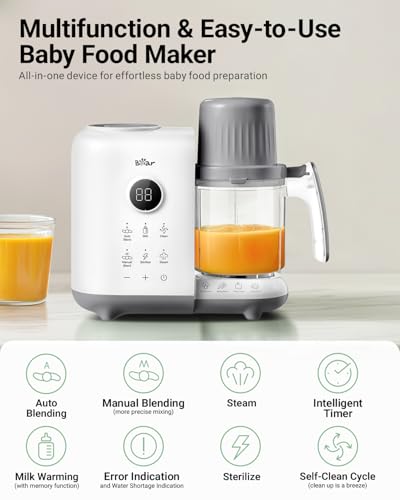
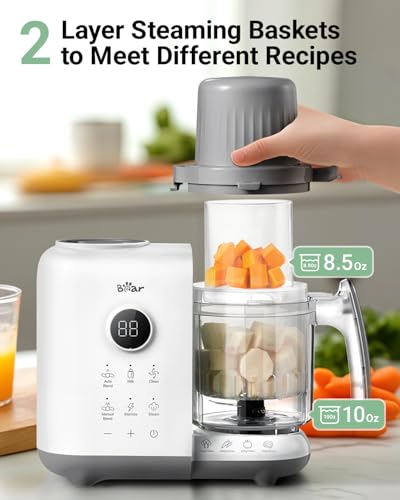
Bear Baby Food Maker with 18.5oz Dual-Layer Steam Baskets, OneStep Baby Food Processor Steamer Puree Blender Grinder Mills, Auto Cooking Grinding&Sterili-zing for Healthy Homemade Baby Food, BPA-Free
- 𝗔𝗹𝗹-𝗶𝗻-𝗢𝗻𝗲 𝗕𝗮𝗯𝘆 𝗙𝗼𝗼𝗱 𝗠𝗮𝗸𝗲𝗿: Say goodbye to kitchen clutter! The Bear baby food maker does it all in one compac
- 𝟭𝟴.𝟱𝗼𝘇 𝗡𝘂𝘁𝗿𝗶𝗲𝗻𝘁-𝗟𝗼𝗰𝗸𝗶𝗻𝗴 𝗗𝘂𝗮𝗹-𝗟𝗮𝘆𝗲𝗿 𝗦𝘁𝗲𝗮𝗺 𝗕𝗮𝘀𝗸𝗲𝘁: Prepare up to five servings at once(for babies 6-8 months)—pe
- 𝗦𝗺𝗮𝗿𝘁 𝗕𝗹𝗲𝗻𝗱𝗶𝗻𝗴 𝗳𝗼𝗿 𝗘𝘃𝗲𝗿𝘆 𝗦𝘁𝗮𝗴𝗲: Whether your baby is starting with smooth purees or exploring chunkier texture
3. The Features That Actually Matter (And the Ones That Don't)
Walk into any baby gear section and you'll see machines with 6-in-1 functions, LCD panels, and self-cleaning modes. Some of those features genuinely help; others are marketing padding. Here's how to tell the difference.
Features Worth Paying For
Features That Sound Good But Matter Less
- Multiple speed settings beyond 2–3 (babies need smooth or chunky, not 10 gradations) - Very large capacities if you have a small freezer - Colour LCD screens (a simple dial works just as well)
The Momcozy AutoMeal Baby Food Maker stands out here with its auto 3-stage texture control — smooth, medium, or coarse — selected with a single touch. Its 6-blade cyclone system also outperforms standard 4-blade models for ultra-fine blending, which matters most in the early weeks of solid introduction.
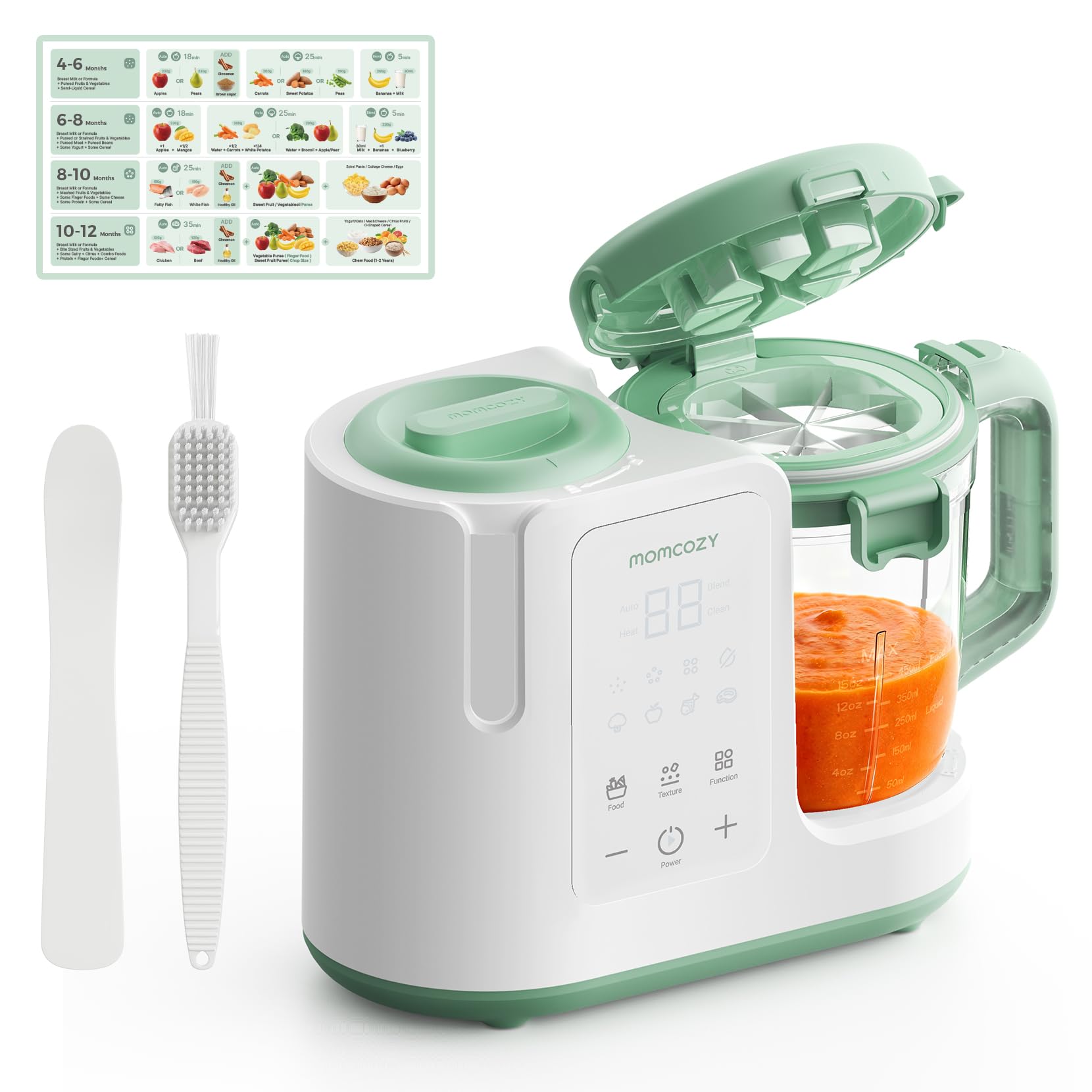
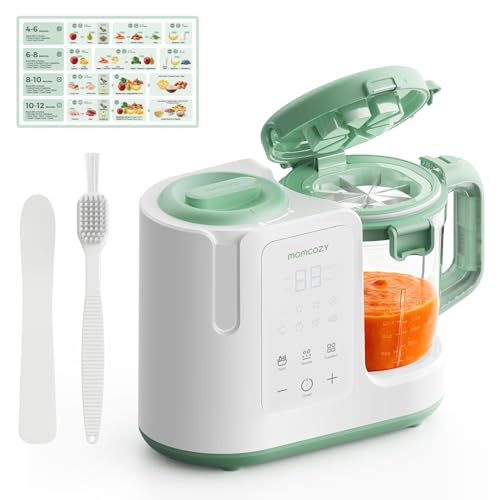

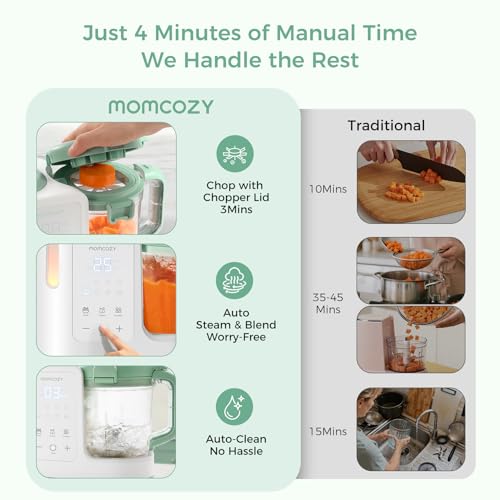
Momcozy AutoMeal Baby Food Maker – One-Step Auto Steam & Blend Food Processor, 15oz Large Cup & 6-Blade Design, Self-Cleaning, Auto 3-Stage Texture Settings for Effortless Homemade Baby Puree
- 𝟑-𝐌𝐢𝐧𝐮𝐭𝐞 𝐏𝐫𝐞𝐩, 𝐈𝐭 𝐇𝐚𝐧𝐝𝐥𝐞𝐬 𝐭𝐡𝐞 𝐑𝐞𝐬𝐭 - Spend just 3 minutes prepping — the Momcozy Baby Food Maker automatically
- 𝐂𝐲𝐜𝐥𝐨𝐧𝐞 𝟔-𝐁𝐥𝐚𝐝𝐞 𝐃𝐞𝐬𝐢𝐠𝐧, 𝐒𝐭𝐞𝐚𝐦-𝐏𝐨𝐰𝐞𝐫𝐞𝐝 𝐒𝐨𝐟𝐭𝐧𝐞𝐬𝐬: Featuring a 6-blade cyclone system, this baby food processor e
- 𝐀𝐮𝐭𝐨 𝟑-𝐓𝐞𝐱𝐭𝐮𝐫𝐞 𝐂𝐨𝐧𝐭𝐫𝐨𝐥 𝐟𝐨𝐫 𝐄𝐯𝐞𝐫𝐲 𝐒𝐭𝐚𝐠𝐞 - Choose from smooth, medium, or coarse textures with one touch. The Mo
4. Budget Breakdown: What You Get at Every Price Point
Baby food makers range from under $40 to over $100. The good news: you don't need to spend top dollar to get a safe, effective machine. Here's an honest breakdown.
Under $50 — Functional and Fuss-Free
At this price point, expect basic steam-and-blend functionality, smaller capacities, and manual controls. The AMZBABYCHEF 4-in-1 Baby Food Maker at $39.99 covers the essentials: steam, blend, defrost, and reheat, with a large-capacity mixing bowl and an auto shut-off timer. It's rated 4.6★ across 857 reviews — strong performance for the price.

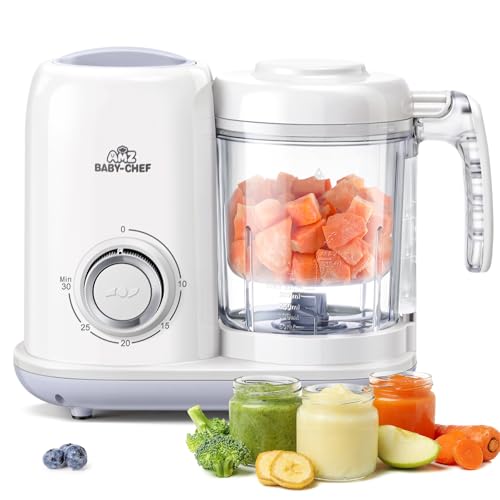
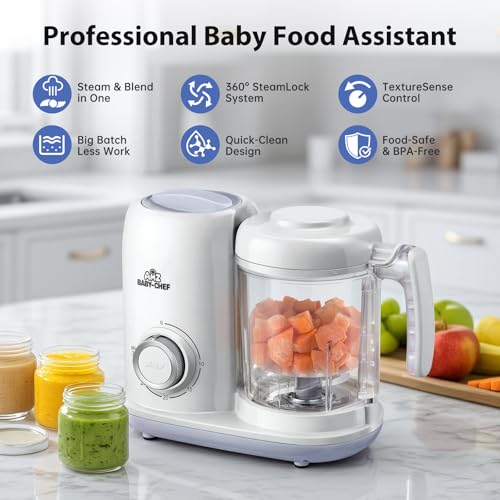
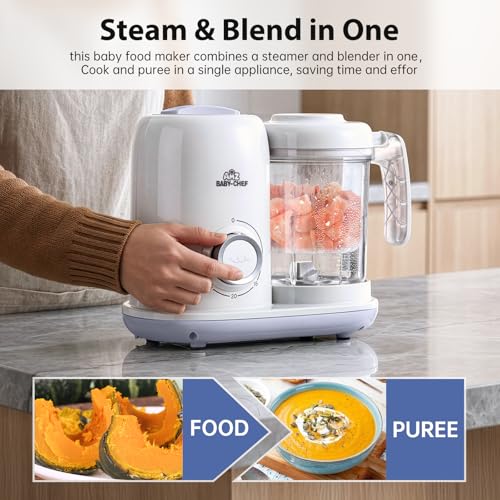
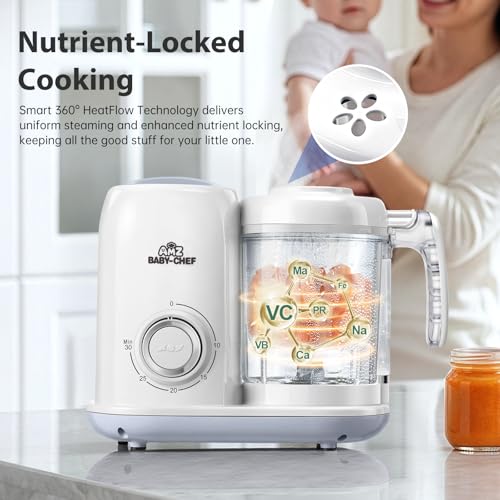
AMZBABYCHEF Baby Food Maker, 4 in 1 Baby Food Processor and Steamer, Puree Blender, Multifunctional Baby Puree Maker, Dishwasher Safe (White)
- 【4-in-1 Baby Food Maker】Multifunctional baby food processor with steamer. You can steam cooks, blends, defrost
- 【Customize Your Ideal Food】This baby food blender with unique blend feature lets you control consistency from
- 【Large Capacity】This baby food maker steamer and blender is thoughtfully equipped with a large-capacity mixing
$60–$80 — Mid-Range Sweet Spot
The Bear Baby Food Maker at $69.99 is the standout here. Its 18.5 oz dual-layer steam baskets let you prepare up to five servings at once for a 6–8 month old, and the BPA-free construction is explicitly confirmed. The two blending modes (auto and manual) give you the texture flexibility you'll need as your baby grows.
$99+ — Premium All-in-One
At the top end, the Grownsy Baby Food Maker and Momcozy AutoMeal both sit at $99.99. You're paying for automation, better build quality, and features like self-cleaning and sterilisation modes. The Grownsy's built-in steriliser is genuinely useful — you can sterilise bottles and small feeding accessories in the same machine.
5. Comparing the Top Baby Food Makers Side by Side
| Machine | Capacity | Key Feature | Texture Control | BPA-Free | Price | Recommended Product |
|---|---|---|---|---|---|---|
| Grownsy (Dark Grey) | Medium | Steam + blend + sterilise, elevated basket | Auto & manual modes | ✓ | $99.99 | Grownsy Dark Grey |
| Grownsy (White) | Medium | Elevated steam basket, steriliser mode | Auto & manual modes | ✓ | $99.99 | Grownsy White |
| Grownsy (Green) | Medium | Steam + blend + sterilise, smart digital controls | Auto & manual modes | ✓ | $99.99 | Grownsy Green |
| Bear Dual-Layer | 18.5 oz | Dual-layer baskets, cook 2 ingredients at once | Auto & manual modes | ✓ | $69.99 | Bear Baby Food Maker |
| AMZBABYCHEF 4-in-1 | Large bowl | Steam, blend, defrost, reheat + auto shut-off | Smooth to chunky | ✓ | $39.99 | AMZBABYCHEF 4-in-1 |
| Momcozy AutoMeal | 15 oz | 6-blade cyclone, 3-stage auto texture, self-clean | 3 preset stages | ✓ | $99.99 | Momcozy AutoMeal |
6. Safety, Hygiene, and Getting the Most From Your Machine
A baby food maker is only as safe as the hygiene habits around it. Infants between 6 and 12 months have developing immune systems, and food-borne illness is a real risk if equipment isn't cleaned properly.
Cleaning Non-Negotiables
Safe Storage of Homemade Purees
- Refrigerate for up to 48 hours in airtight containers - Freeze in ice-cube trays for up to 3 months - Thaw overnight in the fridge — never on the countertop - Reheat to steaming, then cool before serving; never reheat twice


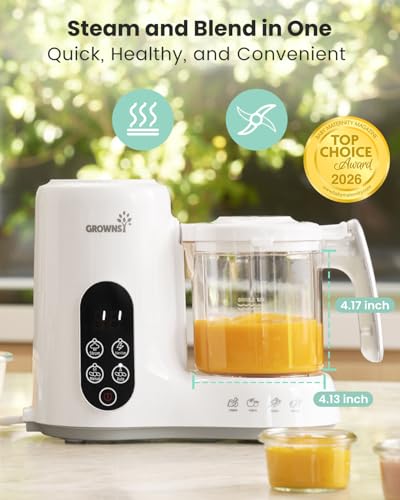


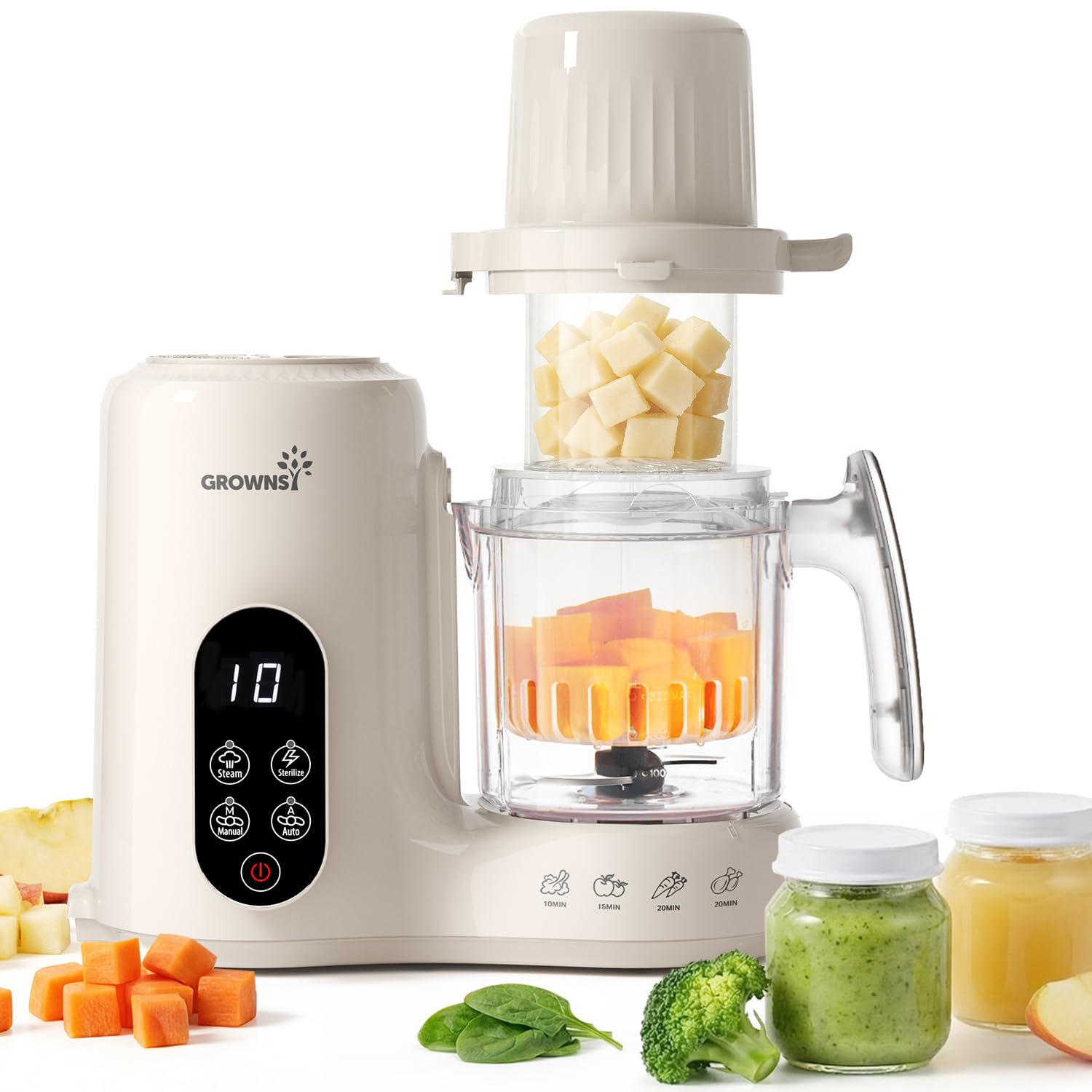
Grownsy Baby Food Maker with Steam Basket, One Step Baby Food Processor Steamer Puree Blender Grinder Mills Machine, Auto Cooking Grinding and Sterili-zing for Healthy Homemade Baby Food, White
- 𝗦𝘁𝗲𝗮𝗺𝗶𝗻𝗴 𝗮𝗻𝗱 𝗕𝗹𝗲𝗻𝗱𝗶𝗻𝗴 𝗶𝗻 𝗢𝗻𝗲: The height of the blender container is 4.13 inches, and the outer diameter is 4.
- 𝗡𝘂𝘁𝗿𝗶𝗲𝗻𝘁-𝗣𝗿𝗲𝘀𝗲𝗿𝘃𝗶𝗻𝗴 𝗦𝘁𝗲𝗮𝗺𝗶𝗻𝗴 𝗕𝗮𝘀𝗸𝗲𝘁: The elevated design of our steaming basket enables true steam cooking, mi
- 𝗧𝘄𝗼 𝗠𝗶𝘅𝗶𝗻𝗴 𝗠𝗼𝗱𝗲𝘀: This baby food steamer and blender simplifies starting solids and everyday baby meal prep wi
7. Matching the Right Machine to Your Baby's Stage
Your baby's texture needs change significantly between 6 and 12 months, and the machine that served you well at the start may need a different setting — or a different technique — by month nine.
Stage-by-Stage Guide
6–7 months — Smooth purees Your baby needs silky, lump-free consistencies. Use the auto blend or fine setting. The Momcozy AutoMeal's "smooth" preset is ideal here. Single ingredients only.
7–9 months — Soft mashes Introduce slightly thicker textures. The Bear Baby Food Maker's manual blend mode lets you stop the blend early for a coarser result. Start combining two familiar ingredients.
9–12 months — Soft lumps and finger foods Your baby is developing a pincer grasp and beginning to self-feed. Use the "coarse" or short-pulse setting. The AMZBABYCHEF 4-in-1's adjustable consistency feature handles this range well. Introduce soft finger foods alongside purees.
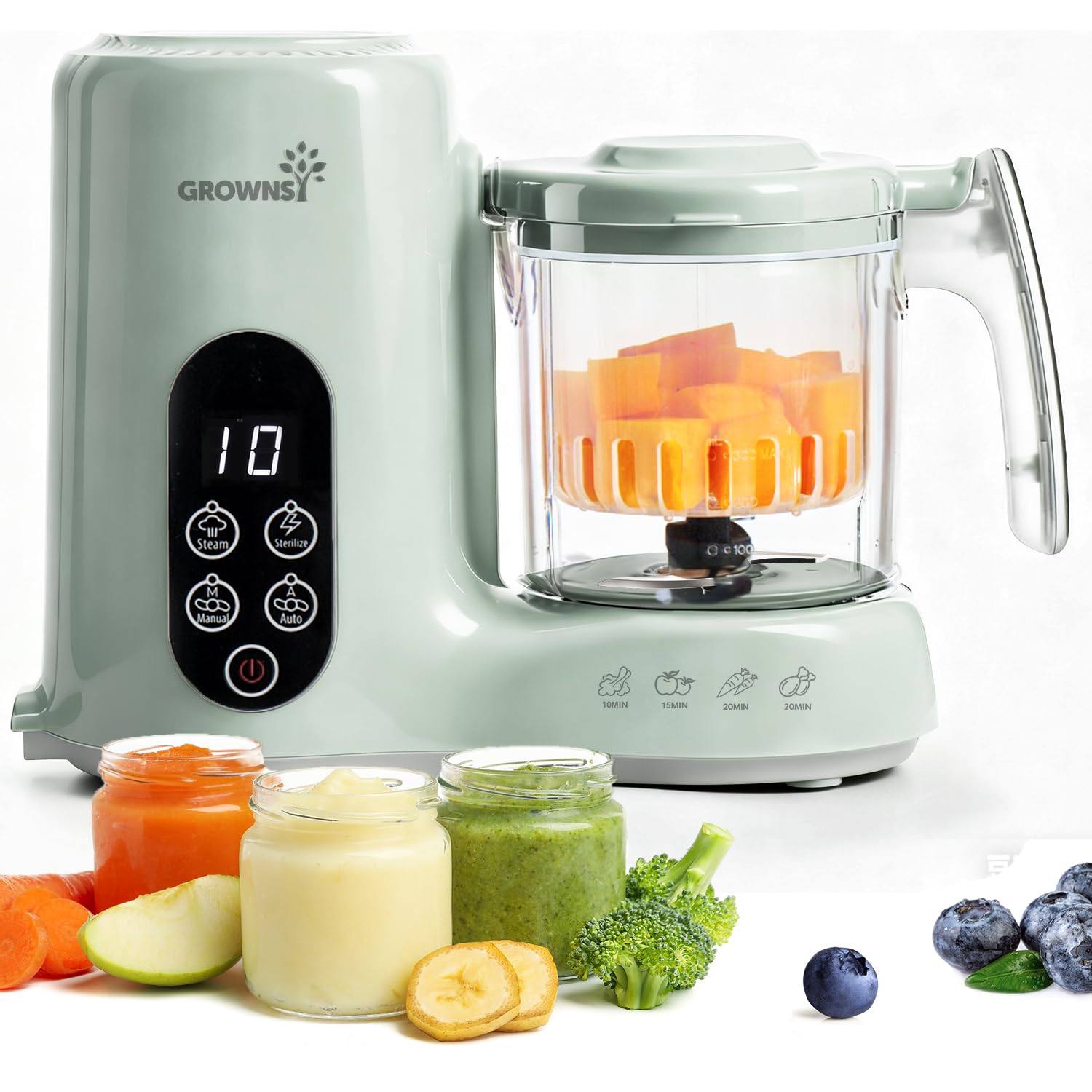
Grownsy Baby Food Maker with Steam Basket, One Step Baby Food Processor Steamer Puree Blender Grinder Mills Machine, Auto Cooking Grinding and Sterili-zing for Healthy Homemade Baby Food, Green
- 𝗦𝘁𝗲𝗮𝗺𝗶𝗻𝗴 𝗮𝗻𝗱 𝗕𝗹𝗲𝗻𝗱𝗶𝗻𝗴 𝗶𝗻 𝗢𝗻𝗲: The height of the blender container is 4.13 inches, and the outer diameter is 4.
- 𝗡𝘂𝘁𝗿𝗶𝗲𝗻𝘁-𝗣𝗿𝗲𝘀𝗲𝗿𝘃𝗶𝗻𝗴 𝗦𝘁𝗲𝗮𝗺𝗶𝗻𝗴 𝗕𝗮𝘀𝗸𝗲𝘁: The elevated design of our steaming basket enables true steam cooking, mi
- 𝗧𝘄𝗼 𝗠𝗶𝘅𝗶𝗻𝗴 𝗠𝗼𝗱𝗲𝘀: The baby food steamer and blender feature smart digital controls for quick and easy settings
Expert Insights
Choosing a baby food maker won't define your parenting — but it might just save your sanity on a Tuesday evening when dinner is due, the baby is tired, and you've got exactly 20 minutes. The best machine is the one you'll actually use: easy to clean, sized for your kitchen, and matched to where your baby is right now in their texture journey. Whether you go for the budget-friendly AMZBABYCHEF 4-in-1, the batch-cooking power of the Bear Dual-Layer, or the automation of the Momcozy AutoMeal, you're making a choice to feed your baby fresh, real food — and that's always worth it.
If this guide helped you, save it for when solids season arrives, and share it with a parent who's just getting started.
Sources & References
- World Health Organization. "Complementary Feeding: Guiding Principles for Breastfed Children." WHO, 2023. https://www.who.int/health-topics/complementary-feeding
- American Academy of Pediatrics. "Starting Solid Foods." HealthyChildren.org, 2023. https://www.healthychildren.org/English/ages-stages/baby/feeding-nutrition/Pages/Starting-Solid-Foods.aspx
- Academy of Nutrition and Dietetics. "Best Ways to Cook Vegetables." EatRight.org, 2022. https://www.eatright.org/food/planning-and-prep/cooking-tips-and-trends/best-ways-to-cook-vegetables
- Fewtrell, M. et al. "Complementary Feeding: A Position Paper by the European Society for Paediatric Gastroenterology, Hepatology, and Nutrition." Journal of Pediatric Gastroenterology and Nutrition, 2017. https://doi.org/10.1097/MPG.0000000000001454
- Savage, J.S. et al. "Parental Influence on Eating Behavior: Conception to Adolescence." Journal of Law, Medicine & Ethics, 2007.
- NHS / National Institute for Health and Care Excellence (NICE). "Maternal and Child Nutrition." NICE Public Health Guideline PH11, updated 2023. https://www.nice.org.uk/guidance/ph11
- Centers for Disease Control and Prevention. "Food Safety for Infants and Toddlers." CDC, 2023. https://www.cdc.gov/food-safety/foods/infant-toddler.html
- Ramsden, M. et al. "Nutritional Content of Commercially Prepared vs. Home-Prepared Infant Foods." Maternal & Child Nutrition, 2019.
Frequently Asked Questions
When should I start using a baby food maker?
Is steaming really better than boiling for baby food?
How long does homemade baby food last in the fridge and freezer?
Do I need a dedicated baby food maker, or can I use a regular blender?
Are the Grownsy and Bear machines safe for BPA exposure?
Can I use a baby food maker to make food for a 4–5 month old?
How do I clean a baby food maker blade safely?
Was this helpful?
Thanks — your feedback helps us pick what to write next.