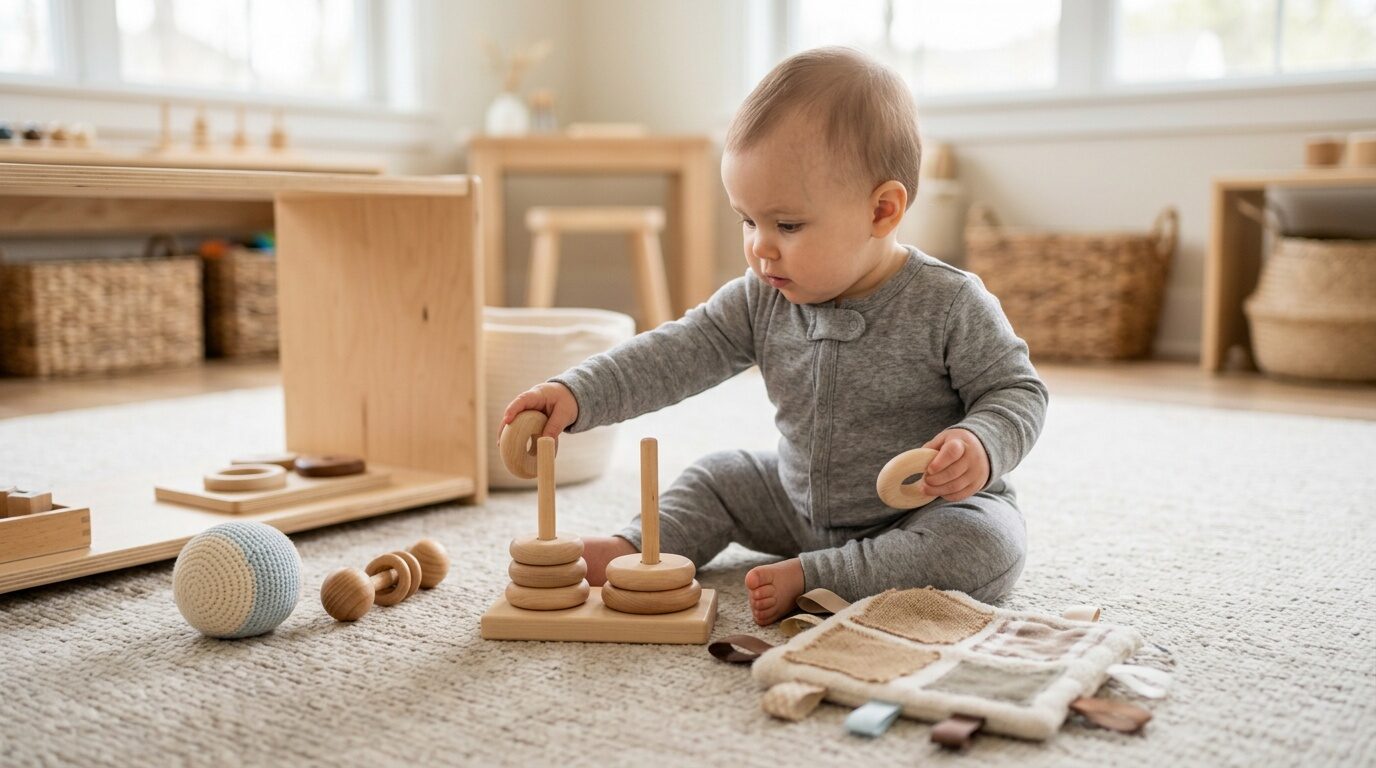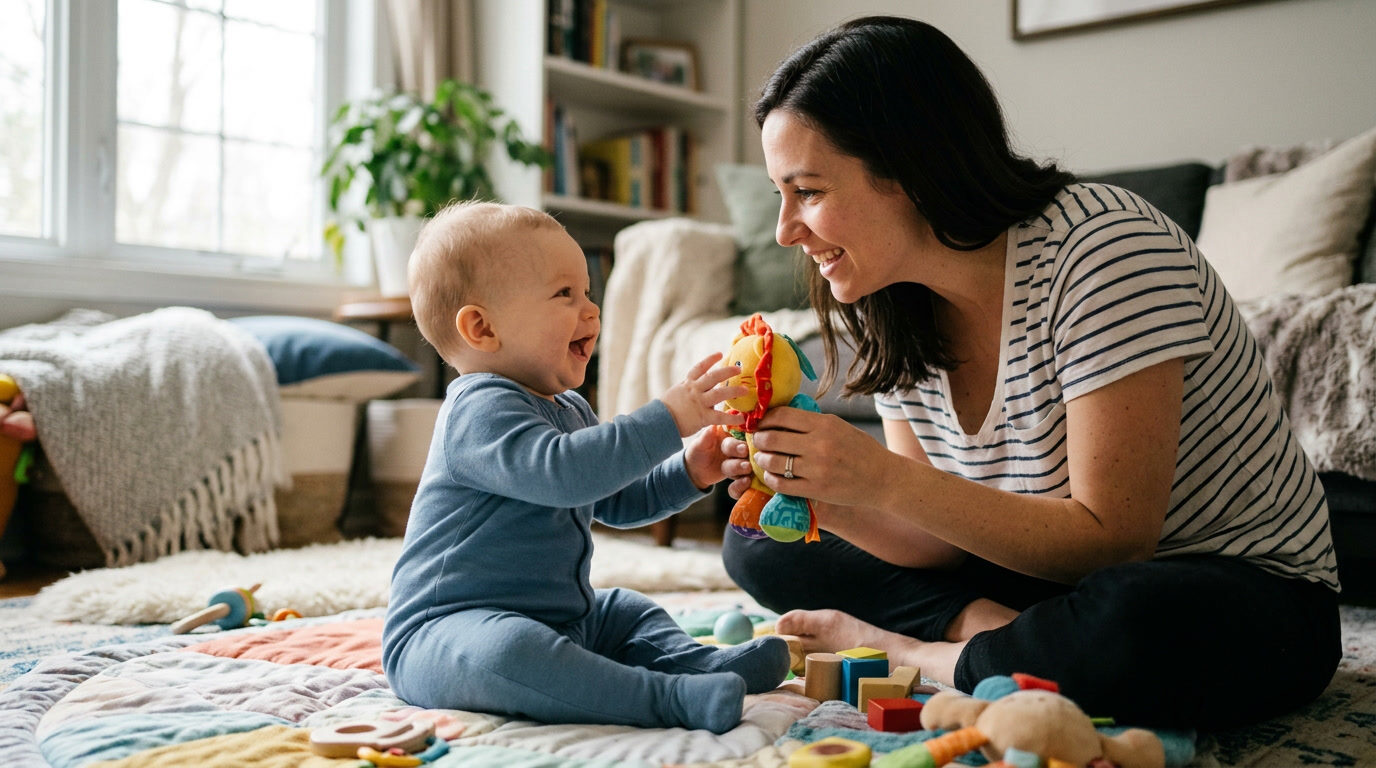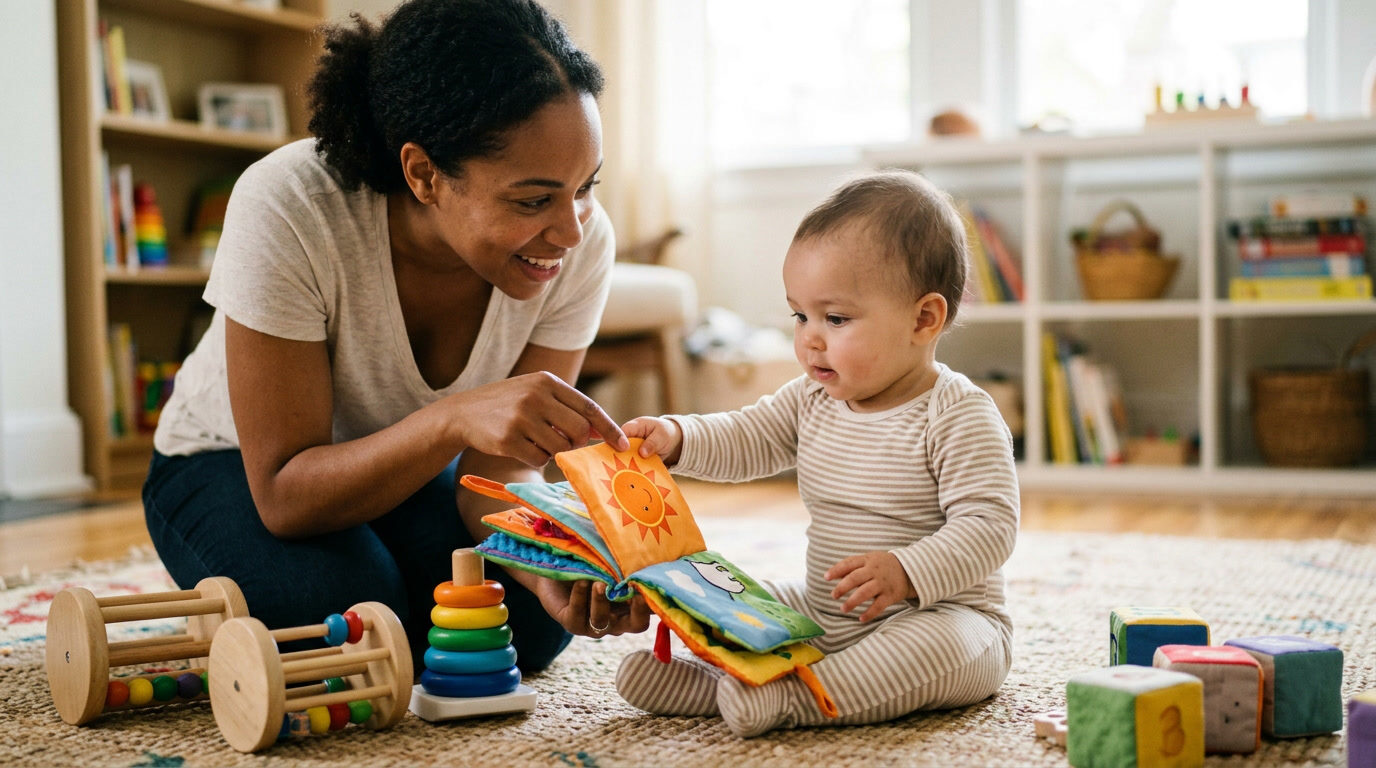
Why Sensory Play Is the Engine of Infant Brain Development
The best sensory toys for infants aged 3–12 months are those that safely engage multiple senses at once — touch, sight, sound, and movement — because this multi-sensory stimulation is what drives the rapid brain development happening right now.
In this article
Your baby's brain is growing faster right now than it ever will again. According to the Centers for Disease Control and Prevention (CDC), the first year of life is one of the most critical windows for sensory and cognitive development — the experiences your infant has during play literally shape the architecture of their brain. Yet with hundreds of "developmental" toys on the market, it's genuinely hard to know what's worth your money and what's just colourful noise.
This guide cuts through the clutter. By the time you finish reading, you'll understand:
1. Why Sensory Play Is the Engine of Infant Brain Development
Sensory play isn't a luxury — it's how your baby builds their brain. Every time your 5-month-old squeezes a textured ball or tracks a brightly coloured toy with their eyes, they're forming and strengthening neural pathways that underpin language, motor skills, and emotional regulation for years to come.
The American Academy of Pediatrics (AAP) emphasises in its developmental guidelines that responsive, play-based interaction in infancy is one of the strongest predictors of healthy cognitive and social-emotional outcomes. Sensory toys serve as the physical bridge between a caregiver's warm engagement and the child's independent exploration.
What "Sensory" Actually Means for a Baby
Sensory play targets the seven sensory systems: sight (visual), hearing (auditory), touch (tactile), movement (vestibular), body awareness (proprioceptive), smell (olfactory), and taste (gustatory). For 3–12 month olds, the first four are the ones you'll engage most through toys.
2. Choosing Toys for the 3–6 Month Stage: Sight and Sound First
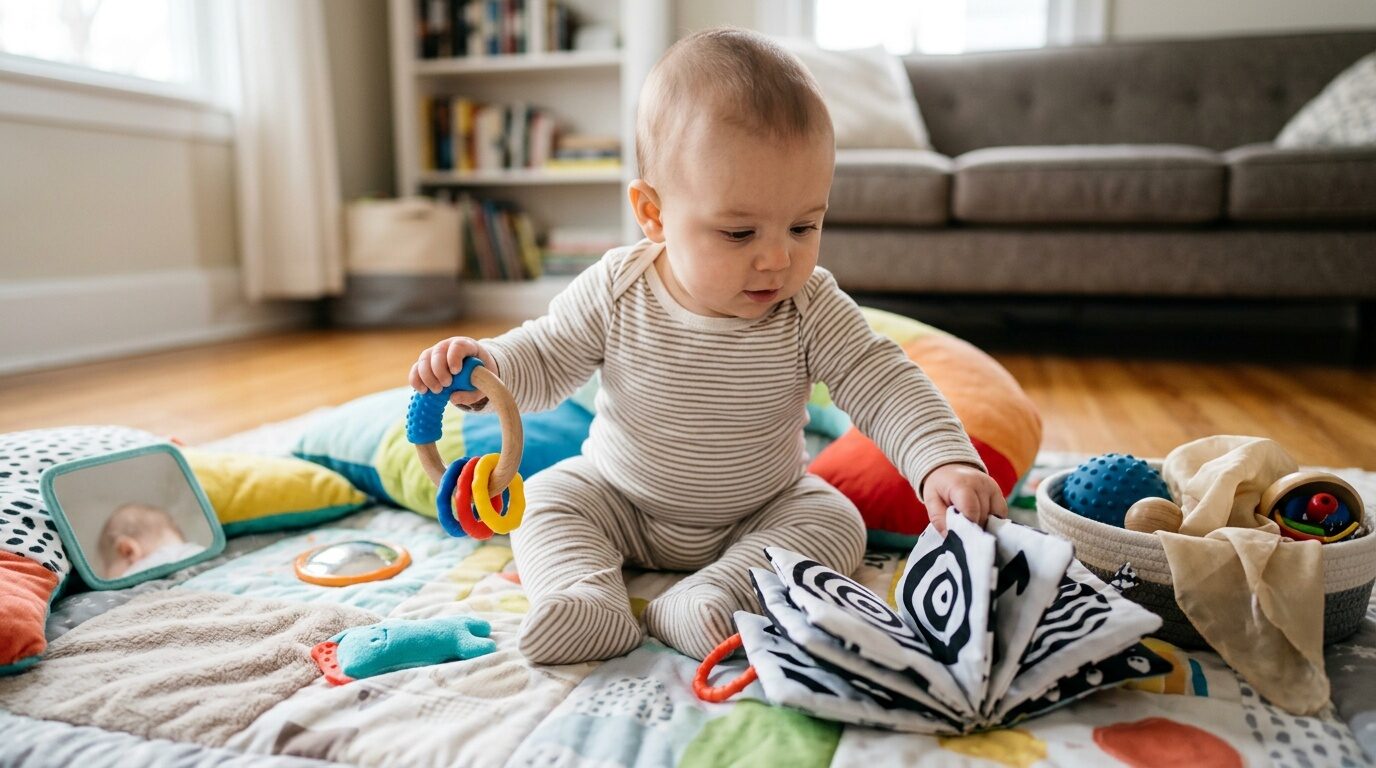
At 3–6 months, your baby's vision is still sharpening. They can see roughly 8–12 inches clearly and are drawn to high-contrast colours and slow-moving objects. Their hands are beginning to open and close intentionally, and they're starting to understand that their actions cause reactions.
The best toys at this stage offer:
For this stage, a multi-toy set that bundles several sensory experiences is a smart investment. The LUCKFUTURE 8-in-1 Montessori Toy Set is rated 4.7 stars across 140 reviews and includes stacking rings, teething toys, and wooden sorting pieces — all BPA-free and tested for infant safety from 6 months.

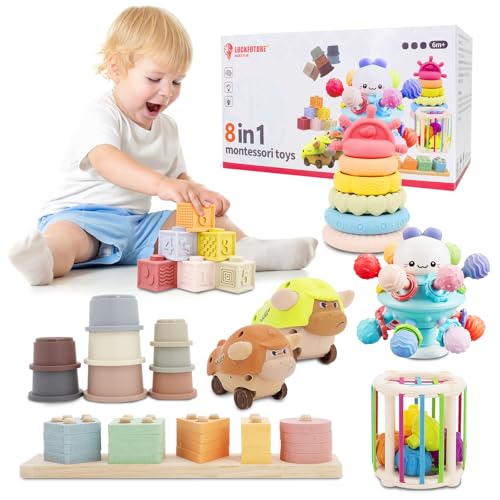
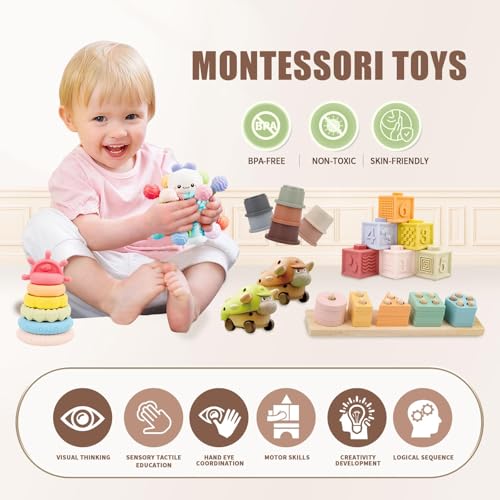
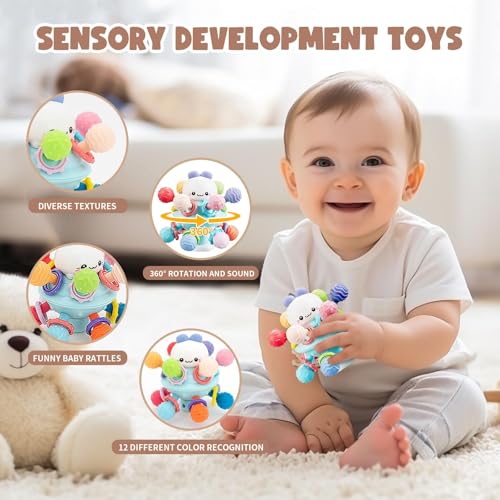
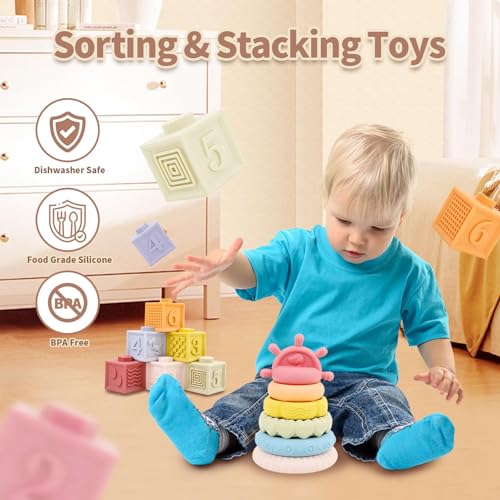
LUCKFUTURE Baby Toys 6 to 18 Months, 8 in 1 Montessori Toy Set, Educational Learning Toy for Toddlers Babies Sensory Toys Newborn Infant Gifts for Boys & Girls
- 8 in 1 MONTESSORI TOY SET: Our exclusive toy set includes stacking blocks & rings & cups, teething toys and se
- 100% SAFE FOR CHILDREN: Our baby toys are made of high quality materials that you can choose with confidence.
- ASSORTED STACKING TOYS SET: Contains different themed stacking activities, stacking blocks, stacking rings, st
3. Tactile Exploration at 5–8 Months: Texture Is Everything
By 5 months, your baby's hands are their primary research tools. They'll grab, squeeze, transfer between hands, and — inevitably — put everything in their mouth. This mouthing behaviour isn't naughty; it's neurologically purposeful. The mouth has the densest concentration of sensory receptors in the infant body, and oral exploration is a legitimate way babies gather information about the world.
What Good Tactile Toys Offer
Tactile stimulation in early infancy supports myelination of sensory pathways, which is critical for the speed and accuracy of nerve signal transmission throughout childhood.
— American Academy of Pediatrics, Caring for Your Baby and Young Child, 7th Edition (2019)
The Infantino Press & Stay Sensory Blocks are a brilliant tactile option from 12 months. Their interlocking design means babies experience cause-and-effect (press → click → stay) while their fingers navigate varied block surfaces. At just $11.87 for a 24-piece set, they're one of the best-value sensory purchases available.



Infantino Press & Stay Sensory Blocks, Developmental Activity Blocks, 24-Piece Multicolor Stacking Toy Set for Babies & Toddlers 12 Months+
- PRESS, STACK & BUILD IN ANY DIRECTION: Unlike traditional baby building blocks, the innovative interlocking de
- SUPPORTS EARLY CHILDHOOD DEVELOPMENT: Every block session is a learning session! These Montessori-inspired sen
- ENDLESS SENSORY PLAY POSSIBILITIES: Designed to spark imagination and encourage open-ended play, this 24-piece
4. Sound and Cause-and-Effect Toys: Building Early Logic
Between 6 and 10 months, your baby is developing a concept that developmental psychologists call "contingency learning" — understanding that their actions produce predictable outcomes. This is the foundation of logical thinking, problem-solving, and eventually, language.
Toys that respond to touch with sound, light, or movement are powerful teachers at this stage. The key is choosing toys where the response is immediate, clear, and proportionate — not so loud or flashy that it overwhelms.
What to Look for in Sound Toys
The hand2mind Sensory Fidget Tubes offer a visually captivating cause-and-effect experience — shake them, flip them, and watch the contents slowly settle. While marketed for older children's emotional regulation, the mesmerising visual and tactile feedback makes them excellent for supervised sensory exploration from around 9–10 months (always with adult supervision given the tube format).

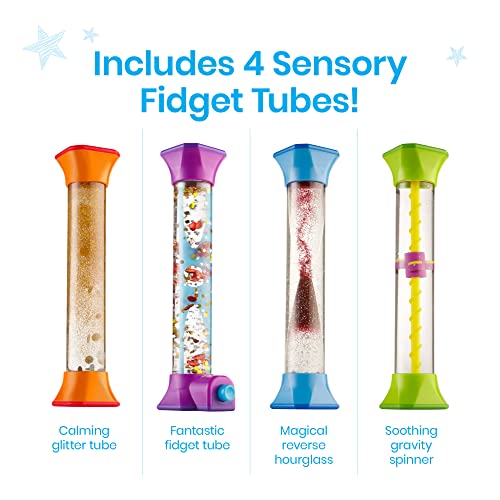
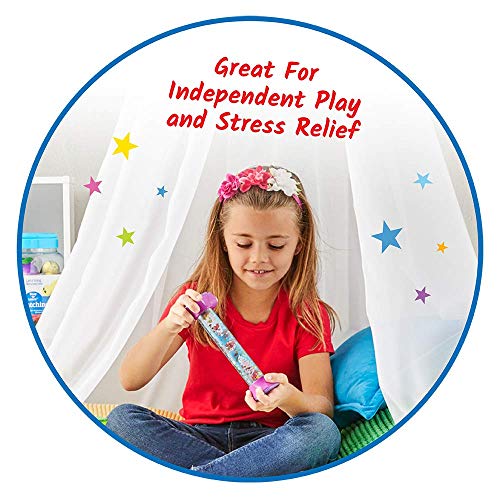

hand2mind Sensory Fidget Tubes, Sensory Toys, Travel Toys, Quiet Fidgets for Classroom, Calm Down Corner Supplies, Anxiety Relief Items for Kids, Toddler Stocking Stuffers, for Kids
- SOCIAL EMOTIONAL LEARNING ACTIVITIES: Help children to manage their emotions, focus their attention, and pract
- CALMING CORNER ITEMS KIDS: Each of the four colorful tubes offers a unique, fascinating design for long-lastin
- SPECIAL EDUCATION CLASSROOM MUST HAVES: Guide children to shake, flip, and play with the tubes to introduce th
5. Fine Motor Development at 8–12 Months: From Grasp to Pincer
Around 8–9 months, your baby transitions from a whole-hand "palmar" grasp to the more refined "pincer" grasp — using thumb and index finger to pick up small objects. This is a landmark milestone, and the right toys accelerate it beautifully.
Activities that involve picking up, inserting, stacking, and transferring objects are gold at this stage. They build the hand strength and coordination that will later support writing, drawing, self-feeding, and dressing.
Fine Motor Milestones to Support (8–12 Months)
The Learning Resources Spike The Fine Motor Hedgehog is one of the most beloved fine motor toys on the market — 54,000+ reviews and a 4.7-star rating don't lie. Its easy-grip textured quills are perfect for the pincer grasp stage, and the colour-matching element adds a cognitive layer as your baby approaches 12 months.
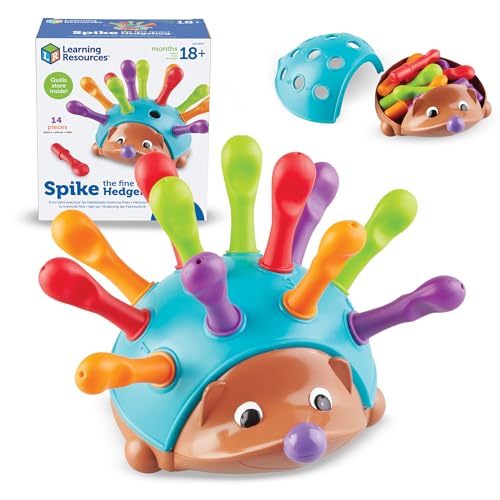


Learning Resources Spike The Fine Motor Hedgehog - Toddler Montessori Toys, Stacking Shape, Gifts For Boys And Girls, Sorting And Matching Skill Activities, Educational Games, Kindergarten
- DEVELOPS ESSENTIAL FINE MOTOR SKILLS - Colorful, quills help toddlers strengthen hand muscles, and enhance han
- GROWS WITH YOUR CHILD - Perfect for ages 18 months and up, this versatile toy evolves from simple play for tod
- PROVIDES ENGAGING SENSORY PLAY - The specially designed quills with easy-grip texture captivate children's att
6. Safety Standards: What Every Sensory Toy Must Pass
No developmental benefit is worth a safety risk. At 3–12 months, your baby will mouth every single toy. Here's what to check before any sensory toy enters your home.
The Non-Negotiable Safety Checklist
The LUCKFUTURE 8-in-1 Montessori Set explicitly states BPA-free materials tested for infant safety from 6 months — a good example of transparent safety communication from a brand. Always cross-reference with your own inspection.
7. Sensory Toy Comparison: Finding the Right Fit by Stage and Skill
| Sensory Focus | Best Age (Infant) | Primary Developmental Benefit | Key Feature to Look For | Recommended Product | Price Range |
|---|---|---|---|---|---|
| Tactile / texture | 5–12 months | Tactile discrimination, mouthing exploration | Multiple textures, BPA-free, safe to chew | Infantino Press & Stay Sensory Blocks | $11–13 |
| Visual / cause-and-effect | 9–12 months | Contingency learning, visual tracking | Clear cause-and-effect response, gentle motion | hand2mind Sensory Fidget Tubes | $26–28 |
| Fine motor / pincer grasp | 8–12 months | Pincer grasp, hand-eye coordination, colour recognition | Small graspable pieces, colour matching | Learning Resources Spike The Fine Motor Hedgehog | $11–13 |
| Multi-sensory / stacking | 6–12 months | Spatial reasoning, colour/shape recognition, stacking | Multiple toy types in one set, age-safe materials | LUCKFUTURE 8-in-1 Montessori Set | $32–35 |
| Sorting / colour recognition | 10–12 months+ | Fine motor, problem-solving, colour sorting | Chunky pieces, high-contrast colours, sturdy build | SMALL FISH Montessori Sorting Toy | $13–15 |
| Busy / multi-activity | 12 months+ | Dexterity, cognitive challenge, independent play | Multiple activity types, portable format | Esjay Toddler Busy Board | $22–24 |
Expert Insights on Sensory Play in Infancy
The Bottom Line
Your baby doesn't need a room full of toys. They need a handful of thoughtfully chosen objects that match where they are right now — developmentally, sensory-wise, and in terms of what genuinely delights them. From the satisfying click of Infantino Sensory Blocks to the bright quills of Spike the Hedgehog, the best sensory toys share one quality: they make your baby want to reach, grab, explore, and try again.
That persistence — that joyful, frustrated, triumphant cycle of trying — is how brains are built. Your job is simply to set the stage, get on the floor, and cheer them on.
If this guide helped you, save it for the next developmental leap, share it with a fellow parent, or bookmark it for your next toy purchase. Your baby's curiosity is the most renewable resource in the house — good toys just help it burn brighter.
Sources & References
- Centers for Disease Control and Prevention (CDC). "Developmental Milestones: 4 Months, 6 Months, 9 Months, 1 Year." 2023. https://www.cdc.gov/ncbddd/actearly/milestones/index.html
- American Academy of Pediatrics (AAP). "Caring for Your Baby and Young Child: Birth to Age 5." 7th Edition. 2019. https://www.aap.org
- American Academy of Pediatrics (AAP). "Where We Stand: Screen Time." 2023. https://www.healthychildren.org/English/family-life/Media/Pages/Where-We-Stand-TV-Viewing-Time.aspx
- Center on the Developing Child, Harvard University. "Serve and Return Interaction Shapes Brain Circuitry." 2023. https://developingchild.harvard.edu/science/key-concepts/serve-and-return/
- Center on the Developing Child, Harvard University. "Brain Architecture." 2023. https://developingchild.harvard.edu/science/key-concepts/brain-architecture/
- U.S. Consumer Product Safety Commission (CPSC). "ASTM F963 Toy Safety Standard." 2023. https://www.cpsc.gov/Business--Manufacturing/Business-Education/Toy-Safety
- Institute for Learning & Brain Sciences (I-LABS), University of Washington. "Infant Brain Research." 2022. https://ilabs.uw.edu
- Barnard College Center for Toddler Development. "Play and Learning in Early Childhood." Columbia University. https://barnard.edu/center-toddler-development
Frequently Asked Questions
What age should I introduce sensory toys?
How long should sensory play sessions last for infants?
Are wooden sensory toys better than plastic ones?
Can sensory toys help with teething discomfort?
How many sensory toys does my baby actually need?
Do sensory toys help babies with developmental delays?
Is screen-based "sensory" content (apps, videos) equivalent to physical sensory toys?
Was this helpful?
Thanks — your feedback helps us pick what to write next.