Infant Education 3–12 Months: What Actually Builds Baby's Brain
Formal schooling isn't on the agenda yet, but the months between 3 and 12 are the most neurologically productive of your child's entire life, and the "curriculum" is everyday interaction, play, and responsive caregiving.
In this article
Picture this: your five-month-old locks eyes with you, kicks both legs, and lets out a sound that is almost certainly trying to say something. You coo back. She kicks harder. That tiny exchange, repeated hundreds of times a day, is building roughly one million new neural connections per second, according to the Harvard Center on the Developing Child. By the time she turns one, her brain will already be 60 percent of its adult volume. The decisions you make right now about play, interaction, childcare, and learning environments are not preparation for education. They are the education.
This guide covers everything parents of 3 to 12-month-olds need to know:
1. How Your Infant's Brain Is Learning Right Now
Your baby is not waiting for school to start learning; the classroom opened the moment they were born. Between 3 and 12 months, the brain is in a critical sensitive period for sensory processing, emotional regulation, and early language. Synaptic density in the prefrontal cortex peaks before the second birthday, meaning the neural scaffolding for thinking, memory, and social connection is being laid down at a pace that will never be matched again.
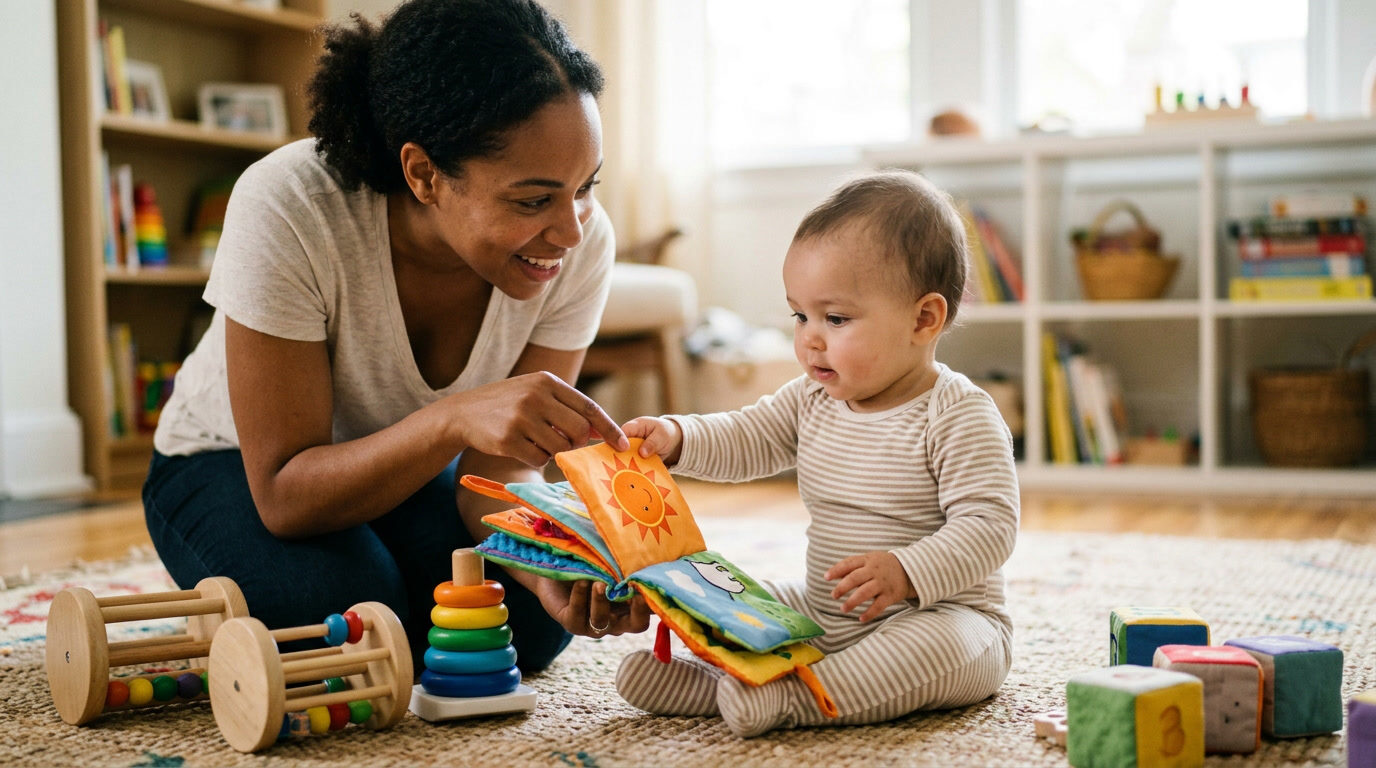
The mechanism behind this growth is surprisingly straightforward. When you respond consistently and warmly to your baby's cues, whether that is a cry, a gurgle, or a reaching hand, you trigger a biological cascade that reinforces the neural pathways involved. Researchers at Harvard call this "serve-and-return" interaction, and it is, in their words, the architecture of healthy brain development.
Understanding how cognitive development actually works gives you a much clearer picture of why these early months matter so disproportionately.
What "Learning" Looks Like at 3–12 Months
- At 3–4 months: tracking faces and high-contrast patterns, turning toward sound sources - At 5–6 months: object permanence begins; dropping items to watch them fall is genuine physics experimentation - At 7–9 months: intentional imitation of mouth shapes and gestures (proto-language) - At 10–12 months: pointing, shared attention, and understanding of about 50 words (even without speaking them)
2. The Serve-and-Return Curriculum: No App Required
Responsive interaction is the most evidence-backed educational intervention available to you, and it costs nothing. The American Academy of Pediatrics (AAP) identifies it as the cornerstone of healthy infant development and explicitly recommends prioritising it over screen-based learning tools for children under 18 months.
Serve-and-return works in three steps that happen naturally in every engaged interaction:
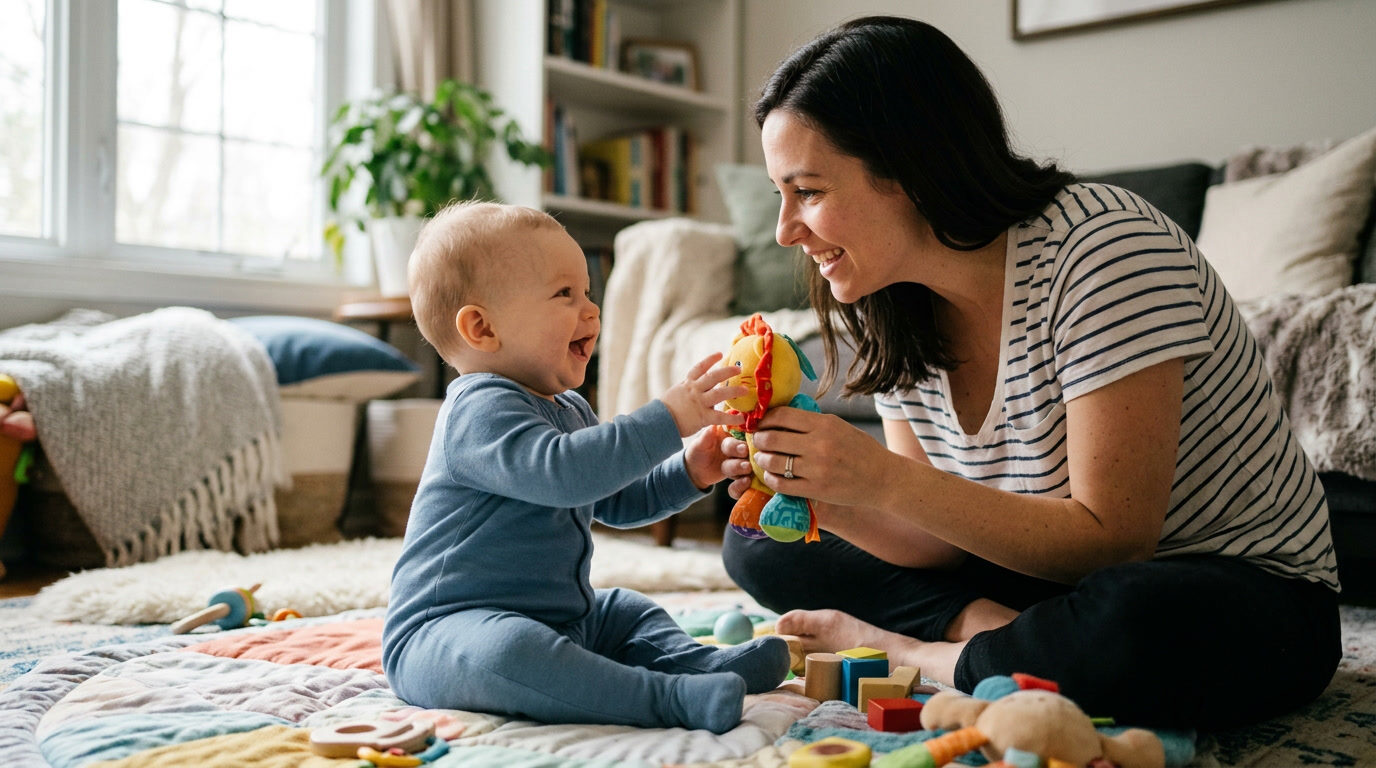
1. Baby serves. She makes a sound, reaches for an object, or changes facial expression. 2. You return. You respond with eye contact, words, or a mirroring gesture. 3. The loop closes. She responds to your response, and the circuit fires again.
Repeated thousands of times, this loop literally builds brain architecture. Chronic disruptions to it (from stress, postnatal depression, or simply being distracted by a phone) have measurable consequences on language development and emotional regulation.
Music and Rhythm as Early Learning
Music is not just entertainment. Research published by the University of Washington's Institute for Learning and Brain Sciences found that rhythmic, musical play at 9 months accelerated the neural processing of both music and speech sounds. Songs with repetitive patterns (think "Wheels on the Bus") train your baby's auditory cortex to detect phoneme boundaries, which is the first building block of reading.
Singing the same songs repeatedly is not boring to your baby; it is the entire point. Predictability is how brains encode pattern.


Baby Piano Toy 6 to 12 Months Light Up Music Baby Toys for 6 9 12 18 Months Early Learning Educational Piano Keyboard Infant Babies Girl Toy 1 Year Old Boy Girls Gift
- Perfect Musical Educational Toys: The cute elephant light up music toys come with colorful design and funny so
- Endless Fun in Two Modes: Elephant music baby toys for 1 year old boy girl have two modes to play. Learning Mo
- 100% Safe and Sturdy: Made of premium ABS plastic, the music toys for babies 6 to 12 months are designed with
3. Choosing the Right Toys for Infant Learning
Toys matter, but only when they are developmentally matched. Overstimulating plastic toys with constant flashing lights and electronic voices can actually reduce quality parent-child interaction time, the very mechanism that drives development.
The most educationally effective infant toys share four features:
By Age Stage
3–6 months: High-contrast visual stimulation is the priority. The visual cortex is still maturing, and black-and-white or bold-colour patterns activate it most efficiently.
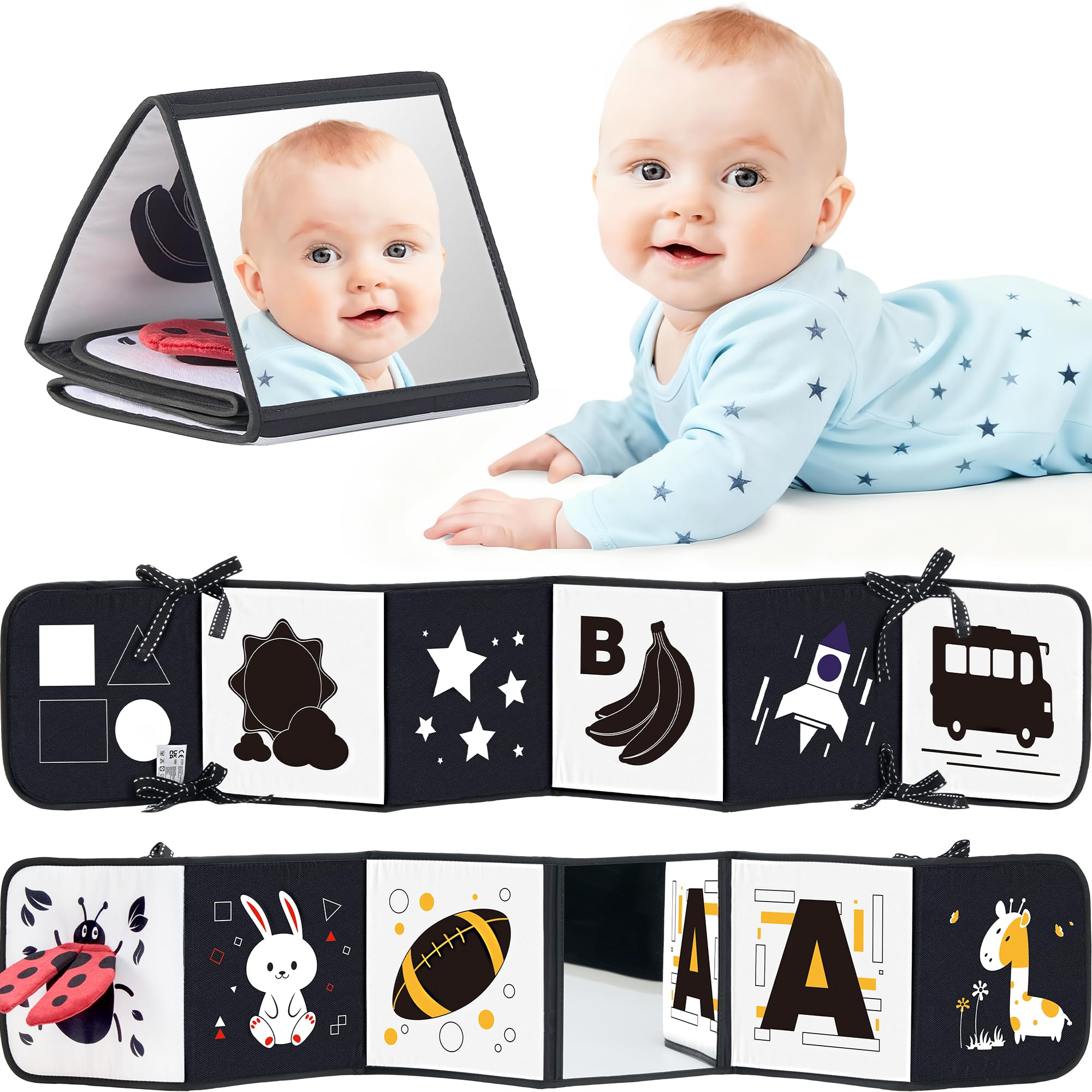
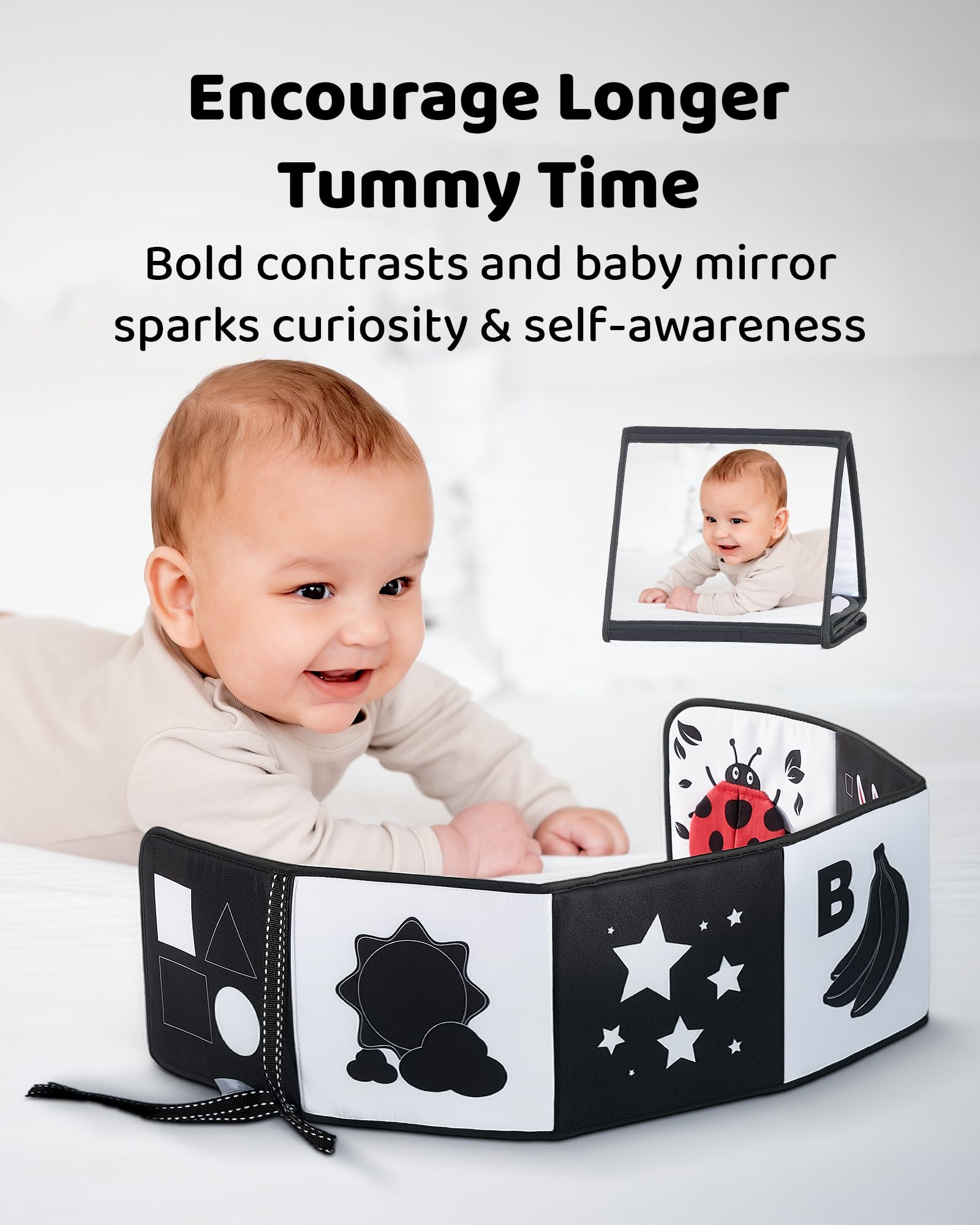
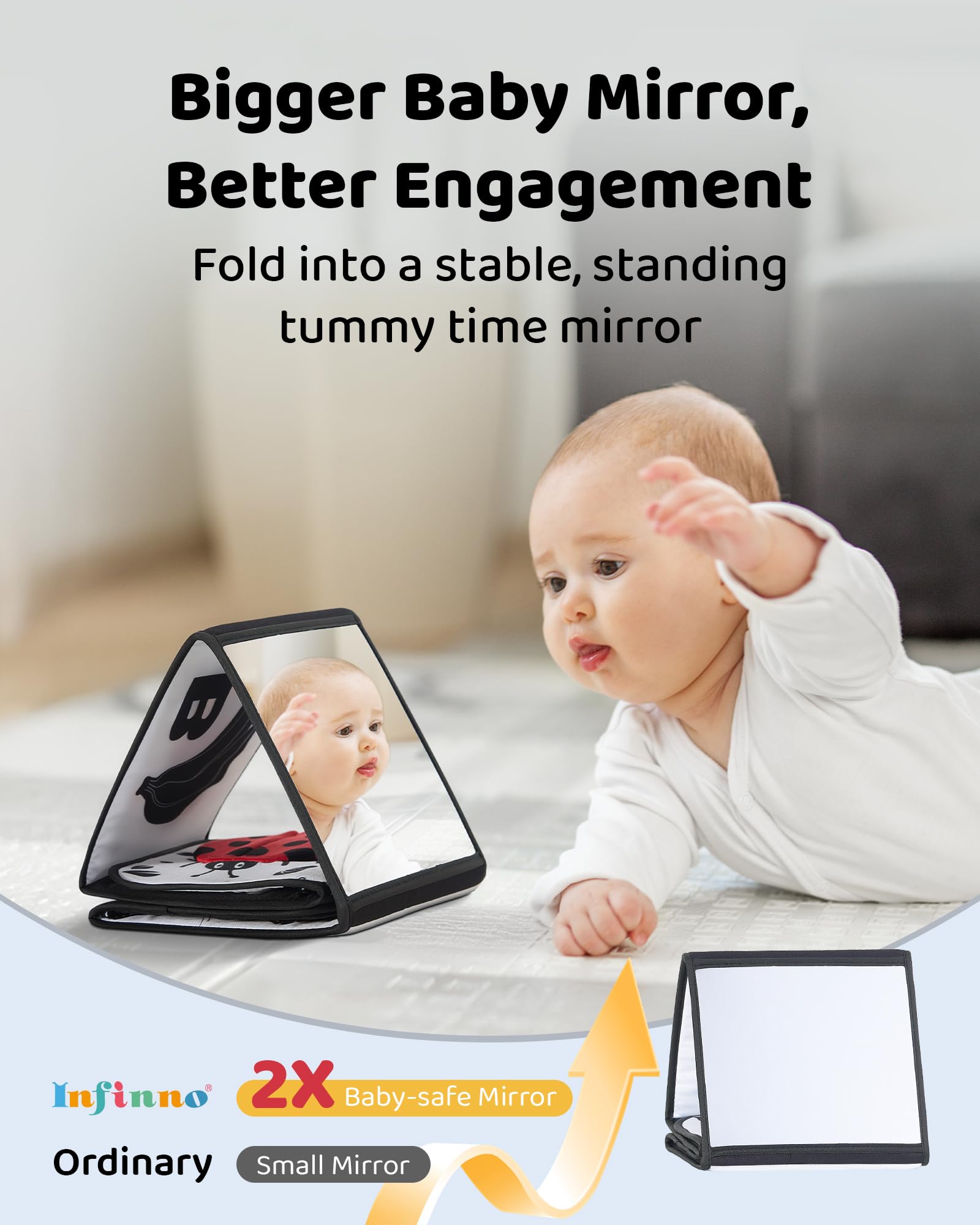
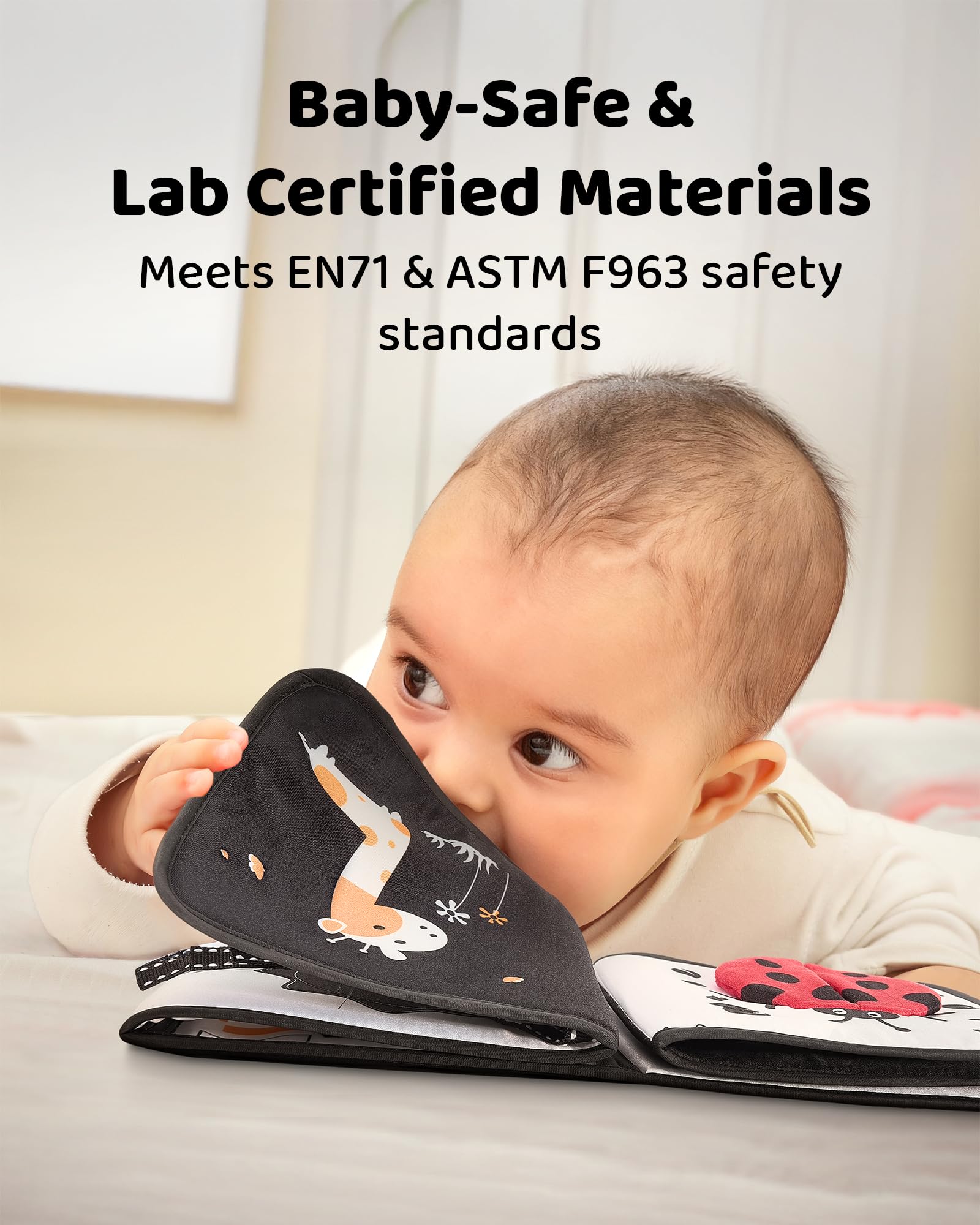
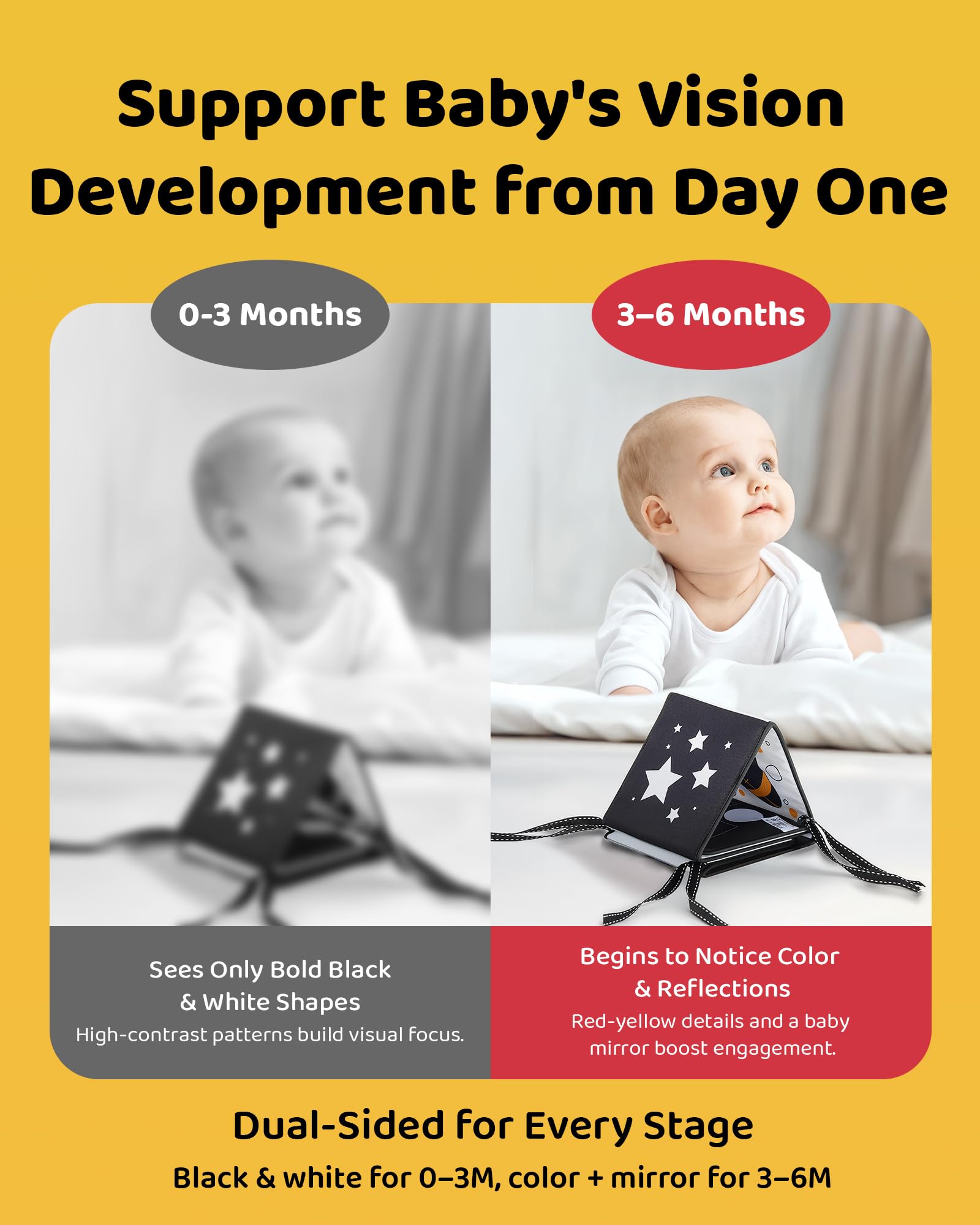
Black and White Baby Books for Newborn - Tummy Time Mirror & Sensory Toys Soft Montessori Toy for Infant Visual Stimulation, Brain Development & Early Learning - High Contrast Toys for 0-6 Months
- Stimulate Your Baby’s Senses: This black and white baby book, designed for babies 0-6 months, features high-co
- Interactive & Engaging Infant Toy: Includes an embedded mirror that aids in self-recognition and cognitive dev
- Safe for Newborns 0–6 Months: Made from non-toxic and BPA-FREE soft sponge and polyester fiber with durable st
6–9 months: Object manipulation, cause-and-effect, and early sorting. Reaching, grasping, mouthing, and banging are all genuine scientific inquiry.
9–12 months: Shape sorting, stacking, and early symbolic play. These activities build spatial reasoning and the hand-eye coordination that will later support writing.


Fisher-Price Stacking Toy Baby's First Blocks Set of 10 Shapes for Sorting Play for Infants Ages 6+ Months
- Set of 10 colorful blocks for baby to sort, stack and drop through the shape-sorter lid
- All blocks fit inside bucket for storage
- Easy-carry handle for take-along play
For the 6-to-12-month window specifically, multi-skill sets tend to offer the best value because a baby's interests shift rapidly. The Somastung 6-in-1 Montessori set bundles stacking rings, sorting shapes, and sensory textures into one safe, food-grade silicone kit that covers the entire second half of the first year.
4. Childcare and Early Learning Settings: What Quality Actually Means
Many families need to return to work before their baby turns one, which makes childcare a genuine educational decision. The good news: high-quality infant care does not harm development and can actively support it. The caveat: quality varies enormously.
The National Institute of Child Health and Human Development (NICHD) Study of Early Child Care, one of the largest longitudinal studies ever conducted on the topic, found that when childcare was sensitive and responsive, children's cognitive and language outcomes were as strong as those of home-reared children. The key variable was not "home versus daycare" but the quality of interactions in whichever setting the child spent time.
What to Look for When Visiting a Setting
5. Language Exposure: Quantity, Quality, and Diversity
Your infant will speak their first word somewhere between 10 and 14 months, but the linguistic groundwork is laid months earlier. Researchers at the University of Kansas tracked word exposure in the first three years and found that children from verbally rich households heard tens of millions more words than those from less talkative homes, a gap directly correlated with vocabulary size at age three and reading scores at age nine.
The quality of language matters as much as quantity. Child-directed speech (the slightly higher-pitched, slower, rhythmically exaggerated talking adults naturally do with babies) is not babying your child. It is a precisely tuned input that helps an immature auditory system isolate phonemes.
Language learning at this age also benefits from diversity of input: different voices, different contexts, and ideally different languages if your household is multilingual. The AAP confirms that bilingual exposure in infancy creates no confusion and may strengthen executive function later in childhood.


LeapFrog Learning Friends 100 Words Book, Green
- Meet learning friends Turtle, Tiger and Monkey who will introduce more than 100 age-appropriate words chosen b
- Word categories include: pets, animals, food, mealtime, colors, activities, opposites, outside and more
- Touching the words on the pages plays the words, sound effects and fun facts; hear the Learning Friends theme
For families building a language-rich home, the Airbition Talking Flash Cards offer 224 illustrated vocabulary categories as a complement to live conversation, useful from around 10 months onward as your baby begins to connect objects to their names.
6. Screen Time, Apps, and "Educational" Media: The Real Evidence
No screen time for infants under 18 months (except video calls with family) is the current, unambiguous AAP recommendation, and the evidence behind it is robust. The core problem is not that screens are toxic; it is that every minute in front of a screen is a minute not spent in serve-and-return interaction, which is irreplaceable.
Studies from the University of Washington have shown that infant-directed DVDs and apps (including products explicitly marketed as educational) do not improve vocabulary or cognitive outcomes at this age. In some studies, heavy infant screen exposure was associated with slightly delayed language development, likely because it reduced caregiver talk time.
What About "Background" TV?
Background television (a TV on in the room while the baby plays) is not neutral. Research published in the journal Child Development found it reduces the number of words spoken to infants by up to 770 words per hour, simply because parents naturally talk less when the TV is on.
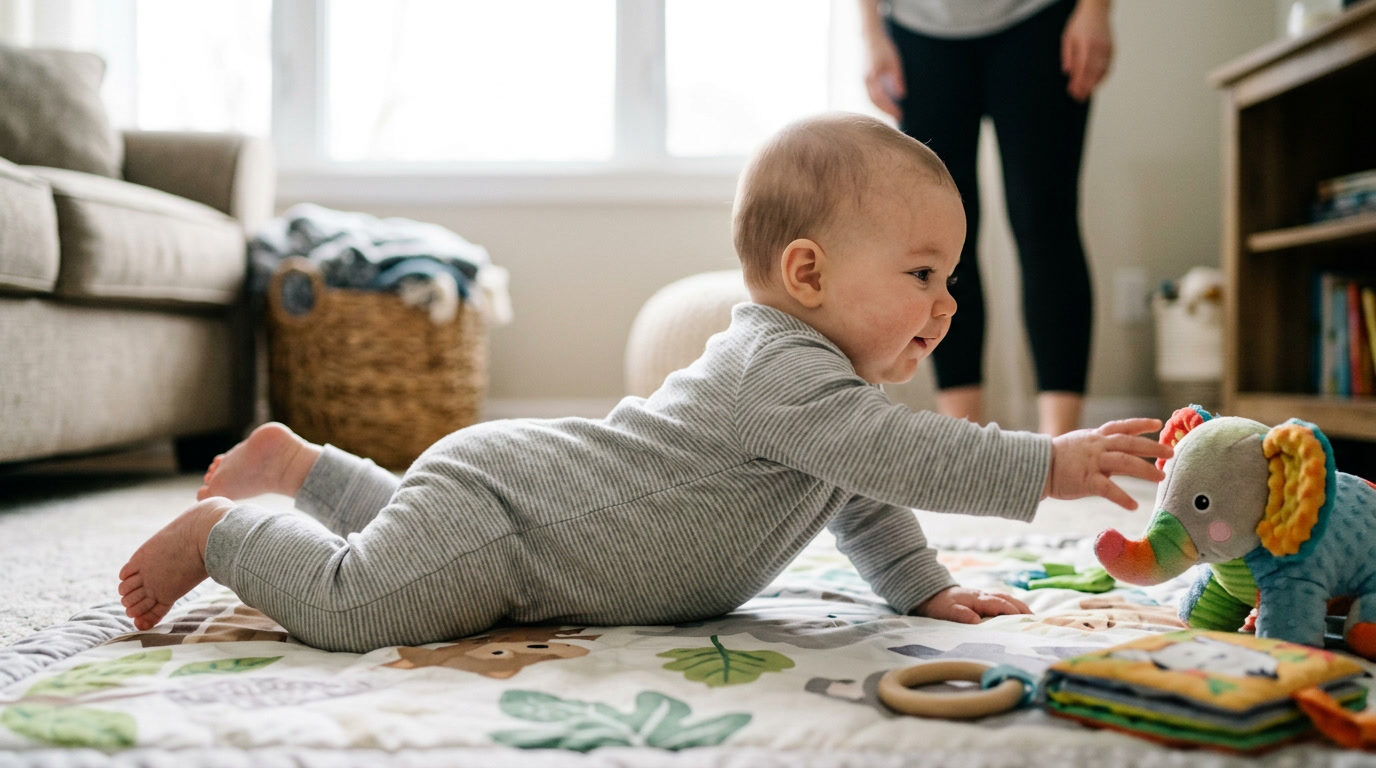
The physical development milestones that emerge alongside cognitive growth during infancy, such as sitting, reaching, and crawling, are also supported far better by floor play than by screen time.
| Learning Activity | Best Age Window | Primary Benefit | Key Limitation | Recommended Product | Price Range |
|---|---|---|---|---|---|
| High-contrast visual books | 0–6 months | Visual cortex development, early focus | Limited use beyond 6 months | Infinno High Contrast Book | $7–9 |
| Musical cause-and-effect toys | 6–12 months | Auditory processing, phoneme awareness | Volume can be overwhelming | WITALENT Baby Piano | $15–18 |
| Shape sorters and stacking | 6–12 months | Spatial reasoning, problem-solving | Fine motor needed (best from 8 mo) | Fisher-Price First Blocks | $10–13 |
| Multi-skill Montessori sets | 6–18 months | Broad sensory + cognitive coverage | Higher upfront cost | Somastung 6-in-1 Set | $33–36 |
| Talking word books | 10–18 months | Vocabulary, auditory-visual pairing | Better after 10 months | LeapFrog 100 Words Book | $19–22 |
| Talking flash cards | 10–24 months | Language categorisation, early literacy | Needs adult co-engagement | Airbition Flash Cards | $9–11 |
Expert Insights
There is something both reassuring and quietly thrilling about the science of infant learning: you, talking and singing and responding, are already the best educational resource your baby has. No subscription, no curriculum, no classroom required. The "school" is the bath, the buggy, the nappy change, and every song you sing twice (and then sing again). Trust that responsiveness, back it up with the right toys for the right stage, and you are giving your child exactly what the evidence says they need.
The most quotable truth in infant development might also be the simplest: connection is the curriculum.
If this guide was useful, save it for the months ahead, the landscape shifts quickly between 3 and 12 months, and it is worth revisiting as your baby grows.
Sources & References
- Harvard Center on the Developing Child. "Serve and Return." 2023. https://developingchild.harvard.edu/science/key-concepts/serve-and-return/
- American Academy of Pediatrics (AAP). "Media and Young Minds." Pediatrics, Vol. 138, No. 5. 2016. https://doi.org/10.1542/peds.2016-2591
- National Institute of Child Health and Human Development (NICHD) Early Child Care Research Network. "Characteristics and Quality of Child Care for Toddlers and Preschoolers." Applied Developmental Science, 4(3), 116–135. 2000.
- Kuhl, Patricia K. "Early Language Acquisition: Cracking the Speech Code." Nature Reviews Neuroscience, 5, 831–843. 2004. https://doi.org/10.1038/nrn1533
- Kirkorian, Heather L., Troseth, Georgene L., and Anderson, Daniel R. "Media and Young Children's Learning." Future of Children, 18(1), 39–61. 2008.
- Hart, Betty and Risley, Todd R. "Meaningful Differences in the Everyday Experience of Young American Children." Paul H. Brookes Publishing, 1995.
- Zhao, T. Christina, and Kuhl, Patricia K. "Musical Intervention Enhances Infants' Neural Processing of Temporal Structure in Music and Speech." PNAS, 113(19), 5212–5217. 2016. https://doi.org/10.1073/pnas.1603984113
- Center on the Developing Child, Harvard University. "Brain Architecture." 2016. https://developingchild.harvard.edu/science/key-concepts/brain-architecture/
Frequently Asked Questions
Is it too early to start "teaching" my 3-month-old anything?
Do I need to buy educational toys, or will any toy do?
My baby will be starting nursery at 6 months. Will that affect their development?
Should I be worried if my baby isn't saying words by 12 months?
Are baby sign language classes worth it?
How many words should I be saying to my baby each day?
At what age can I start using flash cards or word books?
Was this helpful?
Thanks — your feedback helps us pick what to write next.