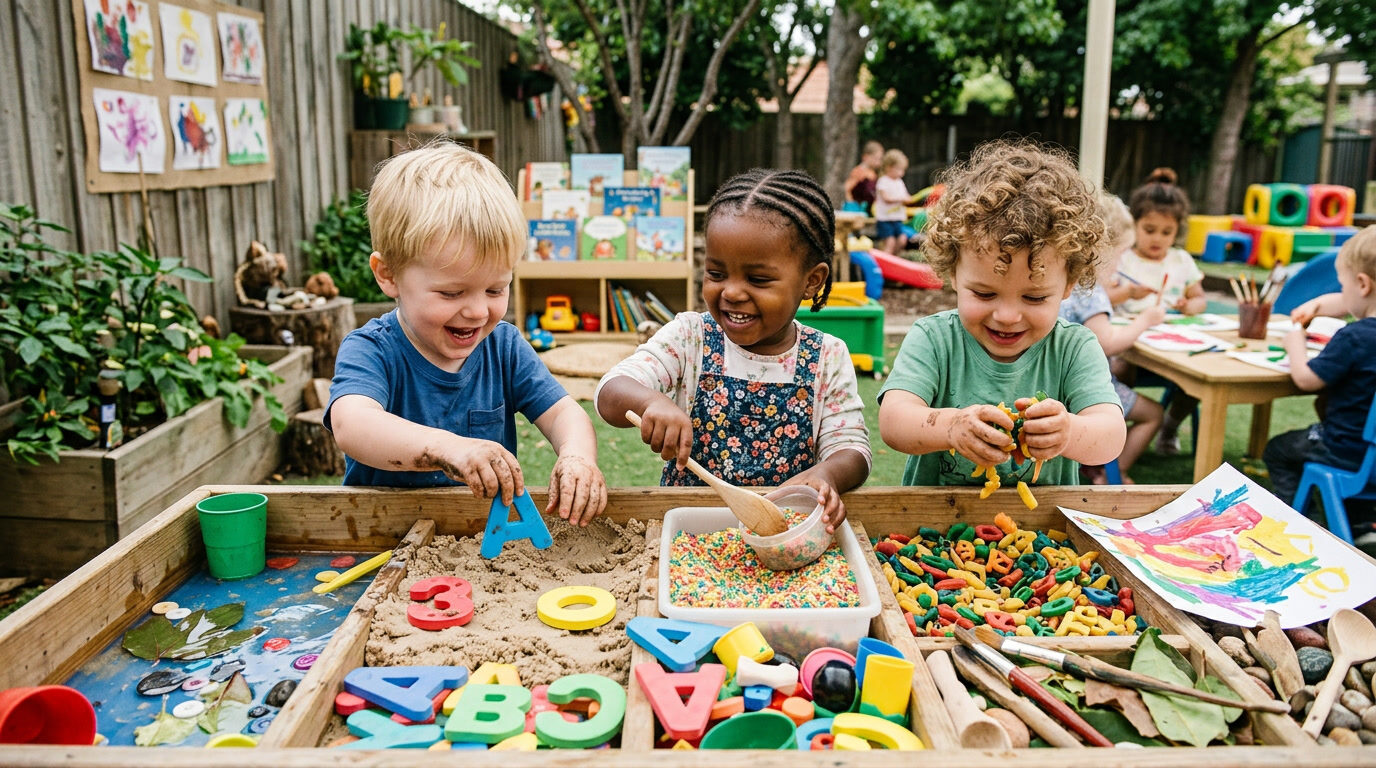
Choose the Right Spot — Location Is Everything
A dedicated toddler art space doesn't need a whole room — it needs the right spot, safe materials, smart storage, and a surface your child can reach independently.
In this article
Your toddler scribbled on the wall again. Before you reach for the Magic Eraser, consider this: according to the American Academy of Pediatrics (AAP), unstructured creative play — including art — is one of the most powerful drivers of early brain development, strengthening executive function, fine motor skills, and emotional vocabulary all at once. The problem isn't that your child wants to make art. It's that they don't yet have a space that says "create here, not there."
This guide will show you exactly how to build one — whether you have a spare room or just a corner of the kitchen.
After reading, you'll understand:
1. Choose the Right Spot — Location Is Everything
The single best location for a toddler art space is a hard-floor area with natural light and low foot traffic, ideally within your sightline.
That sounds simple, but parents routinely set up art corners on carpet (nightmare to clean), in dim hallways (colours look wrong, toddlers lose interest fast), or in a separate room where supervision is tricky. All three choices create friction — for you and your child.
What to look for in a spot
Protecting your surfaces
Even on hard floors, lay down a wipeable splat mat or an old shower curtain under the work area. For walls, a single sheet of peel-and-stick vinyl wallpaper behind the easel takes about 20 minutes to apply and will save you years of repainting.
2. Stock the Right Supplies for Toddler Hands and Brains
For children aged 1–3, the best art supplies are non-toxic, washable, chunky enough to grip, and limited to five or six items at a time.
More is not better at this age. A toddler faced with 40 options will spend the entire session tipping containers rather than creating. Research published by developmental psychologists at the University of Toledo found that reducing the number of available toys significantly increased the quality and duration of toddler play — the same principle applies directly to art materials.
Developmentally appropriate supplies by age
12–18 months
18–24 months
24–36 months
Safety non-negotiables
Always check that paints and markers carry the ASTM D-4236 non-toxic certification (look for the AP seal from the Art and Creative Materials Institute). This is the US standard; in the UK, look for EN71 compliance. Brands like Crayola and Melissa & Doug consistently meet these benchmarks.
3. Set Up Storage That a Toddler Can Actually Use
The goal of toddler art storage isn't tidiness — it's independence. When your child can see, reach, and return every item without asking you, sessions start faster, last longer, and end with less drama.
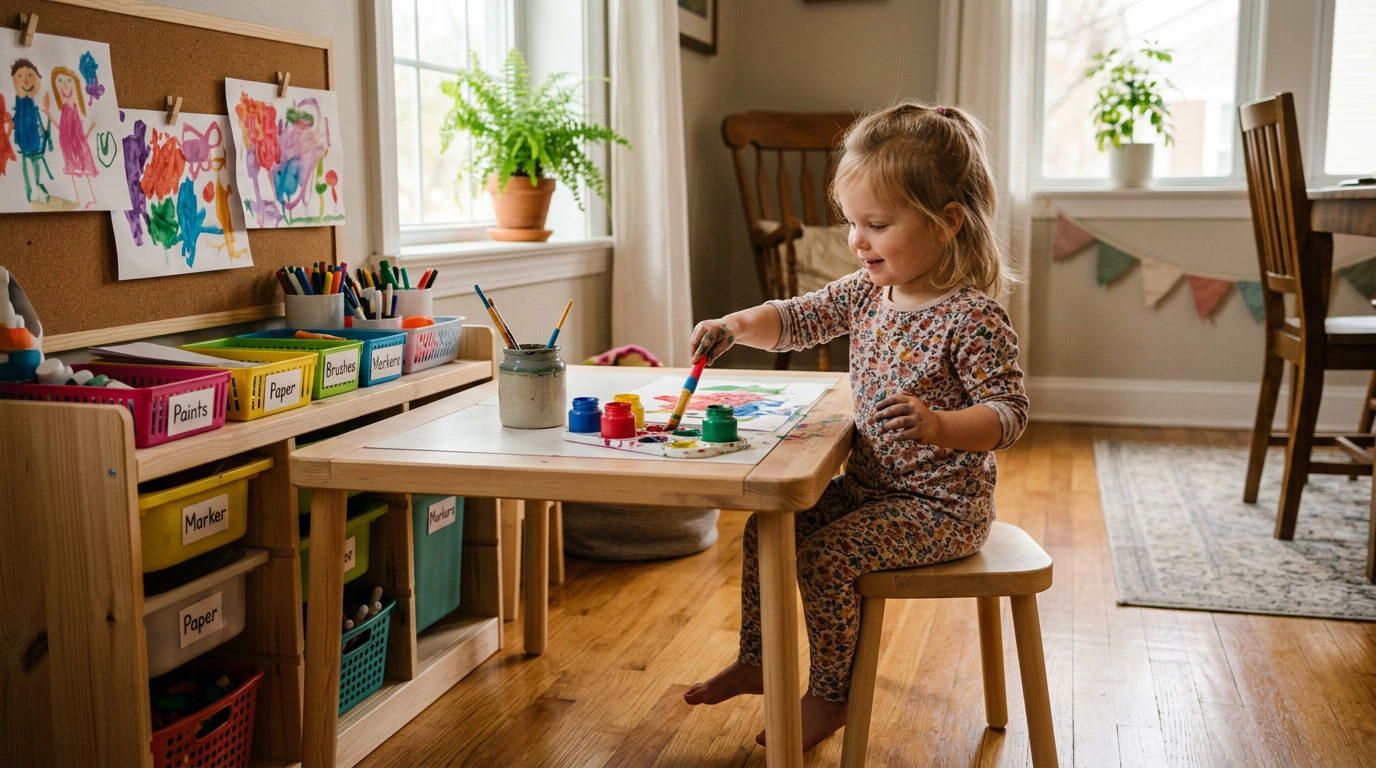
Clear containers at child height are the foundation. A low open shelf (think IKEA Kallax at floor level, or a simple 2-tier trolley) with clear bins labelled by picture — not just words — lets a 2-year-old self-select and self-tidy. Picture labels matter: most toddlers can't read, but they absolutely recognise a photo of a crayon on the crayon bin.
The rotation principle
Keep only one "active" set of supplies accessible at a time. Store the rest in a higher cupboard and rotate every two to three weeks. This is the same logic behind Montessori toy rotation: novelty rekindles engagement without requiring you to buy anything new.
4. Pick the Right Easel — The Art Space Centrepiece
A height-adjustable, double-sided easel is the most versatile single purchase you can make for a toddler art space — it replaces a table for standing work, grows with your child, and keeps supplies contained in one place.
Not every family needs an easel, but for toddlers specifically, standing at a vertical surface is actually better for shoulder and wrist development than hunching over a flat table. Occupational therapists frequently recommend vertical drawing surfaces for this age group because they naturally promote an open wrist position and engage the larger shoulder muscles that underpin fine motor control.
| Easel Type | Best Age Range | Primary Benefits | Main Drawbacks | Recommended Product | Price Range |
|---|---|---|---|---|---|
| Double-sided wooden easel with whiteboard & chalkboard | 2–8 yr | Two surfaces, no paper needed, magnetic | Bulkier footprint | Rundad Double Sided Wooden Easel | $75–85 |
| 3-in-1 easel with paper roll | 2–8 yr | Adds continuous paper roll, great for large-scale art | Slightly more to assemble | Rundad 3-in-1 Art Easel Set | $75–85 |
| Budget-friendly adjustable easel | 2–12 yr | 3 height settings, grows longest with child, high reviews | Fewer included accessories | Joyooss Art Easel for Kids | $50–60 |
| 4-in-1 compact easel with storage | 2–8 yr | Built-in bookshelf and toy storage, small footprint | MDF rather than pine | Faesun 4-in-1 Art Easel | Under $10 |
| Mid-range easel with magnetic letters | 3–8 yr | Includes alphabet magnets for letters + numbers | Shorter max height | Tiny Land Double-Sided Easel | $35–45 |
| Freestanding easel with 2-tier storage | 2–8 yr | Ample storage shelves, 16.5 ft paper roll included | MDF construction | Costzon 3-in-1 Double-Sided Easel | $70–80 |
What to look for when buying


Kids Easel Including 100+ Accessories, Rundad Double Sided Wooden Easel for Kids Age 3-8 with Magnetic Chalkboard & Painting Board, Free Height Adjustable Art Easel Supplies for Toddlers
- Double-sided Design for Infinite Creativity: Specially designed for children, this double-sided art easel boar
- Rich Art Supplies Set: Comes with a diverse set of art tools, including brushes, paints, art smock, and more t
- Dual Development of Manual Skills and Imagination: This drawing board not only enhances children's manual dext

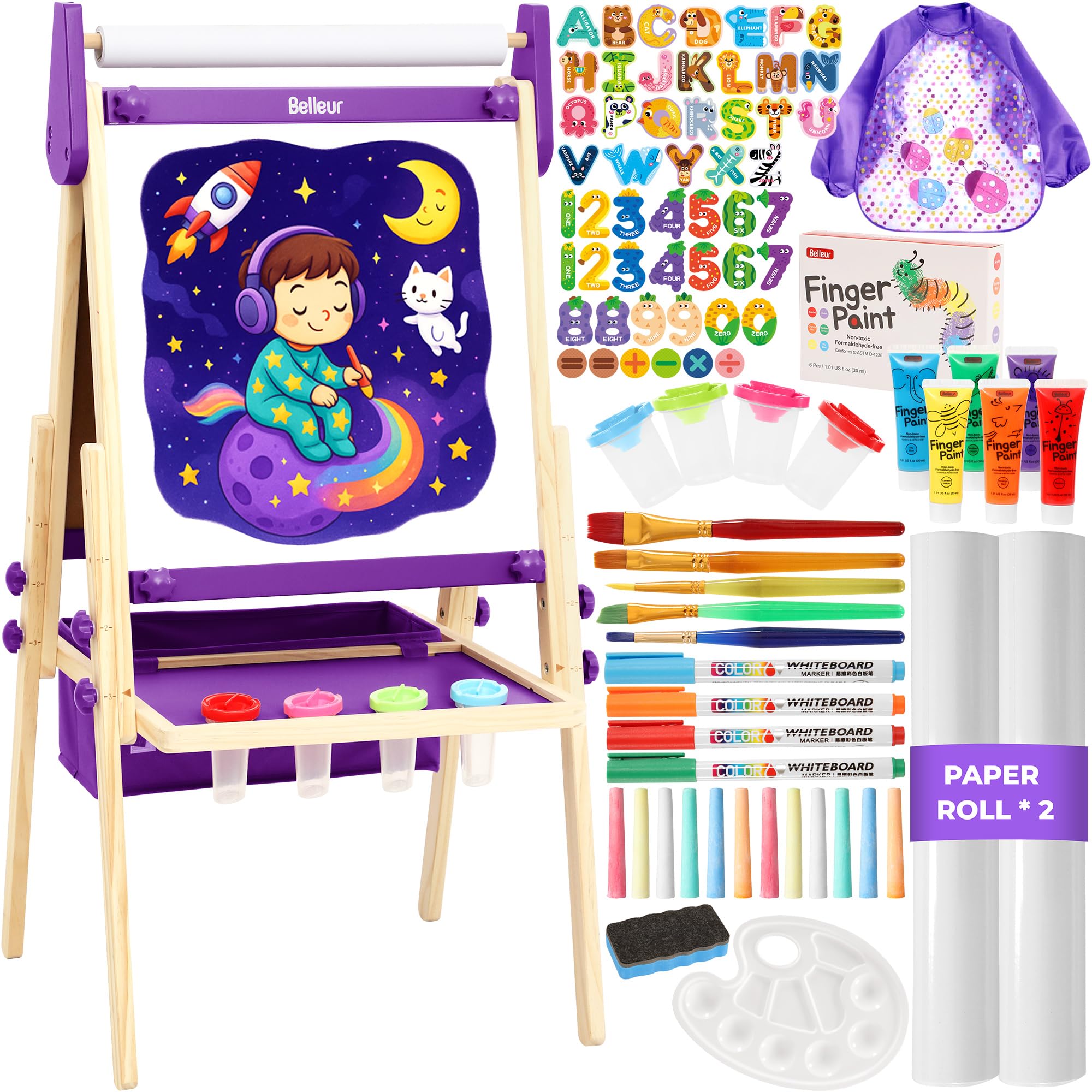


Joyooss Art Easel for Kids Easel for Toddlers,Adjustable Standing Wooden Toddler Easels Kid Whiteboard & Chalk Board Kids Dry Erase Board,Art Easel for Kid Age 2-4 4-8 9-12 Drawing Easels
- 【POSITIVE GIFT FOR KIDS】Our art easel for kids easel design has 3 adjustable heights, which means it can grow
- 【Unlimited Creation Ways】Infinite creative toddler learning activities further stimulate children's creativity
- 【Safety Material】The Art Easel for Kids Age 2-4 4-8 9-12 Drawing Easel is made of high-quality pine wood, ensu
5. Design the Space to Invite Independent Creativity
The physical environment sends your toddler a message before they pick up a single crayon. A space designed at their scale, with their work displayed on the walls, says: "This is yours. You belong here."
This is not interior-design fluff — it's grounded in the Reggio Emilia educational philosophy, which describes the environment as "the third teacher." When children feel ownership of a space, they engage more deeply, take more creative risks, and sustain attention for longer.
Practical design moves that cost almost nothing
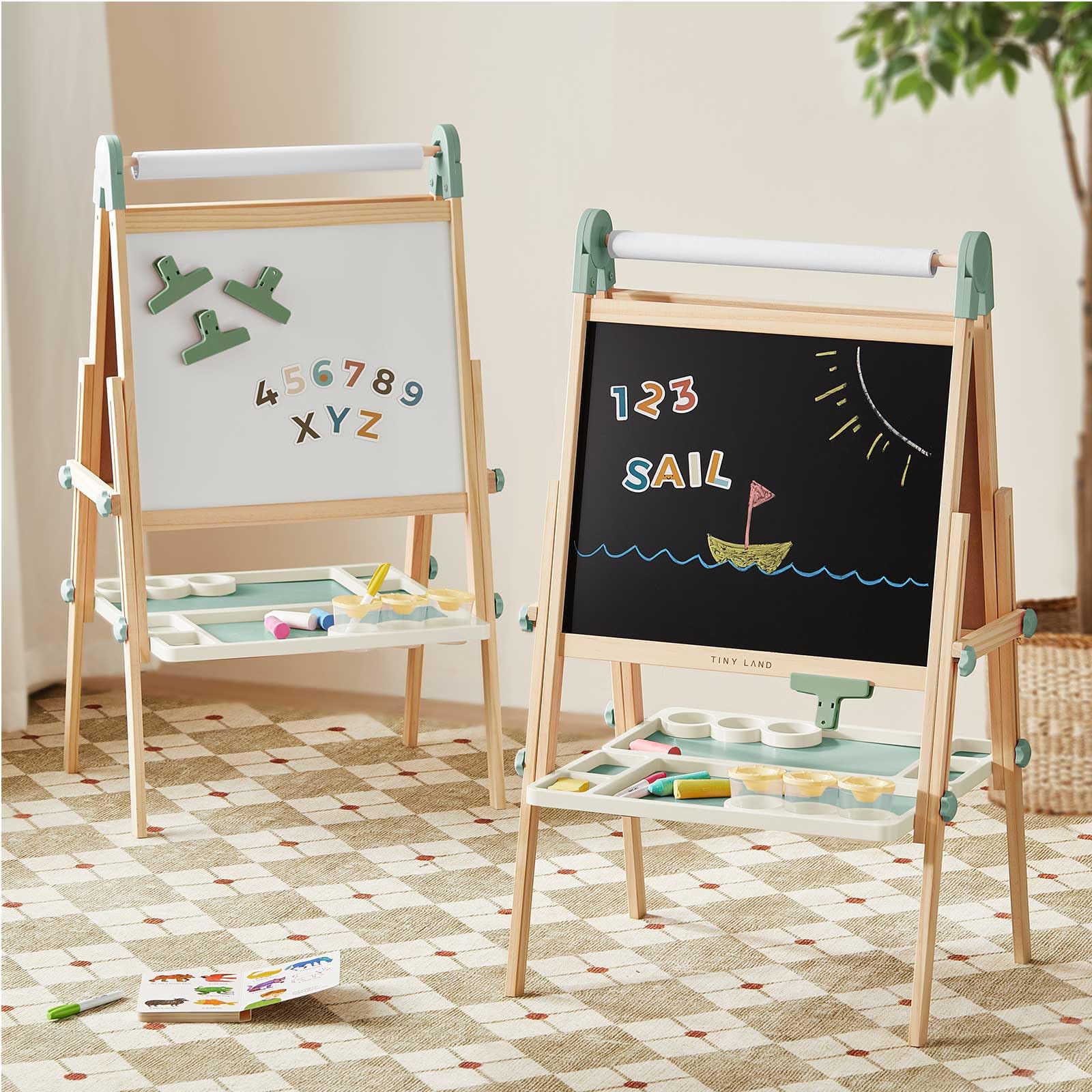
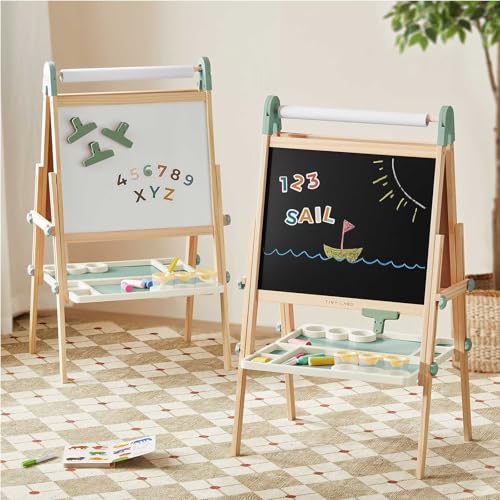
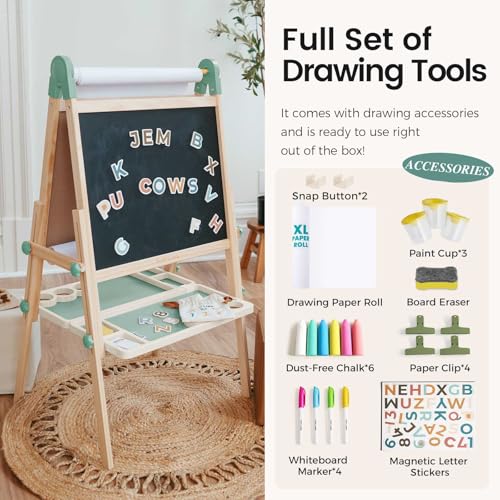
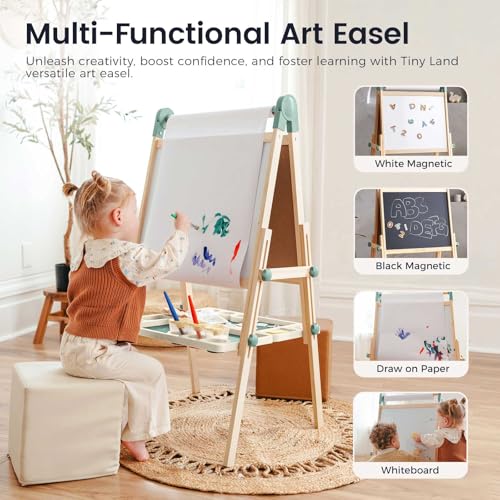
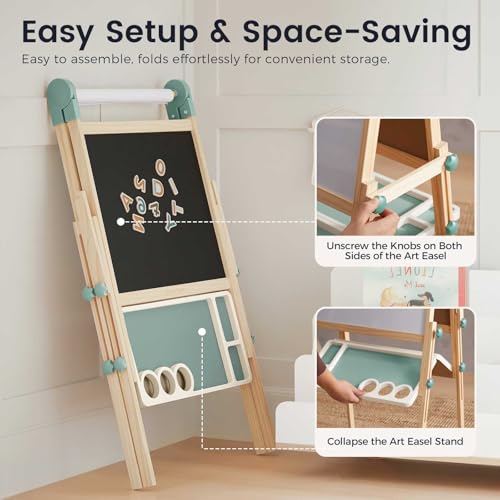
Tiny Land Easel for Kids, Double-Sided Magnetic Easel with Drawing Accessories, Adjustable Wooden Kids Art Easel with Paper Roll, Learning-Toy for 3,4,5,6,7,8 Years Old Boy & Girls Green
- All in One & Multi-function Kids Easel: This kids easel includes: magnetic blackboard, magnetic whiteboard, 6
- Easy to Assemble & Accompany Children to Grow: The easel for kids, open the package only need to assemble 4 le
- Eco-friendly and Durable Kids Easel: The high-end 4-in-1 kids easel is made of natural pine wood. Each part of
6. Make Clean-Up Part of the Creative Ritual
Clean-up that takes 20 minutes will make you dread art time. Build a system where the reset takes under five minutes, and you'll do it every day.
The secret is designing for the mess you know will happen, not the mess you hope won't. Finger paint will end up on hands, forearms, and occasionally faces. Markers get left uncapped. Water pots tip over. Accept these as features of toddler art, not failures, and design around them.
Your five-minute reset system
1. Smock on before, smock in the wash after — one motion, no negotiation 2. Water in a weighted cup — a wide-base silicone cup tips far less than a jam jar 3. Caps on markers = one rule, enforced every time — toddlers can absolutely learn this with consistent, cheerful repetition 4. Wet wipe station at the edge of the art space — one pull, hands clean 5. "One piece away" rule — before getting a new material, the previous one goes back in its bin
Involve your toddler in the reset. Children aged 2–3 are in a sensitive period for order (a well-documented Montessori observation backed by developmental research). They often want to tidy when it's framed as part of the activity, not a punishment at the end of it.
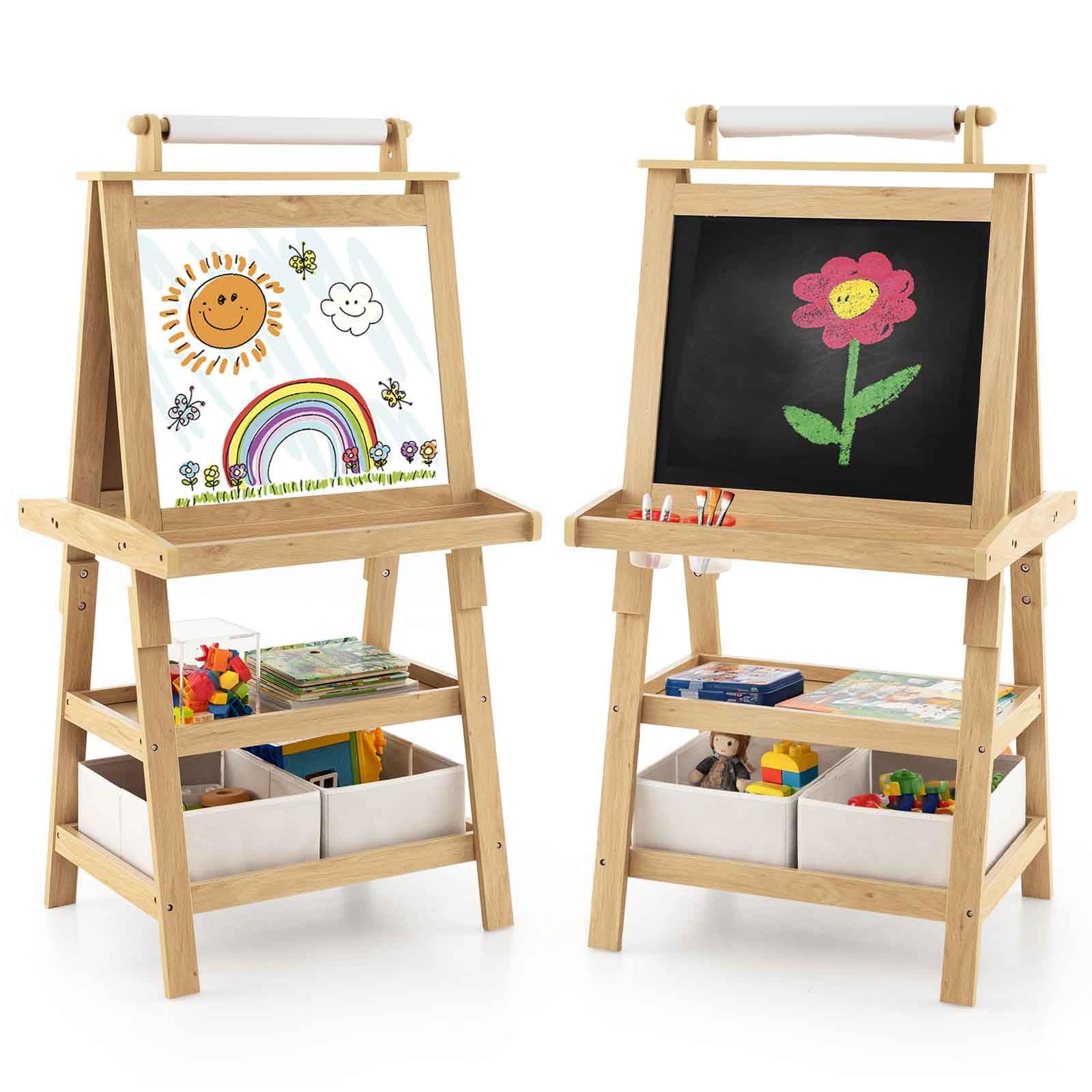
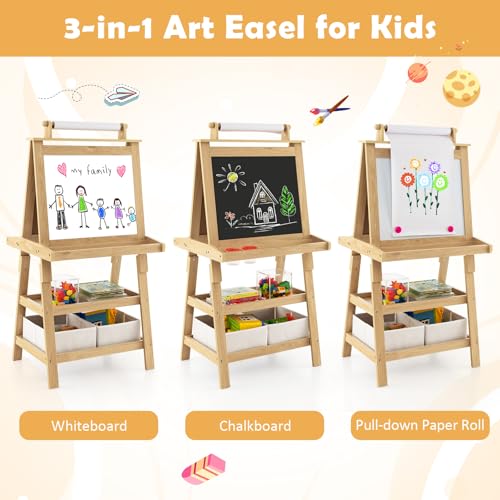
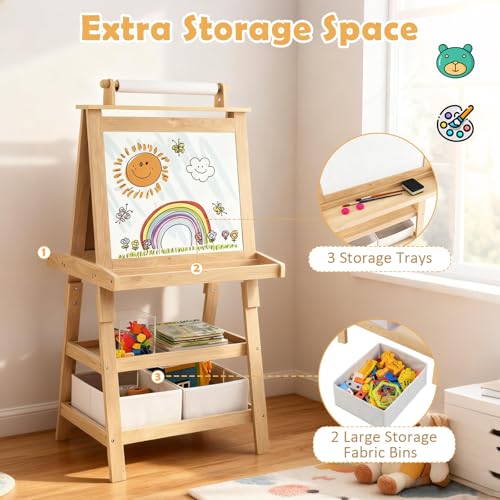
Costzon Kids Art Easel, 3 in 1 Double-Sided Painting Easel w/Magnetic Whiteboard, Chalkboard & Paper Roll, 2-Tier Storage Rack & 2 Boxes, Standing Easel for Kids, Toddlers, Boys, Girls (Natural)
- [ 3-In-1 Art Easel ]: This wooden easel features double-sided drawing board and a pull-down paper roll with 16
- [ Ample Storage Space ]: There are 2 trays under the drawing board on both sides, which offer convenient space
- [ Safe Material & Stable Structure ]: Made of premium MDF material, this art easel is environment-friendly and
7. Grow the Space as Your Toddler Grows
The art space you set up for an 18-month-old will need meaningful updates by age 3 — and that's a sign of success, not a design failure.
At 18 months, your child is exploring cause and effect: "What happens when I drag this crayon?" By 36 months, they're making representational art — drawing people, houses, suns — and they'll want more complex materials to match their ambitions. A space that doesn't evolve creates frustration.
What to add at each stage
18–24 months: Add a second colour of paint. Introduce a stamping tray. Mount the Rundad 3-in-1 Art Easel Set at its lowest height setting.
24–30 months: Introduce child-safe scissors and a glue stick. Add collage materials in a shallow tray. Raise the easel height by one notch.
30–36 months: Add a simple watercolour set. Introduce a "project box" — a shoebox where they can keep a work-in-progress over multiple days. Start a simple art journal (a stapled stack of paper with their name on the front).
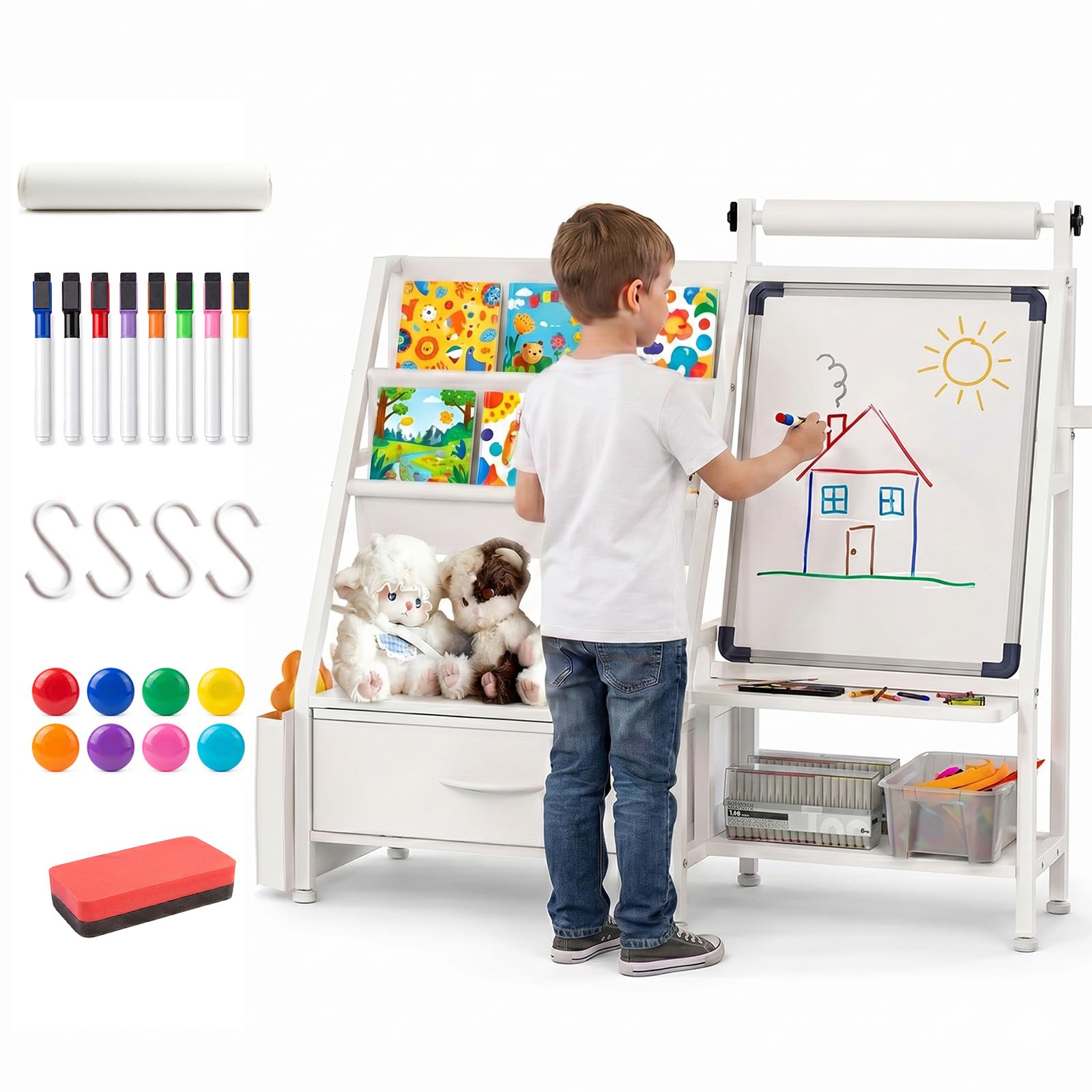
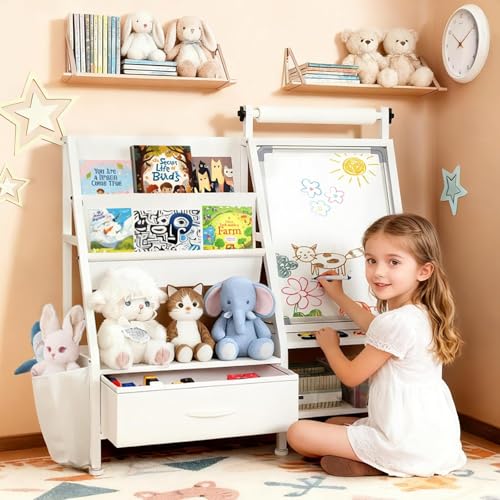
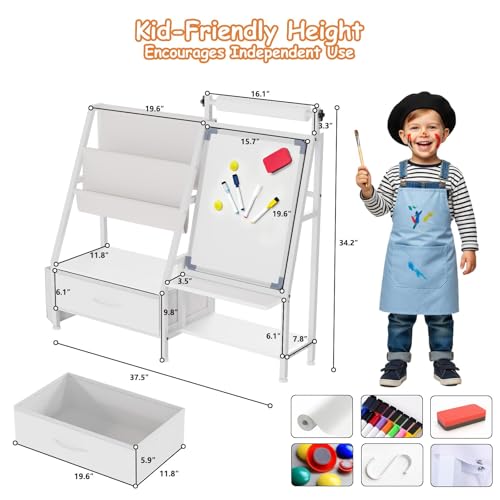
Faesun 4-in-1 Art Easel for Kids, Wooden Kids Easel with Storage,Toddler Drawing Board with Magnetic Whiteboard & Paper Roll & Drawing Accessories, White Board for Kid Ages 2-8 Birthday Gift
- 🎨 𝟒-𝐢𝐧-𝟏 𝐀𝐥𝐥-𝐢𝐧-𝐎𝐧𝐞 𝐊𝐢𝐝𝐬 𝐀𝐫𝐭 𝐄𝐚𝐬𝐞𝐥:This versatile kids easel combines a drawing board, learning board, bookshe
- 🌱 𝐄𝐝𝐮𝐜𝐚𝐭𝐢𝐨𝐧𝐚𝐥 𝐆𝐫𝐨𝐰𝐭𝐡 𝐂𝐨𝐦𝐩𝐚𝐧𝐢𝐨𝐧 𝐟𝐨𝐫 𝐀𝐠𝐞𝐬 𝟐-𝟖:Perfect as an art easel for kids 2-4 and a long-lasting learning t
- 🛡️ 𝐒𝐚𝐟𝐞, 𝐃𝐮𝐫𝐚𝐛𝐥𝐞 & 𝐄𝐜𝐨-𝐅𝐫𝐢𝐞𝐧𝐝𝐥𝐲 𝐂𝐨𝐧𝐬𝐭𝐫𝐮𝐜𝐭𝐢𝐨𝐧:Crafted from high-strength FSC-certified MDF wood with a reinforc
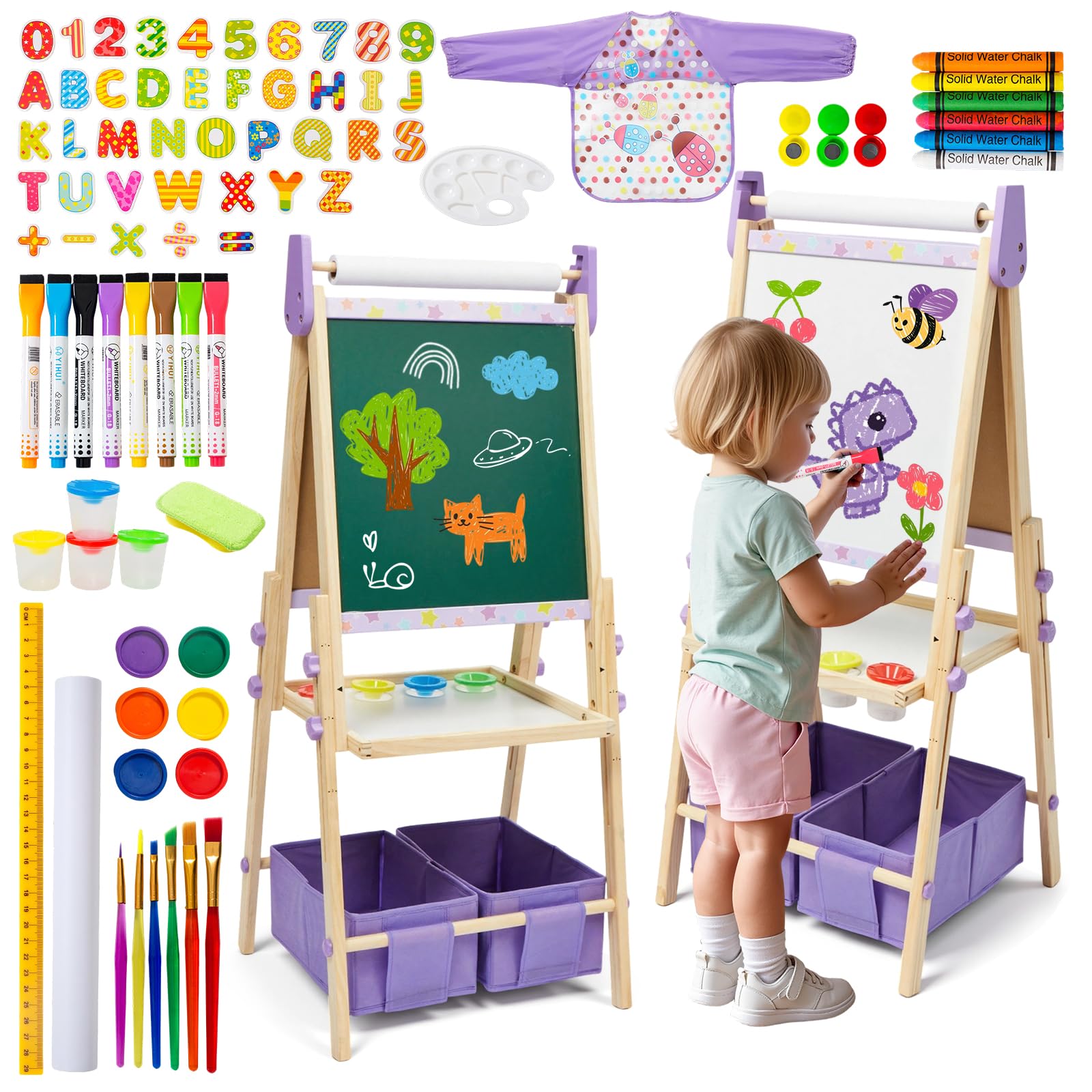
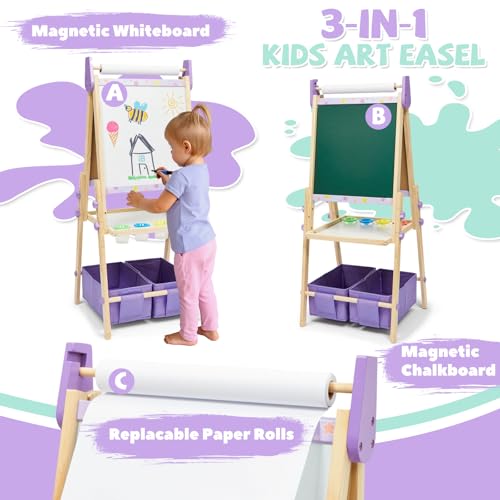
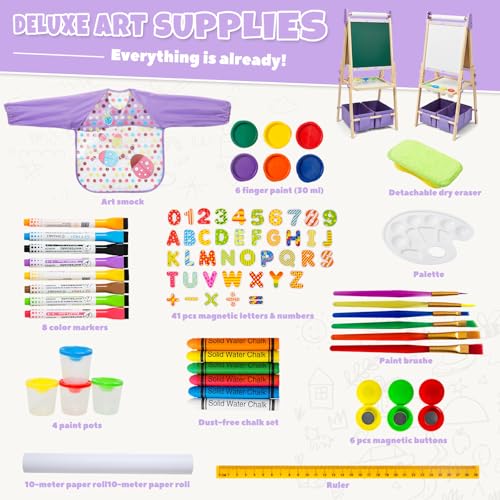
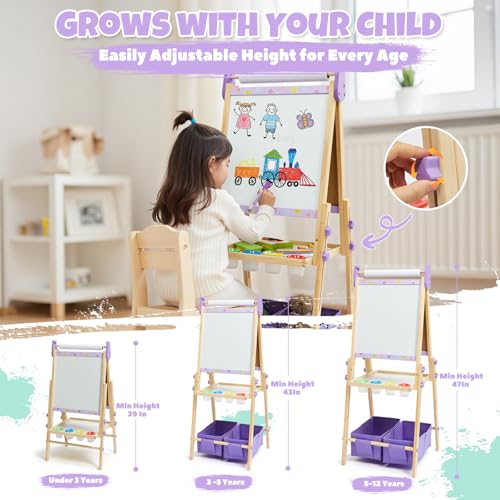
3-in-1 Kids Art Easel Set, Height Adjustable Magnetic Whiteboard & Chalkboard with Painting Paper Roll, Wooden Dual-Sided Art Station for Toddlers & Children Ages 3-8 (Art Supplies Included)
- Dual-Side Fun, Double the Creativity: As a premium dual-sided kids easel, it offers both a whiteboard and a ch
- Precise Height Adjustment from 39" to 47": This children's easel features a wide adjustable height range for t
- Ignite Early Creativity in Toddlers: Designed for younger children, this toddler art easel is the perfect tool
Expert Insights
There is something quietly profound about watching a two-year-old stand at their own easel, brush in hand, entirely absorbed in making a mark that means something only to them. You don't need a Pinterest-perfect studio to give them that experience — you need a corner, a splat mat, a handful of safe supplies, and the wisdom to step back and let them lead.
The best art space isn't the most beautiful one. It's the one your toddler runs to.
If this guide helped you, save it for when you're ready to set up (or refresh) your space, and share it with a parent who's been putting it off. You've got everything you need to start today.
Sources & References
- American Academy of Pediatrics. "The Power of Play: A Pediatric Role in Enhancing Development in Young Children." Pediatrics, 2018. https://publications.aap.org/pediatrics/article/142/3/e20182058/38649
- Kohl, Maryann F. First Art for Toddlers and Twos: Open-Ended Art Experiences. Gryphon House, 2002.
- Zero to Three. "Art and Creativity in Early Childhood." zerotothree.org. Accessed 2025. https://www.zerotothree.org/resources/series/creativity
- Art and Creative Materials Institute (ACMI). "AP Seal Certification." acminet.org. Accessed 2025. https://www.acminet.org/ap-non-toxic-seal
- Malaguzzi, Loris. "History, Ideas, and Basic Philosophy." In The Hundred Languages of Children, edited by C. Edwards, L. Gandini & G. Forman. Ablex, 1993.
- Lerner, Claire & Parlakian, Rebecca. "How to Help Your Child Develop Healthy Self-Esteem." Zero to Three, 2016. https://www.zerotothree.org
- Dauch, Carly et al. "The influence of the number of toys in the environment on toddlers' play." Infant Behavior and Development, Vol. 50, 2018. https://doi.org/10.1016/j.infbeh.2017.11.005
- American Occupational Therapy Association (AOTA). "Occupational Therapy's Role with Children and Youth." aota.org. Accessed 2025. https://www.aota.org
Frequently Asked Questions
What is the minimum space needed for a toddler art area?
What age can toddlers start using an easel?
Are washable paints actually washable?
How do I stop my toddler from eating art supplies?
Should toddler art be guided or completely free?
How do I display toddler artwork without the house looking chaotic?
How many supplies should be out at one time?
Was this helpful?
Thanks — your feedback helps us pick what to write next.