Cognitive Development: Building the Thinking Brain
The ages 5–8 are a critical window for building reading, numeracy, social, and emotional foundations — and what happens at home is just as important as what happens in the classroom.

In this article
Picture this: your five-year-old walks into their first day of school clutching their backpack, and within three years they'll be reading chapter books, adding two-digit numbers, and navigating complex friendships. That transformation is extraordinary — and it doesn't happen by accident.
According to the Centers for Disease Control and Prevention (CDC), the early school years (roughly 5–8) represent one of the fastest periods of brain development in a child's entire life. Neural connections are forming at a pace that won't be repeated, making this window uniquely powerful for building skills that stick.
In this guide you'll understand:
1. Cognitive Development: Building the Thinking Brain
Reading, writing, and early maths are the headline skills of ages 5–8, but the real story is how your child's brain is learning to learn.
Between five and seven, most children move through what developmental psychologist Jean Piaget described as the transition from pre-operational to concrete operational thinking — meaning they shift from magical, intuitive reasoning to logical, evidence-based thought. In practical terms, your child starts to understand that five blocks rearranged in a different pattern are still five blocks. That cause-and-effect logic underpins everything from phonics to subtraction.
Reading and Writing
Literacy is the gateway skill. The American Academy of Pediatrics (AAP) recommends that parents read aloud with children every single day — even after children can read independently — because shared reading builds vocabulary, comprehension, and a love of books simultaneously.
Sight words are one of the first concrete milestones. Children who can recognise the 200 most common high-frequency words by the end of first grade read more fluently and with greater confidence. The 200 Must Know Sight Words Activity Workbook is a practical, highly rated tool (4.7★ across nearly 16,000 reviews) for building this skill through tracing and repetition.

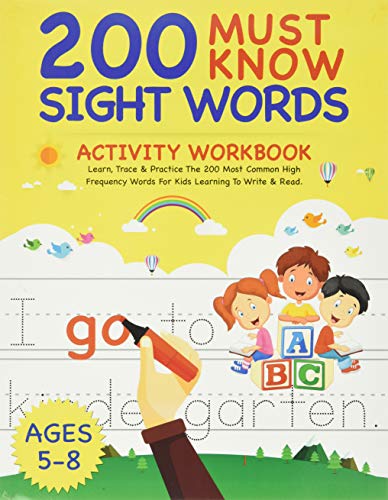


200 Must Know Sight Words Activity Workbook: Learn, Trace & Practice The 200 Most Common High Frequency Words For Kids Learning To Write & Read. | Ages 5-8
- Children's Books
- Education & Reference
- Reading & Writing
Early Maths
Counting, sorting, simple addition and subtraction, and understanding place value are the maths milestones for this age band. The National Council of Teachers of Mathematics (NCTM) emphasises that concrete, hands-on experiences — using blocks, counters, and real objects — should precede abstract pencil-and-paper maths.
2. Social-Emotional Learning: The Curriculum You Can't See on a Report Card
Social-emotional learning (SEL) is not a soft extra — research consistently shows it predicts long-term academic and life outcomes.
A landmark 2011 meta-analysis published in Child Development by Durlak and colleagues found that students who received quality SEL instruction showed an 11-percentile-point gain in academic achievement compared to peers who did not. The skills being built between 5 and 8 — empathy, cooperation, emotional regulation, and self-esteem — are the scaffolding on which everything else is built.
What SEL Looks Like at This Age
At five, children are still largely egocentric — they struggle to see other viewpoints consistently. By eight, most can take a peer's perspective, negotiate conflict, and regulate frustration well enough to stay on task. That journey is not automatic; it requires practice.
How to Support SEL at Home
For children who need extra support identifying and expressing feelings, structured workbooks that blend literacy with social themes are a gentle bridge. The Preschool Big Fun Workbook includes activities around friendship and social skills alongside core academic content.



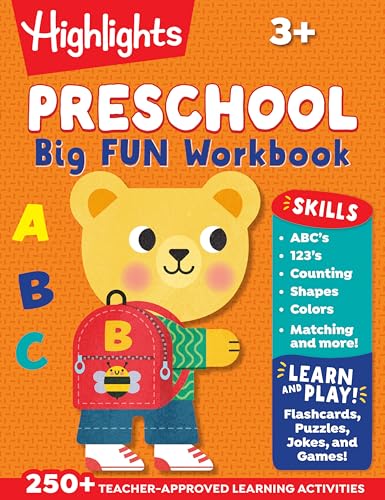
Preschool Big Fun Workbook: 256-Page Preschool Learning Workbook, Practice Math, Writing, Shapes and More with Puzzles and Activities for Preschoolers
- Children's Books
- Growing Up & Facts of Life
- Friendship, Social Skills & School Life
3. Physical Development: Why Bodies and Brains Learn Together
You might not immediately connect PE time with reading progress, but physical development and cognitive learning are deeply intertwined at this age.
The World Health Organization (WHO) recommends that children aged 5–17 get at least 60 minutes of moderate-to-vigorous physical activity daily. Beyond fitness, movement literally supports brain development — gross motor activity increases blood flow to the prefrontal cortex, the area responsible for attention, planning, and impulse control.
Fine Motor Skills and the Writing Connection
Fine motor development — the small, precise movements of fingers and hands — directly affects a child's ability to hold a pencil, form letters, and eventually write fluently. Children who struggle with fine motor skills often find writing physically tiring, which can mask their actual cognitive ability.
Activities that build fine motor strength include:
The My First Learn-to-Write Workbook — rated 4.8★ by over 90,000 families — is specifically designed to build pen control and letter formation through progressive tracing exercises.


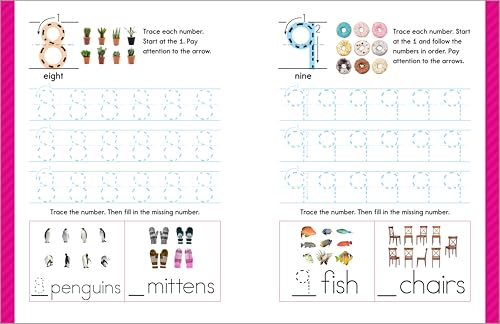
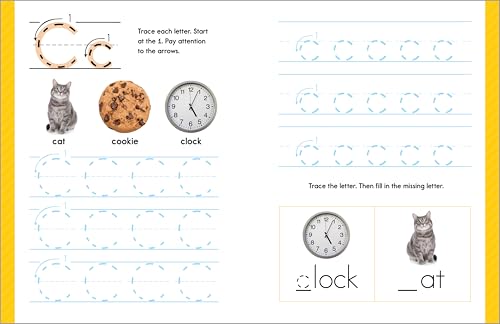
My First Learn-to-Write Workbook: Practice for Kids with Pen Control, Line Tracing, Letters, and More! (My First Preschool Skills Workbooks)
- Children's Books
- Education & Reference
- Reading & Writing
Gross Motor Skills
Running, jumping, climbing, and balancing all develop coordination and spatial awareness. These aren't just playground skills — spatial reasoning is directly linked to mathematical ability, according to research from the University of Chicago's Spatial Intelligence and Learning Center.
4. Building Literacy Skills: Practical Tools That Work
Literacy at ages 5–8 isn't just about decoding words — it's about building a reader who understands, enjoys, and uses text.
The Science of Reading — a growing body of research synthesised by organisations including the National Reading Panel (USA) and the UK's Education Endowment Foundation — identifies five pillars of early literacy: phonemic awareness, phonics, fluency, vocabulary, and comprehension. Effective home support touches all five, not just phonics drills.
Workbooks as a Structured Supplement
Workbooks work best when they're used as a supplement to reading aloud and real-world language experience — not as a replacement. The right workbook provides structured repetition without tedium.
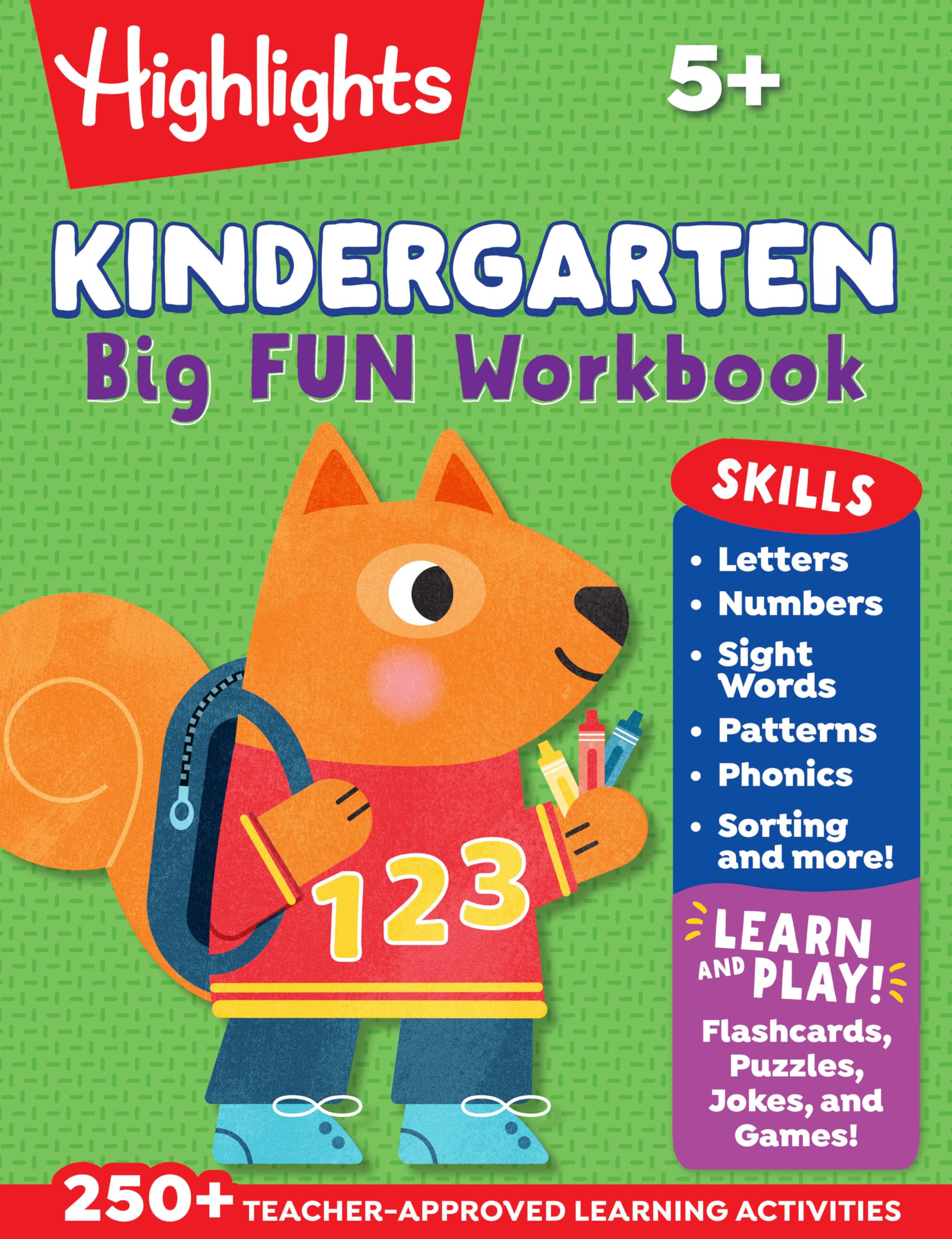
For kindergarten-age children (5–6), the My Kindergarten Workbook offers 101 games and activities mapped to kindergarten skills, making practice feel like play. For children who are ready to stretch their vocabulary and word recognition, the School Zone My First Word Searches Workbook builds pattern recognition and spelling in a format children genuinely enjoy.

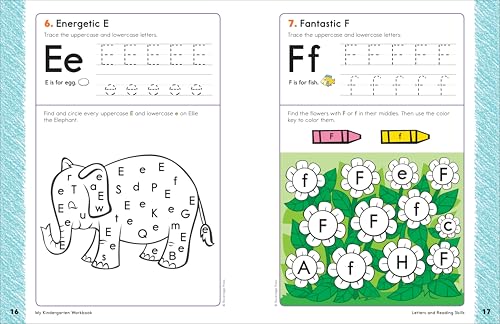
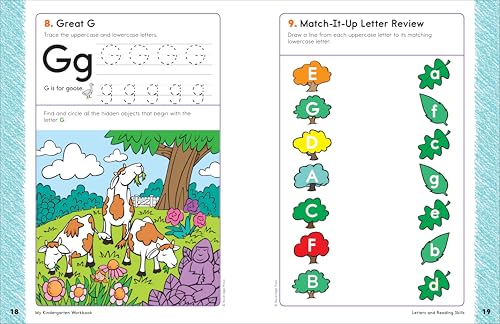
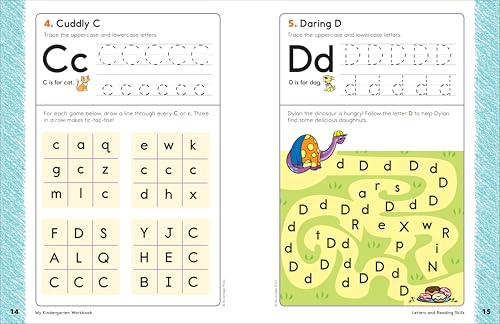
My Kindergarten Workbook: 101 Games and Activities to Support Kindergarten Skills, for Kids Ages 5-6
- Children's Books
- Education & Reference
- Study Aids
5. Critical Thinking and Problem-Solving: Growing Little Thinkers
Critical thinking isn't a subject on the timetable — it's a habit of mind that parents can actively cultivate from age five onwards.
At this stage, children are developing what psychologists call executive function: the ability to plan, focus attention, remember instructions, and manage multiple tasks. The Harvard Center on the Developing Child identifies executive function skills as among the most important predictors of school success and adult wellbeing.
Logic, Reasoning, and Puzzles
Age-appropriate logic puzzles, sequencing activities, and reasoning games challenge children to think systematically rather than guess. The School Zone Thinking Skills Workbook targets problem-solving, logic, and reasoning through puzzles specifically designed for the preschool-to-kindergarten transition.

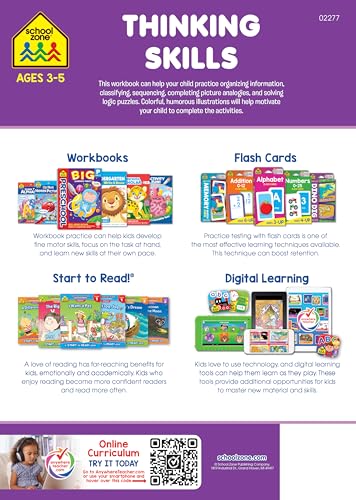
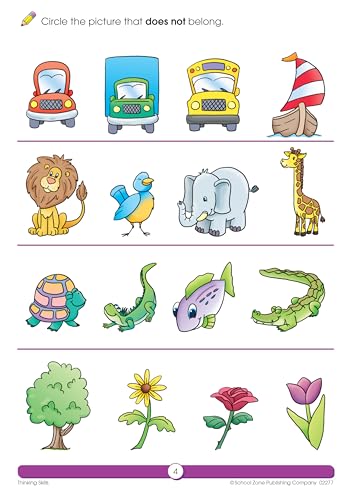
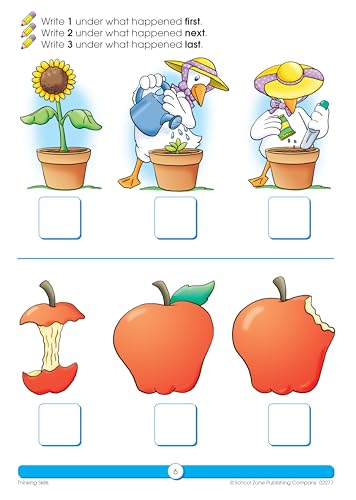
School Zone Thinking Skills Workbook: 64 Pages, Preschool, Kindergarten, Problem-Solving, Logic & Reasoning Puzzles, Ages 3 to 5 (Get Ready! Book Series)
- Children's Books
- Growing Up & Facts of Life
- Friendship, Social Skills & School Life
For children aged 6–8 who are ready for more independent challenge, the School Zone My First Word Searches Workbook builds visual scanning, pattern recognition, and persistence — all components of systematic thinking.
6. Creative Development: Why Imagination Is an Academic Skill
Creativity is not the opposite of academic rigour — it is one of its most important foundations.
Research from the American Psychological Association links creative play and arts engagement in early childhood to stronger divergent thinking, better emotional regulation, and more flexible problem-solving in later years. When a 6-year-old builds an imaginary city from blocks, writes a story about a dragon, or invents rules for a new game, they are practising the cognitive flexibility that underlies innovation and academic resilience.
Art, Music, and Imaginative Play
For children who enjoy creative challenges alongside structured learning, the My Kindergarten Workbook blends both approaches, and pairing it with open-ended creative materials at home gives children the best of both worlds.
7. Comparison: Choosing the Right Learning Support for Your Child
Different children need different types of support at different points in the 5–8 window. Use this table to match your child's current focus area to the most appropriate resource.
| Learning Focus | Best Age Range | Primary Benefit | Approach | Recommended Product | Price |
|---|---|---|---|---|---|
| Pre-reading & school readiness | 4–6 yrs | Broad foundation across maths, writing, shapes | Mixed activity workbook | Preschool Big Fun Workbook | $17.33 |
| Sight word fluency | 5–8 yrs | High-frequency word recognition, reading confidence | Trace & practise repetition | 200 Must Know Sight Words Workbook | Not listed |
| Kindergarten core skills | 5–6 yrs | 101 mapped activities, play-based practice | Games + structured activities | My Kindergarten Workbook | $6.86 |
| Pen control & letter formation | 4–6 yrs | Fine motor development, handwriting readiness | Progressive tracing | My First Learn-to-Write Workbook | Not listed |
| Logic & reasoning | 3–5 yrs | Problem-solving, critical thinking, reasoning puzzles | Puzzle-based activities | School Zone Thinking Skills Workbook | Not listed |
| Word recognition & vocabulary | 5–7 yrs | Pattern recognition, spelling, visual scanning | Word search activity pad | School Zone My First Word Searches | Not listed |
Expert Insights
The ages of 5 to 8 will pass faster than you expect. One September your child is learning to hold a pencil; the next they're writing stories. What you do in these years — reading together at bedtime, asking curious questions at the dinner table, letting them struggle just enough with a puzzle before stepping in — becomes the bedrock of how they approach learning for the rest of their lives.
The research is clear, but so is the lived experience of thousands of families: children thrive when they feel supported, seen, and safe enough to try, fail, and try again. That's not a curriculum. That's a relationship.
If this guide was useful, save it for the months ahead — and share it with a parent who's just starting this journey.
Sources & References
- American Academy of Pediatrics. "Literacy Promotion: An Essential Component of Primary Care Pediatric Practice." Pediatrics, 2014. https://publications.aap.org/pediatrics/article/134/2/404/32699
- Centers for Disease Control and Prevention. "Child Development: Middle Childhood (6–8 years)." 2023. https://www.cdc.gov/ncbddd/childdevelopment/positiveparenting/middle.html
- World Health Organization. "Global Action Plan on Physical Activity 2018–2030: More Active People for a Healthier World." 2018. https://www.who.int/publications/i/item/9789241514187
- Center on the Developing Child, Harvard University. "Executive Function & Self-Regulation." 2023. https://developingchild.harvard.edu/science/key-concepts/executive-function/
- Durlak, J.A., Weissberg, R.P., Dymnicki, A.B., Taylor, R.D., & Schellinger, K.B. "The Impact of Enhancing Students' Social and Emotional Learning." Child Development, 82(1), 405–432. 2011.
- Blair, C. & Razza, R.P. "Relating Effortful Control, Executive Function, and False Belief Understanding to Emerging Math and Literacy Ability in Kindergarten." Child Development, 78(2), 647–663. 2007.
- Anderson, R.C., Wilson, P.T., & Fielding, L.G. "Growth in Reading and How Children Spend Their Time Outside of School." Reading Research Quarterly, 23(3), 285–303. 1988.
- Education Endowment Foundation. "Early Years Evidence Store." 2023. https://educationendowmentfoundation.org.uk/evidence-summaries/early-years-evidence-store
- Brookings Institution. "Arts Integration and Social-Emotional Learning." 2019. https://www.brookings.edu/research/arts-integration-and-social-emotional-learning/
- National Council of Teachers of Mathematics. "Principles to Actions: Ensuring Mathematical Success for All." 2014. https://www.nctm.org/PtA/
Frequently Asked Questions
At what age should my child be reading independently?
How much screen time is appropriate for a 5–8-year-old?
My child hates homework. What should I do?
What's the difference between a learning delay and just being a late developer?
Should I be using workbooks at home if my child is already doing schoolwork all day?
How do I know if my child's school is doing a good job at this age?
My child's teacher says they're behind in reading — what can I do at home right now?
Was this helpful?
Thanks — your feedback helps us pick what to write next.