Early School Age Learning and Play: What Works at Ages 5 to 8
TL;DR: Quick summaryAt ages 5 to 8, play is still how children learn best. Give them time to follow their own interests, add simple games with rules and a little adult guidance, keep active play going every day, and keep playgrounds safe. Short, playful moments at home fit this a
In this article
TL;DR: Quick summary
At ages 5 to 8, play is still how children learn best. Give them time to follow their own interests, add simple games with rules and a little adult guidance, keep active play going every day, and keep playgrounds safe. Short, playful moments at home fit this age well alongside schoolwork.
What you'll get
About 25 minutes to read. Short on time? Read the bold lines and the Key Takeaways near the end.
It is half past three on a Tuesday. Your six year old walks in from school, drops the bag in the hallway and asks if they can go and play. You are looking at the reading folder, the spelling list and the dinner you have not started.
Many parents of children aged 5 to 8 feel this tug. School asks for more sitting and more formal learning, and play starts to feel like the thing that gets squeezed out.
This guide is for you if you want to know what play still does for a school age child, how to add some learning without spoiling the fun, and how much running around your child needs. It also covers playground safety and the signs that are worth a chat with a teacher or your doctor.
By the end you should be able to look at an ordinary afternoon of building, tag or shop games and see the learning in it. You will also have a handful of small, low effort things to try tonight.
Does play still matter now that my child is at school?
Yes. Children aged 5 to 8 are developing fast, and they need plenty of time to play to grow and thrive in these early school years. Play is not a break from learning at this age. It is one of the main ways learning happens.
At this age the day changes shape. Your child spends long stretches at a desk, follows group rules and copes with more adults and more children. Play is where they practise all of that at their own pace.
What play gives a child aged 5 to 8
When children get a variety of play, it supports their physical, social and thinking skills all at once. A game of hide and seek uses running, turn taking, memory and a bit of cunning.
Here is what different kinds of play tend to build:
Follow their interest
Children are often more willing to keep going when the idea is theirs. Here is how this can look in practice:
Children learn most when they’re following their own interests through play.
raisingchildren.net.au
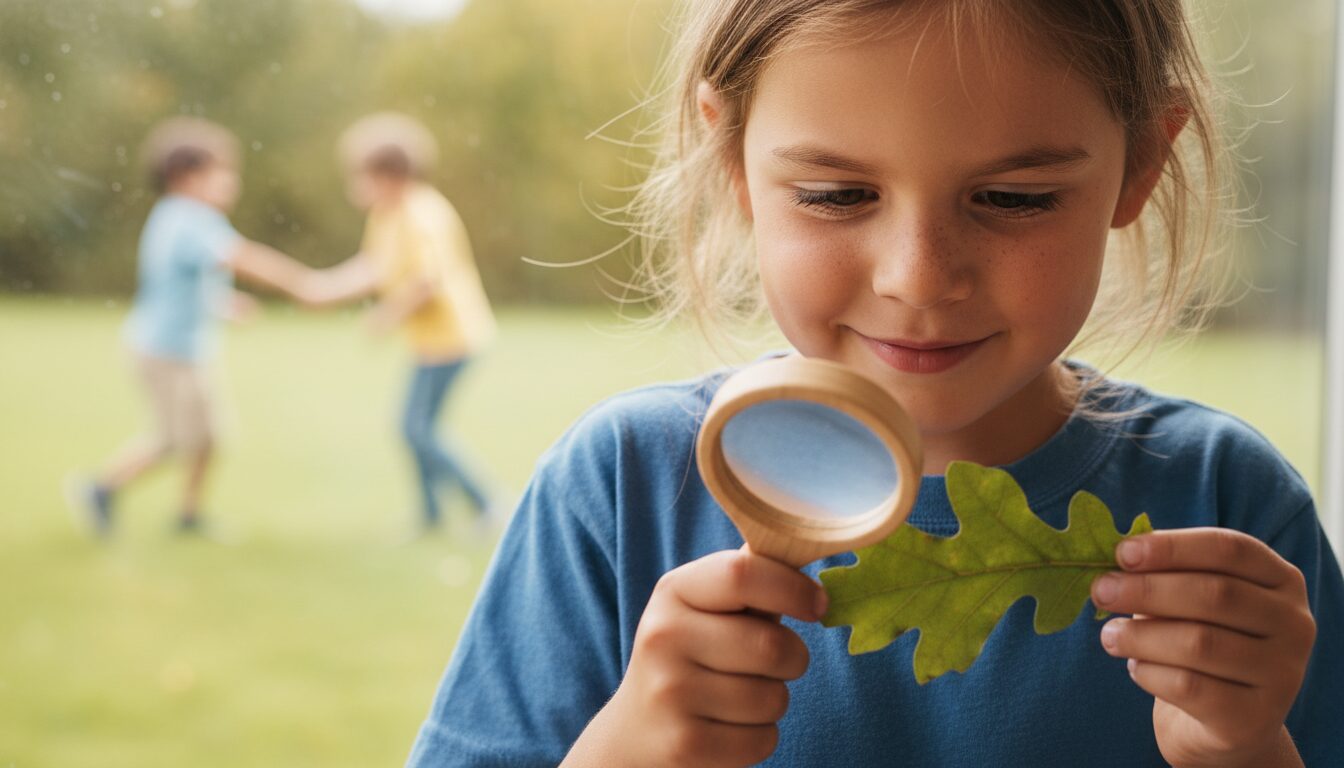
Picture a seven year old who is suddenly obsessed with bugs. You could steer them back to the reading book you chose. Or you could go with the bugs: a magnifying glass, a notebook, a library book about beetles. The second route can often get you the reading anyway, and a child who asks for more.
You do not need a clever lesson plan. Try something like: "Tell me about that one. What do you think it eats?" Then listen.
Games with simple rules help with school
Play and games with simple rules can help your child get used to formal learning in a classroom. Taking turns, following a rule you do not love and coping with a loss are all things teachers ask for every day.
Pattern puzzles are a gentle way in. With the LiKee Wooden Shape Puzzle, your child can copy a pattern card first, which is a simple rule, and then make a design of their own, which is free play. One toy, two modes.


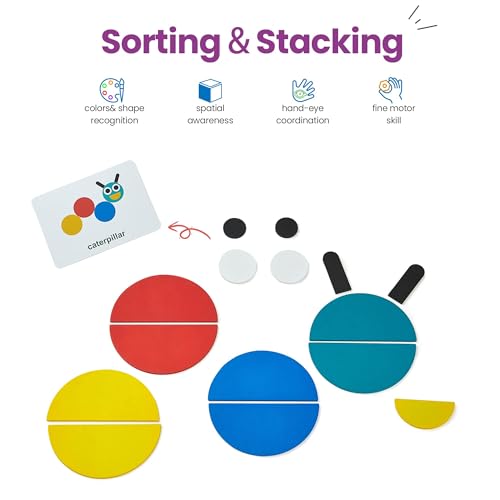

LiKee Wooden Shape Puzzle, 36 Blocks & 60 Cards, Montessori Toy for Kids 3+
- Contains 36 wooden shape pieces, 60 pattern cards and storage box for storing the pieces
- kids can try to build what is shown on the cards or create their own designs
- Great for developing spatial awareness, color & shape recognition, hand-eye coordination, and problem-solving…
If you want the wider research on free play and thinking skills, our piece on unstructured play and IQ goes through what the science does and does not show.
Common mistakes
What is guided play, and how do I do it at home?
Guided play is play where your child keeps control, but an adult adds a small, deliberate nudge that helps them learn more from it. You are sitting beside the game, not running it. Questions and props do most of the work.
Three kinds of playful learning
Researchers describe playful learning as children learning content while playing freely, with an adult guiding them, or in a structured game. That gives you three modes to move between:
None of these is the best one. A healthy week has all three, and your child will often slide from one to another without noticing.
What the research says, and what it does not
Guided play keeps the child's agency but adds an intentional part that helps children learn more from the experience. That is the heart of it: your child is still the driver.
A review of studies found an effect of guided play on early maths and related skills, but not on other outcomes such as literacy and socioemotional development. That is useful to know. Guided play looks promising for number skills, but it is not a magic method for everything, so do not expect it to fix reading or friendships on its own.
How to do it in five steps
- Watch for a minute. Work out what your child is trying to do before you join.
- Join at their level. Sit on the floor and ask for a job: "Can I be the customer?"
- Ask one open question. "What do you think will happen if we add another one?"
- Add one prop or twist. A notepad, a few coins, a pair of dice.
- Step back out. Let them carry on without you.
Here is an example. Your child is playing shop with toy food. You become a customer and say, "I have five coins. Can I buy two apples?" Then you add price tags with small numbers.
Within a few minutes your child is adding, subtracting and arguing about change. You have not taught a lesson, but a lot of maths just happened.
Structured games count too
A dice game with stacking pieces gives you built in rules, counting and a bit of fine motor practice. The Montessori Board Game is designed for young children and uses dice and wooden sticks, so it suits a family game night. Many games like this can build number sense, though the real value comes from playing it with you.
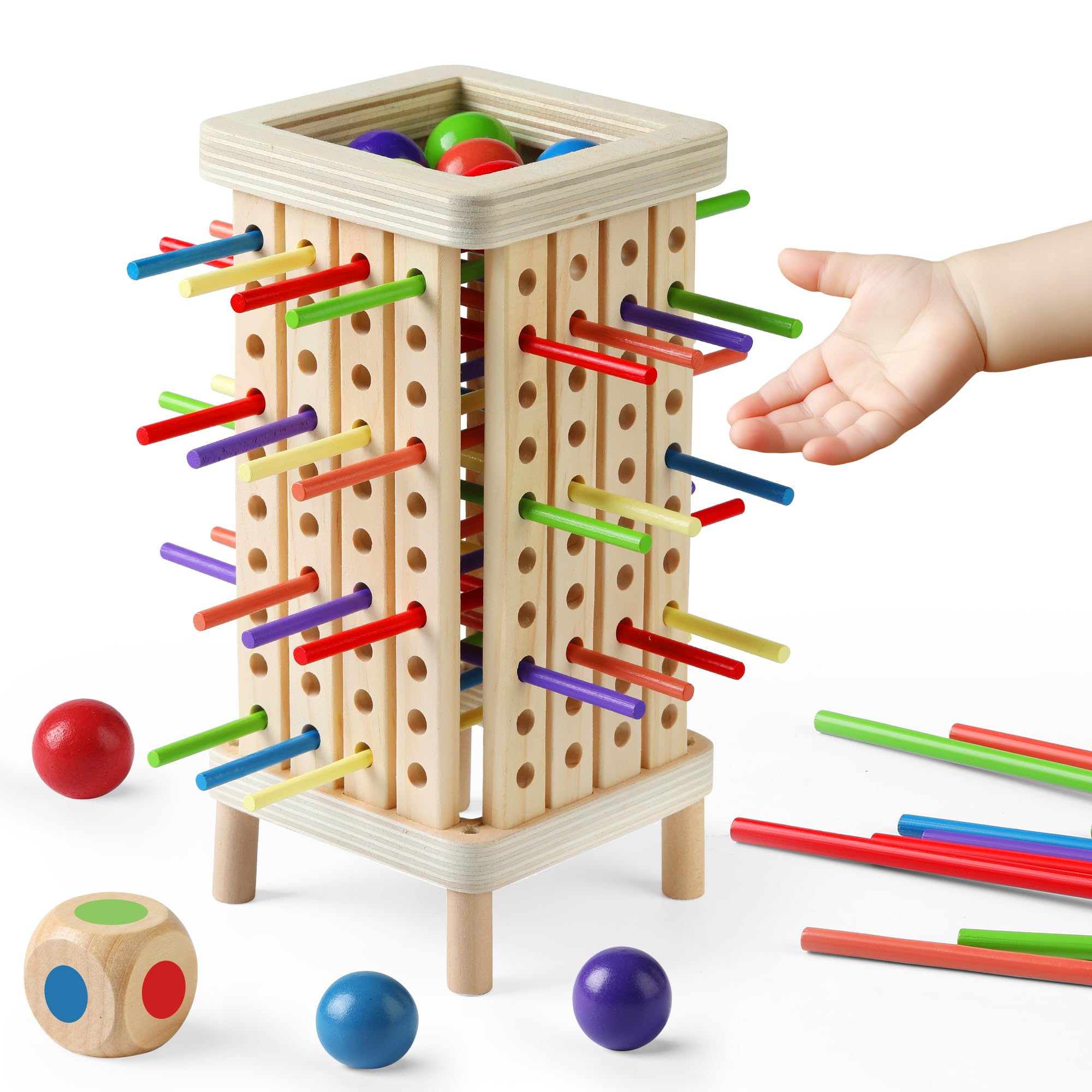

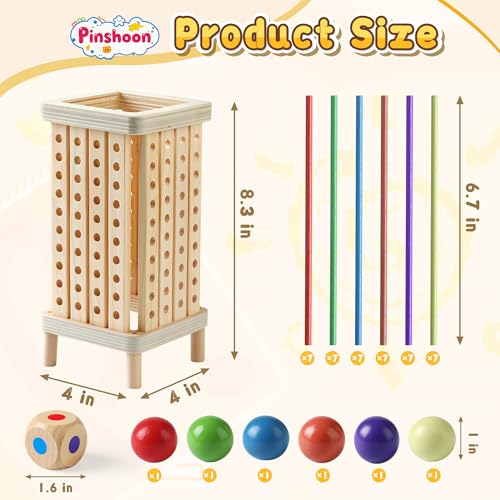
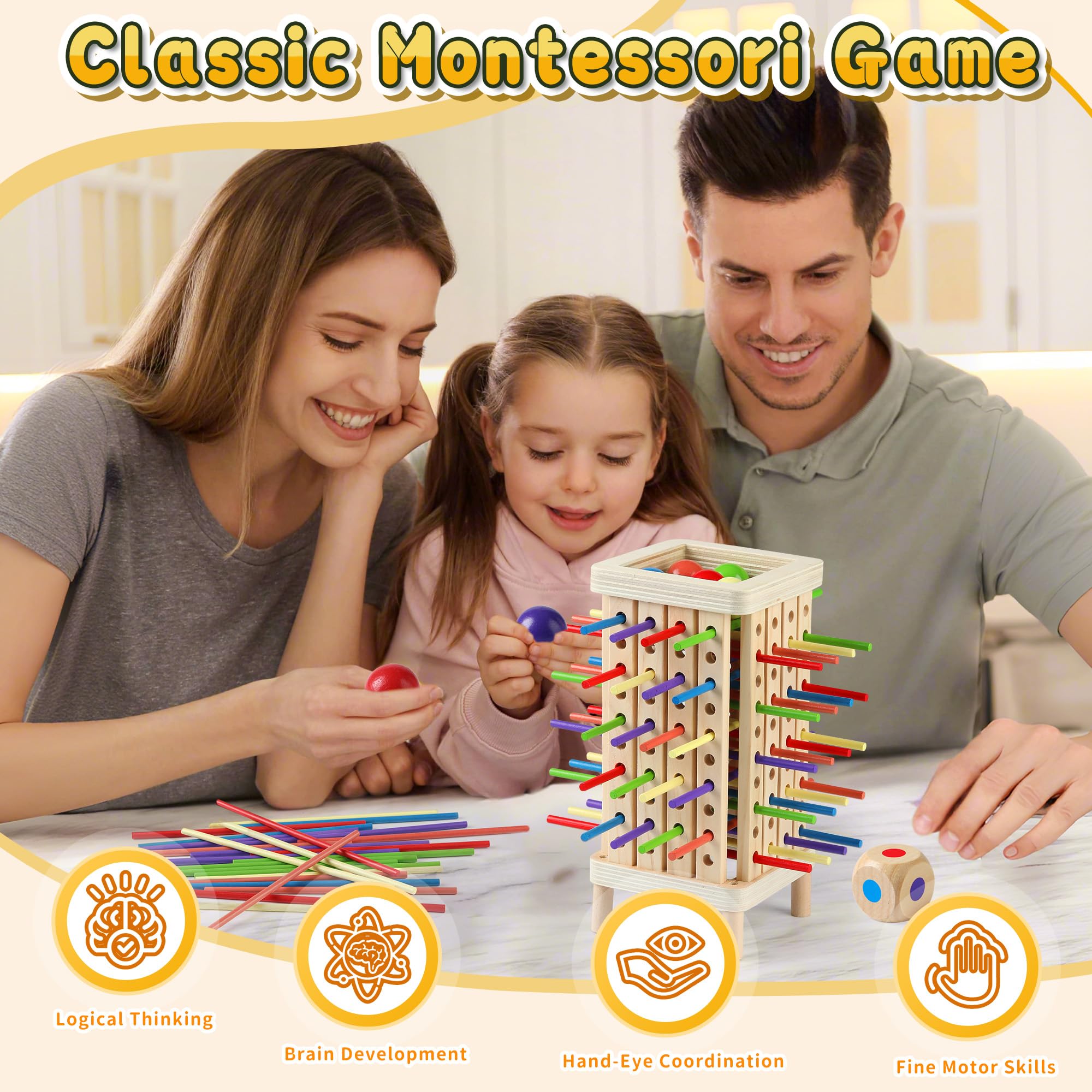
Montessori Board Game for Kids 4-8, Educational Math Family Games
- MONTESSORI EDUCATION CONCEPTS: Our wooden board game incorporates Montessori elements. During the game, by…
- HIGH QUALITY MATERIAL: The 42 wooden sticks of the toy are carefully crafted from natural wood, with a smooth…
- GAME NIGHT: Players take turns rolling dice and gently pulling out sticks, but make sure not to let the ball…
Common mistakes
If your child gets frustrated, you can say, "That is tricky. Do you want a hint, or do you want to keep trying?" Giving the choice keeps them in charge.
Can play really help my child with reading, writing and maths?
Partly, and it helps most with maths. A review found an effect of guided play on early maths and related skills, but not on literacy or socioemotional development. For reading, games can make practice more fun, but they do not replace sitting down with a book.
Everyday maths hides inside play
Maths is the easiest subject to slip into games because numbers are everywhere. You do not need worksheets.
A simple tool can help too. A wooden abacus lets a child see and move numbers, which many children find easier than counting in their head.
For the bigger picture of how thinking skills develop at this age, our cognitive development guide fills in the background.
Reading and writing need regular practice
The research I have to hand did not show an effect of guided play on literacy. So I would not rely on play alone to get your child reading. Reading is a skill that grows with regular, relaxed practice with a patient adult.
Games are a good partner for that practice. Sight words are common words, like "the" and "said", that children learn to recognise at a glance. The Active Minds Sight Words Magnets can live on the fridge, so your child can build a sentence while you wait for the kettle.

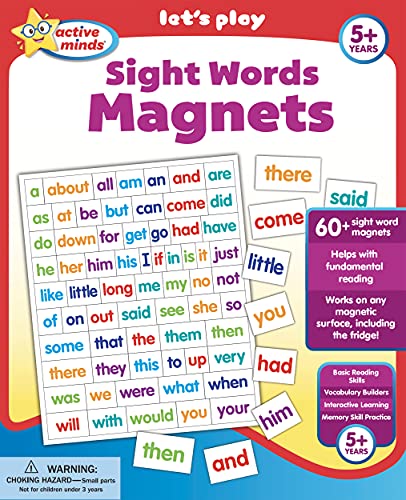

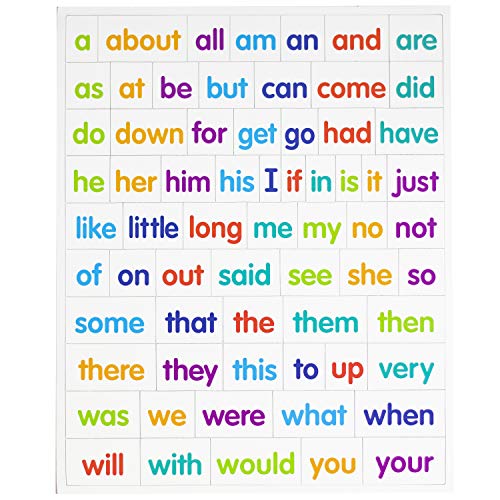

Active Minds Sight Words Magnets - Learn and Practice Language Building Skills needed for Reading (Ages 5 and Up)
- Children's Books
- Education & Reference
- Reading & Writing
For younger children in this age band, or for a tired reader, a matching game like the LIWIN LET'S GO! letter matching game is a gentle option. Check the age guidance on the packaging, because a seven year old may find it easy, but easy can be a nice change after a hard day of reading at school.
A five minute word game
- Choose three words your child is working on at school.
- Put the magnets or cards out on the table or fridge.
- Say, "Build me the word 'said'." Let them search and try.
- Ask them to put one word in a silly sentence: "The dog said..."
- Stop after five minutes, even if they are enjoying it.
Stopping early matters. A child who is left wanting more will ask to play again tomorrow.
What to say when they get stuck
When your child is stuck on a word, avoid jumping in with the answer. Try: "What could you try? Look at the first sound." If they are still stuck after a moment, tell them the word and move on.
You might say, "That one is a tricky word. I will tell you, and we will see it again soon." It keeps the flow and protects their confidence.
Writing through play
Writing becomes easier when it has a purpose. Ideas that work well:
Do not correct every spelling in these. Spelling lists are for school; this writing is for fun.
Common mistakes
How much active play does my child need every day?
The CDC recommends 60 minutes or more of moderate to vigorous physical activity daily for children and adolescents aged 6 to 17. It does not have to come in one block. School age kids usually move in short bursts, with lighter activity or rest in between.
The numbers, in plain words
In the UK, the government recommends at least 60 minutes, and up to several hours, of at least moderate physical activity daily, in line with WHO guidelines. If your child is five, the CDC band starts at six, so ask your doctor or health visitor what target they suggest.
The CDC also recommends that active time includes vigorous activity on at least 3 days a week. On at least 3 days a week it should include muscle strengthening and bone strengthening activity too.
What counts
Moderate activity makes your child breathe a bit harder, though they can still chat. Vigorous activity leaves them breathing hard enough that talking in full sentences is difficult.
Notice that none of this needs a club or a kit. A game of tag covers a lot of boxes.
Break up the sitting
School age kids should not be inactive for periods longer than 2 hours. A long school day is one reason to make time for movement after school. Even a short break matters if homework, a screen or a car journey has kept your child sitting for a while.
Short bursts are normal. Your child may sprint around the garden, collapse on the sofa for twenty minutes, then run again. That pattern is what the guidance describes, not a sign of laziness.
Build movement into a routine
Movement is easier when it is a habit instead of a daily negotiation. Our article on habit formation in children explains how attaching a new habit to something that already happens can help.
Here is how that might look in a normal week:
What to say
Most children respond better to a game than a command. Try, "Race you to the lamppost," or "Can you hop all the way to the gate?" Or, before homework: "Ten jumps, then we start."
If your child says they are too tired, you can say, "You can have five minutes on the sofa first. Then we will do something short and silly." Small, light and friendly works better than a lecture.
Common mistakes
How do I keep playground play safe?
Check the ground first. Surfacing should be at least 12 inches deep and extend at least 6 feet in all directions around stationary equipment. Grass and dirt are not considered protective surfacing, because wear and weather can reduce how well they absorb a fall.
Why a few checks matter
According to the CPSC, emergency departments in the US treat more than 200,000 children for playground related injuries each year. That number is not a reason to avoid playgrounds. It is a reason to spend two minutes checking before your child runs off.
Playground equipment is designed for age groups, and the grade school group covers ages 5 to 12. Look for signs that show which age group the equipment suits. If a structure looks very tall for your small five year old, you can say, "Let's start on the lower one today."
Swings, surfaces and spacing
For swings, the surfacing should extend, in the back and front, twice the height of the suspending bar. That sounds technical, but you can picture it: there should be a generous soft area both in front and behind, not just under the seat.
Loose fill like wood chips or rubber mulch can compact or thin out in busy spots. Walk across the area and look under the swings and at the bottom of slides, where wear is greatest.
What your child wears
Drawstrings on the hoods of jackets, sweatshirts and other upper body clothing can become entangled in playground equipment and can cause death by strangulation. Tuck them in, cut them out or choose a different top for the playground.
Helmets with chin straps should never be worn on playground equipment, because the straps can get caught. If you arrive by bike or scooter, take the helmet off before climbing and put it back on for the ride home.
A two minute checklist
What to say at the gate
Children listen to short, consistent rules. Try: "Hood strings tucked in, helmet off, and let me see you go up one step at a time." Say it every visit, and it becomes routine, like seat belts.
For climbing, "feet first and one at a time on the slide" is easier to follow than a long safety talk. Praise them when they check for friends below before they go down.
When something goes wrong
Most playground bumps are minor, but some are not. If your child hits their head, cannot use an arm or leg, or seems unusually sleepy or unwell afterwards, get medical advice promptly. Ask your doctor or health visitor ahead of time what signs they want you to watch for after a head bump, so you are not guessing in the moment.
Common mistakes
How do I make room for free play, boredom and curiosity?
Protect a daily window where your child chooses what to do, with no screen and no agenda. Children learn most when they follow their own interests through play. Boredom at the start of that window is normal, and it usually gives way to a game.
After school is not the time for another class
By the time your child is home, they have been listening, following rules and being "good" for hours. Many children are tired, hungry and snappy. A snack, a hug and thirty minutes of nothing in particular can do more than another worksheet.
If you can, keep one or two afternoons a week free of clubs, so free play has somewhere to happen. Free play is one of the three kinds of playful learning described earlier, and it needs time to work.
Boredom is not an emergency
Picture an eight year old standing in the kitchen saying, "I'm bored." You do not have to fix it. You can say, "That sounds frustrating. I bet you will think of something. I will check in after dinner."
Many children drift off into some game after a little while. The first few days may be grumbly, but that is the sound of a child learning to entertain themselves.
If you want a little help, make a boredom jar together. Write ideas on slips of paper and let your child pick one:
Curiosity kits worth having
You do not need any special equipment to explore science. A sink, a jug and a spoon will do. If your child is already asking "why" about everything, though, a kit can give their questions somewhere to go.
Check the age range on the Doctor Jupiter My First Science Experiments Kit before you buy, as it suits some ages better than others. Older children may want to take over the experiments and explain them to you.





Doctor Jupiter My First Science Experiments Kit for Kids Ages 4+
- A SCIENCE KIT THEY’LL LOVE: Help your kids foster an early love for science with our innovative kit with 100+…
- STEM LEARNING MADE FUN FOR KIDS: Allow your kids to actively explore and apply STEM concepts designed to…
- THE PERFECT GIFT: Gift your child 100+ days of screen-free fun with this fantastic science kit specially…
Growing things is another good one. A kit like the Root Viewer Kit can let your child watch growing things and track changes day by day. Watching slow change builds patience and close observation, skills that help with school science.
A simple way to use a kit
- Ask your child to predict: "What do you think will happen?"
- Let them try it while you watch.
- Ask them to say or draw what actually happened.
- Ask, "Was that what you expected? What would you change?"
- Put the kit somewhere they can reach it, so they can repeat it alone.
Notice that you are asking questions, not giving answers. That is guided play in action, with your child doing the thinking.
Screens and boredom
Screens fill gaps very quickly, which means they can crowd out the boredom that leads to free play. You do not have to ban them. A simple routine, such as "screens after we have played outside or done something with our hands," keeps the balance without constant battles.
Long stretches of sitting in front of a screen also add to the total time your child spends inactive. Breaking it up with a movement game is a kind way to remind them.
Common mistakes
What if my child struggles, resists or seems behind?
Start with a calm chat with the teacher, because they see your child alongside many others. Children vary widely at this age, and one bumpy term is common. If something persists or worries you, talk to your doctor or health visitor, who can check for causes like vision, hearing or learning differences.
Signs worth raising
Look at the pattern over a few weeks rather than a single bad day. It may be worth talking to someone if you see:
None of these means something is wrong on its own. Together or over time, they are a reason to ask.
How to start the conversation
With the teacher, you could say: "I have noticed that my child gets very frustrated with reading at home. Have you seen the same at school? What helps in class?" That opens a conversation instead of sounding like a complaint.
With your doctor, bring a few written examples with dates. "Over the last six weeks, she has refused to play with other children at breaks and cries before school" is much more helpful than "she is struggling."
Play as a window
Watching play can tell you a lot. Is your child able to take turns, even if they find it hard? Do they use language to ask for help? Can they switch to a new activity when a game ends?
Do not turn this into a test. Just notice, and share your observations with the teacher or doctor if they worry you.
Social skills need their own attention
The review of guided play found no clear effect on socioemotional development. That suggests social skills, like sharing, understanding feelings and handling disagreements, may not simply appear because your child is playing, even with guidance.
They grow with coaching, modelling and practice. Our guide to social and emotional learning has more on raising empathetic, resilient kids.
Handling resistance to learning games
If your child refuses learning games, try shrinking the activity, not pushing harder. Two minutes of cards is better than ten minutes of a fight. Or change the setting: practise spellings on the pavement with chalk, or count the stairs as you climb.
You can say, "We do not have to finish. Let's just do one." Then stop after one. Children who feel in control are often more willing to try again.
Common mistakes
Looking after your own expectations
You are not meant to teach your child everything at home. The school, the teacher and the wider community do a big part of the work. Your job is to protect play, keep a warm relationship and notice when something needs support.
On days when it all falls apart, a hug and a game of tag count as good parenting.
Which toys and games suit which goal?
Use this as a quick way to match a play idea to what your child needs right now. The age ranges are loose, and the best choice is always the one your child will actually pick up.
| Option | Best Age Range | Primary Benefits | Main Drawbacks | Recommended Product | Price Range |
|---|---|---|---|---|---|
| Dice and stacking board game | From about 5 | Counting, turn taking, fine motor control | Needs a partner, can end in tears over losing | Montessori Board Game | $16.99 |
| Letter matching game | From about 5, easier for 5 and 6 | Letter recognition, spelling, memory | May feel too easy for confident readers | LIWIN LET'S GO! letter matching game | $14.53 |
| Magnetic sight words | From about 5 | Quick word recognition, sentence building | Needs an adult to start; small pieces to tidy | Active Minds Sight Words Magnets | Price not listed |
| Pattern and shape puzzle | From about 5 | Spatial thinking, planning, free building | Can be left unused unless you sit with them at first | LiKee Wooden Shape Puzzle | $13.99 |
| Science experiments kit | From about 5 | Curiosity, prediction, observation | Costs more and needs adult help with setup | Doctor Jupiter My First Science Experiments Kit | $29.99 |
| Grow your own plant | From about 5 | Patience, observation, daily routine | Results take days or weeks; plants can fail | Root Viewer Kit | $16.98 |
Frequently asked questions
Key takeaways
Key Takeaways
- Play is still a main way children aged 5 to 8 learn, and they need plenty of time for it.
- Children learn most when they follow their own interests, so start with what your child already loves.
- Guided play, where your child leads and you add one nudge, looks most helpful for early maths, but not clearly for literacy or social skills.
- Games with simple rules help children get used to formal learning in a classroom.
- Aim for 60 minutes or more of moderate to vigorous activity a day for ages 6 to 17, and break up long stretches of sitting.
- Check the ground, the clothing and the equipment at the playground, and keep hood strings and chin strap helmets off the equipment.
- If you are worried about your child's play, reading or mood, talk to the teacher or your doctor early.
A last word
Your child is only five to eight for a short time. These are the years of dens, chalk drawings, scraped knees and long, serious games that make no sense to anyone else.
You do not have to turn every afternoon into a lesson. Protect some time to play, join in now and then with one good question, and keep an eye out for the things that need help.
At this age, play is not what your child does instead of learning; it is how a lot of the learning gets in. If this guide helped, save it for a rainy afternoon, share it with another parent, and come back to the Try this tonight lines whenever you need a small place to start.
Sources & References
- raisingchildren.net.au. "Children’s play activities: ideas."
- naeyc.org. "The Power of Playful Learning in the Early Childhood Setting."
- NIH (National Library of Medicine). "Can guidance during play enhance children’s learning and development in educational contexts? A systematic review and meta analysis."
- CDC. "Physical Activity Guidelines for Students."
- CDC. "Physical Activity Guidelines for School Aged Children and Adolescents."
- kidshealth.org. "Fitness and Your 6 to 12 Year Old."
- kidshealth.org. "Kids and Exercise."
- NIH (National Library of Medicine). "The physical activity profile of active children in England."
- cpsc.gov. "Public Playground Safety Handbook, U.S. Consumer Product Safety Commission."
- cpsc.gov. "Publication 325 092024 Keeping Consumers Safe: Public Playground Safety Handbook."
- safekids.org. "Playground Safety Tips."
- American Academy of Pediatrics. "Playground Safety: How to Ensure Injury Free Fun, HealthyChildren.org."
Frequently Asked Questions
How much should my 6 year old play each day?
Is it okay if my child prefers playing alone?
Should I stop playtime for more reading practice?
Are board games really useful for learning?
Is playground equipment designed for my 5 to 8 year old?
Can my child wear a helmet on the playground?
Was this helpful?
Thanks — your feedback helps us pick what to write next.