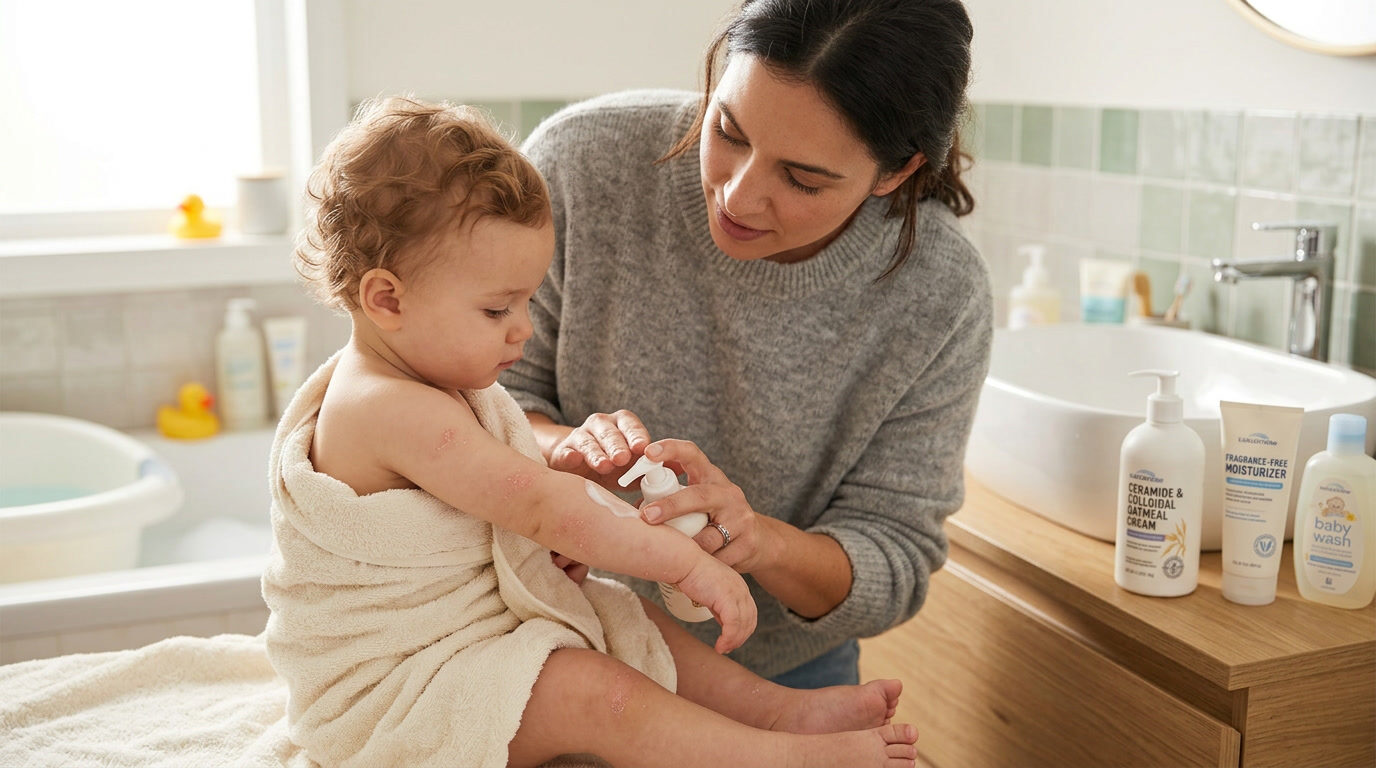
Decode Your Baby's Eczema Triggers Before Anything Else
Managing baby eczema (ages 3–12 months) comes down to six evidence-backed strategies: identifying triggers, bathing correctly, moisturising within minutes of bath time, choosing the right products, trying gentle natural remedies, and knowing when to call your paediatrician.
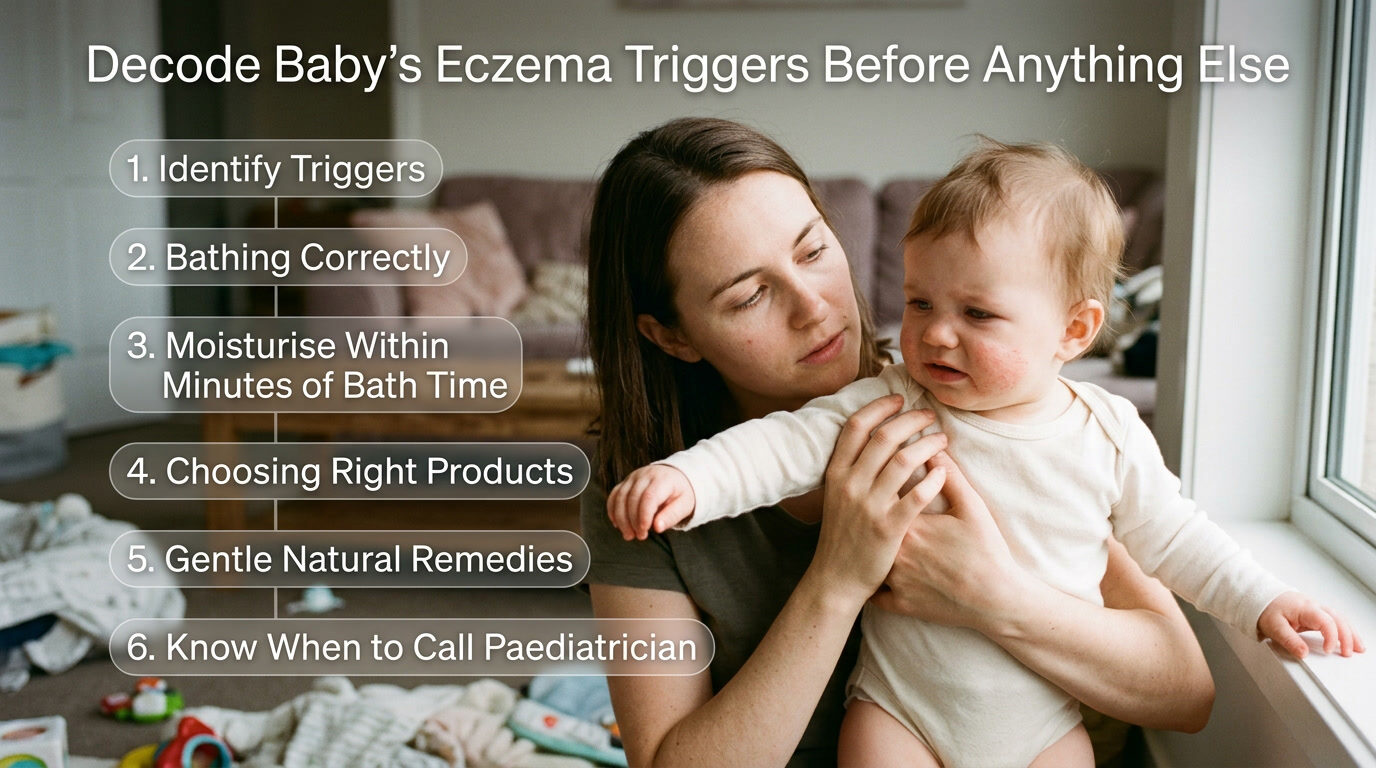
In this article
Your baby has been scratching since 3 a.m. again, and the red patches on their cheeks and elbows just won't quit. If that sounds familiar, you are in very good company. According to the American Academy of Dermatology (AAD), atopic dermatitis — the medical name for eczema — affects up to 20% of children, with the majority of cases appearing in the first year of life. It is the most common chronic skin condition in infants, and for many families it becomes the single biggest daily stressor in those early months.
The good news: eczema is highly manageable. You don't need a cabinet full of prescriptions or expensive gadgets. What you need is a consistent, evidence-based routine built around your baby's specific triggers and skin needs.
By the end of this guide you'll understand:
1. Decode Your Baby's Eczema Triggers Before Anything Else
The fastest route to fewer flare-ups is knowing what starts them. Eczema is not random — it follows a pattern unique to each baby, and once you spot that pattern, you can act on it.
The most common infant triggers
- Allergens: Dust mites, pet dander, and mould spores are the big three for babies under 12 months. Wash cot bedding weekly on a hot cycle (≥60°C / 140°F) and encase the mattress in a dust-mite cover. - Irritants: Fragranced laundry detergents, drool, and certain synthetic fabrics can strip the skin barrier. Switch to a fragrance-free, dye-free detergent and dress your baby in soft 100% cotton. - Temperature extremes: Overheating triggers itching almost as reliably as cold, dry air does. Keep the nursery between 18–20°C (64–68°F). - Food allergens (in some infants): Cow's milk protein, egg, and soy are the most common dietary triggers in this age group. Speak to your paediatrician before eliminating anything from your diet if you are breastfeeding. - Saliva and sweat: Both are acidic and will irritate broken skin around the mouth, neck folds, and wrists.
The trigger diary trick
Keep a simple notes-app log for two weeks. Record: what your baby ate or was exposed to, the weather, any new products used, and whether a flare appeared within 12–24 hours. Most parents identify one or two clear patterns within the first week.
2. Master the "Soak and Seal" Bath Routine
Bathing correctly is the single most impactful daily habit you can build, and most parents are unknowingly making two or three small mistakes that make things worse.
How to do it right
The "soak and seal" method is endorsed by the National Eczema Association (NEA):
1. Lukewarm water only — aim for 36–37°C (97–98°F). Hot water removes natural oils and spikes inflammation. 2. 5–10 minutes maximum. Longer soaks paradoxically dry the skin. 3. Pat (never rub) dry with a soft cotton towel, leaving skin slightly damp. 4. Apply moisturiser within three minutes. This is the "seal" — it traps the water absorbed during the bath.
Bathing and moisturising are the cornerstones of eczema management. Done correctly and consistently, they can reduce the need for topical medications significantly.
— National Eczema Association (2023)
What to skip in the bath
3. Choose a Moisturiser That Actually Rebuilds the Skin Barrier
Not all baby moisturisers are created equal. For eczema-prone skin, you need a product that does three things: hydrates, seals, and helps repair the damaged skin barrier.
The ingredient hierarchy
Look for these in order of evidence strength:
- Colloidal oatmeal — an FDA-recognised skin protectant that reduces itch and inflammation - Ceramides — the lipids naturally found in healthy skin; eczema skin is deficient in them - Petrolatum / white soft paraffin — the gold standard occlusive; nothing seals moisture more effectively - Glycerin — a humectant that draws water into the skin - Shea butter — a gentler occlusive, good for daytime use
Ingredients to avoid
✗ Fragrance (even "natural" fragrance) ✗ Sodium lauryl sulfate (SLS) ✗ Propylene glycol in high concentrations ✗ Essential oils (lavender and tea tree can be sensitisers in infants)
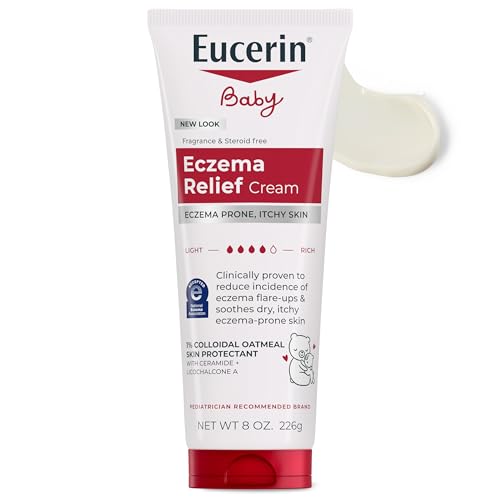
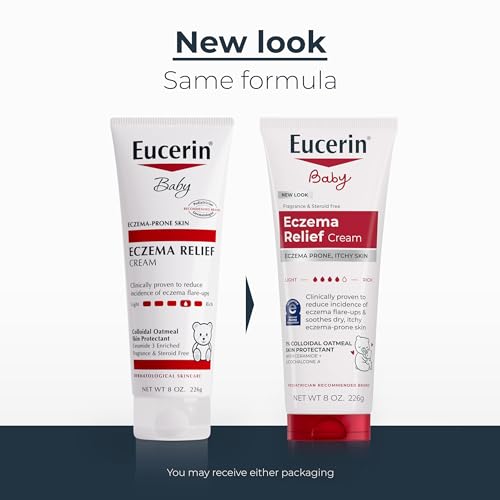
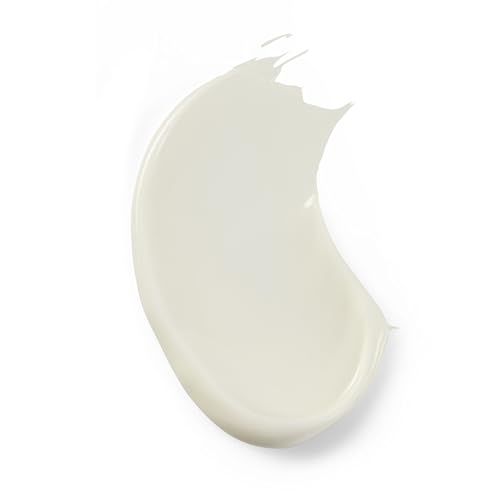
Eucerin Baby Eczema Relief Body Cream, Fragrance Free Baby Eczema Cream with Colloidal Oatmeal, Ceramide-3 and Licorice Root Extract, 8 Oz Tube
- Colloidal Oatmeal, Ceramides and Licorice Root: This Eucerin eczema cream for baby is formulated with Colloida
- Clinically Proven Formula: Eucerin Baby Eczema Relief Cream contains a clinically proven moisturizing formula
- Free Of: This Eucerin Baby cream for eczema treatment is steroid free and fragrance free, and is appropriate f
For daytime use, the Aveeno Baby Eczema Therapy Moisturising Cream combines colloidal oatmeal with vitamin B5 in a non-greasy formula that's easy to reapply after every nappy change. At night, when the skin does most of its repair work, a thicker balm like the Aveeno Baby Eczema Therapy Nighttime Body Balm provides an extended moisture barrier while your baby sleeps.
4. Pick a Cleanser That Protects, Not Strips
Your choice of baby wash matters more than most parents realise. The skin's natural pH is slightly acidic (around 5.5), and many standard baby washes are alkaline enough to disrupt that balance and worsen the barrier defect that underlies eczema.
What a good eczema-safe cleanser contains
- Glycerin — maintains moisture while cleansing - Oat extract — provides anti-inflammatory benefit during the wash itself - Ceramides — some cleansers now include these to begin barrier repair in the bath - pH-balanced formula — look for this on the label


The Honest Company Eczema Soothing Therapy Cream and Skin Protectant, Naturally Derived, Gentle for Baby, Prebiotics Colloidal Oatmeal, 7 oz
- Soothing Therapy Eczema Cream provides long-lasting moisturization to itchy, irritated eczema prone skin; The
- Gently massage the cream all over baby’s sensitive skin or any affected area on the face + body; Safe for dail
- Made With: Prebiotics – nourishes the good bacteria aka your skin barrier; Colloidal Oatmeal – soothes the ski
The Honest Company Eczema Soothing Therapy Cream doubles as a post-wash treatment, pairing prebiotics (which support the skin microbiome) with colloidal oatmeal for a gentle, effective option for infants from 3 months up.
A note on "natural" vs "clinical" products
Some parents prefer organic formulations. The Era Organics Healing Ointment is USDA Certified Organic, National Eczema Association approved, and dermatologically tested — a solid choice if you want to minimise synthetic ingredients without sacrificing efficacy.
5. Use Natural Remedies Wisely (and Know Their Limits)
Natural remedies can be a genuinely useful part of your toolkit — but the evidence is uneven, and a few popular options can actually cause harm in babies under 12 months.
What the evidence supports
Colloidal oatmeal baths: One of the most evidence-backed natural approaches. Grind plain, unflavoured rolled oats to a fine powder in a blender, add one cup to lukewarm bath water, and let your baby soak for 10 minutes. The beta-glucan in oats has measurable anti-inflammatory and itch-relieving properties. The Eucerin Baby Eczema Relief Body Cream (5 oz) harnesses this same ingredient in a clinically tested formula if you prefer a ready-made option.
Sunflower seed oil: A 2013 study published in Pediatric Dermatology found sunflower oil helped maintain the skin barrier in newborns. It is a reasonable, low-risk option for gentle massage.
Proceed with caution
- Coconut oil: Popular, but a 2016 study in JAMA Dermatology raised concerns that oleic acid in coconut oil may impair barrier function in some infants. Use sparingly and patch-test first. - Shea butter: Generally safe and soothing, but check for nut allergies in the family before using.
What to avoid entirely
✗ Essential oils (lavender, chamomile, tea tree) — sensitisation risk in the first year ✗ Honey — botulism risk in babies under 12 months ✗ Breast milk applied topically — a 2021 RCT in JAMA Pediatrics found it was no more effective than emollient cream and not recommended as a substitute
6. Know When Home Care Ends and Medical Help Begins
Home management works brilliantly for mild-to-moderate eczema. But there are clear signals that your baby needs more than moisturiser and trigger avoidance — and recognising them early prevents a minor flare from becoming a serious infection.
Signs to call your paediatrician within 48 hours
What your doctor may offer
- Low-potency topical corticosteroids (e.g., 1% hydrocortisone) — safe for short-term use on infants when prescribed appropriately; the AAP supports their use under medical supervision - Topical calcineurin inhibitors — an alternative for sensitive areas like the face - Allergy referral — if food triggers are suspected, a structured elimination diet under dietitian supervision is far safer than self-directed restriction
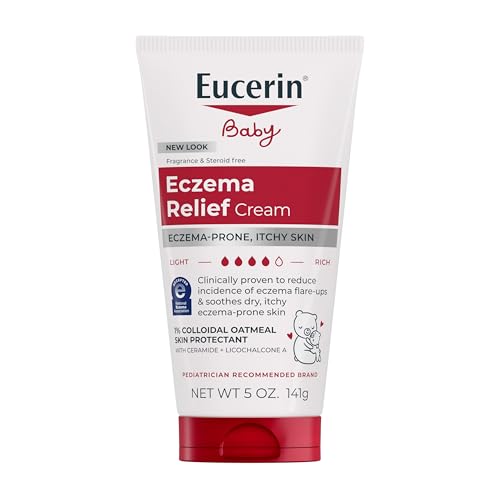
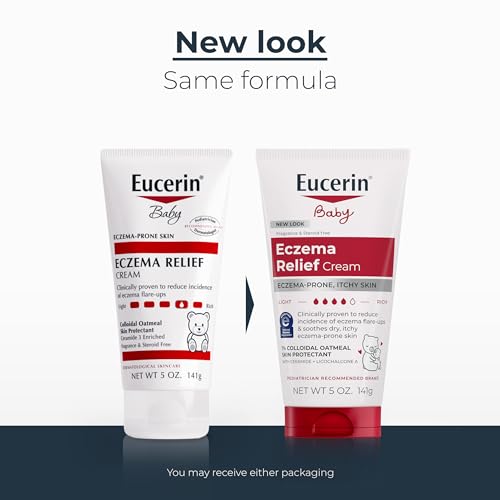
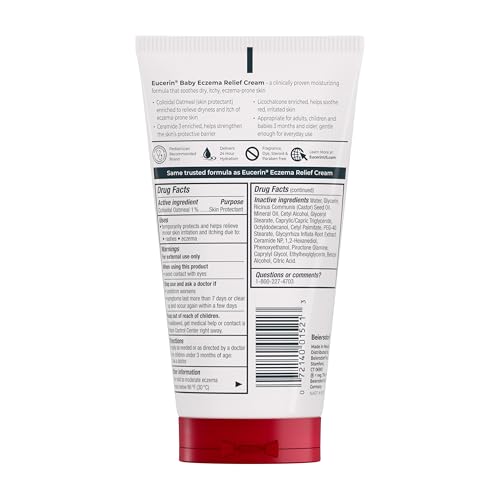


Eucerin Baby Eczema Relief Body Cream, Steroid & Fragrance Free for 3+ Months of Age, 5 oz. Tube
- Colloidal Oatmeal, Ceramides and Licorice Root: This Eucerin eczema cream for babies is formulated with Colloi
- Clinically Proven Formula: Eucerin Baby Eczema Relief Cream contains a clinically proven moisturizing formula
- Free Of: This Eucerin Baby cream for eczema relief is steroid free and fragrance free, and is appropriate for
Between doctor visits, the Eucerin Baby Eczema Relief Body Cream (5 oz) is a practical everyday option: steroid-free, fragrance-free, and formulated for babies from 3 months. The Aveeno Baby Eczema Nighttime Balm is a strong companion for overnight relief.
Comparing Your Baby Eczema Moisturiser Options at a Glance
| Product Type | Best For | Key Active Ingredients | Texture | Recommended Product | Price Range |
|---|---|---|---|---|---|
| Ceramide + oatmeal cream (8 oz) | Daily all-body use, ages 3 mo+ | Colloidal oatmeal, ceramide-3, licorice root | Smooth cream | Eucerin Baby Eczema Relief 8 oz | ~$17–18 |
| Ceramide + oatmeal cream (5 oz) | Travel / starter size, ages 3 mo+ | Colloidal oatmeal, ceramide-3, licorice root | Smooth cream | Eucerin Baby Eczema Relief 5 oz | ~$9–10 |
| Nighttime body balm | Overnight barrier repair | Triple oat complex, ceramides, glycerin | Rich balm | Aveeno Baby Nighttime Balm | ~$19–20 |
| Daytime moisturising cream | Non-greasy everyday use | Colloidal oatmeal, vitamin B5 | Light cream | Aveeno Baby Eczema Therapy Cream | ~$12–13 |
| Prebiotic therapy cream | Microbiome-sensitive skin | Prebiotics, colloidal oatmeal, safflower oil | Medium cream | Honest Company Eczema Cream | ~$12–13 |
| Organic healing ointment | Parents preferring certified organic | USDA organic botanicals | Thick ointment | Era Organics Healing Ointment | ~$14–15 |
What the Experts Say
You've Got This
The 3 a.m. scratch sessions, the guilt of not knowing what's causing the flare, the endless googling — if you've been through any of that, know that every parent of an eczema baby has been exactly where you are. The six strategies in this guide aren't magic, but they are the ones backed by the best evidence and trusted by paediatricians and dermatologists worldwide. Start with the soak-and-seal routine tonight, swap to a fragrance-free detergent this week, and begin your trigger diary tomorrow. Small, consistent steps genuinely move the needle.
The most important thing you can give your baby's skin isn't a product — it's a routine.
If this guide helped you, save it, share it with another eczema parent, or subscribe to tinymindsworld.com for weekly, evidence-based guidance through every stage of your baby's first year.
Sources & References
- American Academy of Dermatology Association. "Atopic Dermatitis: Overview." 2023. https://www.aad.org/public/diseases/eczema/types/atopic-dermatitis
- National Eczema Association. "Eczema in Infants and Toddlers." 2023. https://nationaleczema.org/eczema/children/infants-toddlers/
- National Institute for Health and Care Excellence (NICE). "Atopic Eczema in Under 12s: Diagnosis and Management (NG228)." 2023. https://www.nice.org.uk/guidance/ng228
- Eichenfield LF, et al. "Guidelines of Care for the Management of Atopic Dermatitis." Journal of the American Academy of Dermatology. 2014. https://doi.org/10.1016/j.jaad.2014.03.023
- Cooke A, et al. "Sunflower oil vs. Aqueous Cream in Newborn Skin Care." Pediatric Dermatology. 2016. https://doi.org/10.1111/pde.12731
- Lavender T, et al. "Effect of Breast Milk vs Formula on Infant Eczema." JAMA Pediatrics. 2021. https://doi.org/10.1001/jamapediatrics.2020.5099
- Flohr C, Mann J. "New Insights into the Epidemiology of Childhood Atopic Dermatitis." Allergy. 2014. https://doi.org/10.1111/all.12270
- U.S. Food and Drug Administration. "Colloidal Oatmeal as a Skin Protectant." 2003. https://www.fda.gov
Frequently Asked Questions
What is the difference between baby eczema and dry skin?
Can baby eczema be cured?
Is it safe to use steroid cream on my baby?
How often should I moisturise my baby's eczema skin?
Can diet cause baby eczema?
What fabrics are safest for a baby with eczema?
When should I take my baby to a specialist rather than the GP?
Was this helpful?
Thanks — your feedback helps us pick what to write next.