Do a Floor-Level Safety Walkthrough First
Baby-proofing your home before your infant becomes mobile — ideally by 4–6 months — is one of the most effective things you can do to prevent the leading causes of infant injury and death.
In this article
Every 47 seconds, a child under age five is treated in a U.S. emergency department for an unintentional injury, according to the Centers for Disease Control and Prevention (CDC). For infants aged 3–12 months — the window when rolling, sitting, crawling, and pulling-to-stand all arrive in quick succession — the home is the most common setting for those injuries. The good news: most of them are preventable with straightforward, affordable steps.
This guide walks you through exactly what to do, room by room, before your baby's mobility surprises you. By the time you finish reading, you'll understand:
1. Do a Floor-Level Safety Walkthrough First
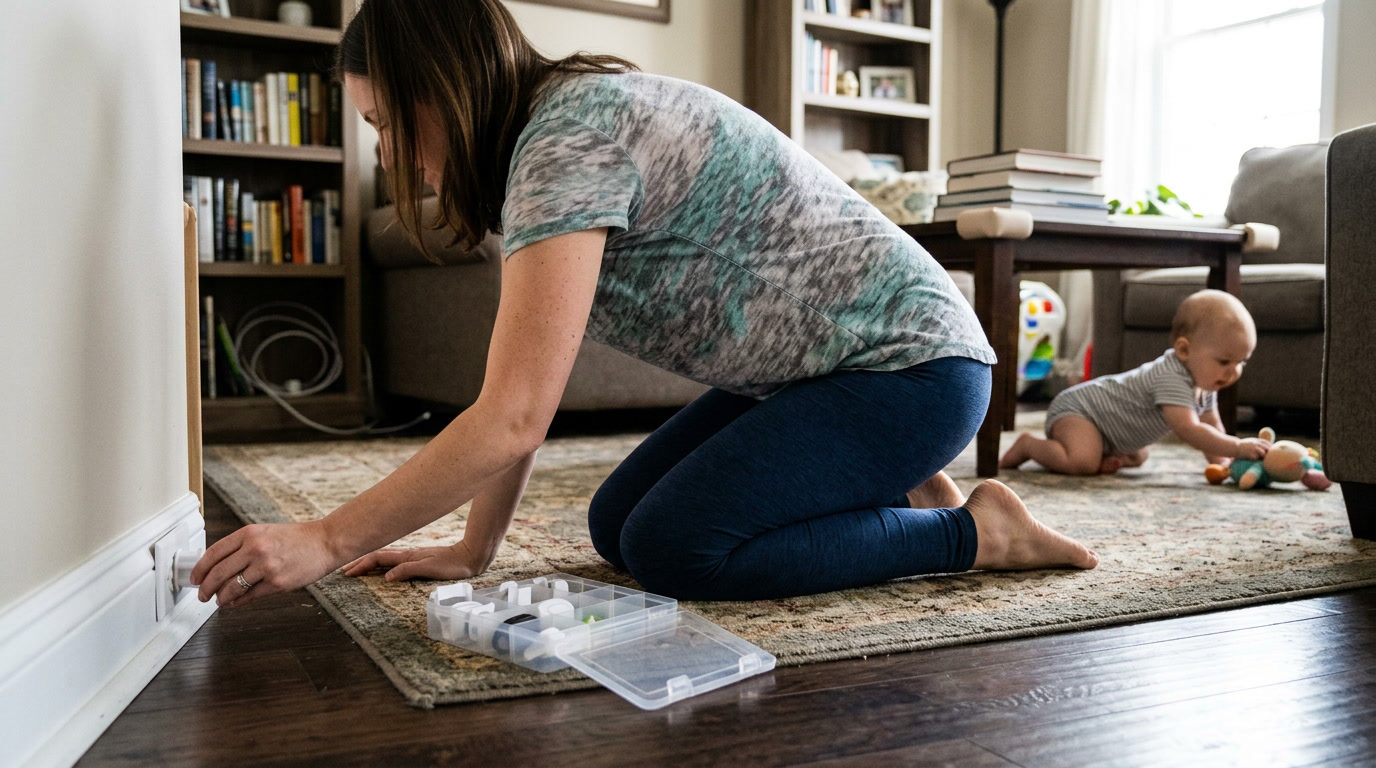
The single most useful thing you can do before buying anything is to get down on your hands and knees and see your home the way your baby will.
Adult eyelines miss a remarkable amount: trailing phone charger cables, loose furniture feet, low shelves with glass ornaments, and gap-sized spaces behind sofas where a baby can wedge themselves. A floor-level crawl through every room changes your perspective immediately.
What to look for, room by room
Living room: Loose electrical cords, low shelves with heavy or breakable items, coffee tables with sharp corners, unsecured bookshelves or TV units.
Kitchen: Lower cabinet contents (cleaning products, sharp utensils, plastic bags), oven and dishwasher door access, fridge magnets small enough to swallow.
Bathroom: Medications and toiletries at any reachable height, toilet lid access, non-slip surfaces in the tub.
Nursery and hallways: Furniture stability (especially dressers), staircase access, blind and curtain cord loops.
As you walk through, keep a running list. Prioritise anything that could cause a fall, poisoning, choking, strangulation, or electrocution — those are the five injury categories that account for the vast majority of infant emergency visits.
2. Secure Cabinets and Drawers in Every Room
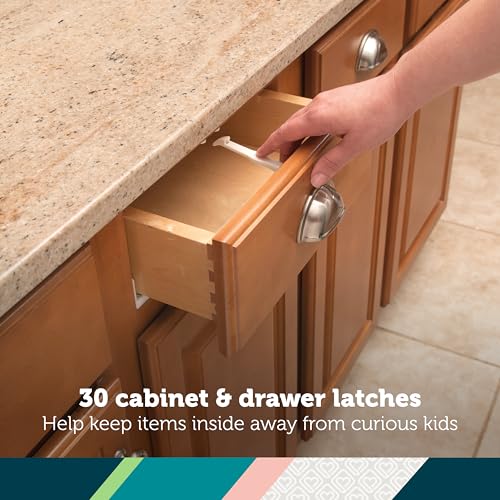
Cabinet locks are non-negotiable for any home with an infant approaching the crawling stage. A curious 9-month-old can open an unsecured lower cabinet in seconds — and kitchen and bathroom cabinets are where the most dangerous household items live.
Choosing the right lock type
There are three main styles worth knowing:
- Magnetic locks install invisibly inside the cabinet and require a magnetic key to open. They're the most secure and aesthetically clean option. - Adhesive strap locks loop around handles and are quick to install but more visible. - Spring-loaded latches mount inside and click shut automatically. Good for renters who can't drill.
For most families, magnetic locks offer the best combination of security and discretion. The Vmaisi 20-Pack Magnetic Cabinet Locks are a strong choice — 4.6 stars across more than 20,000 reviews — and work on both drawers and cabinet doors without drilling.
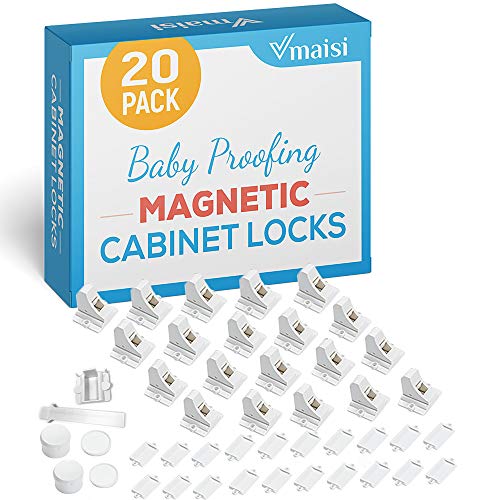


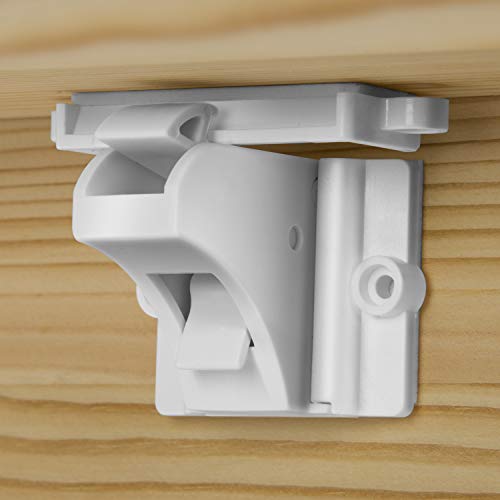

20 Pack Magnetic Cabinet Locks Baby Proofing - Vmaisi Children Proof Cupboard Drawers Latches - Adhesive Easy Installation
- [ 20 LOCKS + 2 KEYS ] Baby Child Safety Magnetic Cabinet Locks Work Both for Drawers and Cabinets. Improved Lo
- [ WORKS FOR CABINETS AND DRAWERS ] Extra Stronger Locks work on Max 2 inches cabinets door and work on cabinet
- [ INVISIBLE FROM OUTSIDE ] Upgraded Locks install inside cabinets or drawers, completely concealed from childr
If you'd prefer a no-drill adhesive latch that stays completely hidden, the Best Helpers Invisible Cabinet Latch Locks are a solid budget pick at $12 for 10 pieces, with optional screws for extra reinforcement on heavier doors.
3. Cover Every Electrical Outlet
Electrical outlets are at exactly the right height to fascinate a crawling or cruising infant, and the risk is serious: the U.S. Consumer Product Safety Commission (CPSC) estimates that approximately 2,400 children suffer electrical injuries from outlets each year in the United States.
Two levels of outlet protection
Basic plug covers are the most affordable option — small plastic inserts that block the socket holes. They're effective but must be replaced if they become loose or cracked, and they need to be removed and re-inserted every time you use the outlet.
Sliding plate covers replace your existing outlet cover entirely and require an adult to simultaneously push and slide a tab to access the socket — a two-step action that young children cannot coordinate. These are considered the safer long-term solution by most paediatric safety organisations.
A complete kit like the Inaya Complete Baby Proofing Kit includes 16 plug covers alongside cabinet locks and corner guards — a practical way to handle multiple hazards in one purchase. For the most comprehensive coverage, the Dapper Creative 67-Pack Child Safety Kit includes 16 outlet covers plus magnetic locks, corner protectors, and strap locks.
4. Cushion Sharp Corners and Edges
Between 6 and 12 months, your baby will be pulling themselves up on every piece of furniture they can reach. Coffee tables, TV units, hearths, and bedside tables all present hard, sharp corners at precisely head height for a cruising infant.
Corner guards won't prevent falls, but they significantly reduce the severity of the impact when a fall happens — which it will, because learning to stand and walk involves falling.
What to look for in corner guards
Choose guards made from high-impact TPU or dense foam rather than cheap soft foam, which compresses too easily and degrades quickly. Transparency matters too — clear guards blend with furniture and are far less likely to be removed by a tidy-minded partner or grandparent.

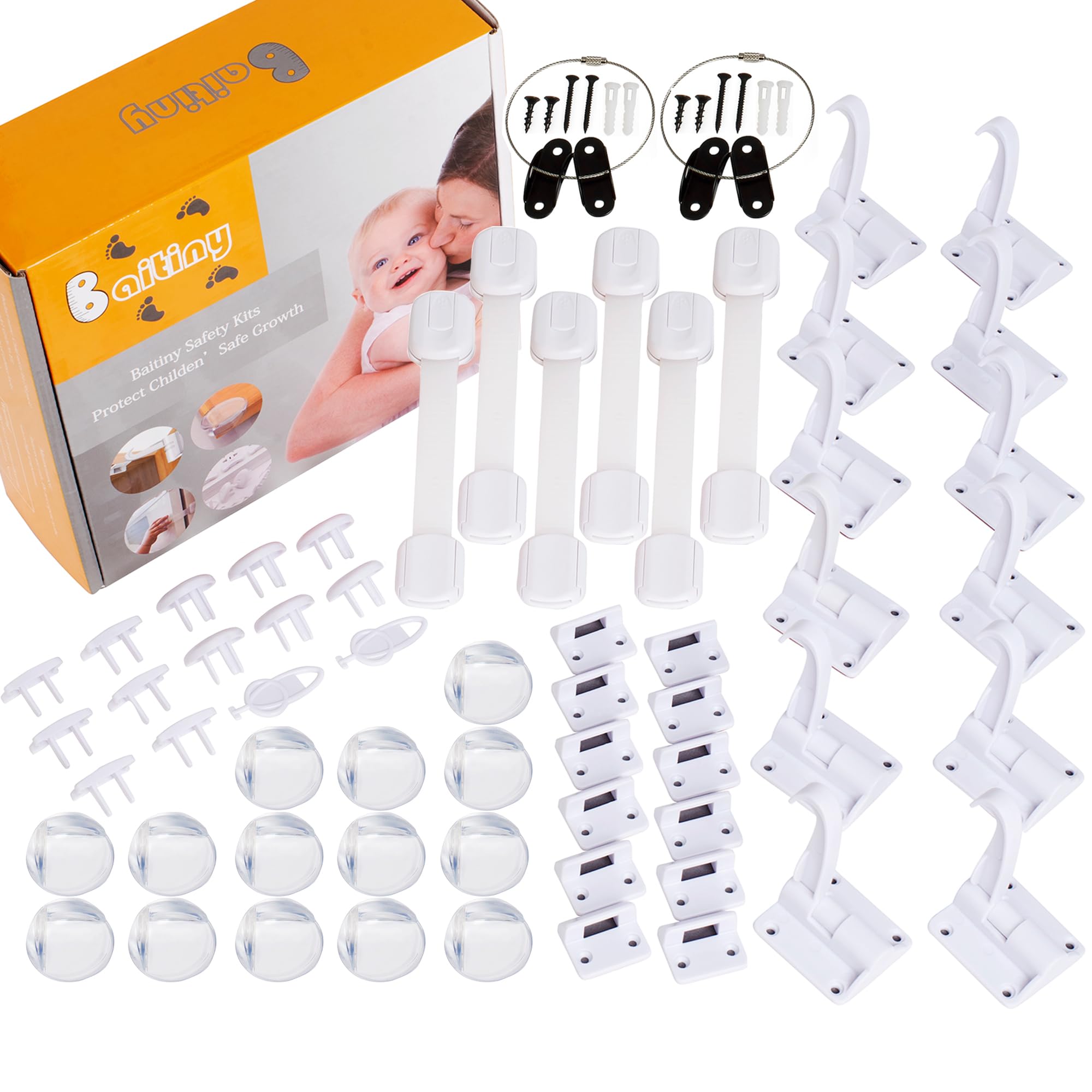
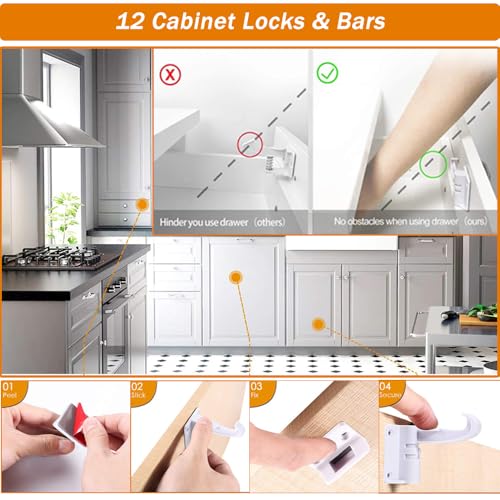
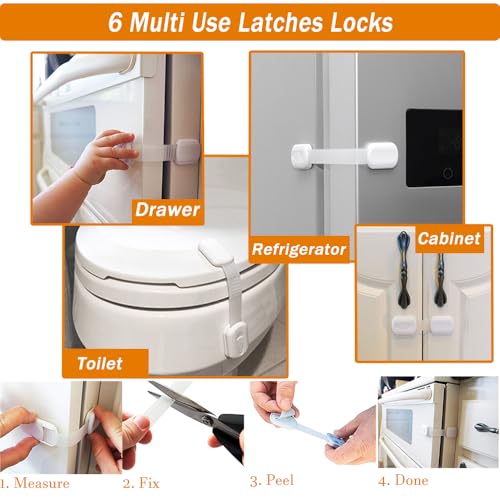
Baby Proofing Kit 60 Packs- Child Proof Essentials Set with Invisible Cabinet & Drawer Locks, Corner Protectors, Furniture Anchors and Outlet Covers Baby Safety Products - Complete House Proof Pack
- 【Complete Coverage】60-piece baby proofing kit vs. typical 20-30 piece sets — includes 12 invisible cabinet loc
- 【Smarter Toddlers, Stronger Locks】Unlike standard adhesive locks that fail within 6 months, our 3rd-gen invisi
- 【Clear & Furniture-Safe】14 transparent corner protectors child proof — 0.4-inch thick high-impact TPU bumpers
The Baitiny 60-Piece Baby Proofing Kit includes 14 transparent TPU corner protectors rated to absorb 90% of collision force, alongside cabinet locks, outlet covers, and furniture anchors — covering the majority of household hazards in a single box for under $25.
5. Anchor Furniture to Prevent Tip-Overs
Furniture tip-overs are one of the most underestimated hazards in infant and toddler safety — and one of the most preventable. According to the CPSC, a child is killed by a furniture or TV tip-over every two weeks in the United States. Dressers, bookshelves, and televisions are the most common culprits.
As your baby begins pulling to stand at 8–10 months, any tall or top-heavy piece of furniture becomes a potential hazard. They will grab whatever is at reach height and use it as a support — and they cannot predict that a dresser will come down on top of them.
Tip-over incidents are entirely preventable with wall anchors, yet they remain one of the most common causes of furniture-related child fatalities.
— U.S. Consumer Product Safety Commission (2023)
How to anchor furniture properly
Anti-tip straps or L-brackets attach the top of a piece of furniture to a wall stud. For maximum security, always anchor into a stud (not just drywall). Most furniture anchors come with the hardware needed; the key is finding the stud first with a stud finder.
The Baitiny 60-Piece Kit includes two metal furniture anchors with keys — enough for the highest-priority pieces. If you need to anchor more items, standalone anchor packs are widely available for under $15.
6. Install Safety Gates and Door Controls
Gates and door controls are your last line of defence — the physical barriers that keep your baby out of the spaces where the highest-risk hazards live.
Staircase gates: pressure-mount vs. hardware-mount
This distinction matters enormously. Pressure-mount gates (the kind that wedge between walls using tension) are convenient but should only be used to block off rooms or low-risk doorways. Hardware-mount gates (screwed into wall studs) are the only safe choice for the top of stairs. A baby falling through a pressure-mount gate at the top of a staircase is a genuine emergency-room scenario.
Door knob covers and door pinch guards
Beyond gates, door knob covers prevent your baby (and curious toddler siblings) from entering bathrooms, utility rooms, and garages independently. The Safety 1st 80-Piece Home Safeguarding Set includes six Grip 'n Twist door knob covers alongside cabinet slide locks — a well-priced bundle for covering multiple room-access risks.
Door pinch guards — soft foam strips that prevent doors from closing fully — protect tiny fingers from being caught in door hinges and latches. The Dapper Creative 67-Pack Kit includes finger pinch guards as part of its comprehensive bundle.

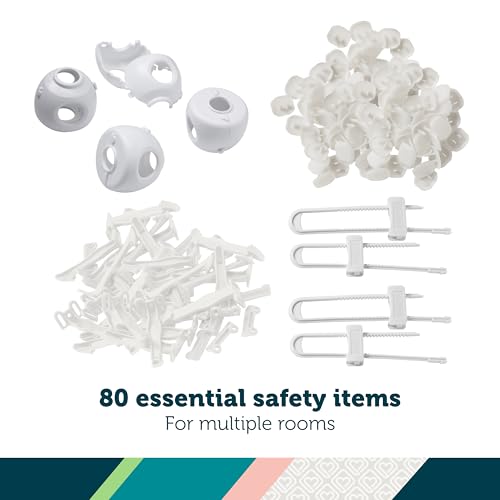
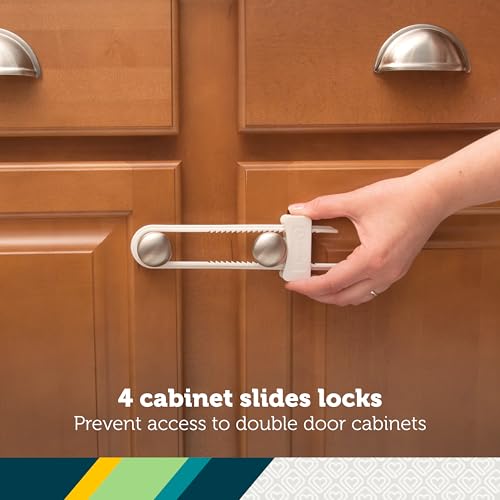
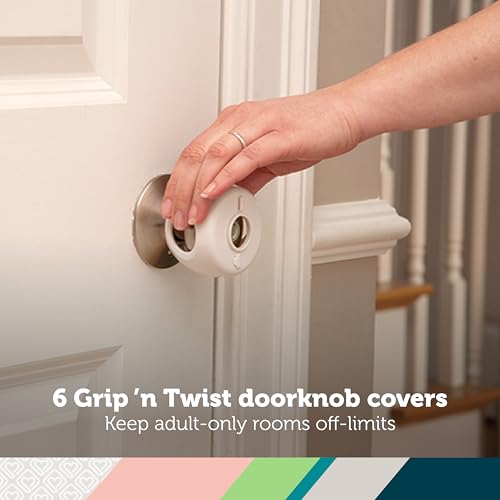
Safety 1st Home Safeguarding and Childproofing Set (80 Pcs), White
- Essential safety items for multiple rooms
- 4 Cabinet Slide Locks for preventing access to double door cabinets
- 6 Grip 'n Twist Door Knob Covers to keep adult-only rooms off-limits
Baby-Proofing Kit Comparison: Which Option Fits Your Home?
| Kit Type | Best For | Pieces Included | Key Features | Main Drawback | Recommended Product | Price |
|---|---|---|---|---|---|---|
| Budget all-in-one | First-time parents, smaller homes | 40 pieces | Cabinet locks, outlet covers, corner guards, latches | Fewer pieces, no furniture anchors | Inaya Complete Baby Proofing Kit | ~$24 |
| Large all-in-one | Larger homes, multiple hazard zones | 60 pieces | Cabinet locks, TPU corners, outlet covers, furniture anchors | Requires stud-finding for anchors | Baitiny 60-Piece Baby Proofing Kit | ~$25 |
| Magnetic lock focus | Parents who want the most secure cabinet solution | 20 magnetic locks + 2 keys | Invisible, drill-free, works on drawers and cabinets | Locks only — need separate corner/outlet products | Vmaisi 20-Pack Magnetic Cabinet Locks | ~$42 |
| Cabinet locks only (budget) | Renters or supplementing an existing kit | 10 adhesive latches | No-drill, damage-free, optional screw reinforcement | Smaller quantity | Best Helpers Invisible Cabinet Latches | ~$12 |
| Premium comprehensive | Families wanting the most complete single kit | 67 pieces | Magnetic locks, outlet covers, corner guards, pinch guards, bath toys | Higher price point | Dapper Creative 67-Pack Safety Kit | ~$41 |
| Trusted brand set | Parents who prefer established baby brands | 80 pieces | Cabinet slide locks, door knob covers, multi-room coverage | Less focus on corner guards | Safety 1st 80-Piece Safeguarding Set | ~$20 |
Expert Insights on Infant Home Safety
Your Safer Home Starts Today
Baby-proofing can feel overwhelming when you look at it all at once — but broken into six focused steps, it's genuinely manageable in a single weekend. The families who do this work early, before their baby surprises them with a first roll or a determined grab at a cabinet door, are the ones who avoid the emergency department visits that are so heartbreakingly common and so preventable.
The most quotable truth in paediatric safety is this: the best time to baby-proof was before your baby arrived; the second-best time is right now.
Start with your walkthrough today. Take the photos. Order one comprehensive kit. And share this guide with any new parent in your circle — because the families who need it most are often the ones who don't yet know they need it.


Inaya Complete Baby Proofing Kit - Child Safety Hidden Locks for Cabinets & Drawers, Adjustable Safety Latches, Corner Guards and Outlet Covers - Baby Proof Pack to Keep Your Child Safe at Home
- All-in-one Child proofing Kit: Ensure the safety of your kids (up to 5 years) at home, with the easy to instal
- Versatile Latches for Home Interiors: The adjustable latches and invisible locks ensure complete child safety
- Avoid Electrical Hazards: The baby safety kit includes reusable outlet plug covers to prevent curious little k
Sources & References
- Centers for Disease Control and Prevention (CDC). "Childhood Injury Report." 2023. https://www.cdc.gov/injury/features/child-injury/index.html
- American Academy of Pediatrics (AAP). "Home Safety: Here's How to Keep Your Baby Safe." HealthyChildren.org, 2023. https://www.healthychildren.org/English/safety-prevention/at-home/Pages/Home-Safety.aspx
- U.S. Consumer Product Safety Commission (CPSC). "Tip-Over Hazards: Furniture and TV Safety." 2023. https://www.cpsc.gov/Safety-Education/Safety-Education-Centers/Tipover-Information-Center
- U.S. Consumer Product Safety Commission (CPSC). "Electrical Outlet Safety for Children." 2022. https://www.cpsc.gov
- Safe Kids Worldwide. "Child Safety Report: Home Hazards." 2023. https://www.safekids.org
- American Academy of Pediatrics (AAP). "Childproofing Your Home." HealthyChildren.org, 2024. https://www.healthychildren.org
Frequently Asked Questions
When should I start baby-proofing?
Do I need to baby-proof rooms my baby won't use?
Are outlet covers actually necessary? I've heard they're a choking hazard.
What's the difference between pressure-mount and hardware-mount safety gates?
Is a baby-proofing kit enough, or do I need individual products?
How do I baby-proof if I'm renting and can't drill into walls?
How often should I re-check my baby-proofing?
Was this helpful?
Thanks — your feedback helps us pick what to write next.