6 Best Baby Teething Toys for Soothing Relief in 2026
The best baby teething toys combine food-grade silicone, age-appropriate textures, and smart design to soothe sore gums safely during the 6-to-24-month teething window.

In this article
Why Teething Toys Deserve More Thought Than You Might Think
Here is a number worth pausing on: the American Academy of Pediatric Dentistry (AAPD) estimates that most children will cut all 20 primary teeth by their third birthday, meaning your child will spend the better part of two years in some degree of teething discomfort. That is a long time to rely on guesswork when choosing what goes in their mouth every day.
Teething is one of those milestones that sneaks up on families. One morning your previously settled baby is drooling through three bibs before 9 a.m., gnawing on your shoulder, and refusing their favourite toy. Suddenly, the question of which teether to buy feels urgent rather than optional.
In this article, you will understand:
1. When Does Teething Start and What Does It Actually Feel Like for Your Baby?
Teething discomfort begins before the tooth breaks through the surface, often catching parents off guard. The American Academy of Pediatrics (AAP) notes that the first tooth typically erupts between 4 and 7 months, but the pressure and inflammation in the gum tissue can begin weeks earlier. That explains why your three-month-old may suddenly become a champion drooler and want to chomp on everything in reach.
The Teething Timeline at a Glance
The eruption sequence tends to follow a predictable order, though every baby is a little different:
- 3 to 7 months: Increased drooling, gum rubbing, and general fussiness (pre-eruption) - 6 to 10 months: Lower central incisors (the two bottom front teeth) arrive first - 8 to 12 months: Upper central and lateral incisors follow - 13 to 19 months: First molars erupt, often the most uncomfortable phase - 16 to 23 months: Canines fill in the gaps - 23 to 33 months: Second molars complete the set
The molar phase deserves special mention because molars have a broader surface and cause more gum pressure than incisors. Parents often feel like teething is "back" after a lull, and they are right.
Symptoms That Are (and Are Not) Down to Teething
Drooling, gum swelling, fussiness, disrupted sleep, and the urge to chew are genuine teething signs. A mild temperature elevation (under 38°C / 100.4°F) is commonly reported by parents, though the AAP and the UK's National Institute for Health and Care Excellence (NICE) are both clear that a true fever above 38°C is not caused by teething and warrants medical attention.
Understanding where your baby is in this sequence helps you choose the right teether. A front-gum soother for a 6-month-old is different from a back-molar teether for an 18-month-old. Just as you would track physical milestones that build core strength, tracking the teething timeline helps you stay one step ahead of the discomfort curve.
2. What Makes a Teether Safe? The Materials and Design Standards That Actually Matter
The safest teether is one made from food-grade silicone or natural, untreated wood, free from BPA, phthalates, PVC, and added dyes. This is not a marketing category; it is a measurable set of material standards that parents should actively check rather than assume.
Silicone: The Gold Standard
Food-grade silicone (sometimes called medical-grade silicone) is the material most paediatric dentists and safety bodies recommend. It is inert, meaning it does not react with saliva, stomach acid, or cleaning chemicals. It is also resilient: it will not crack, splinter, or absorb odours over repeated cleaning cycles.
Parents should look for teethers made of solid, one-piece construction. Any toy with small detachable parts, liquid-filled centres, or sharp edges poses a choking or aspiration risk.
— American Academy of Pediatric Dentistry, Consumer Safety Guidance (2022)
The AAPD's guidance reinforces what the design on products like the ChooKaChoo Teething Mitten gets right: no detachable components, soft one-piece construction, and a size that cannot be swallowed.
Natural Wood: A Secondary Option (with Conditions)
Beech wood is warm, lightweight, and naturally antimicrobial, which is why it is sometimes paired with silicone. The rule here is simple: the wood must be untreated, unvarnished, and unsealed. Products like the Arudyo Silicone Rudder with Wooden Ring combine a food-grade silicone chewing surface with a beech wood ring for gripping, which is a sensible division of labour.
Design Features Worth Checking


Baby Teething Toys Silicone Teethers BPA Free Silicone Rudder with Wooden Ring Soothe Babies Gums (Khaki)
- ★ SAFE MATERIAL – 100% food grade silicone and natural beech. The size of this silicone rudder teether is desi
- ★ HIGH TEMPERATURE – Our silicone rudder can withstand a high temperature of 200 degrees, so you can wash it w
- ★ SOOTHE GUMS – This teething ring has a hollow design, is lightweight and has a suitable size, which is very
3. The Best Teether for Early Graspers (3 to 6 Months): Silicone Mitten and Rudder Styles
Babies under six months cannot reliably grip and hold a traditional teether ring, which is why mitten-style and easy-grip silicone designs exist. At this stage, the goal is as much about proprioception (understanding where their hands are) and sensory stimulation as it is about pain relief.
Why Mitten Teethers Work So Well for Young Infants
The ChooKaChoo Teething Mitten slips over the hand rather than relying on the baby to grip it. The soft bumps and ridges on the surface apply gentle counter-pressure to the gum, which is how teething relief works at a neurological level: sustained, gentle pressure competes with the pain signal. The character's arms on the ChooKaChoo design mimic a nipple shape, which brings in the added comfort of a familiar sucking cue.


ChooKaChoo 2 Pack Baby Teething Toy Silicone Teething Mitten for Babies Over 3 Months Anti Dropping Wrist Hand Teethers Baby Chew Toys for Sucking Needs, BPA Free
- 【Give your little one a hand with teething】The Silicone Teething Mitten is the perfect solution for babies who
- 【Textured Surface Comforts Sore gums】The teether mitten features soft and durable textures of the bumps and lu
- 【Food Grade Soft Silicone】 Teethers are made of BPA free silicone with no small part to provide a strong, yet
Two mittens are included per pack, which is a practical detail. One goes in the wash; one stays with the baby.
The Rudder Teether for Grasping Practice
The Arudyo Silicone Rudder Teether introduces a second function: grasping practice. The wooden ring is sized for small hands to wrap around, while the silicone rudder head is the chewable surface. Because the wooden ring cannot be boiled, parents should wipe it with a damp cloth and allow it to air dry thoroughly to prevent any microbial growth in the grain.
This mirrors the broader story of developmental stages that support independent sitting, where multiple systems (strength, coordination, sensory feedback) develop in parallel rather than in isolation.
4. Fruit-Shaped Multi-Packs: Variety, Texture, and Brain Stimulation in One Set
A single teether design will eventually become boring to a baby who is cognitively growing week on week. Multi-packs with varied shapes and textures solve this naturally, and they align with what developmental research tells us about novelty and early learning.
Why Texture Variety Is More Than a Gimmick
Different textures stimulate different mechanoreceptors in the gum tissue. A smooth surface provides broad pressure; a ridged surface provides localised, repeating pressure points; a bumpy surface mimics the sensation of gum massage. Rotating through textures keeps the sensory experience fresh and ensures that different areas of the gum get attention as new teeth push through at different sites.
The YIYEE 6-Pack Fruit Teethers come with six distinct fruit shapes, each with a different texture profile. The banana shape is designed to reach the back of the mouth, the strawberry has fine surface nubs for the front gums, and the orange has a ridged rind texture. This kind of intentional variation is genuinely useful.


Baby Teething Toys 6 Packs BPA Free Silicone Baby Teethers, Freezer Safe Organic Infant Teething Toys Soft & Textured for Natural Brain Development
- 【100% Safe & Comfortable for Baby】Our baby teething toys are professionally made of soft and chewable food gra
- 【Happy Satisfaction From Teething Relief】These infant teething toys are designed to soothe, massage gums and r
- 【Attractive Cute Fruit Design】In this pack, there is 6 teething toys with different fruit designs and shapes.
Oral sensory experiences during infancy, including varied textures on teethers, contribute to broader sensory processing development and may support easier acceptance of textured foods later on.
— Journal of Pediatric Dentistry, cited in AAP developmental guidance (2021)
Freezer-Safe Features: When to Use Them
Cold temperatures reduce inflammation and numb surface nerve endings, which is why frozen teethers work. The YIYEE set is explicitly freezer-safe. The practical rule: freeze for 30 minutes, not overnight. An overly frozen teether can become too rigid and may actually damage delicate gum tissue. You want cold and flexible, not frozen solid.
5. The Multi-Stage Teether: One Product That Grows With Your Baby (0 to 18 Months)
Most teethers are designed for a specific window. A multi-stage teether that spans infancy through toddlerhood earns its place in a packed nappy bag not just through convenience but through thoughtful engineering.
What Makes the Frida Baby 4-in-1 Stand Out
The Frida Baby 4-in-1 Teether addresses a specific design flaw common in budget teethers: the chilling handle. When you refrigerate a one-piece silicone teether, the handle gets as cold as the chewing surface. Babies then reject the toy because their palm gets uncomfortably cold after a minute or two of use. Frida Baby solves this by using a room-temperature silicone handle paired with two swappable, coolable inserts.


Frida Baby Silicone Teething Toys, 4-in-1 Teether for Babies & Infants, Teething Relief for 0-18 Months, Not-Too-Cold-to-Hold Baby Teether, BPA-Free
- SILICONE BABY TEETHING TOY: Thoughtfully designed with a room-temperature silicone handle that prevents baby's
- 0-18 MONTHS TEETHING TOYS: Features two double-sided inserts with four distinct cooling shapes strategically d
- SENSORY TEETHING TOY: Innovative texture variety incorporates four different massaging surfaces including bump
Each insert has a double-sided cooling shape, giving four distinct surfaces in total: bumps, ridges, waves, and smooth areas. The bumps and ridges target back gum tissue; the smooth surface and waves provide broader pressure across the front incisors. At different points in the teething sequence, you rotate the insert rather than buying a new product.
Sensory Stimulation Across Stages
The four surface textures also map to the sensory development arc that the research on infant cognition describes. As infants move from reflexive mouthing to intentional oral exploration between 4 and 12 months, the variety of tactile input supports the brain's construction of a detailed oral sensory map. This is part of the broader cognitive development work the brain does during the first year, where every new texture or sound is integrated into a growing neural architecture.
6. The Sensory Rattle Teether and Toothbrush Sets: Doubling Up on Developmental Benefits
The most forward-thinking teethers do two things at once: soothe gums now and build habits or skills your child will carry forward. A teether with rattle function introduces auditory stimulation. A banana-shaped toothbrush teether introduces your baby to the sensation of an object moving along the gum in a brushing motion, laying the groundwork for toothbrushing acceptance.
The Rattle Teether: Engaging Two Senses at Once
The Infinno Montessori Sensory Rattle Teether pairs a chewable silicone surface with an internal rattle mechanism. When the baby moves the toy (which they will, because movement is instinctive at this stage), the rattle sound follows. This cause-and-effect loop is one of the earliest forms of intentional learning: the baby discovers that their action produces a result.
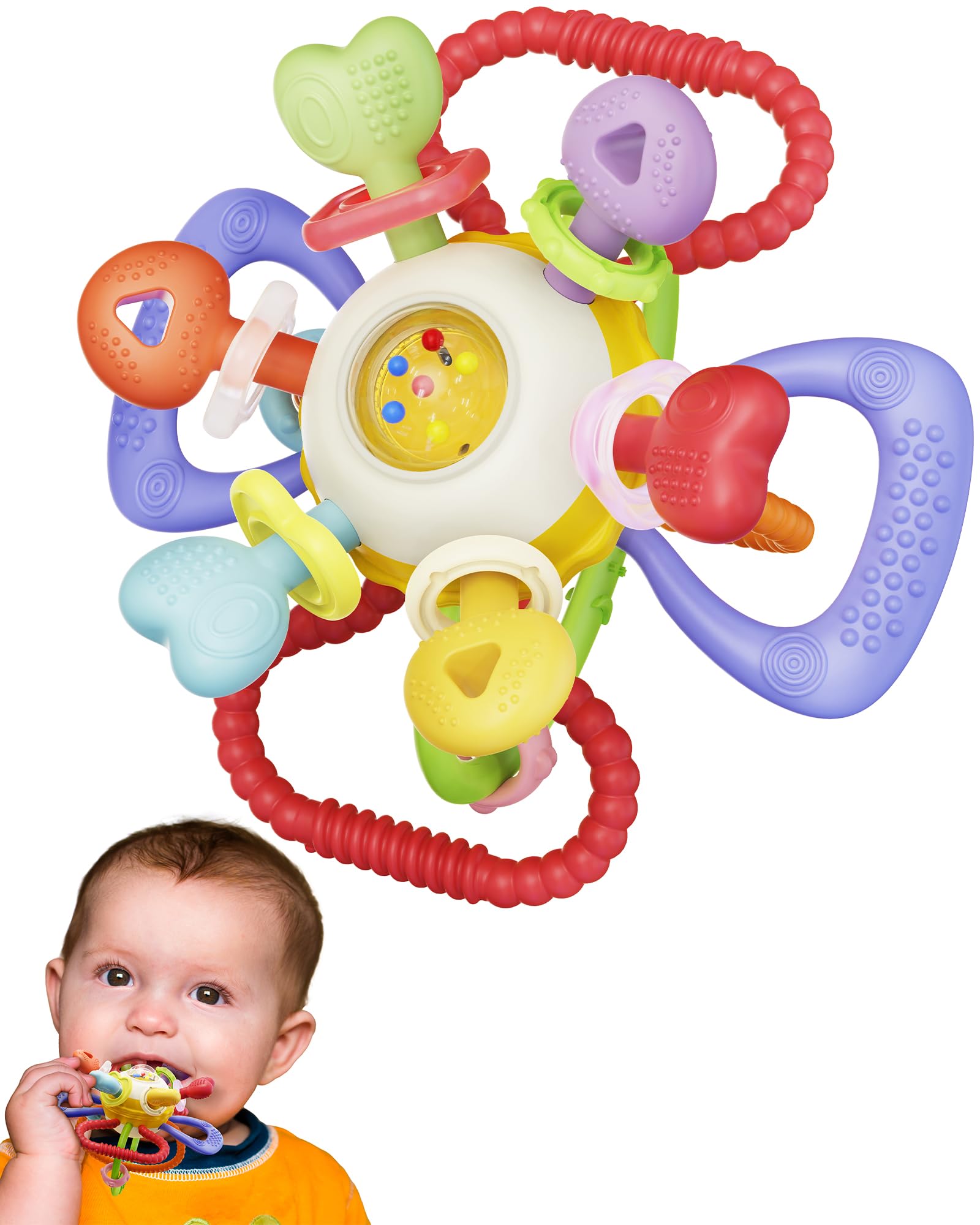
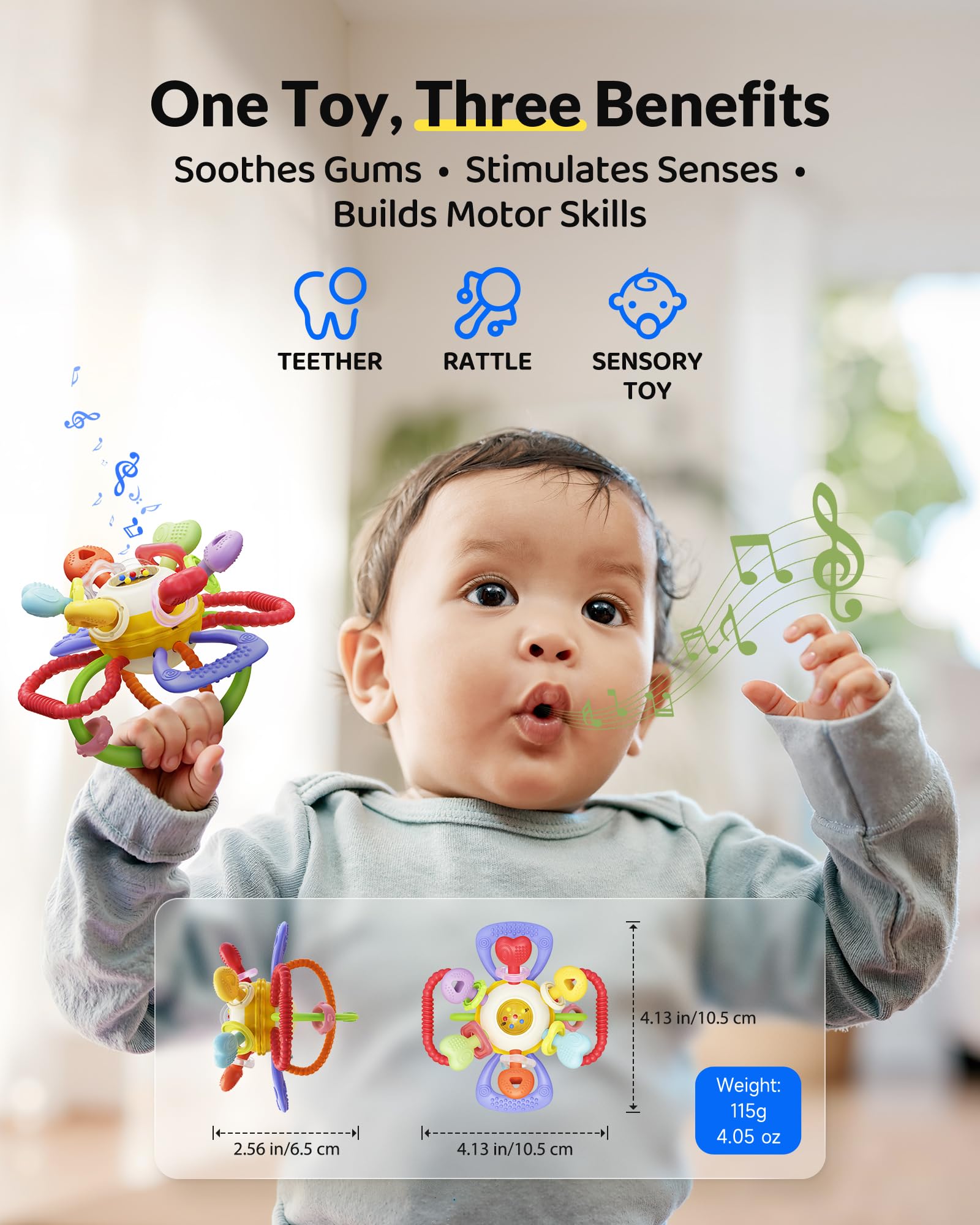
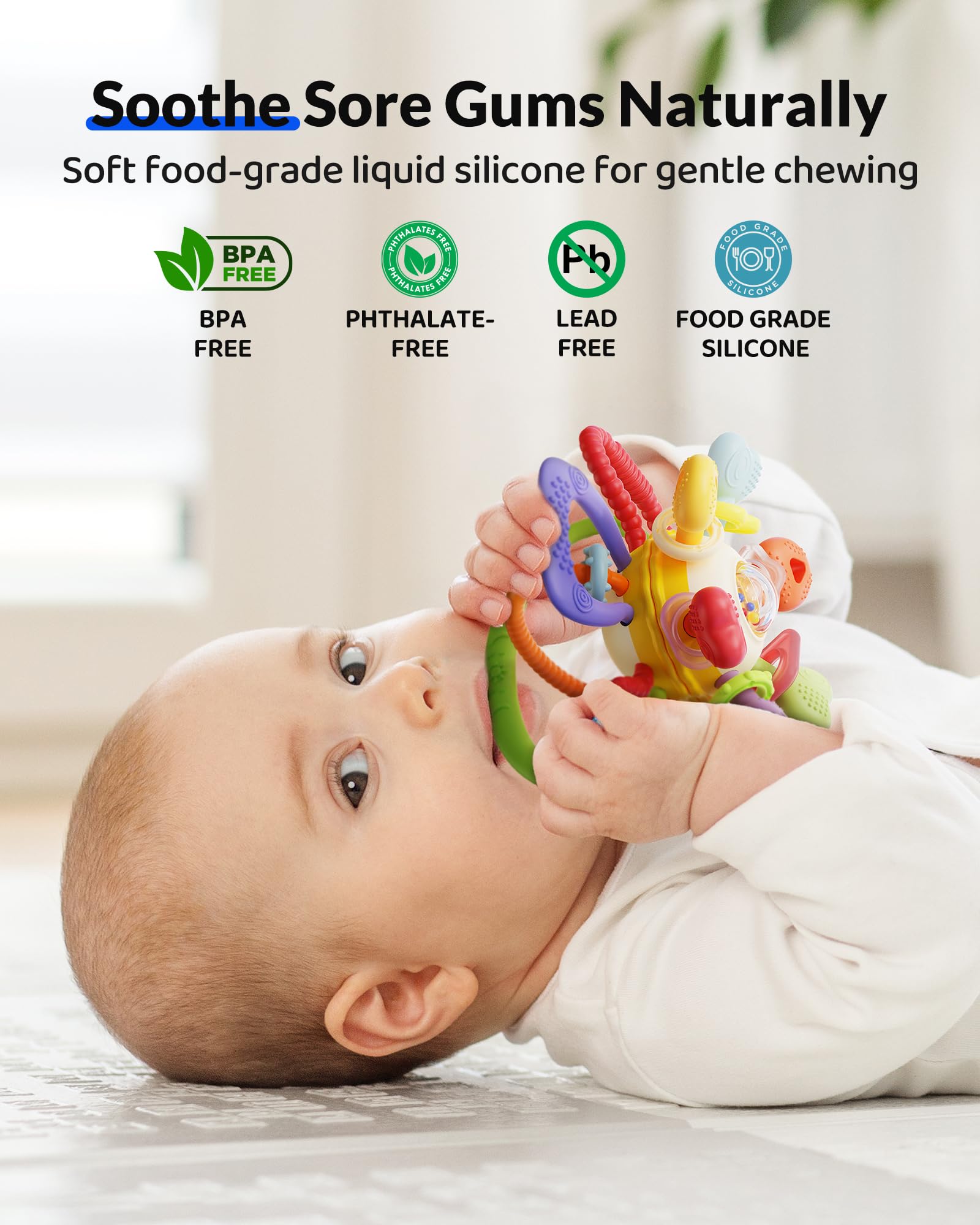
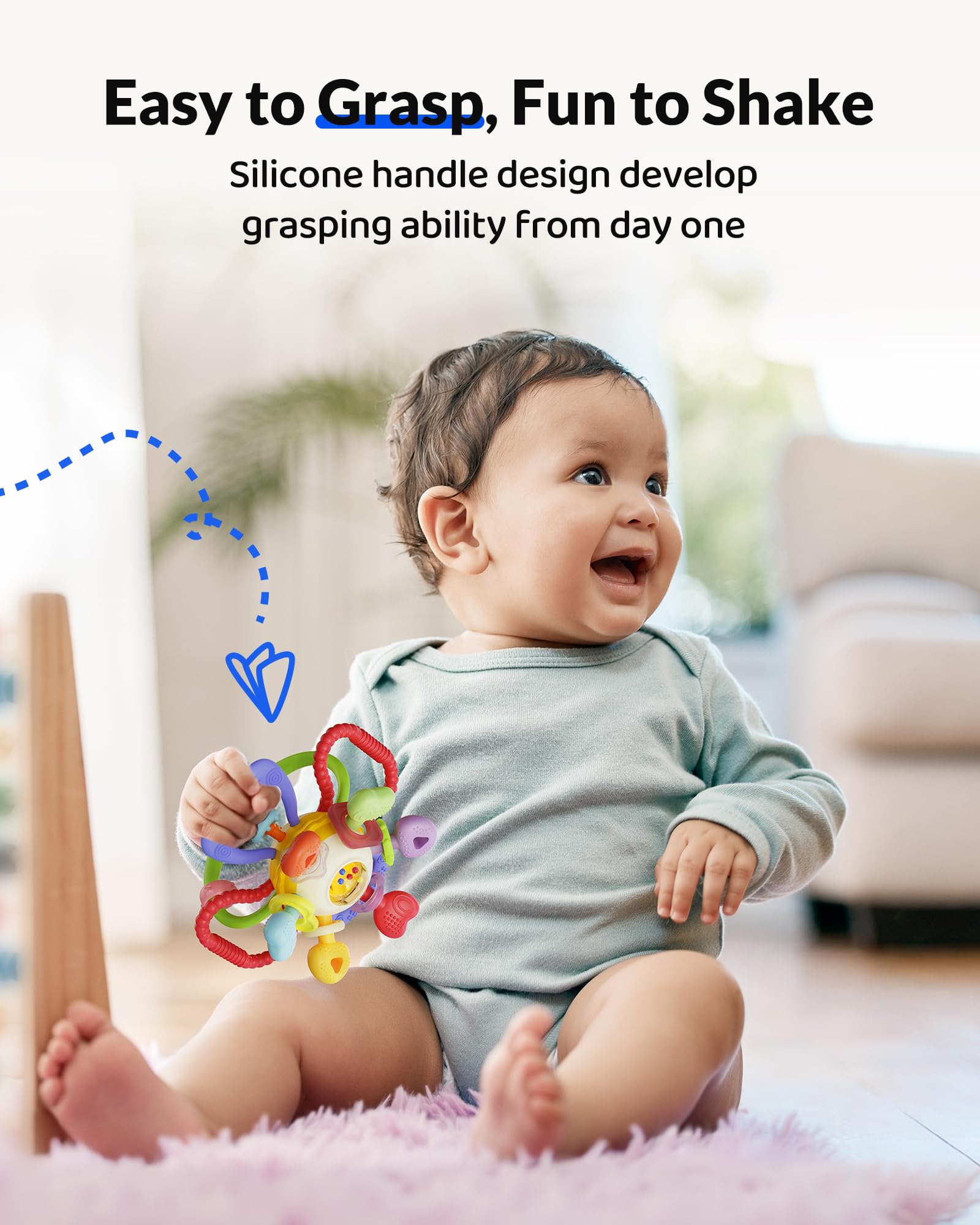
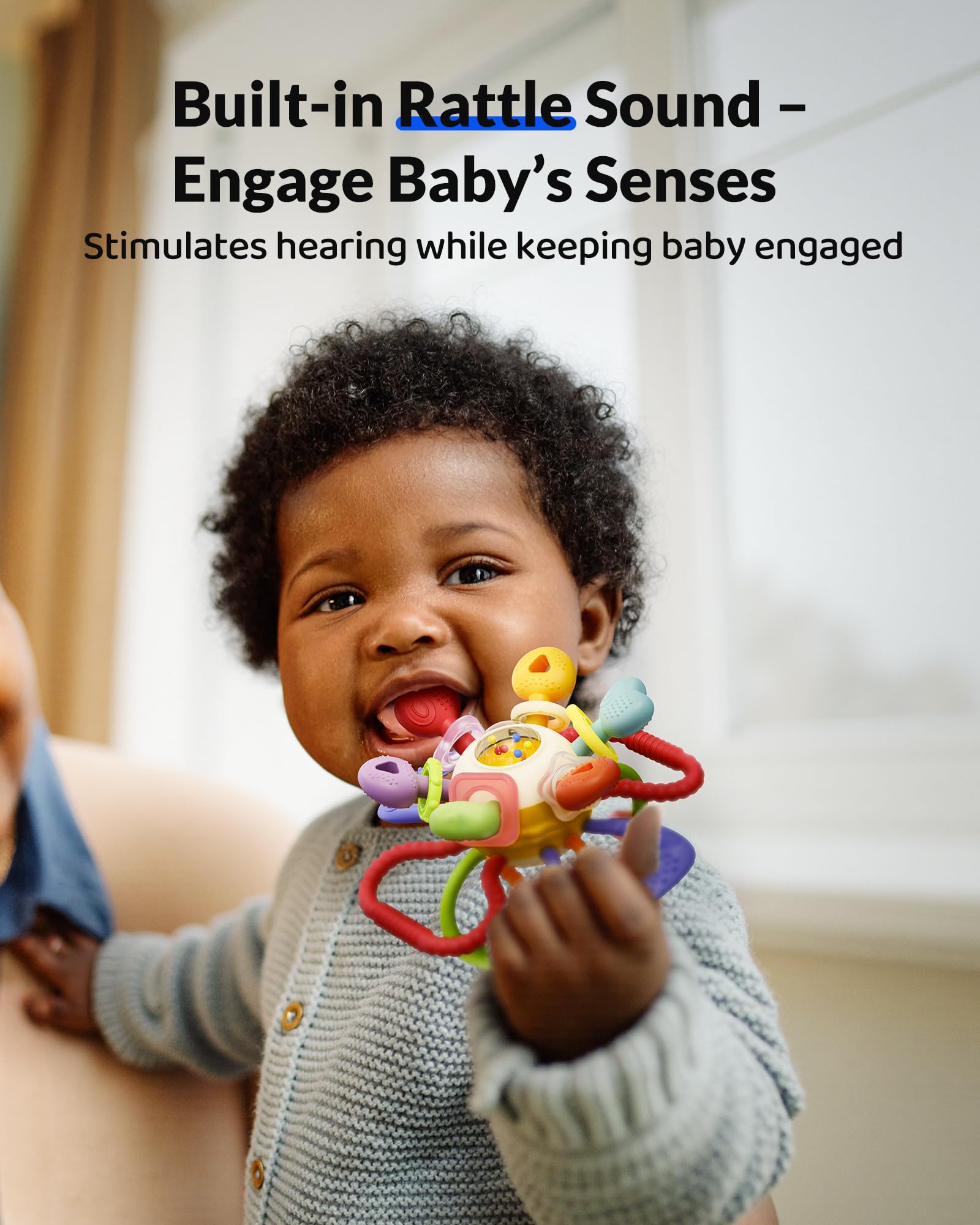
Baby Montessori Sensory Teething Toy - Safe, Multi-Functional BPA-Free Silicone Teether for Babies 0-12 Months - Teething Relief & Fun Play with Rattle - Perfect Baby Toys for Boys & Girls
- Dual Function: Teething Relief & Rattle Fun – This baby toy combines teething points and rattle sounds to soot
- Safe & Non-Toxic for Your Baby – Crafted from food-grade silicone and BPA-free plastic, this toy ensures your
- Vibrant & Engaging Design – With bright colors and fun rattle sounds, this toy is more than just a teether. It
The auditory and visual stimulation layered into this design align with Montessori principles of object permanence and sensory integration, though the practical effect is simply that your baby stays engaged longer, which extends the gum-soothing time without requiring you to keep reintroducing the toy.
The Banana Toothbrush Set: Bridging Teething to Dental Hygiene
The HAILI XMGQ 4-Pack Teething Set includes a banana-shaped toothbrush teether, a giraffe shape, and two additional forms, each in different colours and packaged in a storage box. The banana design is one of the most popular first toothbrush shapes among paediatric dentists precisely because its curved surface naturally runs along the gum line when a baby chews.
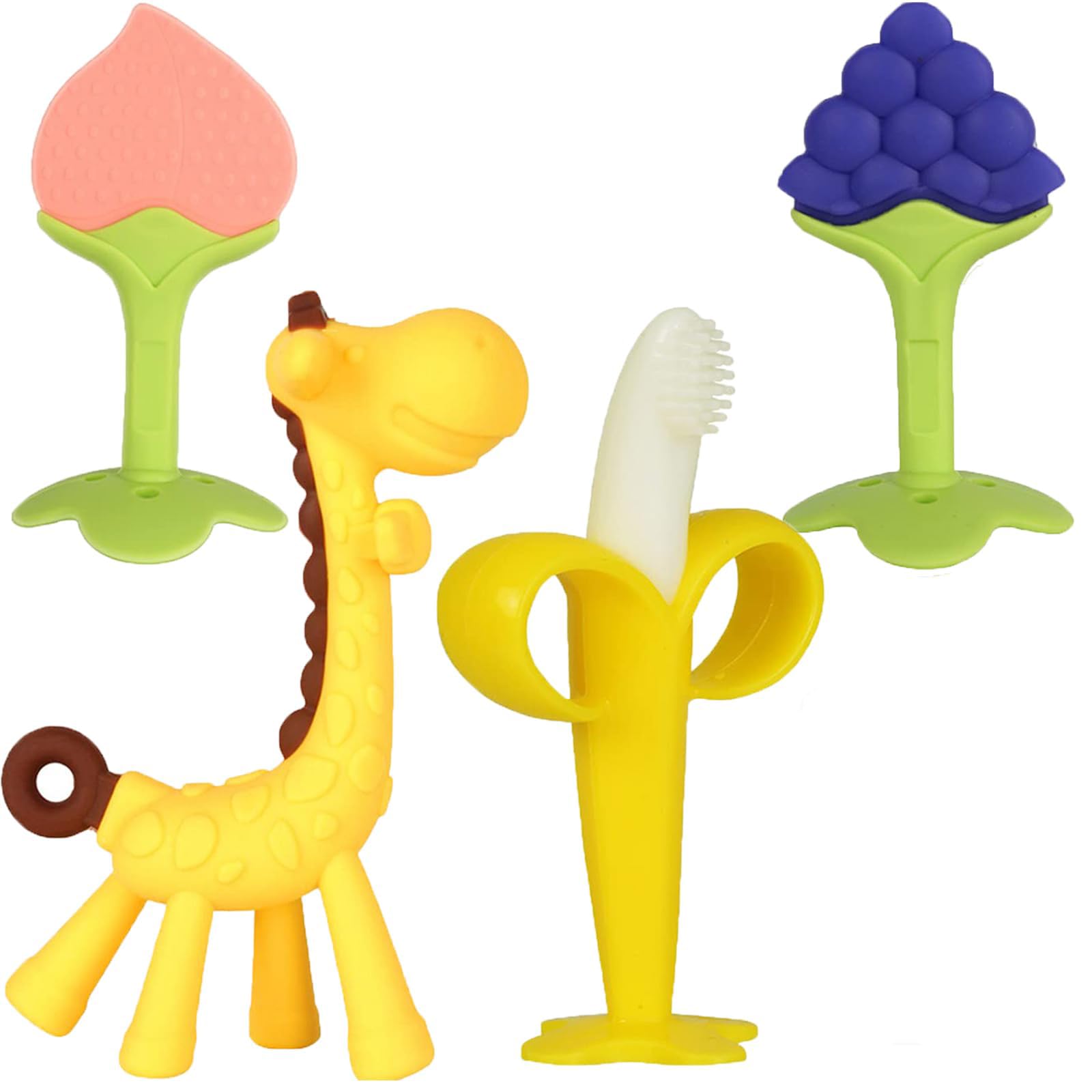
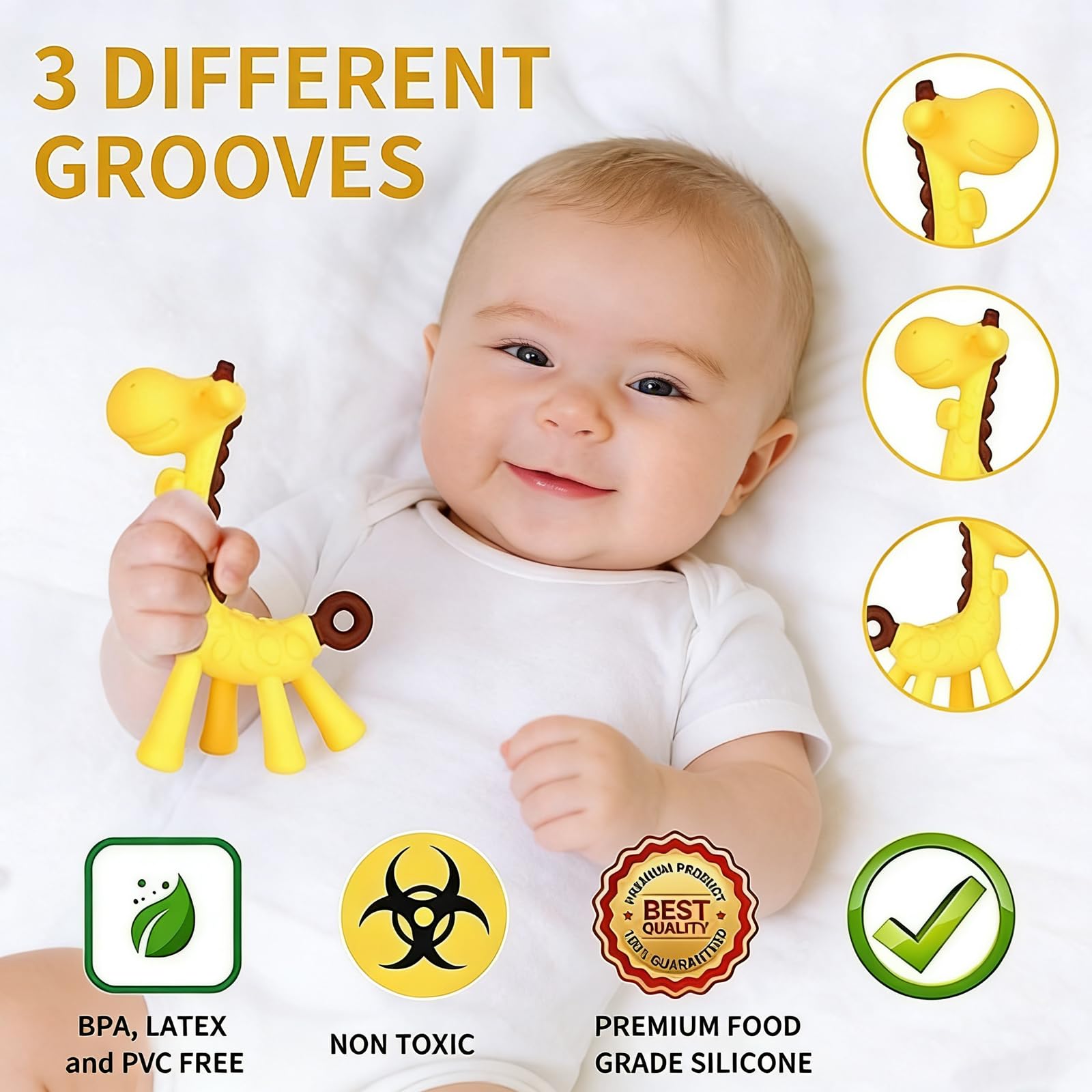
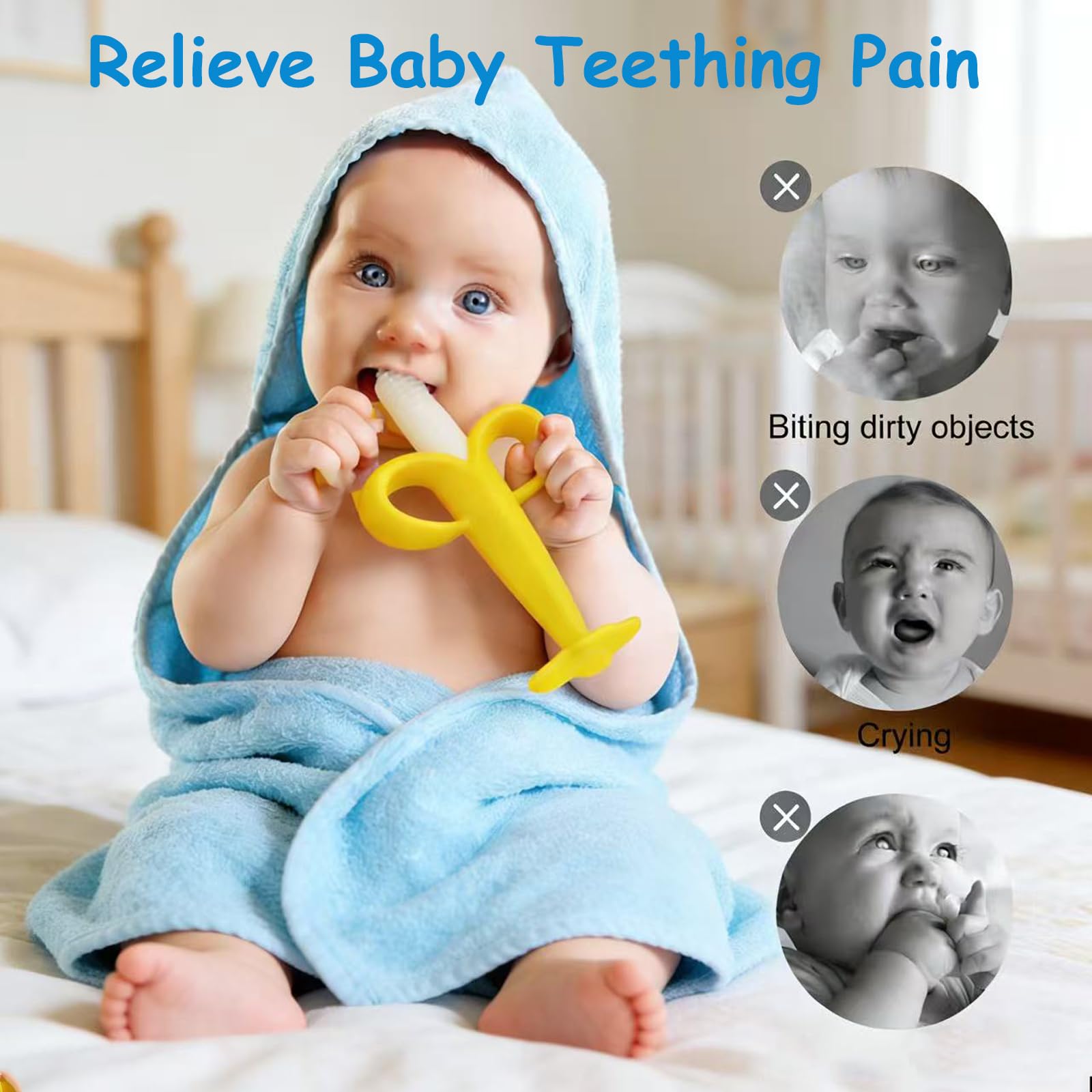
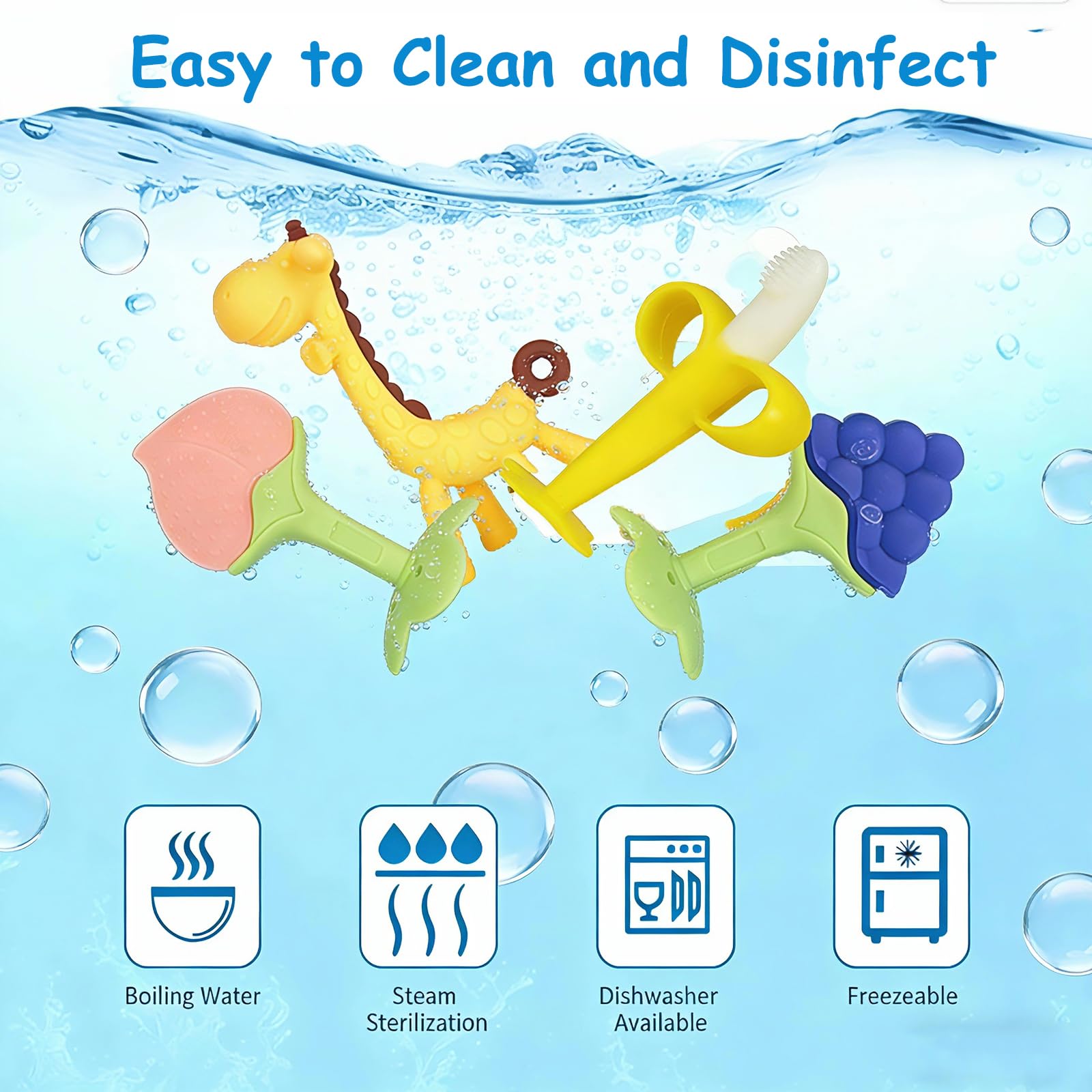
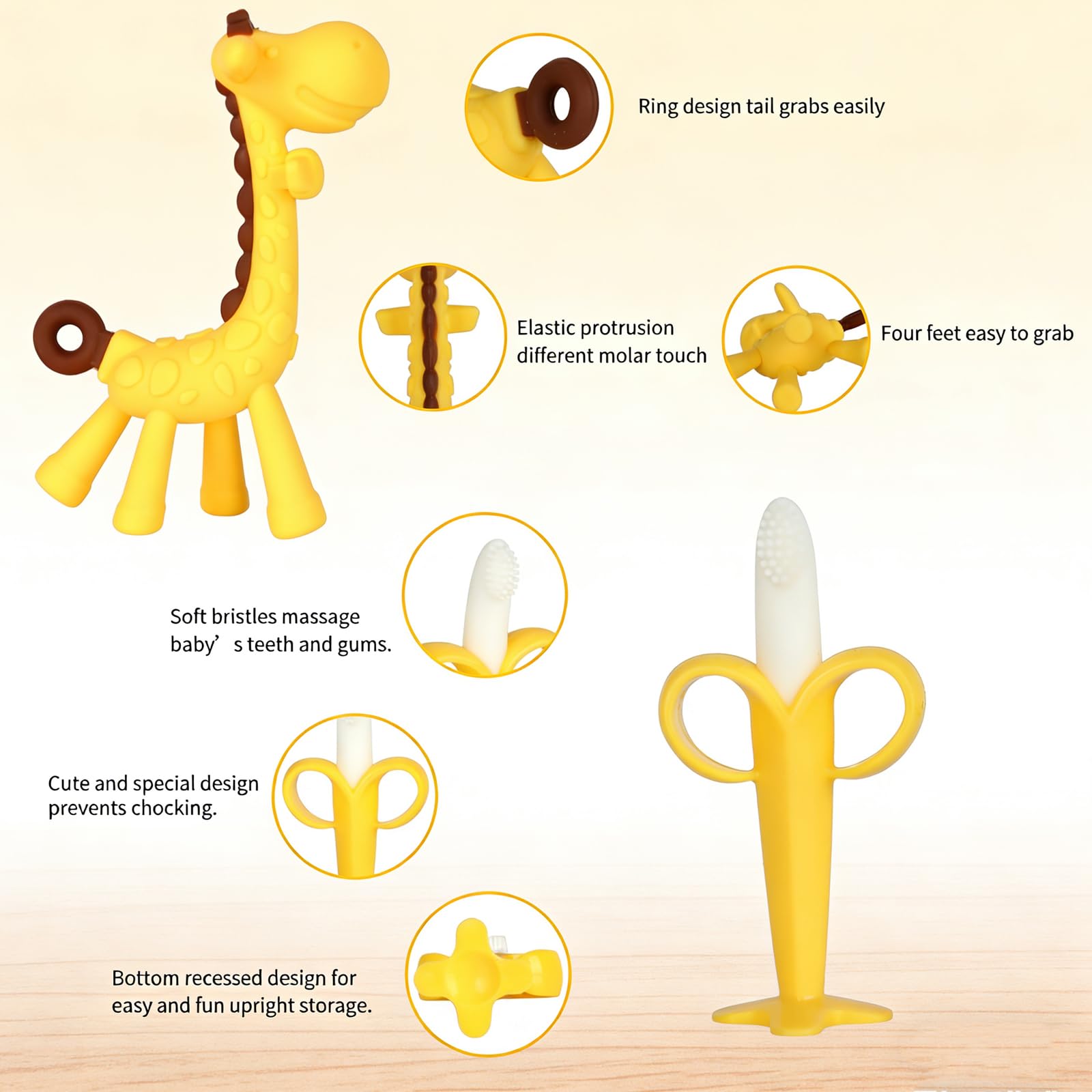
HAILI XMGQ Baby Teething Toys 3-6 Months, Baby Chew Teether Freezer BPA Free, Babies Teething Relief for Infants, Banana Toothbrush, Fruit Shape Giraffe Newborn Teether Gift for Baby Boy and Girl
- Safety: Food grade silicone, BPA free, Toxin Free. Easy to clean and disinfect.
- Function: Relieve the discomfort of baby's teething gums, will also help with sensory development and develop
- Variety: Your infant will get 4 teething toys in different colors and shapes in this pack, and with high quali
Introducing a soft silicone brush to the gum line from the moment the first tooth erupts, even without toothpaste, helps establish the physical sensation as normal and reduces resistance to brushing later.
— American Academy of Pediatric Dentistry, Oral Health Policies (2023)
| Teether Style | Best Age Range | Primary Benefit | Main Drawback | Recommended Product | Price Range |
|---|---|---|---|---|---|
| Silicone mitten | 3 to 6 months | No grip required; hands-free chewing | Outgrown relatively quickly | ChooKaChoo Teething Mitten | $9.99 |
| Silicone + wood ring | 3 months and up | Grasping practice + gum relief | Wood ring cannot be boiled | Arudyo Silicone Rudder | $6.39 |
| Fruit multi-pack | 4 to 12 months | Texture variety; freezer-safe | Multiple pieces to track and clean | YIYEE 6-Pack Fruit Teethers | $8.99 |
| 4-in-1 multi-stage | 0 to 18 months | Covers entire teething arc; swappable inserts | Higher initial cost per unit | Frida Baby 4-in-1 Teether | $6.99 |
| Banana toothbrush set | 3 to 12 months | Bridges teething to dental hygiene | Banana shape less effective for molars | HAILI XMGQ Teething Set | $9.49 |
| Sensory rattle teether | 0 to 12 months | Auditory + visual + oral stimulation in one | Rattle may disturb light sleepers | Infinno Rattle Teether | $8.99 |
Expert Insights: What the Specialists Say About Teething Relief
The Teething Chapter Is Temporary, but the Right Support Makes All the Difference
Every parent who has paced the kitchen at 2 a.m. with a red-cheeked, inconsolable baby knows that teething is not a minor inconvenience. It is a months-long process that tests patience, sleep schedules, and confidence in equal measure. The right teether does not eliminate that journey, but it makes it genuinely more manageable, for your baby and for you.
The best teether is the one your baby actually reaches for, chews willingly, and can use safely without your hands-on involvement every second. Start with one or two well-designed options, watch which shapes get the most attention, and build from there.
Here is the truth worth holding onto: your attentiveness in choosing safe, stimulating teethers is also brain-building, bonding-building work. Every soothing session is a moment of trust between you and your baby. Save this article, share it with your parenting group, and come back to the comparison table when the next tooth is on its way.
Sources & References
- American Academy of Pediatrics (AAP). "Teething: 4 to 7 Months." HealthyChildren.org. 2023. https://www.healthychildren.org/English/ages-stages/baby/teething-tooth-care
- American Academy of Pediatric Dentistry (AAPD). "Policy on Oral Health Care for the Pregnant Adolescent and for Infants and Toddlers." Pediatric Dentistry Reference Manual. 2023. https://www.aapd.org/research/oral-health-policies--recommendations/
- American Academy of Pediatric Dentistry (AAPD). "Consumer Safety Guidance on Teething Products." 2022. https://www.aapd.org
- National Institute for Health and Care Excellence (NICE). "Feverish illness in children: assessment and initial management." NICE Guideline NG143. 2019. https://www.nice.org.uk/guidance/ng143
- Royal College of Paediatrics and Child Health (RCPCH). "Product Safety Guidance for Caregivers." 2022. https://www.rcpch.ac.uk
- Zero to Three. Parlakian, R. "Supporting Oral Development in Infants." ZeroToThree.org. 2021. https://www.zerotothree.org
- Health Canada. "Amber Teething Necklaces and Bracelets: Do not use." Advisory 2018-0011. 2018. https://www.canada.ca/en/health-canada/services/consumer-product-safety/reports-publications/industry-professionals/amber-teething-necklaces.html
- Journal of Pediatric Dentistry. "Oral Sensory Experience and Acceptance of Textured Foods in Infancy." Cited in AAP developmental guidance. 2021.
Frequently Asked Questions
At what age should I introduce a teething toy?
Are amber teething necklaces safe?
Can I freeze any teether to make it colder?
How often should I clean my baby's teether?
My baby keeps dropping the teether. What can I do?
When will teething actually be over?
Do teething toys help with speech and feeding development?
Was this helpful?
Thanks — your feedback helps us pick what to write next.