Newborn Learning and Play: Your 0–3 Month Activity Guide
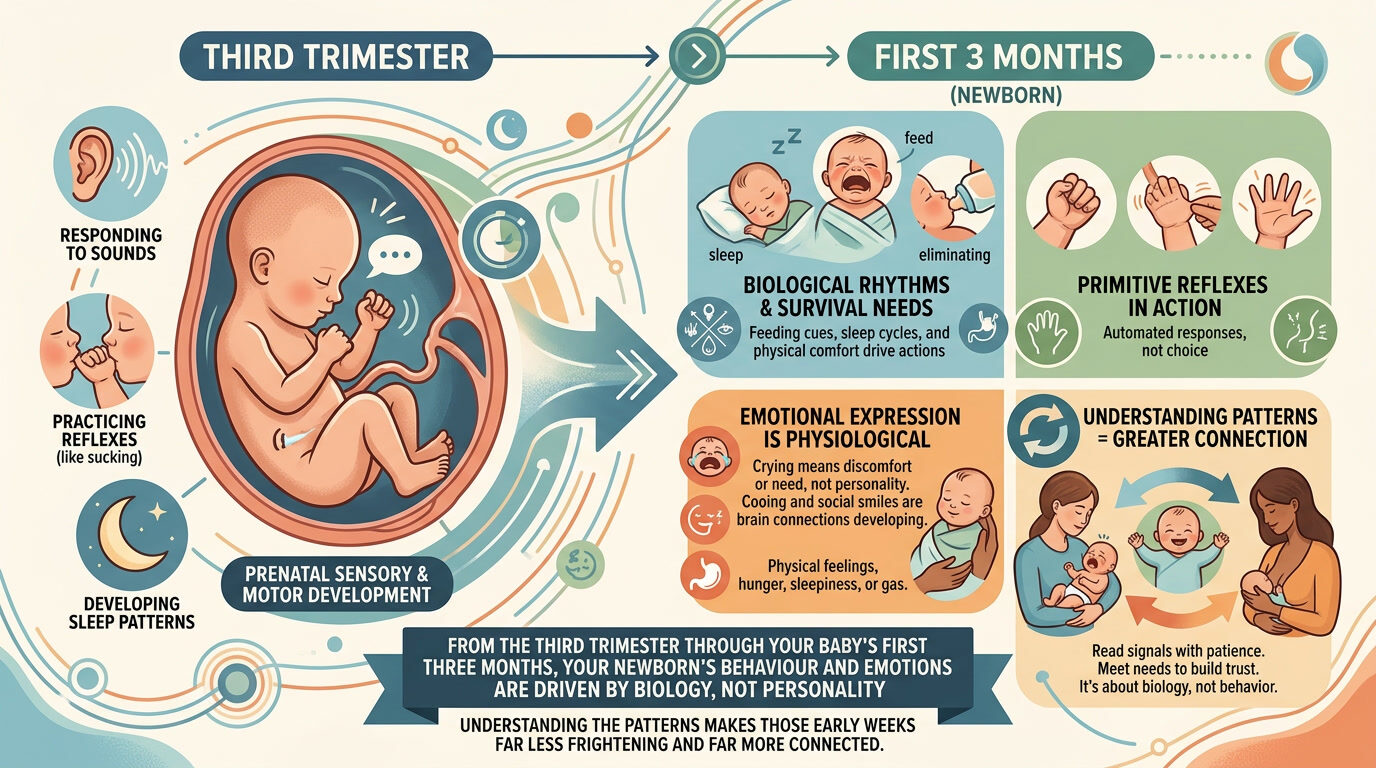
From the third trimester onward, your baby is actively learning through sound, movement, and touch — and simple, intentional play from birth builds the neural foundations for language, memory, and emotional security.
In this article
Here is a number worth sitting with: by the time your baby is born, their brain already contains roughly 100 billion neurons, and in the first few months of life those neurons form up to 1 million new connections every single second, according to the Harvard Center on the Developing Child. That is not a metaphor for fast growth. That is the literal speed of brain wiring happening while your newborn naps on your chest.
The problem most parents face is not a lack of love or intention. It is not knowing which activities actually do something useful at this age, and which ones are just noise. This guide cuts through that.
By the end you will understand:
1. Learning Starts Before the Baby Arrives
Your baby's brain is already processing information in the third trimester, not just reacting to it. From around 28 weeks, the auditory cortex is functional enough to respond to external sounds. Research published in the journal Infant Behavior and Development showed that newborns preferentially orient toward their mother's voice over a stranger's, which only makes sense if they were already listening and storing that information before birth.
This is why the last trimester matters for learning, not just physical growth. If you want to go deeper on the neuroscience here, the piece on your baby's developing brain in the third trimester is worth reading alongside this guide.
What your baby hears and learns in utero
Low frequency sounds carry through amniotic fluid most clearly. Your voice (especially singing), the rhythm of music, and even the cadence of a language your baby hears regularly all leave memory traces. Studies using the sucking reflex as a measurement tool have shown newborns will suck harder on a pacifier wired to play a familiar story read aloud during pregnancy versus an unfamiliar one.
2. What a Newborn Can Actually Perceive
Newborns are not blank slates, and they are not fully formed perceivers either. Getting realistic about what they can and cannot take in helps you pitch stimulation at the right level.
Vision: At birth, your baby can focus most clearly at 8 to 12 inches, which is almost exactly the distance between a feeding baby and a parent's face. High contrast images (black and white, bold shapes) are more visible to a newborn retina than pastel colours. Colour vision develops gradually over the first three months.
Hearing: Fully functional from birth, and already calibrated to speech rhythms as described above. Your baby will startle at loud noises and settle to low, rhythmic sounds.
Touch: The skin is the largest sensory organ and it is exquisitely sensitive from birth. Skin to skin contact regulates heart rate, temperature, and cortisol. This is not just comfort; it is active neurodevelopment.
Smell and taste: These are the most mature senses at birth. Babies recognise their mother's breastmilk by smell within the first days of life.
3. The Highest Value Activities for 0 to 3 Months
The best activities at this stage share three features: they involve a responsive human (or a toy that behaves responsively), they match the baby's current sensory capacity, and they include repetition. Novelty is less important than you think. Predictability and repetition are how young brains wire themselves.
Face to face "serve and return"
The most powerful learning activity costs nothing. Look at your baby, make an expression, wait, and respond to whatever they do. The CDC calls this "serve and return" interaction, and it is the single most documented driver of early brain architecture. When a baby coos and you coo back, a neural pathway gets reinforced. Do it thousands of times and you have built the scaffolding for language.
Music and language exposure
Singing to your baby exposes them to pitch, rhythm, melody, and language simultaneously. You do not need to be in tune. Research from the University of Washington's I-LABS (Institute for Learning and Brain Sciences) found that babies exposed to rhythmic music in person (not recorded) showed enhanced neural responses to both music and speech sounds, suggesting music and language share early processing pathways.
Tummy time
Every paediatric guideline on the planet recommends it, and almost every parent struggles with it. Start from day one, beginning with just two to three minutes on your chest after a nap (not after a feed). Progress to a firm mat as your baby gains tolerance. By three months you are aiming for at least 30 minutes of total tummy time across the day.
A good play gym makes this dramatically easier. The Lovevery Play Gym includes a tummy time zone with a pillow and a mirror positioned at exactly the right angle to give your baby a reason to lift their head.
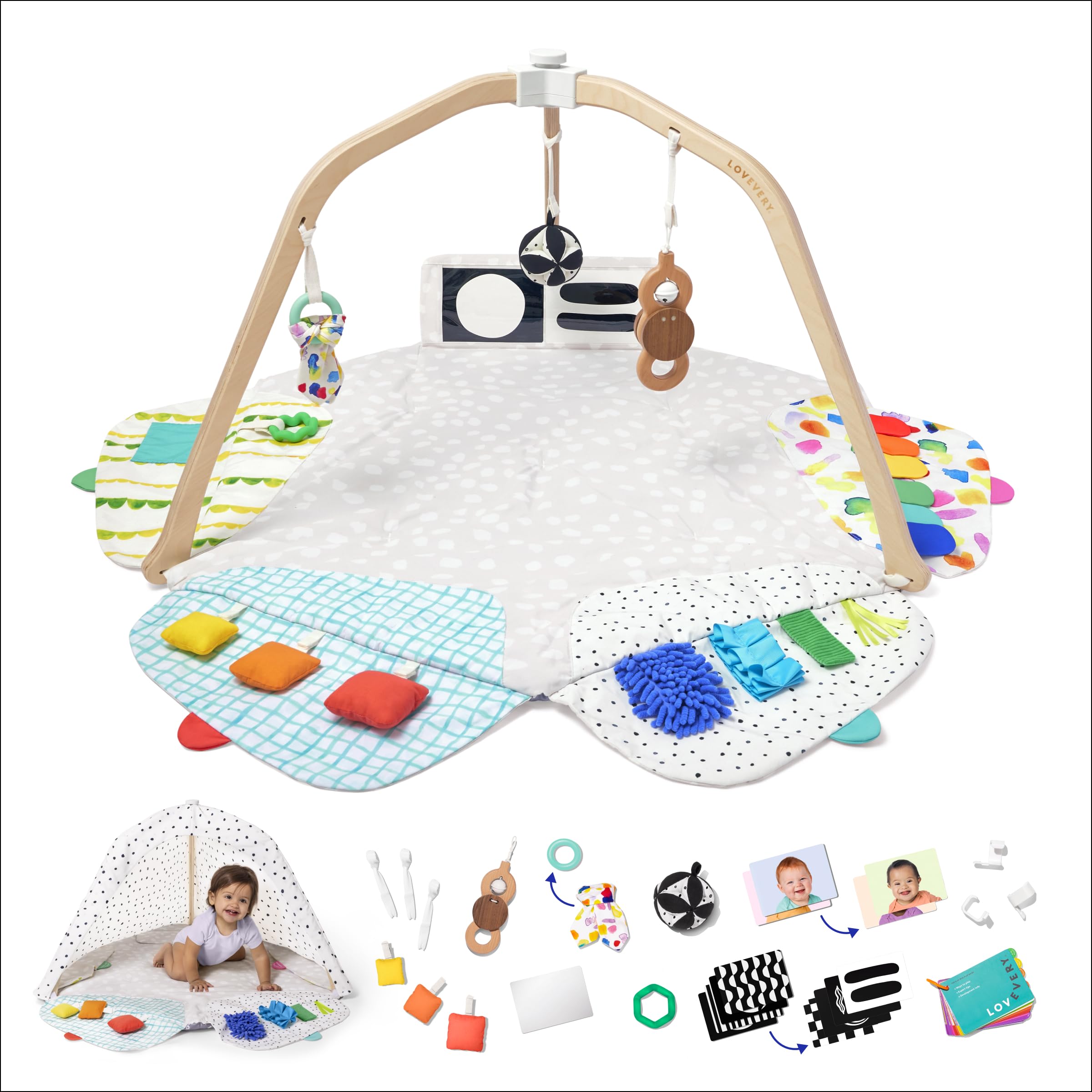
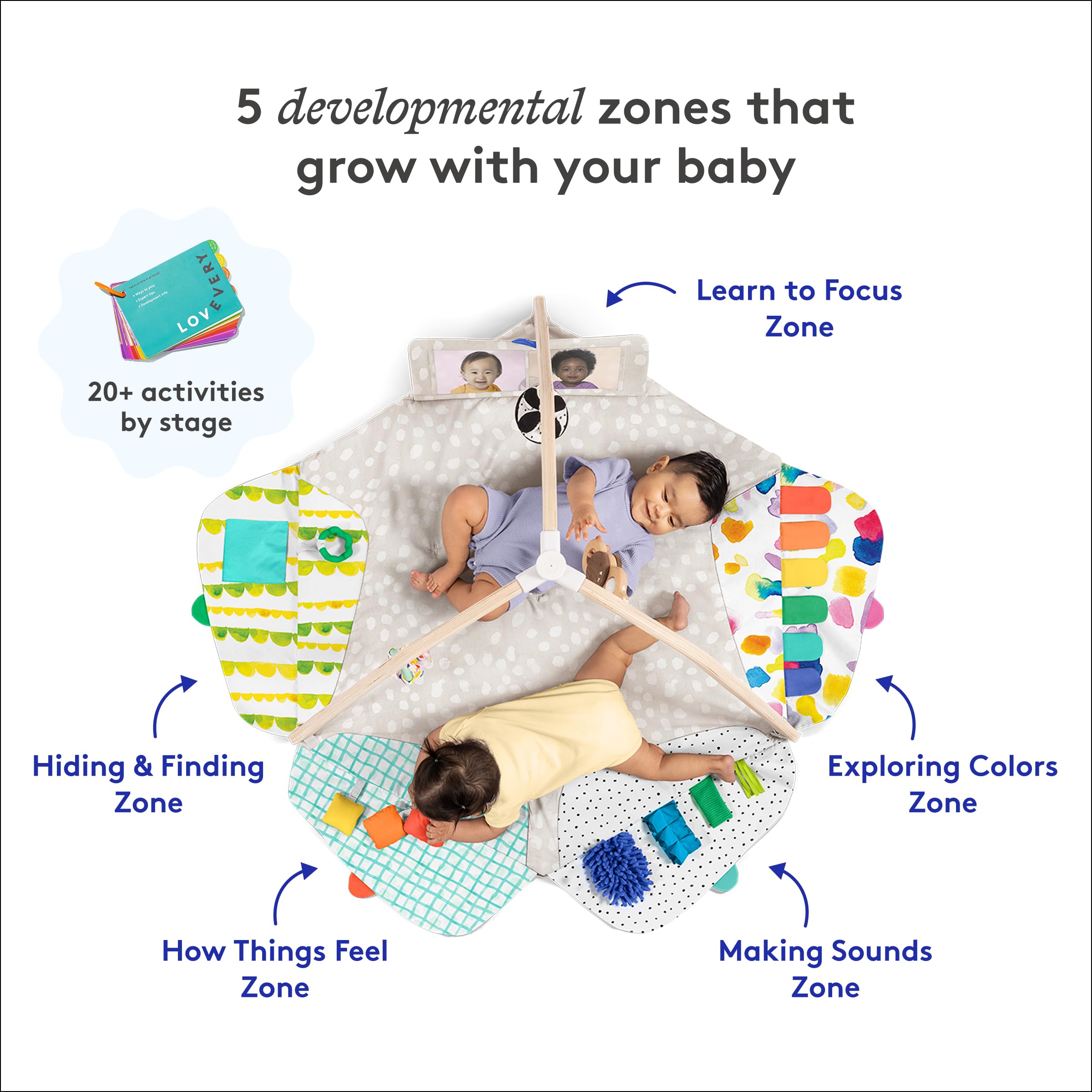
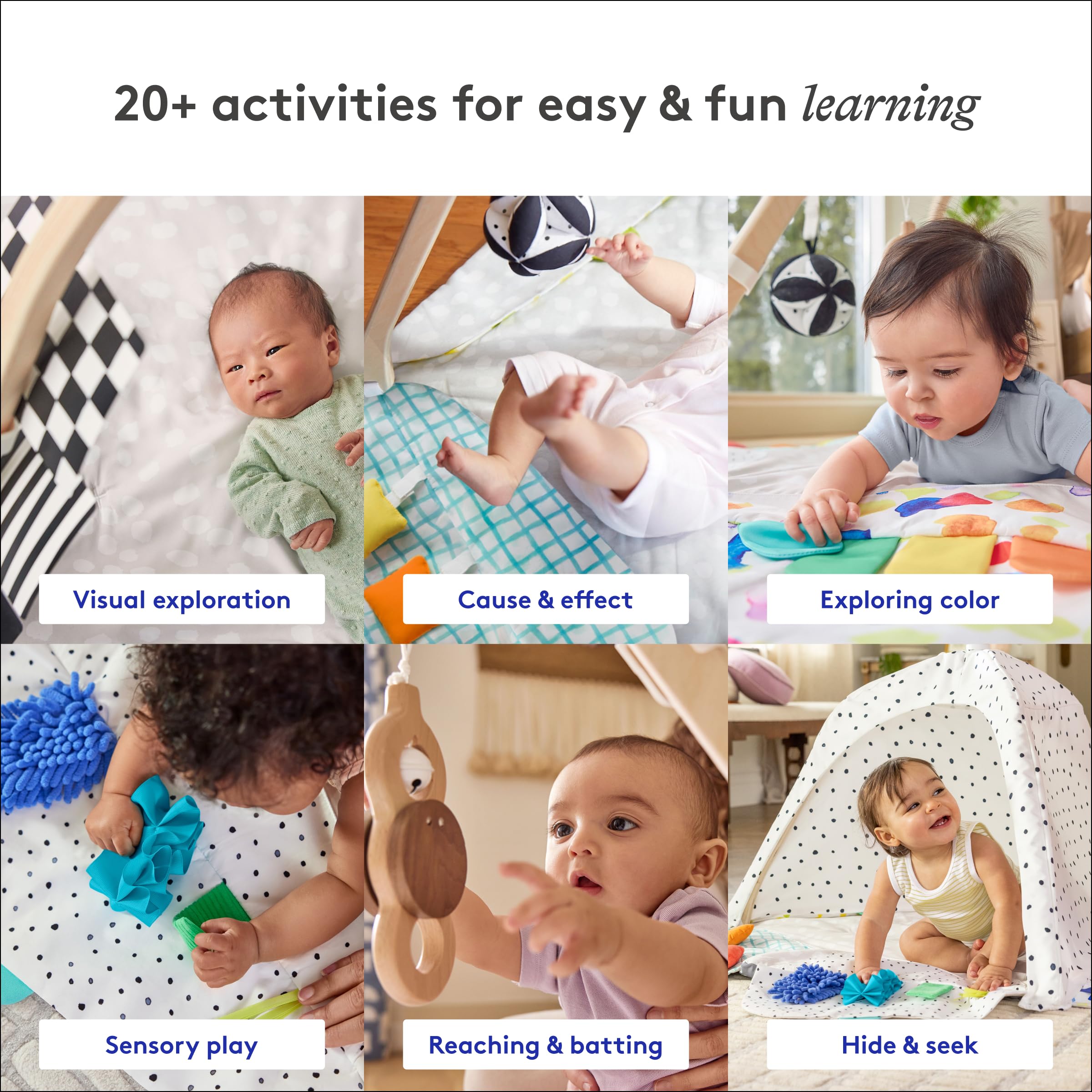
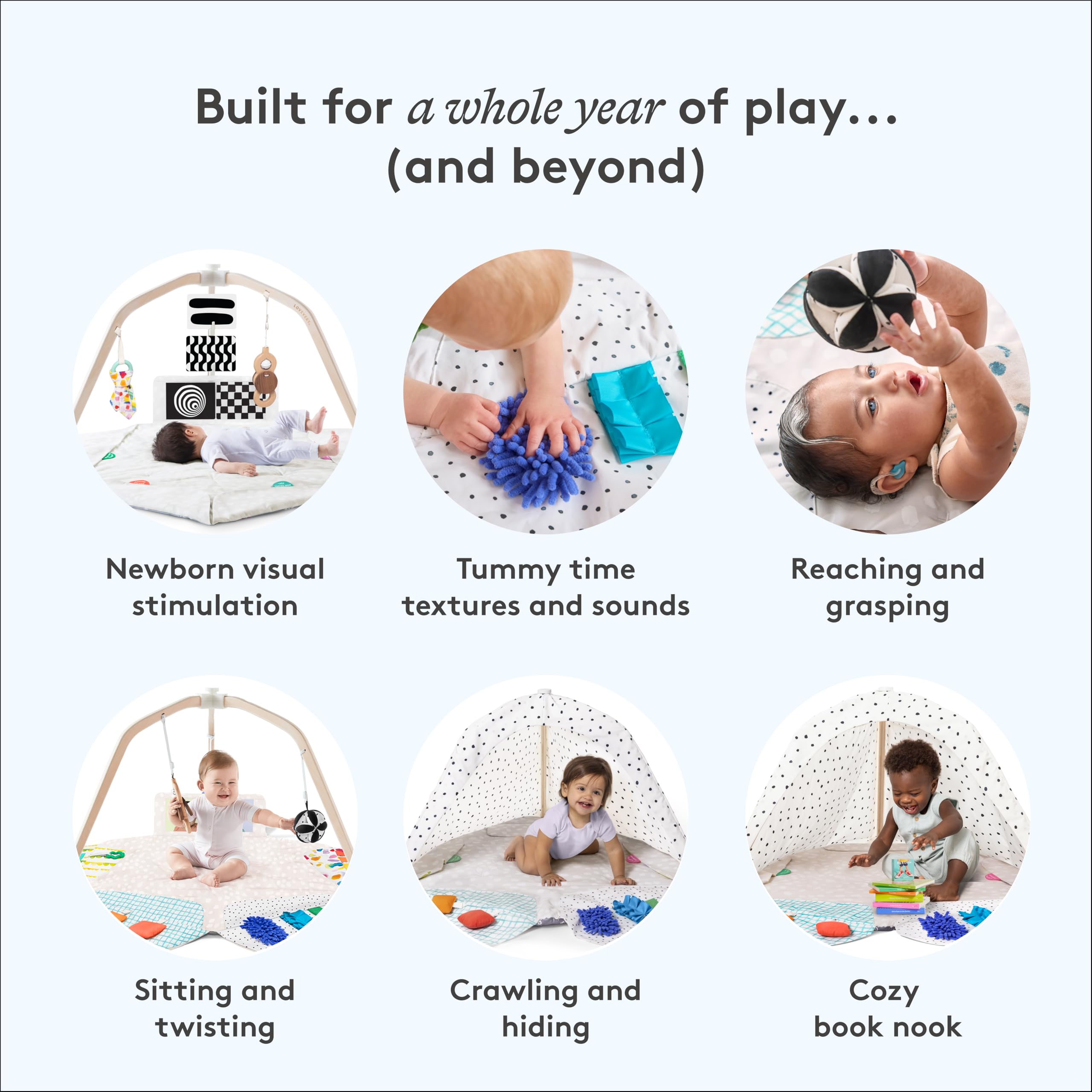
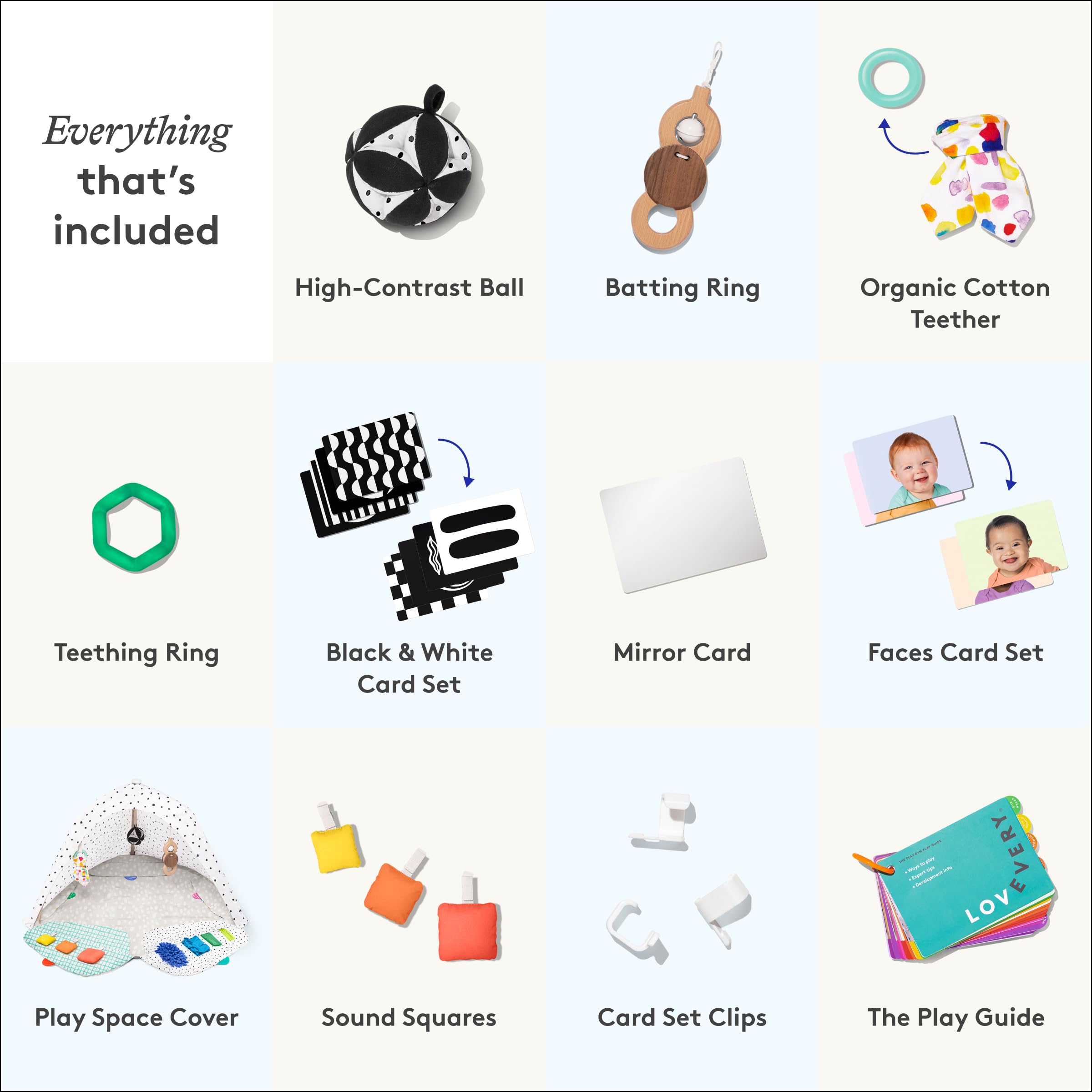
LOVEVERY | The Play Gym | Award Winning For Baby , Stage-Based Developmental Activity Gym & Play Mat for Baby to Toddler
- FROM TUMMYTIME TO PLAYFORT: Lovevery knows nothing is more important than your baby's physical, cognitive, vis
- WE GROW WITH YOUR BABY: 5 Montessori-inspired development zones on the Play Mat reveal or conceal to prevent o
- LEARNING THROUGH PLAY: Includes a guide for age appropriate activities to promote brain and motor skill develo
4. Choosing a Play Gym That Actually Supports Development
A play gym is the one piece of baby gear that earns its floor space at this stage, provided you choose one that matches what a newborn can actually use rather than one designed to dazzle parents in a shop.
Here is what matters in a play gym for the 0 to 3 month window:


Baby Einstein 4-in-1 Kickin' Tunes Music and Language Play Gym and Piano Tummy Time Activity Mat
- The best-selling Baby Einstein 4-in-1 Kickin’ Tunes Music & Language Discovery Activity Gym supports fine and
- 4 modes include lay and play, sitting up, tummy time, on the go; Helps baby strengthen neck muscles during tum
- 7 sensory toys engage and promote fine and gross motor skills like reaching, pressing, and kicking; crinkle me
The Baby Einstein Kickin' Tunes Play Gym covers cause and effect particularly well with its kick piano, which gives an immediate auditory reward for leg movement. That loop (I kicked, something happened) is foundational cognitive learning at its simplest.
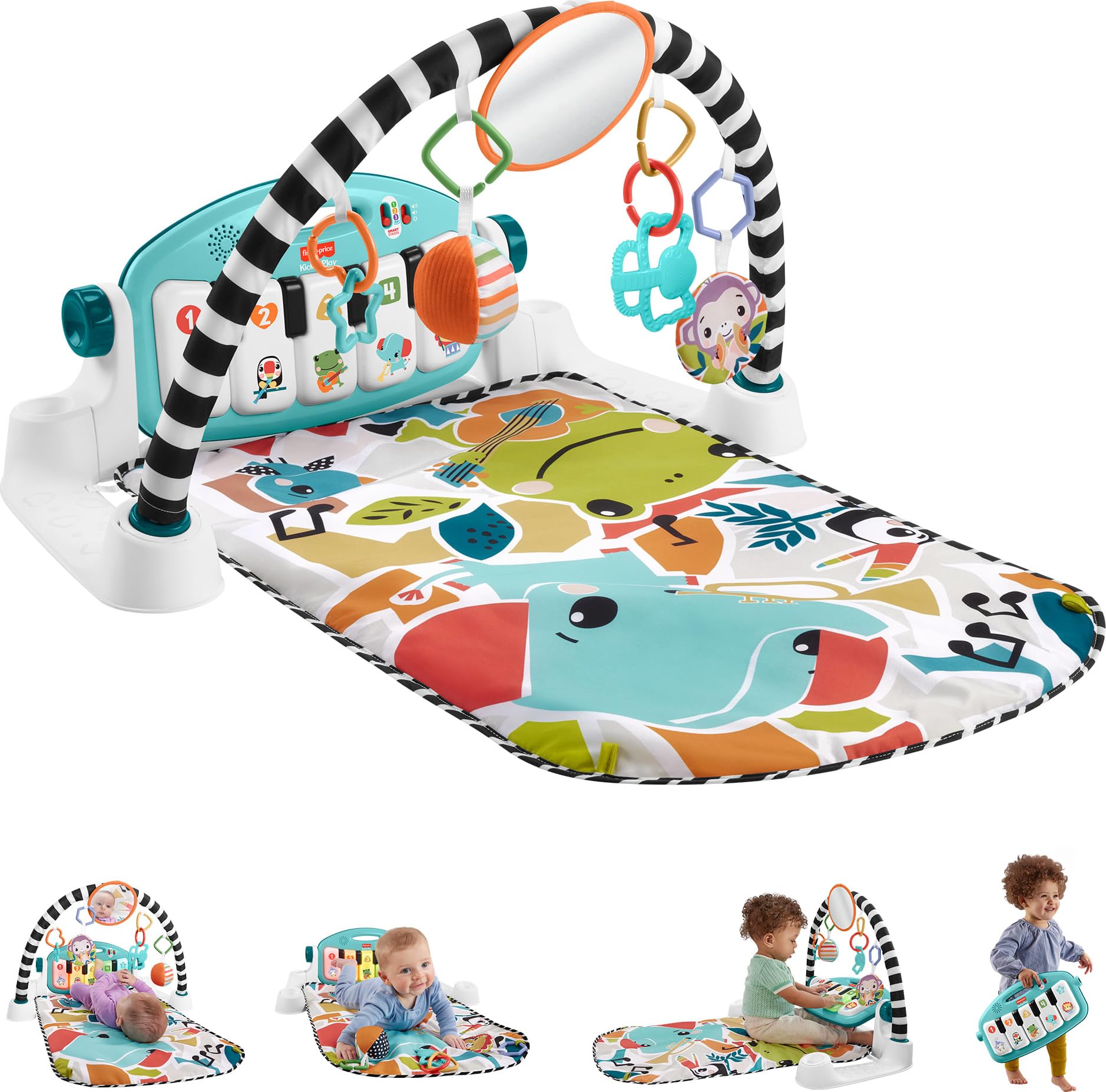
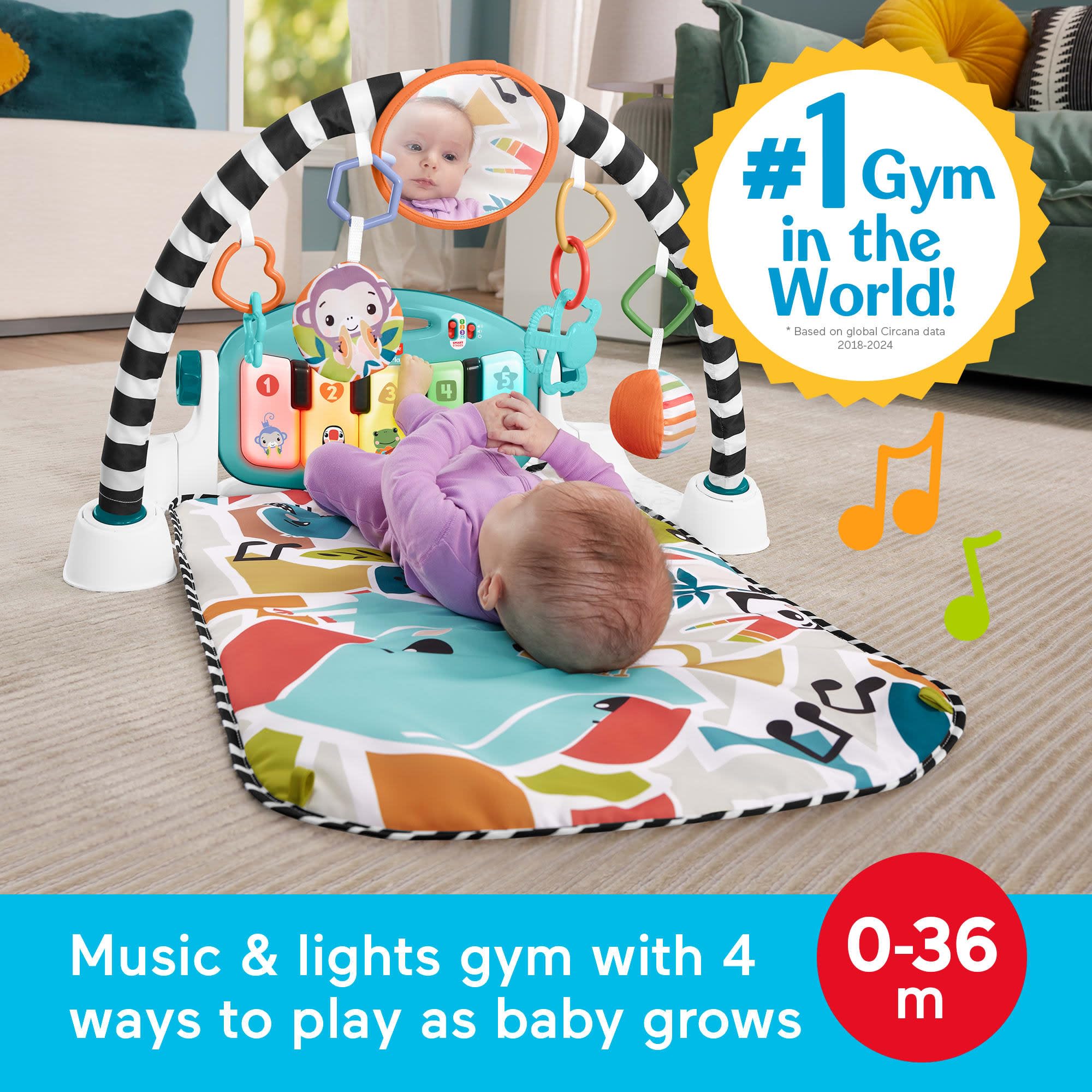
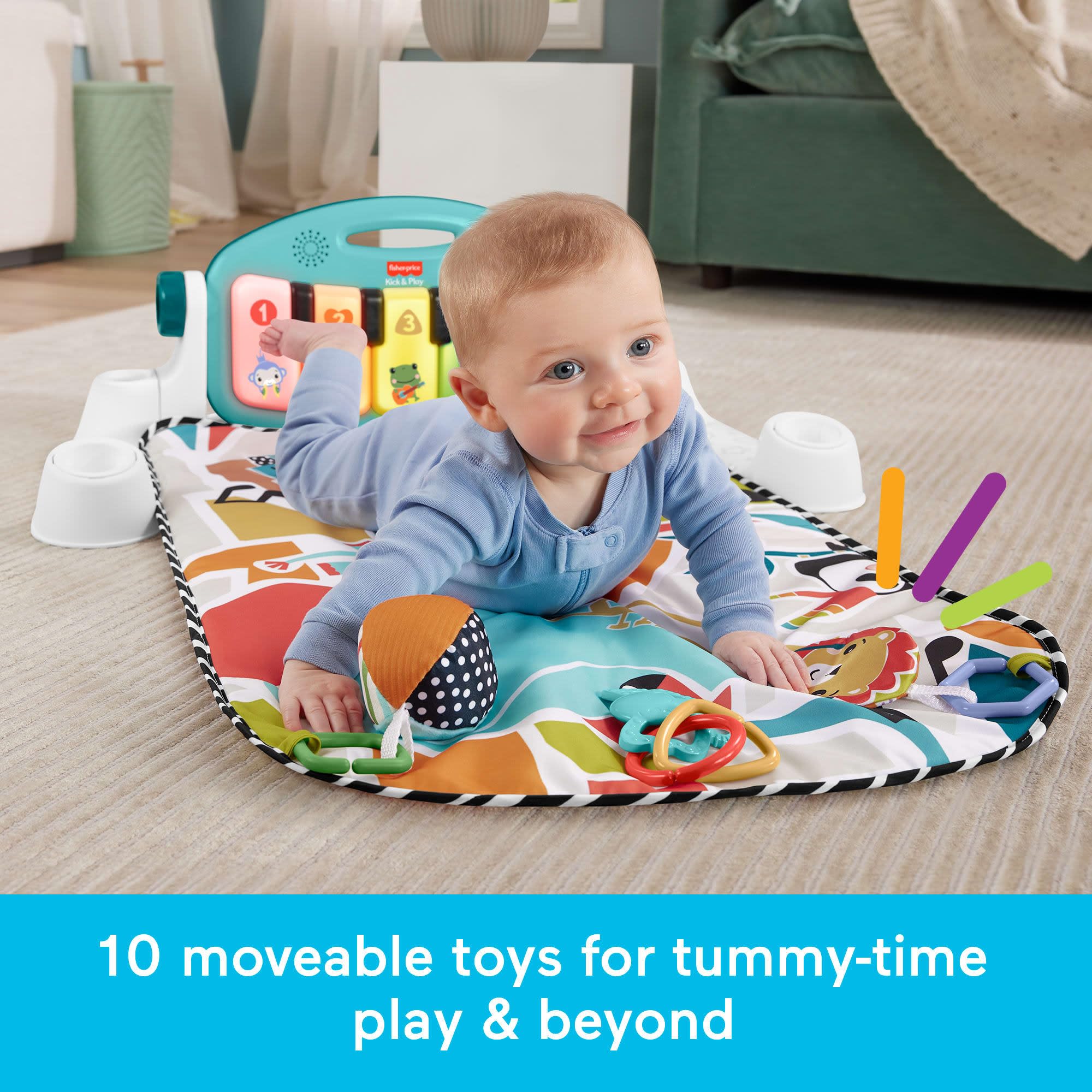
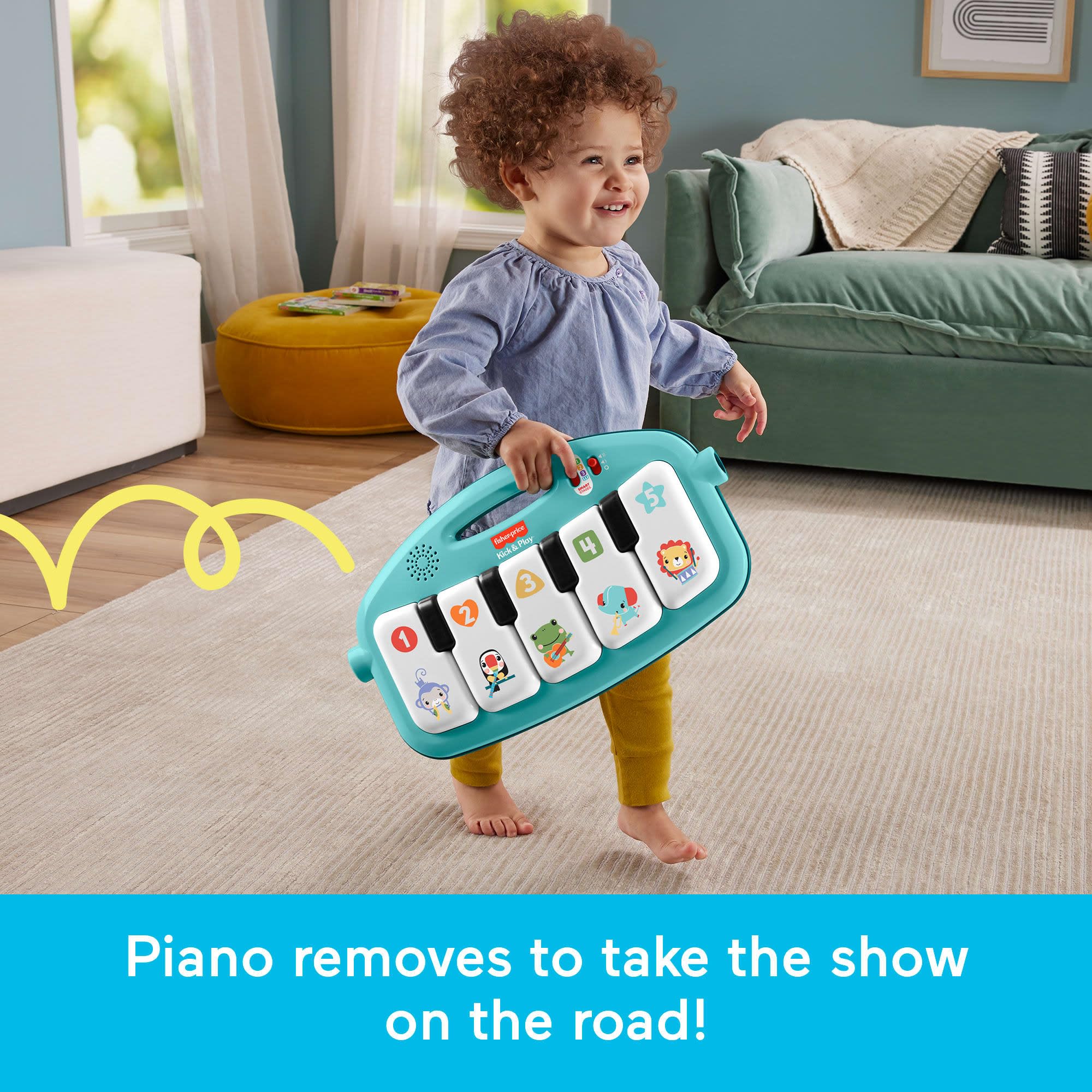
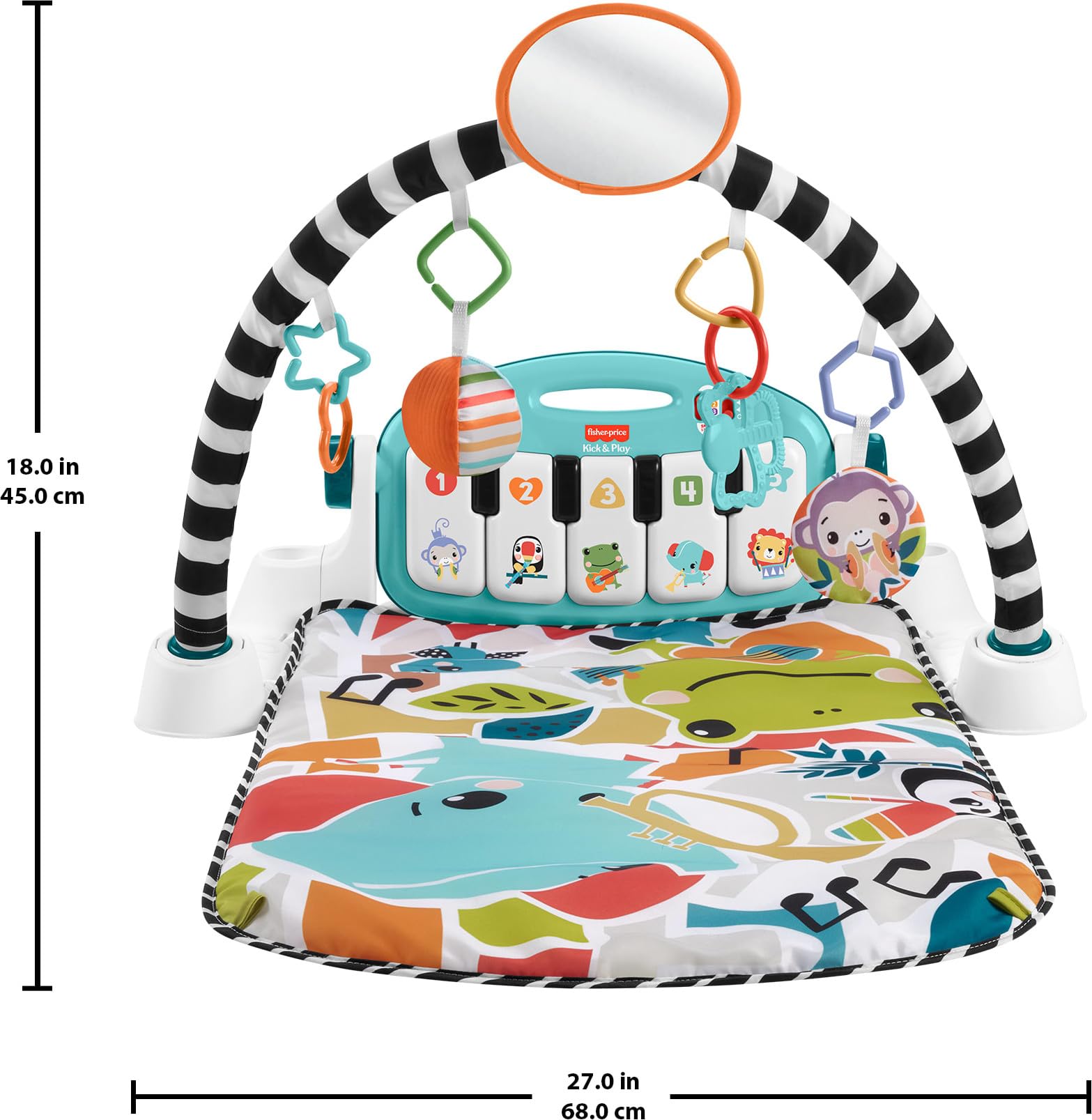
Fisher-Price Baby Playmat Glow and Grow Kick & Play Piano Gym, Blue Musical Learning Toy with Developmental Activities for Newborns 0+ Months
- Newborn baby gym with 4 ways to play as baby grows, plus music, lights & learning fun
- Smart Stages learning levels with 85+ songs, sounds and phrases that help teach animals, colors, numbers and s
- Removeable piano has 5 multi-colored light-up keys, 4 musical settings with freestyle piano play & the popular
The Fisher-Price Glow and Grow Kick and Play Piano Gym adds Smart Stages levels, which means the toy's language and sound content adjusts as your baby grows, with 85 or more songs, sounds, and phrases built in.
5. Play Gym Options Compared
| Play Gym | Best Age Range | Key Developmental Feature | Main Limitation | Recommended Product | Price |
|---|---|---|---|---|---|
| Baby Einstein 4-in-1 Kickin' Tunes | 0–36 months | Kick piano for cause and effect; 4 languages | Slightly bulkier to store | Baby Einstein Kickin' Tunes | $49.97 |
| Fisher-Price Glow and Grow Piano Gym | 0+ months | 85+ Smart Stages songs and phrases | Fewer tactile textures | Fisher-Price Glow and Grow | $45.99 |
| Lovevery Play Gym | 0–12 months | Montessori zones, organic materials, grows 1 full year | Premium price point | Lovevery Play Gym | $150.00 |
| Blissful Diary Baby Play Gym | 0–12 months | 6 detachable toys, cloth book, crinkle textures | Smaller mat footprint | Blissful Diary Play Gym | $39.99 |
| Beavtaens 5-Zone Activity Mat | 0–12 months | Bear ear design cues head lifting; no batteries | Newer brand, fewer reviews | Beavtaens Activity Mat | $41.79 |
| Jyusmile 8-in-1 Tummy Time and Ball Pit | 0–12 months | Extra-large mat, converts to ball pit, cloth book | Slightly busier design | Jyusmile 8-in-1 Play Mat | $39.99 |
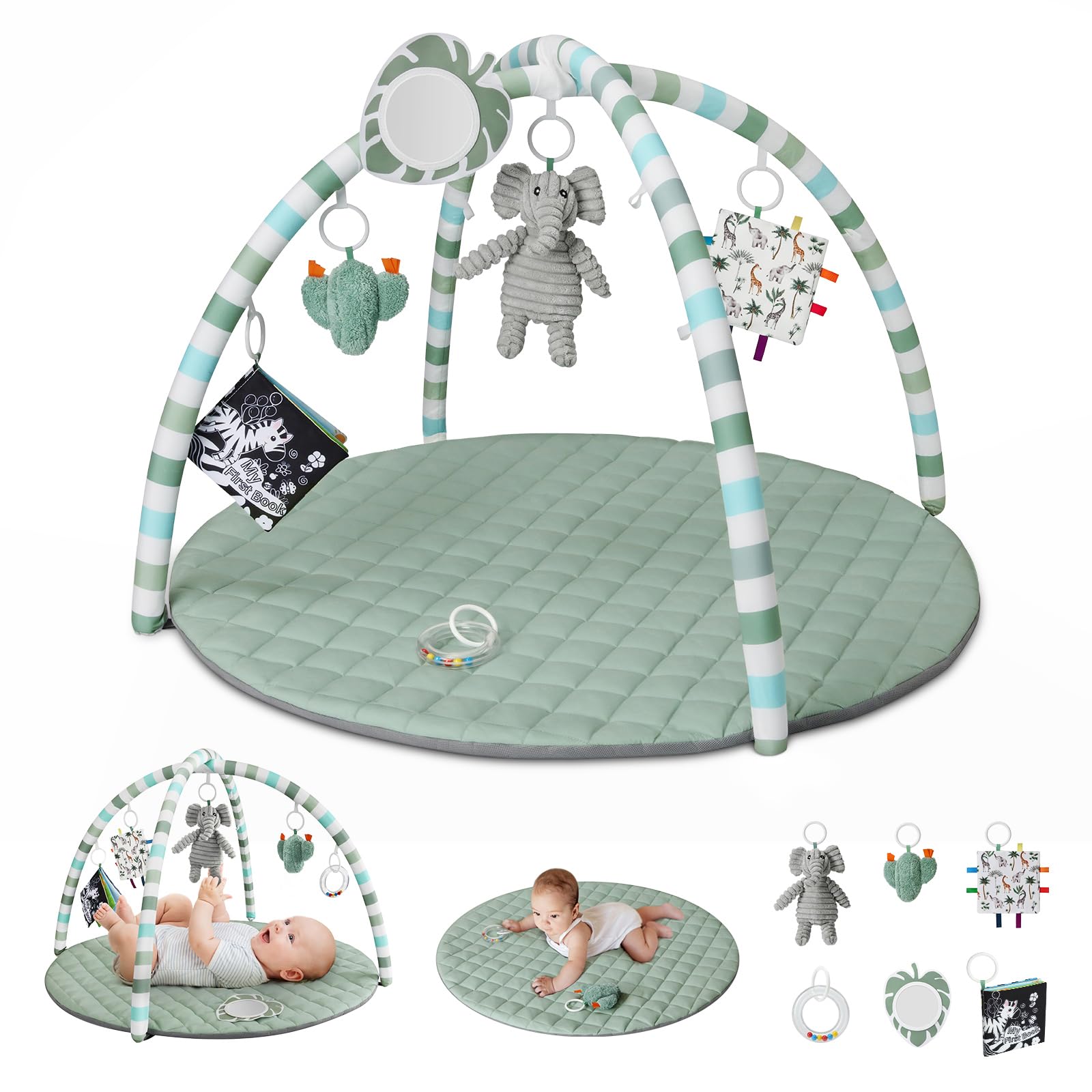
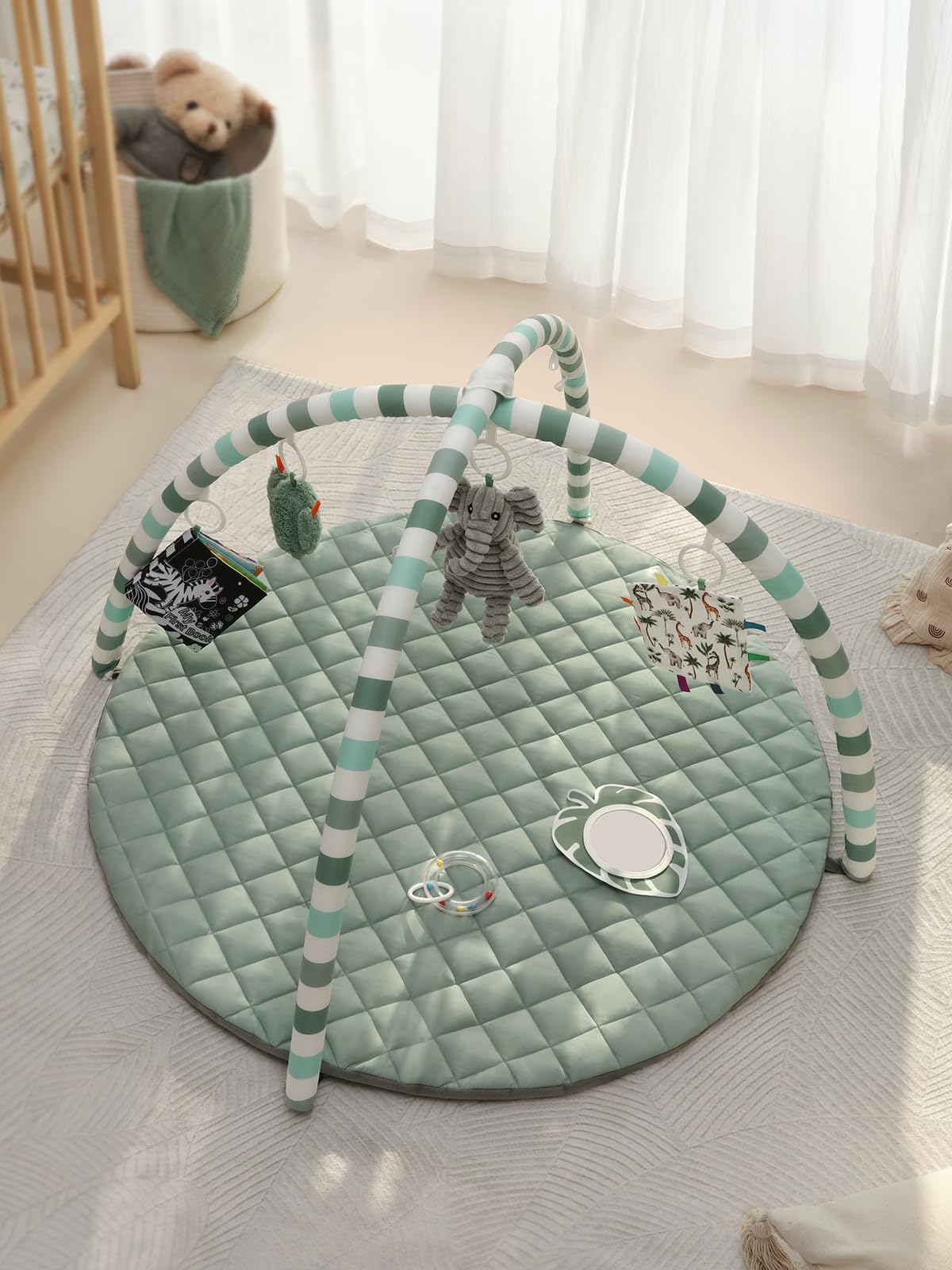
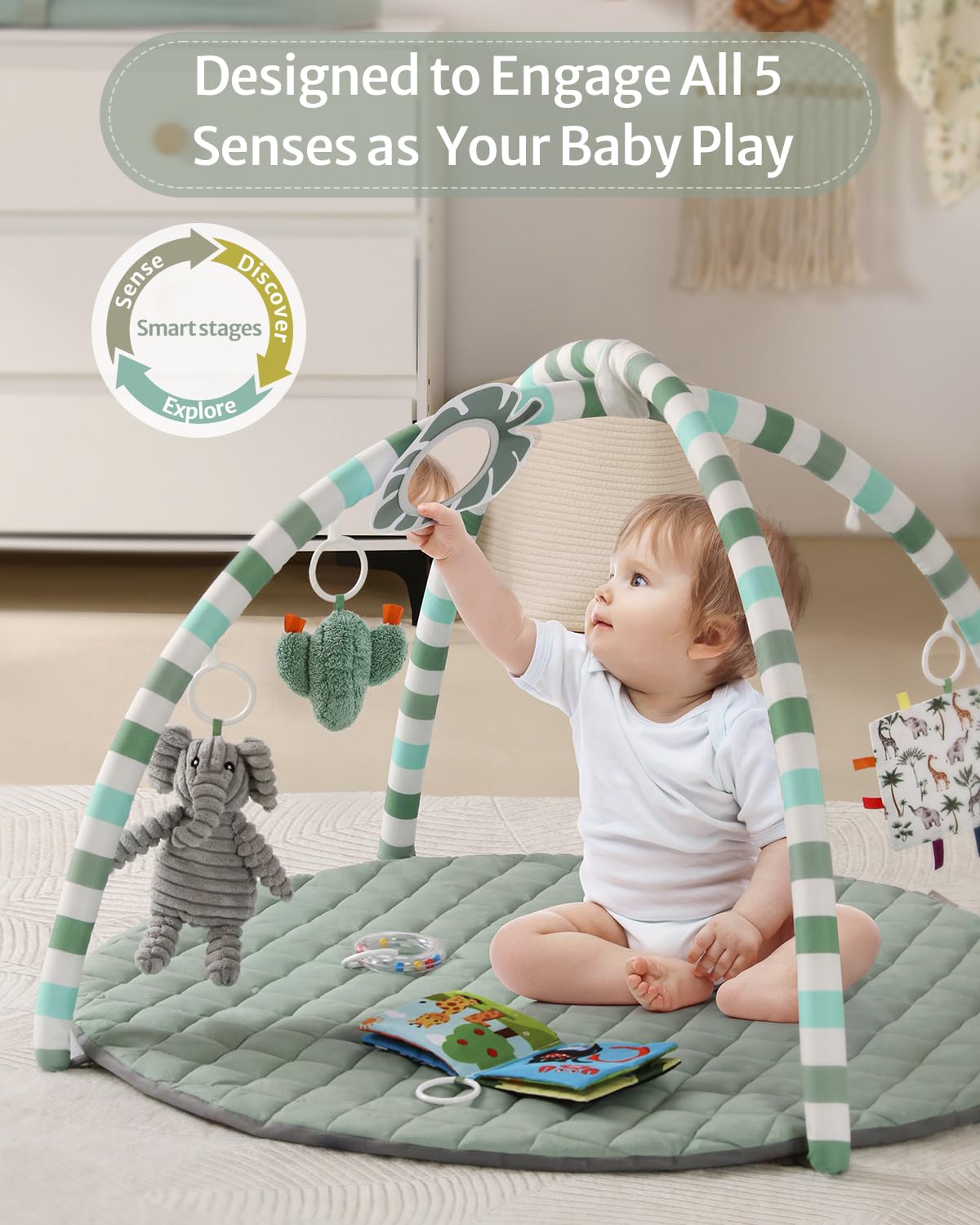
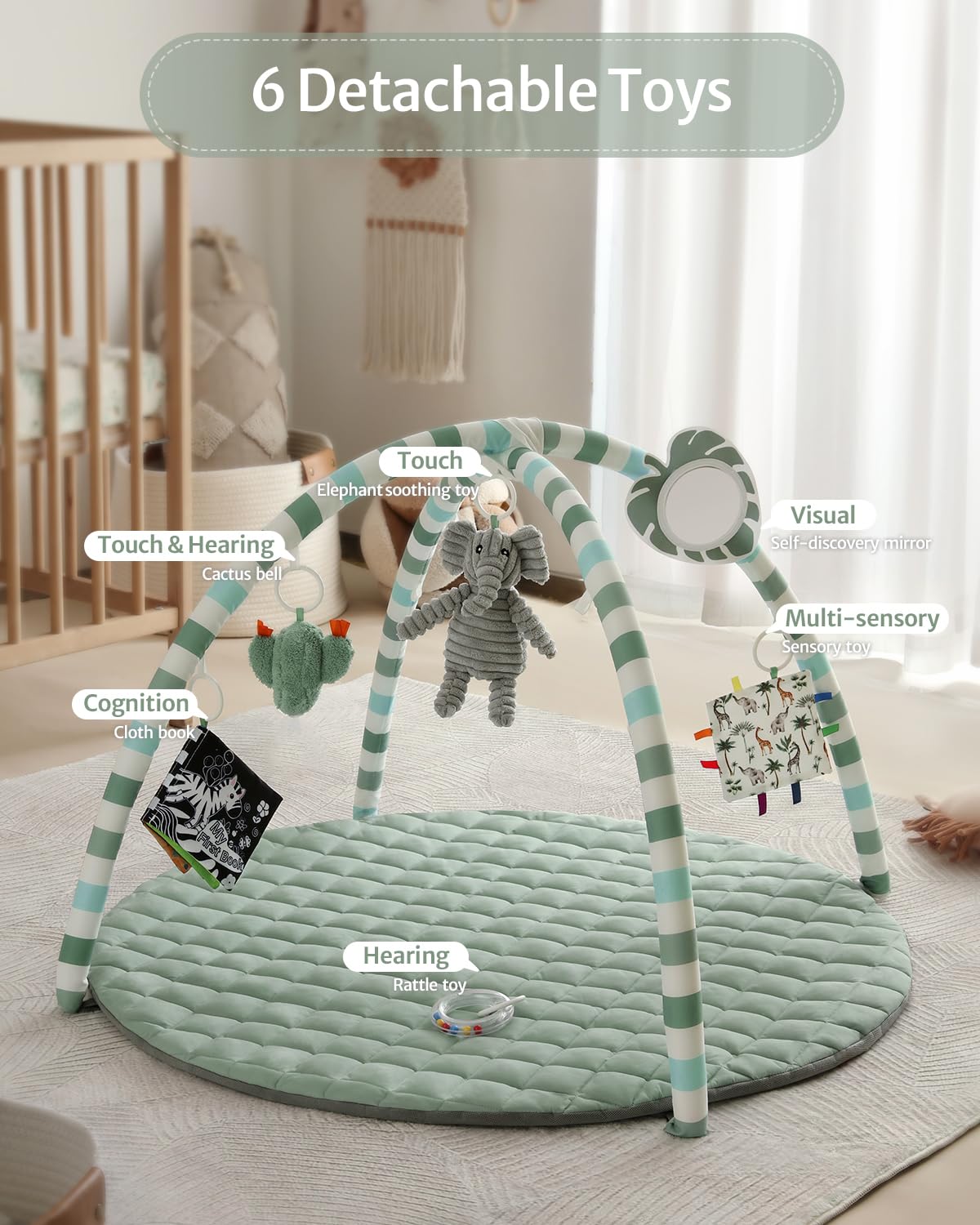
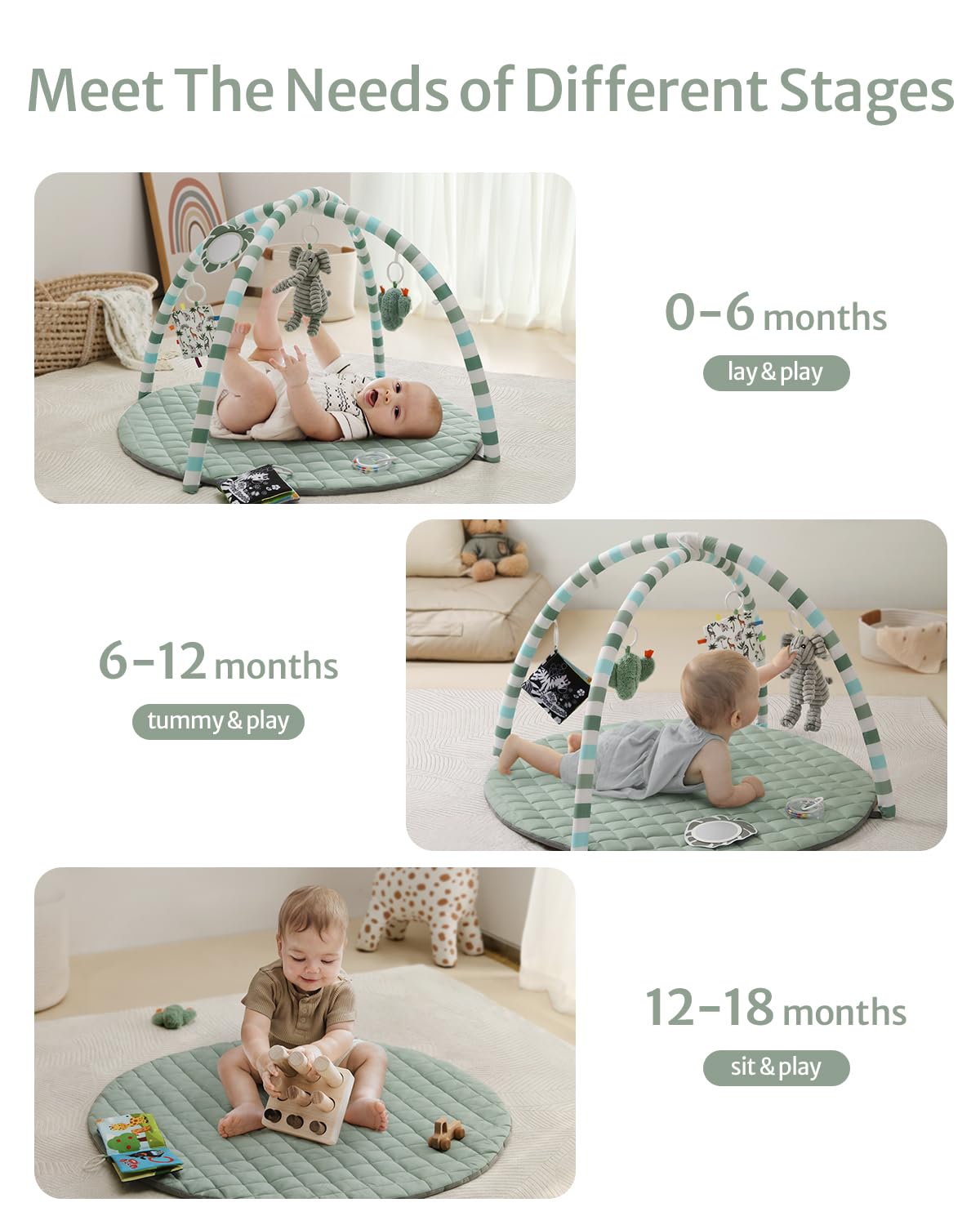
Blissful Diary Baby Play Gym Mat, Play Mat Activity Mat with 6 Detachable Toys for Stage-Based Sensory & Motor Skill Development, Easy to Install & Clean, Baby Essentials Gift, Sage Green
- Newborn Baby Essentials - The baby play gym is designed to develop stage-based sensory and motor skill. The so
- All-Round Early Development - The activity gym has 6 detachable toys which fully engage 5 senses as your baby
- Easy to Assemble & Take Down - The tummy time activity mat's size is 33.46x33.46 inch, crafted using ethically
6. Reading Your Baby's Cues During Play
Knowing when to engage and when to back off is one of the most underrated parenting skills at this stage. Newborns have very short windows of alert, calm attention before they tip into overstimulation or fatigue.
Signs your baby is ready to play
Signs your baby needs a break
Understanding these cues also builds your confidence as a parent. You are not failing when your baby looks away. You are watching self regulation develop in real time. This is part of what we explore further in the guide on how creative play builds the toddler brain, because the cue-reading skills you build now carry forward through every stage.
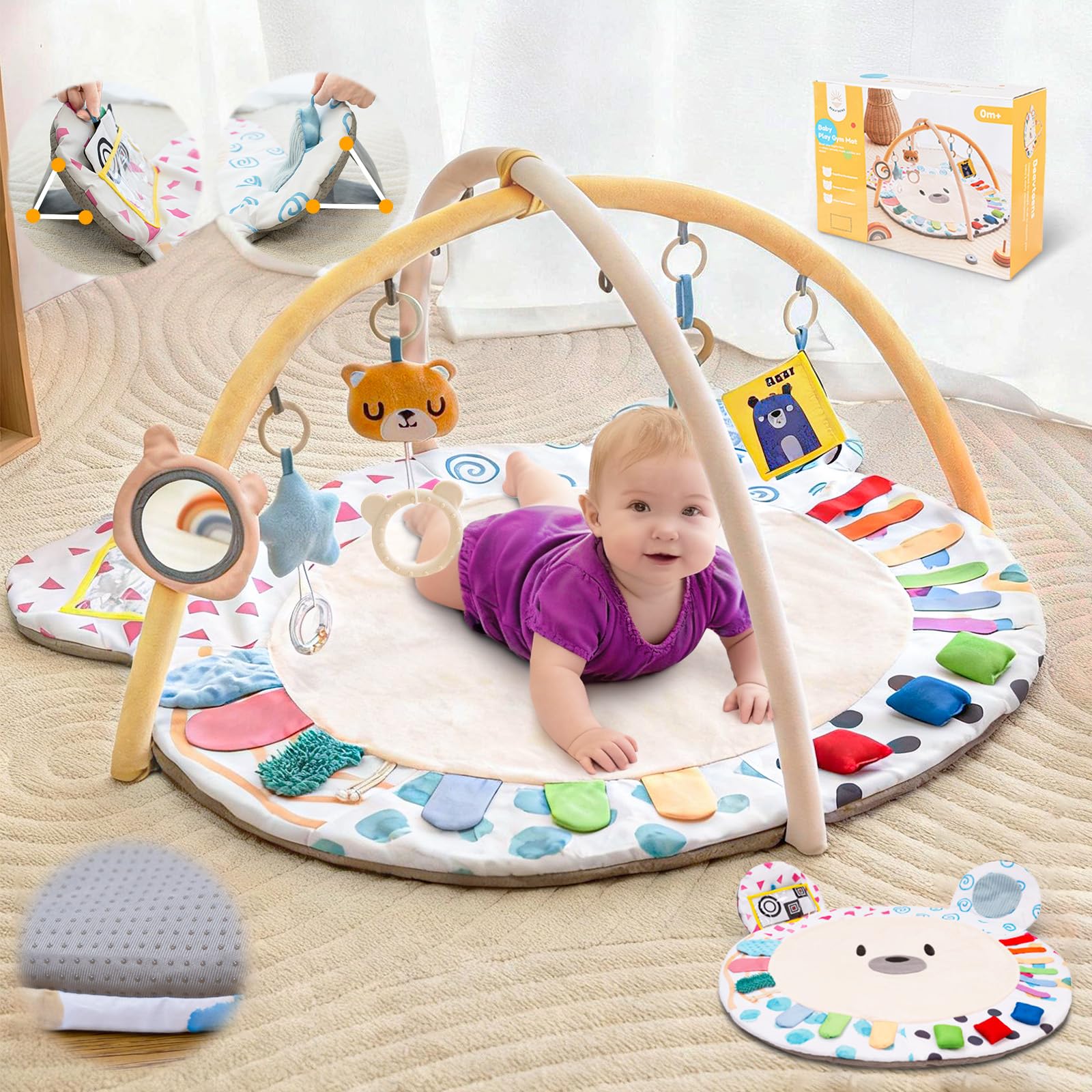
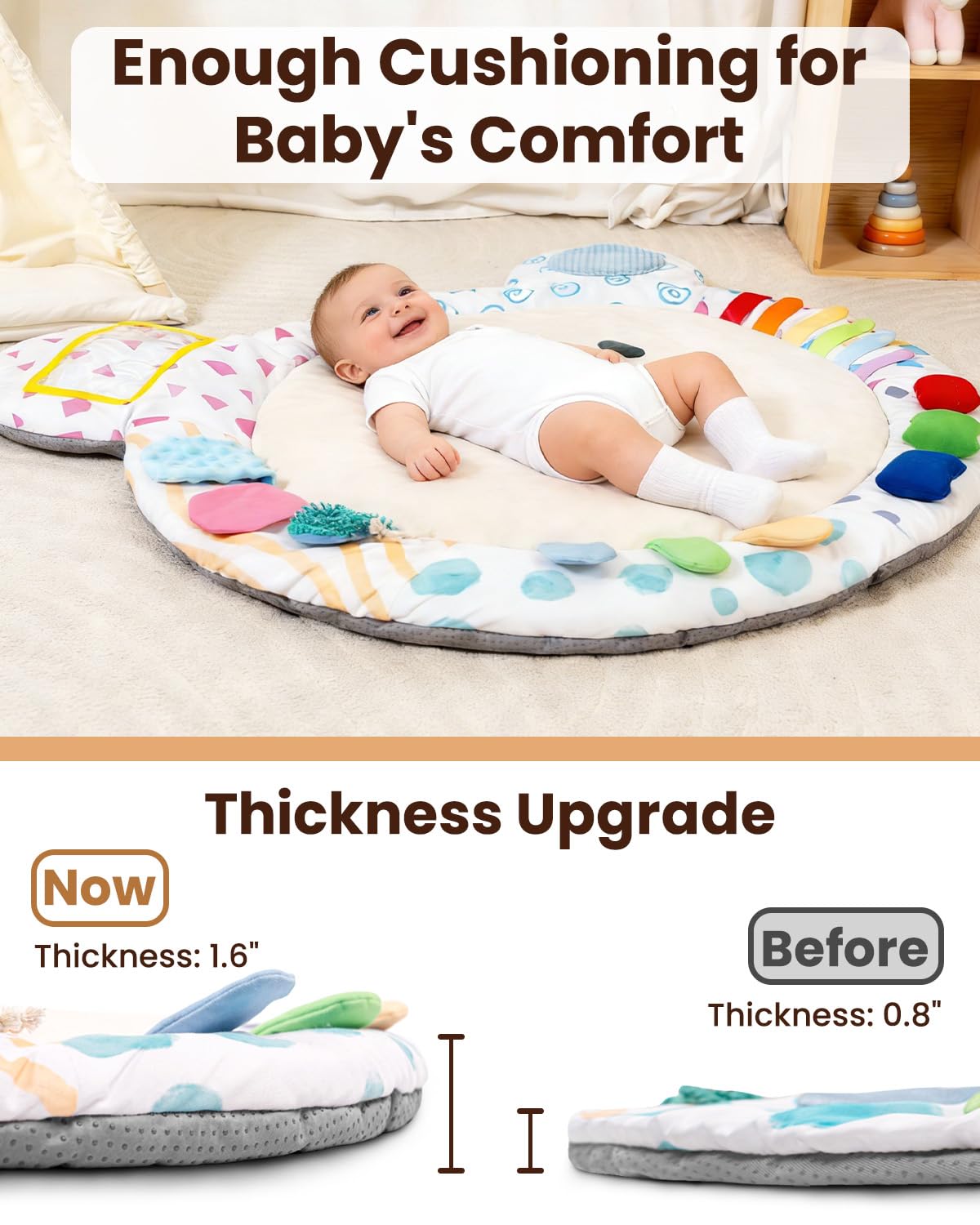
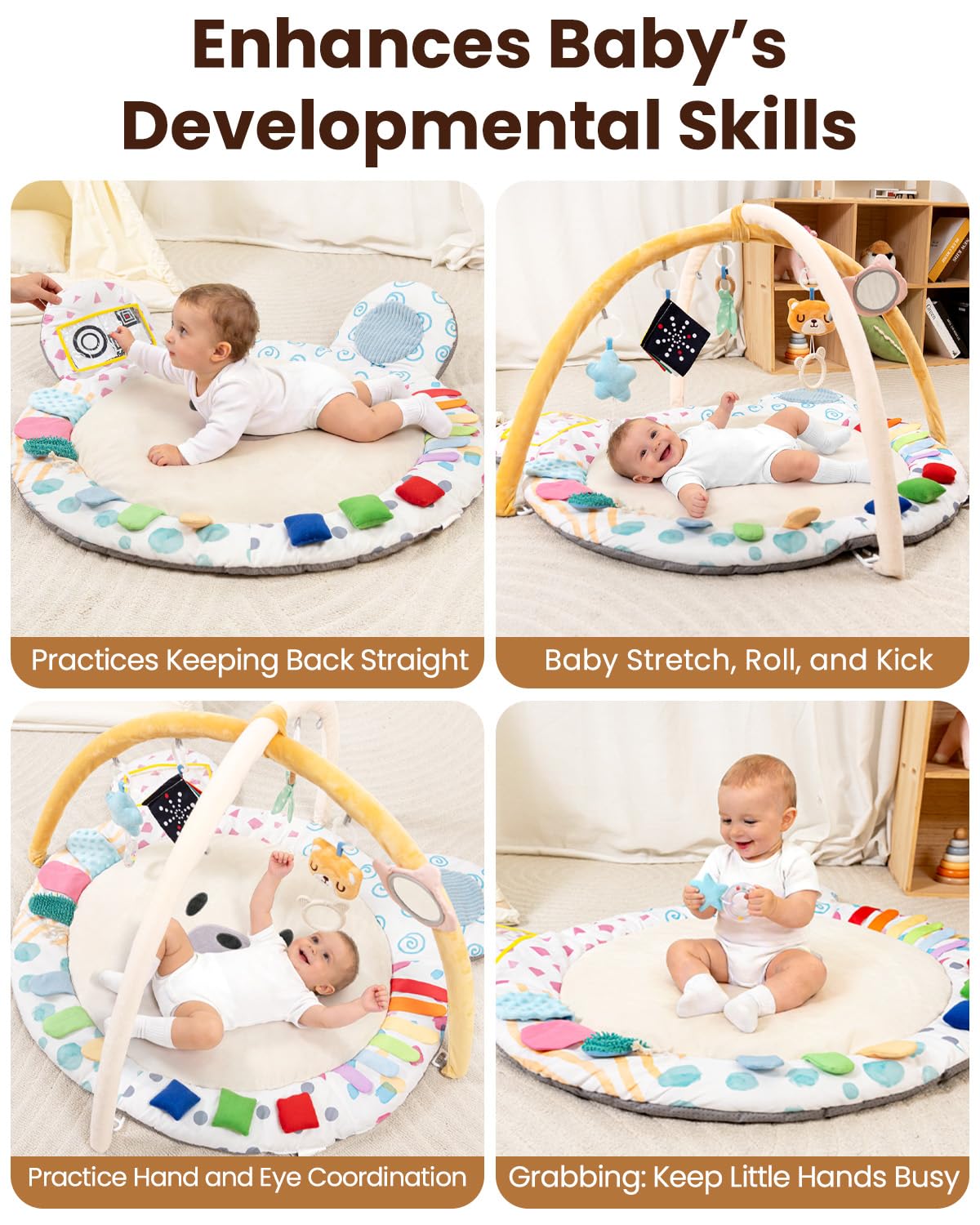
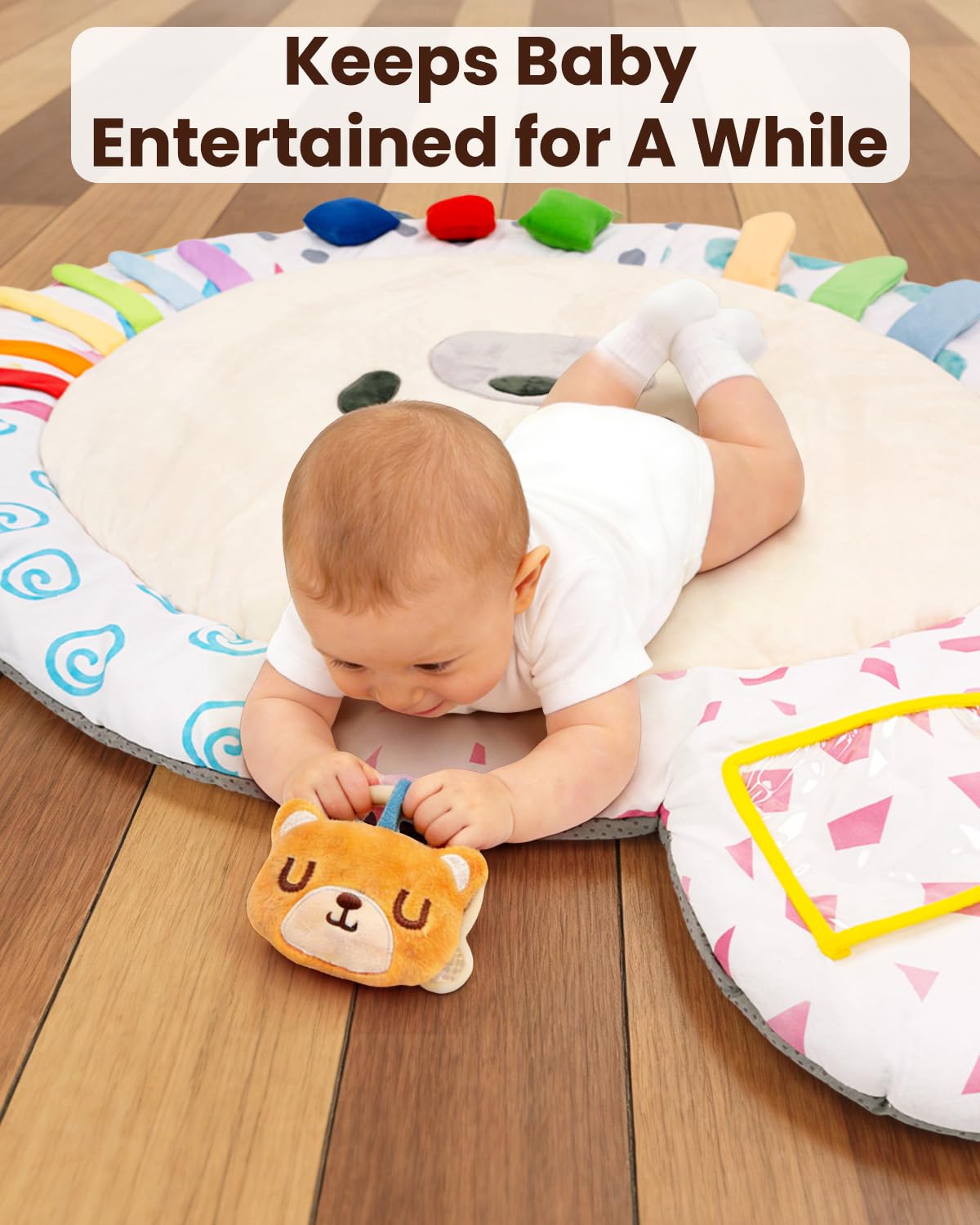
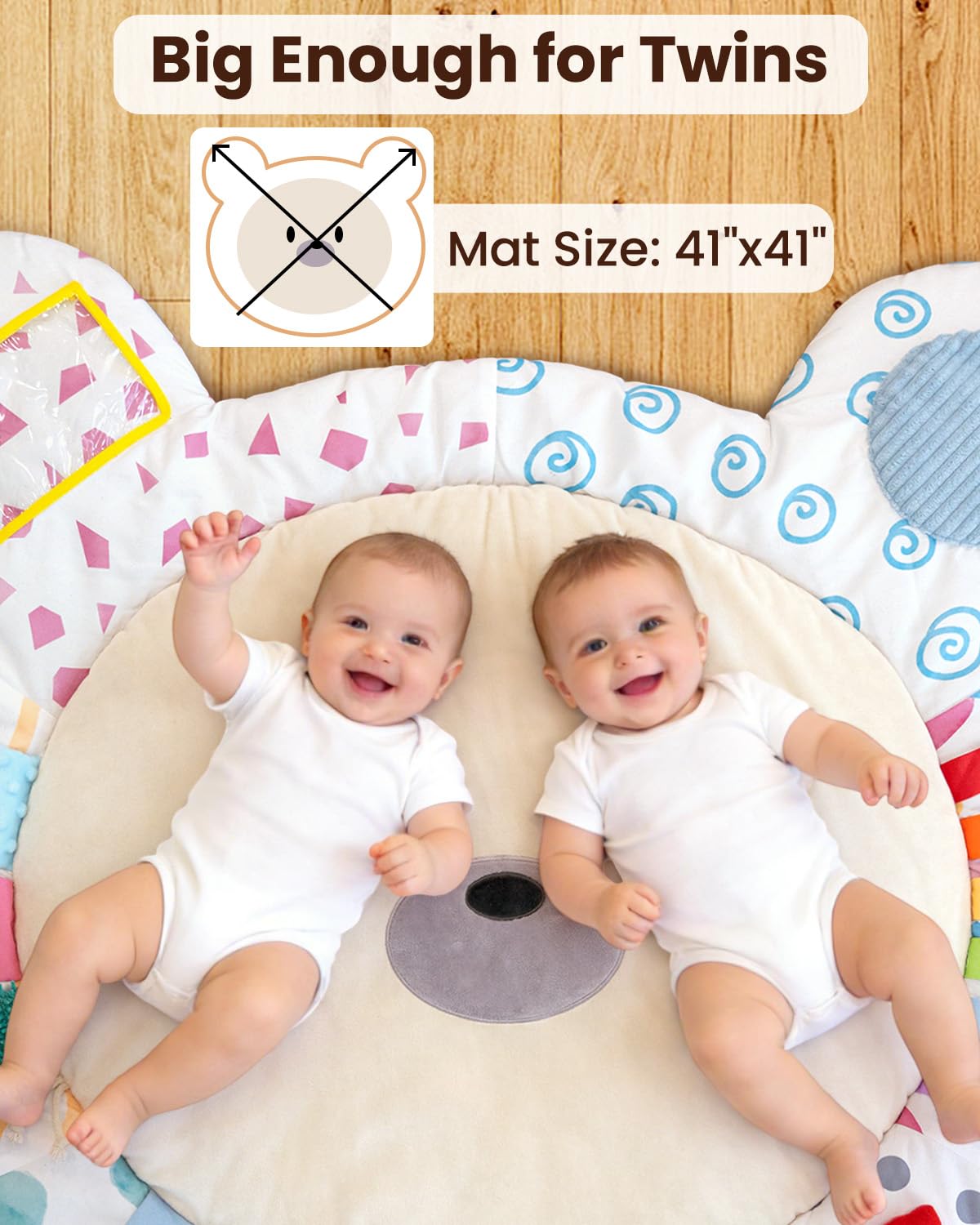
Baby Play Gym, Thickened and Non Slip Activity Mat, 5 Developmental Zones Tummy Time Mat with 5 Detachable Sensory Toys for Motor Skills, Baby Essentials Shower Gift Box(Bear)
- Tummy Time Savior: The stand-up bear ear design helps babies practice lifting their heads during tummy time. F
- Grow With Your Baby: The Activity Mat features 6 Montessori-inspired developmental zones that effectively capt
- Bigger, Comfortable, Safer: Offers a play area that is 30% larger than most Playmats, making it ideal for fami
7. Building a Simple Daily Play Routine
A routine does not mean a rigid schedule. It means predictable sequences that your baby's brain can begin to anticipate, which itself is a cognitive skill. At 0 to 3 months, a loose rhythm works better than a timed plan.
A practical daily framework
Morning (after first feed and nappy): Five to ten minutes face to face time on the mat. Talk about what you are doing. Narrate your morning. It does not matter what you say; the input matters.
Mid morning: Tummy time on the Jyusmile 8-in-1 Play Mat or a similar gym. Start with two minutes and build slowly. Use the mirror to give your baby something to look at.
Afternoon: Carry and sing. Skin to skin if possible. This is not "not playing." This is some of the most valuable sensory and emotional learning of the day.
Evening wind down: Dim the lights, slow your voice, reduce stimulation. Your baby's cortisol regulation is partly calibrated by your behaviour. A predictable calm evening signals the nervous system to begin preparing for sleep.


Baby Gym Play Mat, 8-in-1 Tummy Time Mat & Ball Pit with 6 Toys, Washable Baby Activity Play Mat for Visual, Hearing, Sensory, Motor Development, Baby Toys Gift for Toddler Infant 0-3-6-9-12 Months
- 8-in-1 Baby Activity Play Mat - Our baby play mat with a forest theme comes with some interesting enlightenmen
- All-Round Early Development - The baby play gym is designed to develop stage-based sensory and motor skills. T
- Multipurpose Baby Gym Center - Our baby gym play mat measures 43" x 39", providing babies plenty of space for
Expert Insights on Early Play and Brain Development
The first three months are genuinely extraordinary. Not because you need to do everything right, but because almost everything you do naturally (holding your baby close, talking to them, watching their face, singing off key in the kitchen) is exactly what a developing brain needs. The research just confirms what good instinct already knows.
The quotable truth of this stage: your face, your voice, and your responsiveness are the best developmental tools your baby will ever have.
Save this guide, share it with a partner or grandparent, and come back to it when you feel like you should be "doing more." You are almost certainly doing enough.
Sources & References
- Harvard Center on the Developing Child. "Brain Architecture." 2023. https://developingchild.harvard.edu/science/key-concepts/brain-architecture/
- Harvard Center on the Developing Child. "Serve and Return Interaction Shapes Brain Circuitry." 2023. https://developingchild.harvard.edu/science/key-concepts/serve-and-return/
- American Academy of Pediatrics (AAP). "Back to Sleep, Tummy to Play." Healthychildren.org. 2023. https://www.healthychildren.org/English/ages-stages/baby/sleep/Pages/back-to-sleep-tummy-to-play.aspx
- Kuhl, P.K., and Meltzoff, A.N. Institute for Learning and Brain Sciences (I-LABS), University of Washington. Research on early music and language processing. 2016.
- DeCasper, A.J., and Fifer, W.P. "Of Human Bonding: Newborns Prefer Their Mothers' Voices." Science. 1980.
- LENA Foundation. "Talk With Me, Baby." Research on conversational turns and language development. 2017. https://www.lena.org
- Field, T. Touch Research Institute, University of Miami School of Medicine. Research on touch, tummy time, and infant neurodevelopment. Multiple publications, 1990–2020.
- Centers for Disease Control and Prevention (CDC). "Learn the Signs. Act Early." Developmental milestones, 0–3 months. 2022. https://www.cdc.gov/ncbddd/actearly
Frequently Asked Questions
When should I start tummy time with a newborn?
Is it too early to use a play gym with a newborn?
How long should newborn play sessions be?
Does talking to my baby really make a difference this early?
Should I worry about overstimulating my newborn?
Are black and white toys really better for newborns?
Do I need an expensive play gym like the Lovevery?
Was this helpful?
Thanks — your feedback helps us pick what to write next.