Physical Development: Building the Strength to Explore
Between 2 and 3 months, your baby makes some of the fastest developmental leaps of their entire life — from holding their head steady to flashing their first real social smile.

In this article
Picture this: you're holding your 10-week-old and, out of nowhere, they lock eyes with you and break into a wide, unmistakable grin — not wind, not a reflex, but a real smile meant just for you. That moment is actually a neurological event. According to the CDC's "Learn the Signs. Act Early." programme, social smiling by 2 months is one of the earliest and most important developmental milestones a clinician watches for. Miss it, and it's a red flag; see it, and you can breathe a little easier.
The 2–3 month window is genuinely one of the most dynamic periods in human development. Your baby's brain is growing at roughly 1% per day in early infancy (source: JAMA Pediatrics / NIH research on early brain development), and every interaction you have is literally wiring neural circuits. This guide breaks down exactly what's happening — and what you can do about it today.
In this article you'll understand:
1. Physical Development: Building the Strength to Explore
Your 2–3 month old is working harder than they look — every wriggle, push, and head-bob is purposeful muscle-building.
Head Control
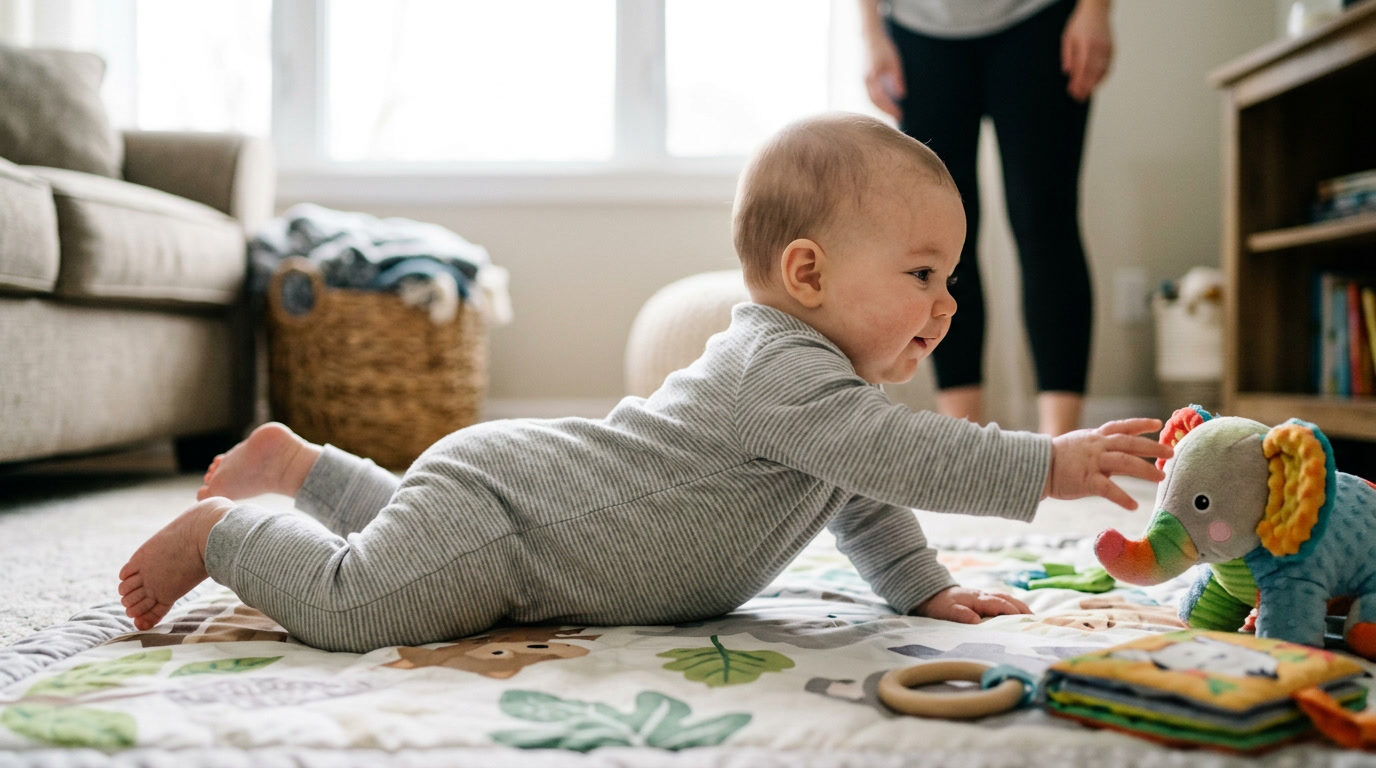
The single biggest physical milestone at this age is gaining control of the head and neck. By 3 months, most babies can hold their head steady when you hold them upright and can briefly lift it 45–90 degrees during tummy time. This matters because strong neck muscles are the foundation for rolling, sitting, and eventually crawling.Motor Skills and Hand Coordination
Arm and leg movements become more vigorous and intentional. You'll notice your baby starting to bat at objects, bring their fists to their mouth, and track a moving toy across their visual field. These are early signs of hand-eye coordination developing on schedule.Red Flags to Raise With Your Paediatrician

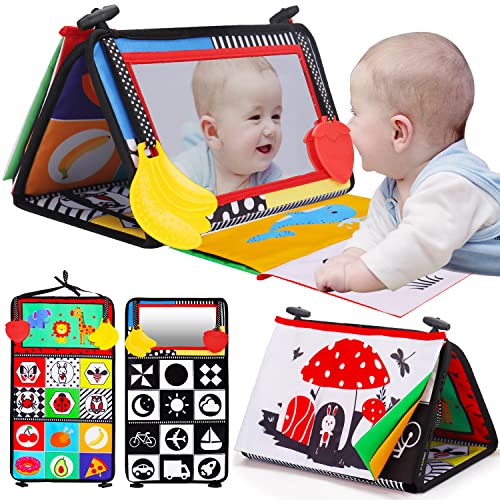
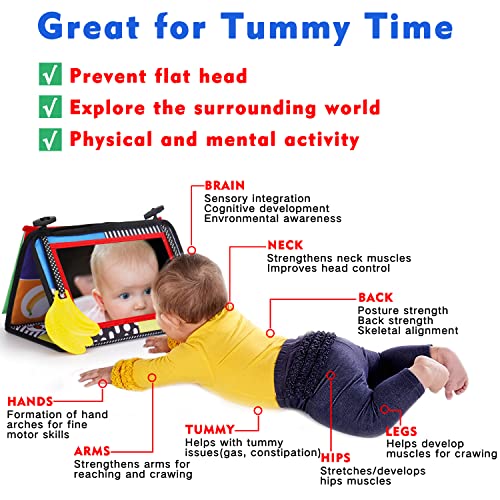


Tummy Time Baby Mirror Infant Toys Newborn 0 3 Months Brain Development with Crinkle Cloth Book Teether Black and White High Contrast Baby Toys 2 4 5 0-6 Month Boys Girls Sensory Activity Shower Gifts
- Baby Toys for Brain Development - Baby mirror and soft book help babies to explore the world during tummy time
- Baby Sensory Toy Book - No need to purchase cloth book and baby teething toy separately. Crinkle book can be f
- Great Tummy Time Toys - Aside from strengthen baby’s leg arm muscles to prepare to crawl, this sensory toys wi
2. Cognitive Development: A Brain Learning to Pay Attention
Your baby's brain at 2–3 months is essentially a pattern-recognition machine running at full speed.
Newborns can only focus clearly at 8–12 inches — roughly the distance from your breast or bottle to your face. By 3 months, that range has expanded significantly, and babies begin tracking moving objects smoothly with their eyes rather than in jerky steps. They also start to show a clear preference for novelty: a new face or a new toy gets more attention than a familiar one, which is an early sign of memory forming.
What Captures Their Attention
- High-contrast patterns: Black-and-white geometric shapes are still the most visually stimulating at this age because the visual cortex responds more strongly to contrast than to colour at 2 months. - Human faces: Your face remains the single most compelling "object" in your baby's environment. - Cause and effect: Babies this age are beginning — just beginning — to notice that shaking their arm makes a rattle sound. This is the earliest seed of logical thinking.Practical Cognitive Stimulation
Rotate two or three high-contrast toys rather than overwhelming your baby with a whole playmat at once. The Infinno Black and White Baby Book with Mirror is a strong pick here: one side is high-contrast monochrome, the other introduces colour as your baby's vision matures, and the embedded mirror supports early self-recognition — a cognitive milestone in its own right.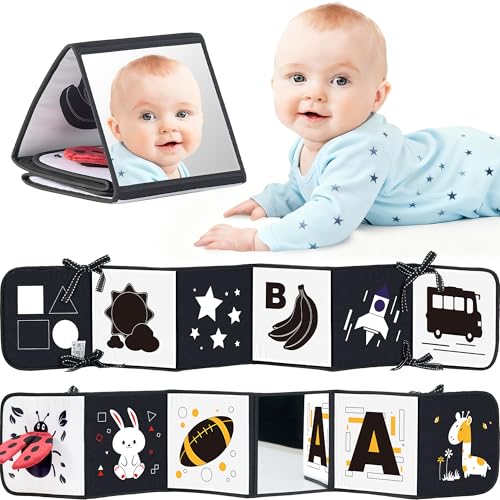
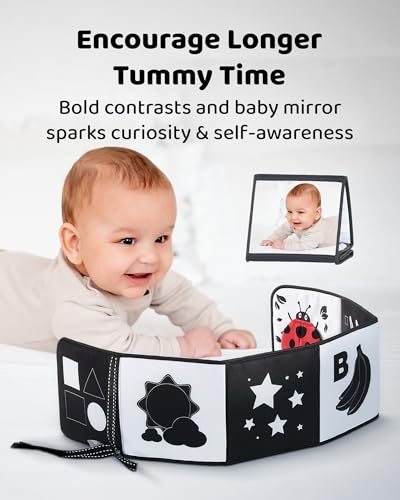
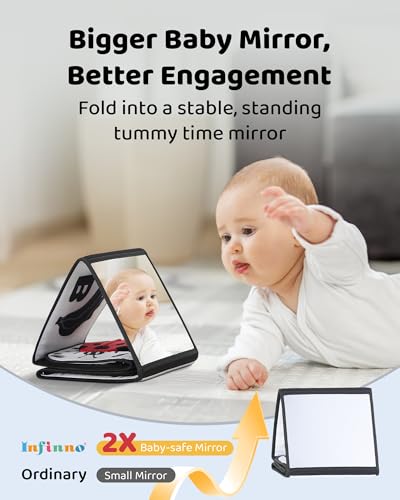
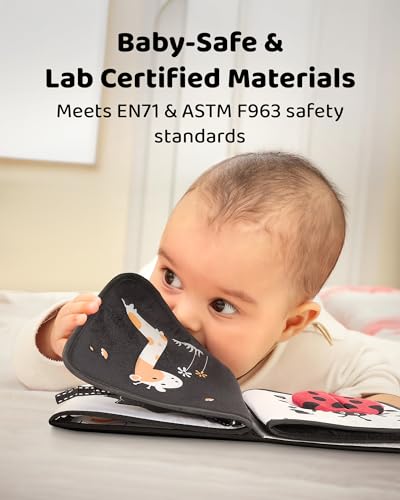
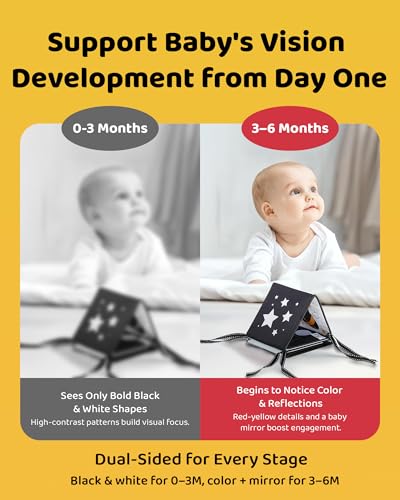
Black and White Baby Books for Newborn - Tummy Time Mirror & Sensory Toys Soft Montessori Toy for Infant Visual Stimulation, Brain Development & Early Learning - High Contrast Toys for 0-6 Months
- Stimulate Your Baby’s Senses: This black and white baby book, designed for babies 0-6 months, features high-co
- Interactive & Engaging Infant Toy: Includes an embedded mirror that aids in self-recognition and cognitive dev
- Safe for Newborns 0–6 Months: Made from non-toxic and BPA-FREE soft sponge and polyester fiber with durable st
Red Flags
3. Emotional and Social Development: The First Real Conversation
The social smile — appearing somewhere between 6 and 8 weeks — is arguably the most important milestone in this entire age window, and it's more than just adorable.
A social smile is different from the reflex smiles of the newborn period. It's triggered by you: your face, your voice, your presence. It signals that your baby's brain has begun to form a social bond, recognise a familiar person, and communicate positive emotion intentionally. The CDC lists social smiling by 2 months as a key developmental marker.
By 3 months, most babies are also: - Making eye contact and holding it for several seconds - Showing excitement (kicking, arm-waving) when they see a familiar caregiver - Calming more readily to a parent's voice than to a stranger's - Beginning to "take turns" in proto-conversations — you smile, they smile; you coo, they coo back
Red Flags
4. Speech and Language: Cooing Is Communication
Your baby won't say a word for another 9–10 months, but language development is already well underway at 2–3 months.
Cooing — those soft, vowel-heavy sounds ("oooh", "ahhh") — typically begins around 6–8 weeks. By 3 months, most babies vary their pitch and volume, produce consonant-vowel combinations ("goo", "bah"), and respond to your voice by turning their head toward the sound. These are not random noises. They are the earliest form of intentional communication.
Babies are born ready to learn language. The interactions they have in the first months of life — the back-and-forth of talking and listening — lay the neural groundwork for all future communication.
— American Speech-Language-Hearing Association (ASHA), Early Intervention Resources
How to Support Language Right Now
- Respond to every coo: Pause after you speak, as if waiting for an answer. Your baby will often fill the gap — this is the earliest form of conversational turn-taking. - Read aloud daily: Content doesn't matter at this age; rhythm, intonation, and the sound of your voice are what register. - Sing: Repetitive, melodic patterns are especially well-processed by the infant auditory cortex.Musical toys that pair sound with visual feedback can reinforce auditory development during independent play. The Baby Einstein Take Along Tunes plays 10 classical pieces with coloured lights that sync to the melody — simple cause-and-effect (baby bats it, music plays) that layers nicely onto language and auditory development.
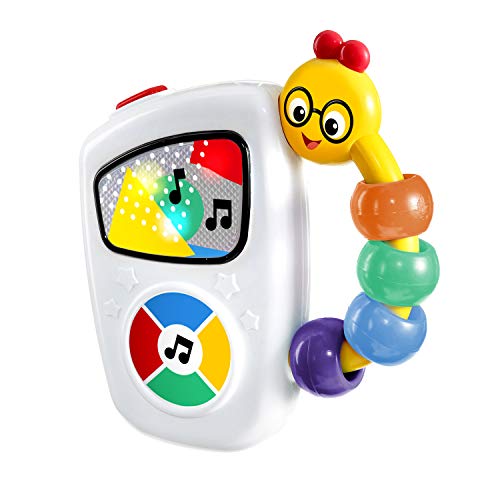


Baby Einstein Take Along Tunes Musical Toy, Ages 3 Months +
- The Baby Einstein Take Along Tunes inspires a lifelong love of music with hours of entertainment; volume contr
- Teaches babies about music and cause and effect as they push the large button to hear 10 classical masterpiece
- Colorful lights dance to the melody to captivate your baby and encourage both auditory and visual development
Red Flags
5. Sensory Development: Touch, Sound, and the World Beyond Eyes
At 2–3 months, your baby is processing sensory input from every direction — and the right stimulation helps organise their nervous system.
Touch remains one of the most powerful developmental inputs at this age. Skin-to-skin contact continues to regulate cortisol levels, support weight gain, and reinforce attachment. Beyond holding, introducing varied textures through toys gives your baby's tactile system important data.
Hearing is fully functional from birth, but babies this age are becoming increasingly skilled at locating sounds — turning their head toward a voice or rattle. This sound-localisation skill is a neurological milestone worth noting.
Proprioception (body-position sense) is stimulated by tummy time, gentle movement, and being carried in different positions.
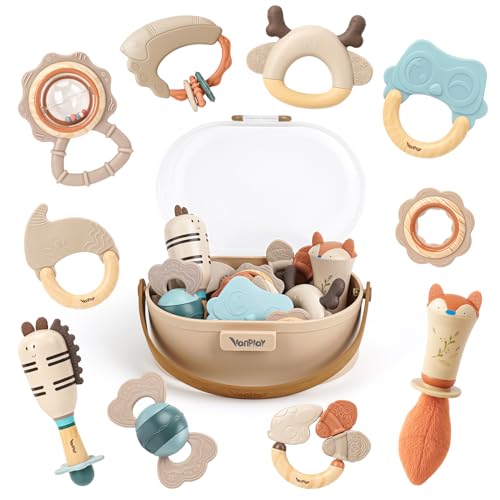
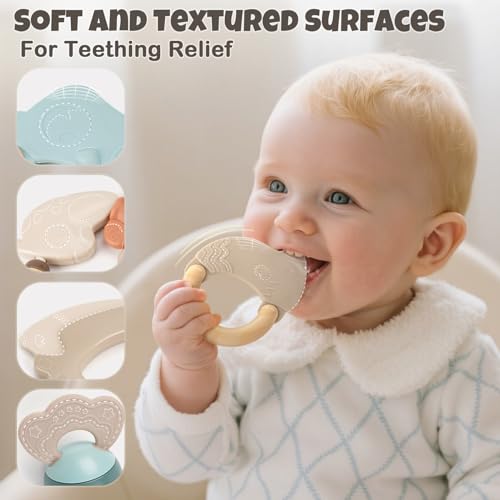
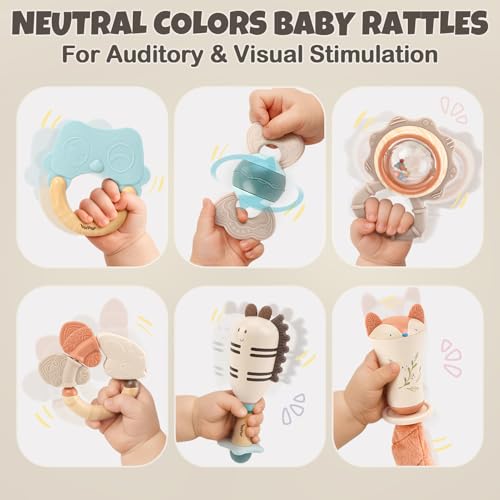
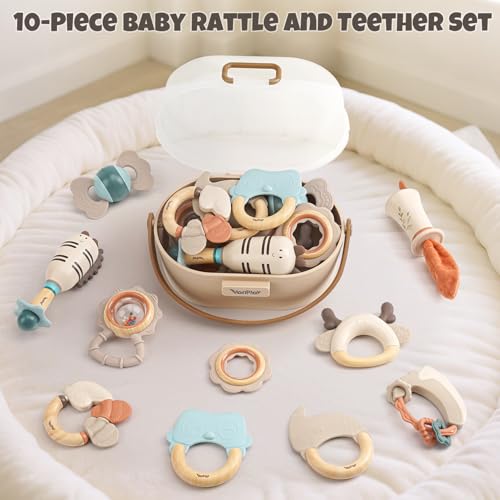

Baby Rattles & Teethers Set – Baby Toys 0-6 Months, Teething Toys 3-6 Months, Sensory Toys with Soft Textures, Gentle Sounds & Easy-Grip Shape, Neutral Newborn Gift(10-Pack)
- 🍼【10-Piece Baby Rattles & Teethers Set】 This premium 10 baby toys set includes a variety of soft silicone teet
- 🦷【Soothing Teething Relief & Safe Chewing】 Made of 100% food-grade silicone,these teethers provide gentle gum
- 🌈【Neutral Colors & Sensory Stimulation】 The soft and gender-neutral color infant toys is visually appealing fo
A water-filled tummy time mat like the Infinno Inflatable Tummy Time Water Mat adds a gentle proprioceptive element — the slight instability of the water surface engages core and neck muscles more than a flat floor, while the bright sea-life illustrations provide visual stimulation simultaneously.
6. Health, Nutrition, and Growth: What the Numbers Mean
Between 2 and 3 months, most babies gain approximately 150–200 g (about 5–7 oz) per week and grow roughly 2.5 cm (1 inch) per month in length, according to WHO Child Growth Standards. Head circumference also increases steadily — a sign of healthy brain growth.
Feeding
- Breastfed babies typically feed 8–12 times in 24 hours; by 3 months many settle into a slightly more predictable rhythm, though cluster feeding remains normal. - Formula-fed babies usually take 120–150 ml (4–5 oz) per feed, every 3–4 hours. - The AAP recommends exclusive breastfeeding for around 6 months where possible, but emphasises that a fed, growing baby is the goal regardless of method.Vaccinations
In most countries (including the US, UK, and Australia), the 2-month well-child visit includes the first round of core vaccinations: DTaP, Hib, IPV, PCV, and rotavirus. The 4-month visit follows the same schedule. These are among the most evidence-supported interventions in paediatric medicine — the CDC, AAP, and WHO all recommend following the national schedule.Red Flags
7. Developmental Toy Comparison: What Actually Helps at 2–3 Months
Not all toys are created equal for this age. Here's a quick comparison of the most useful categories, mapped to developmental goals.
| Toy Type | Best For | Developmental Benefit | Key Limitation | Recommended Product | Price Range |
|---|---|---|---|---|---|
| High-contrast mirror + book | Tummy time, visual development | Visual cortex stimulation, head/neck strength, early self-recognition | Needs adult supervision during tummy time | Thremhoo Tummy Time Mirror & Crinkle Book | ~$18 |
| Soft sensory book (B&W + colour) | Independent play, visual development | Pattern recognition, colour transition, crinkle auditory input | Best used flat — some designs collapse | Infinno Black & White Baby Book | ~$12 |
| Musical cause-and-effect toy | Auditory + early cognitive development | Sound localisation, cause-and-effect learning, auditory-visual pairing | Volume can be loud; check for volume control | Baby Einstein Take Along Tunes | ~$10 |
| Rattle & teether set | Grip development, sensory exploration | Fine motor, tactile variety, early teething relief | Individual pieces small — supervise closely | Vanplay 10-Pack Rattles & Teethers | ~$22 |
| Simple rattle (single piece) | First independent grasping | Easy-grip, auditory feedback, visual tracking | Limited developmental range | Bright Starts Oball Shaker Rattle | ~$4 |
| Water tummy time mat | Tummy time, sensory, proprioception | Core/neck strength, visual stimulation, tactile novelty | Requires inflation/filling; not for unsupervised use | Infinno Inflatable Water Play Mat | ~$13 |
Expert Insights
The 2–3 month stage can feel like a blur of feeds, nappy changes, and sleepless nights — but inside that blur, something extraordinary is happening. Your baby is learning to trust, to communicate, to understand cause and effect, and to love you back. Every time you respond to a coo, hold them through a cry, or get down on the floor for tummy time, you are doing something neurologically profound.
The most important developmental tool your baby has is you.
If this guide helped you feel a little more confident about what's normal — and what to watch for — save it, share it with your co-parent or childminder, and check back as your baby moves into the 4–6 month stage. The milestones only get more exciting from here.
Sources & References
- Centers for Disease Control and Prevention (CDC). "Learn the Signs. Act Early.: Developmental Milestones." 2023. https://www.cdc.gov/ncbddd/actearly/milestones/index.html
- American Academy of Pediatrics (AAP). "Tummy Time: Why It's Important for Your Baby." HealthyChildren.org. 2023. https://www.healthychildren.org/English/ages-stages/baby/Pages/The-Importance-of-Tummy-Time.aspx
- American Academy of Pediatrics (AAP). "Breastfeeding and the Use of Human Milk." Pediatrics. 2022. https://publications.aap.org/pediatrics/article/150/1/e2022057988/188347
- World Health Organization (WHO). "Child Growth Standards." 2023. https://www.who.int/tools/child-growth-standards
- Centers for Disease Control and Prevention (CDC). "Recommended Immunization Schedule for Children and Adolescents." 2024. https://www.cdc.gov/vaccines/schedules/hcp/imz/child-adolescent.html
- Center on the Developing Child, Harvard University. "Serve and Return." 2023. https://developingchild.harvard.edu/science/key-concepts/serve-and-return/
- American Speech-Language-Hearing Association (ASHA). "Early Identification of Speech, Language, and Communication Disorders." https://www.asha.org/public/speech/disorders/early-identification/
- Centers for Disease Control and Prevention (CDC). "Early Hearing Detection and Intervention (EHDI) Programme." 2023. https://www.cdc.gov/ncbddd/hearingloss/ehdi-programs.html
- National Institutes of Health / JAMA Pediatrics. Gilmore JH, Knickmeyer RC, Gao W. "Imaging structural and functional brain development in early childhood." Nature Reviews Neuroscience. 2018. https://www.nature.com/articles/nrn.2018.1
Frequently Asked Questions
Is it normal for my 2-month-old to not smile yet?
How much tummy time does a 2–3 month old actually need?
My baby hates tummy time. What can I do?
How do I know if my baby is getting enough milk?
When should I be worried about my baby's development at this age?
Can I spoil a 2–3 month old by responding to every cry?
What vaccinations does my baby need at 2 months?
Was this helpful?
Thanks — your feedback helps us pick what to write next.