Physical Development: Rolling, Reaching, and Building Core Strength
Between 4 and 6 months, your baby undergoes some of the fastest developmental change of their entire life — across physical, cognitive, social, and language domains — and knowing what to expect helps you support every leap.
In this article
Picture this: you lay your baby on their play mat, walk two steps to grab your coffee, and turn back to find they've rolled clean onto their side and are staring at you with an expression that says, "Did you see that?" That moment — somewhere between 4 and 6 months — is one of the most exhilarating stretches of early parenthood.
The science backs up the feeling. According to the CDC's "Learn the Signs. Act Early." programme, the period from 4 to 6 months is among the densest for milestone accumulation in the first year of life, spanning motor, cognitive, social-emotional, and communication domains simultaneously. In other words, your baby isn't just getting bigger — they're becoming a person.
In this guide you'll understand:
1. Physical Development: Rolling, Reaching, and Building Core Strength
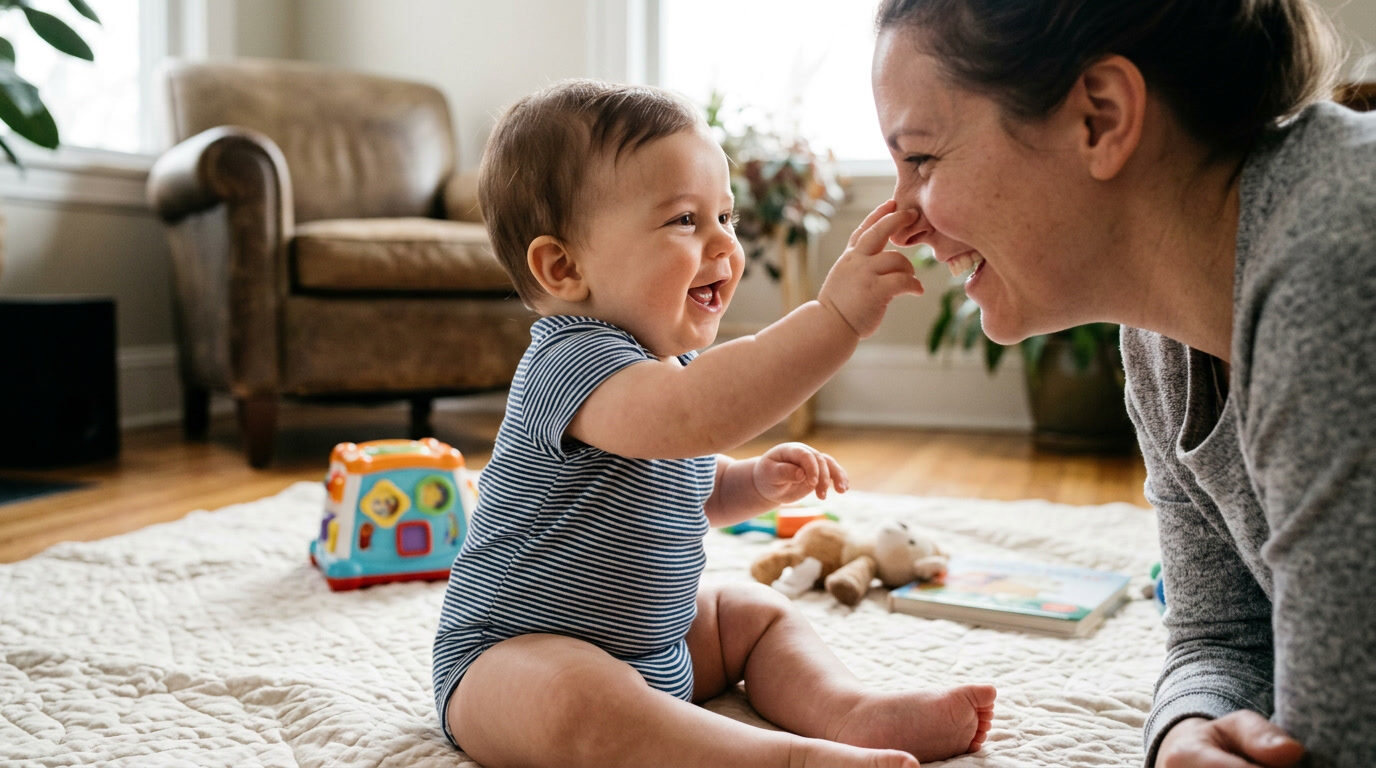
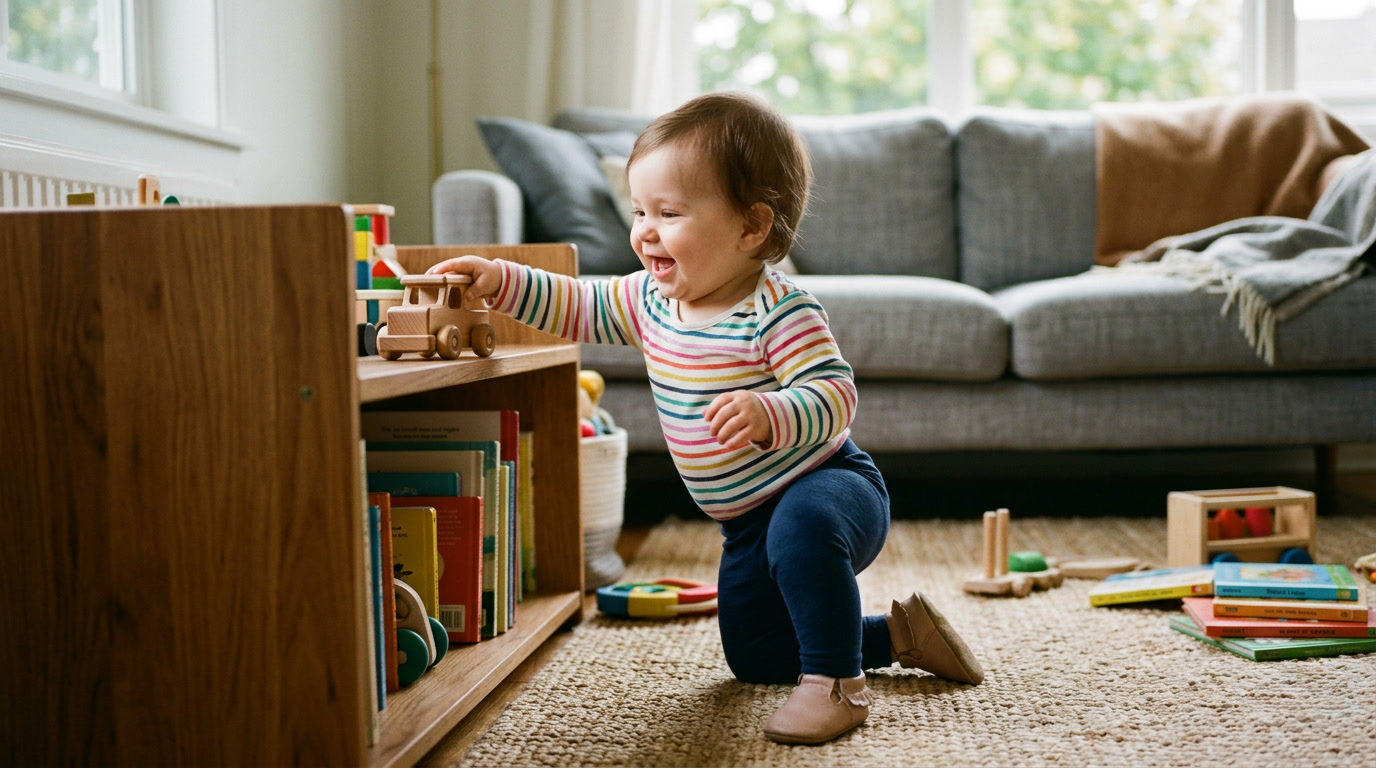
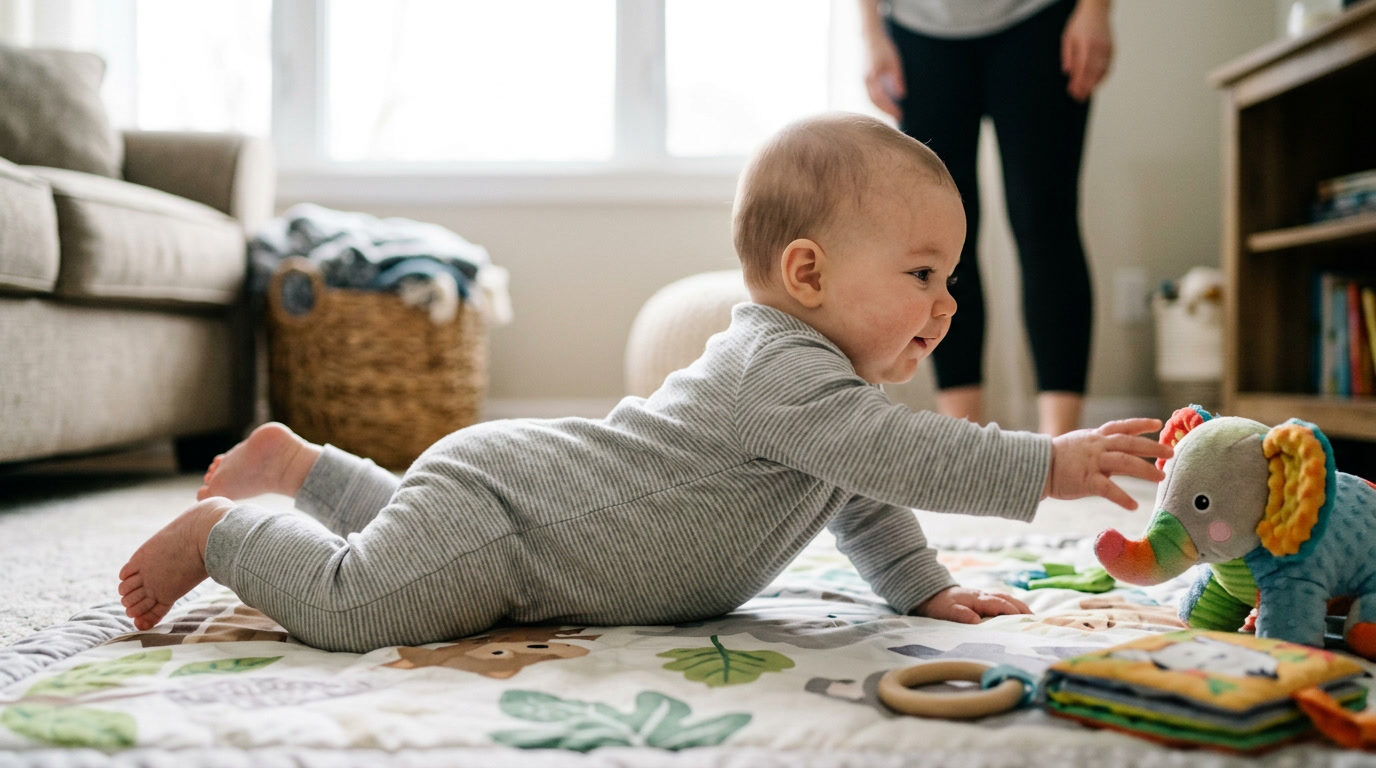
Your baby's body is doing extraordinary work between 4 and 6 months — and the headline act is rolling over. Most babies roll tummy-to-back first (often surprising themselves in the process), then master back-to-tummy closer to 5 or 6 months. Alongside rolling, you'll see steadier head control, purposeful reaching, and the beginning of supported sitting.
Key Physical Milestones (4–6 Months)
Tummy Time: Your Single Biggest Lever
The American Academy of Pediatrics (AAP) recommends working up to at least 30 minutes of supervised tummy time per day by 3 to 4 months, spread across shorter sessions. Tummy time builds the neck, shoulder, and core strength that underpins rolling, sitting, and eventually crawling.
A great way to make tummy time feel like play rather than work is to introduce a high-contrast, textured toy within arm's reach. The TOHIBEE Montessori Sensory Toy is lightweight enough for a 4-month-old to bat at and eventually grasp, and its 12 bright colours hold visual attention well.


Baby Montessori Sensory Toys for 0-6 6-12 Months, Baby Teether Teething Toys for Babies 0 3 6 9 12 18 Months, Newborn Infant Learning Developmental Toys Gifts for 1 2 Year Old Boys Girls
- Multi-Sensory Baby Toy: This baby sensory toy uses 12 kinds of bright colors and textured silicone balls to st
- Silicone Baby Teether: This baby teether is made of high quality soft silicone and ABS plastic, which helps re
- Developmental Montessori Toys: Babies will be instantly drawn to this colorful and lightweight infant toy. Imp
When to Contact Your Paediatrician
2. Cognitive Development: Curiosity, Cause and Effect, and Early Memory
Your baby's brain is not passively absorbing the world — it's actively testing it. Between 4 and 6 months, infants begin to understand that their actions produce results (shaking a rattle makes a sound), start to recognise familiar faces and objects, and show clear signs of curiosity — looking away when bored, leaning in when interested.
What's Happening in the Brain
Researchers at the Harvard Center on the Developing Child describe this period as one of rapid synaptogenesis — the brain is forming up to 1 million new neural connections per second in the first few years of life, with this window being particularly active for sensory and motor circuits.
Cognitive Milestones to Watch For
Toys That Match This Cognitive Stage
A toy that introduces cause and effect is ideal here. The Baby Einstein Opus the Octopus Rattle & Teether has a bubble-pop feature that directly rewards pressing — a perfect first lesson in "I do this, that happens." For high-chair moments, the Baby Einstein Sticky Spinner sticks to any flat surface and lets babies experiment with spinning and grasping independently.

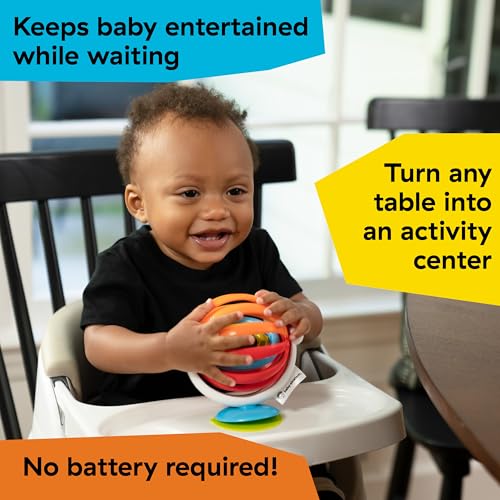
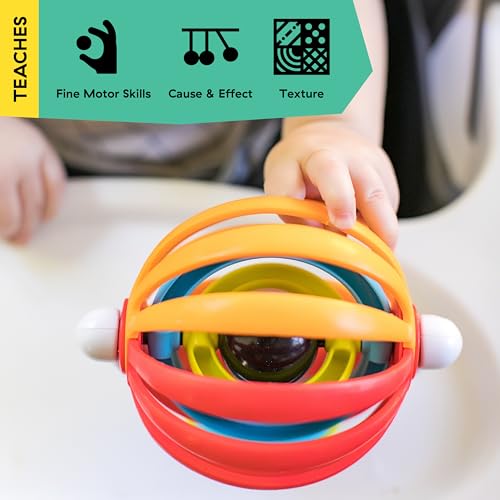
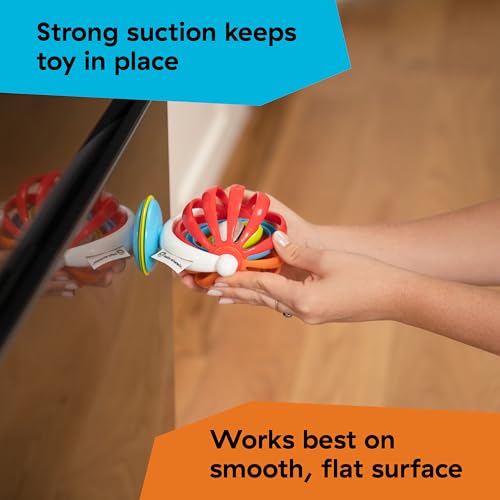
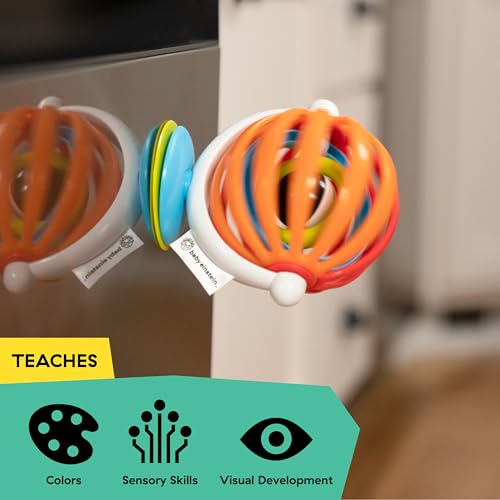
Baby Einstein Sticky Spinner BPA-Free High Chair Activity Toy, Ages 3 Months+
- Turn any table into an activity center
- Suction cup keeps toy in place on flat surfaces
- Colorful loops are fun to grasp and spin
3. Emotional and Social Development: Bonding, Trust, and the First Friendships
Your baby is becoming a social being — and they are deeply, specifically attached to you. Between 4 and 6 months, social smiling becomes rich and reciprocal, laughter appears (one of the great joys of parenthood), and the first seeds of separation anxiety are planted. This isn't clinginess; it's healthy attachment.
Social-Emotional Milestones
Serve and Return: The Interaction That Builds Brains
The CDC and the Harvard Center on the Developing Child both highlight "serve and return" interaction as the single most important thing you can do for social-emotional development. Your baby "serves" — a coo, a gaze, a reach — and you "return" — you respond, name it, match it. Thousands of these micro-exchanges per day wire the social brain.
When to Mention to Your Doctor
4. Speech and Language Development: From Coos to Babbles
Your baby won't say a word for months yet — but the language architecture being laid down right now is the foundation for everything that follows. Between 4 and 6 months, communication takes a significant leap: from simple coos to varied babbling, from reacting to sounds to actively producing them.
Language Milestones (4–6 Months)
How to Grow Language Every Day
The research on early language is unambiguous: quantity and quality of caregiver talk both matter. A landmark study by Hart and Risley (1995) documented that children who heard more varied, responsive language in the first three years showed significantly stronger vocabulary outcomes. You don't need flashcards — you need conversation.
Simple rattles that reward sound-making are perfect language-adjacent toys at this stage. The Bright Starts Oball Shaker Rattle is easy for small hands to grip and its clear body lets babies see the beads moving — connecting sound to cause visually.


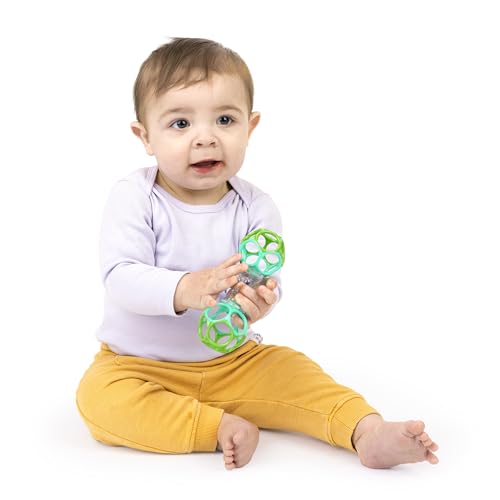
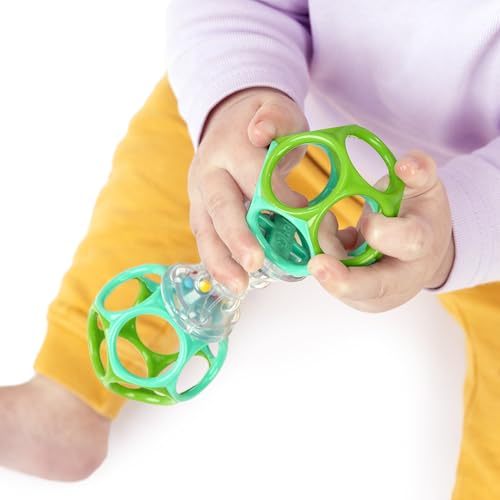
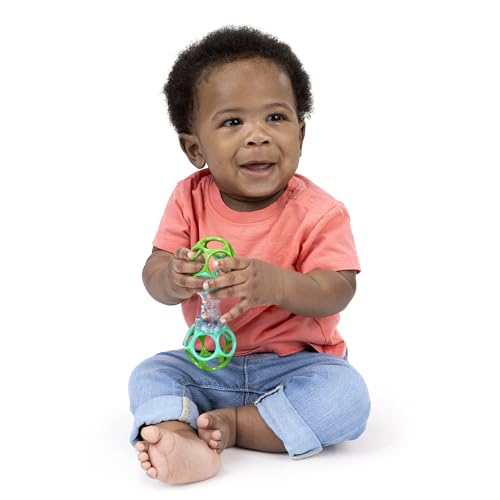
Bright Starts Oball Shaker Rattle Toy, Ages Newborn Plus
- 2 mini flexible, teethable Oballs are easy to hold
- Colorful rattle beads create fun sounds to entertain and delight baby
- Textured rattle is clear so baby can see the colorful beads. BPA Free
When to Flag With Your Paediatrician
5. Sensory Development: Touch, Sight, and the World Through Their Mouth
By 4 months, your baby's vision has sharpened dramatically — they can now see across a room and track moving objects smoothly. Colour perception is nearly adult-level. And everything within reach is going straight into their mouth, which is not mischief — it's neuroscience. The mouth has the highest density of sensory receptors in the body at this age.
Sensory Milestones
Safe Sensory Play
Because mouthing is the primary exploration mode, everything in reach needs to be BPA-free, appropriately sized (no choking hazards), and easy to clean. The Infinno Baby Wrist Rattle Socks and Foot Finder Set is brilliant for this stage — it puts sensory stimulation on the wrists and ankles, letting babies discover their own limbs through sight, sound, and touch simultaneously.

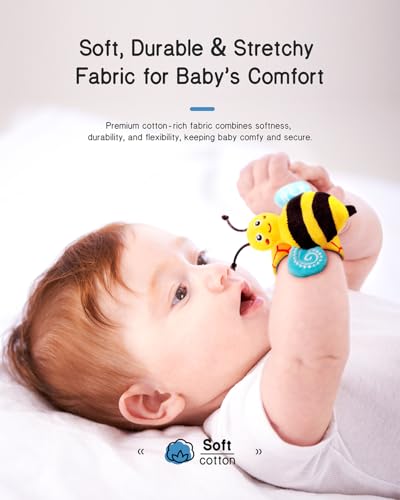


Infinno Baby Wrist Rattle Socks and Foot Finder Set, Perfect Baby Toys for 0-12 Months Newborn Boys and Girls As Shower Gifts, Garden Bug Series
- PROMOTE SENSORY EXPLORATION - The bright colorful rattle socks will promote baby sensory exploration through s
- FIT COMFORTABLY - This set contains two soft wrist rattles and two foot finders. These bright colorful wrist r
- DELIGHTFUL BABY GIFT - Packaged in an exquisite gift box, this rattle socks set makes a delightful baby shower
6. What to Expect at the 4- and 6-Month Well Visits
Your paediatrician will check in at both 4 months and 6 months, and these visits are more than just vaccinations — they're structured developmental screenings.
What Happens at These Visits
Starting Solids: The 4–6 Month Question
The AAP updated its guidance in 2023 to recommend introducing solid foods around 6 months for most infants, while acknowledging that some babies show readiness signs (sitting with minimal support, good head control, showing interest in food) closer to 4 months. Always discuss timing with your own paediatrician.
Developmental Milestone Comparison: 4 Months vs. 6 Months at a Glance
| Domain | Typical at 4 Months | Typical at 6 Months | Red Flag at 6 Months | Recommended Toy |
|---|---|---|---|---|
| Gross Motor | Holds head steady; pushes up on arms | Rolls both ways; bears weight on legs | Not rolling or holding head up | TOHIBEE Sensory Toy |
| Fine Motor | Bats at objects; hands often open | Reaches and grasps; transfers hand to hand | Not reaching for objects | Oball Shaker Rattle |
| Cognitive | Tracks objects; recognises faces | Explores cause and effect; shows curiosity | No interest in surroundings | Baby Einstein Opus Teether |
| Language | Coos; reacts to sounds | Babbles consonants; responds to name | No babbling; not turning to sounds | Baby Einstein Sticky Spinner |
| Social-Emotional | Social smile; calms with caregiver | Laughs; shows separation awareness | No social smile; no laughter | Infinno Wrist Rattle Set |
| Sensory-Play | Mouths objects; prefers high contrast | Explores textures; reaches across distance | No mouthing or object exploration | Sassy Stacking Rings |
Expert Insights
Every Day Counts — But So Does Every Ordinary Moment
The 4-to-6-month window can feel like a race against a checklist, but the truth is gentler than that: your baby's development unfolds best in the context of a relationship. The rolled-up-towel tummy time session, the raspberry that finally gets a laugh, the patient back-and-forth of coo and response — these aren't just cute moments. They are the building blocks of a brain and a bond.
The most developmentally rich thing you can give your baby isn't a toy — it's your full, present attention.
If this guide helped you feel more confident heading into this stage, save it, share it with your co-parent or childminder, and check back for our 6-to-9-month guide when the next wave of milestones arrives.
Sources & References
- American Academy of Pediatrics. "Tummy Time." HealthyChildren.org. 2023. https://www.healthychildren.org/English/ages-stages/baby/sleep/Pages/The-Importance-of-Tummy-Time.aspx
- Centers for Disease Control and Prevention. "Learn the Signs. Act Early. — Developmental Milestones." CDC.gov. 2022. https://www.cdc.gov/ncbddd/actearly/milestones/index.html
- Centers for Disease Control and Prevention. "CDC's Developmental Milestones." Updated 2022. https://www.cdc.gov/ncbddd/actearly/pdf/checklists/CDC_LTSAE_ChecklistsWithTips_2mo_P.pdf
- Harvard Center on the Developing Child. "Serve and Return." developingchild.harvard.edu. https://developingchild.harvard.edu/science/key-concepts/serve-and-return/
- Harvard Center on the Developing Child. "Brain Architecture." developingchild.harvard.edu. https://developingchild.harvard.edu/science/key-concepts/brain-architecture/
- Hart, B., & Risley, T. R. "Meaningful Differences in the Everyday Experience of Young American Children." Paul H. Brookes Publishing. 1995.
- Baillargeon, R. "Infants' Physical World." Current Directions in Psychological Science. 2004. https://doi.org/10.1111/j.0963-7214.2004.00281.x
- American Academy of Pediatrics. "Starting Solid Foods." HealthyChildren.org. Updated 2023. https://www.healthychildren.org/English/ages-stages/baby/feeding-nutrition/Pages/Starting-Solid-Foods.aspx
- World Health Organization. "Infant and Young Child Feeding." WHO.int. 2023. https://www.who.int/news-room/fact-sheets/detail/infant-and-young-child-feeding
Frequently Asked Questions
Is my 4-month-old supposed to be laughing yet?
When should I start solid foods — 4 months or 6 months?
My baby isn't rolling yet at 5 months. Should I be worried?
How much tummy time does a 4-to-6-month-old actually need?
What toys are actually developmentally appropriate for a 4-to-6-month-old?
How do I know if my baby's development is on track between well visits?
My baby seems bored with their toys. Is that normal at this age?
Was this helpful?
Thanks — your feedback helps us pick what to write next.