
Platonic Co-Parenting: A Practical Guide for Families in 2026
Platonic co-parenting means two or more people who are not romantically involved choose to raise a child together — and with the right legal, emotional, and practical groundwork, it can give children a stable, loving upbringing.
In this article
Roughly one in four children in the United States grows up in a single parent household, according to the U.S. Census Bureau — and that figure has pushed many people to ask a compelling question: what if intentional partnership, without romance, could offer children the stability of two engaged parents? Platonic co-parenting is not a workaround or a second best option. For a growing number of families, it is the plan from the start.
In this guide you will understand:
1. What Platonic Co-Parenting Actually Is (and Is Not)
Platonic co-parenting is a deliberate parenting partnership between two or more people who share the raising of a child without a romantic relationship between them. The adults might be close friends, acquaintances matched through an online platform, family members in exceptional circumstances, or LGBTQ+ individuals who want biological children outside of a romantic partnership.
What it is not: a casual arrangement, a parenting-by-committee free-for-all, or a fallback for people who could not find a romantic partner. The families who do this well treat it with the same seriousness and legal intentionality that any couple would bring to starting a family together.
Why it is rising
Several converging trends explain the growth of platonic co-parenting in the 2020s:
- Delayed marriage and increased single living. According to the Pew Research Center, the median age at first marriage in the U.S. hit a record high of 30 for men and 28 for women in 2023. - LGBTQ+ family building. Same-sex couples and single LGBTQ+ adults have long used co-parenting partnerships to build families, and this visibility has normalised the idea for others. - Online matching platforms. Sites like Modamily and Co-parentmatch.com connect prospective co-parents the same way dating apps connect couples — normalising the search process. - Cost of living pressures. Raising a child alone is expensive. Sharing housing, childcare costs, and parental leave across two households makes financial sense for many families.
2. Legal Foundations You Cannot Skip
Sort the legal framework first, before conception or placement if at all possible. This is the single area where platonic co-parents are most vulnerable if they proceed on goodwill alone.
What a co-parenting agreement should cover
A well drafted co-parenting agreement (sometimes called a parenting plan or parenting deed, depending on your country) typically addresses:
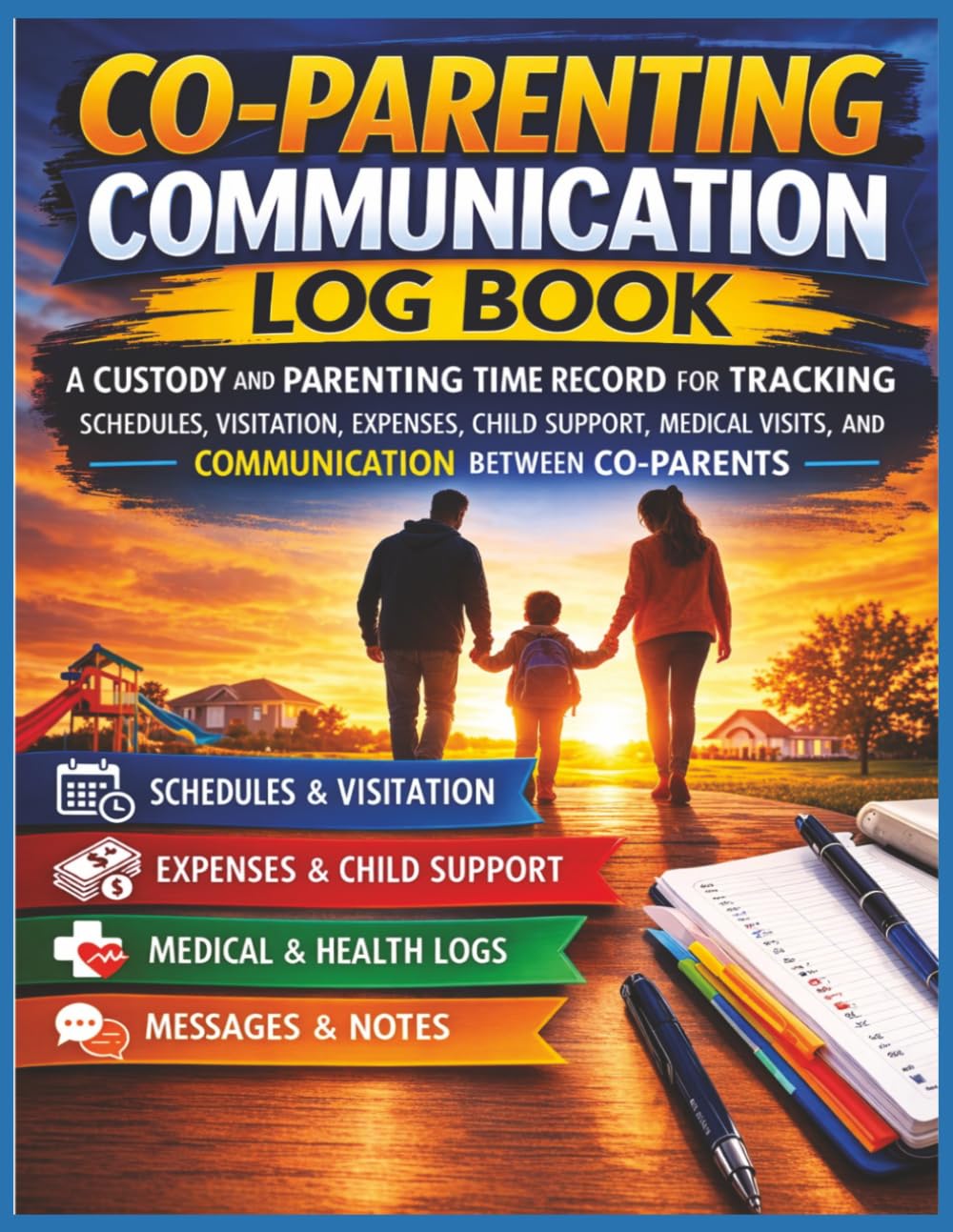
Keeping thorough records from day one is also wise. The Co-Parenting Log helps both parents track visitation, communications, expenses, and medical visits in one place — which becomes invaluable if any legal dispute ever arises.

Co-Parenting Log: Court-Ready Documentation & Planner Track Visitation, Communication, Expenses, Medical Visits & Important Records
- Parenting & Relationships
- Family Relationships
- Image Unavailable Image not available forColor:
3. Communication: The Skill That Makes or Breaks This Arrangement
No matter how warm the friendship between co-parents, raising a child together without romance will test your communication in ways you cannot fully anticipate. Sleep deprivation, differing parenting philosophies, and new life circumstances will all create friction. The families who thrive are the ones who build communication structures before they need them.
Practical communication tools
Scheduled check-ins. A weekly or fortnightly co-parent meeting (even 20 minutes over a video call) keeps both parents aligned on the child's schedule, health, behaviour, and school matters. Doing this proactively means you are not only calling each other when something has gone wrong.
Written records. Relying purely on memory or text threads is a recipe for misunderstanding. A dedicated log book that both parents can access and contribute to reduces conflict and creates a shared picture of the child's life. The Calm and Clear Communication Journal is designed specifically for this — its prompts help co-parents stay factual and constructive rather than reactive.
A communication framework. Some platonic co-parents adapt the "BIFF" model (Brief, Informative, Friendly, Firm) used in high-conflict custody contexts. Even when the relationship is warm, having an agreed framework for discussing difficult topics reduces the chance of a single hard conversation unravelling the whole arrangement.
The skills involved here are the same ones that make any parenting partnership work. The article on active listening habits in parenting offers a practical framework that co-parents can apply directly to their check-in conversations.
Calm and Clear: The Co-Parenting Communication Journal: Less Drama, More Clarity
- Relationships
- Conflict Management
- Image Unavailable Image not available forColor:
4. Child Wellbeing Across the Ages: Newborn to Teen
Children at different developmental stages need different things from their platonic co-parenting arrangement. Here is what to focus on at each stage.
Newborns and infants (0 to 12 months)
The primary task here is secure attachment. Infants do not need to understand family structure — they need consistent, responsive caregiving. Both co-parents should be actively involved in feeding (where possible), settling, and soothing from the earliest weeks. Splitting night feeds across two households is not realistic for very young infants; the primary caregiver in this period should have extended blocks of time with the baby, with the other co-parent offering genuine practical relief rather than just scheduled visits.
Toddlers and preschoolers (1 to 5 years)
Toddlers thrive on predictable routine. This is the stage where a clear, written schedule between households matters most — because a two year old cannot hold ambiguity in mind the way an older child can. Both co-parents should use the same nap times, meal rhythms, and behavioural responses where possible. Disagreements about discipline are extremely common at this stage; working through a shared approach before problems arise saves a lot of distress. Positive parenting principles give both co-parents a shared language for responding to tantrums and testing behaviour without relying on punishment.
School-age children (6 to 12 years)
School aged children are natural comparers. They will notice if the rules are completely different across households, and they will absolutely tell each parent what the other one allows. This is not manipulation — it is developmental. The response is consistency on core values (bedtime, screen time, homework expectations) while allowing each household to have its own personality and rituals. At this stage, children also start asking direct questions about their family structure. Answer honestly and warmly: "We both love you so much that we decided to be a team for you, even though we are not in a romantic relationship."
Teenagers (13 to 17 years)
Teenagers need co-parents who can be a united front on big decisions (which school, which medical treatment, whether they can travel with friends) while also giving them increasing autonomy. Platonic co-parents who have modelled respectful partnership throughout childhood will likely find this stage easier — their teenager has grown up watching two adults manage a relationship through communication and mutual respect rather than conflict. That is a genuinely valuable life lesson.
5. Handling New Romantic Partners and Changing Circumstances
This is the conversation most prospective platonic co-parents avoid, and it is the one most likely to cause serious disruption if not addressed in advance.
When one co-parent starts dating
A new romantic partner introduces a third (or fourth) adult whose values, parenting style, and relationship with your co-parent will affect your child. Your co-parenting agreement should specify:
None of this is about controlling each other's love lives. It is about protecting the predictability your child needs.
Relocation
One co-parent wanting to move cities, states, or countries for work or a new relationship is the most legally fraught scenario in any co-parenting arrangement. If your agreement does not address this, a court will decide for you — and neither of you will like that process. Build a relocation clause in from the beginning, even if you cannot imagine ever wanting to move.
The Child Custody Journal with its 12 month undated calendar is particularly useful here — tracking patterns of involvement, costs, and communications over time builds a record that supports fair negotiation if circumstances change.
6. The Practical Day-to-Day: Tools, Routines, and Real World Logistics
The romantic vision of platonic co-parenting is two adults raising a beautiful child in harmonious partnership. The reality involves school pick-up rosters, paediatric appointment scheduling, disagreements about Halloween costumes, and the occasional month where one co-parent is overwhelmed and the other has to carry more.
Shared documentation
Both parents need access to:
A dedicated log book serves as a single source of truth. The Complete Child Custody Journal at 8.5 by 11 inches gives enough space to track visitation, communication, spending, and child support across the full span of childhood. The Co-Parenting Communication Log Book at 130 pages is a similarly thorough option worth comparing.
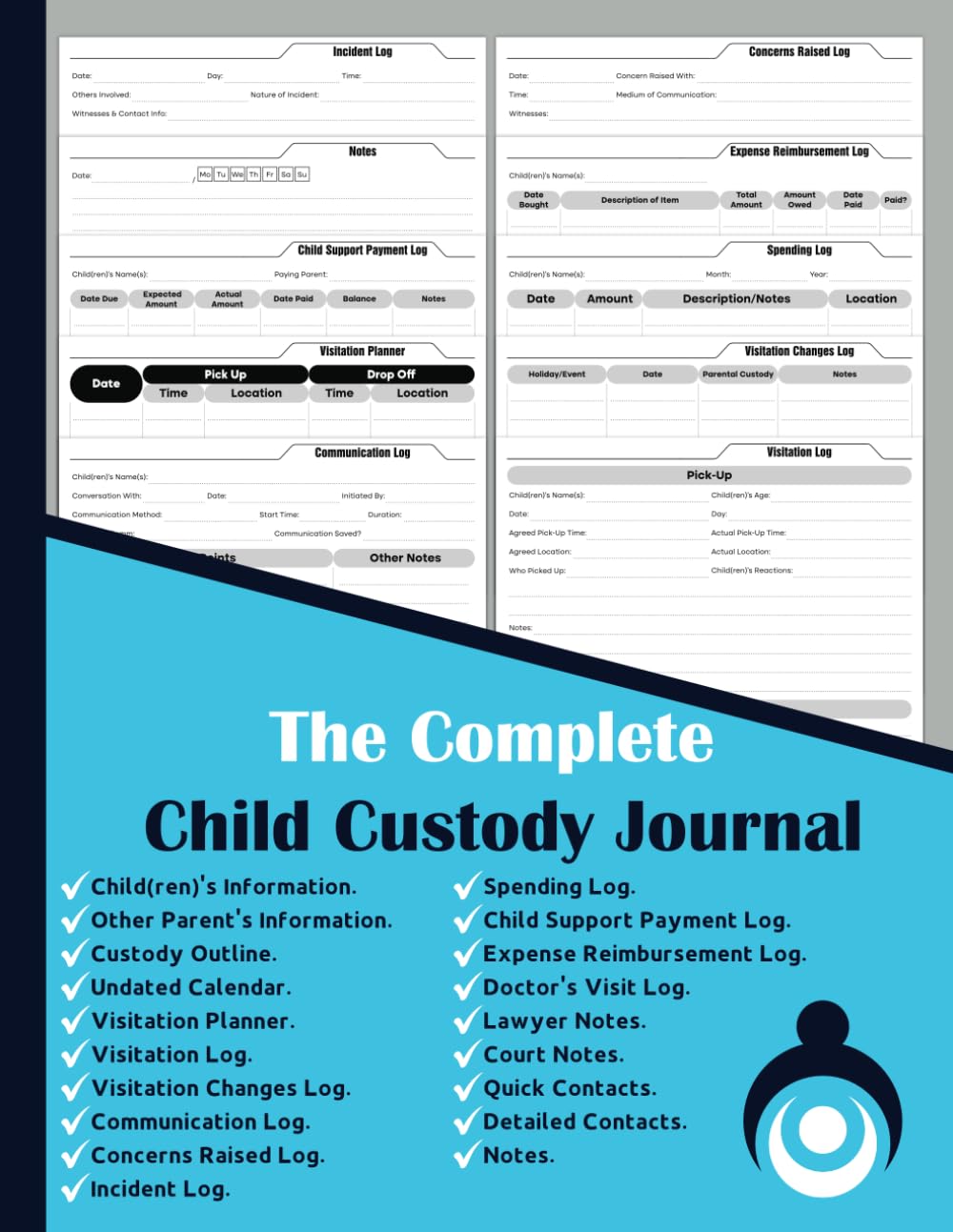
The Complete Child Custody Journal: Your Comprehensive Tool for Documenting Visitation, Communication, Spending, Child Support, and More | Child Custody Organizer | 8.5-inch X 11"-inch
- Parenting & Relationships
- Family Relationships
- Image Unavailable Image not available forColor:
Co-Parenting Communication Log Book: A Custody and Parenting Time Record for Tracking Schedules, Visitation, Expenses, Child Support, Medical Visits, ... Between Co-Parents | 8.5 x 11 | 130 Pages
- Parenting & Relationships
- Family Relationships
- Image Unavailable Image not available forColor:
Financial transparency
Agree in writing on how shared expenses are split and reviewed. Use a shared spreadsheet or a dedicated app (OurFamilyWizard and TalkingParents are two platforms built specifically for co-parents) so neither party feels they are subsidising the other's household. Revisit the financial arrangement every 12 months or whenever a significant change in income occurs.
| Co-Parenting Arrangement Type | Best For | Main Strengths | Main Challenges | Recommended Product |
|---|---|---|---|---|
| Close friends co-parenting | Adults with established trust and shared values | Strong pre-existing communication, genuine friendship as foundation | Friendship dynamics can complicate parenting decisions | Calm and Clear Communication Journal |
| Matched co-parents (via platform) | Single adults or LGBTQ+ individuals without a suitable friend co-parent | Can screen for compatible values and parenting philosophy upfront | Relationship-building takes longer; less inherent trust | Co-Parenting Log |
| Post-separation platonic co-parenting | Former couples who have separated but remain committed parents | Child keeps both parents fully present; adult conflict is separated from parenting | Requires active management of residual romantic conflict | Child Custody Journal |
| Multi-adult co-parenting (3+) | LGBTQ+ families, extended friendship networks | Rich network of support for child; multiple caregiving perspectives | Legal complexity increases; decision making can stall | Co-Parenting Communication Log Book |
| Same-household platonic co-parenting | Adults happy to share a home without romantic relationship | Maximum consistency for the child; lower cost | Requires very clear household boundaries and personal space | Child Custody Log Book |
Expert Insights on Platonic Co-Parenting
Platonic co-parenting asks a lot of the adults involved: clear-eyed honesty, sustained communication, legal diligence, and a genuine commitment to putting a child's needs above personal convenience. But that description also fits the best romantic co-parenting partnerships. The core work is the same.
What platonic co-parenting offers, at its best, is a family built entirely around intention. There is no accidental pregnancy that two reluctant partners are managing. There is no romantic relationship slowly eroding under the weight of parenting stress. There are two (or more) adults who looked at each other and said: I trust you with the most important thing I will ever do.
That is worth something. Children who grow up in it know it, even if they cannot articulate it. Family is not defined by who shares a bed. It is defined by who shows up, consistently, for them.
If this guide has been useful, save it and share it with anyone you know who is exploring what family can look like in 2026. The conversation is only just beginning.
Sources & References
- U.S. Census Bureau. "America's Families and Living Arrangements." 2023. https://www.census.gov/topics/families/families-and-households.html
- Pew Research Center. "Key Facts About Marriage and Cohabitation in the U.S." 2023. https://www.pewresearch.org/short-reads/2023/06/02/key-facts-about-marriage-and-cohabitation-in-the-u-s/
- Amato, Paul R. "The Consequences of Divorce for Adults and Children." Journal of Marriage and Family, Vol. 62, No. 4. 2000.
- Wallerstein, Judith S., Julia M. Lewis, and Sandra Blakeslee. "The Unexpected Legacy of Divorce: A 25 Year Landmark Study." Hyperion, 2000.
- American Academy of Pediatrics (AAP). "Healthy Co-Parenting After Separation." HealthyChildren.org. 2022. https://www.healthychildren.org
- Child Welfare Information Gateway. "Determining the Best Interests of the Child." U.S. Department of Health and Human Services, Children's Bureau. 2021.
- Biblarz, Timothy J., and Judith Stacey. "How Does the Gender of Parents Matter?" Journal of Marriage and Family, Vol. 72, No. 1. 2010.
Frequently Asked Questions
What is the difference between platonic co-parenting and a custody arrangement after divorce?
Do platonic co-parents need to live together?
What legal rights does a platonic co-parent have?
How do you handle it when a platonic co-parent starts a new romantic relationship?
Is platonic co-parenting good for children?
How do I find a platonic co-parent?
What happens if the platonic co-parenting relationship breaks down?
Was this helpful?
Thanks — your feedback helps us pick what to write next.