
What Positive Parenting and Gentle Discipline Actually Mean
Positive parenting and gentle discipline are evidence-based approaches that guide children's behaviour through connection, empathy, and clear boundaries — not punishment — and they work across every age from newborn to teen.
In this article
Picture this: your four-year-old is face-down on the supermarket floor, screaming because you said no to the chocolate bar. Your instinct might be to threaten, bribe, or disappear entirely. Most of us have been there. What research now tells us is that how you respond in that moment — not just what you say, but the warmth underneath it — shapes your child's brain architecture for years to come.
That's not hyperbole. The American Academy of Pediatrics (AAP) reports that children who experience consistent, responsive caregiving in their early years show measurably better outcomes in emotional regulation, academic performance, and mental health well into adolescence. The good news? You don't need a psychology degree. You need a framework.
By the end of this guide, you'll understand:
1. What Positive Parenting and Gentle Discipline Actually Mean
Positive parenting is not the same as permissive parenting — that's the most important myth to clear up first. Permissive parenting means few rules and little follow-through. Positive parenting means clear, consistent boundaries delivered within a relationship built on respect and warmth.
Gentle discipline is the behavioural arm of that philosophy. Rather than asking "how do I make my child stop doing this?", it asks "what is my child trying to communicate, and how do I teach them a better way?" The goal shifts from compliance to competence.
The Five Core Principles
- Empathy first: Validate the feeling before addressing the behaviour ("I can see you're really frustrated") - Respect: Treat your child as a person whose inner experience matters - Positive reinforcement: Notice and name what they're doing right, not just what's going wrong - Connection as the foundation: A child who feels securely attached is far more likely to cooperate - Modelling: You are your child's most-watched teacher, every single day
If you want a readable, clinically grounded starting point, Parenting on Purpose walks through these principles with practical tools for every age stage.
2. What the Research Actually Says
The evidence base for positive, authoritative parenting (the academic term for this style) is robust and spans decades. Studies consistently show it outperforms both authoritarian (high control, low warmth) and permissive (low control, high warmth) approaches.
The science is clear: early experiences — the serve-and-return interactions between children and their caregivers — literally shape brain architecture.
— Center on the Developing Child, Harvard University (2023)
Key findings from the literature:
For a deep dive into the neuroscience behind this, The Whole-Brain Child by Drs Daniel Siegel and Tina Payne Bryson is one of the most clinically respected books in this space.



The Whole-Brain Child: 12 Revolutionary Strategies to Nurture Your Child's Developing Mind
- Health, Fitness & Dieting
- Psychology & Counseling
- Child Psychology
3. Age-by-Age Guide: Newborns to Toddlers (0–3 Years)
In the first three years, positive parenting is almost entirely about responsiveness. Your baby isn't misbehaving — they're communicating. Meeting their needs consistently is not "spoiling" them; it's building the secure base from which all future development launches.
Newborns and Infants (0–12 months)
- Respond promptly to crying — you cannot over-respond at this stage - Make eye contact, narrate your actions, mirror their expressions - Skin-to-skin contact and consistent routines build felt safety
Toddlers (1–3 years)
Toddlerhood is the first real test of gentle discipline, and it's intense. Toddlers are neurologically incapable of full impulse control — the prefrontal cortex (the brain's "brakes") won't be fully developed until their mid-twenties.
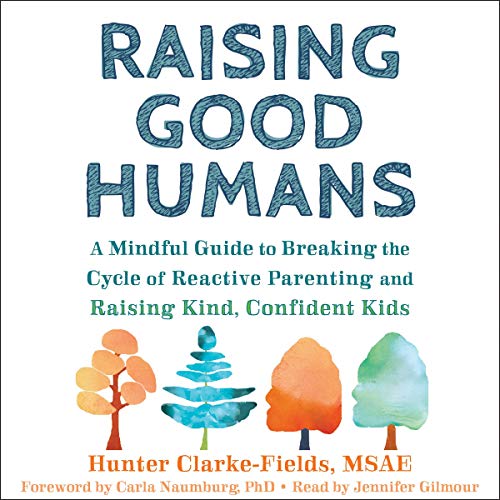
Raising Good Humans is available free for 30 days and has an excellent section on breaking reactive patterns with very young children.
4. Age-by-Age Guide: Pre-Schoolers and School-Age Children (3–8 Years)
This window is where children begin testing boundaries in earnest — and where gentle discipline's collaborative tools really start to shine.
Pre-schoolers (3–5 years)
- Natural and logical consequences replace arbitrary punishment. If they throw their toy, the toy goes away for the rest of the day — that's logical, not punitive - Emotion coaching (a term coined by psychologist John Gottman, PhD): help them build a feelings vocabulary - Consistent routines reduce power struggles because the routine, not the parent, becomes the authority
Early School Age (6–8 years)
Children at this stage can engage in genuine problem-solving conversations. Use them.


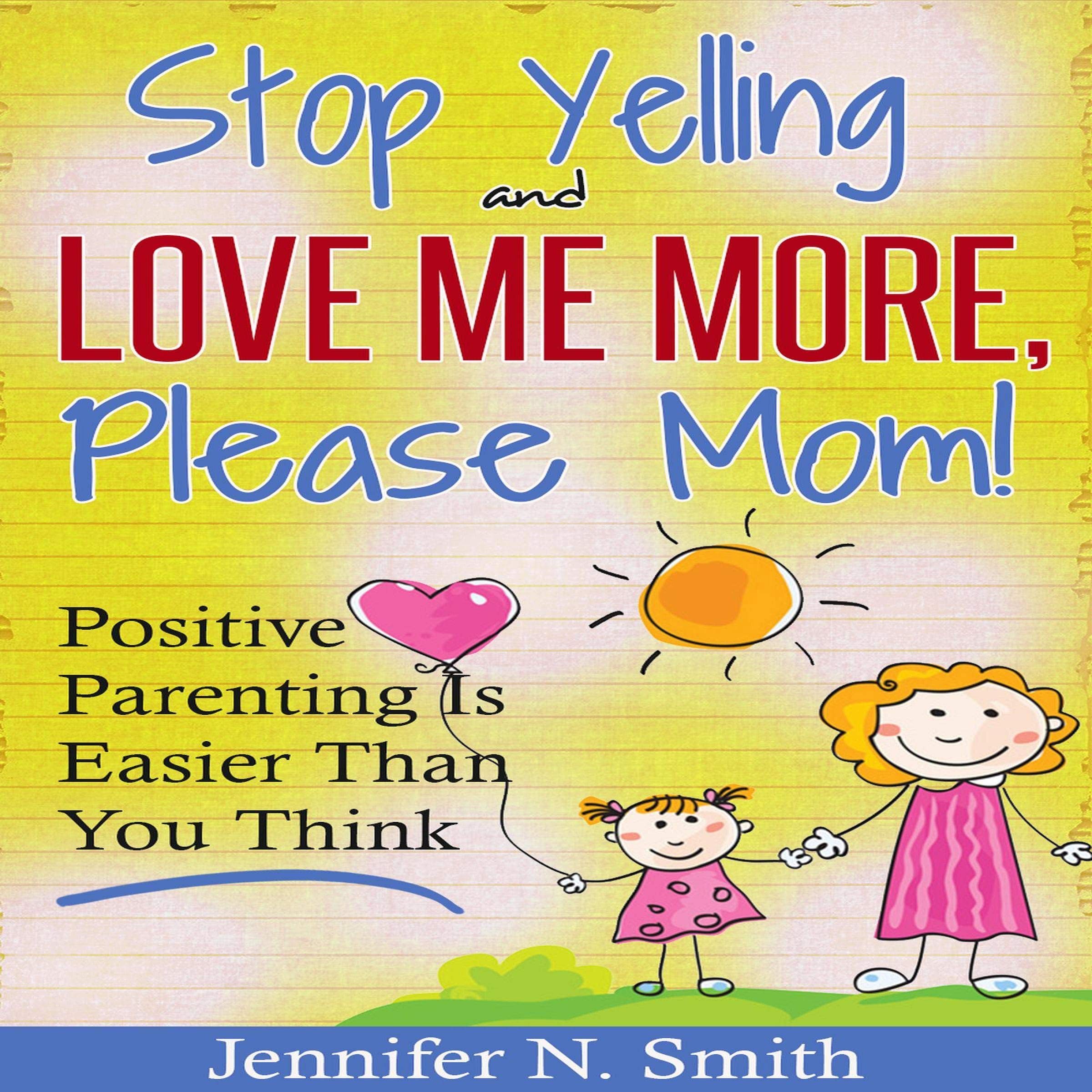
Stop Yelling and Love Me More, Please Mom.: Positive Parenting Is Easier than You Think: Happy Mom, Book 1
- Parenting & Relationships
- Family Relationships
- Motherhood
Parents who find themselves raising their voice more than they'd like will find Stop Yelling and Love Me More, Please Mom a practical and non-judgmental read.
5. Age-by-Age Guide: Tweens and Teens (9–17 Years)
Here's where many parents panic — and where the relationship you've built in earlier years pays dividends. Adolescents are not broken. They are developmentally wired to seek autonomy, test limits, and prioritise peers. Your job shifts from manager to consultant.
Tweens (9–12 years)
- Keep communication lines open even when it's uncomfortable — the parent who listens without immediately fixing or judging is the one teens keep talking to - Negotiate non-negotiables vs. negotiables: safety is non-negotiable; bedroom tidiness might be negotiable - Acknowledge their growing competence: give more responsibility as they demonstrate readiness
Teenagers (13–17 years)
Managing your own emotional reactions is critical here. Practical Anger Management for Parents offers 44 concrete techniques for staying regulated when your teenager has just slammed their door for the third time.

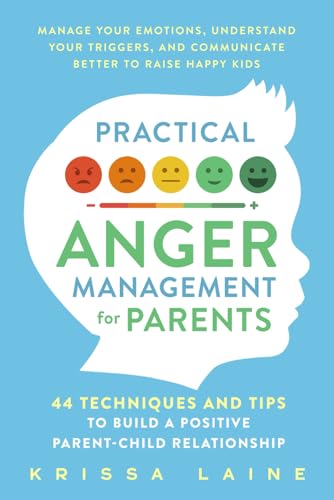
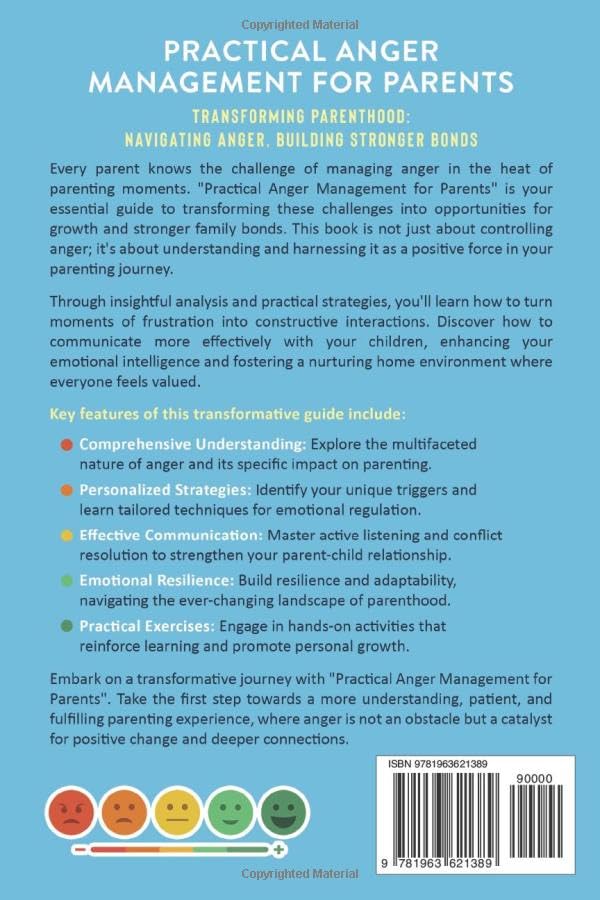
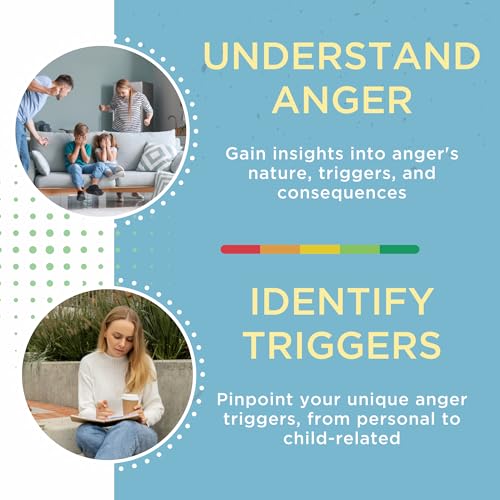
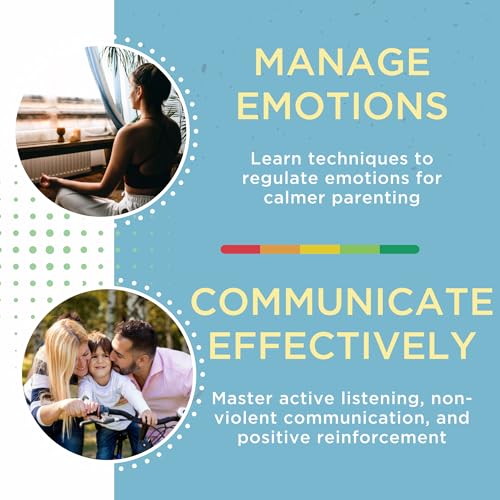
Practical Anger Management for Parents: 44 Techniques & Tips to Build a Positive Parent-Child Relationship. Manage Your Emotions, Understand Your Triggers, & Communicate Better to Raise Happy Kids
- Health, Fitness & Dieting
- Psychology & Counseling
- Personality
6. The Hard Moments: Handling Misbehaviour Without Losing Yourself
Every parent loses it sometimes. The goal is not perfection — it's a pattern of repair and return. Here's a practical framework for the moments that push you to your edge.
The PACE Approach (adapted from Dr Dan Hughes, clinical psychologist)
- Playfulness: Where appropriate, light humour defuses tension - Acceptance: Accept the child, even while not accepting the behaviour - Curiosity: Get genuinely curious about what's driving the behaviour - Empathy: Communicate that you understand their inner world
When You've Overreacted
1. Regulate yourself first — you cannot co-regulate a dysregulated child if you're dysregulated yourself 2. Return and repair: "I raised my voice and that wasn't okay. I'm sorry." 3. Problem-solve together: "What could we both do differently next time?"
Children need love, especially when they do not deserve it.
— Harold Hulbert, child psychiatrist (widely attributed)
For parents who find reactive patterns hard to break, Raising Good Humans and 8 Errors Parents Make and How to Avoid Them both address the cycle of reactivity with compassion and practical steps.

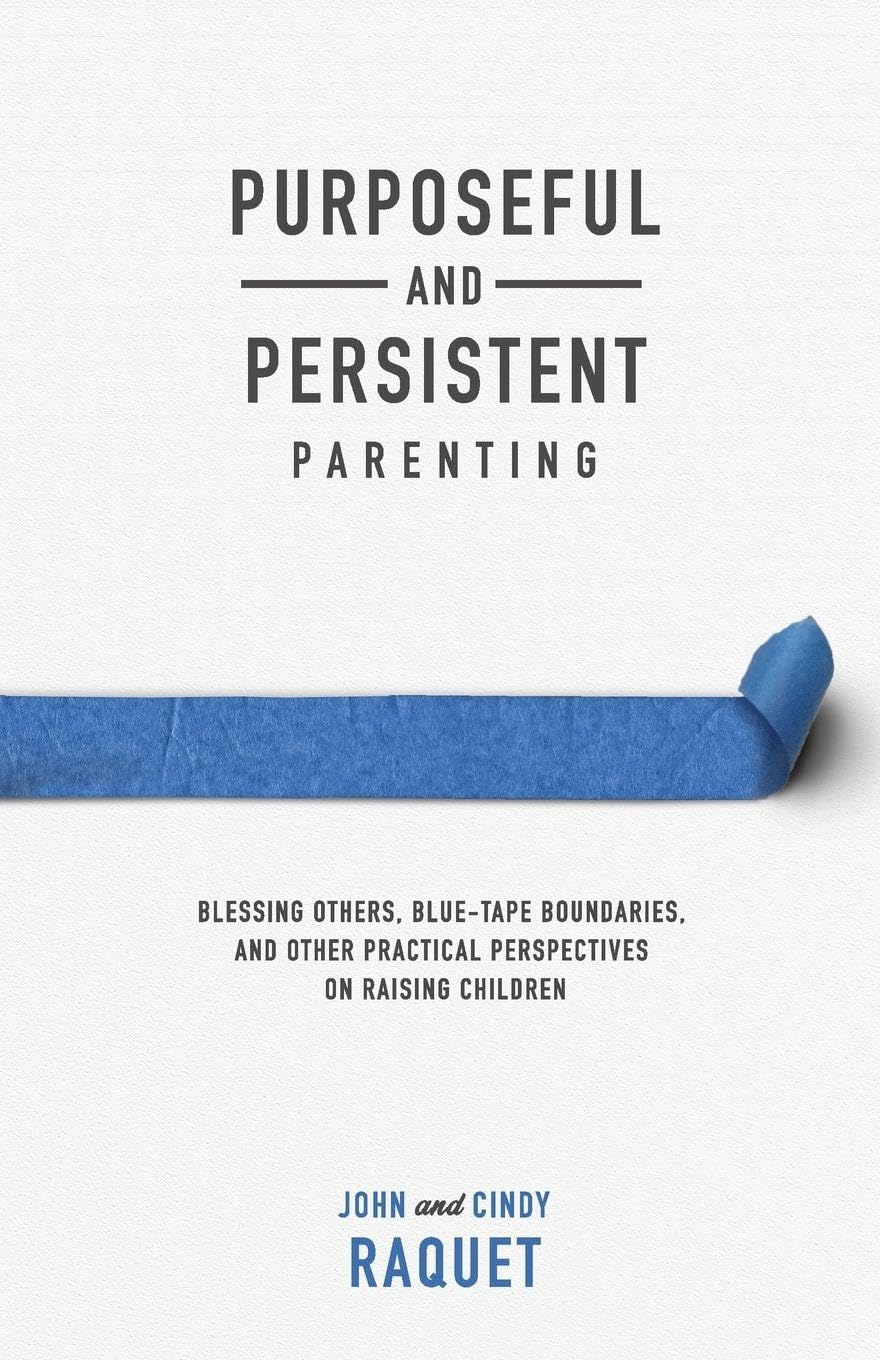

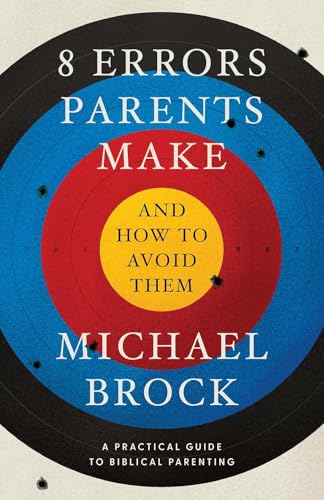
8 Errors Parents Make and How to Avoid Them: Parenting Book, Practical Guide for Christian Parenting, Positive Parenting Book for Parents
- Parenting & Relationships
- Image Unavailable Image not available forColor:
- Publisher : Canon Press
7. Comparison: Parenting Approaches at a Glance
| Parenting Style | Warmth Level | Boundary Level | Typical Outcome | Recommended Resource |
|---|---|---|---|---|
| Authoritative (Positive) | High | High | Best outcomes: confident, emotionally regulated kids | Parenting on Purpose |
| Authoritarian (Strict) | Low | High | Compliant but higher anxiety; less self-regulation | 8 Errors Parents Make |
| Permissive | High | Low | Warm relationship; struggles with self-discipline | Stop Yelling and Love Me More |
| Uninvolved | Low | Low | Poorest outcomes across all domains | Practical Anger Management for Parents |
| Gentle Discipline (subset of Authoritative) | High | High (flexible) | Strong emotional intelligence; cooperative behaviour | The Whole-Brain Child |
| Reactive/Inconsistent | Variable | Variable | Unpredictable; children learn to escalate to get response | Raising Good Humans |
8. Expert Insights
Parenting is the longest relationship you'll ever be in, and like any relationship, it's built in the ordinary moments — the bedtime routines, the car rides, the times you stayed calm when you really didn't want to. Positive parenting isn't a performance standard; it's a direction of travel. Some days you'll nail it. Other days you'll apologise and try again. Both matter equally.
The most quotable truth in all of developmental science might be this: children don't need perfect parents — they need present, repairing ones.
If this guide helped you, save it for the hard days, share it with your co-parent, or pass it to a friend who's in the thick of it. You're already doing better than you think.
Sources & References
- American Academy of Pediatrics. "Effective Discipline to Raise Healthy Children." Pediatrics, 2018. https://publications.aap.org/pediatrics/article/142/6/e20183112/37260
- Center on the Developing Child, Harvard University. "Serve and Return Interaction Shapes Brain Circuitry." 2023. https://developingchild.harvard.edu/science/key-concepts/serve-and-return/
- Steinberg, L. "We Know Some Things: Parent–Adolescent Relationships in Retrospect and Prospect." Journal of Research on Adolescence, 2001. https://doi.org/10.1111/1532-7795.00001
- Siegel, D.J. & Bryson, T.P. The Whole-Brain Child. Delacorte Press, 2011.
- Bowlby, J. Attachment and Loss, Vol. 1: Attachment. Basic Books, 1969.
- Ainsworth, M.D.S. et al. Patterns of Attachment. Lawrence Erlbaum Associates, 1978.
- Gottman, J. & DeClaire, J. Raising an Emotionally Intelligent Child. Simon & Schuster, 1997.
- Hughes, D.A. Attachment-Focused Parenting. W.W. Norton & Company, 2009.
- World Health Organization. "Nurturing Care for Early Childhood Development." 2018. https://www.who.int/publications/i/item/9789241514064
Frequently Asked Questions
Is gentle discipline the same as letting children do whatever they want?
What do I do when my child has a full meltdown in public?
At what age can I start using natural consequences?
My partner uses a different discipline style — how do we get on the same page?
Does positive parenting work for children with ADHD or sensory needs?
How long does it take to see results from positive parenting?
Is it too late to start if my child is already a teenager?
Was this helpful?
Thanks — your feedback helps us pick what to write next.