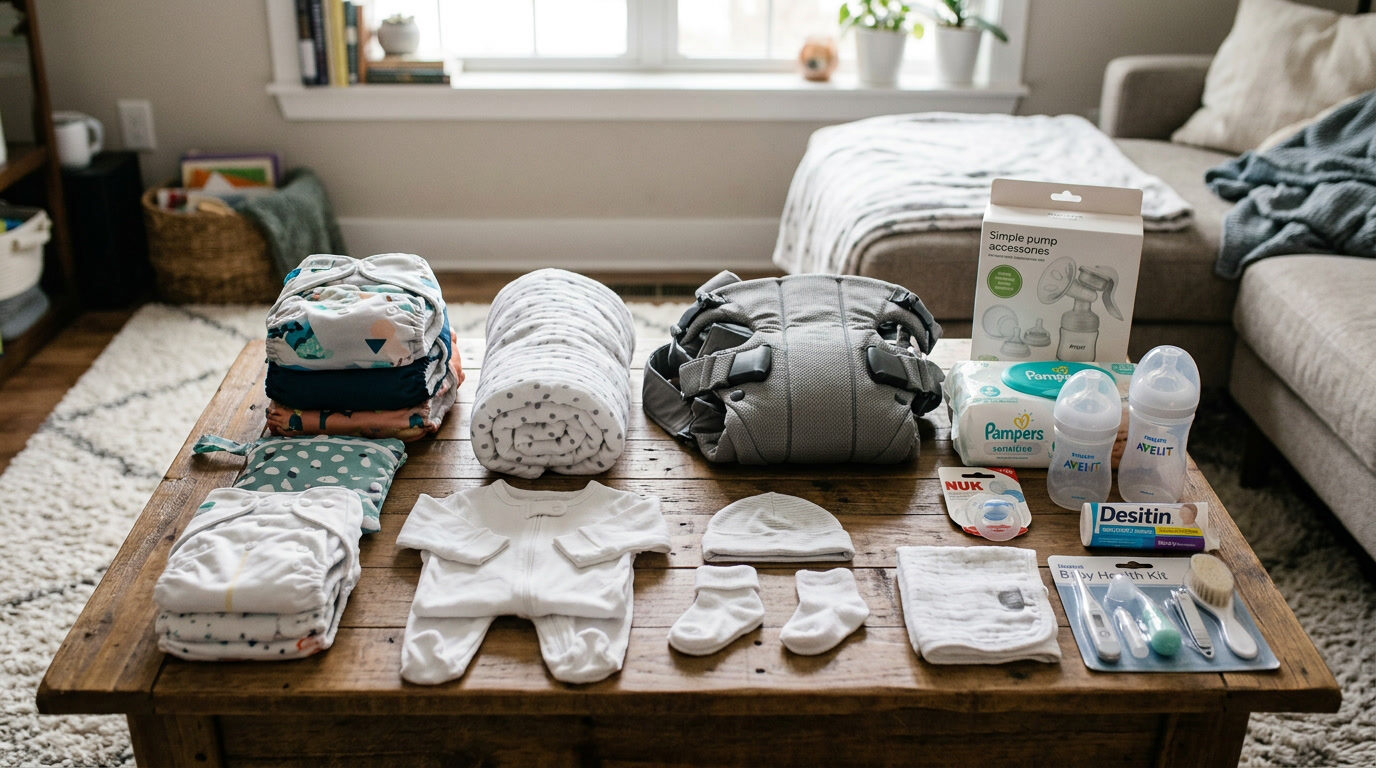
Safe Sleep: The Single Highest-Impact Thing You Can Do
The last trimester through your baby's first three months is one of the highest-stakes windows for health and safety — knowing the evidence-based essentials for safe sleep, feeding, newborn care, and danger signs can genuinely save your baby's life.
In this article
You're somewhere between 28 weeks pregnant and three months postpartum — a window that feels both miraculous and genuinely terrifying. According to the CDC, approximately 3,400 sleep-related infant deaths occur in the United States every year, and many are preventable. Meanwhile, the AAP reports that car crashes are a leading cause of injury death in children under one. The good news: the evidence on keeping newborns safe is clearer than ever, and acting on it is mostly free.
In this guide you'll understand:
1. Safe Sleep: The Single Highest-Impact Thing You Can Do
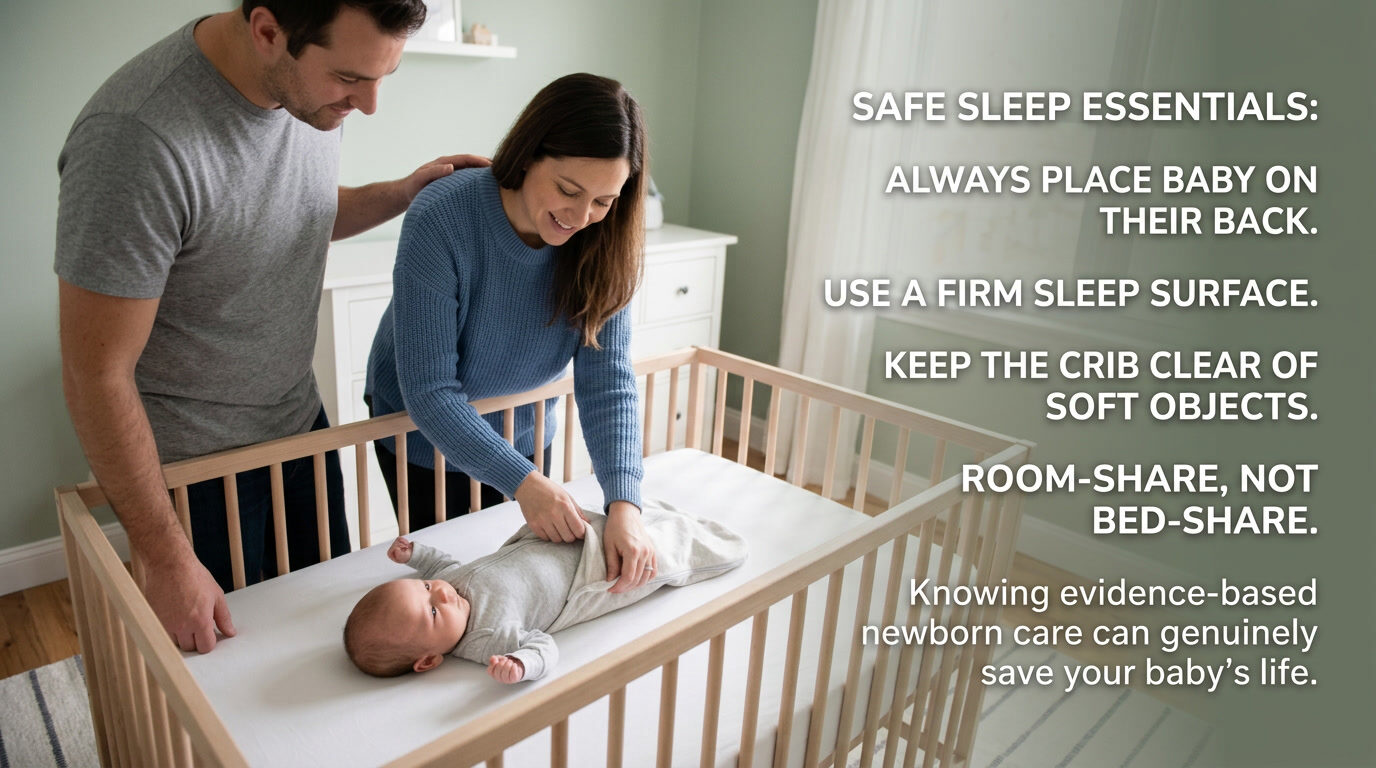
The safest place for your newborn to sleep is on their back, on a firm flat surface, in their own sleep space — every single time, for every sleep.
This is not a preference or a style choice. The American Academy of Pediatrics (AAP) updated its safe sleep guidelines in 2022, and the evidence is unambiguous: placing a baby on their back to sleep reduces the risk of Sudden Infant Death Syndrome (SIDS) by more than 50% compared with stomach sleeping.
The ABCs of Safe Sleep
The AAP's framework is easy to remember: - A — Alone (no bed-sharing, no sofa sleeping) - B — Back (every sleep, every time, until age one) - C — Crib or bassinet (firm, flat, no inclined surfaces)
Soft bedding, including pillows, quilts, comforters, and bumper pads, continues to be associated with SIDS and suffocation deaths.
— American Academy of Pediatrics (2022)
What the Sleep Space Should Look Like
2. Feeding Your Newborn: Breast, Formula, or Both
Whether you breastfeed, formula-feed, or combine both, your baby's nutritional safety comes down to doing it correctly and responsively.
The World Health Organization (WHO) and UNICEF recommend exclusive breastfeeding for the first six months of life, followed by continued breastfeeding alongside complementary foods up to two years. That said, formula feeding is nutritionally complete and medically safe — the most important thing is that your baby is fed adequately and consistently.
Breastfeeding Safety Basics
Formula Feeding Safety
3. Newborn Grooming and Daily Care: What You Actually Need
Newborn daily care — nail trimming, nasal clearing, temperature-taking — sounds minor until your baby has a blocked nose at 2 a.m. and you can't find anything in the dark.
Having the right tools, clean and organised, is a genuine safety issue. Improvised nail-cutting with adult scissors causes lacerations. Untreated blocked nasal passages in newborns (obligate nose-breathers for the first months) can interfere with feeding.
The Core Kit
A good baby grooming kit should include:
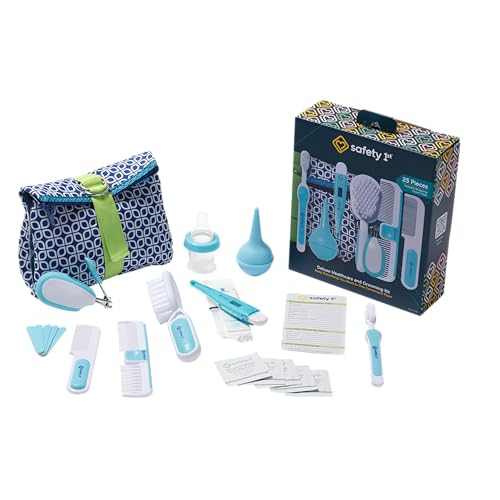
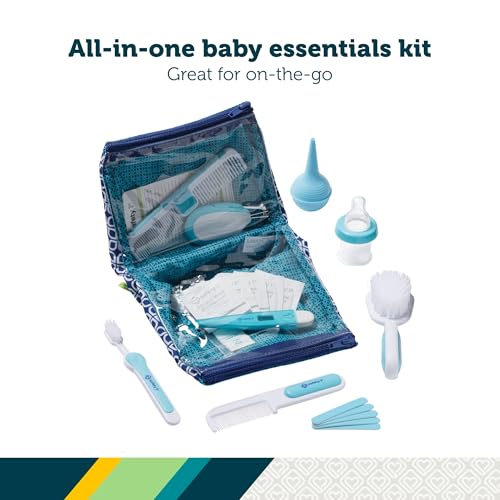
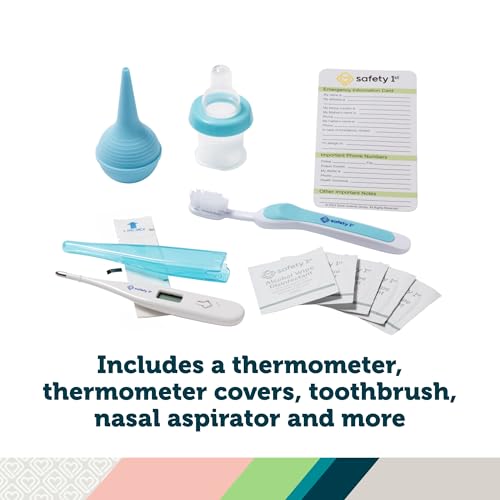

Safety 1st Deluxe Baby Healthcare and Grooming Kit, Arctic Blue, Newborn Baby Essentials, One Size, 25 Pieces
- BABY GROOMING KIT: This baby care kit provides essential grooming tools for newborns and infants, including a
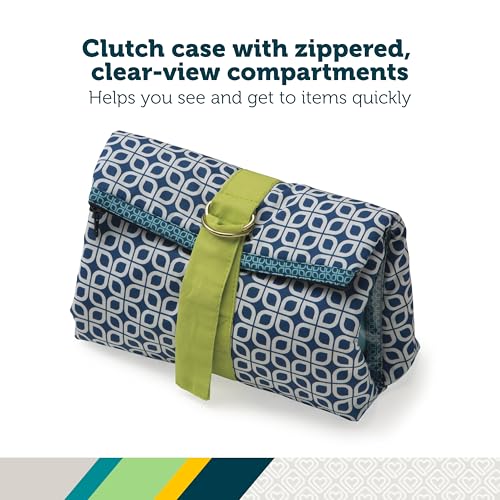
- EASY ORGANIZATION WITH SAFETY 1ST: This deluxe baby grooming kit comes in a wrapping clutch case with two easy
- BABY ESSENTIALS: Our baby grooming kit newborn features an easy-grip brush will softly remove tangles, and the
The Safety 1st Deluxe Baby Healthcare Kit is one of the most comprehensive options available — 25 pieces including a nasal aspirator, toddler toothbrush, and bottle dispenser, all in an organised clutch case. With nearly 29,000 reviews at 4.8 stars, it's one of the most trusted kits on the market.
For a leaner, budget-friendly option, the WXA 14-in-1 Baby Grooming Kit covers the daily essentials in a portable EVA bag — useful for the nappy bag as well as home.
Handling a Stuffy Nose Safely
Newborns are obligate nasal breathers, meaning a blocked nose can genuinely interfere with feeding and sleep. The Little Remedies New Baby Essentials Kit includes saline nasal spray alongside gas relief drops and gripe water — a sensible first-response kit for common newborn symptoms. Saline drops followed by gentle aspiration (3–5 minutes before feeds) is the AAP-recommended approach for nasal congestion in newborns.
4. Recognising Red-Flag Symptoms: When to Call, When to Go
Knowing which symptoms need a same-day call to your paediatrician versus an immediate 999/911 call is one of the most practical safety skills a new parent can have.
Go to Emergency Immediately
Fever in a neonate (under 28 days) should always be treated as a potential serious bacterial infection until proven otherwise.
— NICE Guideline NG143, Fever in Under 5s (2021)
Call Your Paediatrician Same Day
5. Car Seat Safety: Before You Leave the Hospital
Your baby cannot legally or safely leave the hospital without being in a correctly installed rear-facing car seat — and correct installation is less common than you'd think.
The AAP and the National Highway Traffic Safety Administration (NHTSA) report that up to 59% of car seats are installed or used incorrectly. This is not a minor technicality: a misused car seat provides dramatically less protection in a crash.
Getting It Right
In the Third Trimester
If you're still in the last trimester, now is the time to:
6. Maternal Mental Health: A Safety Issue, Not a Side Issue
Your mental health is a direct safety variable for your newborn. A parent experiencing untreated postnatal depression or anxiety is at higher risk of delayed response to infant cues, reduced safe sleep compliance, and impaired decision-making.
The Royal College of Psychiatrists estimates that 1 in 10 women develop postnatal depression, and up to 1 in 5 experience some form of perinatal mental health difficulty. Partners are affected too — paternal postnatal depression is estimated at around 1 in 10.
Signs That Warrant Support
7. Third-Trimester Prep: The Safety Checklist Before Baby Arrives
The safest newborn is one whose home was prepared before they arrived, not scrambled together in the first exhausted week.
Before 37 Weeks: Your Safety Prep List


Baby Healthcare and Grooming Kit for Newborn Kids, 24PCS Upgraded Safety Baby Care Kit, Newborn Nursery Health Care Set, Baby Care Product (Grey White)
- 【Baby Health Essentials Kit】24 in 1 baby grooming kit includes a baby hair brush and comb, baby nail file, bab
- 【Safe and Environmental Baby Grooming Kit】The baby care kit is made of premium stainless steel and BPA-free pl
- 【Intimate Design for Babies】Small and flexible tip of the nasal aspirator is more suitable for the baby’s nose
The POPYJAN 24-in-1 Baby Healthcare Kit is a well-priced option that covers grooming, oral care, and temperature monitoring in one organised set — a solid choice for the hospital bag or the nursery shelf. Its silicone tongue cleaner and accurate medicine dropper are particularly useful in the first weeks.
For parents who want a ready-to-go symptom-management kit alongside grooming tools, the Little Remedies New Baby Essentials Kit pairs saline spray, gas drops, and diaper rash cream in one box — exactly the kind of thing you'll be grateful for at midnight.
Newborn Care Kit Comparison
| Kit Option | Piece Count | Key Safety Features | Best For | Recommended Product | Price |
|---|---|---|---|---|---|
| WXA 14-in-1 Grooming Kit | 14 pieces | BPA-free, stainless steel tools, nasal aspirator | Budget-conscious parents, nappy bag use | WXA Baby Grooming Kit | $9.97 |
| Safety 1st Deluxe Kit | 25 pieces | Organised clutch case, nasal aspirator, toothbrush | First-time parents wanting comprehensive coverage | Safety 1st Deluxe Kit | $16.09 |
| Little Remedies Essentials Kit | Multi-item | Saline spray, gas drops, gripe water, diaper cream | Symptom management + grooming combo | Little Remedies Kit | $24.99 |
| POPYJAN 24-in-1 Kit | 24 pieces | Silicone oral care, accurate dropper, rounded scissors | Parents wanting most tools in one set | POPYJAN 24-in-1 Kit | $9.98 |
| YASEW Kit with Thermometer | 13+ pieces | Includes digital thermometer + pacifier clip | Parents prioritising temperature monitoring | YASEW Kit with Thermometer | $13.99 |
| UHFi 13-in-1 Portable Kit | 13 pieces | Compact, lightweight, full daily-care coverage | Hospital bag, travel, minimalist parents | UHFi Portable Kit | $9.99 |
Expert Insights
The weeks between your third trimester and your baby's third month will be some of the most intense of your life. You won't get everything perfect — no parent does — but the evidence on keeping newborns safe is remarkably clear, and most of it costs nothing but attention. Safe sleep, responsive feeding, knowing your red flags, and asking for help when you're struggling: these are the pillars. Everything else is detail.
The most important thing you can do for your baby's safety is to learn it before you need it.
If this guide helped you feel more prepared, save it, share it with your co-parent or birth partner, and come back to it in the foggy newborn days when you need a quick reference. You've got this.
Sources & References
- American Academy of Pediatrics. "Safe Sleep: Recommendations for a Safe Infant Sleeping Environment." Pediatrics, 2022. https://publications.aap.org/pediatrics/article/150/1/e2022057990/188304
- American Academy of Pediatrics. "Car Safety Seats: Information for Families." HealthyChildren.org, 2023. https://www.healthychildren.org/English/safety-prevention/on-the-go/Pages/Car-Safety-Seats-Information-for-Families.aspx
- World Health Organization. "Breastfeeding." WHO Fact Sheet, 2023. https://www.who.int/news-room/fact-sheets/detail/breastfeeding
- Centers for Disease Control and Prevention. "Sudden Unexpected Infant Death and Sudden Infant Death Syndrome." CDC, 2023. https://www.cdc.gov/sids/index.htm
- National Highway Traffic Safety Administration. "Child Car Seat Inspection Statistics." NHTSA, 2022. https://www.nhtsa.gov/equipment/car-seats-and-booster-seats
- NICE. "Fever in Under 5s: Assessment and Initial Management." NICE Guideline NG143, 2021. https://www.nice.org.uk/guidance/ng143
- Royal College of Psychiatrists. "Perinatal Mental Health." Position Statement PS02/21, 2021. https://www.rcpsych.ac.uk/improving-care/campaigning-for-better-mental-health-policy/position-statements/ps02-21
- World Health Organization. "Recommendations on Newborn Health." WHO Guidelines, 2017. https://www.who.int/publications/i/item/WHO-MCA-17.07
Frequently Asked Questions
What temperature should I worry about in a newborn?
Is it safe to let my newborn sleep in a swing or bouncer?
When should I give my newborn their first bath?
How do I know if my baby is eating enough?
Can I use a baby grooming kit from day one?
What is the safest way to take a newborn's temperature?
When should I start thinking about baby-proofing?
Was this helpful?
Thanks — your feedback helps us pick what to write next.