What Your Body Is Already Making: Third-Trimester Nutrition and Colostrum
In the last trimester and first three months of life, your baby's nutritional needs are best met through breastfeeding or iron-fortified formula — and your comfort, positioning, and confidence are the biggest factors in making feeding work.

In this article
You're in the final stretch of pregnancy or you've just brought a tiny human home — and suddenly every feeding decision feels enormous. Here's a grounding fact: according to the World Health Organization, exclusive breastfeeding for the first six months of life could prevent an estimated 820,000 child deaths globally each year. That number isn't shared to pressure you; it's shared so you understand why the guidance exists, and why getting feeding right in these first weeks genuinely matters.
This guide will help you understand:
1. What Your Body Is Already Making: Third-Trimester Nutrition and Colostrum
Your nutritional job in the third trimester is to support your baby's final organ maturation — and to prime your own body for milk production.
From around 16 weeks of pregnancy your breasts begin producing colostrum, a thick, golden pre-milk that is present and ready well before your due date. It's small in volume (typically 2–10 ml per feed in the first 24 hours) but extraordinarily concentrated. The American Academy of Pediatrics (AAP) describes colostrum as a "perfect first food," rich in secretory IgA antibodies, white blood cells, growth factors, and a natural laxative that helps clear meconium from your newborn's gut.
What to eat in the third trimester
Your caloric needs increase by roughly 300–450 kcal/day in the third trimester (NHS guidance). More important than calories, though, are specific nutrients:
- Iron: Supports baby's brain development and builds stores for the first six months of life. Lean red meat, lentils, fortified cereals. - DHA (omega-3): Critical for fetal brain and retinal development. Oily fish 1–2 times per week, or a pregnancy-safe DHA supplement. - Choline: Often overlooked; supports neural tube closure and memory development. Eggs, liver, soybeans. - Calcium and Vitamin D: Baby takes what it needs from your bones if you don't eat enough. Dairy, fortified plant milks, safe sun exposure.
2. Breastfeeding Basics: Latch, Positions, and the First 48 Hours
A good latch is the single biggest determinant of whether breastfeeding is painful or painless — and most latch problems are fixable.
The first hour after birth is called the "golden hour." The AAP recommends skin-to-skin contact and the first breastfeed within 60 minutes of an uncomplicated birth. Your baby is born with a strong rooting reflex and will often self-attach if placed on your chest.
Signs of a correct latch
Feeding positions
Different positions work for different body types, birth experiences, and baby temperaments. The cross-cradle and football hold give you the most control over head positioning in the early days. Side-lying is a lifesaver after a caesarean section.
Whatever position you choose, getting baby to breast height — rather than hunching down to baby — protects your back, neck, and shoulders for the long feeds ahead. A well-designed nursing pillow is genuinely one of the highest-ROI items on your registry.


My Brest Friend Nursing Pillow - Deluxe - Enhanced Comfort w/ Slipcover - Ergonomic Breastfeeding Pillow For Ultimate Support For Mom & Baby - Adjustable Pillow W/ Handy Side Pocket, Soft Rose
- 100% Polyester, 100% Polyurethane Foam
- ERGONOMIC DESIGN: Elevate your nursing journey with our unique nursing pillow. The wrap-around feature ensures
- GAP-FREE FEEDING: Our firm flat cushion eliminates gaps common in crescent and U-shaped pillows, ensuring secu
3. How Often, How Long, and How to Know It's Working
Newborns feed 8–12 times in 24 hours — which means you are feeding roughly every 2–3 hours, around the clock, in the first weeks.
This is biologically normal and serves two purposes: it meets your baby's high caloric needs relative to their tiny stomach capacity, and it signals your body to ramp up milk production. Milk supply is driven by demand — the more frequently and effectively baby feeds, the more milk you make.
Tracking output: the wet nappy rule
The most reliable home check for adequate intake is nappy output:
- Day 1–2: 1–2 wet nappies per day (colostrum volume is low — this is normal) - Day 3–4: 3–4 wet nappies as milk "comes in" - Day 5 onward: 6+ wet nappies per 24 hours, pale yellow urine
Exclusive breastfeeding for six months is the optimal way of feeding infants. Thereafter infants should receive complementary foods with continued breastfeeding up to 2 years of age or beyond.
— World Health Organization (2023)
Weight loss and regain
Most newborns lose 5–7% of birth weight in the first few days; up to 10% is within normal range. Your baby should return to birth weight by 10–14 days. If they haven't, see your midwife, health visitor, or paediatrician promptly — this is the clearest early signal that intake needs to be assessed.
4. Breastfeeding Comfort: Positions, Pillows, and Preventing Common Problems
Sustained discomfort is the number-one reason parents stop breastfeeding earlier than they intended — and most of that discomfort is preventable.
The average newborn spends 20–45 minutes per feed. Multiply that by 10 feeds a day and you're looking at 3–7 hours of nursing daily. Your posture during those hours matters enormously.
The ergonomics of feeding
Sit with your back fully supported. Bring the pillow — and therefore baby — to your breast, not your breast down to baby. Your shoulders should be relaxed, not raised. Your wrists should not be bearing your baby's weight for the duration of the feed.
A nursing pillow with a safety guard prevents the subtle, exhausting muscle tension that builds over weeks of feeding. The Momcozy Memory Foam Nursing Pillow uses firm memory foam to maintain height and position without deflating mid-feed — particularly useful in the early weeks when you're still mastering the latch.
For parents who prefer a more budget-friendly option, the Chilling Home Nursing Pillow features a three-sided safety fence and adjustable fill so you can customise the height to your body.
Common breastfeeding problems and what to do
- Engorgement (days 3–5): Feed frequently, hand-express a little before latching to soften the areola, apply a cool cloth after feeds. - Blocked ducts: Firm, tender lump in the breast. Feed from that side first, gently massage toward the nipple during feeds. - Mastitis: Blocked duct that becomes infected — red, hot, flu-like symptoms. Continue feeding (it's safe), contact your GP or midwife within 24 hours. - Nipple thrush: Burning pain after feeds, shiny or flaky nipple skin. Needs antifungal treatment for both you and baby.


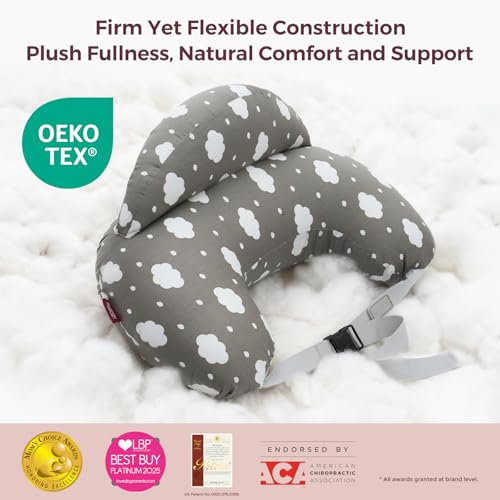
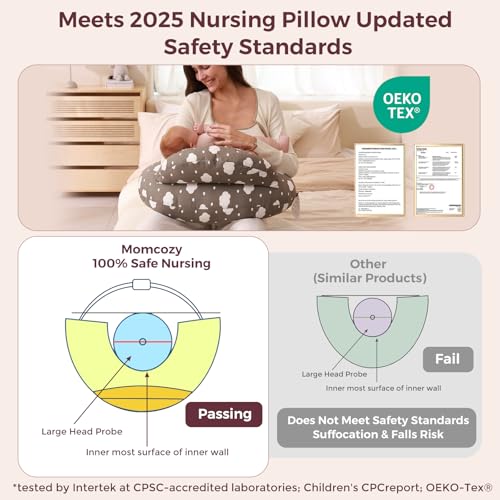
Momcozy Original Nursing Pillow for Breastfeeding-Innovative Safety Guard - Wider Feeding Pillows for More Support for Mom & Baby- Easier Nursing & Hand Free- Fit for All, Removable Cotton Cover
- Easy Deep Latch for Baby, Stress-Free Nursing for Mom:Momcozy nursing pillow provides great support for mom an
- The Innovative " Safety Guard " Design , Prevent Baby From Slipping and Feeding Safer & More at Ease:Inspired
- Widen Design for All Around Support and Adjustable for Most Bodies: Through the feedback of many customers, we
5. Formula Feeding: When, Which, and How to Do It Well
Formula is a nutritionally complete alternative to breast milk, and choosing it — for any reason — does not make you a lesser parent.
The AAP and WHO both recommend breast milk as the first choice, but both organisations also recognise that formula feeding is a safe, valid option. Situations where formula may be the right choice include:
Choosing a formula
In most countries, infant formula is tightly regulated. The primary types:
- Cow's milk–based formula: Appropriate for the vast majority of newborns. Look for one with added DHA and ARA (fatty acids important for brain development). - Partially hydrolysed ("comfort") formula: Proteins are partially broken down; sometimes recommended for mild reflux or wind. - Extensively hydrolysed or amino acid–based formula: For confirmed cow's milk protein allergy — only on medical advice.
Avoid: goat's milk formula unless it meets the same regulatory standards as cow's milk formula in your country. Homemade formula is never safe — it cannot replicate the precise nutrient balance of commercial products.
Responsive bottle feeding
Whether you're formula feeding or offering expressed milk, responsive (paced) bottle feeding matters. Hold the bottle horizontal, allow baby to draw milk at their own pace, and pause mid-feed. This prevents overfeeding and preserves the baby's ability to self-regulate hunger — a skill that matters for years to come.
The PILLANI Nursing Pillow works just as well for bottle feeding as for breastfeeding, freeing one hand while keeping baby at the ideal angle.
6. Nursing Pillow Comparison: Finding the Right Support for You
| Nursing Pillow | Best For | Key Feature | Firmness | Safety Guard | Recommended Product | Price |
|---|---|---|---|---|---|---|
| PILLANI Nursing Pillow | Budget-conscious families, bottle + breast | Adjustable waist strap, C-shaped base | Medium | ✓ Yes | PILLANI Nursing Pillow | $32.39 |
| Momcozy Memory Foam (Deluxe) | Parents with back/shoulder pain | 100% memory foam, 28% wider surface | Firm | ✓ Yes | Momcozy Memory Foam Nursing Pillow | $54.99 |
| Momcozy Original | Most body types, all-day use | Widened sides, adjustable strap | Medium-firm | ✓ Yes | Momcozy Original Nursing Pillow | $39.99 |
| Chilling Home | Customisable height, gift-givers | Adjustable fill, 3-sided fence | Adjustable | ✓ Yes | Chilling Home Nursing Pillow | $30.98 |
| My Brest Friend Deluxe | Latch precision, flat-surface preference | Flat wrap-around design, side pocket | Firm | ✗ No | My Brest Friend Deluxe | $56.99 |
| Boppy Nursing Pillow | Multiple feeding positions, longevity | High-lift U-shape, hypoallergenic fill | Firm | ✗ No | Boppy Nursing Pillow | $50.00 |

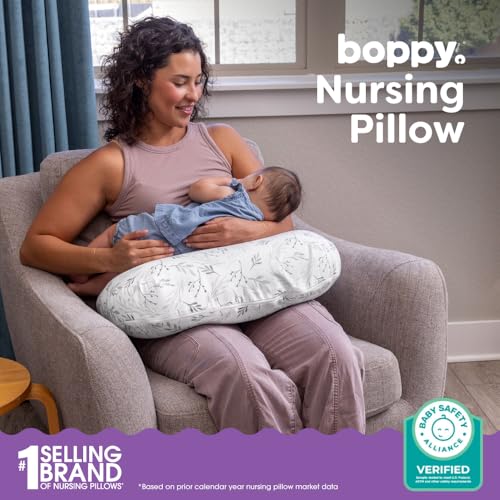

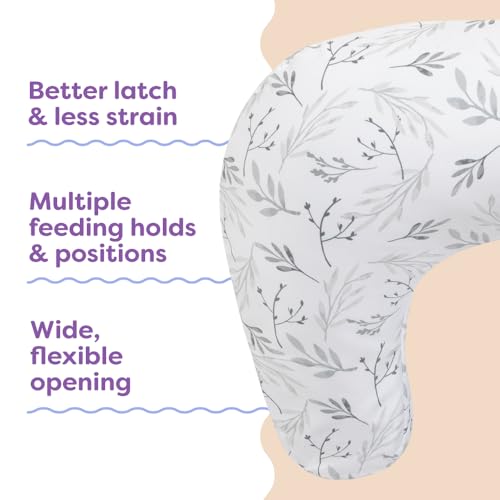
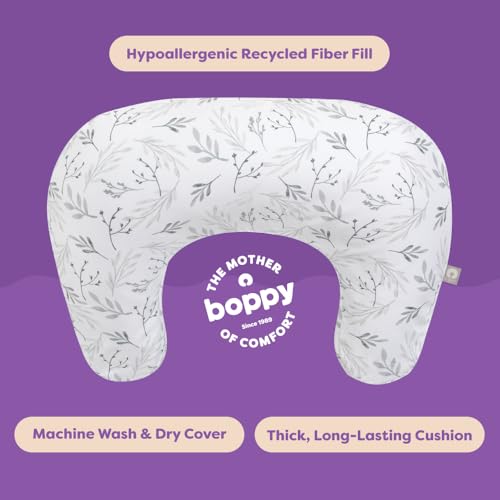
Boppy Nursing Pillow - Firm, Ergonomic U-Shaped Bottle and Breastfeeding Pillow with High Lift for Comfort and Support, Spacious Surface - Gray Gentle Leaves
- Fill: 100% Polyester
- #1 SELLING: Boppy is the number 1 selling brand of nursing ppillows, based on prior calendar year nursing pill
- REDUCE STRAIN: A higher lift means less back and shoulder strain for parents. This bottle and breast feeding p
7. Nutrition for Breastfeeding Parents: Fuelling Your Milk Supply
What you eat while breastfeeding directly affects your energy, your mood, and — to a meaningful degree — the flavour and some nutrient content of your milk.
Breastfeeding burns an additional 300–500 kcal per day (NHS). That's not a licence to eat anything, but it is a genuine physiological demand. Undereating is one of the most common and least-discussed reasons milk supply dips in the early weeks.
Priority nutrients while breastfeeding
- Iodine: Essential for baby's thyroid and brain development; often low in breastfeeding parents' diets. Found in dairy, seafood, iodised salt. - Vitamin D: Breast milk is naturally low in vitamin D. The AAP recommends all breastfed infants receive 400 IU of vitamin D daily as a supplement from the first few days of life. - Calcium: Your body will draw from your bones if dietary intake is low. Aim for 1,000 mg/day. - Continued DHA: Keep up the oily fish or supplement — DHA in your milk supports your baby's ongoing brain development.
Foods and drinks that affect supply
- Hydration: Drink to thirst — roughly 2.5–3 litres of fluid per day. Milk production is water-intensive. - Alcohol: The AAP advises that occasional moderate alcohol (up to one standard drink) is compatible with breastfeeding if you wait 2 hours before the next feed. Pumping and dumping does not speed alcohol clearance. - Caffeine: Up to 300 mg/day (roughly 2 cups of coffee) is considered safe by most guidelines.
The Momcozy Memory Foam Nursing Pillow's hands-free design means you can eat, drink, or rest one arm while baby feeds — a small detail that adds up to real self-care over weeks of nursing.

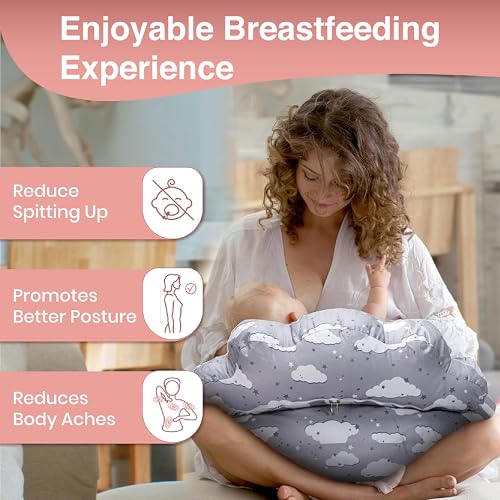
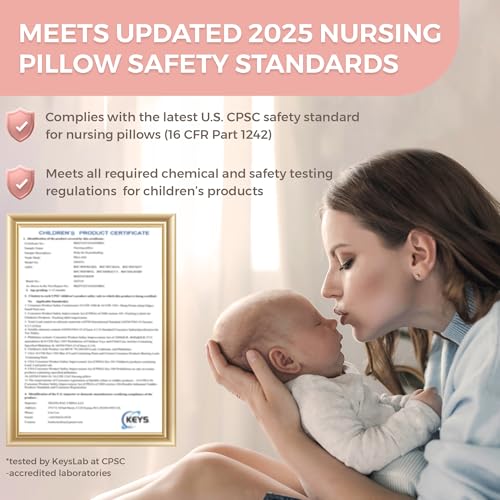
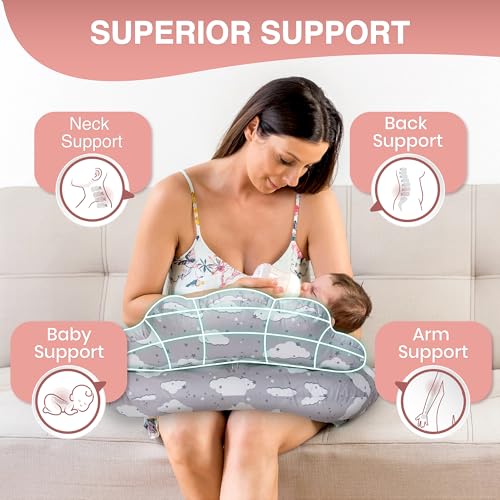
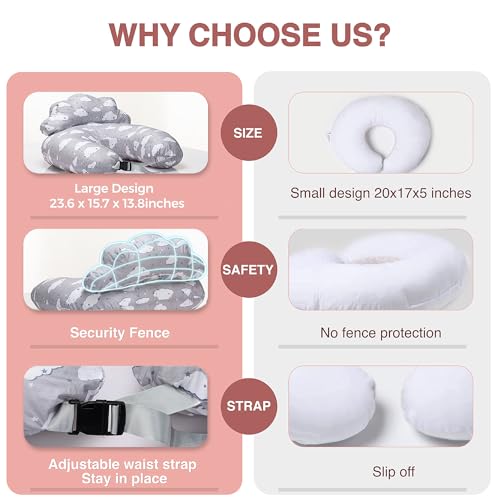
Nursing Pillow – Breastfeeding Pillows with Security Fence for Enhanced Support & Comfort – Removable Cotton Cover, Adjustable Waist Strap, Newborn Essentials Must Haves Baby Registry Search
- [Superior Support for Mom and Baby] Experience the ultimate support with our exceptional breastfeeding pillow.
- [Baby Safety is Our Priority] The innovative cloud design offers excellent security and support, preventing yo
- [Free you hands] Our innovative breastfeeding & bottle pillow is designed to amplify your baby's comfort. This
Expert Insights
These first weeks of feeding your baby are genuinely hard — and genuinely fleeting. Whether you're nursing, pumping, formula feeding, or doing some combination of all three, you are doing the most important nutritional work of your child's life. Every feed is an act of care. The knowledge in this guide exists not to add pressure but to give you the confidence to trust your body, read your baby's cues, and ask for help the moment something doesn't feel right.
The best feeding plan is the one that keeps your baby nourished and you sustainable.
If this guide helped, save it for the 3 a.m. moments when you need a quick answer — and share it with a friend who's expecting. You might be exactly the resource they didn't know they needed.
Sources & References
- World Health Organization. "Breastfeeding." 2023. https://www.who.int/health-topics/breastfeeding
- American Academy of Pediatrics. "Breastfeeding and the Use of Human Milk." Pediatrics, 2022. https://publications.aap.org/pediatrics/article/150/1/e2022057988/188347
- American Academy of Pediatrics. "Vitamin D and Calcium: Updated Clinical Practice Guidelines." Pediatrics, 2022. https://publications.aap.org/pediatrics/article/151/1/e2022060221
- NHS (National Health Service, UK). "Breastfeeding: the first few days." 2023. https://www.nhs.uk/conditions/baby/breastfeeding-and-bottle-feeding/breastfeeding/the-first-few-days/
- NHS. "Have a healthy diet in pregnancy." 2023. https://www.nhs.uk/pregnancy/keeping-well/have-a-healthy-diet/
- UNICEF UK Baby Friendly Initiative. "A Guide to Infant Formula for Parents Who Are Formula Feeding." 2023. https://www.unicef.org.uk/babyfriendly/
- Centers for Disease Control and Prevention. "Breastfeeding: Frequently Asked Questions." 2023. https://www.cdc.gov/breastfeeding/faq/index.htm
- Royal College of Paediatrics and Child Health. "Vitamin D — advice for all children." 2022. https://www.rcpch.ac.uk/
Frequently Asked Questions
How do I know if my baby is getting enough breast milk?
Is it normal for breastfeeding to hurt?
Can I breastfeed if I have COVID-19 or another illness?
How do I combine breastfeeding and formula (combination feeding)?
When should I introduce a bottle if I'm breastfeeding?
Do I need a nursing pillow, or is it just a nice-to-have?
What should I eat to increase milk supply?
Was this helpful?
Thanks — your feedback helps us pick what to write next.