Teen Gear and Products: What to Buy, What to Check, What to Skip
TL;DR: Quick summaryMost teens need three kinds of gear: protective gear that fits and suits the sport, a sturdy backpack that sits comfortably, and clear household rules for devices. Spend on helmets and eyewear first, check anything second hand with care, and do not assume a pr
In this article
TL;DR: Quick summary
Most teens need three kinds of gear: protective gear that fits and suits the sport, a sturdy backpack that sits comfortably, and clear household rules for devices. Spend on helmets and eyewear first, check anything second hand with care, and do not assume a product has been tested for teens.
What you'll get
About 22 minutes to read. Short on time? Read the bold lines and the Key Takeaways near the end.
You are standing in a shop with your 14 year old. They want a new bike helmet, a bigger bag for school, a hoodie and a phone upgrade. Nothing on the shelf says "teen" on it, and you are not sure who checked any of it.
That doubt is fair. The testing and certification rules for children's products only apply to items designed mainly for children aged 12 or younger. Once your child is over 12, the testing rules may not cover their gear, so you do much of the checking yourself.
This guide is for parents of teens aged 13 to 17. It covers what to buy first, how to check fit and safety in a minute or two, where you can save money, and what to say when your teen rolls their eyes.
I am a paediatrician, and helmets, heavy backpacks, screens and skincare are the topics parents bring up most. So that is where we will spend our time.
What gear does a teenager really need?
Teens need three things: protective gear that fits the activity, a comfortable bag for school, and a few clear rules for their devices. Everything else is optional. Buy in that order, because a good helmet matters far more than a trendy jacket.
Why teen shopping feels harder than it should
When your child was small, almost everything had an age label and a safety standard behind it. Cots, car seats and toys were checked. Teens fall into a gap.
The formal testing and certification requirements for children's products stop at age 12. That does not make teen products unsafe. It means nobody has necessarily done the checking for you, so you become the quality control.
Teens also make their own choices now. They will pick the helmet that looks right, the bag that matches their friends' bags, and the hoodie with the longest strings. Your job is less about controlling the purchase and more about setting the short list.
The three bucket rule
I suggest sorting every gear decision into one of three buckets.
When money is tight, fill the buckets in that order. A cheap hoodie is fine. A cheap helmet that does not fit or is not certified for the activity is not.
A quick example
Picture a 15 year old who cycles to school, plays football in the autumn and wants a new laptop bag. If you have limited money, the helmet and football gear come first, the bag second, and the new headphones wait for a birthday. That order is easy to explain to your teen, and it makes the "no" feel fair rather than random.
Common mistakes
You can say: "I am not picking for you. I have picked the short list, and you pick from it." That one sentence protects your teen's independence and your safety standards at the same time.
Which helmet and protective gear should my teen wear?
Your teen needs a helmet made for the activity, fitted properly and worn every time. The American Academy of Pediatrics says teens and their adult caregivers should wear one for cycling, snow sports, ice skating and horse riding. Helmets reduce head injury risk by 75 to 85 percent.
What a good helmet looks like
The CDC says a helmet should fit properly and be well maintained, right for your child's age, certified for its use, and worn consistently and correctly. That last part is where teens slip. The best helmet in the world does nothing in a backpack.
Use this checklist in the shop:
How to check the fit in a minute
Do this with your teen's hair as it normally is, and with the helmet on.
- Set the helmet level on the head, not tipped back like a hat.
- Check the front edge. It should sit low on the forehead.
- Adjust the side straps and chin strap so they are snug but comfortable.
- Ask your teen to shake their head and open their mouth wide. The helmet should stay put and not rock or slide.
Seattle Children's gives a clear rule for the front edge:
Helmet sits level on your child’s head and rests low on the forehead, 1 to 2 finger widths above the eyebrows.
Seattle Children's
Match the helmet to the activity
One helmet for everything is tempting, but multi-sport helmets are not always safe for every activity. Multi sport helmets used for inline skating and skateboarding are not considered safe for bicycle riding unless they carry the CPSC sticker. Football helmets must be certified by the National Operating Committee on Standards for Athletic Equipment (NOCSAE).
Picture a 15 year old who skateboards to school and rides a bike at weekends. Before you buy two helmets, look inside the one you have for the labels. If the bike certification is missing, it is a skate helmet only.
Powered scooters and e bikes can go faster than a pedal bike. Check the helmet maker's label to see what the helmet is rated for.
Used helmets and what to do after a crash
Every helmet should be replaced after any accident, because there can be damage you cannot see. Used or hand me down helmets need careful checking, and a cracked or broken helmet should never be worn.
Be firm on this one, even if the helmet "looks fine". If your teen's helmet took a hit, it has done its job. Buy a new one.
Do not forget eye protection
Sports are the leading cause of eye injuries in teens. Properly fitting protective eyewear can reduce the risk of serious eye injury by 90 percent. That matters for sports with balls, sticks, racquets or crowded elbows. Ask the coach or club what eyewear they recommend for your teen's sport.
Talking to a teen who says "nobody wears one"
Start with their goals, not your fear. Try: "You ride a lot, and you want to keep riding for years. This is the cheapest way to make sure you can." Then offer a choice of two helmets.
How do I choose a school backpack for a teen?
Choose a bag that fits your teen's back, with padded adjustable straps, a laptop sleeve if they carry a laptop, and zips that will last. Try it on while loaded. Comfort and fit matter more than the brand on the front.
What to look for in the shop
Start with the straps. They should be padded, adjustable and wide enough not to dig into the shoulders. Then look at the back panel, where some padding helps with comfort.
Next, check the layout. One big main space plus a laptop sleeve and a few pockets is usually enough. Too many compartments mean more places to lose a charger or a lunch.

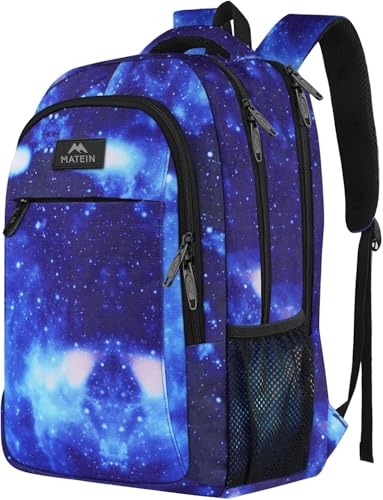

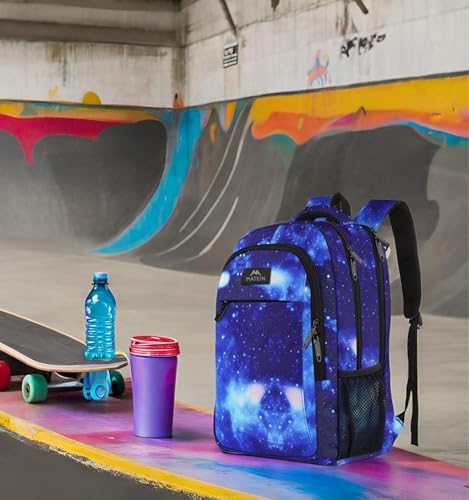

MATEIN 15.6 inch Laptop Backpack for Men Women, Cool Backpack for College
- SPACE & POCKETS: 1 separate laptop compartment fit 15.6 Inch Laptop as well as 15 Inch,14 Inch and 13 Inch…
- FUNCTIONAL & SAFE: A luggage strap allows backpack fit on luggage/suitcase, slide over the luggage upright…
- COMFY & STURDY: Comfortable back design with thick but soft multi-panel ventilated padding, gives you maximum…
The MATEIN 15.6 inch laptop backpack is a good example of a feature rich option. Before paying for extras, check which of the bag's features your teen will actually use every school day. Ask your doctor or health visitor how to set up a safe sleep space for your child.
Any built-in charging port is only useful if there is a charged power bank inside, so budget for that.
How the bag should be worn
A great bag worn badly is still a bad bag. Teens love the one strap slouch, but it loads one shoulder.
- Put both straps on every time.
- Tighten the straps so the bag sits close to the back, not swinging low.
- Pack the heaviest items, like the laptop and textbooks, nearest the back.
- Clear out the bag weekly. Old books and spare shoes add up.
I cannot give you a safe weight for your teen's bag, because it depends on their size and strength. Ask your doctor or school nurse what weight is sensible for your teen.
What to say when they refuse the second strap
"I am not nagging about looks. I am asking you to protect your shoulders and back." If that fails, shorten the straps so the bag sits high. A high bag looks more normal than a low one, and a lot of teens prefer that look anyway.
Common mistakes
Is a more expensive backpack worth it?
Sometimes, but not always. A pricier bag usually means tougher fabric and sturdier hardware, not automatically better comfort. For a teen who is rough on gear or carries a heavy load, it can pay off. For many others, a mid priced bag lasts just as long.
What extra money tends to buy
Look at the details rather than the price tag. The Carhartt Classic 25L backpack uses a polyester fabric with rain defender technology and a laptop sleeve. It is the most expensive bag in this guide.
The JanSport SuperBreak One is a mid-priced bag that uses fabric described as abrasion resistant and water repellent. It has one main compartment and a front pocket with an organizer. It is a plain, simple bag with fewer ways to go wrong.


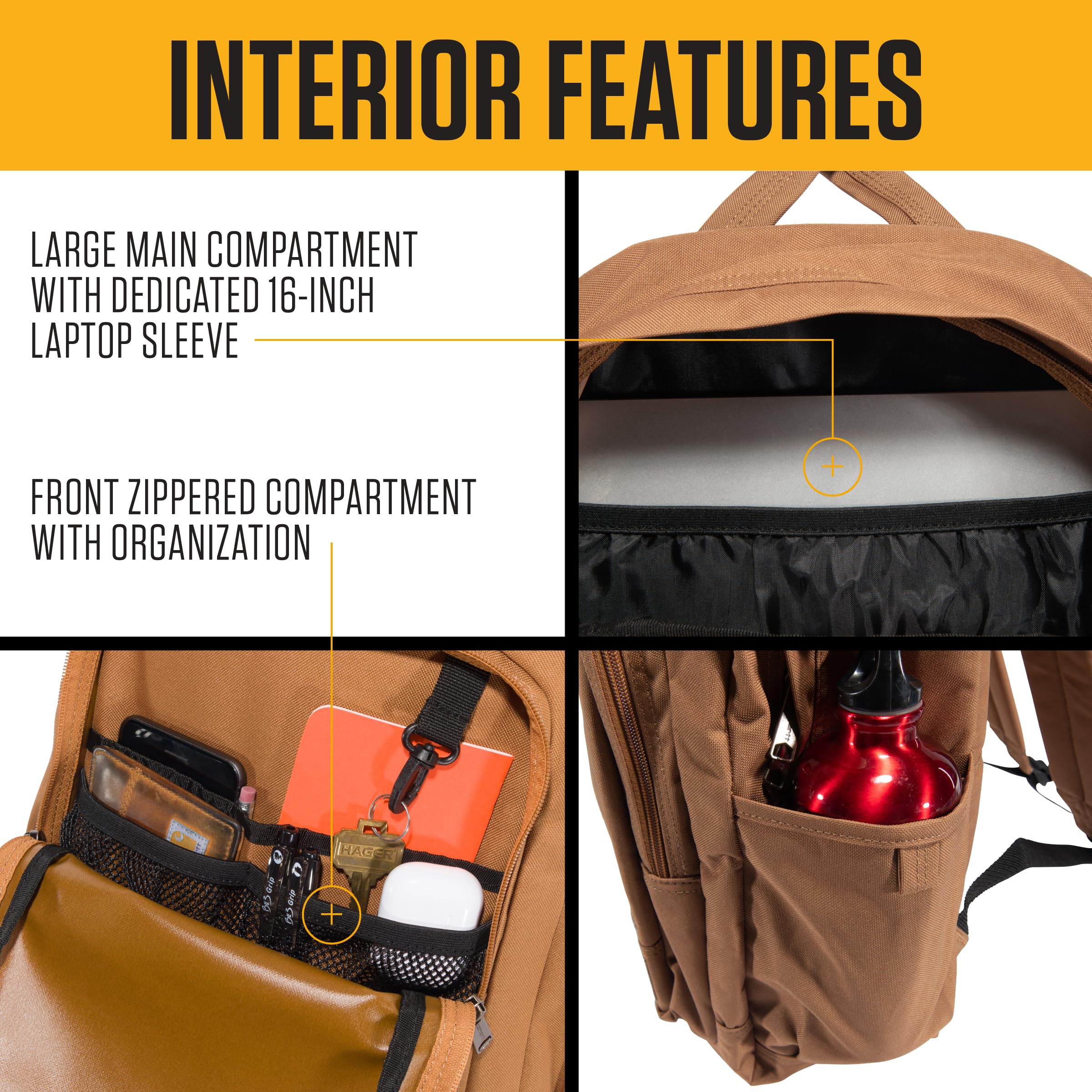
Carhartt Classic 25L Backpack Black
- 25L CARHARTT LAPTOP BACKPACK | A backpack for men and women who mean business. This no-nonsense Carhartt…
- DENIER POLYESTER | Crafted from durable 600-denier polyester, this backpack is built to last. The integrated…
- 16-Inch LAPTOP SLEEVE | Featuring a front zipper compartment and main zippered compartment with a dedicated…
At the other end, the Trail maker Classic 17 inch backpack is a budget option, with double zips and padded adjustable straps. It does not list a laptop sleeve, so it suits a teen who carries books and a binder rather than a laptop.
A cost per year example
Picture a teen who destroys a $10 bag every term. That could mean several bags a year, and several torn zips at awkward moments. A pricier bag that survives the whole year can cost about the same and causes less stress.
Now picture a teen who is gentle on gear and only carries a notebook. For that teen, the $10 bag may be perfectly fine. Match the bag to the teen, not to an ideal teen.
What review scores do and do not tell you
Ratings are a useful signal, but they have limits. A bag with many high-star reviews tells you more than a bag with only a few reviews. Still, reviews rarely measure back comfort over a full school year.
A five minute checklist before you buy
- Measure your teen's laptop and check the sleeve size.
- Load the bag and wear it for two minutes in the shop or at home.
- Test the zips, stitching and handle.
- Ask your teen to find their phone, keys and bottle without taking the bag off.
- Keep the receipt for a return in the first week.
Common mistakes
Are hand me downs, hoodies and gadgets safe for teens?
Mostly yes, with a few checks. Skip helmets that are cracked, look at drawstrings on hoodies, keep high powered magnet sets away from your teen and any younger children, and hold off on BB guns. KidsHealth says not to give them to kids under 16.
Hoodies and drawstrings
Strings caught on a bike, a door or a fence are a real risk. In children's upper outerwear in sizes 2T to 12 (or the equivalent), the voluntary standard ASTM F1816 prohibits drawstrings at the hood and neck. For waist and bottom drawstrings in sizes 2T to 16, the length outside the channel is limited to 3 inches when the garment is fully stretched.
Many teens wear adult sizes, so those rules may not reach their hoodie. Do not assume. Check it yourself.
Children's upper outerwear is also limited to 100 parts per million (0.01 percent) of total lead in any accessible part. For genuine children's sizes that is reassuring. For adult sizes or unbranded imports, I would stick with brands you trust.
Hand me downs and second hand gear
Cousins, friends and neighbours are wonderful sources of free kit. But KidsHealth warns about older toys, even from friends and family, because they might not meet current safety standards. That is written about toys, but the logic applies to older equipment too.
For helmets, a used one may have cracks you cannot see. For anything with straps, buckles or moving parts, check it over before it goes near your teen.
You can say to a generous relative: "Thank you, that is so kind. We try to buy helmets new, but we would love the jacket." People are rarely offended by that.
High powered magnets
The CPSC says high powered magnet sets are a safety risk to children, from toddlers through teens. Teens may use them for desk toys and for pranks, so keep them out of reach of younger children. Keep them out of the house if you can. If your teen has younger siblings, our piece on magnetic tiles for toddlers covers that side of the story.
If your teen swallows a magnet, or you are not sure, get urgent medical advice. Do not wait to see what happens.
BB guns and pellet rifles
KidsHealth advises that BB guns and pellet rifles should not be given to kids under 16. Even above that age, think about supervision, storage and your teen's maturity. A sibling or friend might be involved, too.
Common mistakes
How much screen time and tech gear is right for my teen?
There is no single magic number. The American Academy of Pediatrics says there is no exact amount recommended for teens, and suggests looking at the quality of use as well as the time. Some guidance gives a starting point of 1 to 2 hours of entertainment use a day.
What the guidance actually says
Here is the AAP's honest summary:
While we wish we had a simple answer for you, there isn’t an exact amount of screen time that is recommended for teens.
American Academy of Pediatrics
The AAP also suggests we think about the quality of interactions with digital media, not just the amount of time. A teen video calling a friend or building a project is not the same as a teen scrolling at 1 a.m.
Other bodies give numbers. The Royal Children's Hospital in Australia suggests limiting teen screen time, excluding schoolwork, to two hours or less each day. KidsHealth offers 1 to 2 hours of entertainment media as a reasonable starting point, not including homework, learning or creative projects.
I would use those as starting points to talk about, not as laws.
Setting up the gear
Gear can make good habits easier. A few ideas that work for many families:
Make a family agreement
Rules often work better when your teen helps write them. Try this sequence.
- Ask your teen what they use screens for and what they enjoy most.
- Share your worries in one or two sentences, not a speech.
- Agree on a few non negotiables, such as phones out of the bedroom at night and no screens at meals.
- Choose a review date in a month to adjust.
A good opener: "I am not trying to take your phone. I want to make sure it helps your life and does not run it."
For the bigger picture on feeds, friendships and mood, read our guide to teen social media and mental health. It goes deeper than gear can.
Common mistakes
Which skincare and beauty products are fine for teens?
Keep it simple. A gentle cleanser, a moisturiser and daily sunscreen cover most teens. Skip harsh or heavily fragranced products, patch test anything new, and talk to your doctor if acne is painful, scarring or getting your teen down.
Why the shelf feels so crowded
Social media is full of hauls and "must have" routines, often aimed at teens and even younger children. It can make a simple face wash feel like an under performance. Many of those products are designed for adults with different skin and different goals.
Teens can also feel under pressure about their skin, particularly during breakouts. That is normal. Treat it as you would any other health question: calmly, with facts.
A starter routine
- Morning: rinse or use a gentle cleanser, then moisturiser and sunscreen.
- Evening: cleanse once to remove sweat, dirt and sunscreen, then moisturiser.
- New product: try one at a time and wait until you see how it suits your skin before adding another.
- Patch test: put a small amount on the inner forearm first and watch for redness or itching.
That is it. More steps are not better steps.
What to look for and what to avoid
Ask your doctor or pharmacist before your teen uses anything that is not a basic cleanser, moisturiser or sunscreen. Prescription acne treatments should come from a doctor, not from a haul video.
How to talk about it
Skip "you do not need that." Try: "Show me what you are curious about, and let us look at the ingredients together." Then compare it with a simpler alternative.
If your teen is spending a lot of money, hiding products or feeling very anxious about their looks, treat it as a wellbeing issue, not a shopping issue. Talk to your doctor about it.
Common mistakes
Which backpack suits which teen?
The right bag depends on how your teen uses it. Here are the six options from this guide side by side, using the price listed for each.
| Option | Best Age Range | Primary Benefits | Main Drawbacks | Recommended Product | Price Range |
|---|---|---|---|---|---|
| Budget classic bag | Early teens | Low cost, padded adjustable straps, double zips | No laptop sleeve listed | Trail maker Classic 17 inch backpack | $9.99 |
| Everyday value bag | Early to mid teens | 26L space, YKK zips, 900D nylon, side bottle pockets | Plain look | ZORFIN 26L backpack | $17.99 |
| Tech friendly bag | Mid to older teens | USB charging port, laptop sleeve up to 15.6 inches | Port needs a charged power bank inside | kadilong laptop backpack | $25.49 |
| Simple classic bag | Early to mid teens | One main compartment, front organizer, water repellent fabric | No dedicated laptop sleeve listed | JanSport SuperBreak One | $32.85 |
| Laptop and travel bag | Mid to older teens | Ventilated padding, anti theft pocket, luggage strap | Lots of pockets to keep organized | MATEIN 15.6 inch laptop backpack | $32.99 |
| Heavy duty bag | Mid to older teens | 600 denier fabric, rain defender, 16 inch laptop sleeve | Highest price here | Carhartt Classic 25L backpack | $64.99 |
FAQ
Key Takeaways
Key Takeaways
- Buy gear in this order: protect, carry, connect. Helmets and eye protection come first.
- A helmet must fit, be certified for the activity and be worn every time.
- Replace any helmet after an accident, and never wear one that is cracked.
- Choose a backpack for fit and durability, and teach your teen to wear both straps.
- Check hoodies, hand-me-downs and magnet sets yourself, because CPSC testing and certification requirements only apply to products designed for children 12 and under.
- There is no exact screen time number for teens, so focus on sleep, mood and quality of use.
- Letting your teen choose from a short list you have approved can help them be willing to wear what they picked.
Conclusion
Teen shopping can feel like guesswork, but you already know your teen better than any label does. A helmet that fits, a bag that sits well, a hoodie without dangling strings and a calm talk about screens will do more than any product on the shelf.
You do not have to get it perfect. You just have to check the few things that really matter, and keep talking to your teen while you do it.
The best gear for a teenager is gear they will actually wear, and that you have actually checked.
If this guide helped, save it for the next shopping trip and share it with another parent of a teen.
Sources & References
- CDC. "Safety Guidelines: Helmets."
- American Academy of Pediatrics. "AAP: Helmets Save Lives & Reduce Risk of Traumatic Brain Injury."
- kidshealth.org. "Sports and Exercise Safety (for Teens)."
- Seattle Children's. "Bike Helmet Safety."
- kidshealth.org. "Sports & Exercise Safety."
- CPSC. "Toy Safety Business Guidance."
- CPSC. "Drawstrings in Children’s Upper Outerwear."
- CPSC. "CPSC Expands Toy Safety Collaboration Efforts with Retail, Toy Industries & Safe Kids; Top Toy Safety Tips for Shoppers This Holiday Season."
- kidshealth.org. "Choosing Safe Toys for School-Age Kids."
- American Academy of Pediatrics. "Screen Time for Teenagers."
- American Academy of Pediatrics. "Screen Time Guidelines."
- rch.org.au. "Kids Health Info : Screen time and social media."
- kidshealth.org. "Media Use Guidelines: Teens (for Parents)."
Frequently Asked Questions
Does my teen really need a helmet if none of their friends wear one?
Can my teen use a skateboard helmet for riding a bike?
When should I replace my teen's helmet?
How much screen time is okay for a teenager?
Are hoodies with drawstrings safe for teenagers?
Is it okay for my teen to have a BB gun?
Are magnets a risk for teens?
Was this helpful?
Thanks — your feedback helps us pick what to write next.