Baby Food Maker Reviews: Is It Worth the Investment in 2026?
A baby food maker is worth the investment for most families in 2026, offering fresher nutrition, significant cost savings over jarred food, and real convenience during the 4 to 12 month weaning window.

In this article
Every parent I see in clinic around the four to six month mark asks some version of the same question: "Do I really need a baby food maker, or is it just another thing that'll gather dust next to the bottle steriliser?" It is a fair question. A 2022 report from the Environmental Working Group found that over 95% of commercial baby food products tested contained at least one heavy metal above recommended safety levels. That single finding alone pushed a lot of families toward making their own purees. But the question is not just about safety. It is about time, money, and whether a dedicated machine actually makes your life easier than a regular blender and a saucepan.
In this article you will understand:
1. What Does a Baby Food Maker Actually Do?
A baby food maker combines two jobs into one appliance: it steams raw ingredients and then blends them to your chosen texture, all in the same bowl. That is the core value proposition. You do not need to dirty a steamer basket, a saucepan, a separate blender jar, and a spatula. You load the ingredients, press a button, and come back to a finished puree.
Most machines on the market today follow one of two design approaches. The first is a compact all in one unit where the food sits in a bowl above a built in water reservoir, steam rises through to cook it, and then the same bowl flips or rotates onto the blending blade. The second is a more traditional food processor style that adds steam capability via a separate basket or insert.
Why steaming matters so much
Boiling vegetables pulls water soluble vitamins (especially vitamin C and the B vitamins) out of the food and into the cooking water. You then throw that water away. Steaming keeps the food above the water, so those nutrients largely stay in the food. This is not marketing language; it is straightforward food chemistry backed by the British Dietetic Association and Food Standards Agency guidance on home food preparation.
The other thing a baby food maker controls well is texture. Babies move from smooth, thin purees around four to six months, to thicker, lumpier mashes around seven to nine months, to soft chopped pieces from around ten months onward. Having fine grained control over how long you blend, and whether you add back cooking liquid to thin the puree, makes this texture progression genuinely easier to manage.
2. The Real Costs: Baby Food Maker vs. Jarred Food vs. Regular Blender
Let me be honest with you about the numbers, because the "save money" claim deserves scrutiny.
A standard organic baby food pouch or jar costs between $1.50 and $2.50 per serving in 2026. A baby eating three solid servings a day goes through roughly $4.50 to $7.50 of commercial baby food daily, or around $135 to $225 per month at peak weaning. If you use a baby food maker, a batch of sweet potato puree (one large sweet potato, roughly $1.00) produces around eight servings. That brings your cost per serving to about $0.12 to $0.15 once you account for water and electricity. Over a six month weaning period, the savings can comfortably exceed $700 for a family using jarred food exclusively.
Even against a regular blender, the dedicated machine has a real argument. You could absolutely use a countertop blender and a stovetop steamer to make the same food. Many parents do. The baby food maker wins on:
The honest downside is that a good baby food maker is used intensively for roughly six to ten months, then mostly sits idle. If you are planning a second child within a few years, it earns its keep across two or three weaning journeys. If you are a one and done family, do the maths for your own usage.
If you want a deeper look at how much milk your baby still needs alongside those first solids, how much breast milk or formula your baby needs during the three to twelve month window is a useful companion read to this article.
3. Key Features to Look For (and Two to Ignore)
Features that actually matter
Material of the cooking bowl. Glass and stainless steel are the gold standard. Both are free from BPA and phthalates, do not absorb food odours or staining, and do not degrade with repeated steam cycles. Plastic bowls, even BPA free ones, can discolour and develop micro scratches over time that harbour bacteria.
True elevated steaming. As I mentioned above, the basket or cooking surface should sit above the water level, not in it. When you see a machine claiming "superior nutrient retention," look for the word "elevated" in the steam basket description.
Texture control. Auto blend cycles are convenient but they produce the same result every time. The machines worth recommending have both auto and manual blend modes so you can adjust consistency as your baby moves through weaning stages.
Bowl capacity. Smaller bowls (around 12 oz or 350 ml) are fine for daily single serve cooking but make batch prep tedious. Larger bowls (the BEABA Babycook Neo runs to 1,250 ml, or just over five cups) let you make a week's worth of purees in one session and freeze the rest.
Ease of cleaning. Check whether the bowl and blade assembly are dishwasher safe. Hand washing a blender blade every day gets old fast.
Features you can probably ignore
Built in sterilisation mode. A couple of machines include this, but the NHS and AAP both clarify that equipment sterilisation is mainly relevant for bottles and formula feeding equipment in very young or immunocompromised infants. For weaning equipment, thorough washing in hot soapy water is adequate for most healthy babies.
LCD touchscreens and preset ingredient programmes. Nice to look at in the box. In practice, most parents find they run the same two or three programmes on repeat, and the extra complexity adds more to clean.
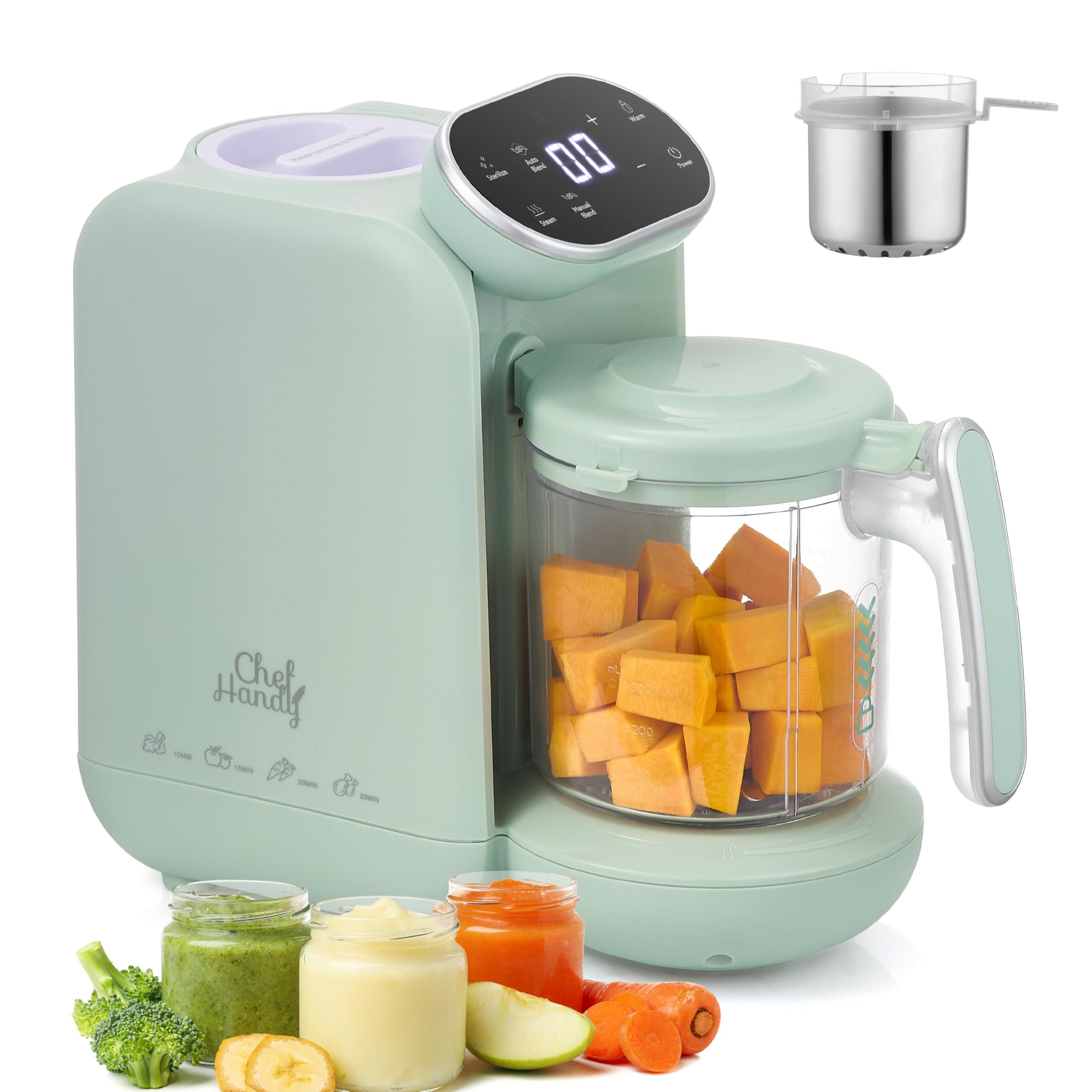
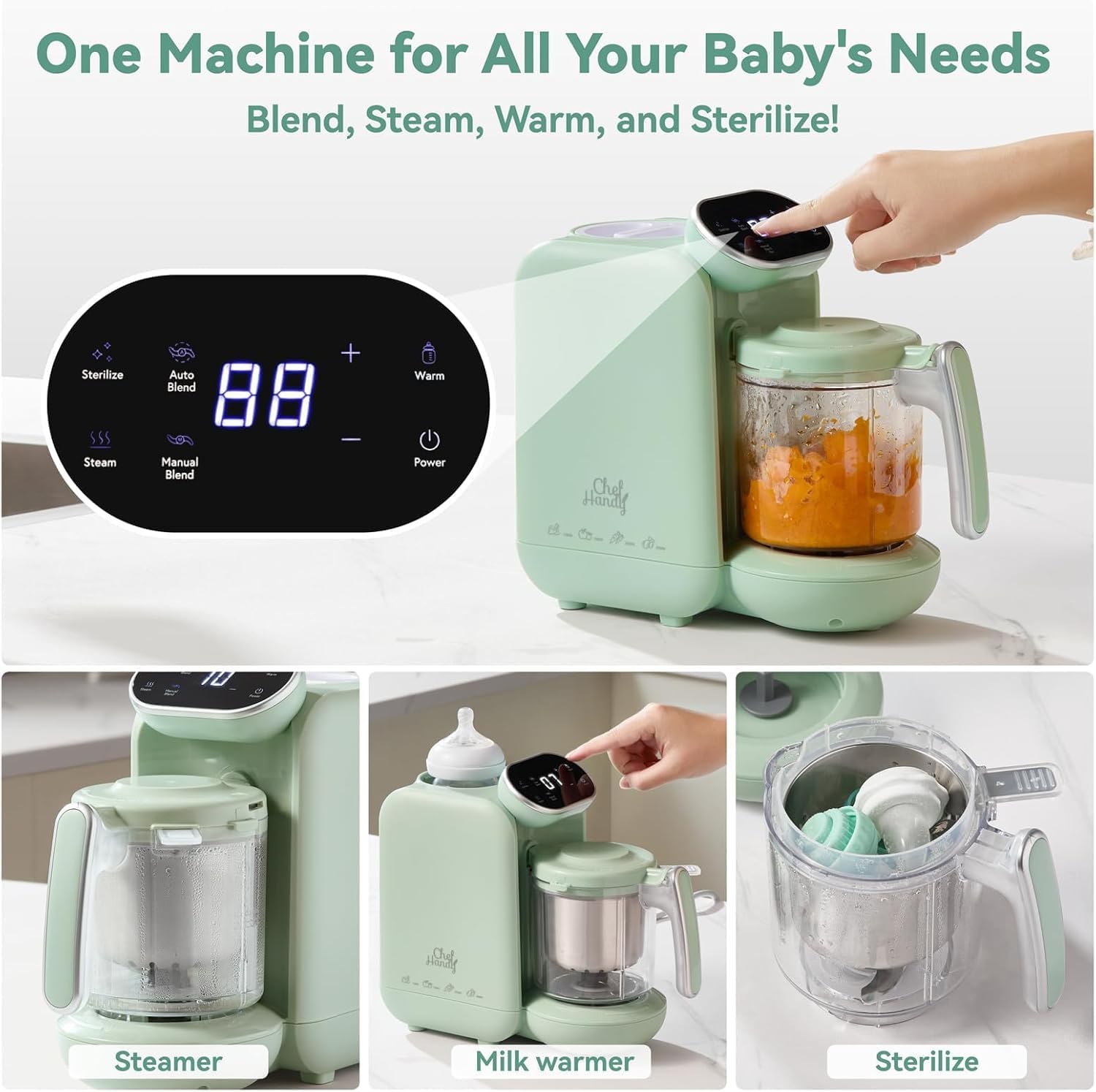
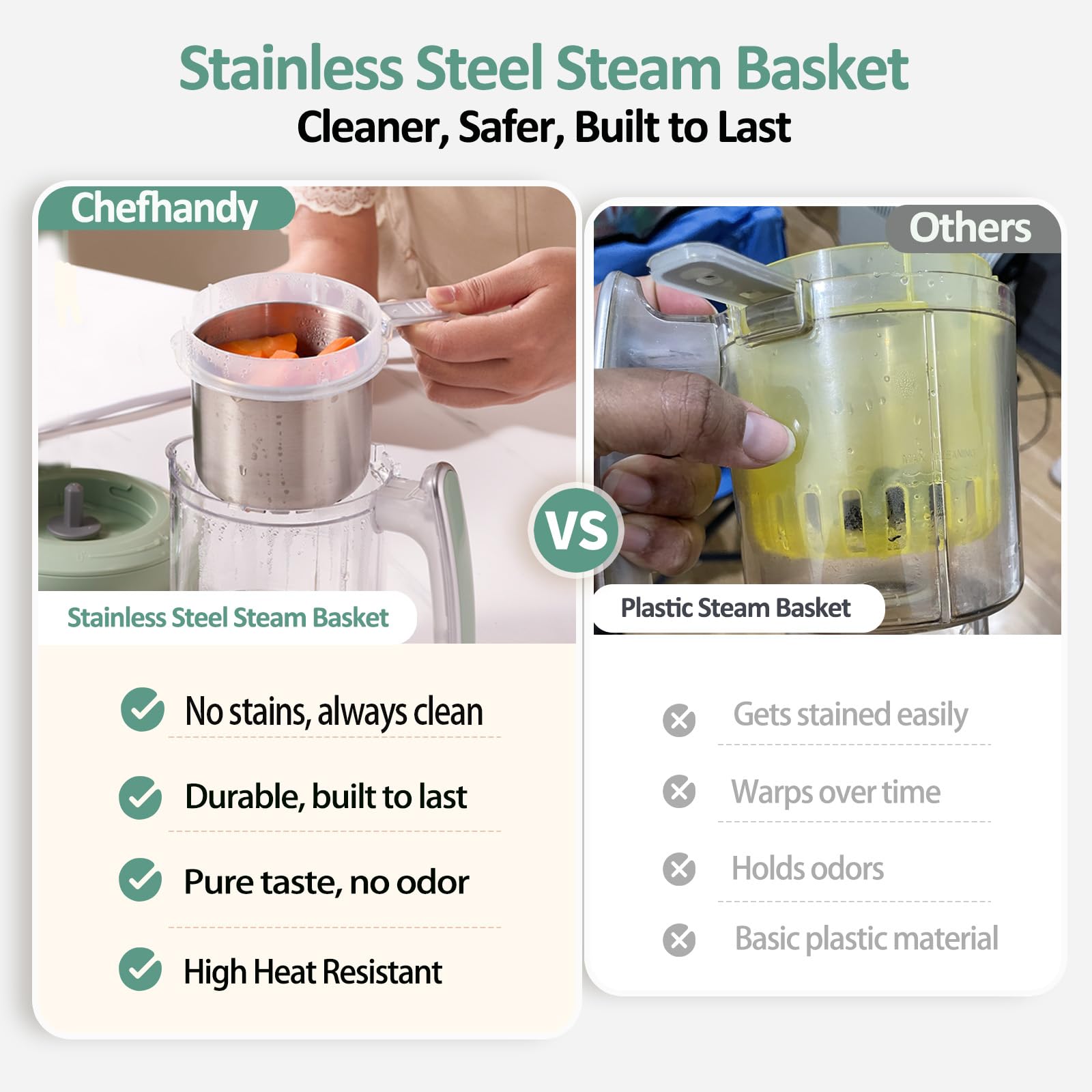
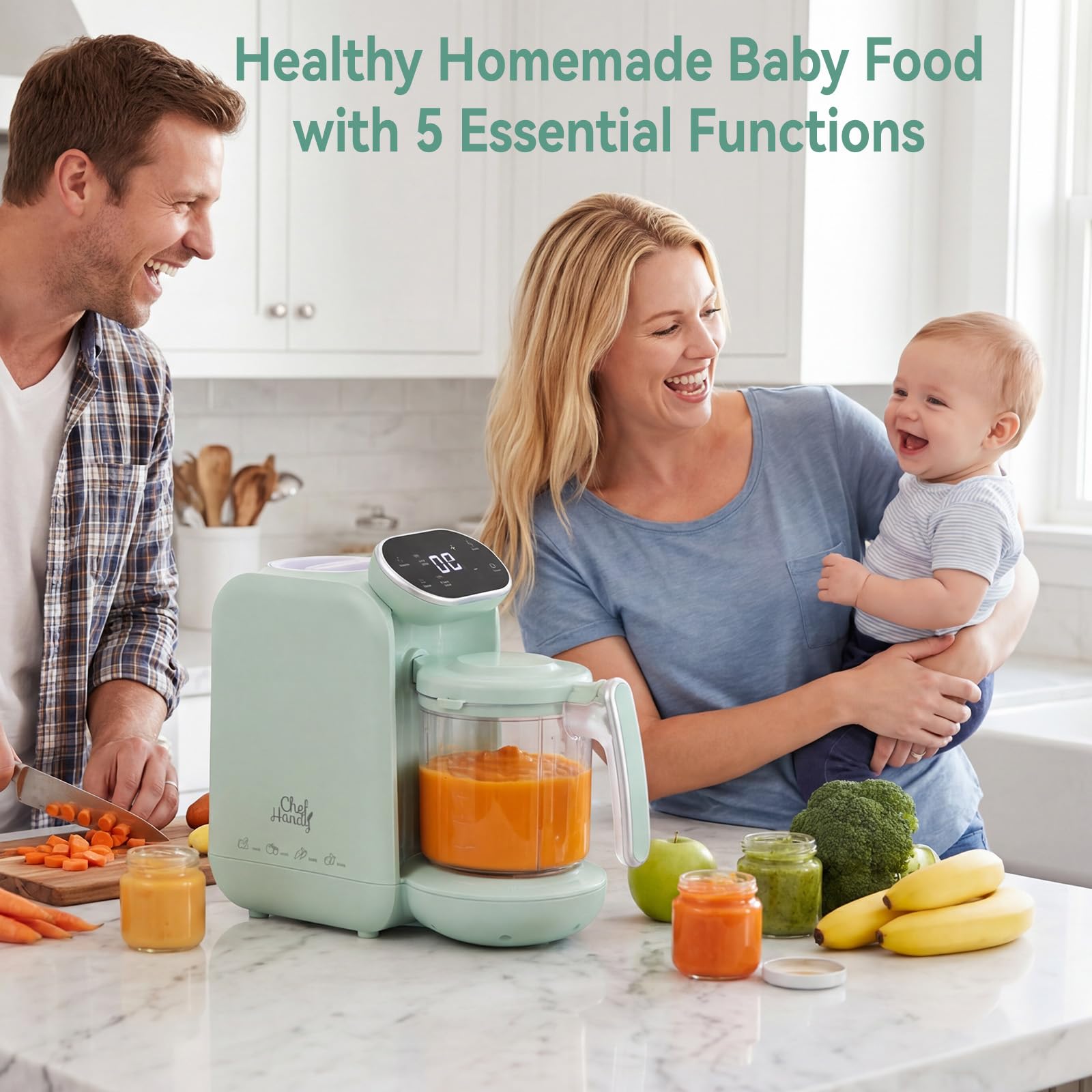
Chefhandy Baby Food Maker with Stainless Steel Steam Basket | 5-in-1 Baby Food Processor, Steamer & Blender for Homemade Baby Food, BPA-Free, 6 Reusable Pouches, Ideal for Newborns & Infants, Green
- 𝗡𝘂𝘁𝗿𝗶𝗲𝗻𝘁-𝗙𝗿𝗶𝗲𝗻𝗱𝗹𝘆 𝗦𝘁𝗲𝗮𝗺𝗶𝗻𝗴 𝗕𝗮𝘀𝗸𝗲𝘁 : Tired of losing nutrients when making baby food at home? During daily meal
- 𝗔𝗹𝗹-𝗶𝗻-𝗢𝗻𝗲 𝗕𝗮𝗯𝘆 𝗙𝗼𝗼𝗱 𝗚𝗿𝗶𝗻𝗱𝗲𝗿 : Busy parents often struggle to prepare fresh meals while managing daily routine
- 𝗘𝗮𝘀𝘆 𝗧𝗲𝘅𝘁𝘂𝗿𝗲 𝗖𝗼𝗻𝘁𝗿𝗼𝗹 𝗳𝗼𝗿 𝗘𝘃𝗲𝗿𝘆 𝗦𝘁𝗮𝗴𝗲 : As your baby grows, their feeding needs change. With both auto and manu
4. The Top Baby Food Makers of 2026: Hands-On Breakdown
Here is how the main contenders actually perform, based on feature analysis, verified user reviews, and the clinical lens of what matters for infant nutrition.
Chefhandy 5-in-1 Baby Food Maker (Best Budget All-Rounder)
At $68.99, the Chefhandy sits at the accessible end of the market and genuinely punches above its price. The stainless steel steam basket keeps food elevated above the water, which is the nutritional feature that matters most. Both auto and manual blend modes give you texture control across every weaning stage. The six included BPA free storage pouches are a thoughtful addition; you can steam, blend, portion, and refrigerate all in one session without hunting for separate containers.
With 2,888 reviews at 4.6 stars, this is the most reviewed machine in this comparison and the rating holds up. The main limitation is bowl capacity for batch cooking, but for everyday fresh prep it handles the job well.
Bear NutriEase AllStage (Best for Developmental Stage Precision)
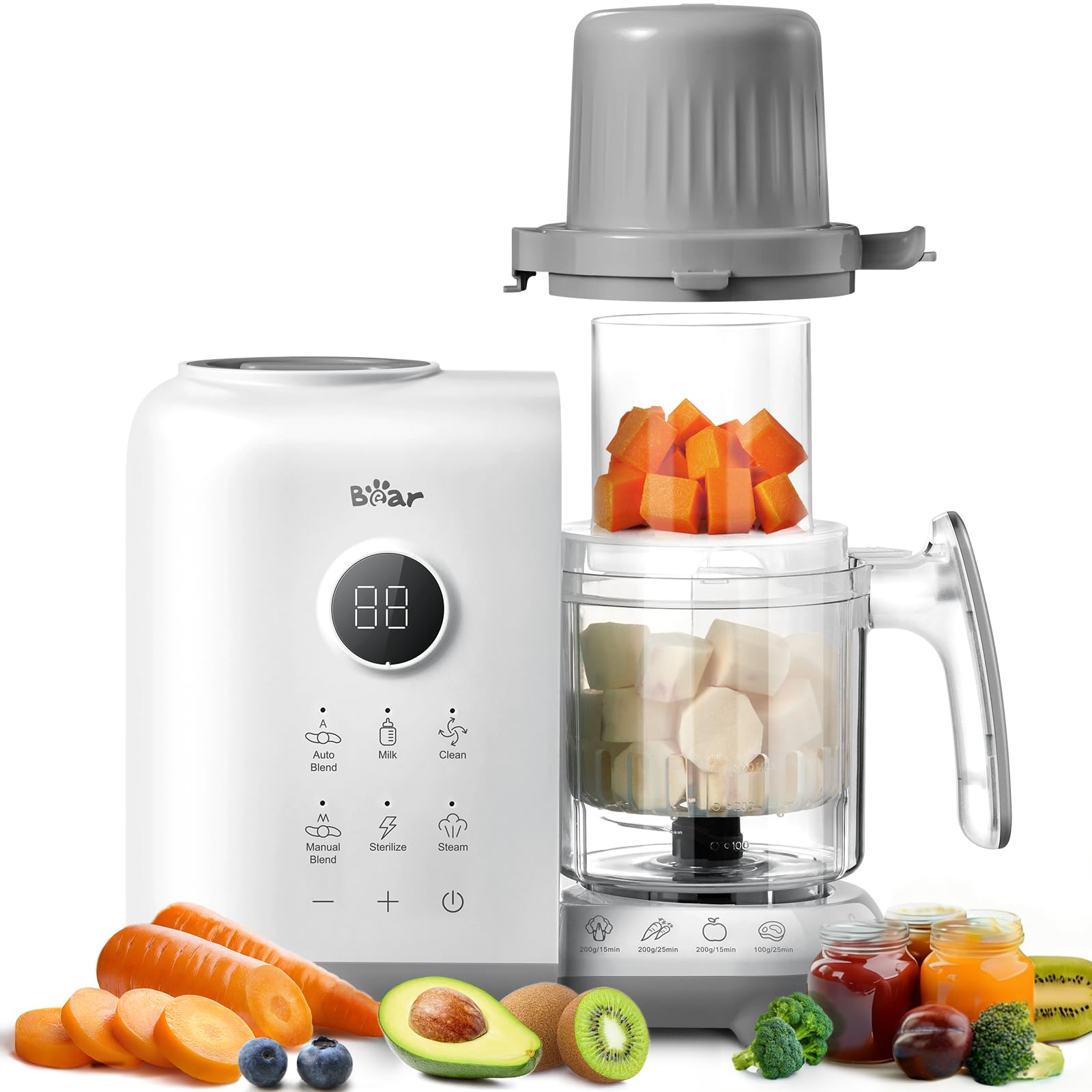
The Bear's standout feature is its three age stage settings (4 to 7 months, 8 to 10 months, 11 months and up) combined with ingredient specific programmes for vegetables, fruits, root vegetables, meat, fish, and stew. For a first time parent who is not sure how long to steam a piece of salmon versus a piece of sweet potato, this is genuinely useful guidance baked into the machine itself.
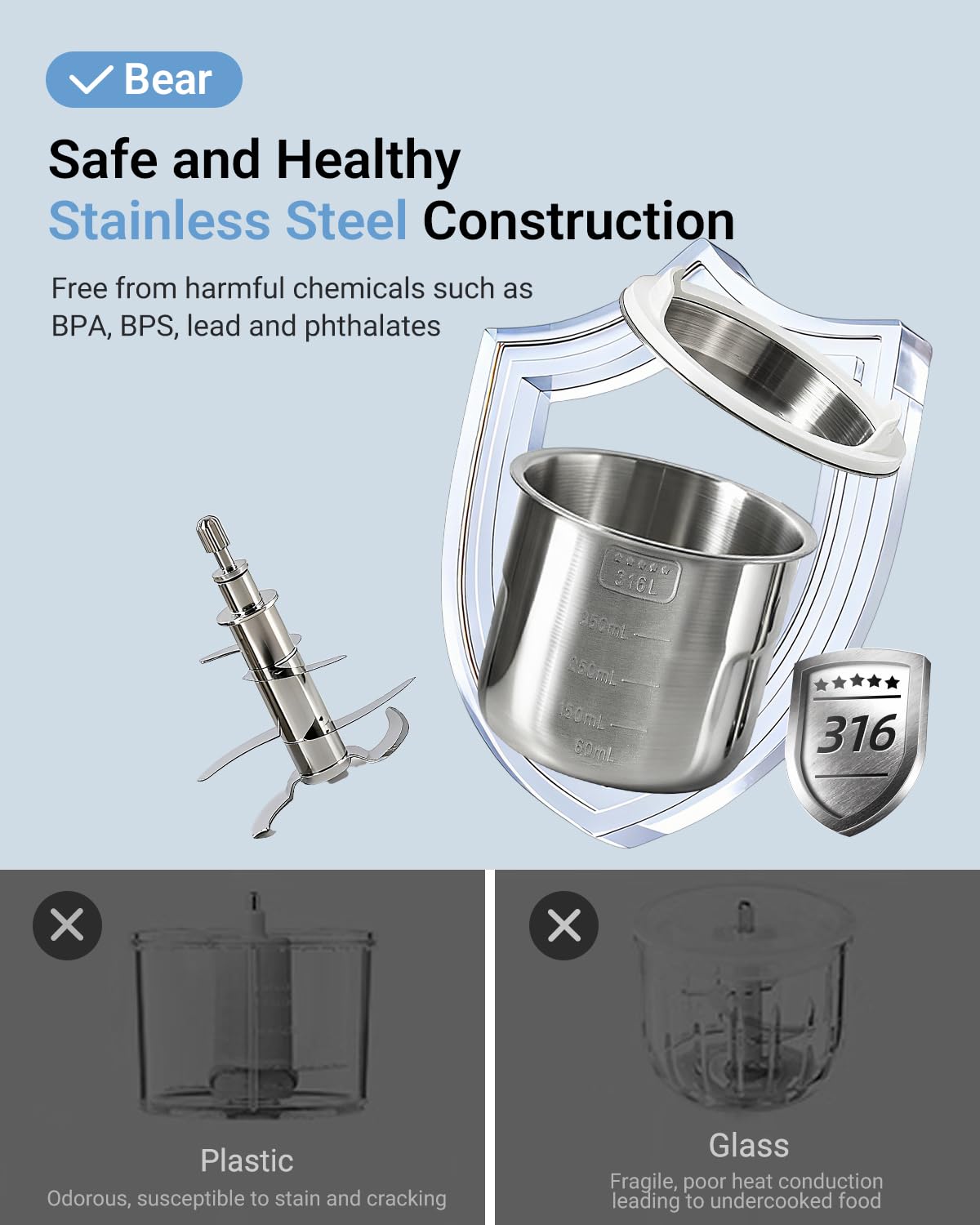
The stainless steel bowl, cover, and blade are BPA free and built to last. At $129.99 it is a meaningful step up in price, and the 126 reviews (4 stars) give a thinner evidence base than the Chefhandy, but the design is thoughtful.
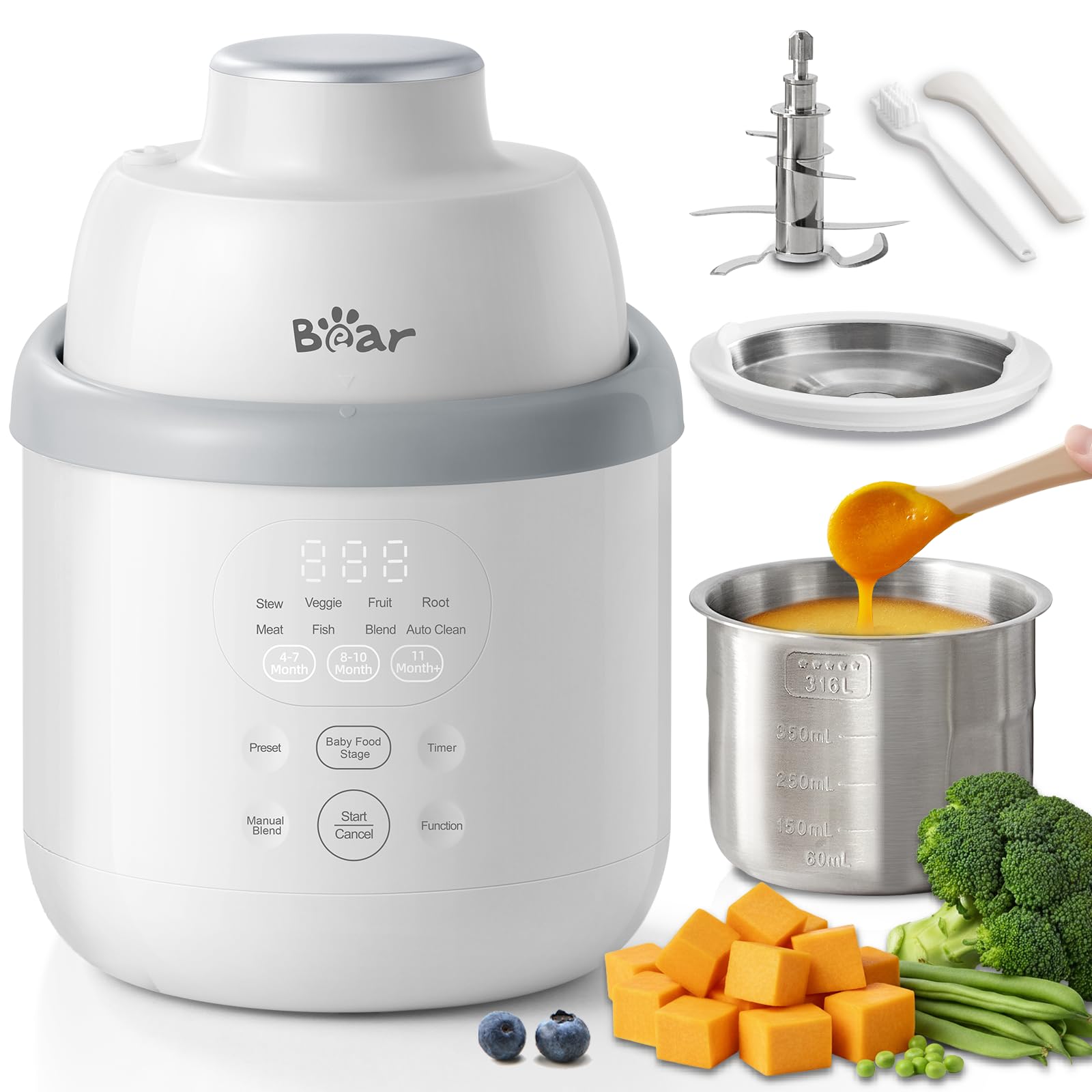
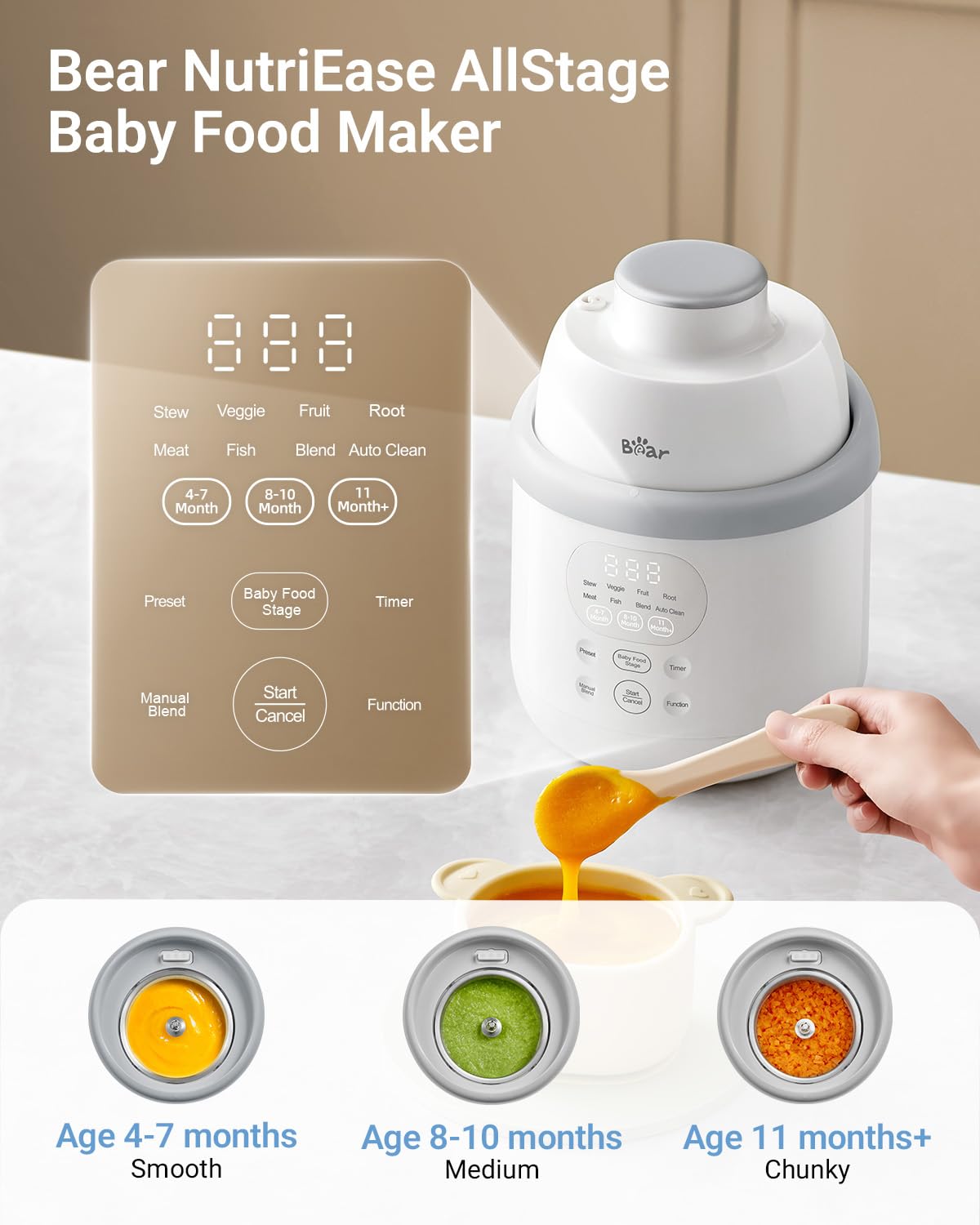
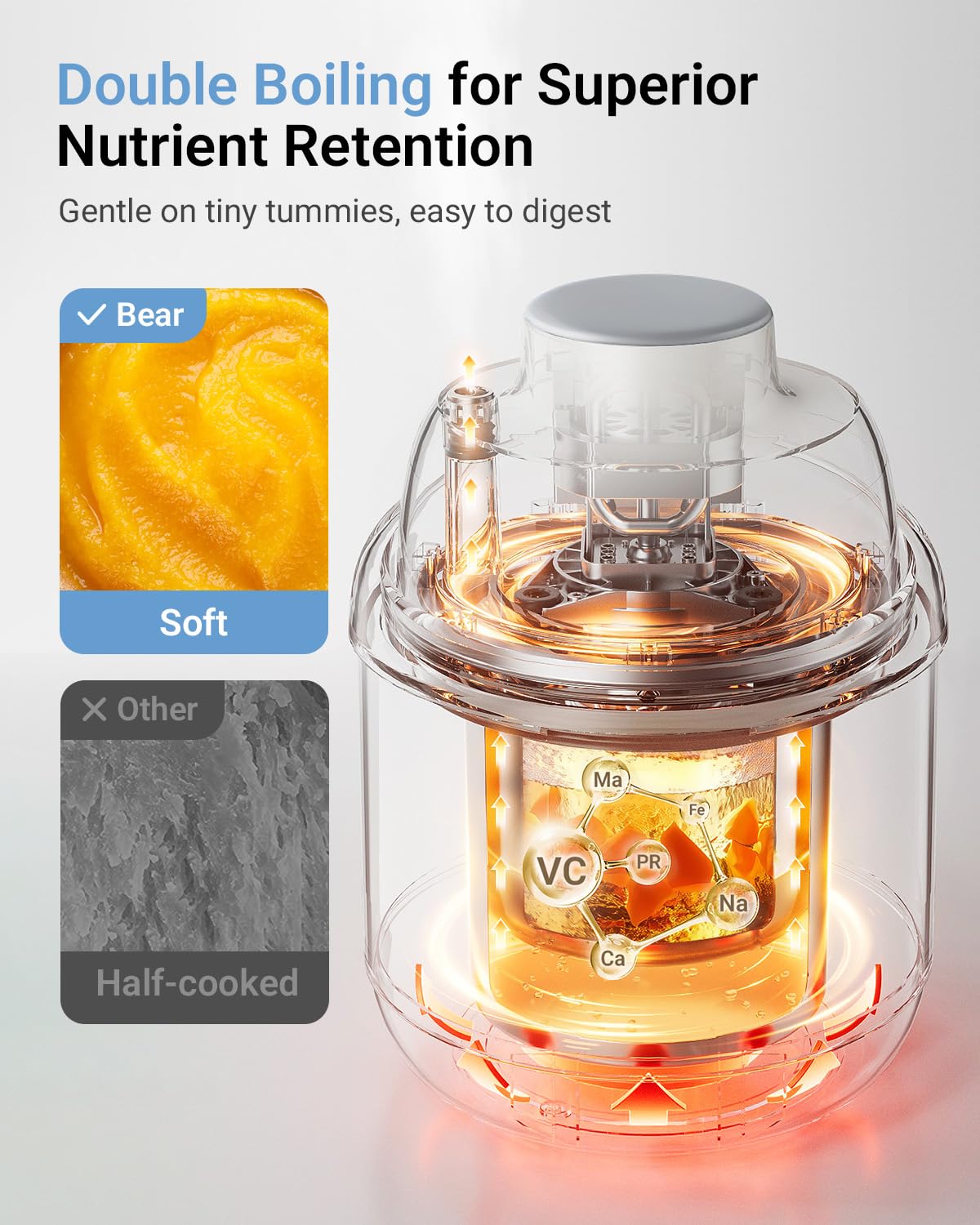
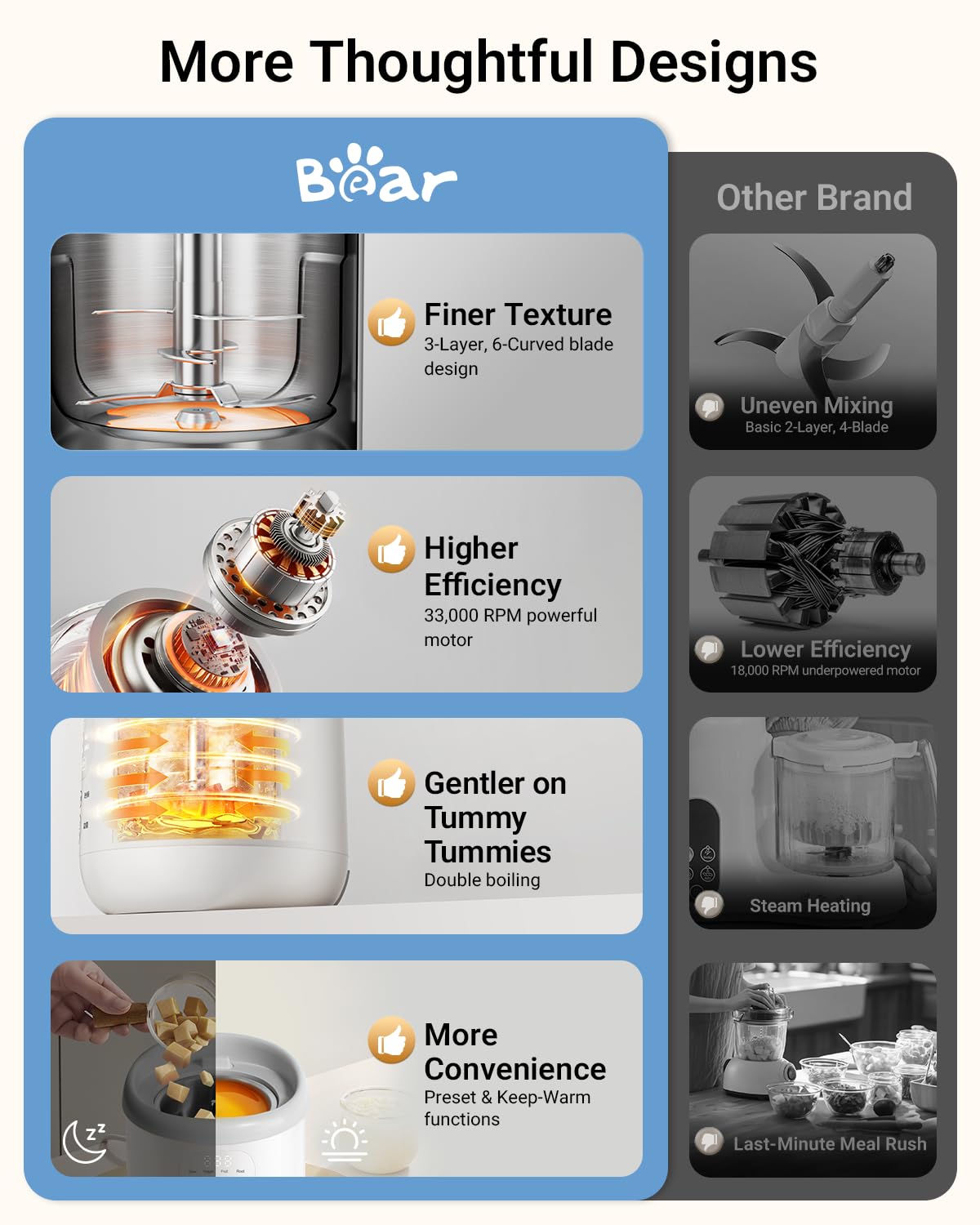
Bear NutriEase AllStage Stainless Steel Baby Food Maker Steamer and Blender, Truly OneStep Baby Food Processor Puree Maker Grinder Mills, Auto Cooking&Grinding for Healthy Homemade Baby Food, BPA-Free
- 𝗧𝗿𝘂𝗹𝘆 𝗔𝗹𝗹-𝗶𝗻-𝗼𝗻𝗲 𝗕𝗮𝗯𝘆 𝗙𝗼𝗼𝗱 𝗠𝗮𝗸𝗲𝗿 – The Bear baby food maker is your ultimate kitchen partner, combining a stea
- 𝗖𝘂𝘀𝘁𝗼𝗺𝗶𝘇𝗲 𝗜𝗱𝗲𝗮 𝗙𝗼𝗼𝗱 𝗖𝗼𝗻𝘀𝗶𝘀𝘁𝗲𝗻𝗰𝘆 – Choose between auto or manual mixing modes to precisely control food consist
- 𝗦𝘂𝗽𝗲𝗿𝗶𝗼𝗿 & 𝗦𝗮𝗳𝗲 𝗦𝘁𝗮𝗶𝗻𝗹𝗲𝘀𝘀 𝗦𝘁𝗲𝗲𝗹 𝗖𝗼𝗻𝘀𝘁𝗿𝘂𝗰𝘁𝗶𝗼𝗻 – Durable, non-toxic, and premium, our stainless steel bowl, cove
BEABA Babycook Neo (Best for Serious Batch Cookers)
The BEABA is the premium option at $279.99 and it earns that premium in one key way: capacity. The 1,250 ml glass bowl produces up to 20 servings in a single cook cycle. If you are someone who wants to spend two hours on a Sunday and have a full week of lunches and dinners sorted, the BEABA makes that genuinely practical. The glass bowl is non toxic, scratch resistant, and satisfying to use.
The elevated stainless steel steam basket is the best engineered steam system of the group. BEABA also makes a valid point about competitors whose food sits in water rather than above it; if you care about nutrient preservation, the design difference matters.
The price will put some families off, and fairly so. But for parents who batch cook seriously, choosing the right baby food maker is one decision that genuinely pays back in time saved over a full weaning year.


BEABA Babycook Neo, Baby Food Maker, Glass Bowl Baby Food Processor, 4 in 1 Steam Cook & Blender, Stainless Steel Steam Basket, Easy Clean Reservoir, 5.5 Cup Capacity, Eucalyptus
- THE ORIGINAL CREATORS OF THE BABY FOOD MAKER Newest model with glass bowl, stainless steel steam basket, & lar
- 4-IN-1 FUNCTION - steam cook, blend, defrost, reheat healthy food all in one baby food maker. Babycooks Elevat
- LARGER CAPACITY - 1,250ml size bowl makes 5.2 cups (up to 20 servings) of fresh baby food in just one cooking
Grownsy Baby Food Maker (Best Mid-Range with Steriliser)
The Grownsy (available in white and dark grey, both at $89.99) earns its 4.7 star rating across 2,248 reviews, making it the highest rated machine in this group by user satisfaction. The elevated steam basket design protects vitamins B and C specifically, and the built in steriliser mode, while not strictly necessary for most healthy babies, does provide peace of mind in the early months.
Auto and manual blend modes give texture flexibility. The digital controls are simple enough that sleep deprived parents can operate them without consulting a manual. Both colour variants are identical in function; pick whichever suits your kitchen.

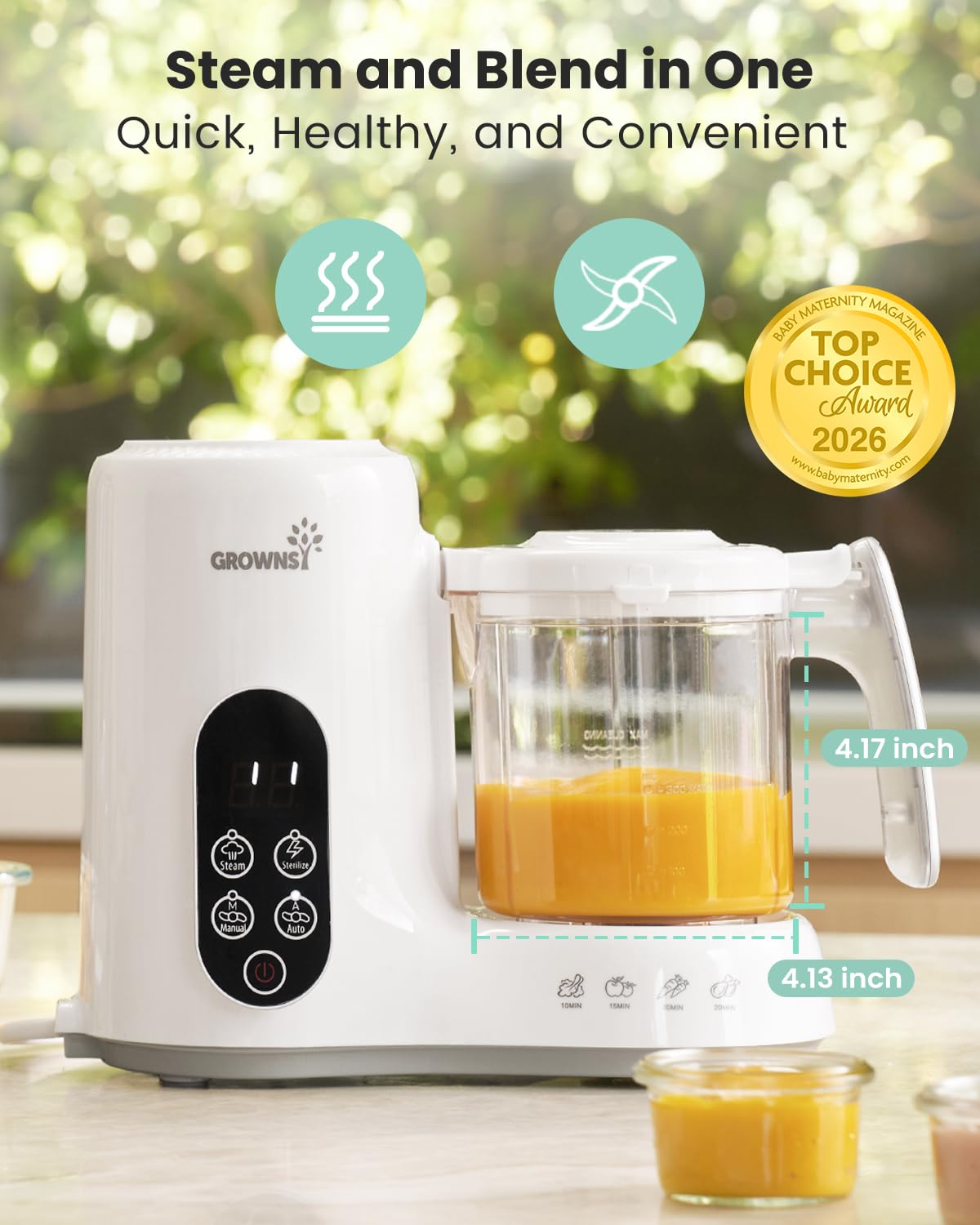

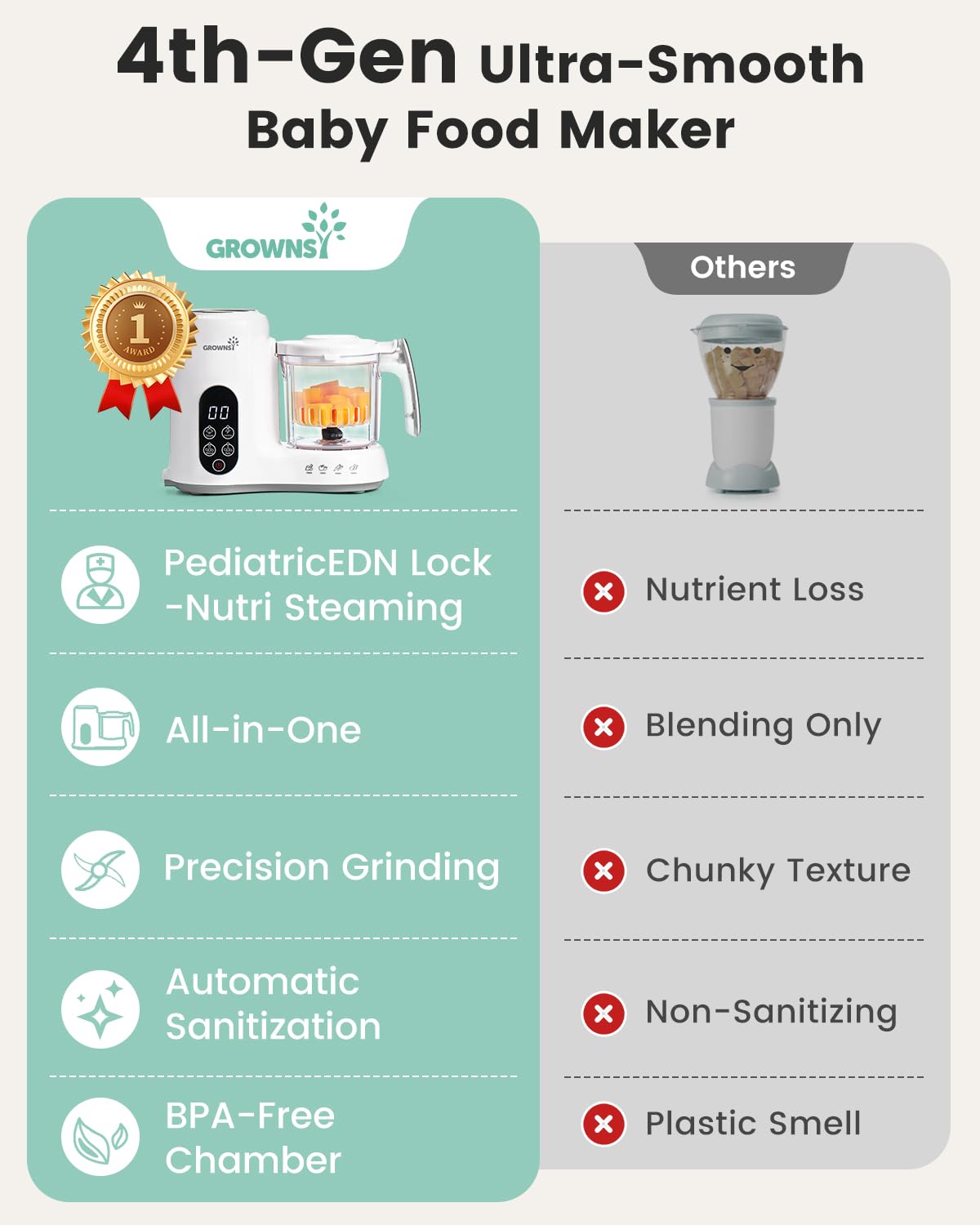

Grownsy Baby Food Maker with Steam Basket, One Step Baby Food Processor Steamer Puree Blender Grinder Mills Machine, Auto Cooking Grinding and Sterili-zing for Healthy Homemade Baby Food, White
- 𝗦𝘁𝗲𝗮𝗺𝗶𝗻𝗴 𝗮𝗻𝗱 𝗕𝗹𝗲𝗻𝗱𝗶𝗻𝗴 𝗶𝗻 𝗢𝗻𝗲: The height of the blender container is 4.13 inches, and the outer diameter is 4.
- 𝗡𝘂𝘁𝗿𝗶𝗲𝗻𝘁-𝗣𝗿𝗲𝘀𝗲𝗿𝘃𝗶𝗻𝗴 𝗦𝘁𝗲𝗮𝗺𝗶𝗻𝗴 𝗕𝗮𝘀𝗸𝗲𝘁: The elevated design of our steaming basket enables true steam cooking, mi
- 𝗧𝘄𝗼 𝗠𝗶𝘅𝗶𝗻𝗴 𝗠𝗼𝗱𝗲𝘀: This baby food steamer and blender simplifies starting solids and everyday baby meal prep wi
BABYNUTRI Auto Baby Food Maker (Best Glass Bowl at Mid-Range Price)
At $89.99 with a glass bowl, the BABYNUTRI offers premium material quality without the premium BEABA price. The touchscreen operation, scheduling function, and keep warm setting are genuinely useful quality of life features. The 12 oz capacity is small for batch cooking but perfect for daily fresh prep.
The 4.1 star rating from 140 reviews is solid if limited in volume. If you prioritise glass over stainless and want to spend under $100, this is the one to consider.
5. Safety, Materials, and What "BPA Free" Actually Means for Your Baby
"BPA free" has become a marketing standard rather than a genuine safety signal on its own, so let me explain what you are actually evaluating.
BPA (bisphenol A) is an industrial chemical used in some plastics and resins that can leach into food, particularly under heat. The concern is its potential as an endocrine disruptor. The American Academy of Pediatrics (AAP) published guidance in 2018 recommending that families choose glass, stainless steel, or BPA free plastics and avoid heating food in plastic containers. All six machines in this comparison are BPA free. The premium options go further by using glass bowls or stainless steel bowls entirely, which removes the question of what might leach from plastic substitutes.
The other safety feature worth checking is the blade lock mechanism. Every machine in this comparison activates only when the lid and bowl are securely in place. This is a non-negotiable feature; a blender blade spinning in an unsecured bowl is a serious injury risk.
What about heavy metals in homemade baby food?
The Environmental Working Group's 2022 testing found lead, arsenic, cadmium, and mercury in commercial baby food products at concerning levels. Homemade food is not automatically free from heavy metals (rice, for example, naturally concentrates arsenic), but you have far more control. You can choose lower risk vegetables and fruits as your base, rotate ingredients for variety, and avoid the rice flour fillers common in commercial products.
The FDA's Closer to Zero initiative, launched in 2021 and updated in 2024, has been working toward action levels for heavy metals in infant and toddler food. Staying informed through the FDA website is worthwhile if this is a concern for you.
6. When a Baby Food Maker Is NOT Worth the Investment
I want to be honest with you here, because a good clinician does not just tell parents what they want to hear.
A baby food maker is probably not the right purchase for you if:
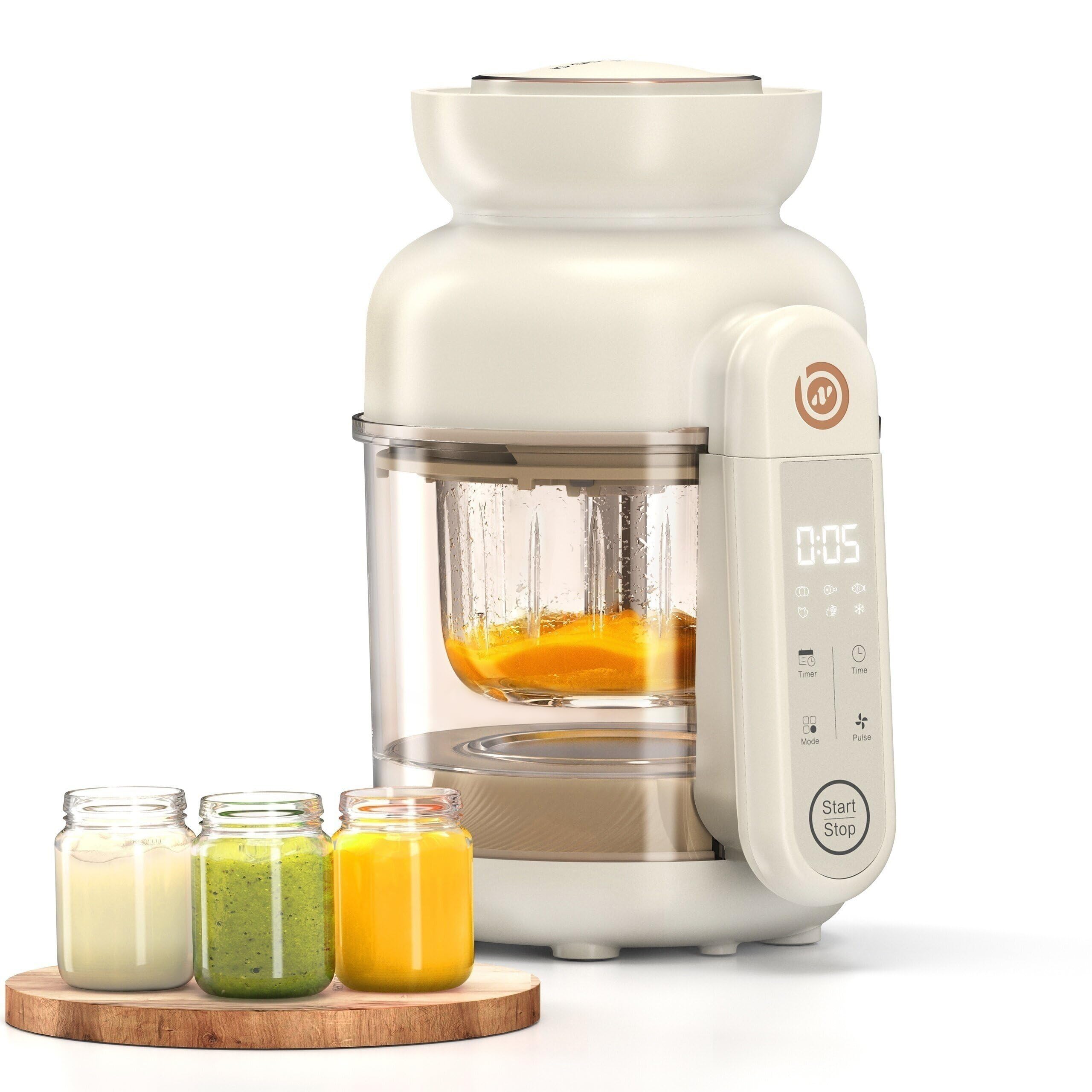
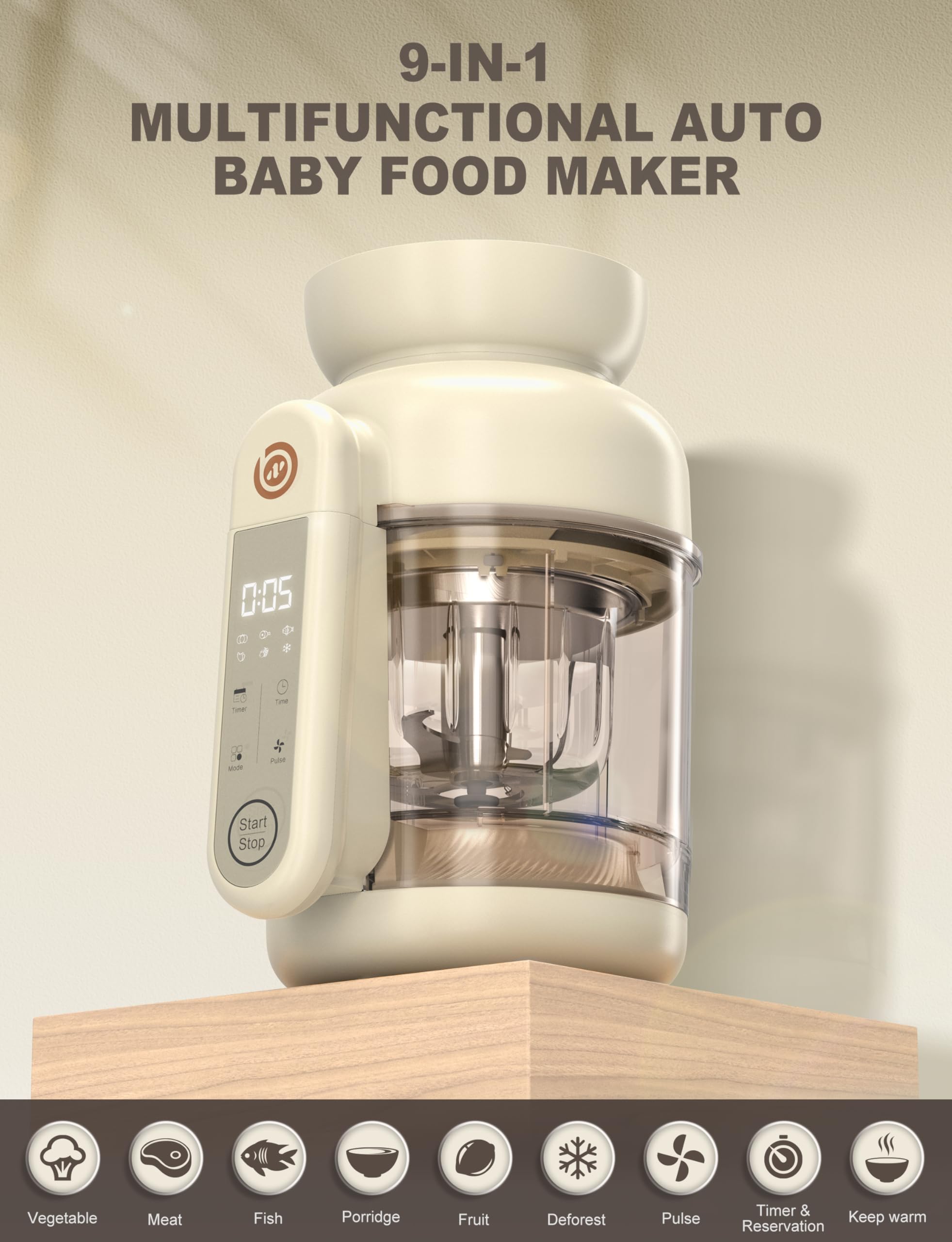
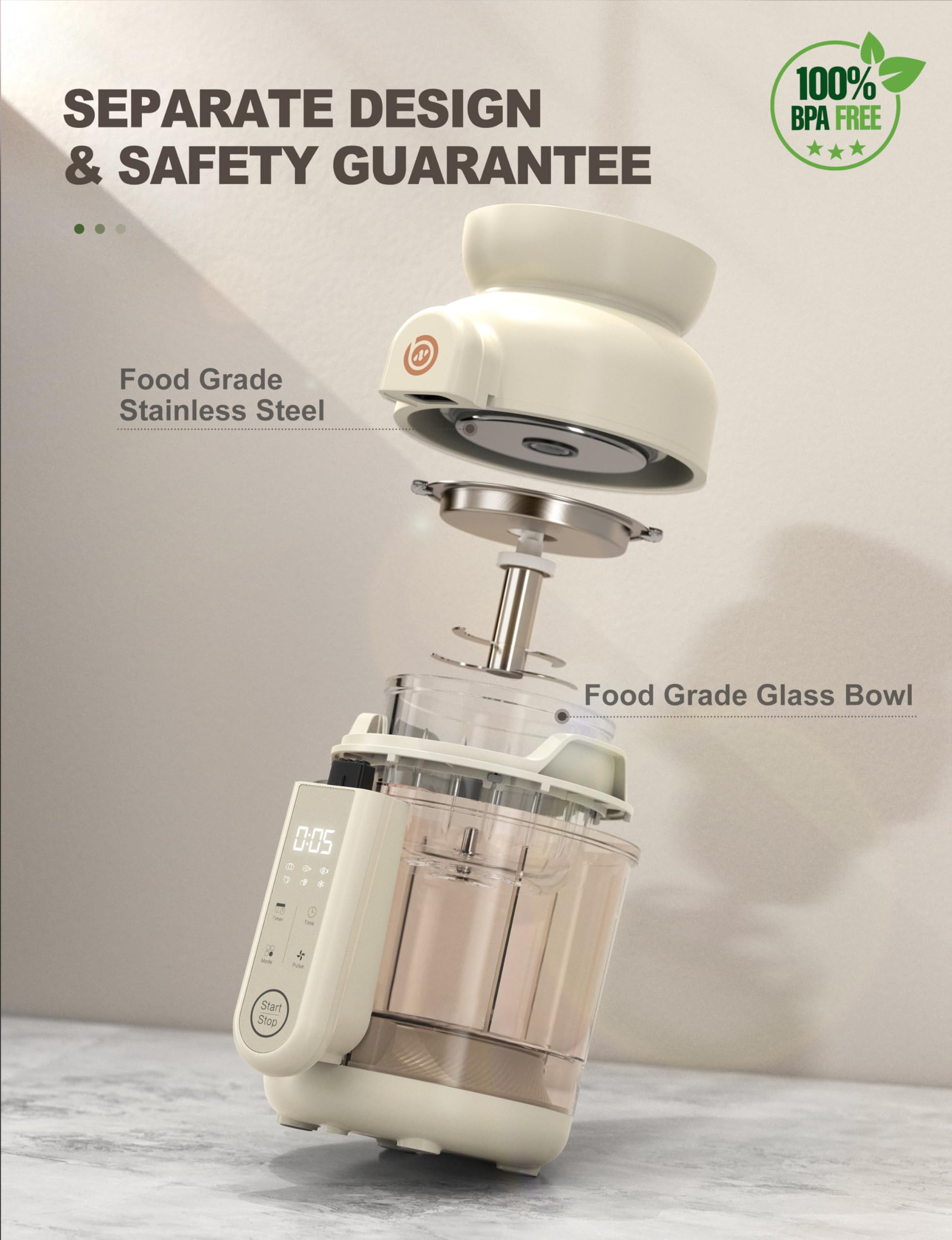
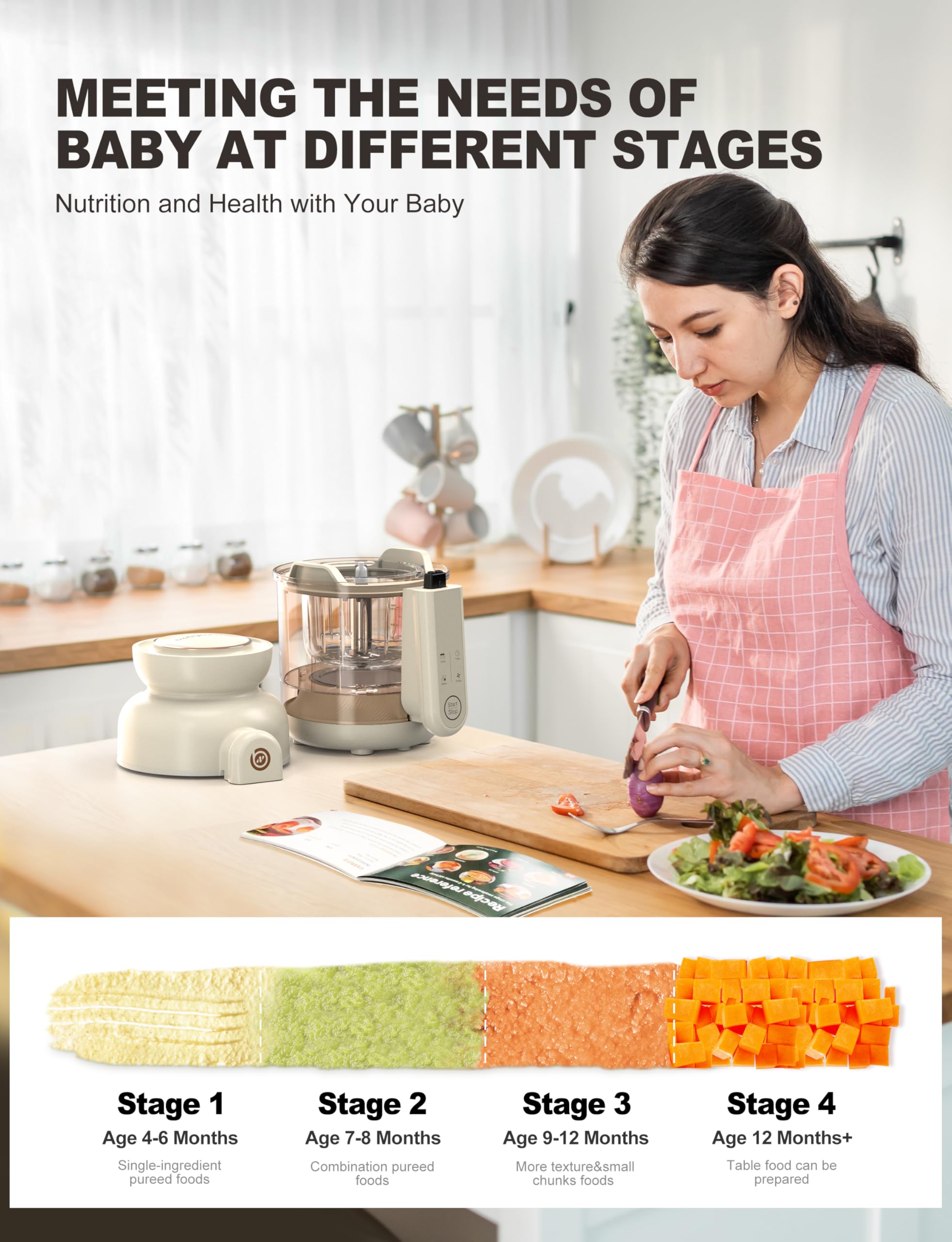
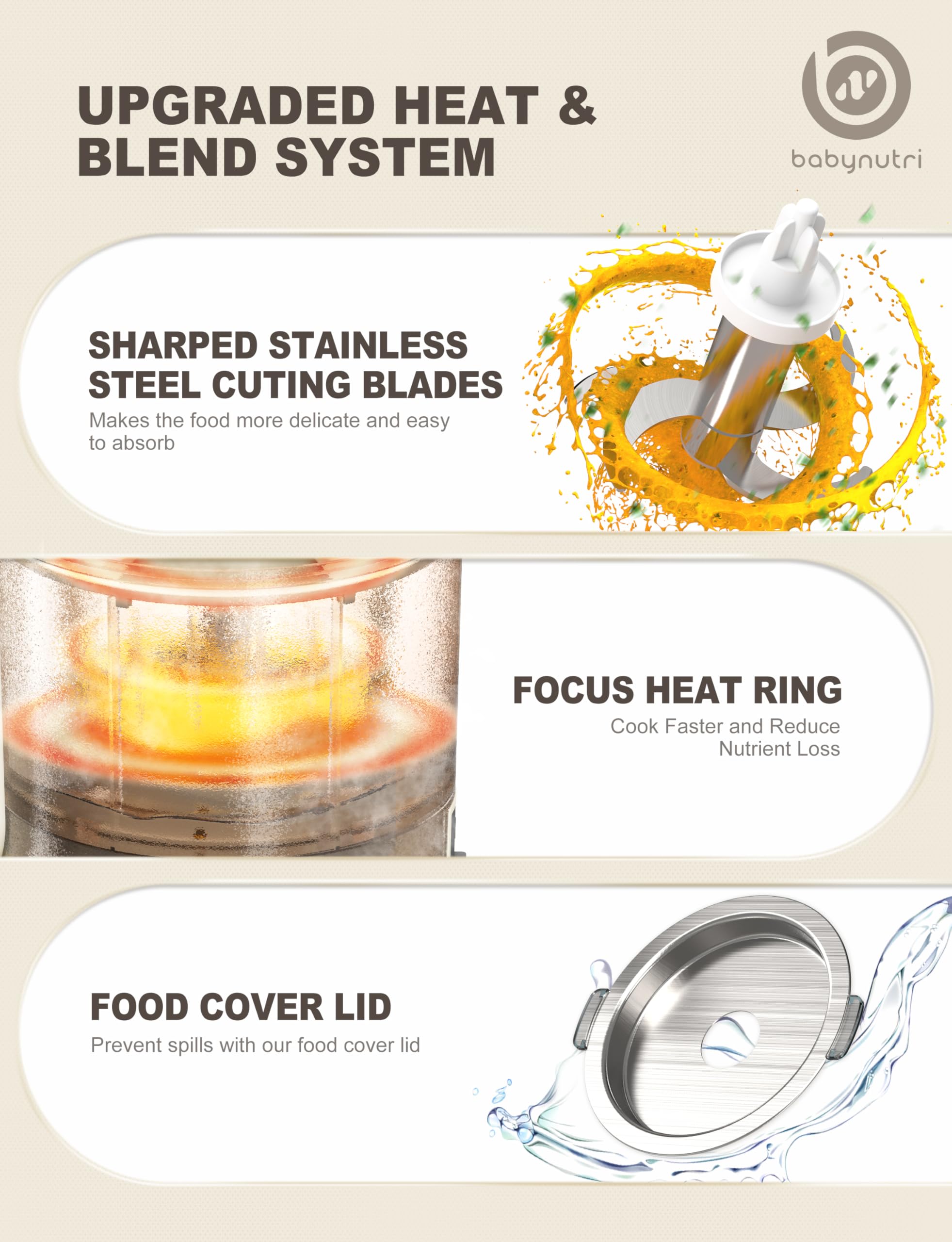
Auto Baby Food Maker, Glass Baby Food Mill, Baby Blender & Steamer and Puree Maker with Auto Cooking, Easy Cleaning, Touch Screen, Dishwasher Safe(12oz)
- All-in-One Marvel: BabyNutri redefines convenience with its multifunctional prowess. Seamlessly integrating st
- Cutting-Edge Precision Blades: Elevate your baby's dining experience with BabyNutri's Precision Blade Technolo
- Uncompromising Safety Standards: Crafted from premium stainless steel and glass, BabyNutri sets the gold stand
| Machine | Best For | Bowl Material | Capacity | Key Feature | Recommended Product | Price |
|---|---|---|---|---|---|---|
| Chefhandy 5-in-1 | Budget buyers, daily fresh prep | Stainless steel steam basket | Small-medium | 6 pouches included | Chefhandy Baby Food Maker | $68.99 |
| Bear NutriEase AllStage | Stage-by-stage precision | Stainless steel bowl and blade | Medium | 3 age stage + ingredient presets | Bear NutriEase Baby Food Maker | $129.99 |
| BEABA Babycook Neo | Batch cooking, glass purists | Glass bowl | Large (5.5 cups) | 20 servings per cycle | BEABA Babycook Neo | $279.99 |
| BABYNUTRI Auto | Glass bowl under $100 | Glass bowl | Small (12 oz) | Touchscreen, scheduling, keep warm | BABYNUTRI Baby Food Maker | $89.99 |
| Grownsy (White) | Best rated mid-range | Stainless steel steam basket | Medium | Built-in steriliser, highest user rating | Grownsy Baby Food Maker White | $89.99 |
| Grownsy (Dark Grey) | Same features, darker finish | Stainless steel steam basket | Medium | Built-in steriliser, digital controls | Grownsy Baby Food Maker Dark Grey | $89.99 |
Expert Insights
Wrapping Up
The honest answer to "is a baby food maker worth it?" is: it depends, but for most parents in the thick of the four to twelve month weaning window, it really does make life easier. Not in a gadget-y way, but in the genuinely practical sense of less washing up, better texture control, and food you actually know the ingredients of. The Environmental Working Group findings on heavy metals in commercial baby food shifted a lot of families toward homemade purees, and for good reason. A machine that makes that switch easier and faster has real value.
If I had to give one piece of advice from both the clinical and the parenting side: buy the machine that fits your batch cooking habits. If you cook daily, spend less. If you want to cook once a week, spend more on capacity. The baby in front of you will not taste the difference between a $70 puree and a $280 one, but you will notice whether the machine works with your actual routine or against it.
If this helped, save it for when the weaning questions start arriving from your mum group, and share it with any parent about to google their way through this exact decision at midnight.
Sources & References
- Environmental Working Group. "Baby Food Hall of Shame." 2022. https://www.ewg.org/news-insights/news/2022/02/ewg-report-baby-food-hall-shame
- American Academy of Pediatrics (AAP). "Food Additives and Child Health." Pediatrics, 2018. https://doi.org/10.1542/peds.2018-1408
- World Health Organization (WHO). "Complementary Feeding: Family Foods for Breastfed Children." WHO, 2023. https://www.who.int/publications
- NHS. "Your baby's first solid foods." NHS Choices, updated 2024. https://www.nhs.uk/conditions/baby/weaning-and-feeding/babys-first-solid-foods/
- Food Standards Agency. "Nutrient retention in food preparation." FSA, 2023. https://www.food.gov.uk
- US Food and Drug Administration (FDA). "Closer to Zero: Reducing Childhood Exposure to Contaminants from Foods." Updated 2024. https://www.fda.gov/food/environmental-contaminants-food/closer-zero-reducing-childhood-exposure-contaminants-foods
- British Dietetic Association. "Weaning and Complementary Feeding: Food Fact Sheet." BDA, 2023. https://www.bda.uk.com
- Trasande, Leonardo. "Sicker, Fatter, Poorer: The Urgent Threat of Hormone-Disrupting Chemicals to Our Health and Future." Houghton Mifflin Harcourt, 2019.
- Rapley, Gill and Murkett, Tracey. "Baby-Led Weaning: Helping Your Baby to Love Good Food." Vermilion, updated edition 2019.
Frequently Asked Questions
Do I need a baby food maker if I already have a blender?
When should I start using a baby food maker?
Is homemade baby food actually more nutritious than commercial?
How long does homemade baby food last in the fridge and freezer?
Are glass bowls safer than stainless steel in a baby food maker?
Can I use a baby food maker to make toddler food too?
What is the difference between auto and manual blend modes?
Was this helpful?
Thanks — your feedback helps us pick what to write next.