Best Baby Strollers of 2026: Budget to Luxury Picks
The best baby stroller for your family depends on your budget, lifestyle, and how long you want the stroller to last — but in 2026, standout picks exist at every price point from around $440 to $1,000.
In this article
Every year, roughly 4 million babies are born in the United States alone (CDC, 2023), and nearly every family raising one will spend real money on a stroller, often before the baby arrives. Yet stroller shopping remains one of the most confusing purchasing decisions a new parent faces: more than 200 distinct stroller models were available at major US retailers in 2025, spanning a price range from under $100 to over $2,000.
The stakes are higher than most people realise. A stroller is not just a convenience item. For a newborn, the recline angle directly affects airway safety. For a toddler, the harness system and wheel stability affect injury risk on uneven terrain. And for you, the parent doing the pushing, an ergonomically mismatched handlebar height can cause genuine back strain over months of daily use.
In this article, you will understand:
1. Why Stroller Safety Standards Matter More Than Price Tags
The single most important thing to know before buying any stroller is that safety certification matters far more than the brand name or price. In the United States, the Juvenile Products Manufacturers Association (JPMA) certifies strollers against ASTM International standard F833, which covers stability, entrapment hazards, restraint system strength, and folding-mechanism safety. In the UK, EN1888 is the equivalent benchmark.
A $400 stroller without certification is genuinely riskier than a $200 stroller that carries it. Always look for the JPMA seal or, for UK families, the BSI Kitemark.
Recline Angle and Newborn Airway Safety
This is where clinical knowledge matters most. Newborns under approximately 4 months have limited neck muscle control. When a stroller seat is too upright, a baby's head can fall forward, compressing the airway in what paediatricians call positional asphyxia. The American Academy of Pediatrics (AAP) has long flagged this risk in car seats and bouncers; the same physics apply to stroller seats.
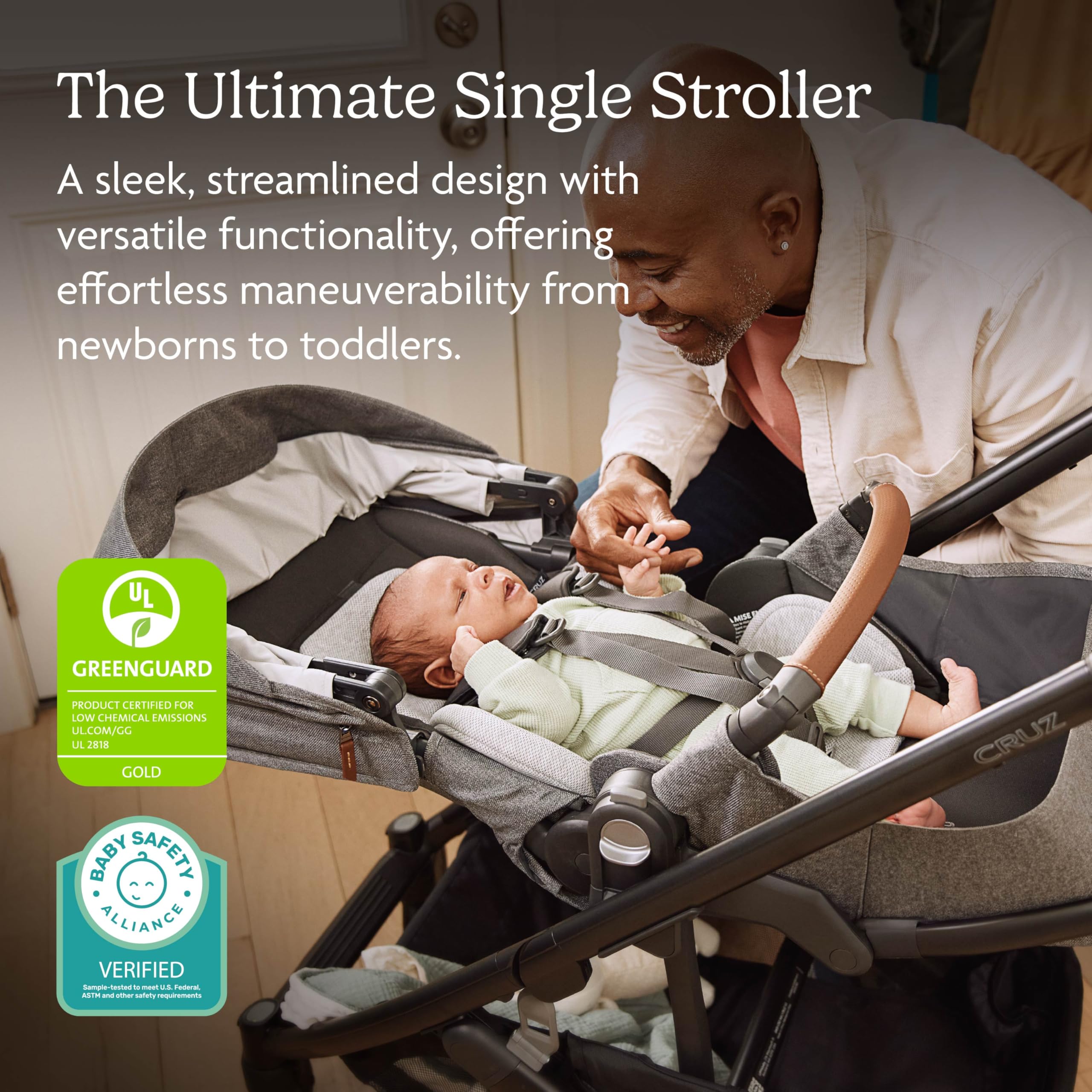
The practical rule: any stroller used from birth should offer a recline of at least 150 degrees (near-flat), or come with a compatible bassinet or pramette attachment. Both the UPPAbaby Cruz V3 and the UPPAbaby Vista V3 include an integrated carriage mode usable from birth, addressing this concern directly.
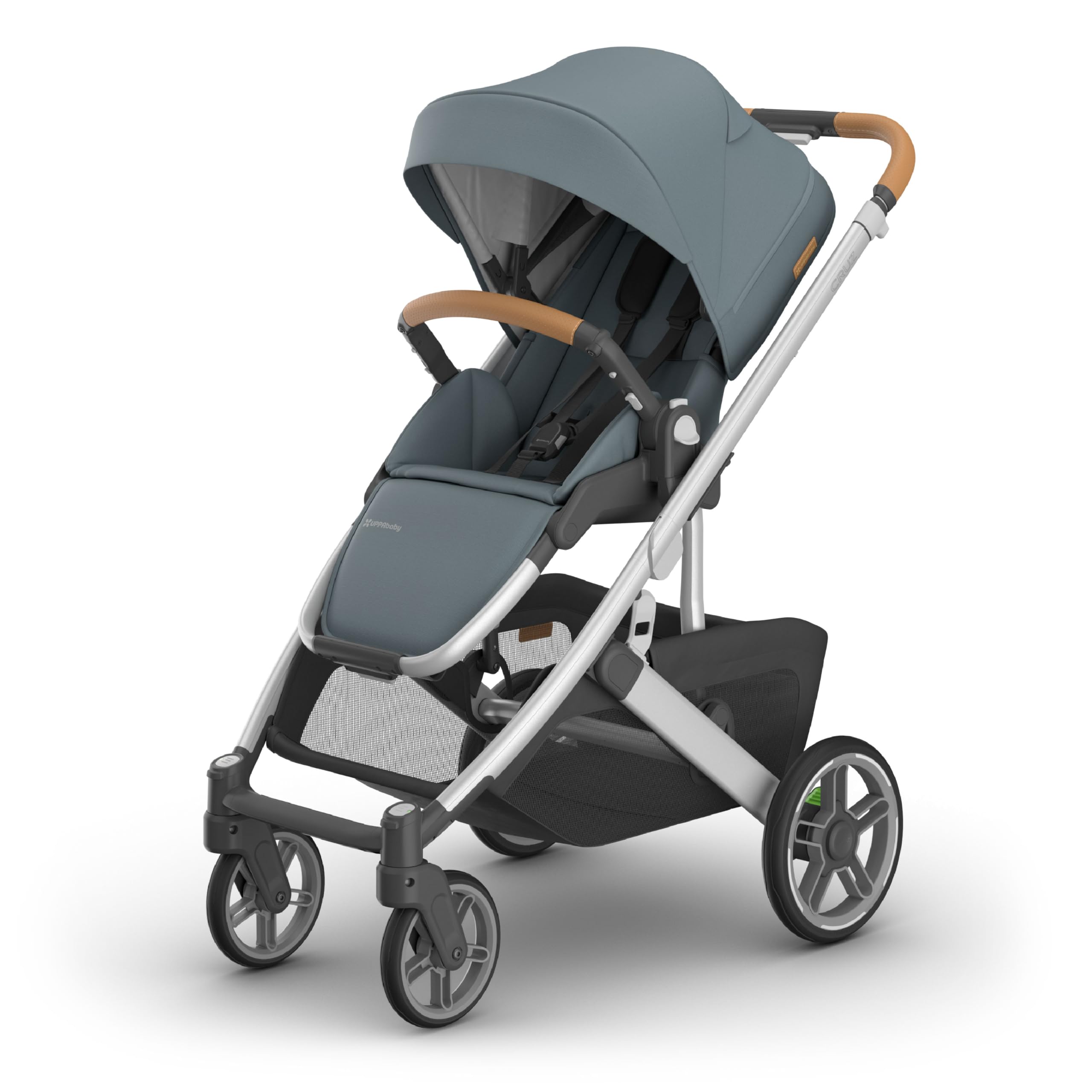
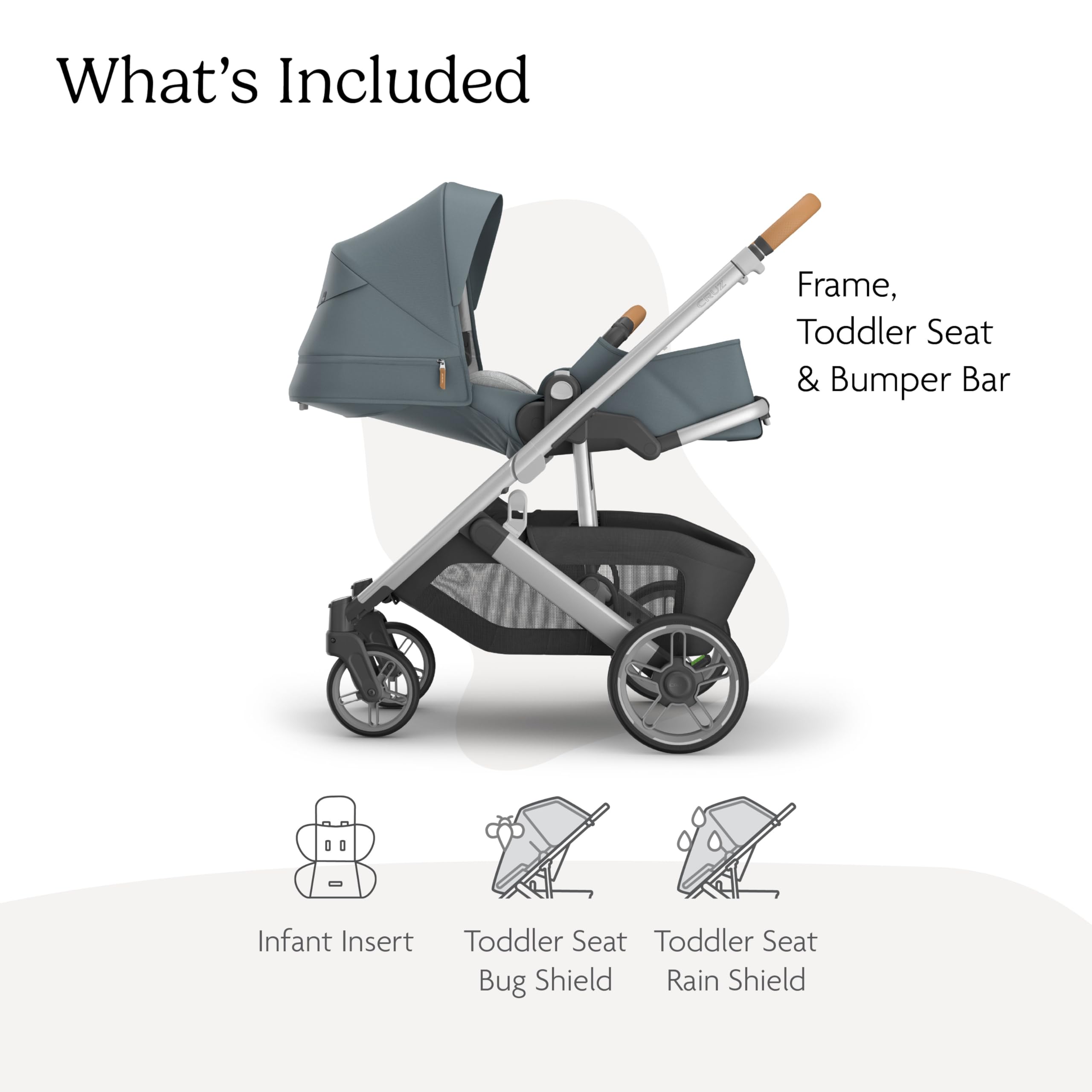
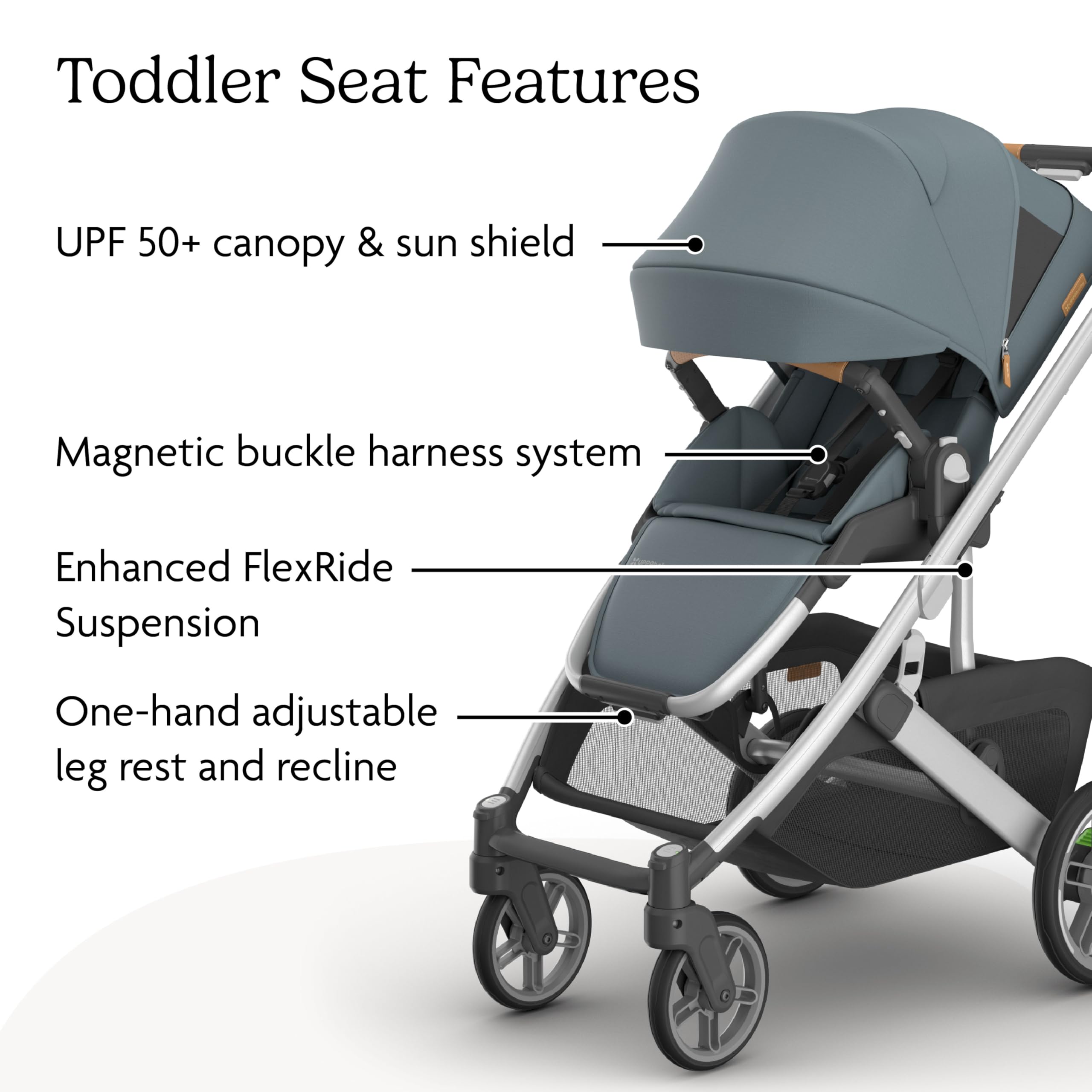
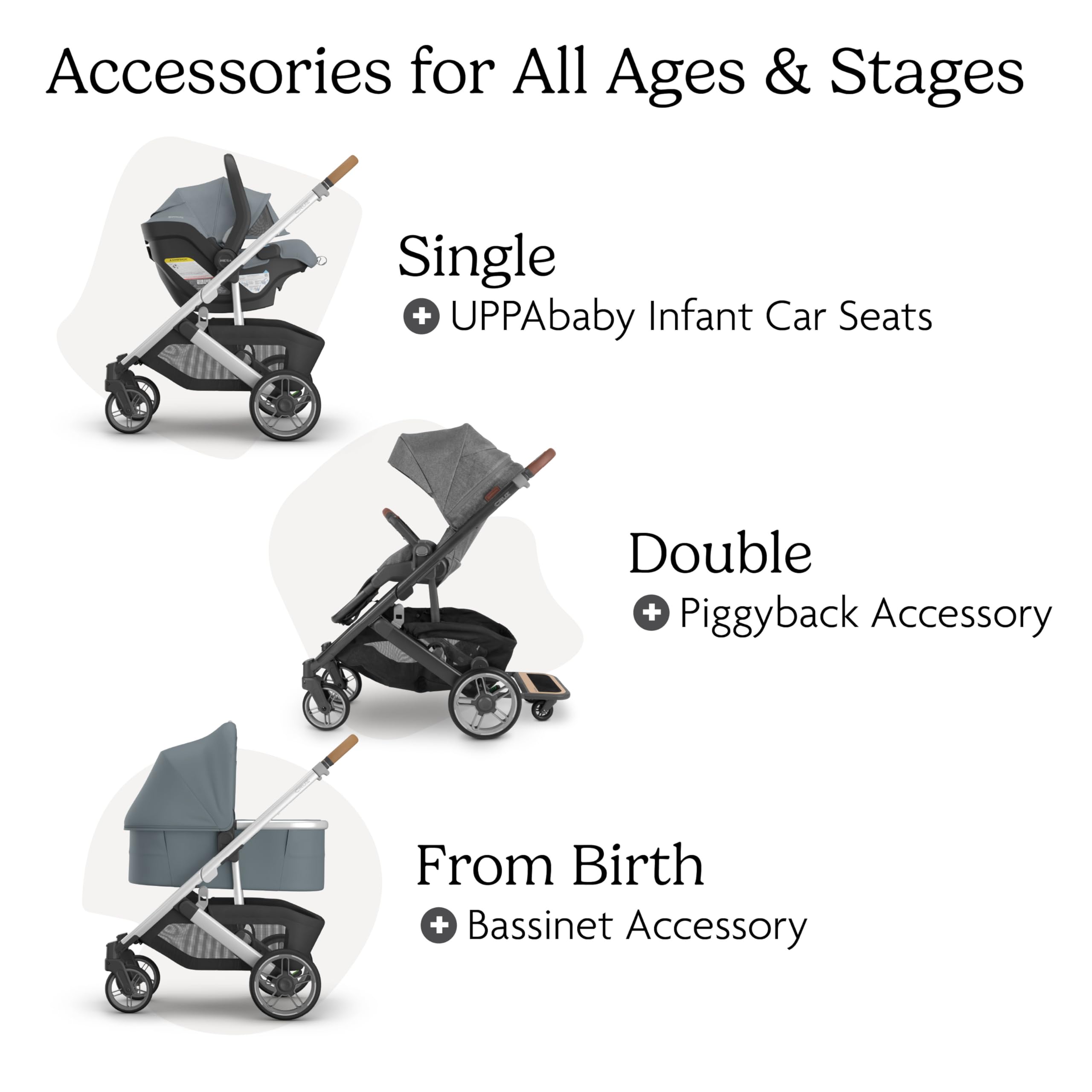
UPPAbaby Cruz V3 Stroller - from Birth + Car Seat Compatible - Full-Size, Reversible Seat - Infant Insert, Bug and Rain Shields Included - Callum (Stone Blue/Silver Frame/Sand Leather)
- FROM BIRTH TO TODDLER: The sleek, streamlined design offers effortless maneuverability with a full-size, lay-f
- CARRIAGE MODE: The integrated foot barrier for carriage mode can be used with baby from birth.
- SIMPLE FOLD: The Cruz offers a one-step, ultra-compact fold with footrest and bumper bar seamlessly tucking in
2. Travel Systems vs. Standalone Strollers: Which Actually Saves You Money
A travel system bundles an infant car seat with a compatible stroller frame, and for most first-time parents it represents genuine savings, both financial and cognitive. Instead of researching, purchasing, and learning two separate products, you get one integrated system engineered to work together.
The Graco Modes Nest Travel System is one of the most popular examples in 2026, pairing the SnugRide 35 Lite Elite infant car seat (rated for infants 4 to 35 lbs) with a 3-in-1 stroller frame. The stroller converts from an infant car seat carrier to a pramette and then to a forward-facing toddler stroller, meaning you buy once and use it across the first three to four years of your child's life. At $479.99, it competes favourably against buying a standalone infant car seat ($150–$250) and a basic stroller ($200–$350) separately.
The Slide2Me Advantage
One feature in the Graco Modes Nest worth highlighting is the Slide2Me adjustable seat mechanism, which lets you bring the seat closer to you for face-to-face interaction. Responsive face-to-face engagement during early infancy supports language development and attachment, so a stroller that facilitates eye contact is genuinely more than a convenience feature.
The Evenflo Shyft Intuiti Travel System takes a different approach with its Revolve180 LiteMax NXT rotating rear-facing car seat, which spins 180 degrees to make loading and unloading the car significantly easier. If you park in tight urban spaces or have a back condition, the rotational seat is worth the $439.99 price on its own.

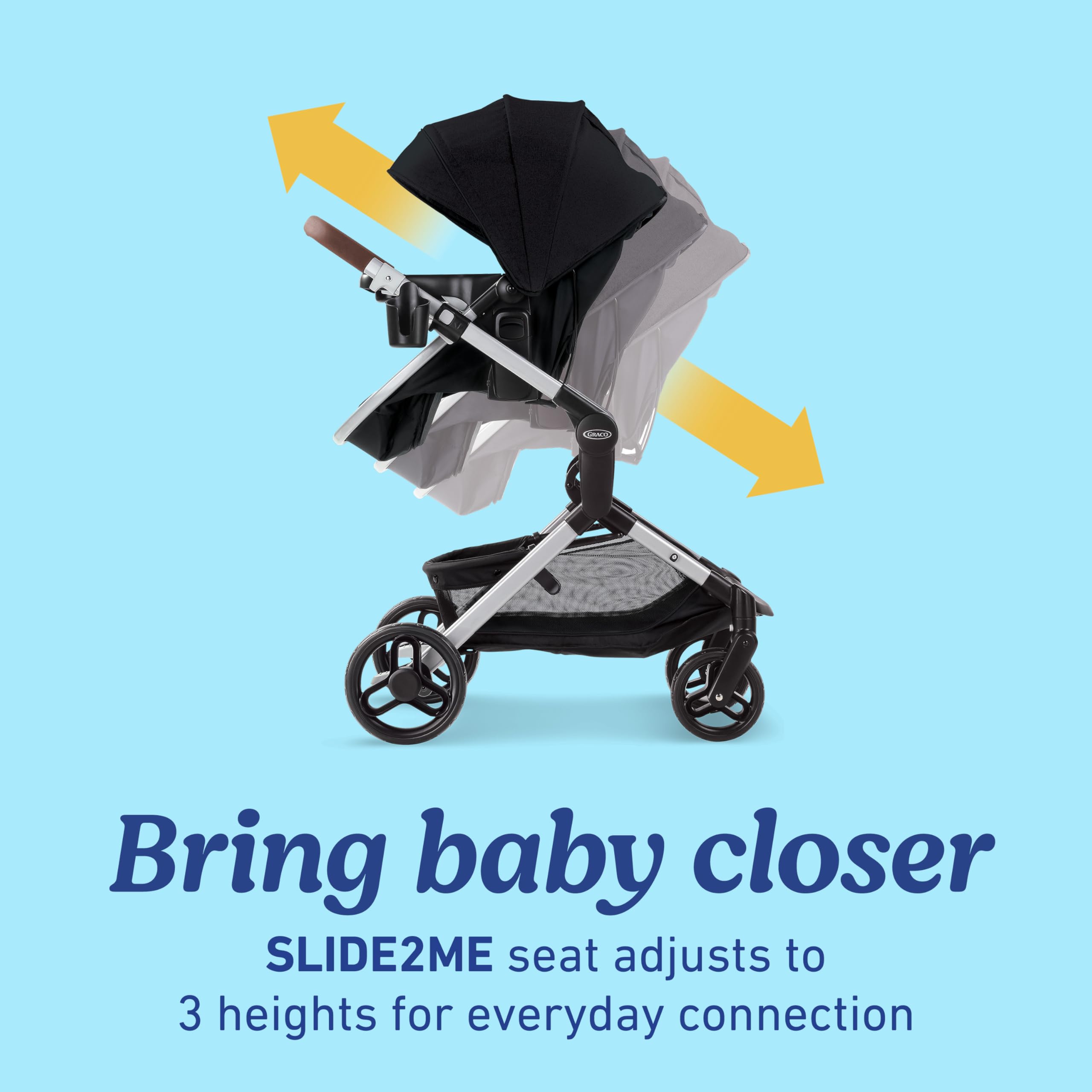
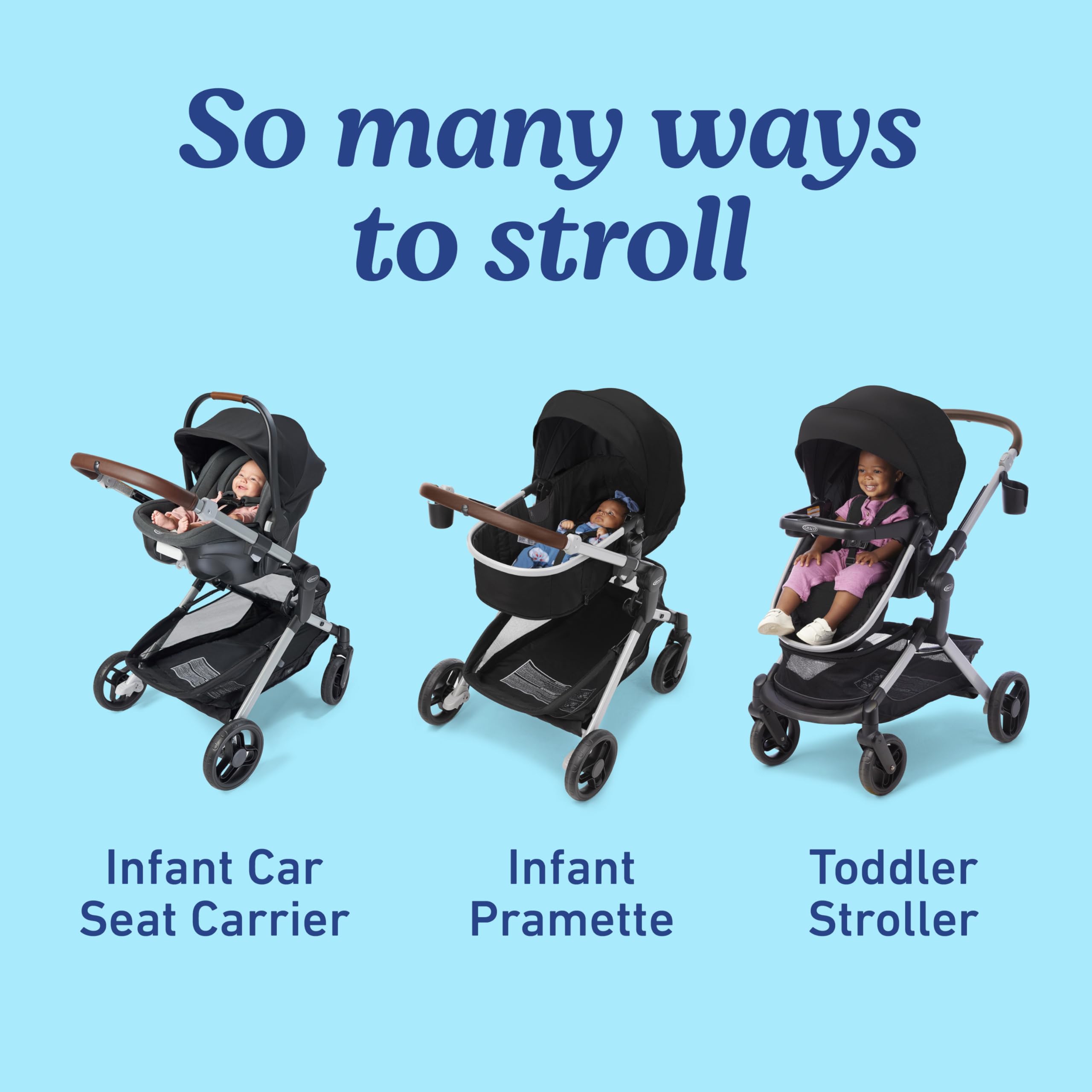
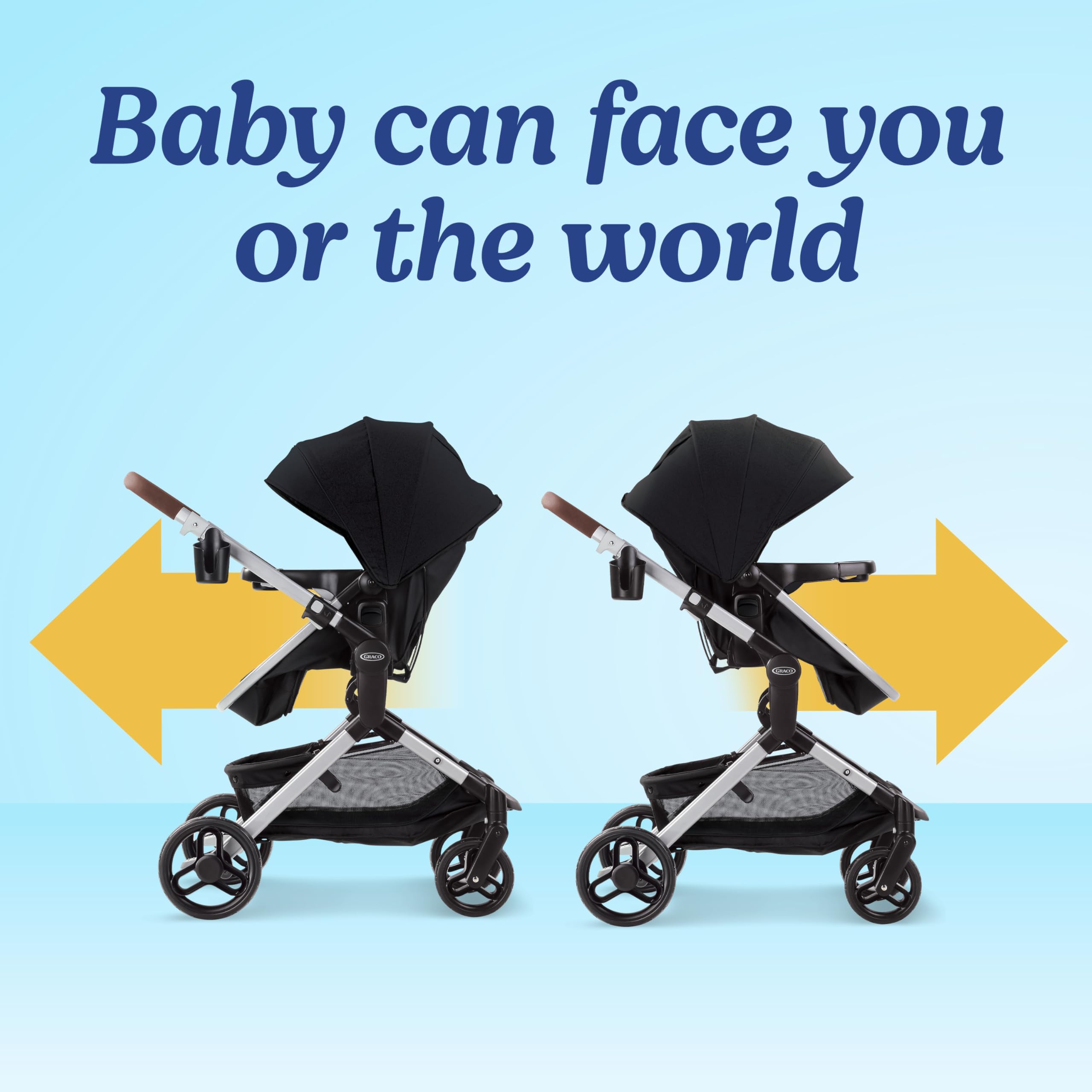
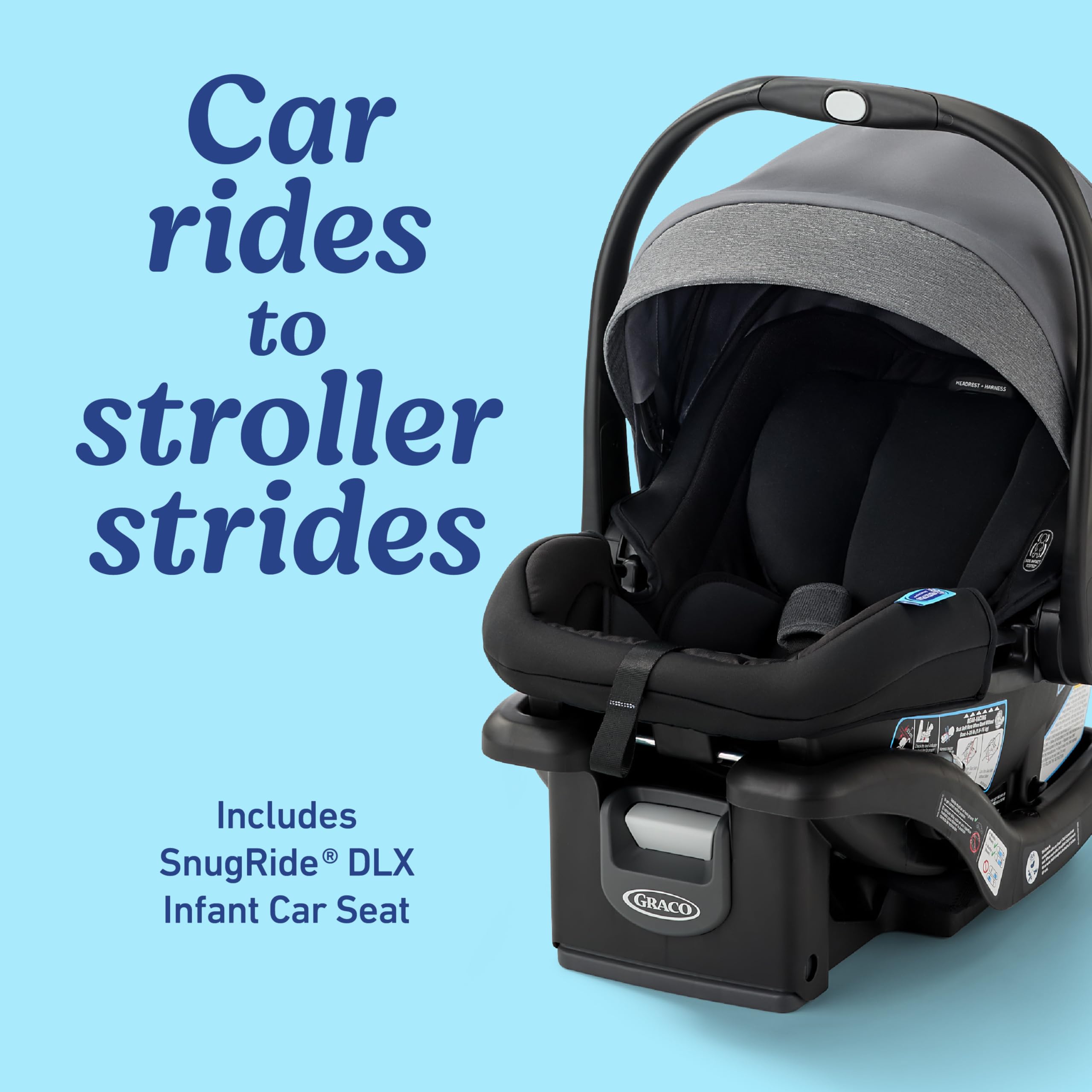
Graco Modes Nest Travel System, 3-in1 Modular Carseat Stroller Combo, Adjustable Slide2Me Infant Car Seat Carrier to Toddler Stroller, Includes the SnugRide DLX Infant Car Seat, Sullivan
- Versatile 3-in-1 Stroller: Transforms from an Infant Car Seat Carrier to Infant Pramette and then to Toddler S
- Inclusive Travel System: Comes with the Graco SnugRide 35 Lite Elite Infant Car Seat for infants from 4-35 lb
- Slide2Me Adjustable Seat: Modify the height for closer face-to-face interaction
3. All-Terrain vs. Urban Strollers: Matching the Stroller to Your Real Life
The most common stroller regret parents report is buying a beautiful compact stroller, then discovering it cannot handle their actual environment, whether that is cracked city sidewalks, gravel park paths, or grassy sports fields where older siblings play.
Before buying anything, spend one week noticing exactly where you walk. If 80 percent of your outings are smooth pavement, a lightweight urban stroller with smaller wheels is the smarter, easier-to-fold choice. If you regularly encounter uneven terrain, you need larger wheels (10 inches or more at the front, 12 inches at the rear) and a suspension system with genuine shock absorption.
The Momcozy ChangeGo Stroller is engineered for families who want genuine terrain versatility without buying separate strollers for different contexts. Its 10-inch front swivel wheels and 12-inch rear wheels with advanced spring suspension handle bumps quietly enough that a sleeping baby tends to stay asleep. The adjustable handlebar offers five height positions, which matters significantly if you and your co-parent have different heights; pushing a stroller with a handlebar 3 to 4 inches below your natural wrist height causes cumulative lower-back strain.
Urban Parents: Compact Fold and Weight Are King
For city families who navigate public transit, cafe entrances, and small car boots daily, fold mechanism and stroller weight are the two specifications to obsess over. Look for a stroller that folds in under three seconds with one hand (because your other hand will always be holding a baby or a coffee), and weighs under 25 lbs for routine portability.
The UPPAbaby Cruz V3 nails this with its one-step ultra-compact fold, and at 22.4 lbs it is light enough for daily transit use while remaining full-featured. It stands independently when folded, a deceptively practical feature when you have no free hands at all.
4. Growing Families: Convertible and Double Strollers Worth the Investment
If you are already pregnant with a second child, or you know you want more children within the next three to four years, buying a single stroller is often a false economy. Convertible strollers that grow from single to double configurations cost more upfront but eliminate the need for a second purchase entirely.
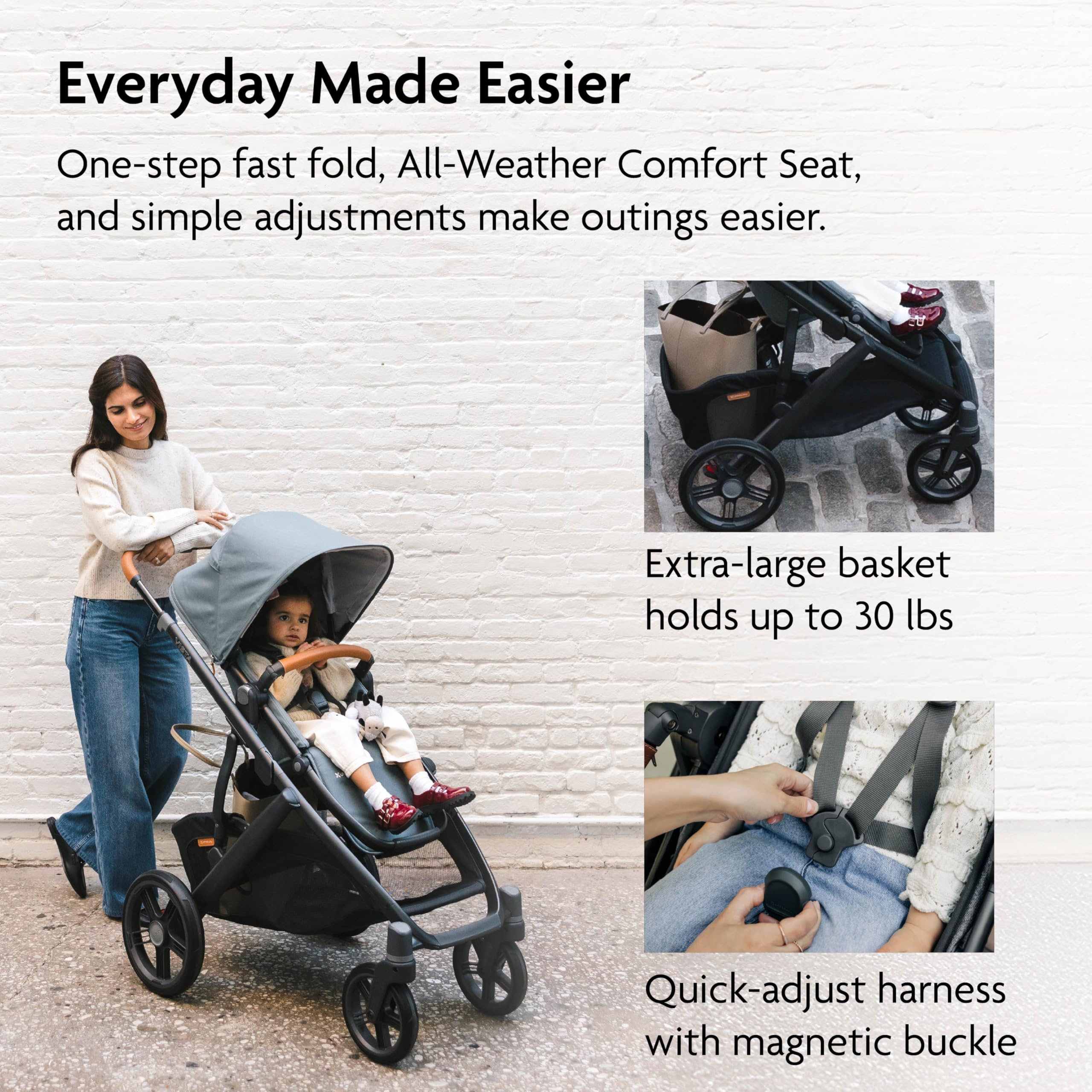
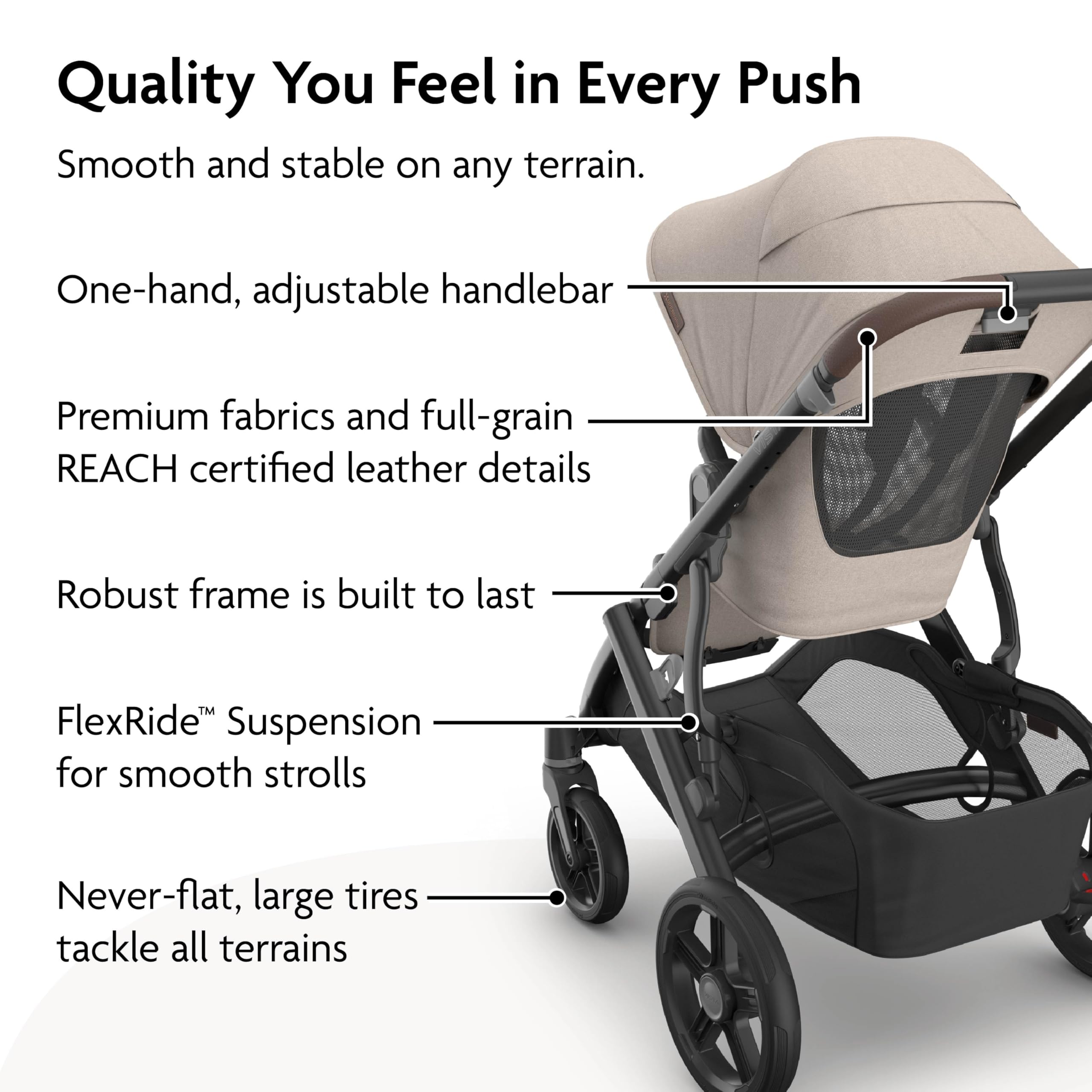
The UPPAbaby Vista V3 is the category leader here, and its $999.99 price starts to look reasonable when you do the maths. With 30-plus configurations, it accommodates up to three children simultaneously through a combination of bassinet, RumbleSeat, and toddler seat options. The magnetic harness system, a new feature in the V3, uses a quick-snap magnetic buckle that even tired parents can operate in the dark. The all-wheel suspension and XL storage basket (rated for up to 30 lbs of cargo) mean this is genuinely a primary transport system, not a supplementary walk-around stroller.
The Momcozy ChangeGo takes a different approach to expandability, with a single-to-double-to-wagon conversion system across 23 configurations. The wagon mode is particularly useful once your children are older, since it holds up to 50 lbs per seat and gives toddlers a sense of adventure that a standard stroller seat does not. The extendable UPF50+ canopy on the Momcozy is also best-in-class, protecting against UV radiation, which the World Health Organization (WHO) notes is cumulative from infancy, making sun protection during outdoor time a real health consideration rather than marketing language.
Understanding infant-specific stroller features becomes even more important when you are purchasing a multi-child system, since the newborn configuration must be as safe as a dedicated infant stroller.
What "Configurations" Actually Means in Practice
Marketing language like "30+ configurations" can feel abstract. In practical terms, configurations refer to the number of distinct seating arrangements you can create: parent-facing or forward-facing, bassinet or toddler seat, with or without car seat adapter, single or double setup, and so on. More configurations mean more flexibility as your family grows, but also a steeper learning curve in the first few weeks. Budget 30 to 45 minutes with the instruction manual before your first outing.
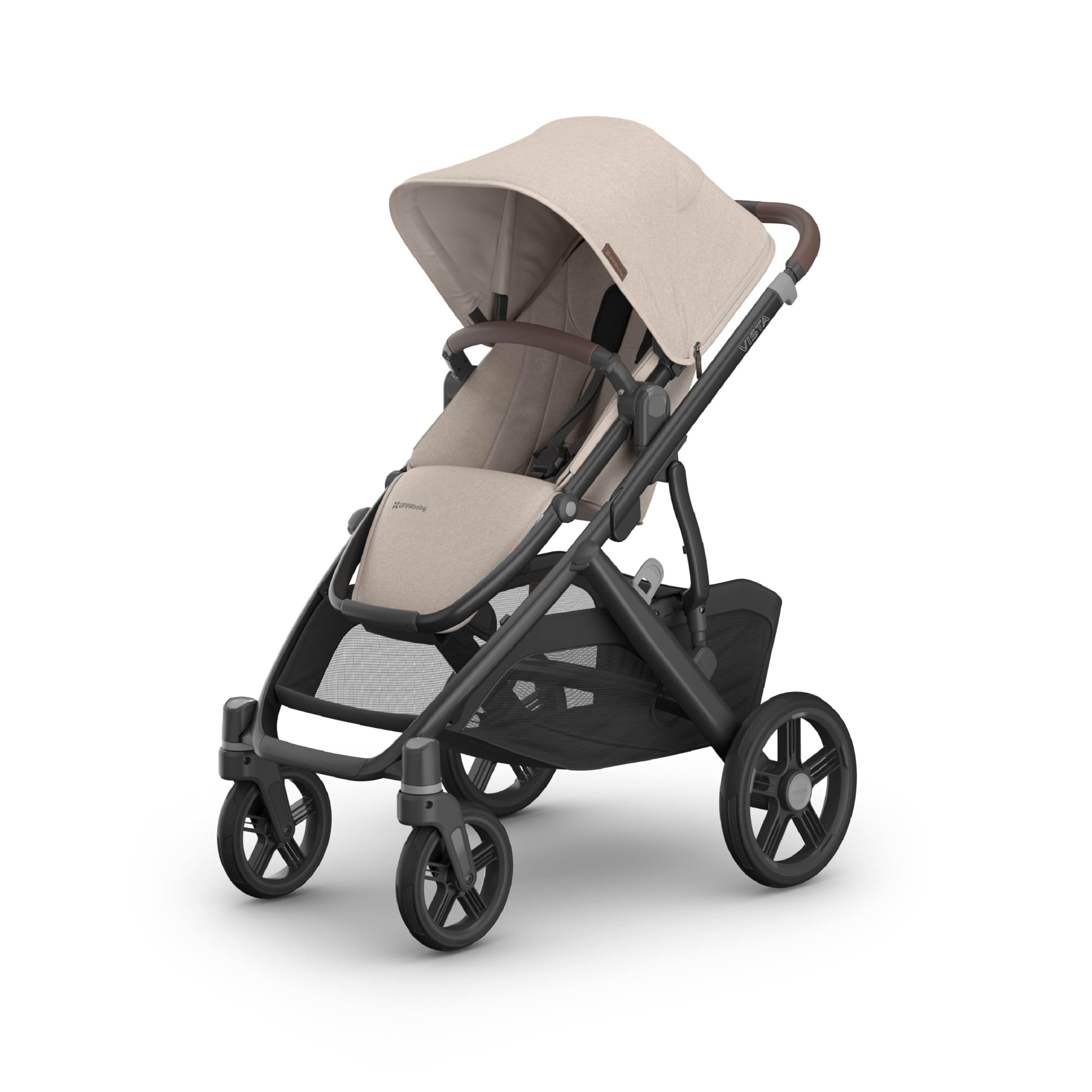
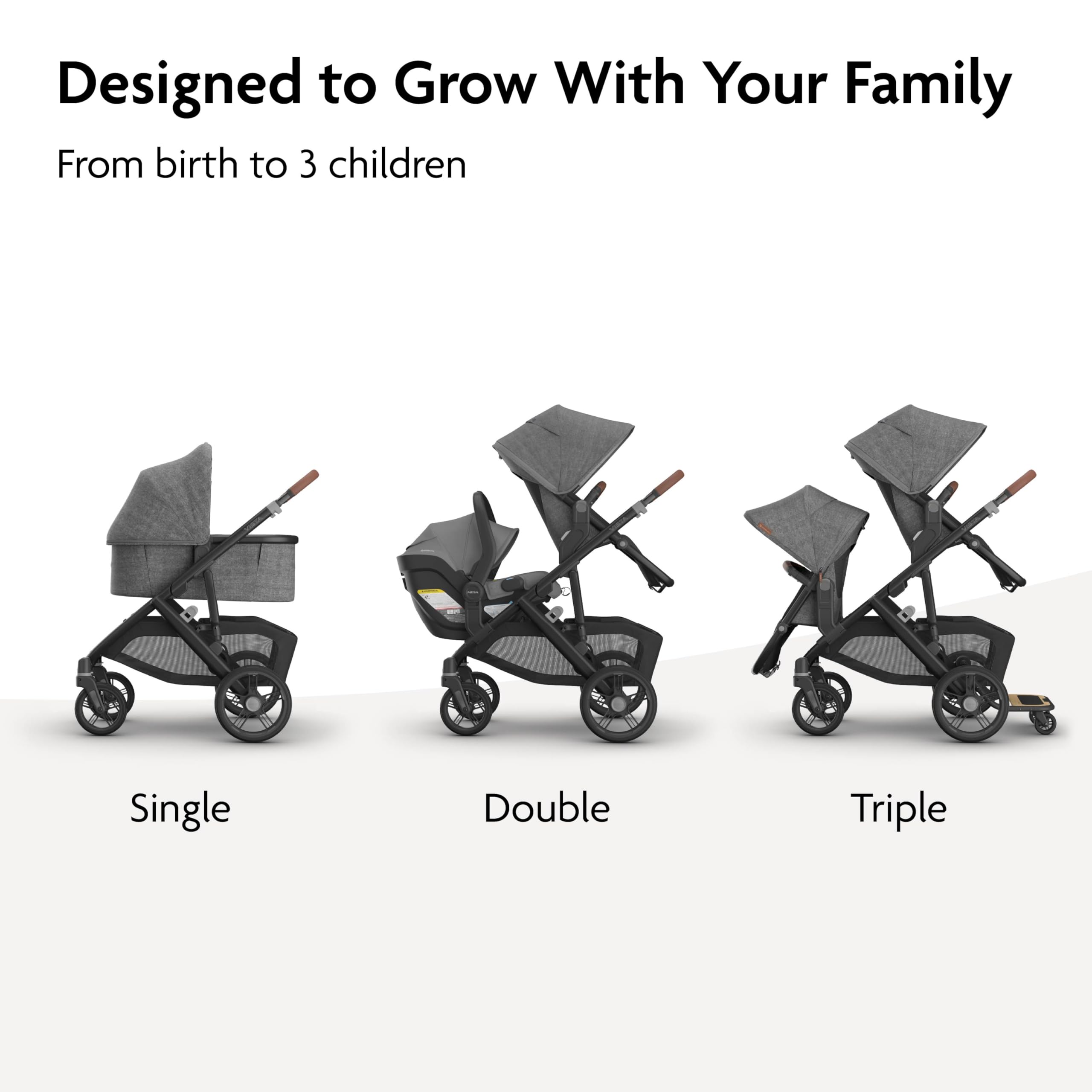
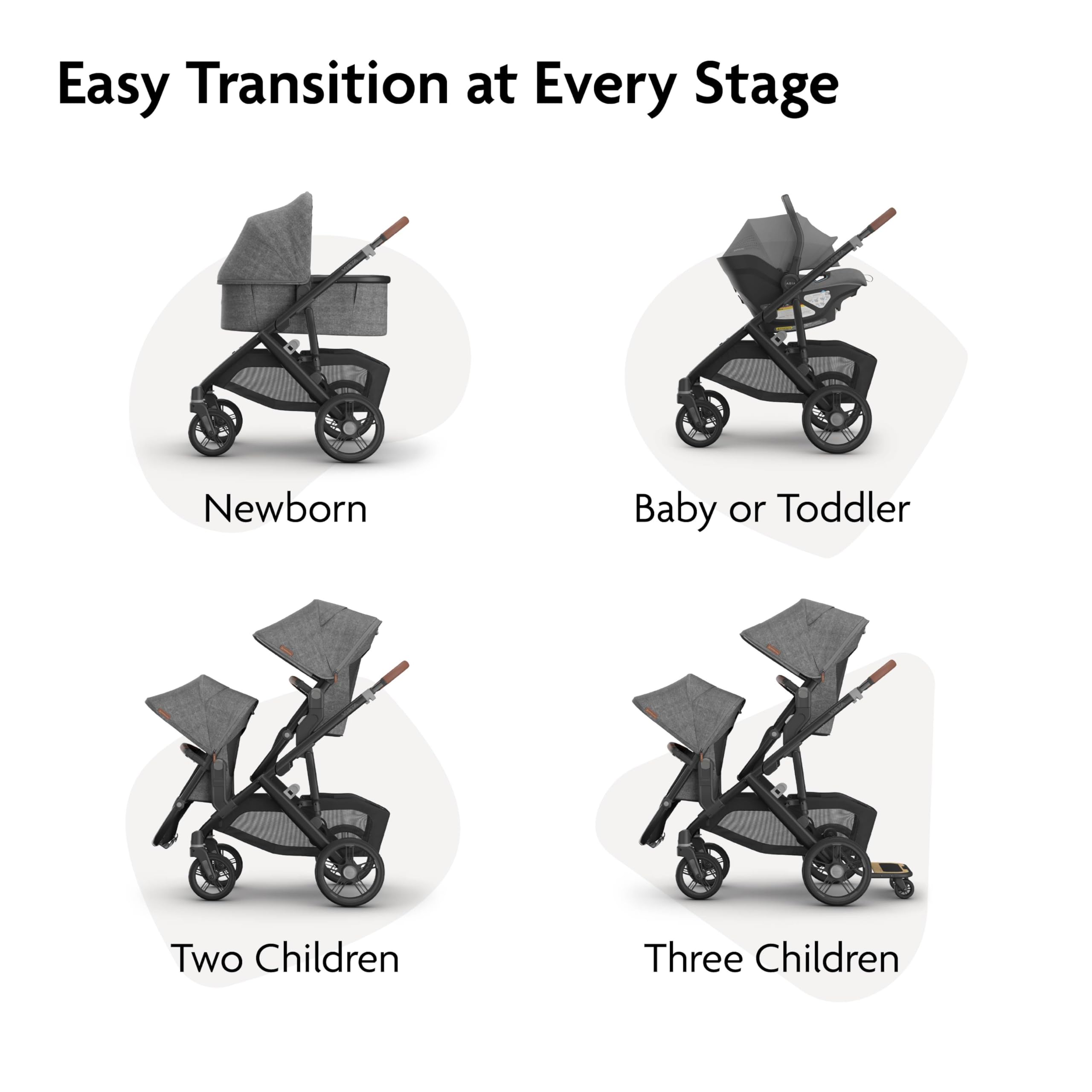
UPPAbaby Vista V3 Convertible Single-to-Double Stroller for Baby & Toddler, 30+ Configurations, Car Seat Compatible, All-Wheel Suspension, XL Basket – Ada (Sandstone Mélange/Carbon Frame)
- DESIGNED TO FIT EVERY FAMILY: An upgrade to the trusted Vista V2, the Vista V3 stroller offers 30+ configurati
- INCLUDED TODDLER SEAT: This full-size, multi-position seat easily switches between parent-facing and forward-f
- MAGNETIC HARNESS SYSTEM: A quick-to-secure magnetic buckle with an easy-adjust, no-rethread harness makes fitt
5. Budget vs. Luxury Strollers: Where the Real Differences Actually Are
Spending $1,000 on a stroller feels extravagant until you understand exactly what you are and are not paying for. The honest answer is that you pay for longevity, resale value, smoothness of roll, and convenience features, not for a meaningfully safer ride.
A well-certified $440 stroller like the Evenflo Shyft Intuiti is statistically as safe as a $999 UPPAbaby. Both meet the same federal safety standards. The premium you pay for luxury strollers buys:
- Frame quality and longevity. Aluminium frames (standard on UPPAbaby) outlast steel frames under regular daily use. The Cruz V3 and Vista V3 are both designed to be resold or passed down, which matters if you plan multiple children or want resale value. - Wheel and suspension engineering. Premium strollers use foam-filled or air-filled tyres with precision bearings. Budget strollers use plastic or basic rubber wheels. The difference is most noticeable on cobblestones or gravel paths. - Fold mechanism precision. Luxury stroller folds operate with a satisfying single-motion action. Budget folds often require two hands and a specific sequence of steps. - Canopy coverage. Premium canopies typically extend further, include magnetic peekaboo windows, and are made from UV-rated fabric. - Resale value. UPPAbaby strollers routinely resell at 50 to 70 percent of original retail on the secondary market (Facebook Marketplace, Kidizen), effectively lowering your net cost significantly.
Stroller choice involves trade-offs between portability, terrain adaptability, and longevity. Families should prioritise safety certification and proper recline for newborns over brand prestige.
— American Academy of Pediatrics, Safe Sleep and Infant Positioning Guidelines (2022)
The Middle-Ground Sweet Spot
For most families, the sweet spot sits between $450 and $600. The Graco Modes Nest at $479.99 and the Momcozy ChangeGo at $594.97 both occupy this range and offer genuinely premium features (all-wheel suspension, multi-position recline, large canopy coverage) without the luxury price premium. If your budget is firm, either of these delivers excellent daily function.
6. Features Parents Overlook Until They Are Pushing Every Day
After the headline specifications, a handful of overlooked features will determine whether you actually enjoy using your stroller or merely tolerate it. These are the details most marketing copy buries.
Handlebar Height and Ergonomics
The optimal handlebar height for pushing a stroller is approximately wrist height when your arms hang naturally at your sides. Most fixed-height strollers are engineered for a height of around 5'6" to 5'8". If you are significantly shorter or taller, or if you and your co-parent have different heights, an adjustable handlebar is not optional — it is a back-health necessity. The Momcozy ChangeGo's five-position adjustable handlebar and the UPPAbaby Vista V3's telescoping bar are both genuinely useful here.
Storage Basket Capacity
You will use the under-seat storage basket on every single outing. Look for a basket that is accessible from both the front and rear of the stroller (not just the rear, which requires crouching), and check the weight limit. The UPPAbaby Vista V3's XL basket holds up to 30 lbs and maintains accessibility even with a second seat attached, which is rare in convertible designs.
Canopy Coverage and UV Protection
Infants under 6 months should not have sunscreen applied to their skin (per the AAP), making physical shade their only UV protection. A canopy that extends far forward and wraps around the sides is not a luxury feature for this age group; it is clinically important. The Momcozy ChangeGo's extendable UPF50+ canopy leads the group here.
Just as choosing the right cup for your toddler affects development in ways that seem minor but compound over time, the small ergonomic details of a stroller compound into months of comfortable or uncomfortable daily use.
One-Hand Fold Mechanics
The true test of a fold mechanism is not the manufacturer's demonstration video — it is whether you can operate it while your toddler is trying to climb back in. Stand at the stroller in the store, put one arm behind your back (simulating a child on your hip), and attempt the fold. If it requires both hands or more than one distinct motion, be honest with yourself about whether that will work for your daily life.
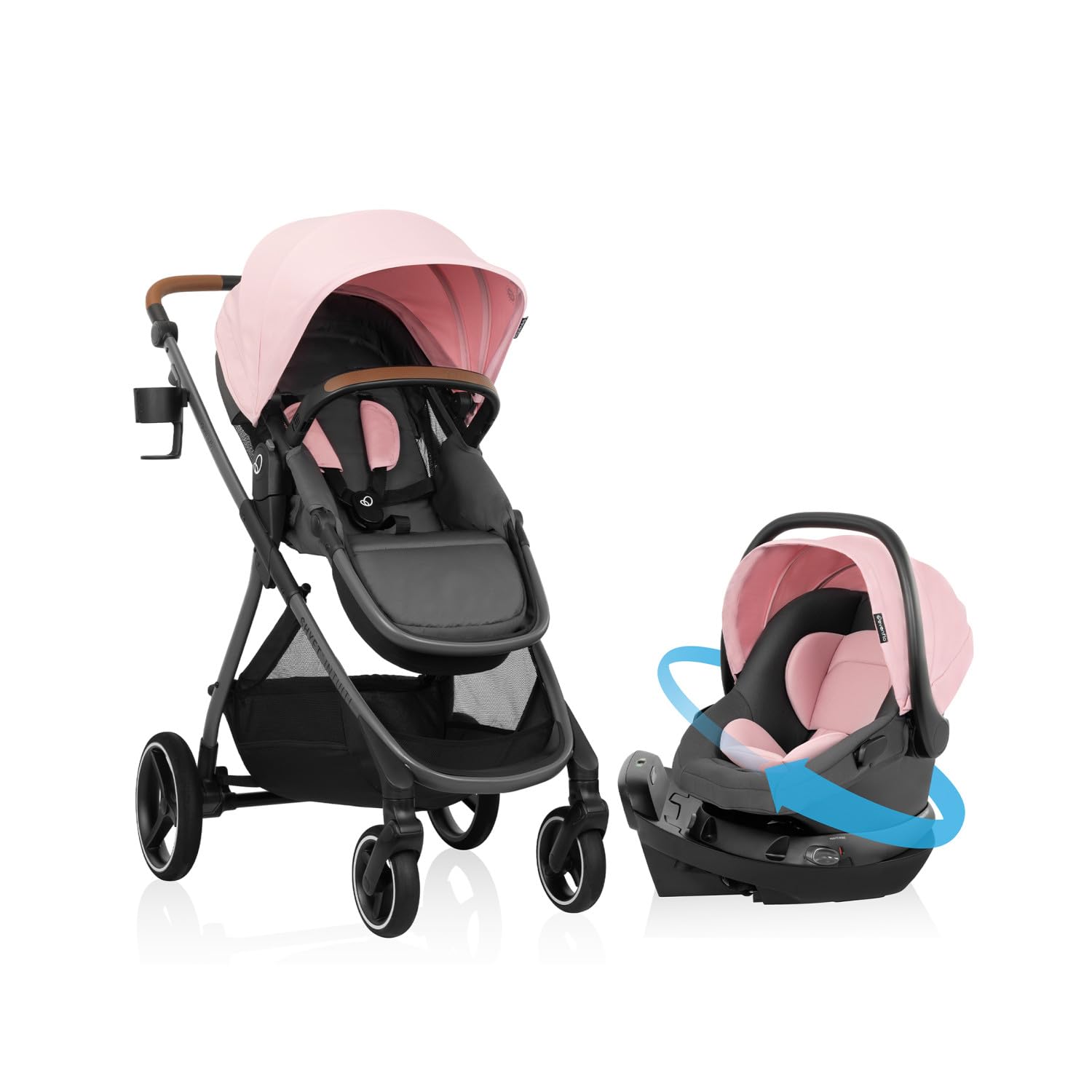


Evenflo Shyft Intuiti Travel System with Revolve180 LiteMax™ NXT Rotating Rear-Facing Lightweight Preemie and Infant Car Seat 3-30 lbs. (Amaranth Pink)
- 25% Cotton
- HAVE IT ALL: This exceptional travel system includes a luxury, lightweight fully featured stroller that offers
- MAKE SMOOTH MANEUVERS: Features a stroller engineered with all-wheel suspension and high-traction rubber tires
| Stroller Type | Best Age / Scenario | Primary Benefits | Main Drawbacks | Recommended Product | Price Range |
|---|---|---|---|---|---|
| Travel System | Newborn to 3 years, first-time parents | Car seat + stroller in one purchase; seamless infant-to-toddler transition | Heavier than standalone strollers; car seat expires | Graco Modes Nest | $440–$480 |
| Travel System with Rotating Car Seat | Newborn to 3 years, urban/tight parking | 180° rotating seat eases loading; all-wheel suspension | Slightly complex to operate initially | Evenflo Shyft Intuiti | $430–$450 |
| Convertible Single-to-Double | Birth to 6 years, growing families | 23 configurations; converts to wagon; UPF50+ canopy | Heavier when fully loaded; accessories sold separately | Momcozy ChangeGo | $590–$600 |
| Premium Urban Full-Size | Birth to 50 lbs, city families | One-step compact fold; stands when folded; lightweight for class | Single child only; no double conversion | UPPAbaby Cruz V3 | $890–$910 |
| Premium Convertible Single-to-Double | Birth to 3+ children, long-term investment | 30+ configurations; magnetic harness; XL basket; strong resale | Highest price point in category | UPPAbaby Vista V3 | $990–$1,010 |
Expert Insights on Stroller Safety and Selection

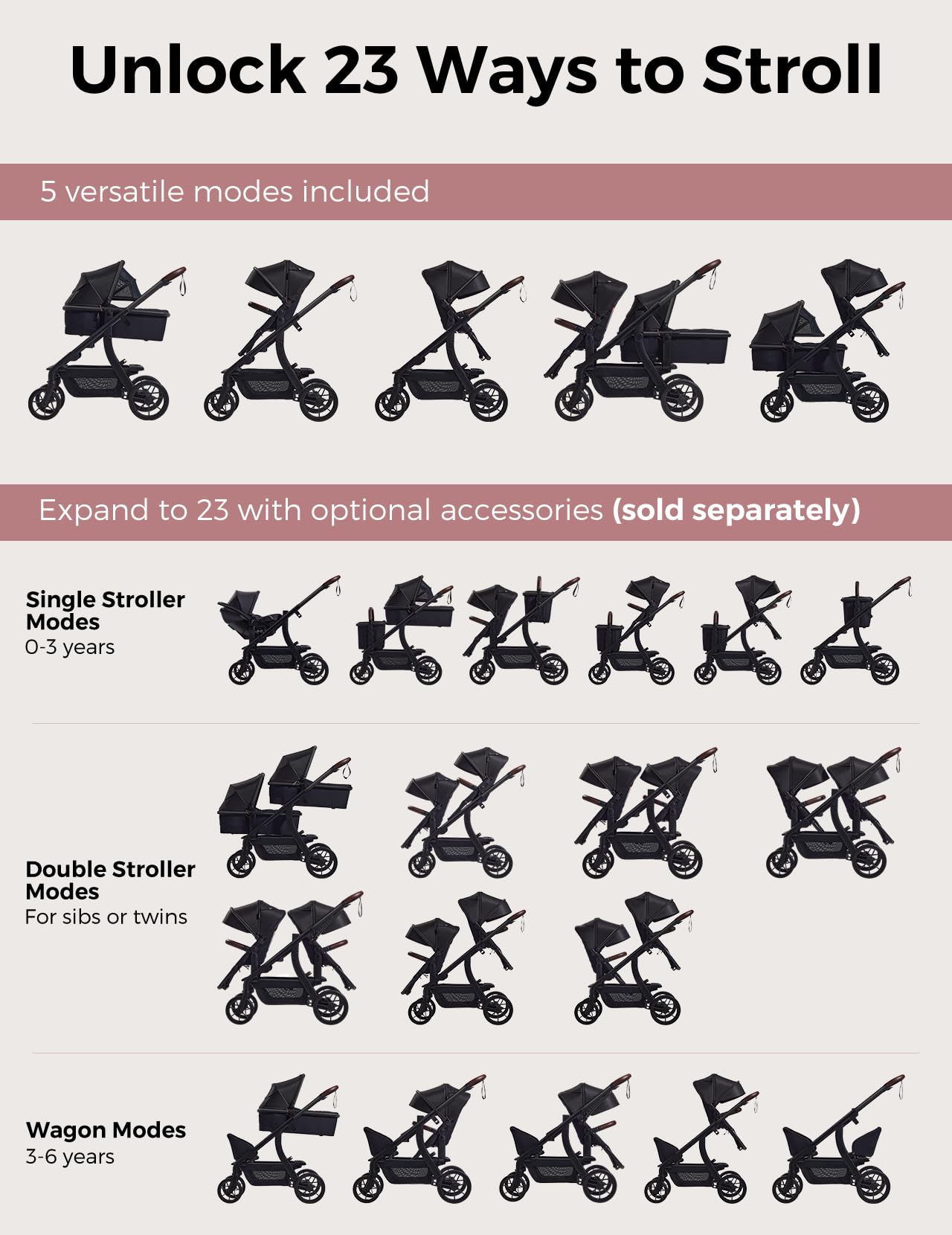
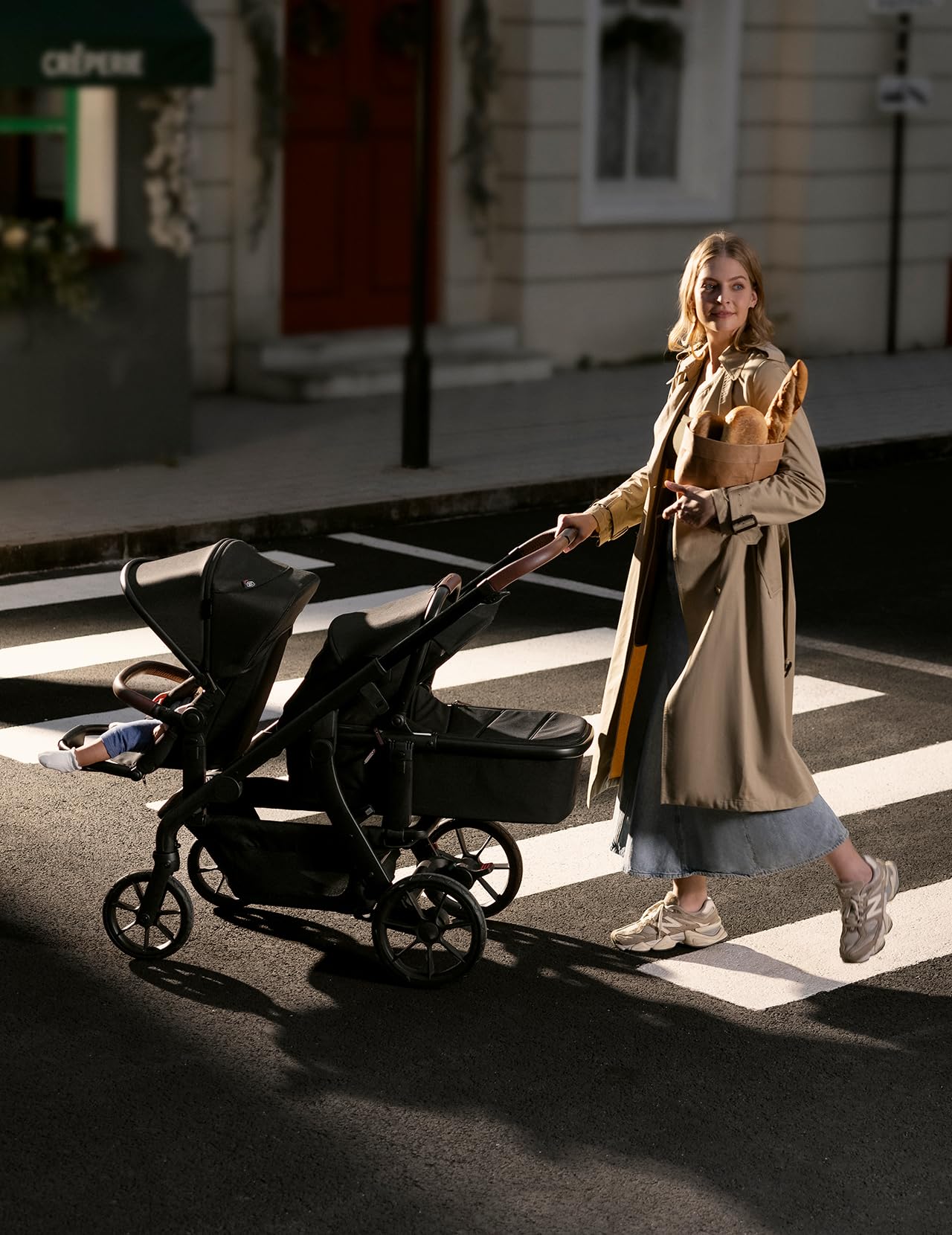
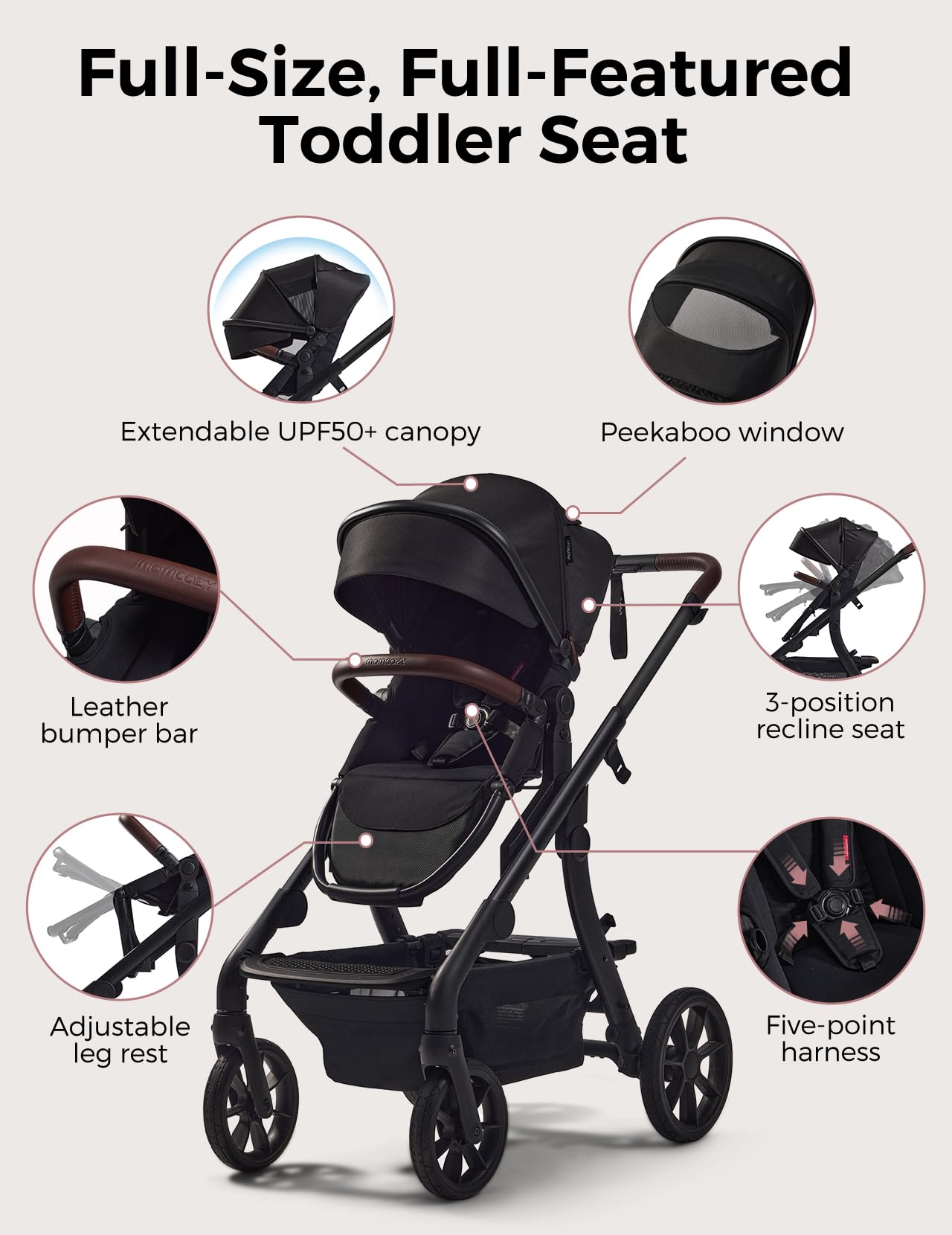
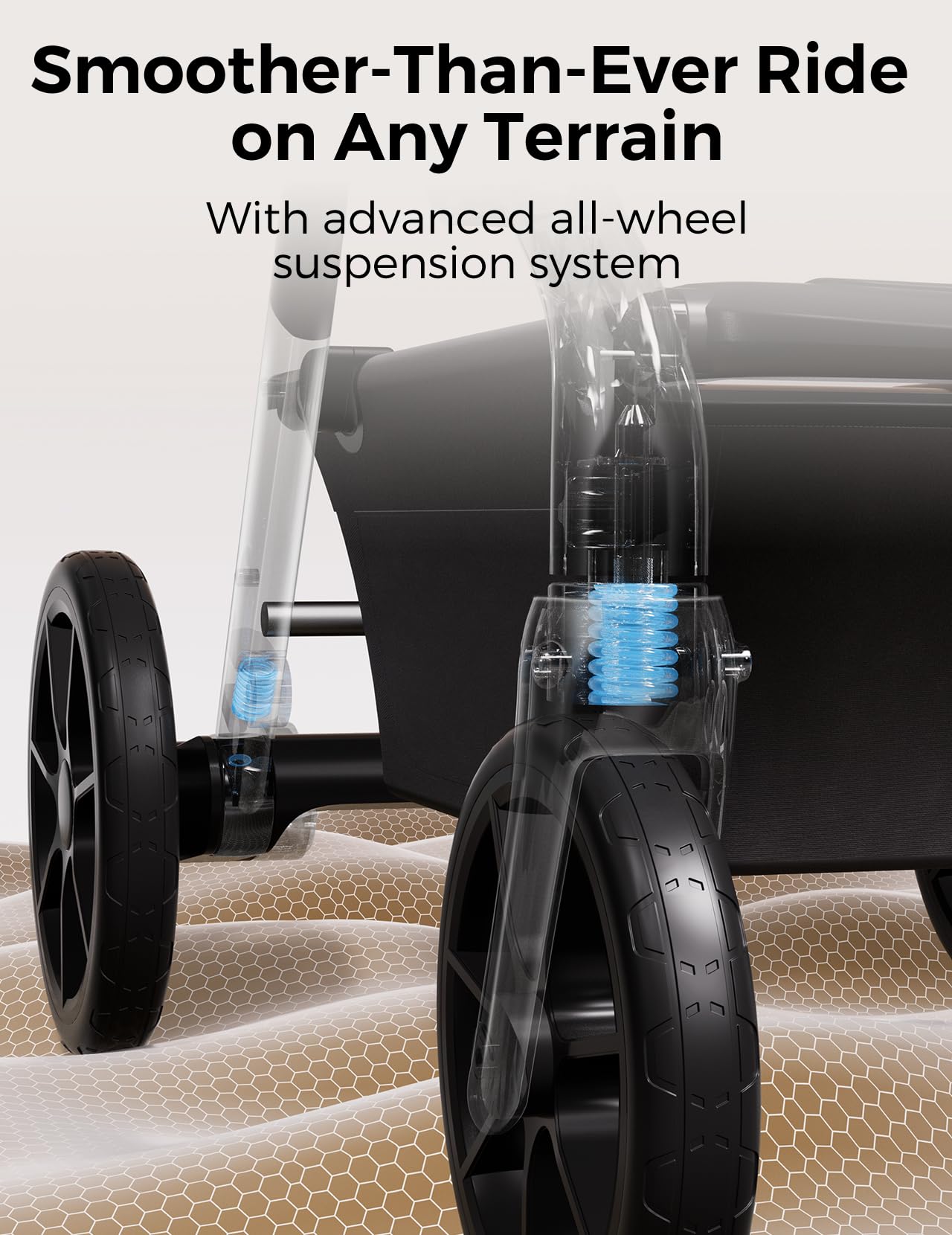
Momcozy ChangeGo Baby Stroller, Convertible Single-to-Double-to-Wagon Stroller with 23 Configurations, Carry-cot and Seat Included, Large PU Wheels, All-Wheel Suspension & Extendable UPF50+ Canopy
- Unlock 23 Configurations: This versatile baby stroller converts easily from a single stroller to a double stro
- Smooth and Comfy Strolling: No worries about waking baby on bumpy surfaces or over curbs thanks to the large 1
- Full-Size, Full-Featured Toddler Seat: Multi-position adjustable recline and leg rest allow your little one to
The Right Stroller Makes Every Outing Feel Easier
Choosing a stroller is one of the earliest and most lasting decisions you will make as a new parent. It will accompany you on morning walks when you are running on three hours of sleep, on trips to the farmers market with a snack-covered toddler, and eventually on school drop-offs where your child insists they are too old for it but climbs in anyway.
The perfect stroller is not the most expensive one, or the most popular one on Instagram. It is the one that fits your body, your neighbourhood, your family size, and your realistic daily routine. Safety certification and proper recline come first. Everything else is about matching the product to the life you actually live.
The one sentence worth sharing: a stroller that truly fits your life does not feel like equipment; it feels like freedom.
If this guide helped you narrow down your choice, save it and share it with another parent in your circle who is deep in the research rabbit hole. You know at least one.
Sources & References
- Centers for Disease Control and Prevention (CDC). "National Vital Statistics Reports: Births in the United States, 2023." 2023. https://www.cdc.gov/nchs/products/nvsr.htm
- American Academy of Pediatrics (AAP). "Safe Sleep and Infant Positioning Guidelines." 2022. https://www.aap.org/en/patient-care/safe-sleep/
- American Academy of Pediatrics (AAP). "Sun Safety." 2023. https://www.healthychildren.org/English/safety-prevention/at-play/Pages/Sun-Safety.aspx
- World Health Organization (WHO). "Ultraviolet Radiation and Child Health." 2023. https://www.who.int/health-topics/ultraviolet-radiation
- Juvenile Products Manufacturers Association (JPMA). "JPMA Stroller Safety Certification Program." 2024. https://www.jpma.org/certification
- ASTM International. "ASTM F833: Standard Consumer Safety Performance Specification for Carriages and Strollers." Current edition. https://www.astm.org/f0833-latest.html
- Consumer Product Safety Commission (CPSC). "Stroller Recalls and Safety Information." 2024. https://www.cpsc.gov/Recalls
- British Standards Institution. "EN 1888: Child Care Articles — Wheeled Child Conveyances." Current edition. https://www.bsigroup.com
Frequently Asked Questions
Is it safe to put a newborn in a stroller?
When should I transition my baby from an infant car seat to the stroller seat?
How long does a stroller last, and is it safe to buy secondhand?
What is the weight limit on most strollers?
Do I need both a travel system and a full-size stroller?
Are UPPAbaby strollers worth the premium price?
What does all-wheel suspension actually do for my baby?
Was this helpful?
Thanks — your feedback helps us pick what to write next.