The Science of Habit Formation in Children: Why Starting Early Changes Everything
Building healthy habits early — across sleep, nutrition, movement, emotional regulation, hygiene, and screen time — gives children ages 0–12 the physical foundation and emotional toolkit they need to thrive with genuine joy.
In this article
Picture this: it's 7 a.m. on a Tuesday, and your six-year-old is already negotiating their way out of brushing their teeth, eating breakfast, and putting on shoes — all before you've had a single sip of coffee. Sound familiar? You're not alone, and more importantly, you're not failing. Building healthy habits in children is genuinely hard, but the research tells us it is also one of the most powerful investments you can make in your child's future.
According to the World Health Organization (WHO), nearly 1 in 5 children aged 5–19 worldwide lives with a mental or physical health condition that could be significantly reduced through early lifestyle interventions — including consistent sleep, balanced nutrition, and regular physical activity. The habits your child forms before their 12th birthday don't just shape who they are today; they wire the brain and body for decades to come.
In this article, you'll understand:
1. The Science of Habit Formation in Children: Why Starting Early Changes Everything
The single most important reason to start healthy habits early is brain plasticity — your child's brain is literally more changeable right now than it will ever be again.
Between birth and age 12, the prefrontal cortex (the region responsible for self-regulation, decision-making, and routine) is in active construction. Neuroscientists call this a "sensitive period" — a window when repeated behaviours carve neural pathways more efficiently than at any later stage of life. A habit practised consistently during this window doesn't just become a routine; it becomes a default setting.
What the Research Actually Shows
A landmark study published in the European Journal of Social Psychology found that it takes an average of 66 days for a new behaviour to become automatic — but in children, environmental consistency and positive reinforcement can accelerate this significantly. The American Academy of Pediatrics (AAP) emphasises that children thrive on predictable routines because routine reduces the cognitive load of decision-making, freeing up mental energy for learning and play.
Routines give children a sense of security and help them develop self-discipline.
— American Academy of Pediatrics (2022)
The Role of Positive Reinforcement
Here's where parents have a genuine superpower: children ages 3–10 respond extraordinarily well to visual progress and earned recognition. This isn't bribery — it's developmental science. When a child sees a sticker go on a chart, their brain releases a small burst of dopamine, reinforcing the behaviour that earned it. Over time, the behaviour itself becomes the reward.

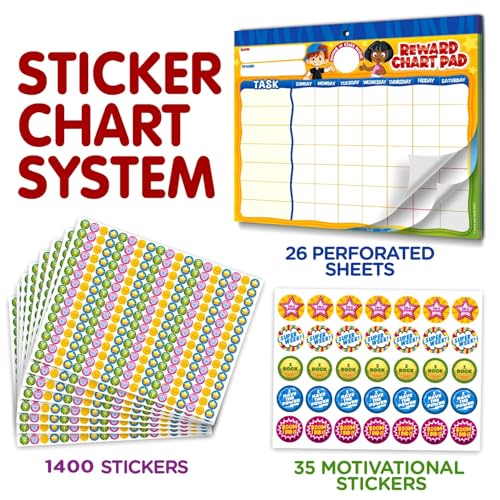
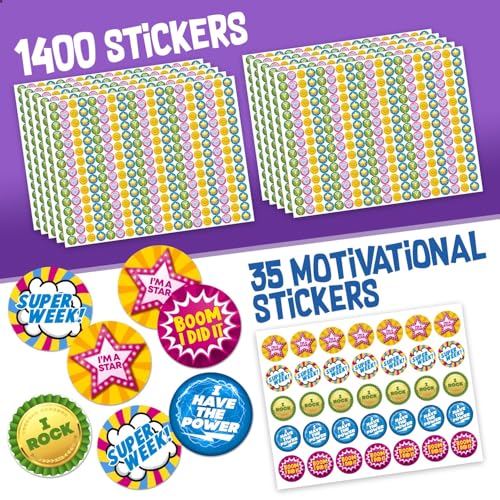
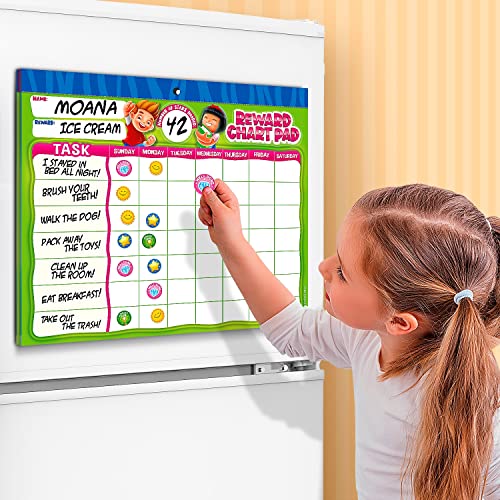
Behavior Reward Chart System - Pad with 26 Chore Charts for Kids, 2800 Stickers to Motivate Responsibility & Good Habits
- Sticker chore Chart pad for kids with 26 perforated pages and 2800 stickers
- Responsibility Reward Pad has 26 perforated pages, fill up 1 chart at a time or use for multiple kids 1 chart
- This reward chart Includes 2800 exciting sticker and 35 motivational stickers for your girl or boy to stick on
Using a structured tool like the Learn & Climb Behavior Reward Chart System gives children a tangible, visual map of their progress. With 26 perforated chore charts and 2,800 stickers, it's designed to grow with your child — and with your family's evolving habit goals.
2. Sleep: The Non-Negotiable Foundation of Every Healthy Habit
No other habit has a bigger upstream effect on your child's physical health, emotional regulation, and learning capacity than sleep — and it's the one most commonly sacrificed.
The AAP and the National Sleep Foundation both publish age-specific sleep recommendations, and the numbers are striking. Infants (4–12 months) need 12–16 hours per 24-hour period. Toddlers (1–2 years) need 11–14 hours. School-age children (6–12 years) need 9–12 hours per night. Yet a 2020 report from the CDC found that more than 1 in 3 school-age children in the United States are not getting enough sleep on school nights.
Why Sleep Deprivation Looks Like Behaviour Problems
Chronically under-slept children are often misidentified as having attention or behaviour difficulties. Unlike sleep-deprived adults who become sluggish, sleep-deprived children frequently become hyperactive, impulsive, and emotionally dysregulated — which can look remarkably like ADHD. Before assuming a behaviour challenge is temperament-based, always audit sleep quality and duration first.
Building a Sleep Habit That Actually Works
A visual chart — like the Learn & Climb Reward Chart — works beautifully as a bedtime checklist. Children as young as three can follow picture-based steps independently, which reduces the nightly negotiation and gives them a sense of autonomy.
Today's action: Write down your child's current average bedtime and compare it to the AAP recommendations for their age. If there's a gap of more than 30 minutes, move bedtime earlier by 15 minutes this week.
3. Nutrition: Feeding Curiosity, Not Just Calories
Healthy eating in childhood isn't about perfection on the plate — it's about building a relationship with food that will last a lifetime.
The WHO recommends that children over age 2 eat a varied diet rich in fruits, vegetables, whole grains, and lean proteins, with limited added sugars, saturated fats, and salt. But perhaps more important than what children eat is how the eating experience feels. Research consistently shows that pressuring children to eat — "just three more bites" — is associated with increased food aversion and disordered eating patterns in adolescence.
The Division of Responsibility
Dietitian Ellyn Satter, a registered dietitian and family therapist widely cited in paediatric nutrition literature, developed the "Division of Responsibility" model: parents decide what food is offered, when it's served, and where eating happens. Children decide whether they eat and how much. This framework, endorsed by the AAP, removes the power struggle and builds interoceptive awareness — the ability to recognise hunger and fullness — which is a critical lifelong health skill.
Practical Nutrition Habits to Build Now
Today's action: At your next meal, put one new vegetable on the table alongside familiar foods. Say nothing about it. Repeat for 10–15 exposures before expecting acceptance — research shows children may need up to 15 exposures to a new food before accepting it.
4. Physical Activity: Movement as Medicine (and Pure, Unstructured Fun)
Children are born to move — and modern life keeps getting in the way.
The WHO recommends that children aged 5–17 accumulate at least 60 minutes of moderate-to-vigorous physical activity every day, with muscle- and bone-strengthening activities included at least three times per week. For children under 5, the recommendation is simply to be physically active several times per day in a variety of ways — including floor-based play for infants and active play for toddlers and preschoolers.
Why Unstructured Play Counts Most
There is a growing body of evidence — including a major review by the AAP published in Pediatrics in 2018 — that unstructured free play is one of the most important contributors to children's physical, cognitive, and social-emotional development. Running, climbing, jumping, and chasing in an unscripted environment builds proprioception, risk assessment, cardiovascular fitness, and creativity simultaneously.
Play is not a luxury. Play is a necessity.
— American Academy of Pediatrics, Pediatrics (2018)
Making Movement a Daily Habit
Pair daily movement goals with a visual tracker using the Learn & Climb Behavior Reward Chart — add a "30 minutes outside" sticker row alongside hygiene and homework habits for a whole-child approach.
Today's action: After school today, take shoes and socks off and let your child run barefoot on grass for 20 minutes. No agenda, no screens. That's it. That counts.
5. Emotional Wellbeing: Teaching Children to Know and Name What They Feel
Emotional health is health — and the habits that support it are just as teachable as hand-washing.
According to the CDC's National Center for Health Statistics, approximately 9.4% of children aged 2–17 in the US have received a diagnosis of anxiety, and 4.4% have a diagnosis of depression. These numbers have increased significantly post-pandemic. While not all emotional difficulties are preventable, building emotional literacy from an early age gives children a vocabulary and a toolkit for managing the inevitable hard moments of childhood.
Emotional Literacy: The Keystone Habit
Psychologist and researcher Dr. John Gottman, founder of the Gottman Institute, coined the term "emotion coaching" — the practice of helping children identify, name, and process emotions rather than dismiss or minimise them. His research found that children who were emotion-coached by parents showed better academic performance, stronger friendships, fewer behavioural problems, and even better physical health outcomes.
Daily Habits for Emotional Wellbeing
Today's action: At dinner tonight, ask every family member — including yourself — to name one emotion they felt today and what caused it. No fixing, no advice. Just listening.
6. Hygiene and Screen Habits: The Two Routines That Shape Daily Life Most Visibly
Good hygiene and healthy screen habits are the two areas where daily habits are most visible — and most contested.
Hygiene: Building Pride, Not Just Cleanliness
The WHO identifies hand hygiene as one of the single most effective public health interventions available. For children, consistent hand-washing — before meals, after toileting, after outdoor play — can reduce respiratory infections by up to 21% and gastrointestinal illness by up to 31% (CDC, 2020). But hygiene habits extend beyond hand-washing: dental hygiene, bathing routines, nail care, and — as children approach puberty — body odour management all require intentional, consistent teaching.
Screen Time: The Evidence-Based Middle Ground
The AAP recommends no screen time (except video chatting) for children under 18 months, limited high-quality programming for ages 2–5 (one hour per day), and consistent limits with parental co-viewing for ages 6 and up. The concern is not screens themselves — it's displacement: every hour on a screen is an hour not spent sleeping, moving, playing, or connecting with caregivers.
Combine hygiene and screen-habit tracking with a Learn & Climb Behavior Reward Chart System — having both in one visual system helps children see their whole day as a connected set of healthy choices, not a list of chores.
Today's action: Identify one screen habit in your household that's crept past healthy boundaries (screens at the dinner table? phones in bedrooms?) and make one rule change today — together, as a family, so children feel included rather than punished.
Comparing Healthy Habit Tools and Approaches by Age Stage
| Habit-Building Approach | Best Age Range | Primary Benefits | Main Drawbacks | Recommended Product |
|---|---|---|---|---|
| Visual Sticker Reward Charts | 3–10 years | Builds autonomy, makes progress tangible, highly motivating | Less effective for teens; requires parental consistency | Learn & Climb Reward Chart System |
| Verbal Praise Only | 0–12 years | Always available, builds intrinsic motivation over time | No visual tracking; harder for young children to self-monitor | Pair with Learn & Climb Charts |
| Habit Stacking (attaching new habits to existing ones) | 5–12 years | Leverages existing routines; low friction | Requires a stable existing routine to anchor to | Use chart to track stacked habits |
| Family Routine Boards | 3–8 years | Whole-family buy-in; reduces negotiation | Needs wall space; can become background noise | Learn & Climb Chart as portable board |
| Natural Consequences | 6–12 years | Teaches cause and effect; builds intrinsic motivation | Slow-acting; not suitable for health/safety habits | Combine with Learn & Climb Charts |
| Gamified Apps | 6–12 years | High engagement; screen-based motivation | Adds more screen time; subscription costs; less tactile | Learn & Climb as screen-free alternative |
Expert Insights on Healthy Habits in Childhood
Conclusion
Here's the truth that every exhausted parent needs to hear: you don't have to be perfect to raise a healthy child. You just have to be consistent enough, warm enough, and present enough — and those are things you're already working toward by reading this far.
The six habits explored in this article — sleep, nutrition, movement, emotional wellbeing, hygiene, and screen balance — aren't a checklist to conquer. They're a living, evolving practice that grows with your child. Some weeks you'll nail all six. Some weeks you'll manage two. Both are fine.
What matters most is that your child feels your intention: that you care deeply about their health, their joy, and their future. As the research keeps reminding us, children don't need a flawless environment — they need a consistent one.
The healthiest gift you can give your child isn't a perfect diet or a rigid schedule — it's the daily, joyful practice of trying together.
If this article helped you, save it, share it with another parent who needs it, or subscribe to tinymindsworld.com for more research-backed, parent-friendly guidance every week.
Sources & References
- World Health Organization. "Mental Health of Adolescents." WHO Fact Sheet. 2021. https://www.who.int/news-room/fact-sheets/detail/adolescent-mental-health
- American Academy of Pediatrics. "The Importance of Play in Promoting Healthy Child Development and Maintaining Strong Parent-Child Bond." Pediatrics. 2018. https://publications.aap.org/pediatrics/article/142/3/e20182058/38649
- American Academy of Pediatrics. "Healthy Sleep Habits: How Many Hours Does Your Child Need?" HealthyChildren.org. 2022. https://www.healthychildren.org/English/healthy-living/sleep/Pages/healthy-sleep-habits-how-many-hours-does-your-child-need.aspx
- Centers for Disease Control and Prevention. "Sleep in Middle and High School Students." CDC Data Brief. 2020. https://www.cdc.gov/sleep/data-research/facts-stats/adults-sleep-facts-and-stats.html
- Lally, P., van Jaarsveld, C.H.M., Potts, H.W.W., & Wardle, J. "How are habits formed: Modelling habit formation in the real world." European Journal of Social Psychology. 2010. https://doi.org/10.1002/ejsp.674
- Satter, Ellyn. "Ellyn Satter's Division of Responsibility in Feeding." Ellyn Satter Institute. 2022. https://www.ellynsatterinstitute.org/how-to-feed/the-division-of-responsibility-in-feeding/
- World Health Organization. "Physical Activity Fact Sheet." WHO. 2022. https://www.who.int/news-room/fact-sheets/detail/physical-activity
- Centers for Disease Control and Prevention. "Data and Statistics on Children's Mental Health." CDC. 2023. https://www.cdc.gov/childrensmentalhealth/data.html
- Gottman, John M., & DeClaire, Joan. "Raising an Emotionally Intelligent Child." Simon & Schuster. 1997.
- American Academy of Pediatrics. "Screen Time and Children." HealthyChildren.org. 2023. https://www.healthychildren.org/English/family-life/Media/Pages/Where-We-Stand-TV-Viewing-Time.aspx
- Centers for Disease Control and Prevention. "Hand Hygiene in Healthcare Settings." CDC. 2020. https://www.cdc.gov/handhygiene/index.html
- Gunnar, Megan R. "Social Regulation of Stress in Early Child Development." University of Minnesota Institute of Child Development. Published in multiple peer-reviewed journals including Development and Psychopathology.
- American Psychological Association. "Stress in America: Children and Stress." APA. 2021. https://www.apa.org/topics/children/stress
Frequently Asked Questions
At what age should I start building healthy habits with my child?
How do I get my child to actually stick to a habit without constant nagging?
How much physical activity does my 7-year-old actually need?
Is it too late to build healthy habits if my child is already 10 or 11?
How do I handle a child who refuses to follow any routine?
What's the most important healthy habit to start with?
How do I make healthy habits fun rather than a chore?
Was this helpful?
Thanks — your feedback helps us pick what to write next.