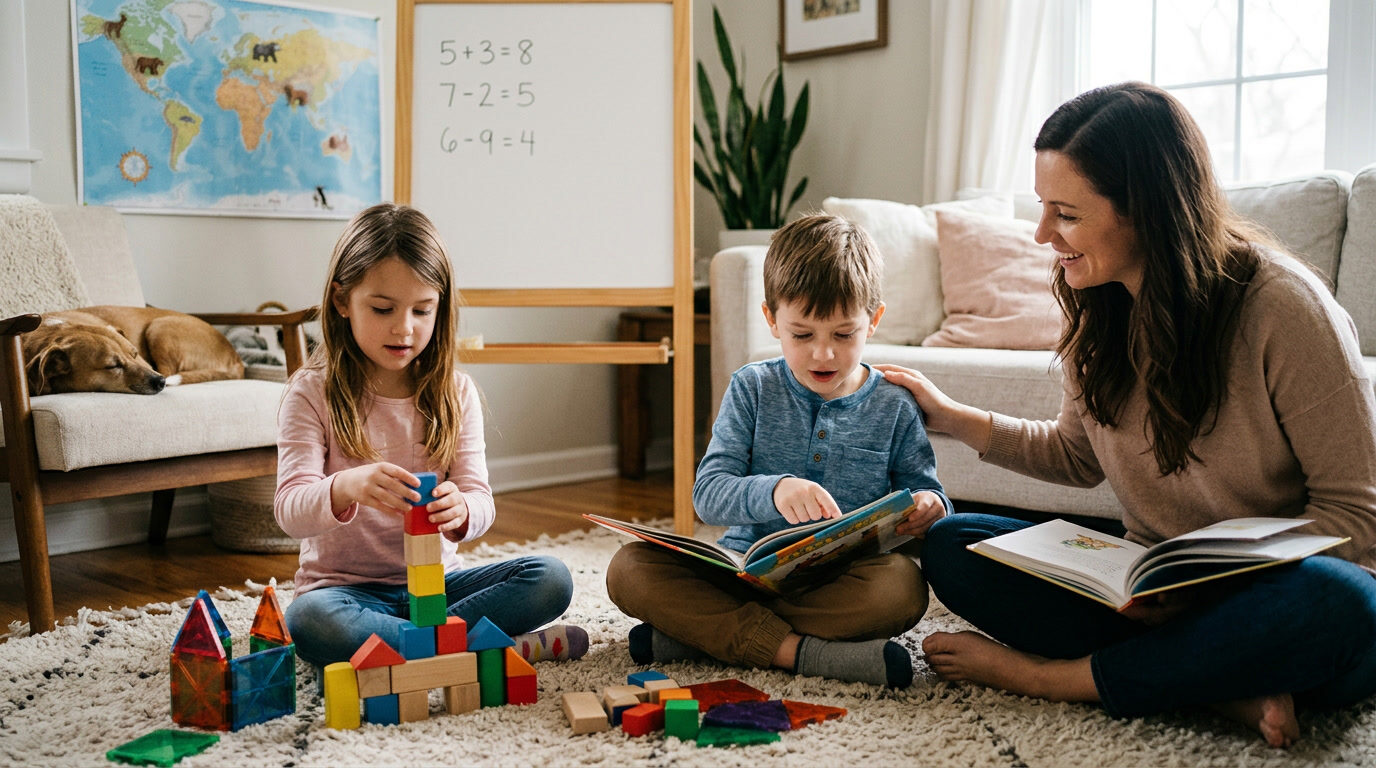
Why 5–8 Year Olds Struggle With Emotions (It's the Brain, Not the Child)
Children aged 5–8 are in a critical window for emotional development — their brains are actively building the self-regulation circuits that will shape behaviour for life, and the right support now makes a measurable difference.
In this article
Your 6-year-old just dissolved into tears because their sandwich was cut in squares instead of triangles. Your 8-year-old slammed their bedroom door hard enough to rattle the pictures in the hall. Sound familiar? You're not alone — and you're not failing.
According to the Centers for Disease Control and Prevention (CDC), approximately 1 in 6 U.S. children aged 2–8 has a diagnosed mental, behavioural, or developmental disorder — yet many more children struggle with big emotions that fall short of a clinical threshold but still disrupt daily family life. The 5–8 age window is a particularly intense period: children are navigating the social complexity of school, developing a sense of self that can be bruised easily, and learning — still very much learning — how to manage feelings their prefrontal cortex isn't yet wired to handle alone.
In this guide, you'll understand:
1. Why 5–8 Year Olds Struggle With Emotions (It's the Brain, Not the Child)
The single most important thing to understand is that emotional outbursts in this age group are a developmental feature, not a character flaw. The prefrontal cortex — the part of the brain responsible for impulse control, emotional regulation, and rational decision-making — isn't fully mature until the mid-20s. At age 5–8, children are essentially driving a high-powered sports car with learner-driver brakes.
What's Actually Happening Neurologically
When a child feels threatened, embarrassed, or frustrated, the amygdala (the brain's alarm system) fires rapidly. In adults, the prefrontal cortex can often override that alarm. In young children, the connection between these two regions is still under construction. The result: big reactions to what look like small problems.
Children are not giving us a hard time; they are having a hard time.
— Ross W. Greene, PhD (2014)
At the same time, this age group is experiencing a surge in social awareness. They now care deeply about fairness, friendship, and how peers perceive them — adding entirely new emotional triggers that didn't exist at age 3.
What This Looks Like Day-to-Day
2. Emotion Coaching: The Evidence-Based Approach That Changes Everything
Emotion coaching is the single most researched parenting strategy for building emotional intelligence in school-age children. Developed by psychologist Dr. John Gottman at the University of Washington, it involves five steps: noticing the feeling, treating it as an opportunity, listening empathetically, naming the emotion with the child, and then setting limits while problem-solving.
Studies from Gottman's lab found that children of emotion-coaching parents had better physical health, higher academic achievement, and stronger friendships compared to children whose parents dismissed or punished emotions.
The Four Steps You Can Use Today
Step 1 — Notice and name: "I can see you're really frustrated right now." Step 2 — Validate before you fix: "It makes sense you're upset. That did seem unfair." Step 3 — Set limits if needed: "It's okay to feel angry. It's not okay to hit." Step 4 — Problem-solve together: "What could we try next time?"
For families wanting a structured, story-based entry point to emotion coaching, the A Little SPOT Emotional Regulation Box Set covers eight core emotional experiences — from anger to worry to disappointment — in child-friendly language that mirrors these exact steps.


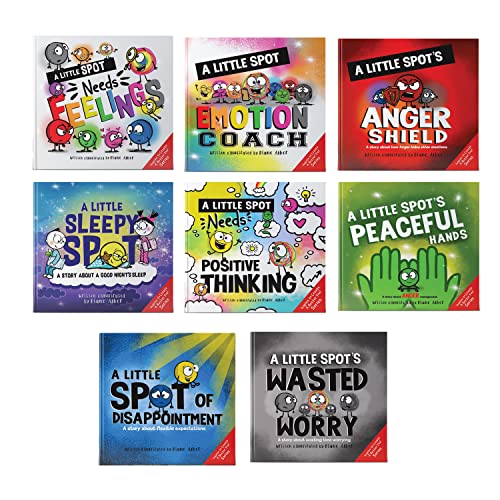
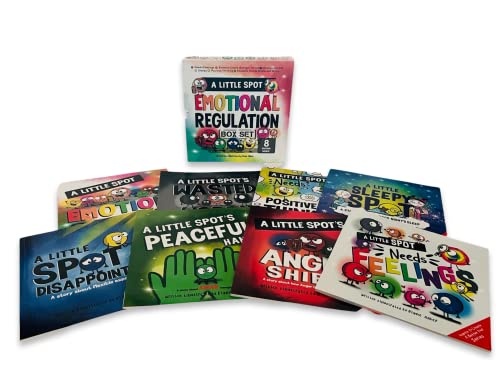

A Little SPOT Emotional Regulation Box Set (Books 49-56: Peaceful Hands, Anger Shield, Needs Feelings, Sleep, Disappointment, Wasted Worry, Positive Thinking, and Emotion Coach)
- Children's Books
- Image Unavailable Image not available forColor:
- Publisher : Diane Alber Art LLC
3. The Most Common Flashpoints: Anger, Anxiety, and School Stress
These three emotional experiences account for the vast majority of what parents of 5–8 year olds bring to my clinic. Each has distinct triggers and slightly different management strategies.
Anger
Anger at this age is often triggered by perceived unfairness, loss of control, or social humiliation. The key is to teach children that anger is information, not a command to act.
The Anger Management Skills Workbook for Kids offers 40 structured activities specifically designed for this age group, helping children identify triggers and rehearse calming strategies before the next flashpoint hits.


Anger Management Skills Workbook for Kids: 40 Awesome Activities to Help Children Calm Down, Cope, and Regain Control
- Children's Books
- Growing Up & Facts of Life
- Difficult Discussions
Anxiety
Anxiety in 5–8 year olds often presents as school refusal, sleep problems, clinginess, or physical complaints. The American Academy of Pediatrics (AAP) notes that anxiety disorders are among the most common mental health conditions in childhood, affecting roughly 7.1% of children aged 3–17.
School Stress
The transition to formal schooling brings peer comparison, academic pressure, and a loss of the free-play autonomy toddlers enjoy. Watch for a child who is "fine" at school but falls apart the moment they get home — this is called the "after-school restraint collapse" and it's completely normal. They've held it together all day and you are their safe place.
4. Building Self-Regulation Skills: Practical Tools That Work
Self-regulation — the ability to manage one's own emotions and behaviour — is a skill, not a personality trait. It can be taught, practised, and strengthened, just like reading or riding a bike.
Everyday Regulation Builders
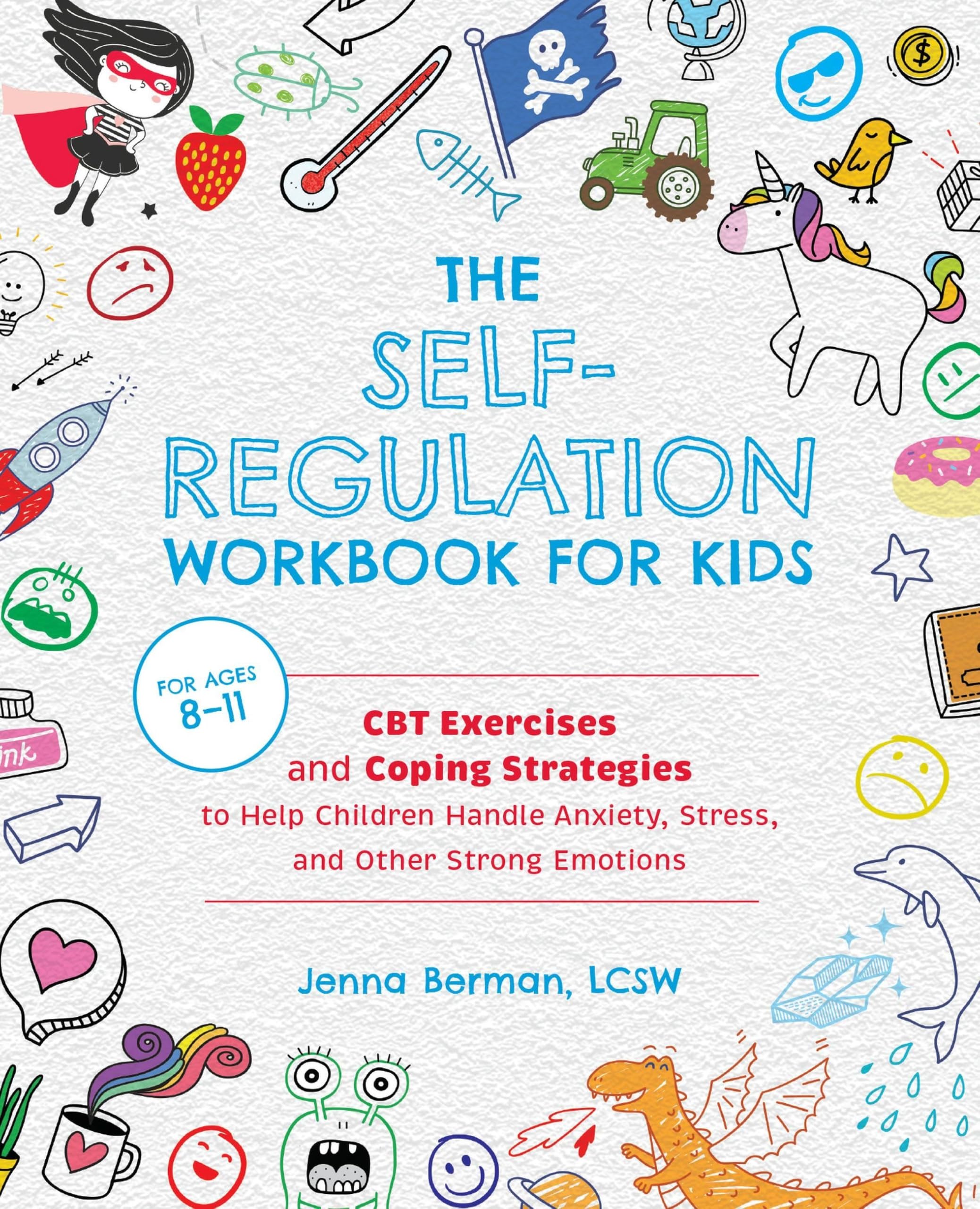
For parents who prefer a structured, workbook-style approach, the Self-Regulation Workbook for Kids uses CBT-based exercises adapted for children, covering anxiety, stress, and strong emotions in a format kids can actually engage with independently or with a parent.
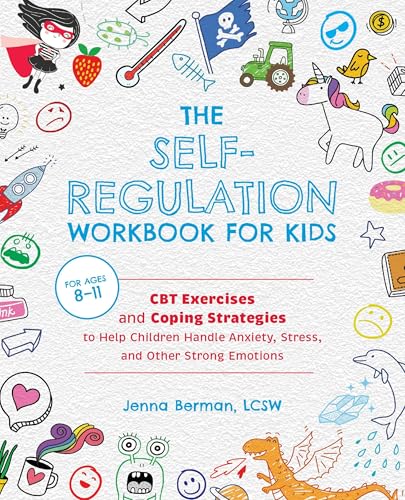
The Self-Regulation Workbook for Kids: CBT Exercises and Coping Strategies to Help Children Handle Anxiety, Stress, and Other Strong Emotions
- Children's Books
- Growing Up & Facts of Life
- Friendship, Social Skills & School Life
The Emotional Regulation for Kids activity book pairs well here — it's packed with coping skills for anger, anxiety, and stress in a format that feels like play rather than homework.
When to Involve a Professional
5. Social-Emotional Learning at School: What to Know and How to Support It
Most primary schools now deliver some form of Social-Emotional Learning (SEL) — structured teaching of skills like empathy, cooperation, and emotional awareness. A landmark meta-analysis published in Child Development (Durlak et al., 2011) found that students receiving SEL programmes showed an 11-percentile-point gain in academic achievement compared to controls, along with improved social skills and reduced behaviour problems.
Social and emotional learning is not a break from academic learning — it is the foundation for it.
— Collaborative for Academic, Social, and Emotional Learning (CASEL) (2020)
How to Reinforce SEL at Home


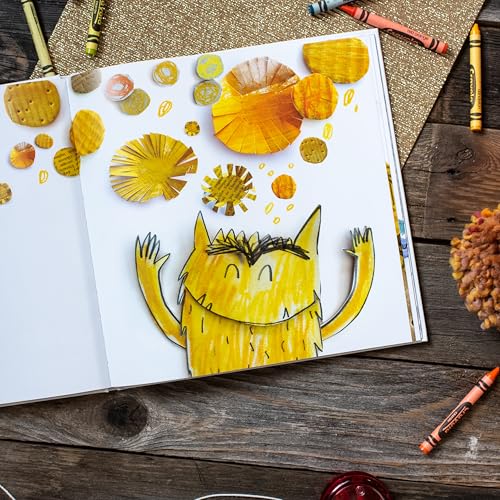

The Color Monster: A Story About Emotions
- Children's Books
- Growing Up & Facts of Life
- Friendship, Social Skills & School Life
6. Red Flags vs. Normal: A Parent's Quick Reference
One of the most common questions I hear is: "Is this normal, or should I be worried?" The honest answer is that context matters enormously — frequency, intensity, duration, and impairment to daily life are the four dimensions that shift "normal big feelings" into "worth a professional conversation."
| Behaviour | Typical for Age | Possible Concern | Recommended Resource | Price Range |
|---|---|---|---|---|
| Anger outbursts | Occasional, settles within 15–20 min | Daily, lasting 30+ min, includes aggression | Anger Management Workbook for Kids | $9–10 |
| Worry / anxiety | Situational, responds to reassurance | Persistent, interferes with school/sleep | Self-Regulation Workbook for Kids | $15–16 |
| Emotional vocabulary | Limited but growing | Completely unable to identify own feelings | The Color Monster | $10–11 |
| Mood changes | Reactive to events, recovers quickly | Persistent low mood, withdrawal, hopelessness | Consult your paediatrician | — |
| Social difficulties | Occasional conflict, learning repair | Persistent isolation, bullying, no friendships | A Little SPOT Emotion Box Set | — |
| Coping with disappointment | Upset but recovers with support | Extreme reactions, inability to move on | Emotional Regulation for Kids | — |
Expert Insights
Conclusion
Parenting a 5–8 year old through big emotions can feel relentless — like you're constantly one wrong sandwich shape away from a full-scale crisis. But here's what the research, and 15 years of clinical practice, keeps confirming: the moments you stay curious and connected instead of reactive are the moments you're actually building your child's brain. Not perfectly. Not every time. But enough.
The skills your child is learning right now — how to name a feeling, tolerate disappointment, ask for help, and come back from a hard moment — are the skills that will carry them through adolescence, relationships, and adult life. You are not just managing behaviour. You are building a human being.
The most powerful parenting tool you own isn't a book or a workbook — it's your regulated, present self.
If this guide helped you, save it for the next hard afternoon, share it with another parent in the thick of it, or subscribe for more evidence-based support at tinymindsworld.com.
Sources & References
- Centers for Disease Control and Prevention. "Data and Statistics on Children's Mental Health." 2023. https://www.cdc.gov/childrensmentalhealth/data.html
- American Academy of Pediatrics. "Anxiety and Depression in Children." HealthyChildren.org, 2022. https://www.healthychildren.org/English/health-issues/conditions/emotional-problems/Pages/Anxiety-Disorders.aspx
- American Academy of Pediatrics. "Sleep in Middle Childhood." HealthyChildren.org, 2023. https://www.healthychildren.org/English/healthy-living/sleep/Pages/school-age-sleep.aspx
- Gottman, J.M., Katz, L.F., & Hooven, C. "Parental Meta-Emotion Philosophy and the Emotional Life of Families." Journal of Family Psychology, 1996.
- Durlak, J.A., Weissberg, R.P., Dymnicki, A.B., Taylor, R.D., & Schellinger, K.B. "The Impact of Enhancing Students' Social and Emotional Learning." Child Development, 82(1), 405–432, 2011.
- Lieberman, M.D., Eisenberger, N.I., Crockett, M.J., Tom, S.M., Pfeifer, J.H., & Way, B.M. "Putting Feelings Into Words: Affect Labeling Disrupts Amygdala Activity in Response to Affective Stimuli." Psychological Science, 18(5), 421–428, 2007.
- Collaborative for Academic, Social, and Emotional Learning (CASEL). "CASEL's SEL Framework." 2020. https://casel.org/fundamentals-of-sel/
- Shanker, S. "Self-Reg: How to Help Your Child (and You) Break the Stress Cycle and Successfully Engage with Life." Penguin Press, 2016.
- Child Mind Institute. "Anxiety in the Classroom." 2023. https://childmind.org/topics/concerns/anxiety/
- Greene, R.W. "The Explosive Child." HarperCollins, 5th edition, 2014.
Frequently Asked Questions
My 7-year-old has meltdowns every day after school. Is this normal?
How do I teach my child to calm down without dismissing their feelings?
My 6-year-old says they hate school. Should I be worried?
What's the difference between a tantrum and an emotional meltdown?
At what age should my child be able to regulate emotions independently?
Are workbooks and activity books actually effective for this age group?
How do I know if my child needs professional help for anxiety or behaviour?
Was this helpful?
Thanks — your feedback helps us pick what to write next.