Understanding the Brain's Blueprint: How Cognitive Development Actually Works
Everyday play, conversation, and hands-on exploration are the most powerful drivers of cognitive development in children aged 0–12 — and parents are the single biggest factor in making that happen.

In this article
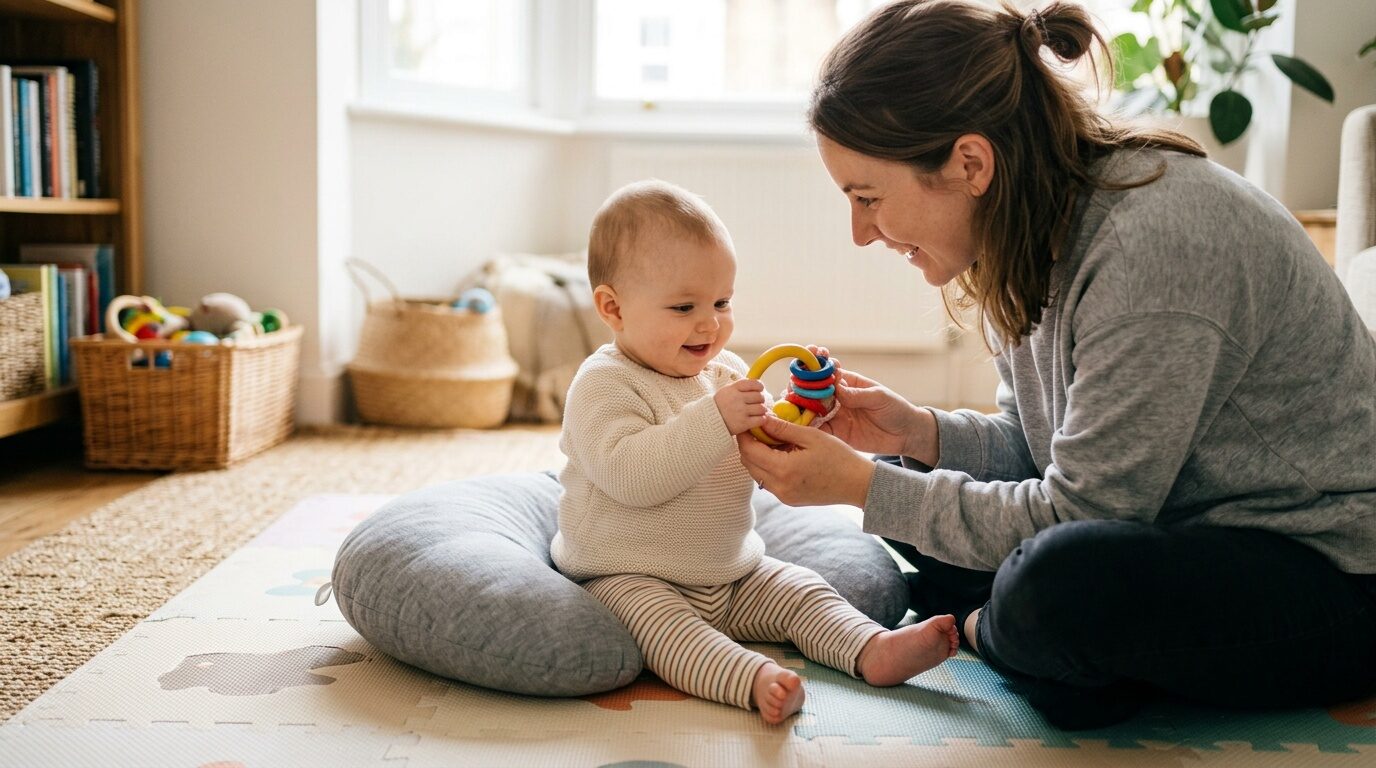
Imagine watching your eight-month-old stare at a wooden block, turn it over, put it in their mouth, bang it on the floor, and then look up at you with pure delight. That thirty-second sequence involved sensory processing, object permanence, cause-and-effect reasoning, and social referencing — four distinct cognitive skills firing at once. According to the Center on the Developing Child at Harvard University, the brain produces roughly one million new neural connections per second in early childhood, a pace that will never be matched again. What happens in those early years — the sights, sounds, conversations, games, and relationships your child experiences — literally shapes the architecture of the brain.
This article will help you understand:
1. Understanding the Brain's Blueprint: How Cognitive Development Actually Works
Cognitive development is not a single skill — it is a constellation of at least six overlapping domains that build on each other from the moment your baby opens their eyes for the first time. Those domains are: attention, memory, language, executive function, reasoning and problem-solving, and sensory processing. Understanding how they interact gives you a map, not just a to-do list.
The First 1,000 Days: When Wiring Is Fastest
The period from conception to a child's second birthday is often called the "critical window." During this time, the brain is building the scaffolding for every higher-order skill that will follow — reading, maths, emotional regulation, social empathy. The World Health Organization (WHO) places early childhood development at the centre of its global health agenda, noting that nurturing care in the first years of life is one of the highest-return investments any family or society can make.
The brain is more plastic during the first years of life than at any later time, making early childhood the period of greatest sensitivity to environmental influences.
— Harvard Center on the Developing Child (2016)
After age two, the brain begins a process called synaptic pruning — trimming connections that are not regularly used and strengthening those that are. Think of it as the brain editing its own wiring based on what your child's world demands of it. That pruning continues well into the mid-twenties, which is why middle-childhood experiences (ages 6–12) still matter enormously even though the early window gets most of the attention.
What "Serve and Return" Really Means
One of the most cited concepts in developmental paediatrics is "serve and return" — the back-and-forth interaction between a caregiver and child that looks a lot like a rally in tennis. Your baby babbles (serve); you smile and babble back (return). Your toddler points at a dog (serve); you say "Yes! That's a brown dog, isn't it fluffy?" (return). The Harvard Center on the Developing Child identifies this interaction as the primary driver of healthy brain architecture. It costs nothing and can happen during nappy changes, mealtimes, and bath time.
2. Language and Vocabulary: Building the Foundation of All Future Learning
Language development is arguably the most studied area of early cognition — and for good reason. A child's vocabulary size at age five is one of the strongest predictors of reading comprehension, academic achievement, and even lifelong earnings, according to research published by the Annie E. Casey Foundation.
The "Word Gap" and What It Means for Your Family
A landmark study by Hart and Risley (1995) found that by age three, children from language-rich households had heard approximately 30 million more words than children from households where talk was sparse. While later research has refined the exact numbers, the core finding — that conversational quantity and quality matter enormously — has held up across decades of replication.
The most important thing parents can do is talk with their children — not at them — using a wide variety of words in meaningful contexts.
— American Academy of Pediatrics (2014)
From Babble to Books: A Developmental Timeline
- 0–6 months: Cooing, social smiles, recognising caregivers' voices - 6–12 months: Babbling with consonants ("ba," "da"), responding to their name - 12–18 months: First words, pointing, proto-conversations - 18–24 months: Vocabulary explosion (often 50+ words), two-word phrases - 3–5 years: Sentences, storytelling, questions, early literacy - 6–12 years: Complex grammar, reading, abstract language, humour
One of the simplest tools you can add to your routine right now is a talking flash card set. The Airbition Talking Flash Cards feature 224 illustrated and narrated cards covering animals, food, vehicles, and more — delivering the sound-image pairing that research identifies as ideal for vocabulary acquisition, particularly for children who may benefit from extra speech support.


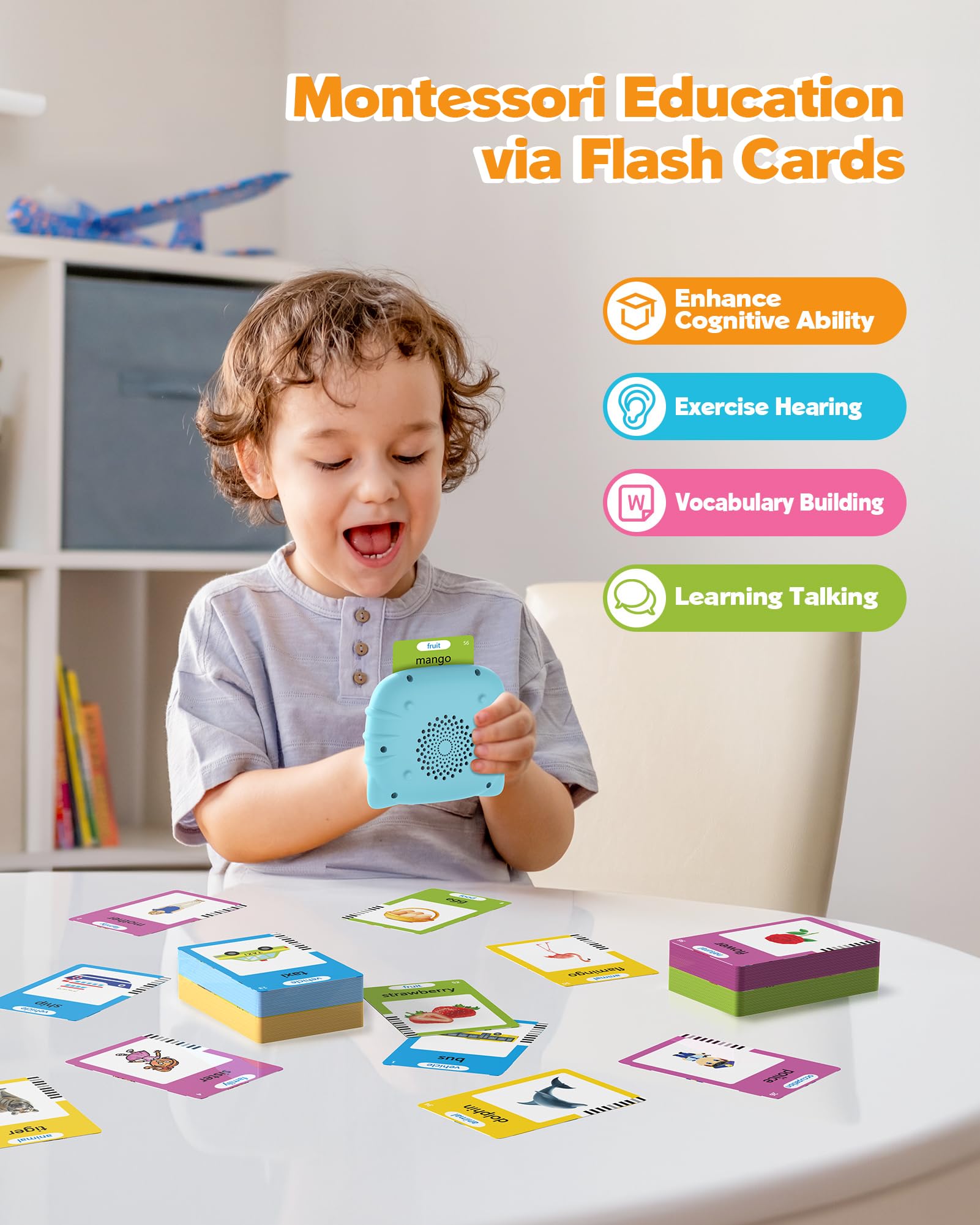


Airbition Talking Flash Cards for Toddlers 1 2 3 4 Year Olds, Montessori Language Learning Toys with 224 Words, Pocket Speech Therapy Toys, and Speech Development Educational Playthings for Children
- Toddler Montessori Learning Toys: This educational talking flash card features 224 colorful illustrations and
- Speech Therapy and Sensory Toys: Talking flashcards are a valuable tool for children. The sound-image combo he
- Easy to Use: Simply turn on the switch, insert a card into the reader, and hear content in a standard American
3. Fine Motor Skills and Sensory Play: The Hands-On Highway to Smarter Thinking
Here is something that surprises many parents: the part of the brain that controls hand movements sits directly adjacent to the areas managing language, attention, and executive function. When your toddler pinches, stacks, sorts, or threads, they are not just developing physical dexterity — they are laying down neural pathways that support thinking itself.
Why Sensory Input Is Cognitive Input
Sensory play — activities that engage touch, proprioception (body awareness), sound, and sight — helps the brain organise and make sense of information. Occupational therapists and paediatric neuroscientists agree that children who regularly engage in rich sensory experiences show stronger attention spans and better emotional regulation. The tactile sensation of grasping a smooth wooden block, feeling its weight, and fitting it into a slot is a multi-system learning event.
Matching Toys to Developmental Stage
For babies and young toddlers (12–36 months), the goal is open-ended exploration with objects of varying shapes, colours, and textures. The PEBIRA Wooden Sorting & Stacking Toy is a beautifully simple example: 20 wooden pieces in five colours and five geometric shapes that a child can sort by colour, shape, or number of holes. With over 9,000 reviews and a 4.6-star rating, it's a community favourite for good reason.
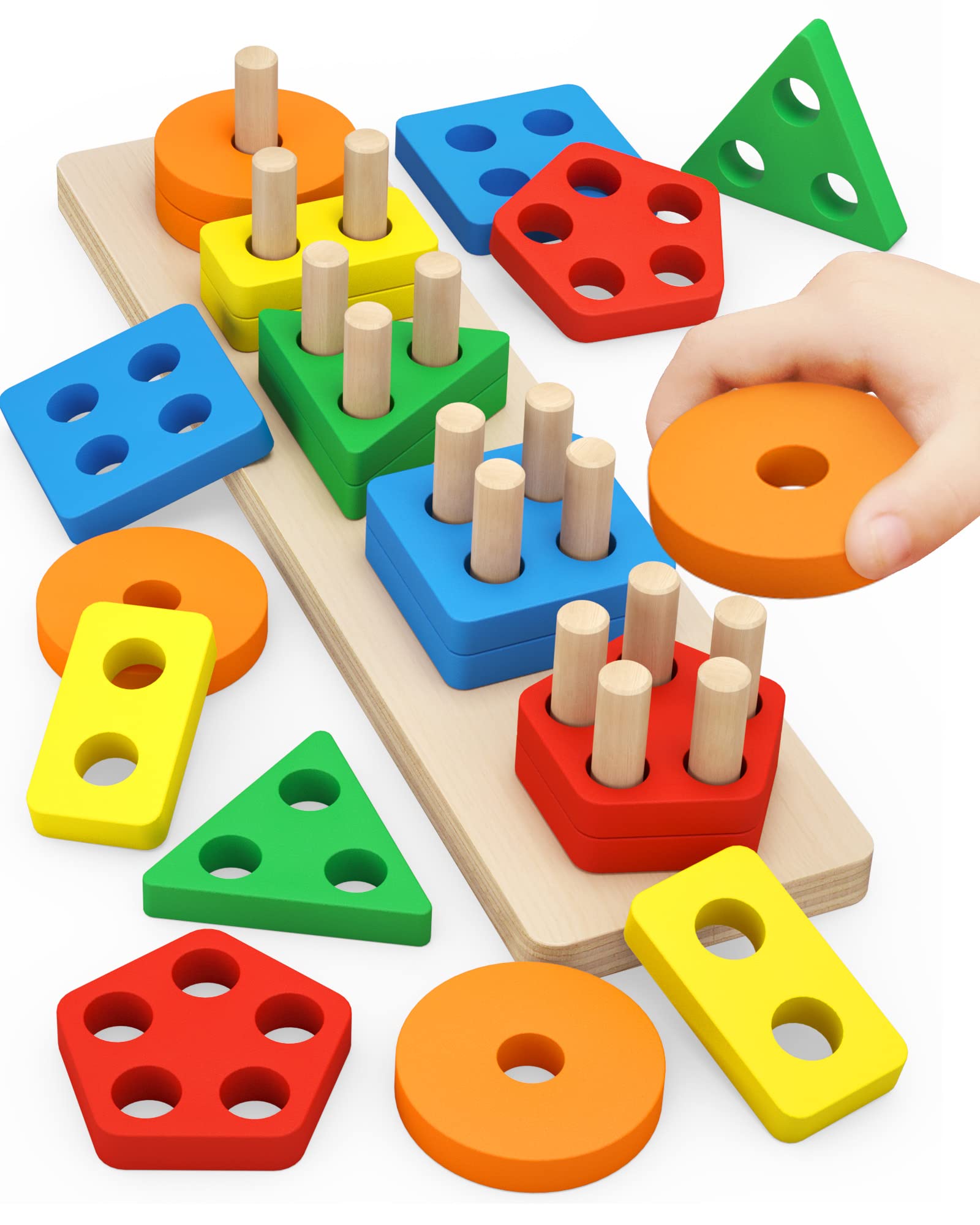


PEBIRA Montessori Toys for 1 to 3-Year-Old Boys Girls Toddlers, Wooden Sorting & Stacking Toys for Toddlers and Kids Preschool, Educational Color Recognition Shape Sorter, Learning Puzzles Gift
- Montessori Toy for Early Education: This wooden sorting and stacking puzzle contains 20 pieces including block
- Learn Colors Shapes and Numbers: Kids can sort by shape,by color or by the numbers of holes for pegs. Toddler
- Design for Baby: Perfectly sized for toddlers' hands and a great choice as travel toys. Your child will love t
For slightly older toddlers who are ready for a bit more challenge, Learning Resources Spike The Fine Motor Hedgehog offers coloured quills that children remove and replace, building hand-muscle strength, pincer grip, and colour recognition simultaneously. It grows with your child from simple sensory play at 18 months to pattern-making and counting by age three or four.
4. Executive Function: The Cognitive Skills That Matter More Than IQ
Executive function (EF) is the set of mental skills that allows your child to plan, focus, remember instructions, and manage impulses. Harvard's Center on the Developing Child describes EF as the "air traffic control system" of the brain — and without it, even bright, knowledgeable children struggle to learn effectively.
Three Core Components
1. Working memory — Holding information in mind while using it (following a two-step instruction, for example) 2. Cognitive flexibility — Switching between tasks or rules without melting down 3. Inhibitory control — Resisting an impulse in favour of a more considered response (the marshmallow test is the classic demonstration)
EF skills begin developing in infancy but undergo rapid growth between ages 3–5, and again during the 7–9 year window. They are heavily influenced by environment — meaning warm, predictable, low-stress caregiving has a direct, measurable effect on a child's EF capacity.
Executive function skills are not fixed at birth. They are shaped by experiences — especially the quality of early relationships and the richness of play environments.
— Center on the Developing Child, Harvard University (2011)
Games That Build Executive Function at Every Age
- Ages 1–3: Simple sorting games, peekaboo, "Simon Says" - Ages 3–5: Board games with turns, puzzles, dramatic play - Ages 6–12: Strategy games, reading chapter books, learning a musical instrument
For toddlers just entering this window, colour-matching and categorisation activities are ideal. The MUONE Montessori Busy Book turns colour sorting into a rich EF exercise — children must hold a colour in mind, scan options, inhibit the urge to grab randomly, and match correctly. These are working memory and inhibitory control in action.
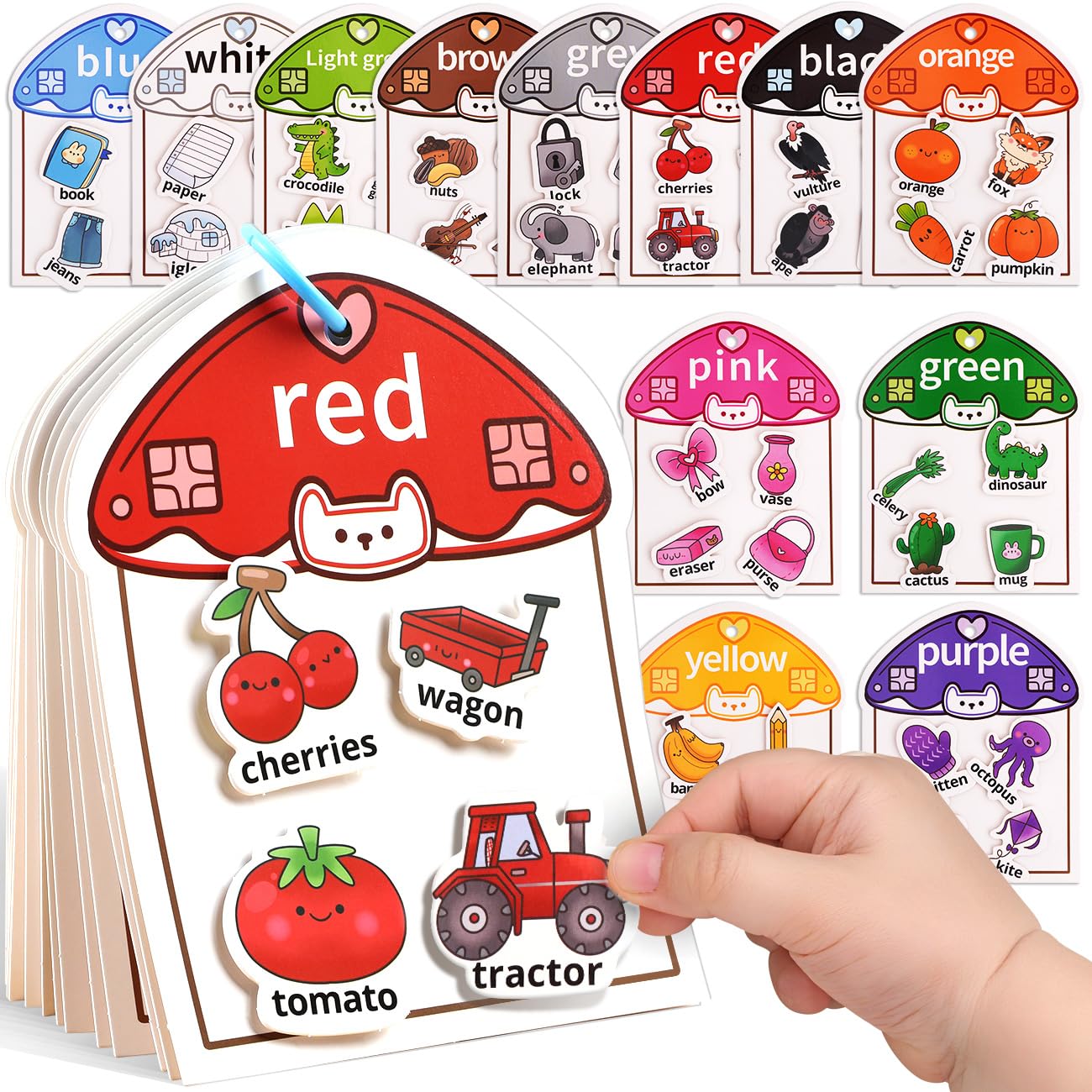
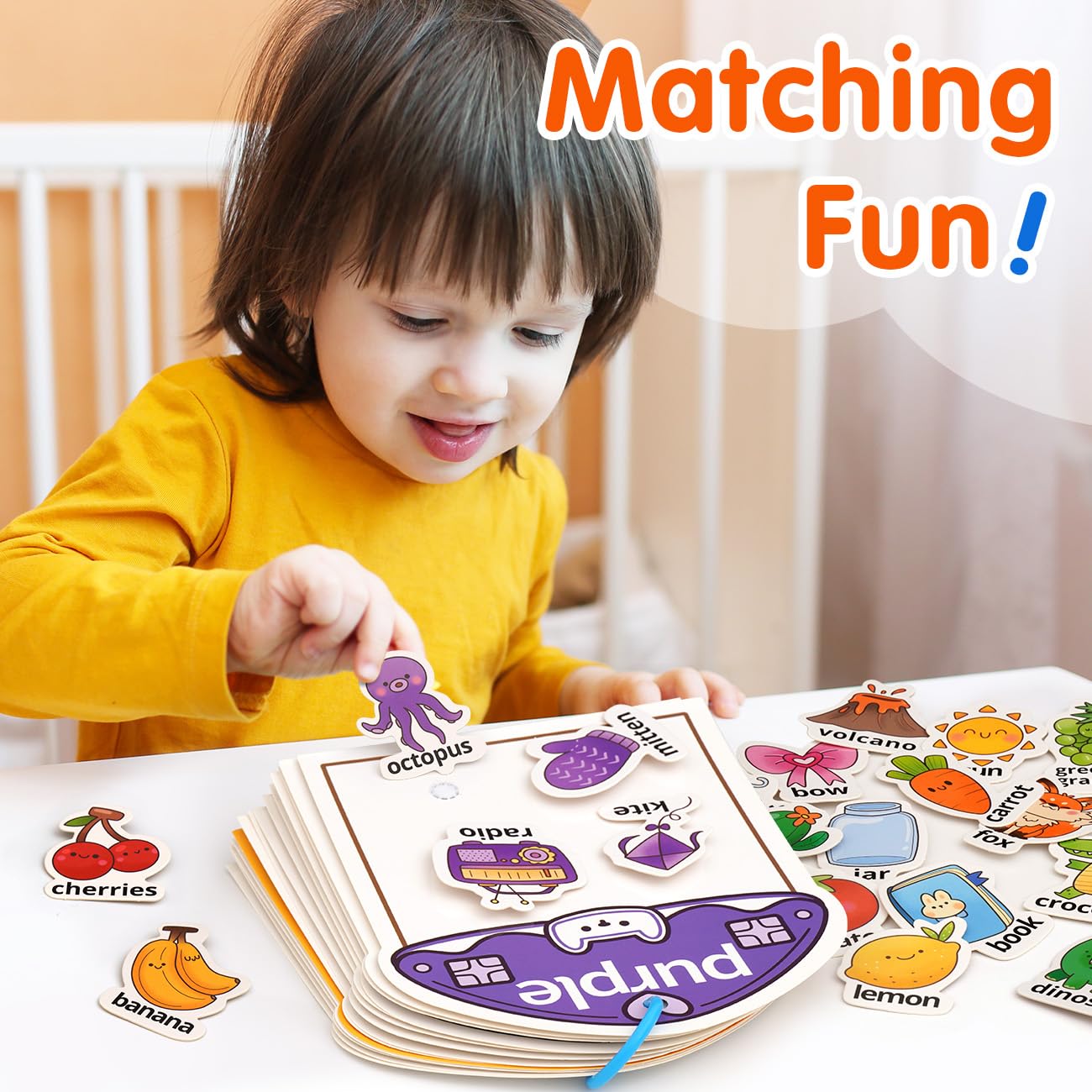
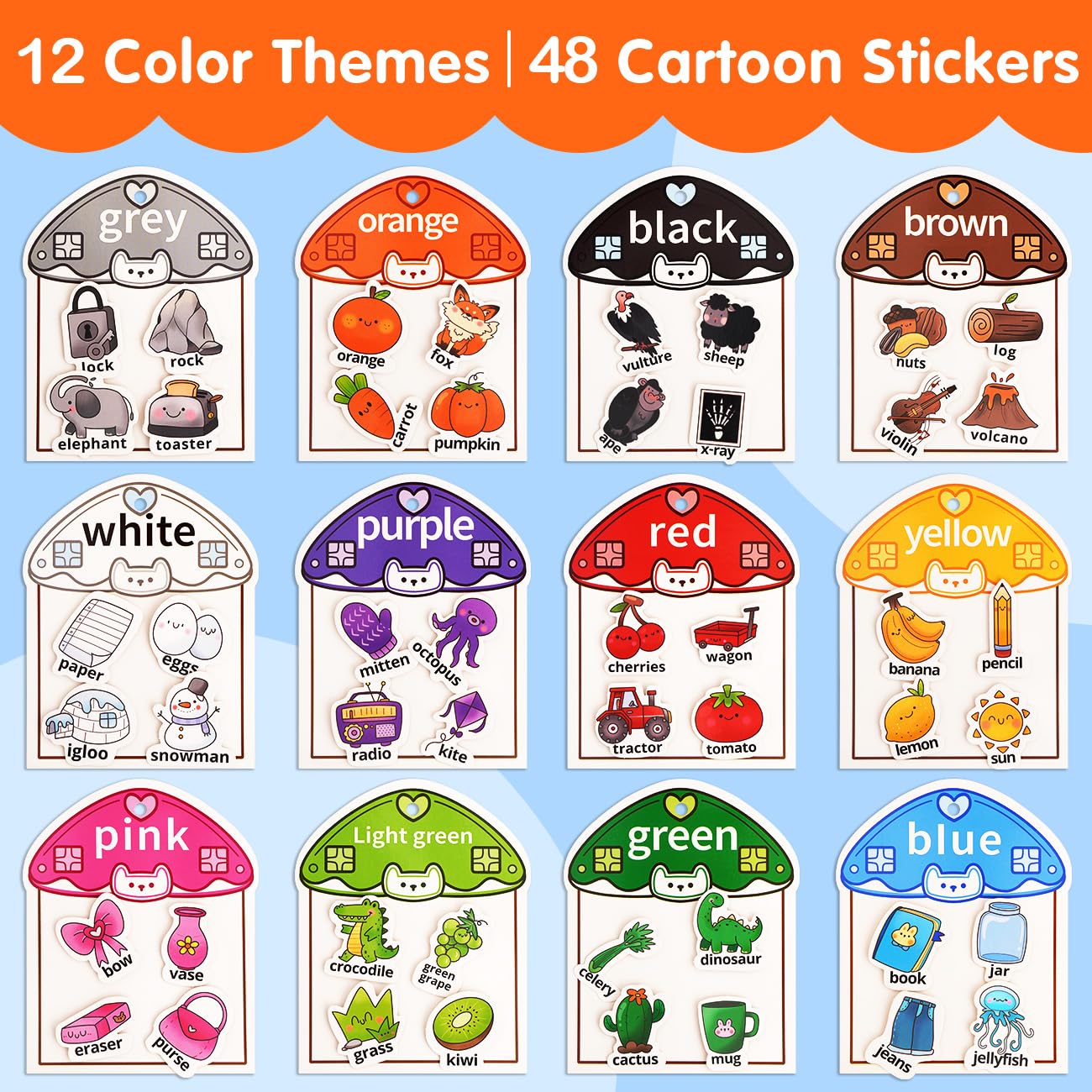
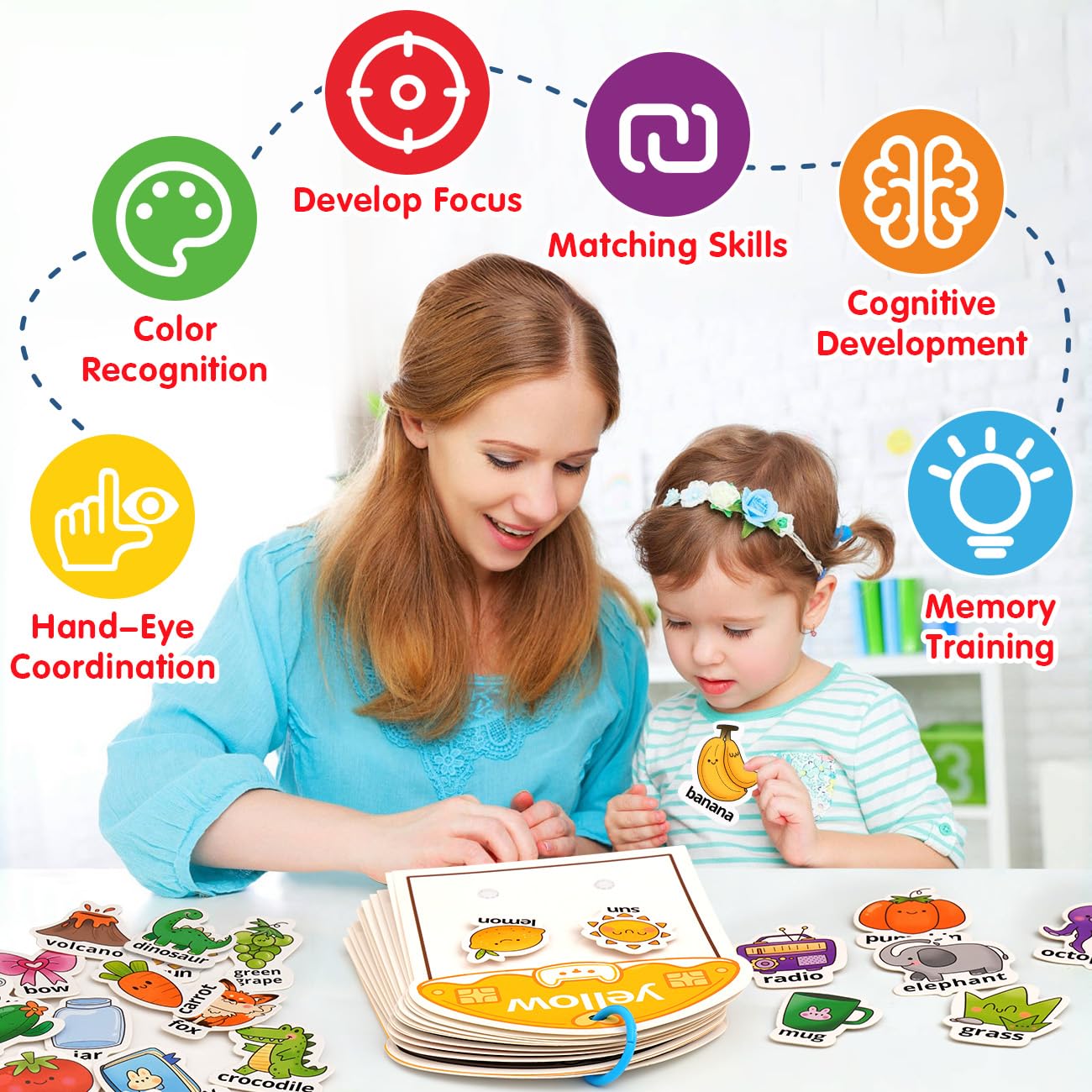
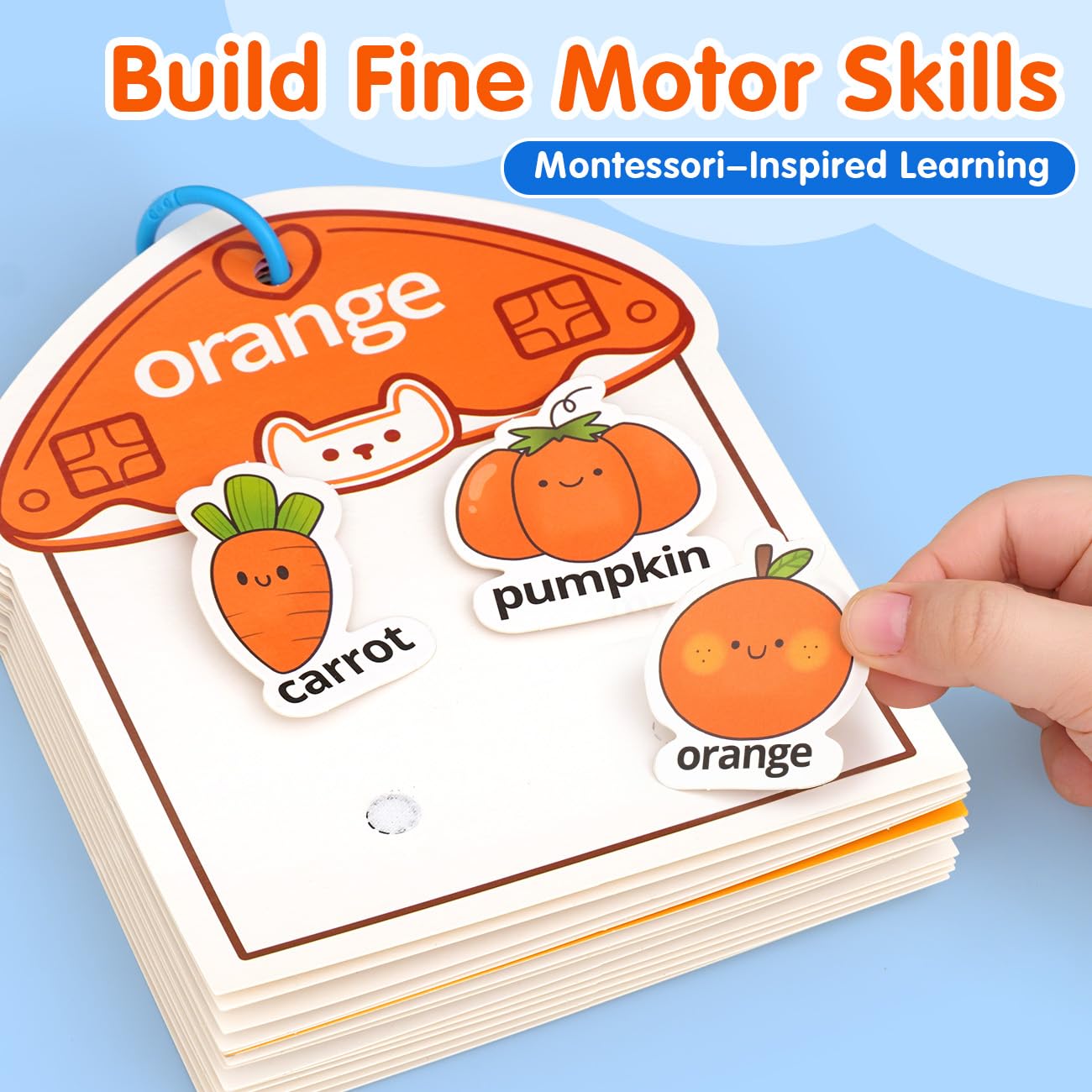
Montessori Busy Book Color Sorting Toys for Toddlers 2-4, Educational Preschool Learning Activities for Kids, Sensory Fine Motor Matching Games for 3 Year Old Boys Girls Gifts
- Matching Color Busy Book: Your toddlers will adore mastering 12 colors with our interactive busy book. They'll
- Build Essential Skills: Watch your child's mind grow! This engaging activity is far more than a sorting toys—i
- Spark Joyful Connections & Teamwork: "Wow, you found the red tomato! Great job, sweetie!" This busy book is de
5. Reasoning, Problem-Solving, and Early STEM Thinking
Logical reasoning and problem-solving emerge gradually across childhood, beginning with simple cause-and-effect understanding in infancy ("If I cry, someone comes") and expanding into abstract thought by late primary school. Nurturing this domain early creates the foundation for mathematical thinking, scientific inquiry, and creative problem-solving.
How Children Learn to Reason
Swiss developmental psychologist Jean Piaget described children as "little scientists" who build knowledge by experimenting, observing, and revising their understanding. Modern developmental science has refined and challenged some of Piaget's timelines — we now know babies can reason about physical laws far earlier than he thought — but his core insight holds: children learn by doing, not by being told.
Spatial Reasoning: The Underrated Superpower
Spatial reasoning — the ability to mentally rotate, visualise, and manipulate objects — is one of the strongest early predictors of mathematical ability. Yet it is often overlooked in favour of number drills. Simple activities like jigsaw puzzles, block building, and shape-matching do more for early maths readiness than flashcard numbers ever could.
For toddlers beginning to grasp spatial concepts, the Yetonamr Wooden Sensory Sorting Toy offers chunky, smooth-edged geometric blocks in multiple colours and shapes. Children must figure out which shape fits which slot — a hands-on exercise in spatial reasoning and trial-and-error problem-solving. Food-safe, non-toxic paint makes it worry-free even for younger explorers.


Yetonamr Montessori Toys for 1 2 3 Years Old Boys Girls Birthday Gifts, Wooden Sensory Toys for Ages 2-4 Toddlers Kids Baby, Toddler Learning Toy Activities Puzzles Ages 1-3
- SAFETY AND HIGH QUALITY: Toddler toys for young kids include high-quality, chunky wooden pieces to ensure tiny
- LEARNING THROUGH PLAY: This wooden sorting and stacking puzzle contains 20 pieces including blocks of 5 colors
- DESIGN FOR TODDLERS: Our montessori toy is an easy game that involves mounting one piece on top of the another
For slightly older children moving into letter recognition alongside spatial play, the Zeoddler Wooden Alphabet Puzzle brings 26 uppercase letter pieces in natural wood — combining fine motor challenge with early literacy in one elegant, durable tool.
6. Attention, Memory, and the Role of Play in Consolidating Learning
Attention and memory are the infrastructure everything else runs on. Without the ability to focus and retain information, language, reasoning, and EF cannot develop effectively. The good news: both attention and memory are highly trainable — and play is the training ground.
How Attention Develops From Birth to Age 12
- 0–3 months: Reflexive attention — responds to loud sounds and faces - 3–12 months: Sustained attention increases; begins tracking moving objects - 1–3 years: Joint attention emerges (sharing focus with another person) - 3–6 years: Selective attention develops — can filter out distractions - 6–12 years: Goal-directed attention, can self-monitor and self-correct
One of the most protective things you can do for your child's attention development is to protect unstructured, screen-free play time. The American Academy of Pediatrics (AAP) recommends that children aged 2–5 have no more than one hour of high-quality screen time per day, with an emphasis on co-viewing and conversation about content.
Memory: Why Repetition Isn't Boring
Toddlers ask you to read the same book twelve times in a row for a neurological reason: repetition strengthens memory traces. Each re-reading deepens the encoding of vocabulary, narrative structure, and phonological patterns. Rather than steering away from repetition, lean into it — and add a tiny new detail or question each time to stretch the learning.
Play is not a break from learning — it is the primary vehicle through which children aged 0–6 consolidate memory, develop language, and build cognitive flexibility.
— American Academy of Pediatrics (2018)
The Learning Resources Spike The Fine Motor Hedgehog is a beautiful example of a toy that rewards repetition — the colour-matching and quill-placement activity is engaging enough to revisit dozens of times, each session subtly deepening colour memory, counting, and fine motor control.
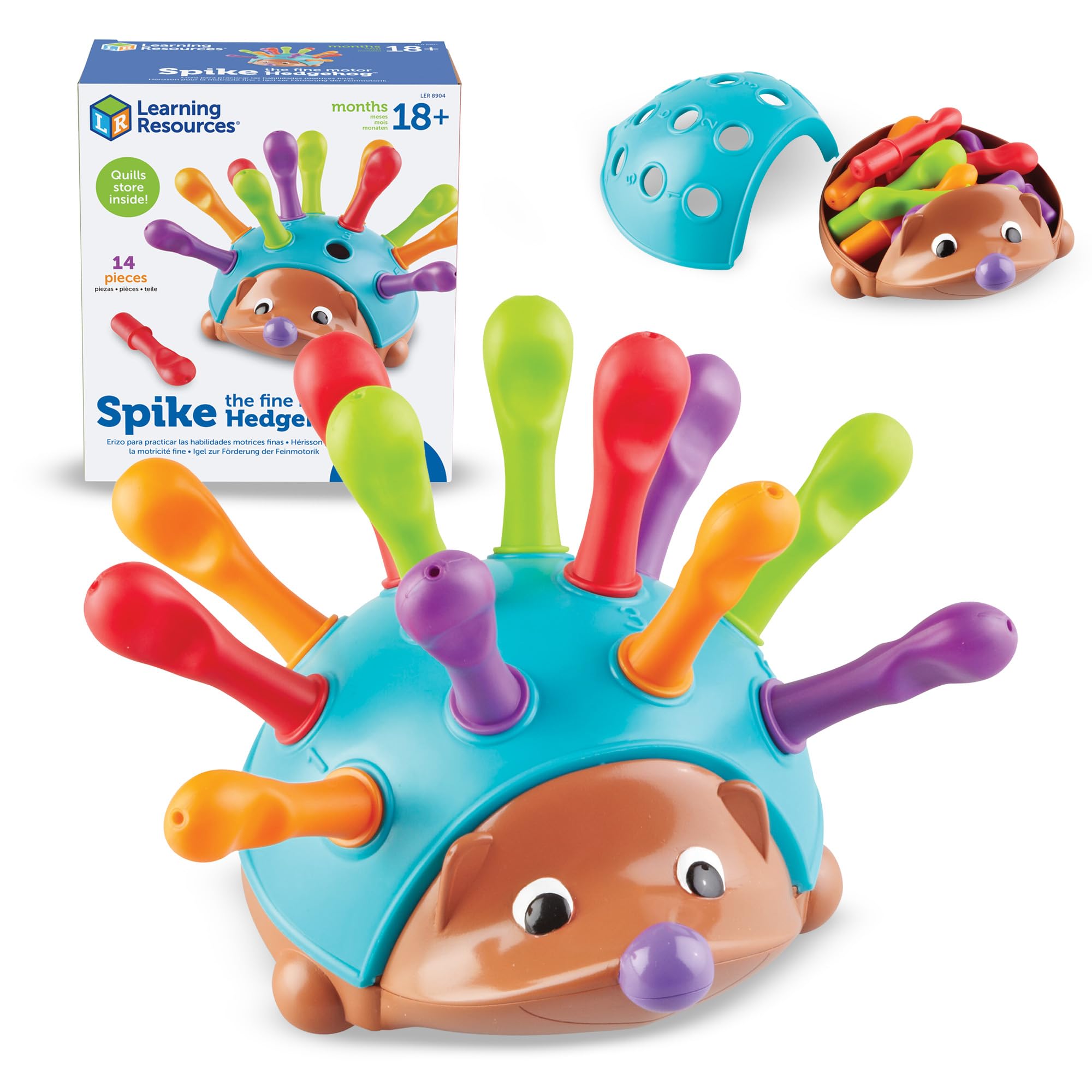


Learning Resources Spike The Fine Motor Hedgehog - Toddler Montessori Toys, Stacking Shape, Gifts For Boys And Girls, Sorting And Matching Skill Activities, Educational Games, Kindergarten
- DEVELOPS ESSENTIAL FINE MOTOR SKILLS - Colorful, quills help toddlers strengthen hand muscles, and enhance han
- GROWS WITH YOUR CHILD - Perfect for ages 18 months and up, this versatile toy evolves from simple play for tod
- PROVIDES ENGAGING SENSORY PLAY - The specially designed quills with easy-grip texture captivate children's att
Comparing Cognitive Development Toys by Learning Stage
| Learning Stage | Age Range | Primary Cognitive Domain | Key Features to Look For | Recommended Product | Price Range |
|---|---|---|---|---|---|
| Early Sensory Explorer | 12–24 months | Sensory processing, fine motor | Chunky pieces, smooth edges, multiple textures | Yetonamr Wooden Sensory Sorting Toy | $9.99 |
| Shape & Colour Sorter | 18–36 months | Spatial reasoning, colour recognition | Multiple shapes, colour coding, open-ended sorting | PEBIRA Wooden Sorting & Stacking Toy | $9.99 |
| Fine Motor Builder | 18 months–4 years | Fine motor, attention, counting | Tactile quills, repeatable action, pattern play | Spike The Fine Motor Hedgehog | $11.97 |
| Language Learner | 1–4 years | Vocabulary, language, auditory memory | Audio-visual pairing, 200+ words, portable | Airbition Talking Flash Cards | $9.99 |
| Executive Function Builder | 2–4 years | EF, memory, colour categorisation | Matching activity, 48+ pieces, sticker interaction | MUONE Montessori Busy Book | $8.95 |
| Pre-Literacy & Reasoning | 3–6 years | Early literacy, spatial reasoning, fine motor | Natural wood, 26 letter pieces, age-appropriate size | Zeoddler Wooden Alphabet Puzzle | $6.69 |
Expert Insights on Cognitive Development
Every Day Is a Brain-Building Day
Parenting is full of moments that feel small but are anything but: the book you read for the twelfth time, the block tower your toddler knocked over and rebuilt, the question about why the sky is blue that you answered on a tired Tuesday evening. Every one of those moments is a neural connection forming, a skill consolidating, a mind expanding.
You don't need a neuroscience degree or an expensive curriculum. You need curiosity, warmth, and the knowledge that your presence — your voice, your responses, your delight in your child — is the most sophisticated cognitive development tool ever created.
The science is clear: children who grow up in language-rich, play-friendly, emotionally safe homes build stronger brains. And that is something every parent reading this can offer, starting today.
If this article helped you, save it, share it with a fellow parent, or subscribe to tinymindsworld.com for more clinically informed, parent-friendly guidance every week.
Sources & References
- Center on the Developing Child, Harvard University. "The Science of Early Childhood Development." 2016. https://developingchild.harvard.edu
- Center on the Developing Child, Harvard University. "Building the Brain's 'Air Traffic Control' System: How Early Experiences Shape the Development of Executive Function." 2011. https://developingchild.harvard.edu/resources/building-the-brains-air-traffic-control-system-how-early-experiences-shape-the-development-of-executive-function/
- World Health Organization. "Nurturing Care for Early Childhood Development." 2018. https://www.who.int/publications/i/item/9789241514064
- American Academy of Pediatrics. "Literacy Promotion: An Essential Component of Primary Care Pediatric Practice." Pediatrics, 2014.
- American Academy of Pediatrics. "The Power of Play: A Pediatric Role in Enhancing Development in Young Children." Pediatrics, 2018. https://doi.org/10.1542/peds.2018-2058
- American Academy of Pediatrics. "Media and Young Minds." Pediatrics, 2016. https://doi.org/10.1542/peds.2016-2591
- Hart, B. & Risley, T. R. "Meaningful Differences in the Everyday Experience of Young American Children." Paul H. Brookes Publishing, 1995.
- Annie E. Casey Foundation. "Early Reading Proficiency in the United States." 2014. https://www.aecf.org
- Lillard, A. & Else-Quest, N. "The Early Years: Evaluating Montessori Education." Science, 2006. Vol. 313, pp. 1893–1894.
- Tamis-LeMonda, C. S., Bornstein, M. H., & Baumwell, L. "Maternal Responsiveness and Children's Achievement of Language Milestones." Child Development, 2001. 72(3), 748–767.
- University of Chicago, Spatial Intelligence and Learning Center. Research on Spatial Language and Reasoning. https://spatiallearning.org
Frequently Asked Questions
At what age does cognitive development really begin?
How much screen time is safe for my toddler's cognitive development?
Are Montessori toys really better for brain development?
My 4-year-old still can't focus for more than two minutes. Is that normal?
What are the best activities for boosting executive function in children aged 6–12?
Can I do too much to stimulate my child's brain development?
Do alphabet puzzles really help with early literacy?
Was this helpful?
Thanks — your feedback helps us pick what to write next.