Infant Behaviour and Emotions: What Your Baby Feels (3–12 Months)
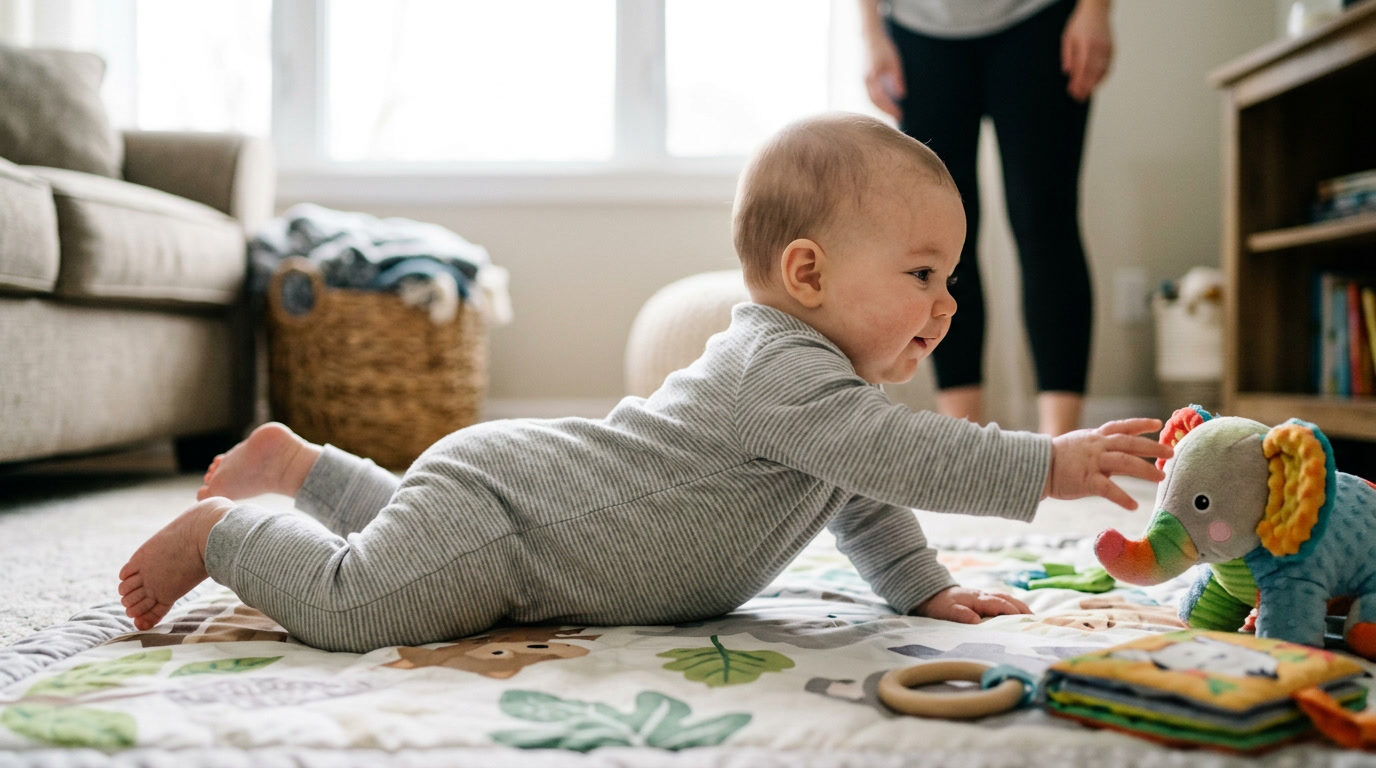
Between 3 and 12 months, your baby is not just eating and sleeping; they are building a full emotional world, complete with joy, frustration, fear, and the earliest seeds of empathy.
In this article
Picture this: it is 4 pm on a Wednesday and your 7 month old has gone from giggling to full meltdown in under 60 seconds. No wet nappy. Not hungry. Just... furious. Sound familiar?
Here is the thing. That emotional volatility is not a problem to fix. It is your baby doing exactly what their developing brain is built to do. According to the Centers for Disease Control and Prevention (CDC), emotional and social development in the first year of life lays the foundation for every relationship, learning experience, and coping skill your child will ever develop. That is a lot riding on a tiny person who cannot yet say a single word.
In this guide you will understand:
1. How Baby Emotions Actually Develop (3 to 12 Months)
Your baby is born with basic emotional circuits already wired in, and the months between 3 and 12 represent an explosion of emotional complexity. It is not a straight line. Think of it more like a staircase, with occasional slides back down.
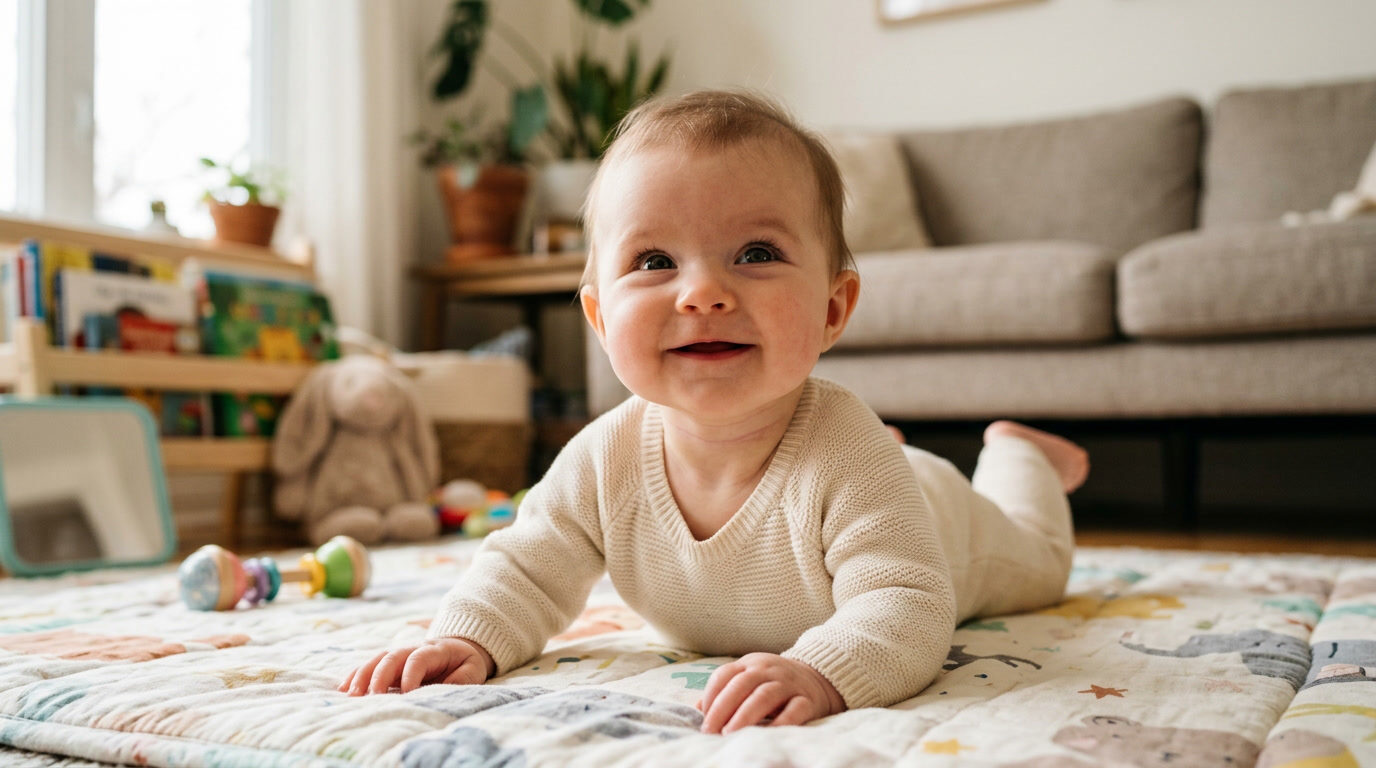
At 3 months, you will typically see genuine social smiling (not just wind), cooing in response to your voice, and clear signs of pleasure when they see your face. By 5 to 6 months, babies begin showing more nuanced emotions: excitement, frustration when a toy is taken away, and something that looks a lot like wariness around new faces. Between 8 and 10 months, many babies hit what feels like a behavioural cliff: separation anxiety peaks, stranger anxiety ramps up, and the baby who used to go happily to anyone now screams when Grandma reaches out her arms.
Why This Happens
The prefrontal cortex, the brain region responsible for emotional regulation and impulse control, is barely online in infancy. Your baby genuinely cannot calm themselves down the way an adult can. What they can do is signal distress and wait for a response. This is where you come in.
Understanding how the brain develops its emotional blueprint helps explain why your reactions matter so much in these early months.

What's Going on in There? : How the Brain and Mind Develop in the First Five Years of Life
- Health, Fitness & Dieting
- Psychology & Counseling
- Child Psychology
2. Reading Your Baby's Emotional Signals
Babies communicate emotions long before they have words. By 3 months, most infants have already developed a rich vocabulary of signals, if you know what to look for.
Engagement Cues
These tell you your baby is ready and happy to interact:
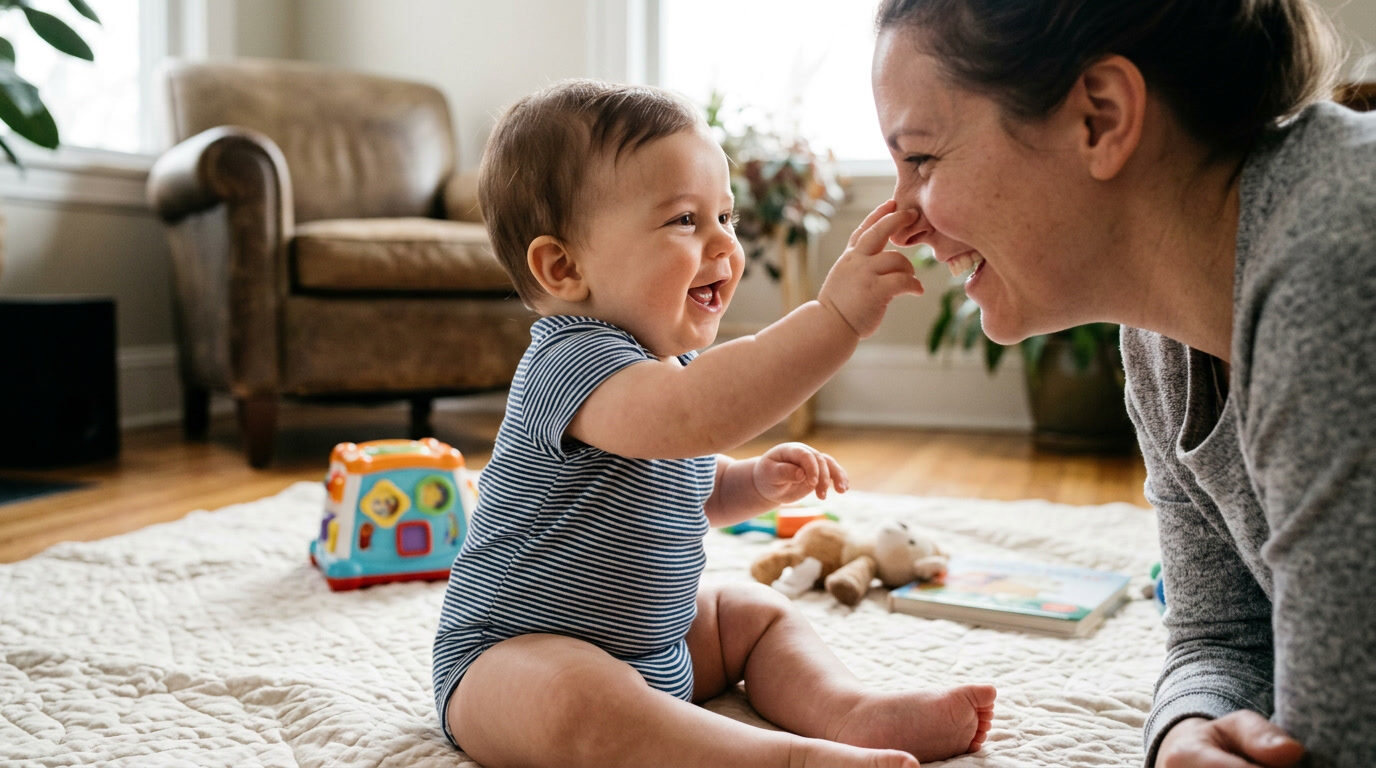
- Bright, widened eyes and sustained eye contact - Relaxed body, soft hands - Reaching toward you - Babbling, cooing, smiling - Leaning in toward a familiar face
Disengagement Cues
These tell you your baby needs a break or is feeling overwhelmed:
- Looking away or turning the head - Arching back - Kicking or flailing limbs - Yawning (outside of tiredness) - Fussing or a lower lip tremble
Missing disengagement cues is one of the most common ways well meaning parents accidentally overstimulate their babies. When your baby looks away mid-play, they are not rejecting you. They are regulating their nervous system. The right response is to pause, soften your voice, and wait.
Books like Making Faces: A First Book of Emotions are a surprisingly useful tool here. Even at 4 to 5 months, babies are drawn to faces that label emotions simply, and shared reading builds the very vocabulary of feeling you are trying to help your child grow.
3. Attachment: The Emotional Foundation of Everything
Secure attachment is not a parenting philosophy. It is a biological need, and the research behind it is some of the most robust in all of developmental psychology.
John Bowlby, the British psychiatrist who developed attachment theory, described the parent-infant bond as an evolutionary survival system. When your baby cries and you respond, you are not spoiling them. You are literally building the neural pathways that will allow them to feel safe in the world.
The good news is that secure attachment does not require perfection. Research, including landmark work by Mary Ainsworth at Johns Hopkins University, shows that "good enough" responsiveness is what counts. You will miss cues sometimes. Your baby will cry and you will take a moment to figure out why. That is normal. What matters is the repair: when you do respond, and when you come back after a difficult moment with warmth.
Signs of Secure Attachment at 9 to 12 Months
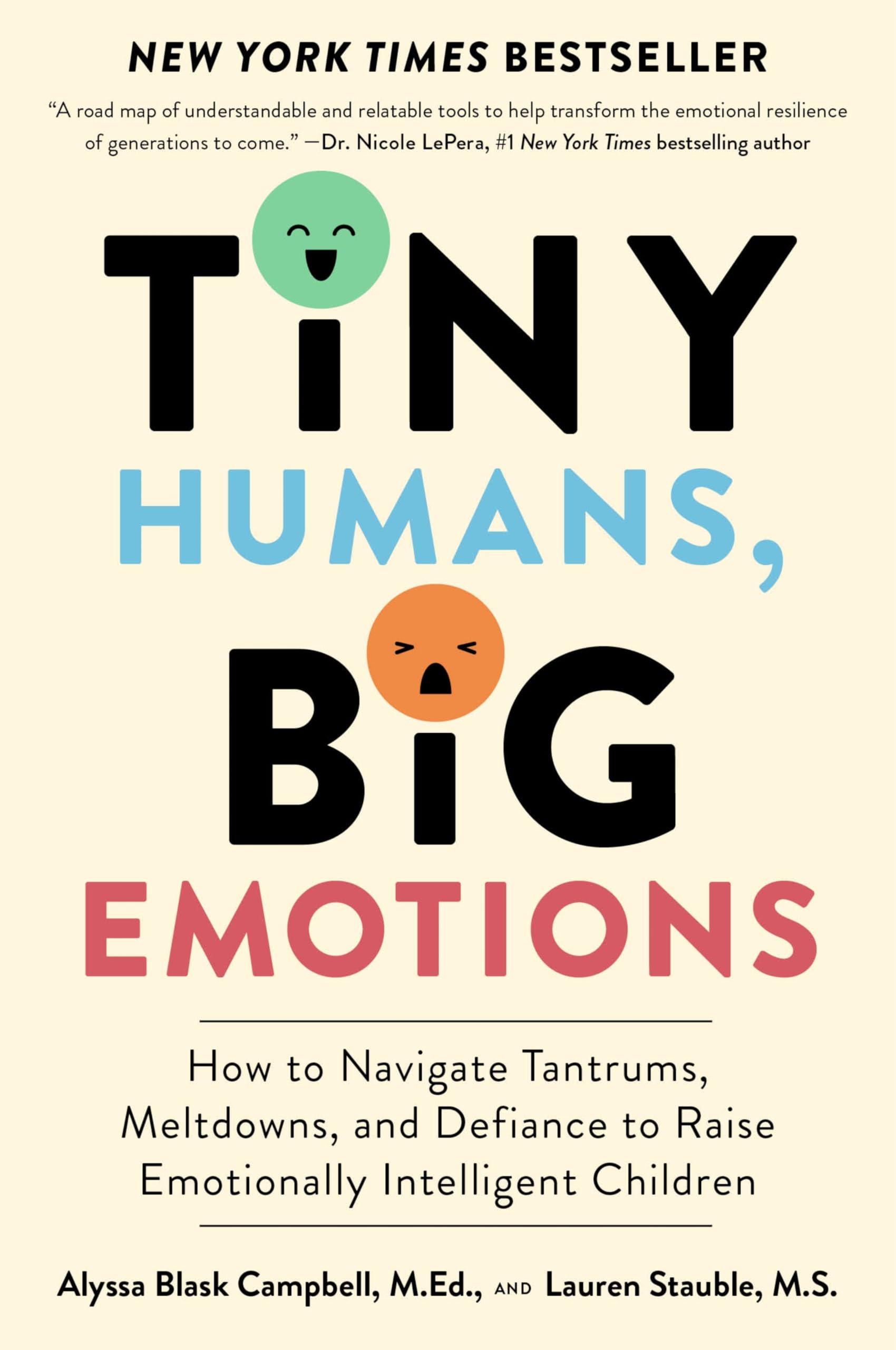
Tiny Humans, Big Emotions: How to Navigate Tantrums, Meltdowns, and Defiance to Raise Emotionally Intelligent Children―An Essential Guide for Caregivers of Children from Infancy to Age Eight
- Relationships
- Conflict Management
- Image Unavailable Image not available forColor:
4. Crying, Fussing, and What Your Baby Is Actually Saying
Crying is not a behaviour problem. It is communication. Between 3 and 12 months, crying evolves considerably, and most parents become remarkably good at decoding their specific baby's signals over time.
Common Reasons for Crying in This Age Range
- Hunger: Still a top reason even past 6 months; watch feeding cues before full crying starts - Tiredness: Overtired babies are harder to settle than tired ones; catching the yawn window matters - Overstimulation: Too much noise, movement, or novelty - Pain or discomfort: Teething (typically from 4 to 7 months), wind, or illness - Loneliness or boredom: Yes, babies get bored, especially from 5 months onward - Developmental leaps: Periods of rapid brain growth often produce fussiness; this is normal and temporary
Research published by the AAP on infant crying shows that responding promptly to cries in the early months does not create dependency. It creates trust. The more reliably you respond, the more your baby's nervous system learns that the world is safe, and paradoxically, the less they tend to cry over time.


Baby's Feelings - A First Book of Emotions - Educational
- Children's Books
- Growing Up & Facts of Life
- Family Life
5. Separation Anxiety and Stranger Wariness (8 to 12 Months)
Around 8 months, something shifts. The baby who used to smile at checkout clerks now buries their face in your shoulder. The drop-off at nursery that was smooth last month now involves screaming. This is separation anxiety, and it is one of the most reliably universal milestones in infant emotional development.
Why It Happens at 8 Months
Your baby has spent the first 6 to 7 months building a clear picture of you as their person. By 7 to 9 months, they also develop object permanence, the understanding that things exist even when out of sight, including you. So now, when you leave, they know you exist somewhere else, but they have no concept of time and no certainty you are coming back. Distress is the completely logical response.
What Helps
6. Supporting Emotional Development Through Everyday Play
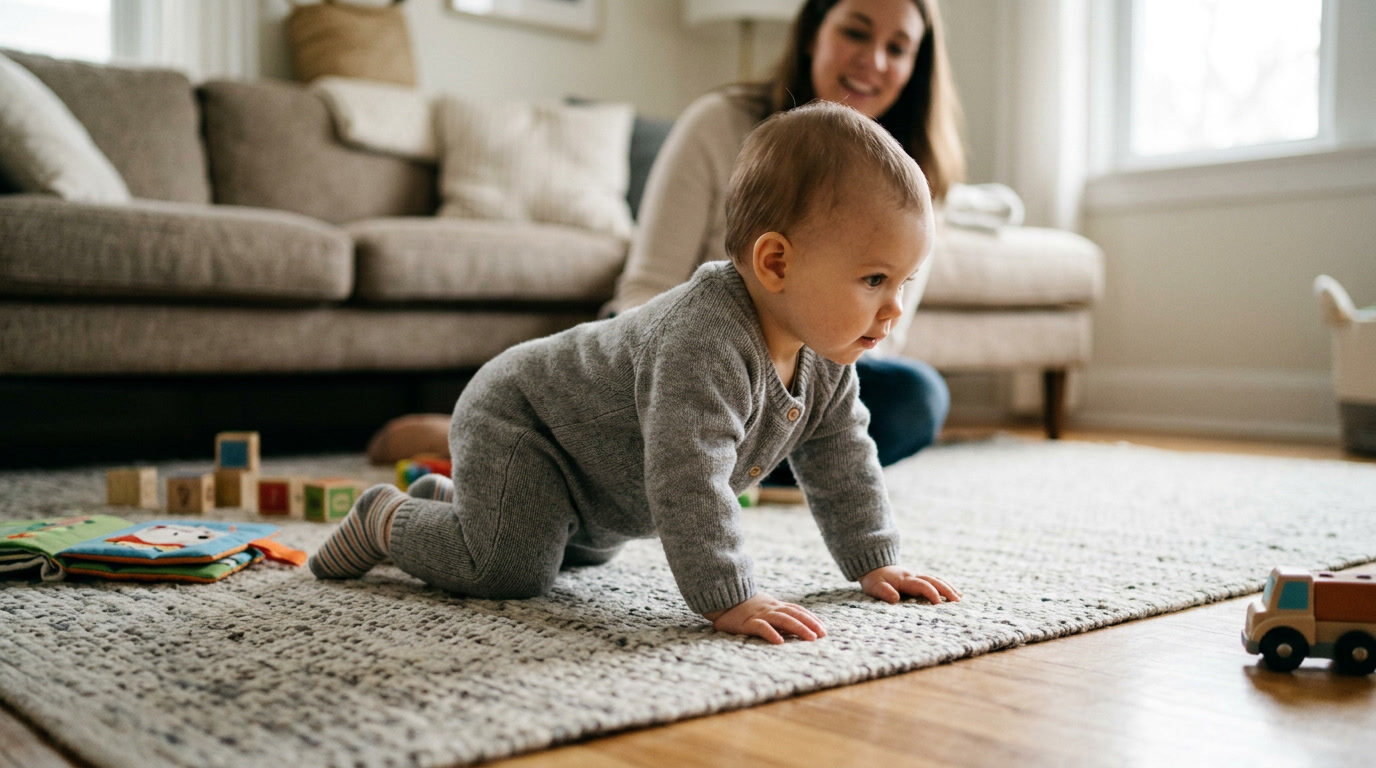
Play is not just fun. For a baby aged 3 to 12 months, it is the primary engine of emotional learning. Through play, your baby practices reading faces, tolerating frustration, experiencing delight, and recovering from small upsets.
Emotion-Building Play Ideas by Age
3 to 6 months: - Mirror play: hold your baby in front of a mirror and narrate what you both see ("Look at that happy face!") - Exaggerated facial expressions during conversation - Simple songs with predictable rhythms and surprise elements (Peek-a-boo is genuinely developmental, not just cute)
6 to 9 months: - Cause and effect toys that reward effort with sound or movement - Simple object permanence games (hide a toy under a cloth) - Reading board books with faces and expressions; Making Faces and Baby's Feelings are both excellent for this
9 to 12 months: - Simple back and forth turn taking with objects - Allowing safe frustration (a toy just out of reach) before offering help - Narrating your own emotions ("Mummy is feeling tired today; let's have a quiet cuddle")
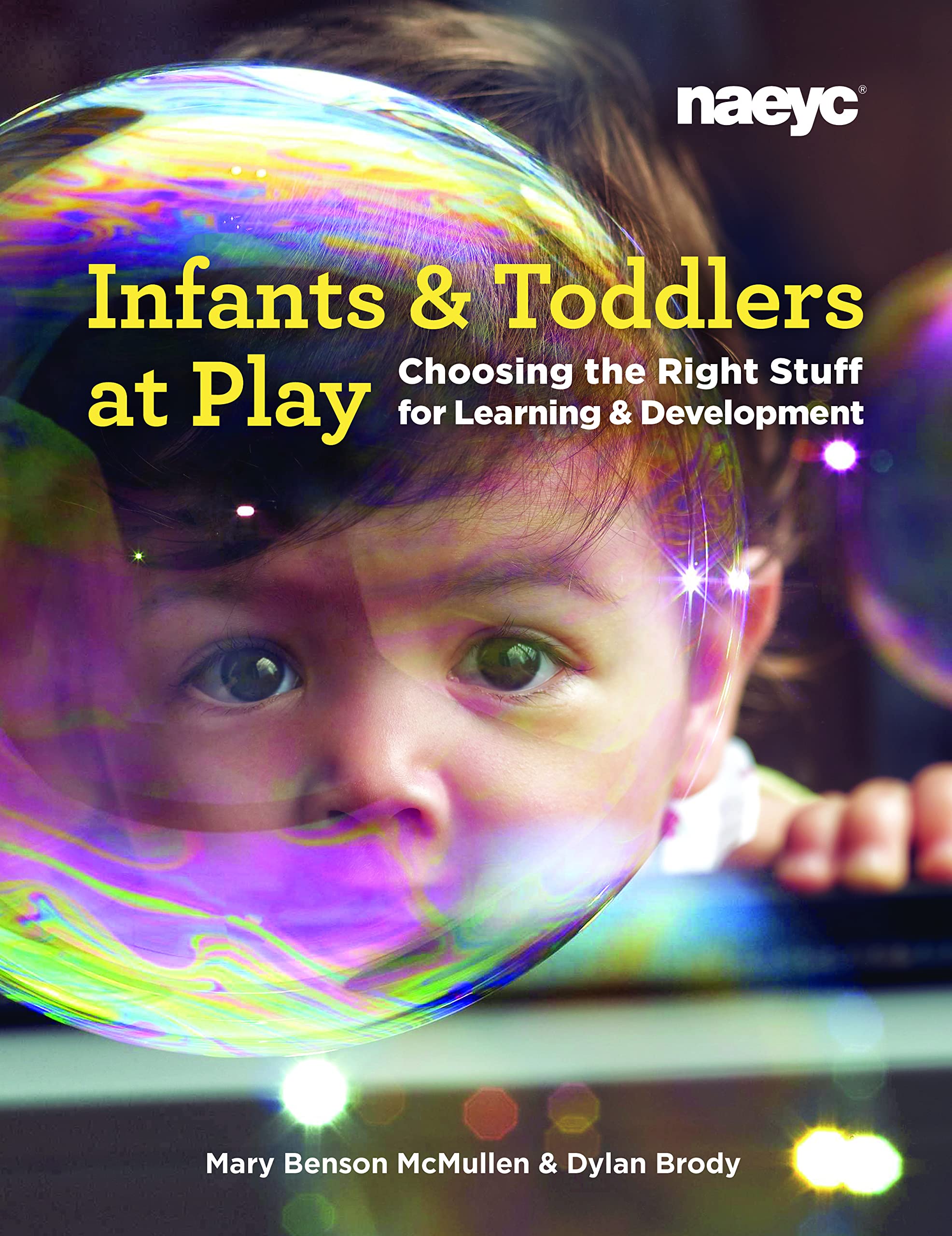
Infants and Toddlers at Play: Choosing the Right Stuff for Learning and Development
- Education & Teaching
- Schools & Teaching
- Curriculum & Lesson Plans
7. When to Talk to Your Doctor: Emotional Red Flags in Infancy
Most emotional variability in the first year is typical. But there are some patterns worth raising with your paediatrician.
Check In If You Notice
These are not necessarily signs of a serious problem; many have simple explanations. But early input from a paediatrician, a health visitor, or a developmental specialist is always worth seeking. The detailed milestones overview at 9 to 12 months can give you a helpful reference point for what to expect and when to ask questions.
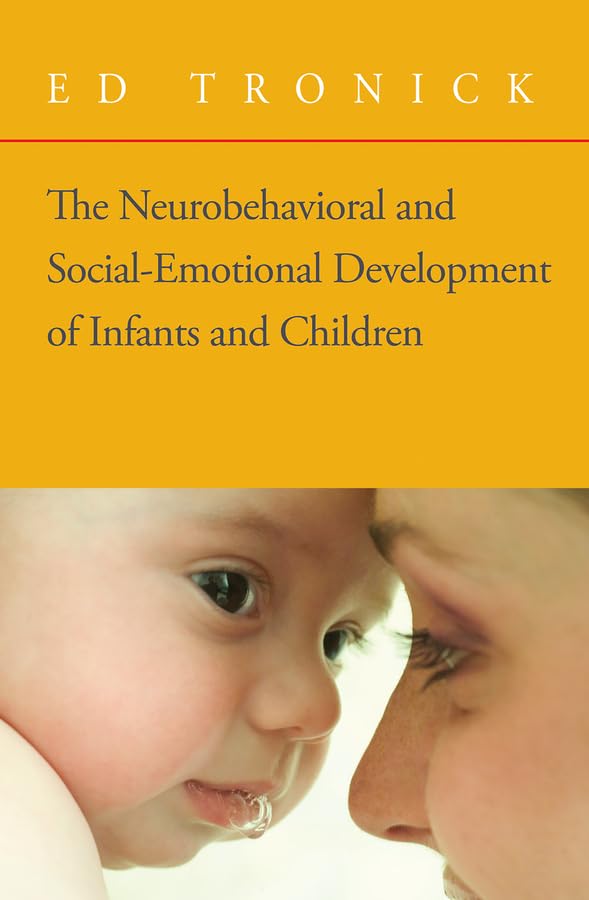
The Neurobehavioral and Social-Emotional Development of Infants and Children (Norton Series on Interpersonal Neurobiology)
- Medical Books
- Internal Medicine
- Pediatrics
How Emotional Support Approaches Compare (3 to 12 Months)
| Approach | Best Age Range | Primary Benefit | Main Drawback | Recommended Resource |
|---|---|---|---|---|
| Serve and return interaction | 3 to 12 months | Builds secure attachment and brain connectivity | Requires consistent parental presence | What's Going on in There? |
| Emotion labelling ("sportscasting") | 4 to 12 months | Builds emotional vocabulary early | Takes practice to become habit | Tiny Humans, Big Emotions |
| Face-focused books and play | 3 to 9 months | Teaches emotion recognition through faces | Limited engagement before 3 months | Making Faces |
| Predictable routines | 0 to 12 months | Reduces anxiety, supports self regulation | Can be hard to maintain consistently | Infants and Toddlers at Play |
| Parent-led co-regulation | 0 to 12 months | Directly soothes and models calm | Risk of under-encouraging independence if continued past infancy | Tiny Humans, Big Emotions |
| Responsive caregiving | 0 to 12 months | Foundation of secure attachment | Often misread as "spoiling" | Neurobehavioral and Social-Emotional Development |
Expert Insights
Your baby is doing something remarkable right now. In the space of 9 months, they are going from a creature who knows only hunger and comfort to someone who reaches for your face, laughs at your expressions, and feels something when you leave the room. That is not small.
You do not need to get every response exactly right. You just need to keep showing up, warm and consistent, letting your baby know that their feelings make sense and that you are here. As one developmental researcher once put it, the goal of the first year is not to raise a calm baby. It is to raise a baby who knows they are safe.
Save this guide, share it with a co-parent or caregiver, and come back to it when the 4 pm meltdowns feel endless. You are doing better than you think.
Sources & References
- Centers for Disease Control and Prevention. "Developmental Milestones: Social and Emotional." 2023. https://www.cdc.gov/ncbddd/actearly/milestones/index.html
- American Academy of Pediatrics. "Responding to Your Baby's Cries." HealthyChildren.org. 2023. https://www.healthychildren.org
- Ainsworth, M.D.S., Blehar, M.C., Waters, E., & Wall, S. "Patterns of Attachment: A Psychological Study of the Strange Situation." Lawrence Erlbaum Associates, 1978.
- Bowlby, J. "Attachment and Loss, Vol. 1: Attachment." Basic Books, 1969.
- Tronick, E. "The Neurobehavioral and Social-Emotional Development of Infants and Children." Norton, 2007.
- Gopnik, A., Meltzoff, A., & Kuhl, P. "The Scientist in the Crib." William Morrow, 1999.
- University of California San Diego. Draghi-Lorenz, R., Reddy, V., & Costall, A. "Rethinking the development of 'nonbasic' emotions." Developmental Review, 2001.
- Dozier, M., et al. "Developing Evidence-Based Interventions for Foster Children." Development and Psychopathology, 2006.
- Zero to Three. "Social-Emotional Development in the First Three Years." 2022. https://www.zerotothree.org
Frequently Asked Questions
Why does my baby cry more in the evenings?
Is my 9 month old's clinginess a problem?
Can babies feel jealousy or anger, or is that a toddler thing?
Should I let my baby "cry it out" for emotional self regulation?
My baby seems to have a very intense temperament. Is that normal?
How do I know if my baby trusts me?
Does going back to work affect my baby's emotional development?
Was this helpful?
Thanks — your feedback helps us pick what to write next.