
What Emotional Resilience Actually Means (and Why It's Not "Toughening Up")
Emotional resilience — the ability to adapt, recover, and grow through difficulty — is a learnable skill that parents can actively nurture from infancy through adolescence using consistent, evidence-based strategies.

In this article
Your child just fell apart over a broken biscuit. Or a friend's comment. Or a grade they didn't expect. You stepped in, you soothed, and somewhere in the back of your mind you wondered: am I actually helping them, or just delaying the meltdown? That question — how to help without over-rescuing — sits at the heart of raising emotionally resilient children.
Here's why it matters beyond the biscuit moment: according to the World Health Organization, one in seven children aged 10–19 lives with a diagnosed mental health condition, accounting for 13% of the global burden of disease in that age group (WHO, 2021). Resilience doesn't prevent hard times — it determines how children move through them.
In this guide you'll understand:
1. What Emotional Resilience Actually Means (and Why It's Not "Toughening Up")
Emotional resilience is your child's capacity to adapt to stress, setbacks, and adversity while maintaining — or returning to — emotional equilibrium. It is not stoicism, suppression, or the ability to "get over it fast." Resilient children still cry, still feel fear, still struggle. The difference is that they move through those feelings rather than getting stuck in them.
This distinction matters enormously, because well-meaning parents sometimes confuse resilience-building with emotional dismissal. Telling a child to "stop crying, it's not a big deal" doesn't build resilience — research consistently shows it erodes the sense of safety children need to take emotional risks.
What resilience looks like at different ages
A resilient 3-year-old bounces back from a tantrum and re-engages with play. A resilient 8-year-old loses a football match, feels genuinely gutted, and still turns up to training next week. A resilient 14-year-old navigates social conflict without completely unravelling. The emotional content changes; the underlying skill — feel it, process it, keep going — remains constant.
The American Psychological Association identifies five core factors in childhood resilience: supportive relationships, a sense of self-efficacy, strong emotion-regulation skills, the ability to manage attention and thinking, and a sense of meaning or purpose (APA, 2020). Parents influence every single one of these.
2. The Foundation Years (0–3): Co-Regulation Comes Before Self-Regulation
Babies and toddlers cannot regulate their own emotions — their prefrontal cortex, the brain region responsible for emotional control, won't be fully developed until their mid-twenties. What they can do is borrow your calm. This process, called co-regulation, is where resilience begins.
When you pick up a distressed infant, make eye contact, and use a slow, low voice, you're not spoiling them — you're literally helping their nervous system learn what "settling down" feels like. Over thousands of these interactions, the pattern becomes internalised.
What this looks like in practice
- Respond consistently. You don't need to be perfect — "good enough" responsiveness is what the research supports. Attunement, repair after rupture, and predictability matter more than never getting it wrong. - Name what you see. "You're frustrated — you wanted the red cup." Naming emotions activates the brain's prefrontal cortex and reduces emotional intensity. This is sometimes called "name it to tame it," a phrase popularised by neuropsychiatrist Dr. Daniel Siegel of UCLA. - Use books as mirrors. Picture books that show characters experiencing big feelings give toddlers language and permission.



The Boy with Big, Big Feelings (The Big, Big Series, 1)
- Children's Books
- Growing Up & Facts of Life
- Friendship, Social Skills & School Life
3. The Preschool and Early School Years (3–7): Building an Emotional Vocabulary
Between ages three and seven, children's emotional lives become dramatically more complex — they experience guilt, shame, pride, jealousy, and empathy, often before they have words for any of it. Your most powerful tool in this window is emotional literacy: helping children name, describe, and understand feelings as information rather than threats.
Research published in Developmental Psychology found that children whose parents used more "emotion coaching" — acknowledging feelings, helping label them, and problem-solving together — showed better emotional regulation and social competence at school age compared to children whose parents minimised or dismissed emotions (Gottman, Katz & Hooven, 1996).
Practical emotional literacy strategies
- Feelings check-ins. Use a simple scale ("1 is calm, 5 is volcano") at dinner or bedtime. Children love rating systems — it makes the abstract concrete. - Validate before you solve. When your 5-year-old is upset that her tower fell down, resist the urge to immediately rebuild it. Say "Oh, you worked so hard on that — that's so disappointing" before you move into problem-solving mode. - Books that do the heavy lifting. A well-chosen picture book can open conversations that feel too big face-to-face.

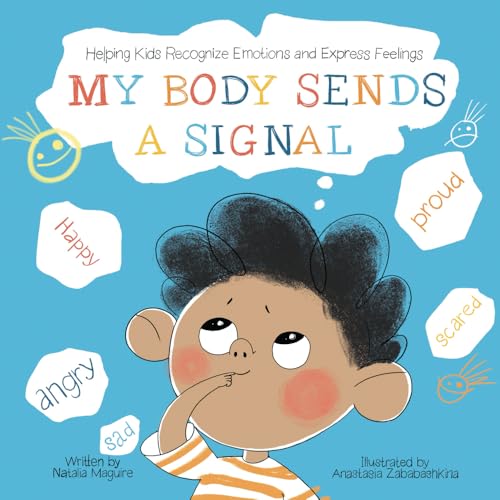



My Body Sends a Signal: Helping Kids Recognize Emotions and Express Feelings (Resilient Kids)
- Children's Books
- Growing Up & Facts of Life
- Friendship, Social Skills & School Life

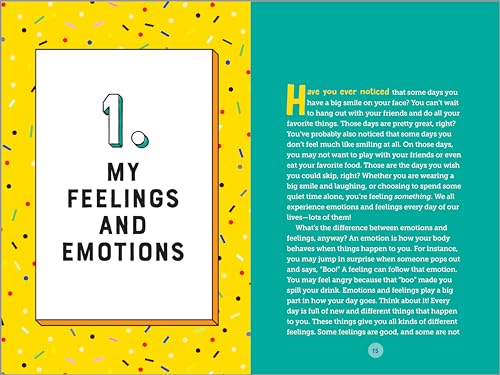
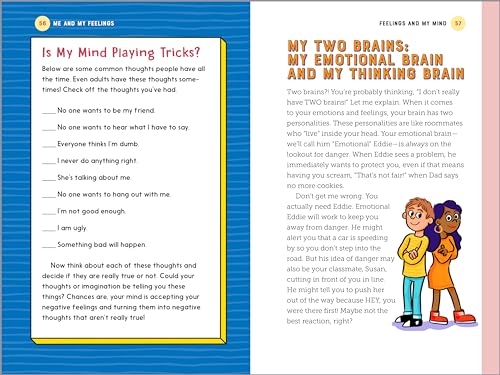
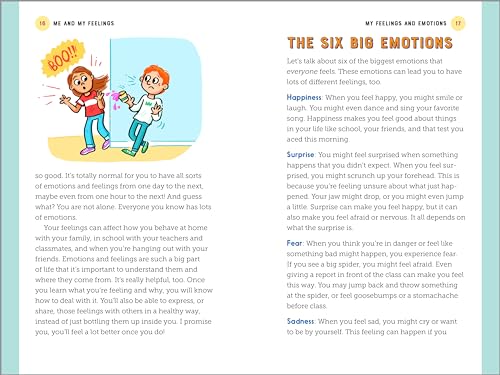
Me and My Feelings: A Kids' Guide to Understanding and Expressing Themselves
- Children's Books
- Growing Up & Facts of Life
- Friendship, Social Skills & School Life
4. Middle Childhood (8–12): Teaching Problem-Solving and Healthy Coping
By middle childhood, children are increasingly navigating peer relationships, academic pressure, and a growing awareness of their own strengths and weaknesses. This is the prime window for teaching active coping strategies — not just how to feel feelings, but what to do with them.
The Centers for Disease Control and Prevention (CDC) notes that strong social-emotional skills in middle childhood are among the strongest predictors of positive mental health, academic achievement, and reduced risk-taking behaviour in adolescence (CDC, 2023).
The three coping categories every child needs
1. Emotion-focused coping — managing the feeling itself (deep breathing, movement, journalling, talking to someone) 2. Problem-focused coping — changing the situation (breaking a problem into steps, asking for help, making a plan) 3. Meaning-focused coping — finding perspective ("This is hard, but I've handled hard things before")
Children who have access to all three are far more flexible than those who rely on only one. Many children default to avoidance — which works short-term and backfires long-term.
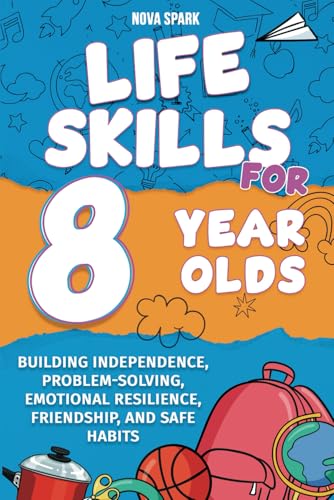
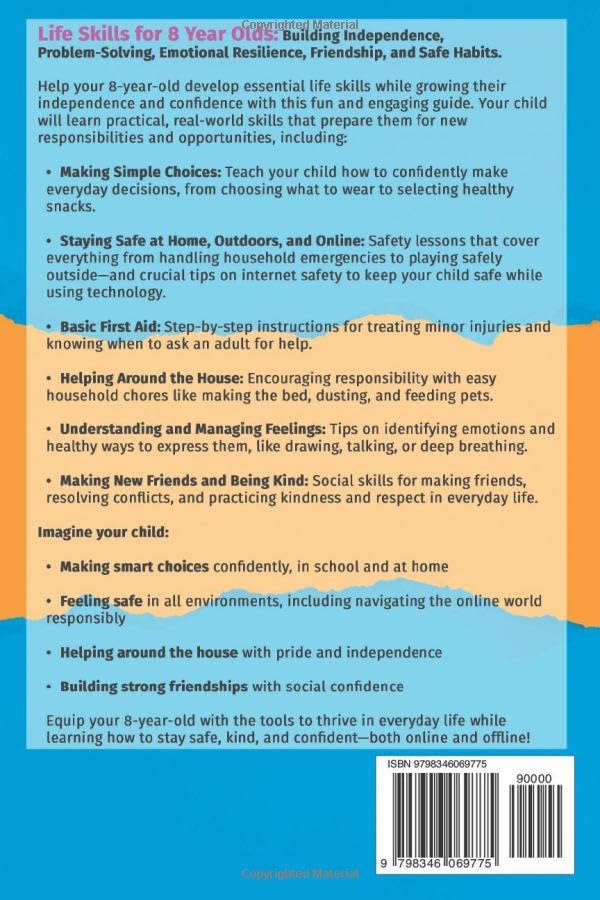
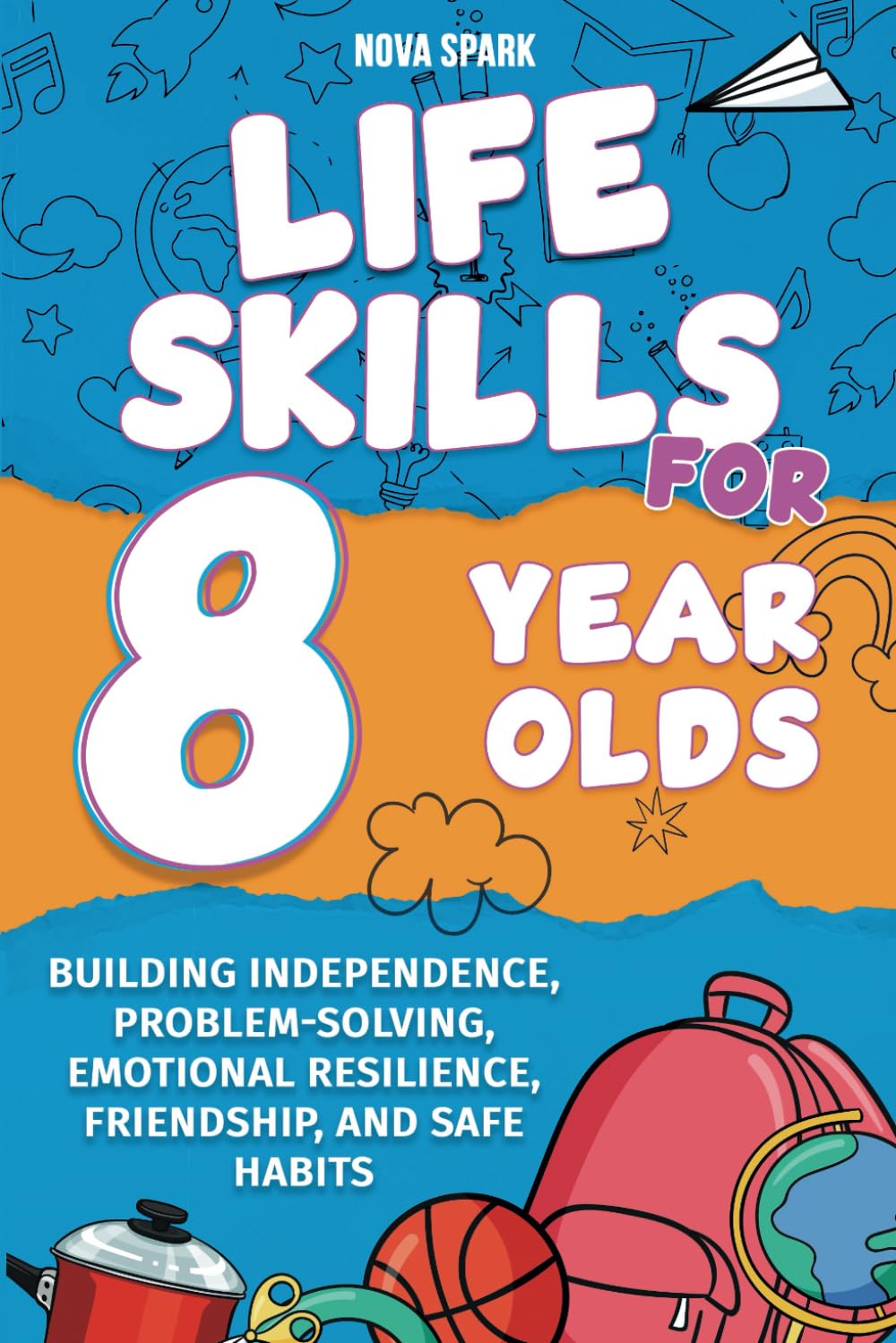


Life Skills for 8 Year Olds: Building Independence, Problem-Solving, Emotional Resilience, Friendship, and Safe Habits
- Children's Books
- Growing Up & Facts of Life
- Friendship, Social Skills & School Life
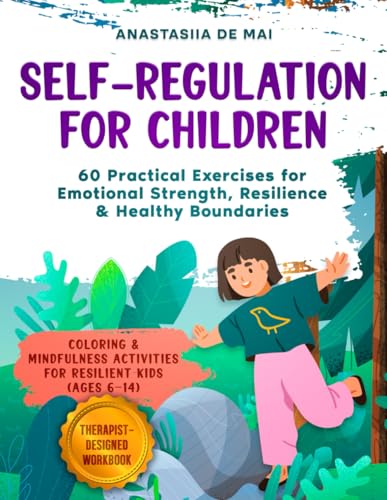
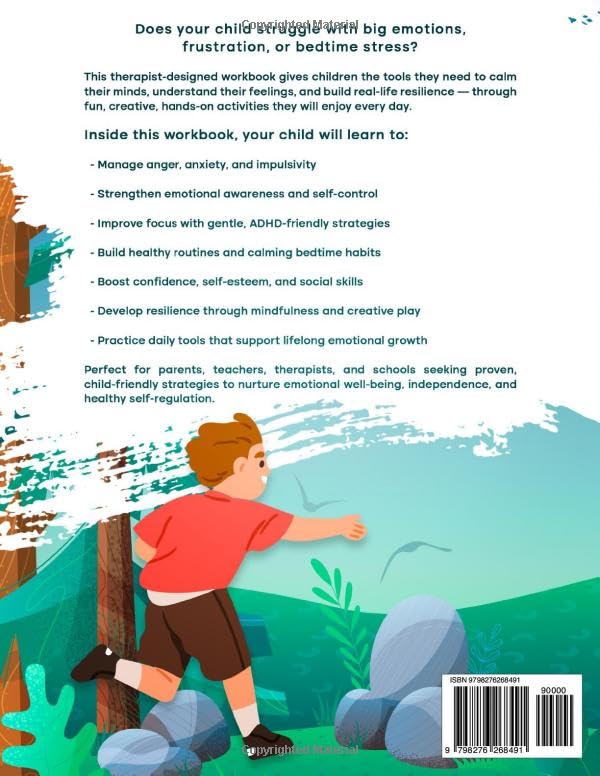
Self-Regulation for Children – Workbook Edition: 60 Practical Exercises for Emotional Strength, Resilience & Healthy Boundaries (WandelRaum Mindful Kids Series)
- Children's Books
- Growing Up & Facts of Life
- Family Life
5. Adolescence (13–17): Autonomy, Identity, and Keeping the Door Open
Teenagers need resilience most acutely at the exact developmental moment they are most likely to push their parents away. This is not a design flaw — it's the work of adolescence. The goal shifts from direct coaching to staying available without hovering.
What resilience-building looks like in the teen years
- Ask, don't advise (first). "What do you think you'll do?" before "Here's what I'd do" signals that you trust their judgement — which builds the self-efficacy resilience depends on. - Model your own emotional processing. Saying "I had a really frustrating day at work — I went for a walk to clear my head" is more powerful than any lecture on coping skills. - Keep micro-connections alive. A brief check-in at 10pm, a shared podcast, a standing Sunday breakfast — these low-pressure rituals keep the relational bridge intact. - Know the warning signs. Resilience-building is not the same as ignoring distress. Persistent withdrawal, significant changes in sleep or appetite, loss of interest in previously enjoyed activities, or talk of hopelessness warrant professional support, not more resilience coaching.
6. The Role of Coping Tools: Breathwork, Mindfulness, and Movement
Strategies only work when children have practised them before they're needed. Teaching a child to breathe slowly during a crisis is like handing someone a swimming manual while they're drowning. The goal is to build a toolkit in calm moments so it's available in stormy ones.
Mindfulness practice in children has been associated with reduced anxiety, improved attention, and better emotional regulation — effects that are particularly robust when parents practise alongside their children.
— American Academy of Pediatrics (2019)
Three evidence-supported tools to introduce at home
- Diaphragmatic breathing. "Belly breathing" — breathing in for four counts, out for six — activates the parasympathetic nervous system. Use B is for Breathe to make this concrete and fun for younger children. - Physical activity. The evidence base is unambiguous: regular aerobic exercise reduces cortisol, increases BDNF (a brain-growth protein), and improves mood regulation across all ages. Even a 20-minute walk shifts the emotional baseline. - Expressive writing and drawing. For children aged 8 and up, brief journalling about difficult events — not just venting, but reflecting on what they learned — is associated with improved emotional processing (Pennebaker & Smyth, 2016).
7. What Parents Can Stop Doing: Common Habits That Undermine Resilience
Sometimes the most powerful shift isn't adding a new strategy — it's removing a habit that's quietly working against you.
Four well-intentioned habits that backfire
- Rescuing too quickly. Jumping in before your child has had a chance to struggle even briefly communicates: "I don't think you can handle this." Pause. Wait. See what they do first. - Catastrophising alongside them. When your child says "Everyone hates me," matching their emotional intensity ("That's terrible, who did this?") amplifies the crisis rather than anchoring it. Validate the feeling, gently reality-test the thought. - Praising outcomes over effort. "You're so smart" after a good grade teaches children that ability is fixed. "You worked really hard on that" teaches that effort drives outcomes — a core resilience belief. This is the heart of Carol Dweck's growth mindset research (Stanford University). - Avoiding the hard conversations. Grief, failure, family conflict — children who are shielded from all difficulty don't build the emotional muscles to handle it. Age-appropriate honesty, delivered with warmth, builds trust and capacity simultaneously.
Comparing Resilience-Building Approaches by Age Stage
| Age Stage | Core Focus | Key Strategy | Main Risk to Avoid | Recommended Resource |
|---|---|---|---|---|
| 0–2 (Infant/Toddler) | Co-regulation | Consistent, warm responsiveness | Over-stimulation or emotional unavailability | The Boy with Big, Big Feelings |
| 3–5 (Preschool) | Emotional vocabulary | Name feelings; use books and play | Dismissing or minimising big emotions | My Body Sends a Signal |
| 6–8 (Early school) | Emotional literacy + first coping tools | Feelings check-ins; validate before solving | Rescuing before the child attempts the problem | Me and My Feelings |
| 8–12 (Middle childhood) | Problem-solving + active coping | Three-options rule; movement; journalling | Avoidance reinforcement | Life Skills for 8 Year Olds |
| 8–12 (Workbook approach) | Self-regulation practice | Structured exercises, healthy boundaries | Passive learning without practice | Self-Regulation Workbook |
| All ages | Breathwork + calm-down tools | Belly breathing; side-by-side practice | Teaching tools only during crisis | B is for Breathe |
Expert Insights
The Long Game
Raising an emotionally resilient child is not a project you complete — it's a relationship you keep showing up to. There will be weeks when everything you've read flies out the window and you just survive. That's fine. Resilience isn't built in the peak moments of your most patient parenting. It's built in the repair after you lost your temper. In the bedtime conversation you almost skipped. In the ten seconds you waited before fixing it for them.
The most quotable truth in all the research is also the simplest: children become resilient because there is someone in their life who believes they can.
Save this guide, share it with a co-parent or carer, and come back to it as your child grows — because the stage you're in right now won't last, and the one ahead will need a slightly different version of you.
Sources & References
- World Health Organization. "Adolescent Mental Health." 2021. https://www.who.int/news-room/fact-sheets/detail/adolescent-mental-health
- American Psychological Association. "Building Your Resilience." 2020. https://www.apa.org/topics/resilience/building-your-resilience
- Centers for Disease Control and Prevention. "Children's Mental Health: Social-Emotional Learning." 2023. https://www.cdc.gov/childrensmentalhealth
- Gottman, J., Katz, L., & Hooven, C. "Parental meta-emotion philosophy and the emotional life of families." Developmental Psychology, 1996.
- Siegel, D. J., & Bryson, T. P. The Whole-Brain Child. Delacorte Press, 2011.
- Dweck, C. S. Mindset: The New Psychology of Success. Random House, 2006.
- Perry, B. D., & Winfrey, O. What Happened to You? Flatiron Books, 2021.
- Ginsburg, K. R. Building Resilience in Children and Teens. American Academy of Pediatrics, 2015.
- Pennebaker, J. W., & Smyth, J. M. Opening Up by Writing It Down. Guilford Press, 2016.
- Royal College of Paediatrics and Child Health. "The health impacts of screen time: a guide for clinicians and parents." 2019. https://www.rcpch.ac.uk/resources/health-impacts-screen-time-guide-clinicians-parents
- American Academy of Pediatrics. "Mindfulness-Based Interventions for Children." Pediatrics, 2019.
Frequently Asked Questions
At what age should I start building emotional resilience in my child?
Is my child just "sensitive" or do they have a real problem with emotional regulation?
How do I build resilience without dismissing my child's feelings?
My child avoids everything challenging. How do I help without forcing?
Can screens and social media undermine emotional resilience?
What's the difference between emotional resilience and mental health?
How do I model resilience when I'm struggling myself?
Was this helpful?
Thanks — your feedback helps us pick what to write next.


