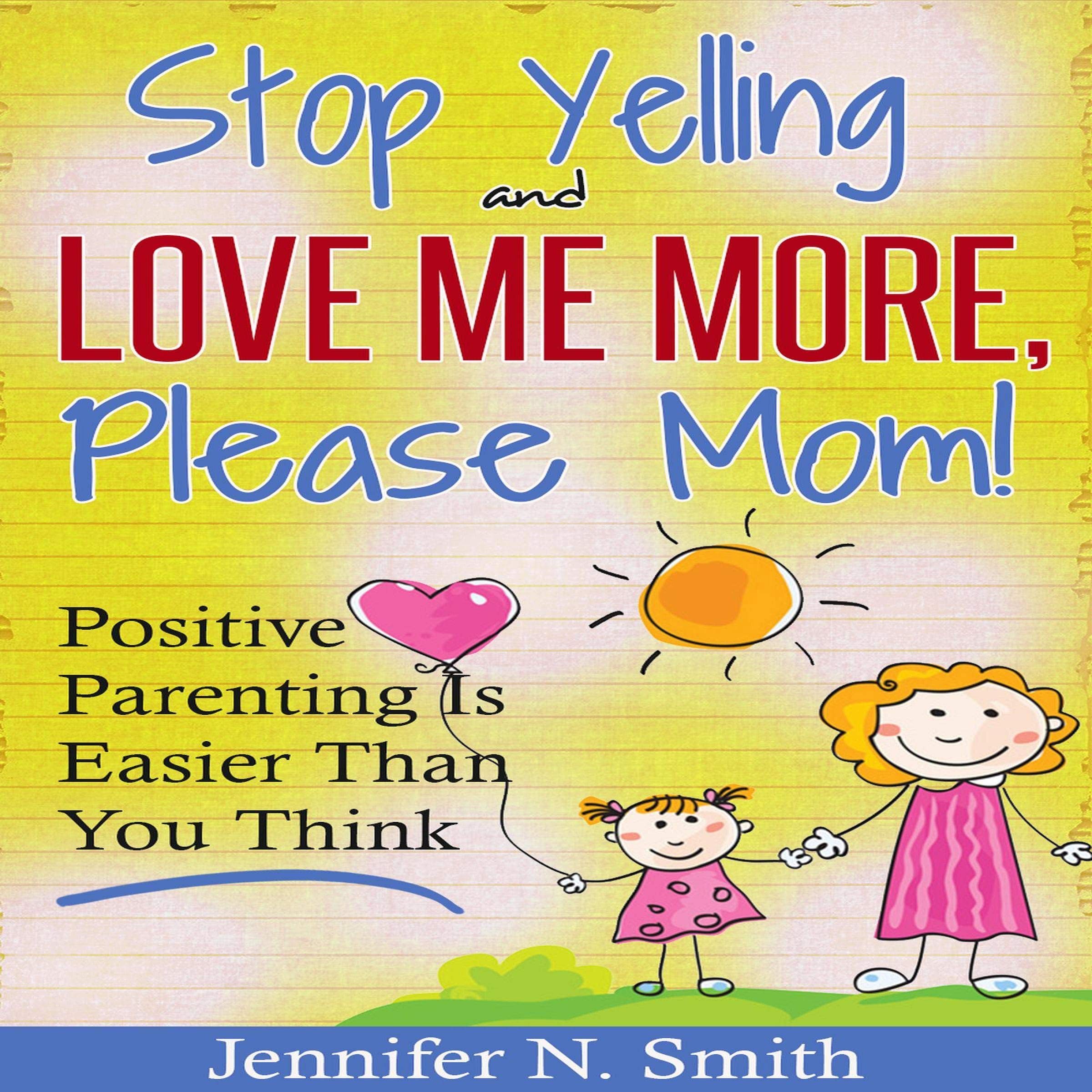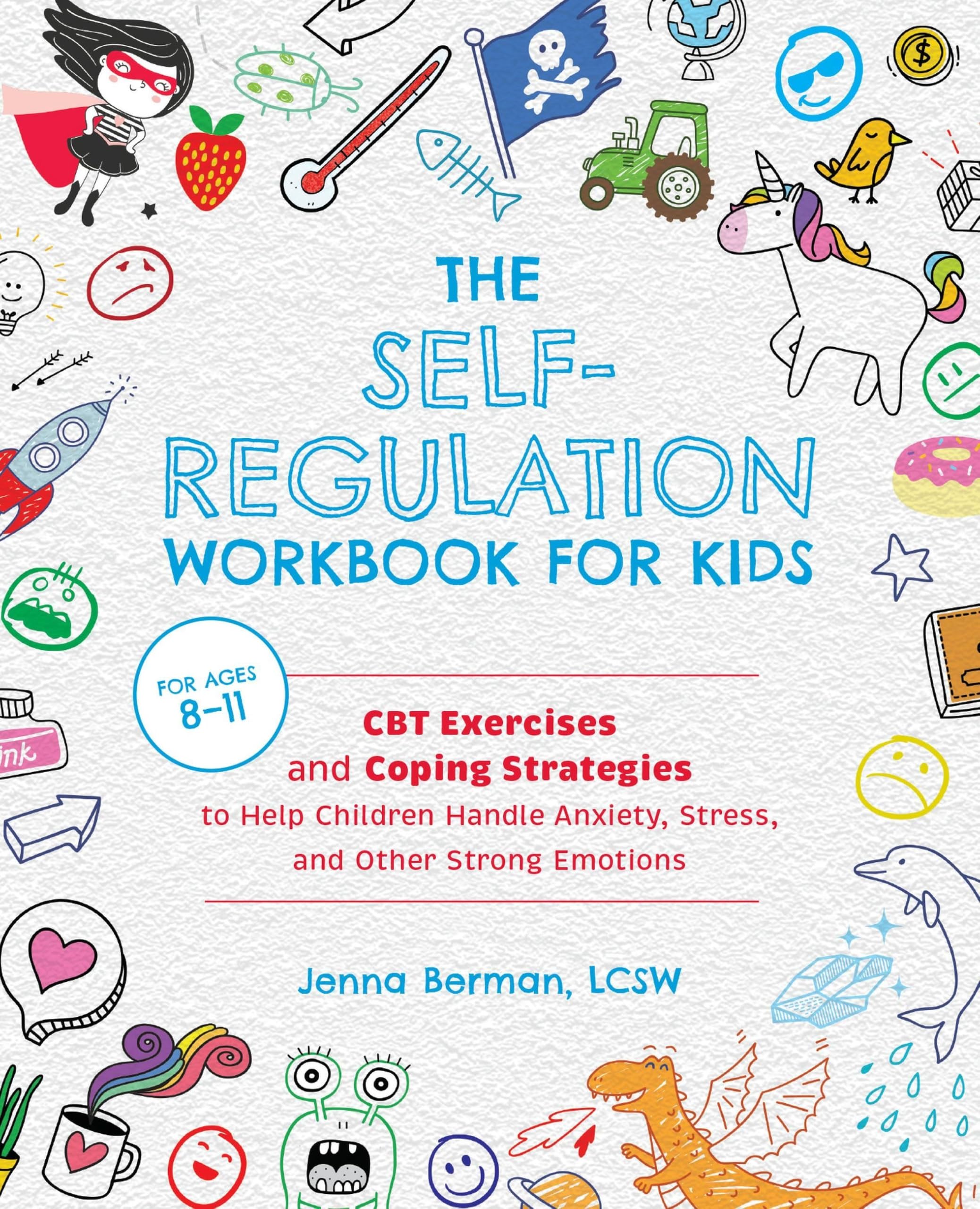
Why Screen Time Is a Behaviour-and-Emotions Problem, Not Just a Time Problem
Screen time tokens give 5–8 year olds a tangible, self-directed way to manage their own digital time — reducing power struggles while building real emotional regulation and planning skills.

In this article
It's 4:30 pm on a Tuesday and your seven-year-old has been on a tablet for 45 minutes. You say "ten more minutes." They hear nothing. You say it again. Meltdown incoming. If that scene is familiar, you're not alone — and the research backs you up. According to the American Academy of Pediatrics (AAP), children aged 5–8 average more than four hours of recreational screen time daily, well above the organisation's own guidance of no more than one to two hours of high-quality content. The gap between what's happening and what's healthy is real, and closing it without daily conflict is the challenge most parents are actually trying to solve.
Screen time tokens — physical coins or cards that children exchange for device minutes — have emerged as one of the most practical, evidence-aligned tools for this age group. In this guide you'll understand:
1. Why Screen Time Is a Behaviour-and-Emotions Problem, Not Just a Time Problem
The real issue isn't the clock — it's what happens in your child's brain when screens stop. Children aged 5–8 are still developing the prefrontal cortex functions that govern impulse control and emotional regulation. Screens deliver dopamine hits in short, reliable bursts; when that stimulus is removed abruptly, the resulting frustration is neurologically genuine, not just "bad behaviour."
This is precisely why a rule like "one hour a day" rarely works on its own. Telling a child how long they may use a screen doesn't give them the emotional scaffolding to handle the transition off it. Tokens do something different: they make the limit concrete and predictable before the session starts, so your child's brain can prepare for the ending rather than be ambushed by it.
What "concrete and predictable" means for this age group
Children between five and eight are in what developmental psychologist Jean Piaget called the concrete operational stage. Abstract concepts like "too much screen time is bad for you" are genuinely hard for them to process. A physical token in their hand, however, is not abstract. They can see it, hold it, count it, and — critically — choose when to spend it.
2. The Behavioural Science Behind Token Systems
Token economies are not a parenting trend — they are one of the most studied behaviour-change tools in clinical and educational psychology, with roots going back to the 1960s work of psychologists Teodoro Ayllon and Nathan Azrin in applied behaviour analysis (ABA).
For screen time specifically, the token system leverages two well-established psychological mechanisms:
Delayed gratification
Earning tokens through chores, reading, or outdoor play — and then saving them for a bigger screen session later — is a form of practised delayed gratification. Stanford's famous marshmallow research and its follow-up studies consistently show that children who develop this skill early have better academic, social, and health outcomes in later life.Response cost
When children spend a token, they feel the "cost" of screen time in a way that a parental verbal limit never achieves. This mild friction is enough to make many children self-regulate — choosing a shorter session to preserve tokens for the weekend, for example.


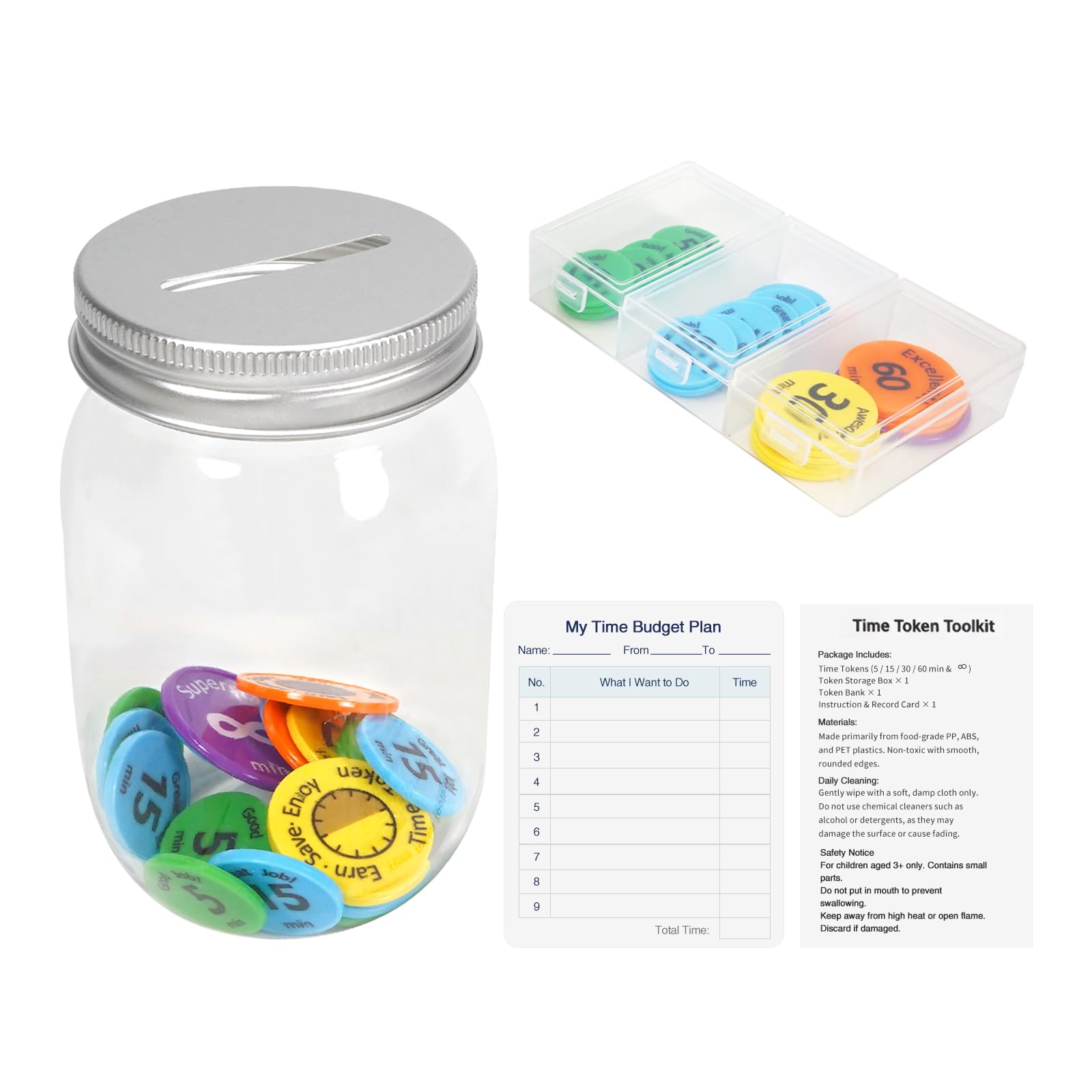
Time Token Kit for Kids-Earn, Save, Spend Kit to Build Time Management and Planning Skills. 55 Tokens, Piggy Bank,Storage Box. Ideal for Screen Time Limits, Behavior Management,Reward System
- MASTER THE "EARN, SAVE, SPEND" SYSTEM – Move beyond simple rewards! Our Time Token Kit teaches children the fu
- BUILD PLANNING SKILLS & TIME AWARENESS – Designed with a dual-sided planning card (earning rules on one side,
- PERFECT FOR SCREEN TIME MANAGEMENT – Struggling with tablet or TV limits? These tokens serve as the ultimate S
3. How to Set Up a Screen Time Token System in Five Steps
You don't need a specialist kit to start — a jar and some poker chips work fine. But a structured setup makes the system stick longer.
Step 1: Decide the denomination
Choose what one token is worth. For 5–6 year olds, 15 minutes per token works well. For 7–8 year olds, 30 minutes is manageable. Keep it consistent to start.Step 2: Set the weekly budget
The AAP recommends no more than one to two hours of recreational screen time per day for school-age children. A daily budget of two to four tokens (depending on denomination) sits within that range and leaves room for earned bonuses.Step 3: Define earning opportunities
Write a simple list with your child. Examples:Step 4: Set the spending rules
Tokens are handed to a parent (or placed in a designated jar) before a device is unlocked. The device goes away when the token's time is up — not one minute later. Using a visual timer alongside the token makes this concrete.Step 5: Hold a family meeting
Introduce the system as a team decision, not a new punishment. Ask your child to help decorate their token pouch or storage box. Ownership of the process dramatically increases cooperation.
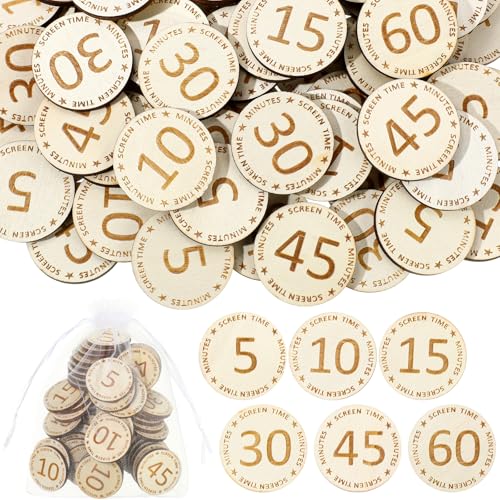
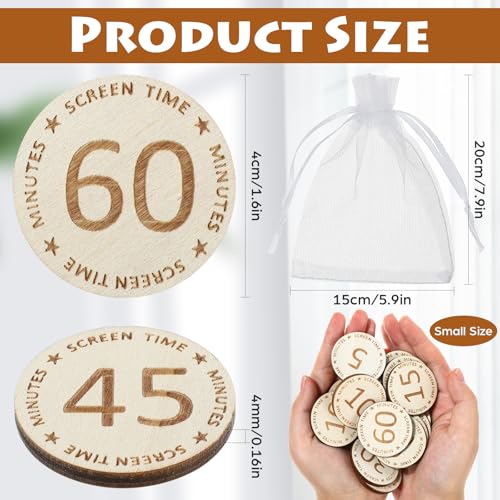
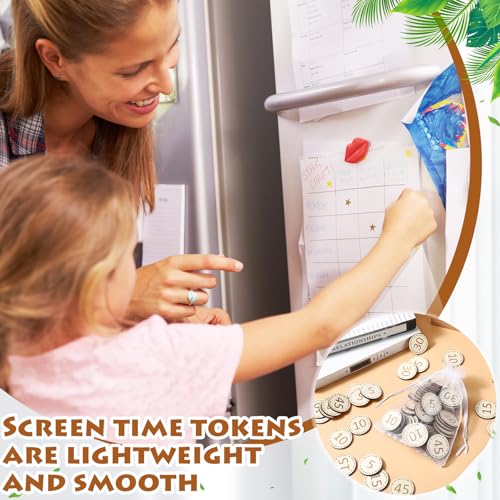

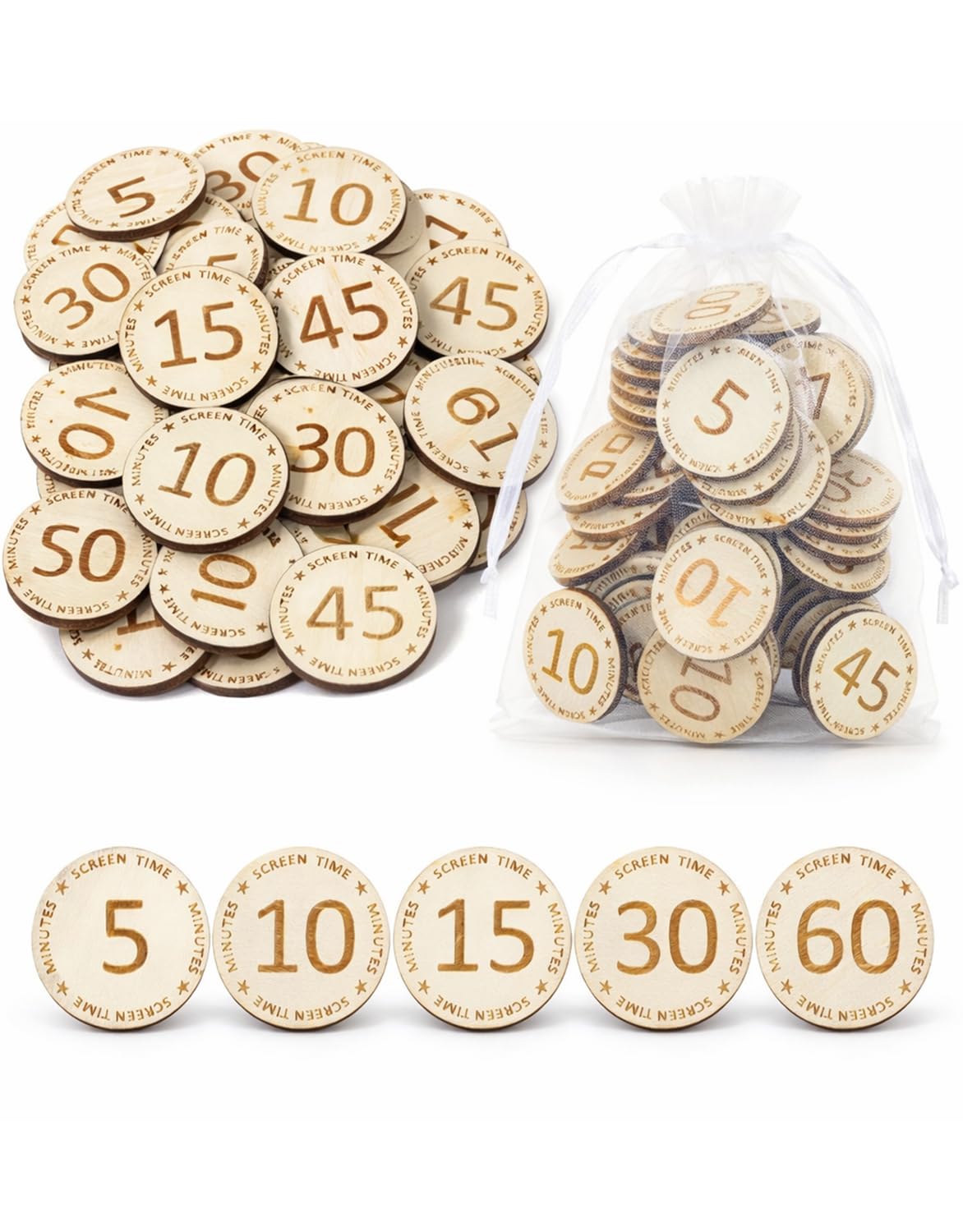
Weysat 100 Pcs Wooden Reward Tokens Bulk Screen Time Tokens with Organza Bags Behavior Incentives Coins for Classroom Home
- Meet Your One-time Purchase Needs: there are 100 wooden tokens in total, including 6 different denominations,
- Reliable Quality: our screen time tokens are not only fun, but also durable; These tokens are made of solid wo
- Incentive Tokens: these incentive tokens are a helpful way to motivate young people to earn play time by compl
4. Choosing the Right Tokens: DIY vs. Ready-Made
The physical token matters more than you might expect. Cheap tokens that break, fade, or get lost create friction that erodes the system. Here's how the main options compare:
| Token Type | Best For | Key Benefits | Main Drawbacks | Recommended Product | Price Range |
|---|---|---|---|---|---|
| Wooden engraved coins (time-denominated) | Ages 5–8, home & classroom | Durable, clear denominations, tactile satisfaction | Slightly heavier to carry | Weysat Wooden Reward Tokens | $14–15 |
| Larger wooden set (150 pcs, 6 denominations) | Families with multiple kids or classrooms | More tokens, flexible denominations (5–60 min) | Larger quantity may feel overwhelming to start | Tritaraesa 150-Piece Wooden Tokens | $14–15 |
| Structured earn/save/spend kit | Ages 5–8, teaching financial literacy alongside screen limits | Includes planning card, piggy bank, storage box | Smaller token count (55 pcs) | Bothidea Time Token Kit | $15–16 |
| Clip-to-rewards plastic tokens | Ages 5–10, reward chart integration | Pairs with existing reward systems | Less tactile than wood | Clip To Rewards Screen Time Tokens | $16–17 |
| Multicolour plastic tokens (120 pcs) | Homeschool families, colour-coded systems | Bright, fun, durable plastic | No time denominations printed | Eersida 120-Piece Screen Time Tokens | $11–12 |
| Metallic "caught being good" coins (144 pcs) | Classrooms, large families, budget buyers | Bulk quantity, low cost per token | Generic — no screen time branding | Fun Express Caught Being Good Coins | $8–9 |
5. Handling the Hardest Moments: Meltdowns, Hoarding, and Sibling Conflict
Even the best-designed system hits turbulence. Here's how to navigate the three most common flashpoints for 5–8 year olds.
The token meltdown
Your child has spent all their tokens and wants more. Do not issue emergency tokens. Sympathy without capitulation is the move: "I know that's really disappointing. You'll earn more tomorrow. What else could we do right now?" Having a short list of screen-free activities on the fridge — chosen by your child in advance — makes this pivot much easier.Token hoarding
Some children, especially anxious ones, hoard tokens and never spend them. This is actually a sign the system is working too well in one direction. Gently introduce a "use-it-or-lose-it" rule for tokens older than one week, or create a savings goal: "If you save five tokens, you can trade them for a 30-minute family movie night."Sibling disputes
Give each child their own clearly labelled storage — a different coloured pouch, a named jar, or a dedicated section of a box. Tokens are non-transferable. If one child lends tokens to another, both lose them. State this rule clearly from day one.
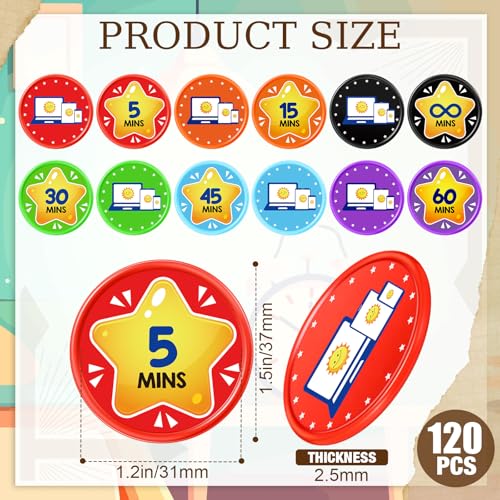
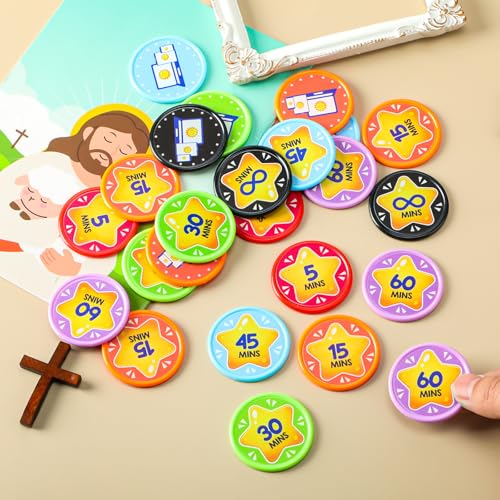
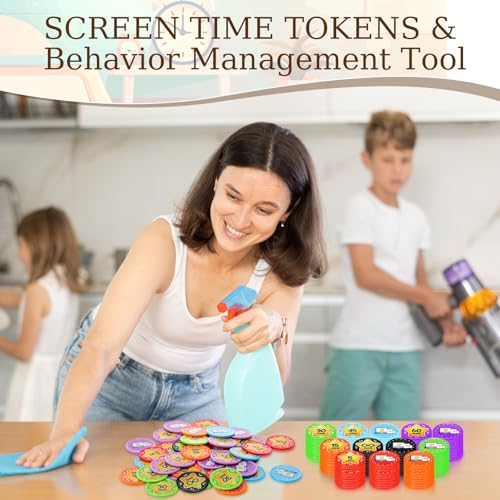
Eersida 120 Pcs Round Screen Time Tokens for Behavior Clip to Rewards, Behavior Management Tool, Positive Reinforcement, Reward Incentives and Teacher Handout Rewards
- Helps limit Scree-Time! ( Video Games; Tablets; TV), comprehensive Set for Long-Term Use; Our package includes
- Helps improve homeschooling outcomes! Introducing our multicolor Screen Time Tokens, designed to make managing
- Helps to decrease Screen Time. Crafted from plastic, these Screen Time Tokens are built to withstand the rigor
6. Connecting Tokens to Emotional Skills: The Bigger Picture
Screen time tokens are a behaviour management tool, but for 5–8 year olds they're also an emotional development tool — and that distinction matters.
When your child holds a token and decides whether to spend it now or save it for later, they are practising:
These are exactly the emotional competencies that the Collaborative for Academic, Social, and Emotional Learning (CASEL) identifies as foundational for school readiness and peer relationships in the 5–8 age band.
When to phase the system out
The goal is never to run a token economy forever. As your child internalises the habit of balancing screen time with other activities — typically over six to twelve months of consistent use — you can gradually transfer responsibility to them. Start by letting them manage their own token jar without daily parental oversight. Then move to a weekly check-in. Eventually the tokens become unnecessary because the habit is built.
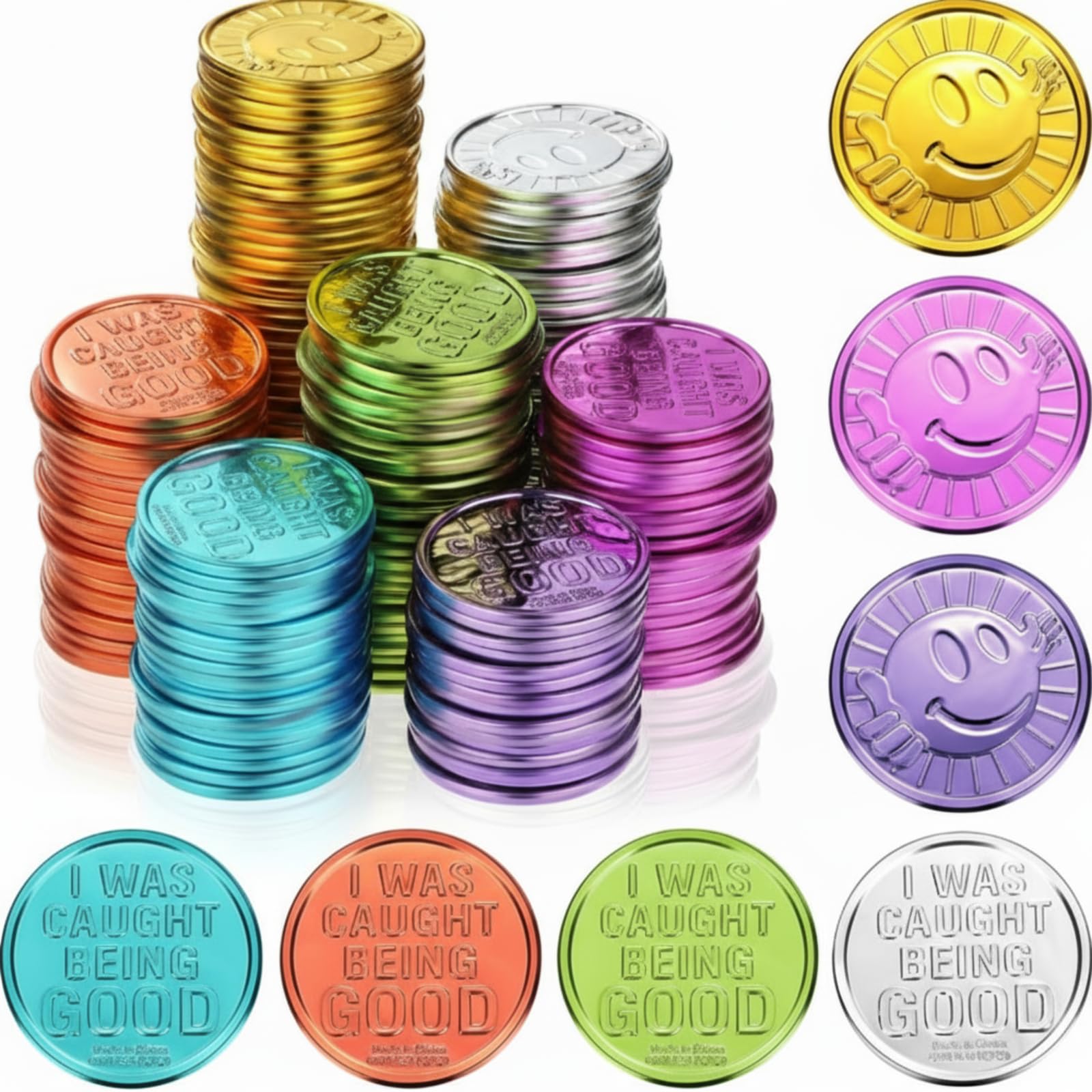



Caught Being Good Coins - Bulk Set of 144 Tokens - Classroom Behavior Incentives and Teacher Handout Rewards
- Give these plastic metallic coins to kids as classroom rewards when they’re “caught being good".
- Let students trade these play coins for their favorite rewards from your treasure chest or use them as classro
- Size: 1 1/4" in size
Expert Insights
There's a particular kind of quiet satisfaction that comes on the day your child looks at their token jar, counts what's left, and says, "I'm going to save these for the weekend." That moment — small, undramatic, easy to miss — is actually something significant: a child practising the emotional skill of choosing the future over the present. Screen time tokens won't solve every digital-age parenting challenge, but for children aged 5–8, they offer something rare: a tool that works with how children's brains actually develop, rather than against it. The best time to start is this week, with whatever tokens you have to hand.
If this guide was useful, save it for when the next screen-time standoff happens — and share it with a parent who needs it.
Sources & References
- American Academy of Pediatrics. "Media and Young Minds." Pediatrics, 2016. https://publications.aap.org/pediatrics/article/138/5/e20162591/60503
- American Academy of Pediatrics. "Children and Adolescents and Digital Media." Pediatrics, 2016. https://publications.aap.org/pediatrics/article/138/5/e20162592/60534
- Cheng, S. et al. "Screen Time and Emotional Dysregulation in Early School-Age Children." JAMA Pediatrics, 2023.
- Ayllon, T., & Azrin, N. H. "The Token Economy: A Motivational System for Therapy and Rehabilitation." Appleton-Century-Crofts, 1968.
- Mischel, W., Shoda, Y., & Rodriguez, M. L. "Delay of Gratification in Children." Science, 244(4907), 933–938, 1989.
- CASEL. "Core SEL Competencies." Collaborative for Academic, Social, and Emotional Learning. https://casel.org/fundamentals-of-sel/what-is-the-casel-framework/
- American Academy of Pediatrics. "ADHD: Clinical Practice Guideline for the Diagnosis, Evaluation, and Treatment of Attention-Deficit/Hyperactivity Disorder in Children and Adolescents." Pediatrics, 2019. https://publications.aap.org/pediatrics/article/144/4/e20192528/81590
- Radesky, J. S., & Christakis, D. A. "Increased Screen Time: Implications for Early Childhood Development and Behavior." Pediatric Clinics of North America, 63(5), 827–839, 2016.
Frequently Asked Questions
What age should I start using screen time tokens?
How many tokens should my child get per day?
What if my child refuses to hand over their tokens before using a device?
Can tokens be used for educational screen time too?
My child has ADHD — will a token system work for them?
What happens when we travel or the routine breaks down?
Are wooden tokens better than plastic ones?
Was this helpful?
Thanks — your feedback helps us pick what to write next.