Why Cooking Skills Matter Most Between Ages 5 and 8
The seven best kid-friendly cookbooks of 2024 give 5–8 year olds hands-on kitchen skills, build food confidence, and make vegetables and balanced meals genuinely appealing — without requiring a culinary degree from you.
In this article
Picture this: it's 5:30 pm on a Tuesday. You're staring into the fridge, your seven-year-old is tugging your sleeve asking what's for dinner, and the last thing you want is a battle over broccoli. Now imagine that same child standing on a step-stool beside you, stirring, measuring, and — crucially — eating what they just made.
That scenario is more than wishful thinking. Research published by the Journal of Nutrition Education and Behavior found that children who participate in food preparation are significantly more likely to consume fruits and vegetables and report higher diet quality than those who don't cook at all. The American Academy of Pediatrics (AAP) also highlights that shared mealtimes and kitchen involvement during the early school years lay the groundwork for lifelong healthy eating patterns.
In this guide you'll find:
Let's get into it.
1. Why Cooking Skills Matter Most Between Ages 5 and 8
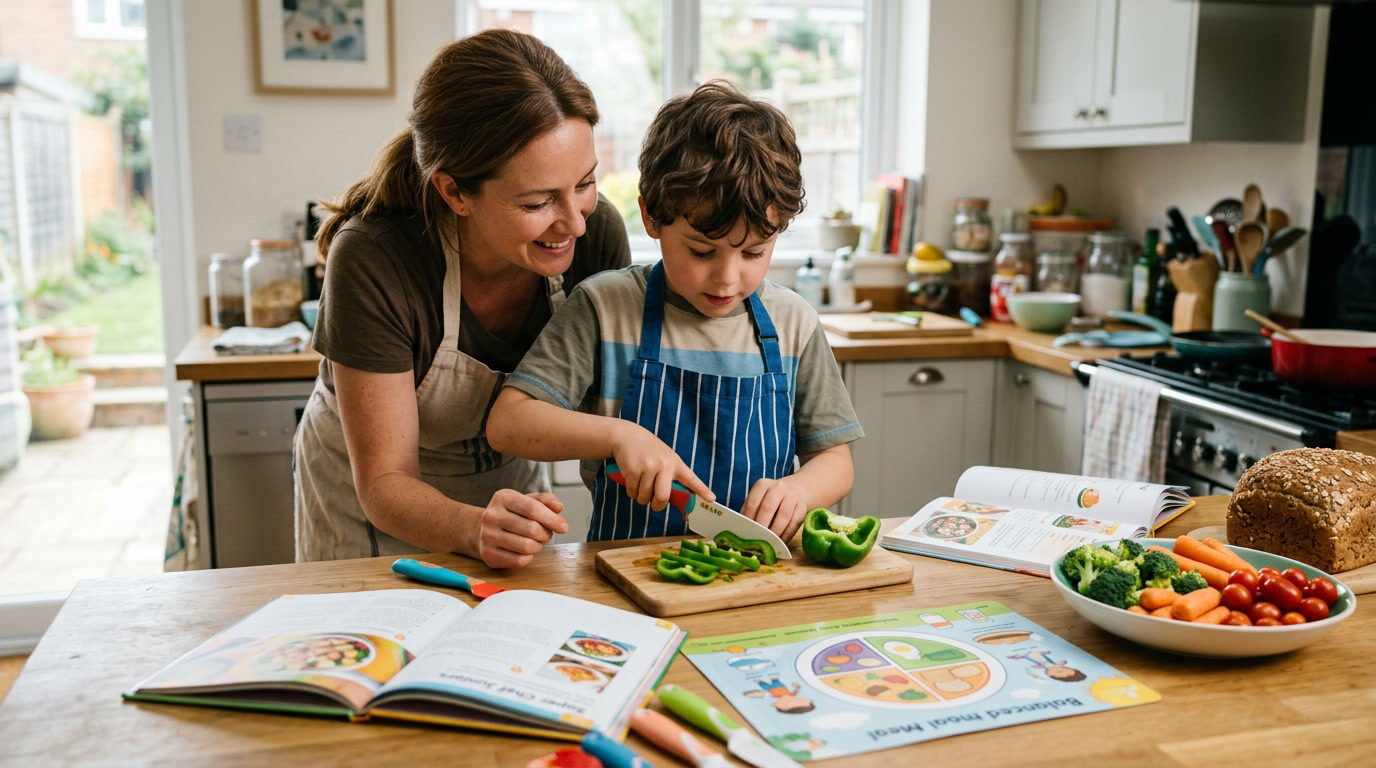
Children aged 5–8 are in a sweet spot for kitchen learning. Their fine motor skills are developed enough to pour, stir, and use a child-safe knife, yet they still find the process genuinely magical rather than tedious.
The Academy of Nutrition and Dietetics notes that children who cook are more likely to develop intrinsic motivation to eat well, because they feel ownership over the food. That ownership is the secret ingredient no recipe can replicate.
What "age-appropriate" really means in the kitchen
A cookbook labelled "ages 6–12" covers a huge developmental range. For your 5–8 year old, look for:
- ✓ Short ingredient lists (5–8 items maximum per recipe) - ✓ Step-by-step photos, not just text instructions - ✓ Recipes completable in under 30 minutes - ✓ Clear icons indicating which steps need adult supervision - ✓ A mix of sweet and savoury to broaden palates
2. The Complete Cookbook for Young Chefs — Best All-Rounder

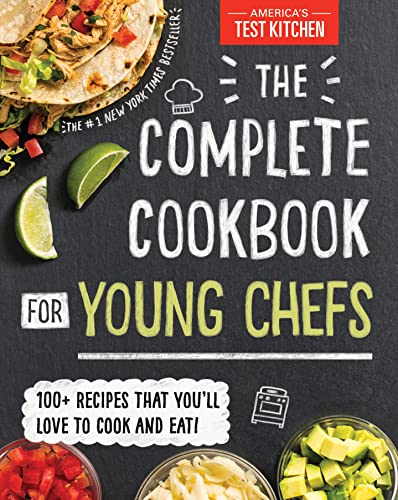
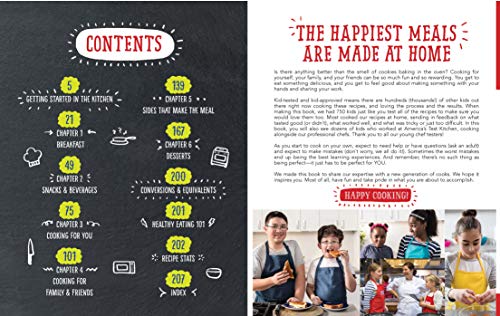
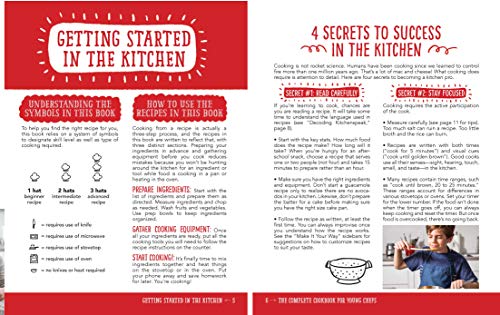
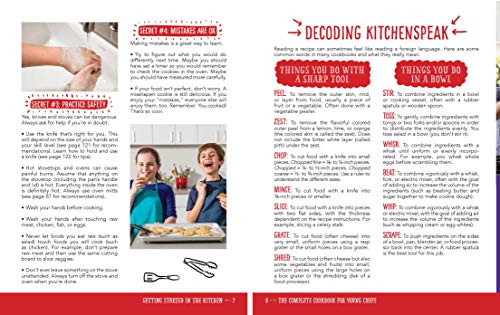
The Complete Cookbook for Young Chefs: 100+ Recipes that You'll Love to Cook and Eat
- Children's Books
- Growing Up & Facts of Life
- Daily Activities
If you only buy one cookbook this year, make it this one. Developed by America's Test Kitchen — the same team behind rigorous, science-based recipe testing — The Complete Cookbook for Young Chefs was built with real child testers aged 8–12, but the simpler recipes work beautifully for confident 6–7 year olds with a parent alongside.
With 100+ recipes spanning breakfast, lunch, dinner, and snacks, it covers every meal occasion. More importantly, it teaches technique — how to properly hold a knife, why you cream butter before adding sugar, what "fold" means versus "stir." These are transferable skills, not just instructions to follow once and forget.
What dietitians love about it
The book is unusually good at explaining why ingredients matter. A sidebar explaining that eggs add protein and structure, for example, turns a recipe into a mini nutrition lesson without ever feeling preachy.
- ✓ Step-by-step photographs for every major technique - ✓ "Test kitchen tips" embedded throughout - ✓ Recipes tested and approved by child testers - ✓ Covers kitchen safety explicitly in an early chapter
3. The Complete Baking Book for Young Chefs — Best for Building Patience and Precision

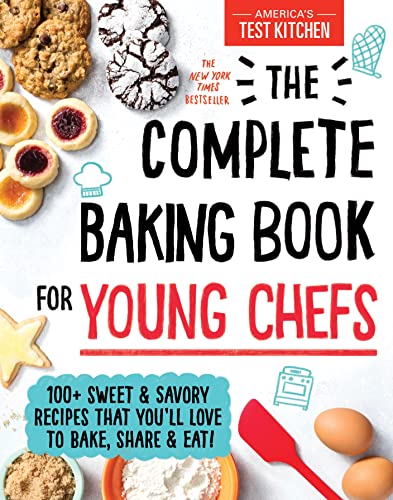


The Complete Baking Book for Young Chefs: 100+ Sweet and Savory Recipes that You'll Love to Bake, Share and Eat!
- Children's Books
- Growing Up & Facts of Life
- Daily Activities
Baking is chemistry. And for 5–8 year olds who are just beginning to grasp cause-and-effect, watching a flat batter rise into a golden muffin is genuinely mind-blowing. The Complete Baking Book for Young Chefs, also from America's Test Kitchen, delivers 100+ sweet and savoury baking recipes with the same rigorous, child-tested approach as its sibling volume.
What sets it apart nutritionally is the savoury baking section — focaccia, cheese scones, whole-grain breads — which gives parents a way to work more fibre and nutrients into baked goods without a fight.
Why baking specifically supports this age group
At 5–8, children are developing executive function — the ability to plan, follow sequential steps, and manage impulse control. Baking, with its strict sequence and delayed gratification (you have to wait for it to bake), is one of the best low-tech exercises for those emerging skills.
- ✓ Includes both sweet and savoury bakes - ✓ Teaches measurement precision — great for early maths reinforcement - ✓ Safety icons clearly flag oven and stovetop steps - ✓ Beautiful photography motivates kids to attempt the recipes
4. KIDS Recipe Book — Best Budget Pick for Ages 5–12
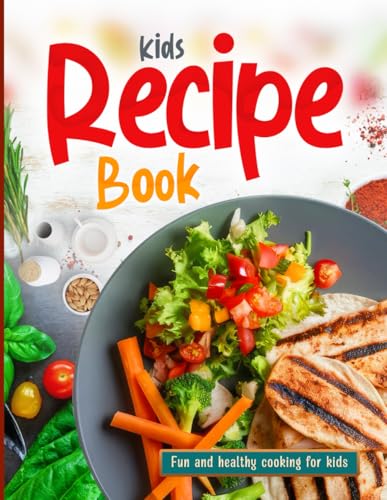
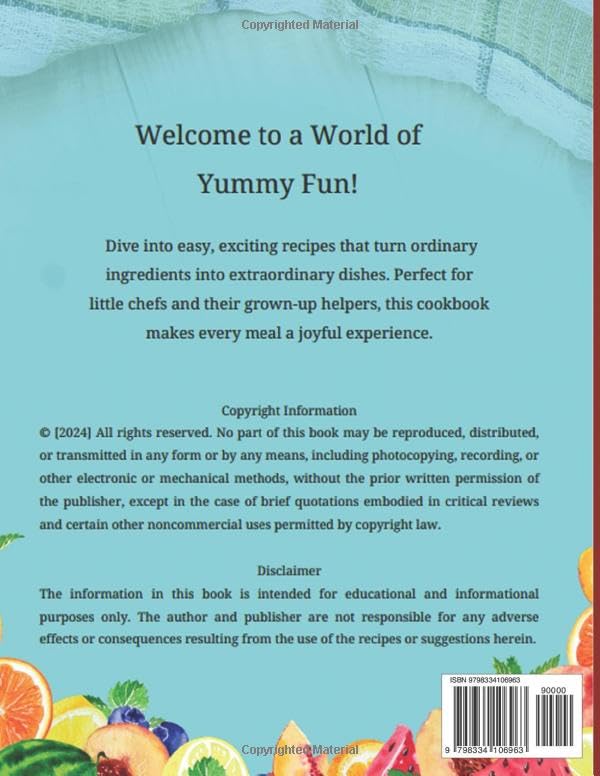
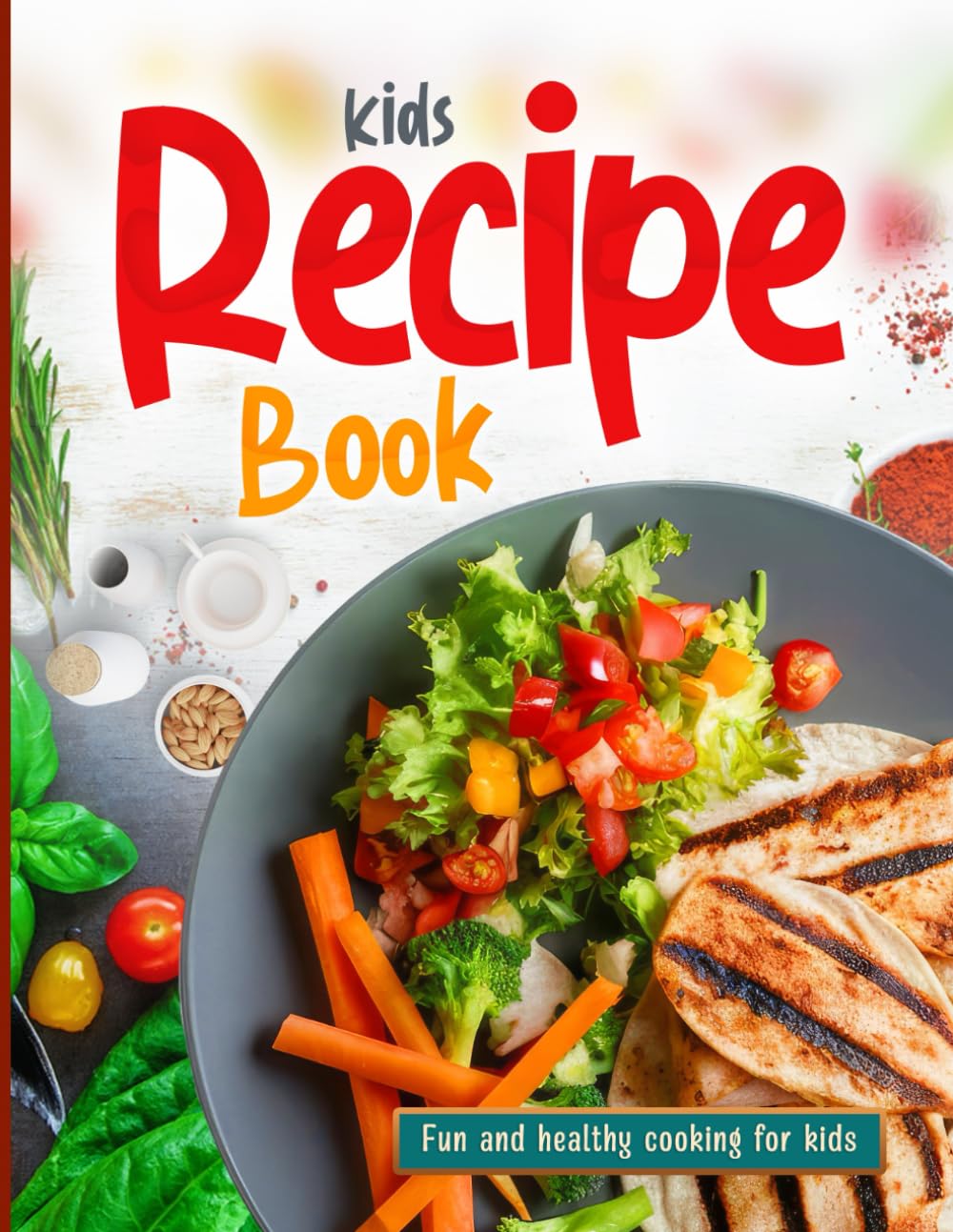
KIDS Recipe Book: Simple Cookbook for Kids Ages 5-12
- Children's Books
- Children's Cookbooks
- Image Unavailable Image not available forColor:
Not every family needs a glossy hardcover. The KIDS Recipe Book is a straightforward, no-fuss spiral-bound cookbook aimed squarely at 5–12 year olds, with simple recipes, clear instructions, and a format that lies flat on the counter — a genuinely underrated feature when small hands are busy measuring.
It won't win design awards, but it earns its 4.7-star rating by being usable. Recipes are written at an accessible reading level for early readers, and the skill progression from simple to more complex is sensible.
5. Taste of Home Kids Can Cook! — Best for Skill-Level Variety
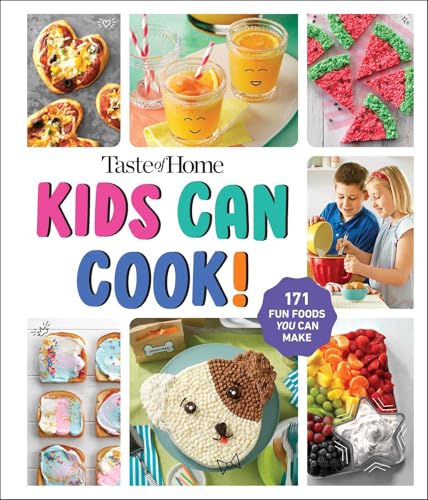
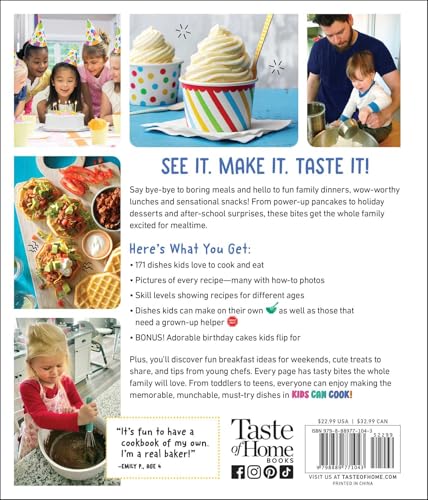
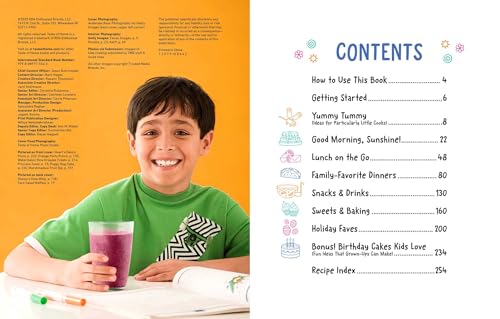
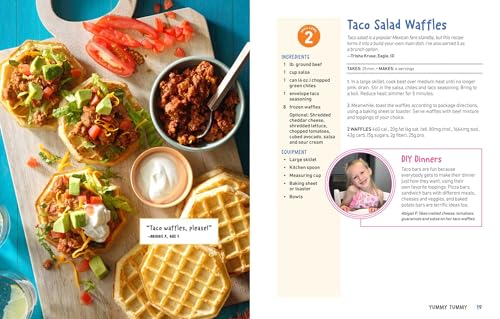
Taste of Home Kids Can Cook!: 171 Easy Recipes Spiral Bound Kids Cookbook with Skill Levels and No Bake Options (Taste of Home Quick & Easy)
- Cookbooks, Food & Wine
- Cooking Methods
- Cooking with Kids
With 171 recipes across multiple skill levels and a spiral binding that keeps pages flat, Taste of Home Kids Can Cook! is built for the reality of a busy household. The no-bake options are particularly useful for weekday afternoons when you want your child cooking but the oven isn't practical.
The skill-level labelling system is one of the clearest in any children's cookbook — a genuine help when you have a child who's confident in some areas but still developing in others. Recipes range from simple assembly (fruit skewers, wraps) to more involved stovetop cooking.
The nutritional angle
Taste of Home recipes skew toward comfort food, so you'll find more cheese and refined carbohydrates here than in the America's Test Kitchen volumes. That's not a dealbreaker — comfort food has a place in a balanced diet — but it's worth supplementing with a vegetable-forward book (see pick #7 below).
- ✓ 171 recipes — the largest collection on this list - ✓ No-bake options ideal for independent after-school cooking - ✓ Skill-level labels prevent frustration - ✓ Spiral binding stays flat on the counter
6. Little Helpers Toddler Cookbook — Best for Younger Siblings Cooking Alongside

Little Helpers Toddler Cookbook: Healthy, Kid-Friendly Recipes to Cook Together
- Cookbooks, Food & Wine
- Cooking Methods
- Cooking with Kids
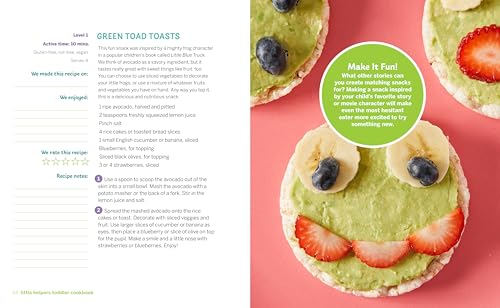
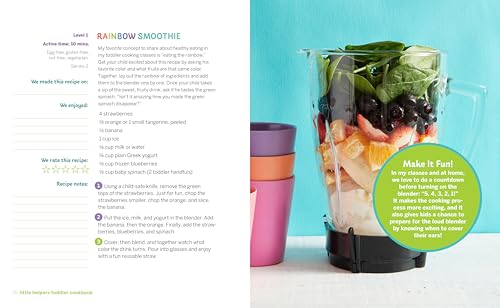
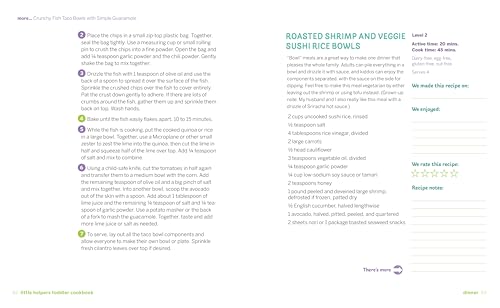
If you have a 5–8 year old and a younger sibling at home, Little Helpers Toddler Cookbook solves the "but I want to help too" problem elegantly. Designed for toddlers cooking with a caregiver, it's simple enough to keep a 2–4 year old engaged while your school-ager takes on more complex tasks in the same cooking session.
The recipes are whole-food focused — lots of vegetables, fruit, whole grains — and the instructions are written for adults to read aloud, making it genuinely collaborative.
7. Yummy Toddler Food: Dinnertime SOS — Best for Picky-Eater Households


Yummy Toddler Food: Dinnertime SOS: 100 Sanity-Saving Meals Parents and Kids of All Ages Will Actually Want to Eat: A Cookbook
- Cookbooks, Food & Wine
- Cooking Methods
- Image Unavailable Image not available forColor:
Don't let "toddler" in the title put you off. Yummy Toddler Food: Dinnertime SOS by Amy Palanjian is one of the most practically useful family cookbooks available for households where at least one child is a selective eater — and at ages 5–8, picky eating is still extremely common.
The 100 recipes are designed to be accepted across a wide age range, which means your 6-year-old who refuses mixed textures and your 8-year-old who'll eat anything can sit at the same table. Palanjian, who runs the widely-followed Yummy Toddler Food platform, grounds her approach in the division of responsibility model developed by dietitian Ellyn Satter — one of the most evidence-based frameworks for feeding children.
The Ellyn Satter Division of Responsibility
This model, endorsed by the AAP and the Academy of Nutrition and Dietetics, holds that:
- ✓ Parents decide: what food is offered, when, and where - ✓ Children decide: whether to eat and how much
Cooking together fits this framework perfectly — it increases a child's familiarity with ingredients without any pressure to eat them.
8. Cookbook Comparison: Which One Is Right for Your Child?
| Cookbook | Best Age (5–8 focus) | Skill Level | Nutritional Strength | No-Bake Options | Recommended Product | Price Range |
|---|---|---|---|---|---|---|
| Complete Cookbook for Young Chefs | 6–8 (with adult) | Beginner–Intermediate | Balanced, technique-focused | Some | Complete Cookbook for Young Chefs | ~$11 |
| Complete Baking Book for Young Chefs | 6–8 (with adult) | Beginner–Intermediate | Savoury + sweet balance | No | Complete Baking Book for Young Chefs | ~$11 |
| KIDS Recipe Book | 5–12 | Beginner | Simple, accessible | Some | KIDS Recipe Book | Budget |
| Taste of Home Kids Can Cook! | 5–12 | Beginner–Advanced | Comfort food focus | Yes — labelled | Taste of Home Kids Can Cook! | Mid-range |
| Little Helpers Toddler Cookbook | Younger sibling focus | Beginner | Whole-food focused | Yes | Little Helpers Toddler Cookbook | ~$10 |
| Yummy Toddler Food: Dinnertime SOS | 5–8 (picky eaters) | Beginner | Picky-eater optimised | Yes | Yummy Toddler Food: Dinnertime SOS | ~$15 |
9. Expert Insights on Children, Cooking, and Food Confidence
Conclusion
The kitchen is one of the best classrooms you have access to, and it requires no tuition fees. When your 6-year-old cracks an egg for the first time, or your 8-year-old presents a salad they assembled themselves, something shifts — not just in what they're willing to eat, but in how they see themselves. That confidence is the real recipe.
The cookbooks on this list aren't just collections of instructions. They're tools for building a relationship between your child and real food, at exactly the age when those relationships are most easily shaped. Pick one that matches where your child is right now, not where you hope they'll be in two years.
If this guide helped you, save it for the next time someone asks for a gift idea — because a great cookbook, handed to a curious 6-year-old, is genuinely one of the best presents they'll receive all year.
Sources & References
- Journal of Nutrition Education and Behavior. "Cooking Frequency May Enhance Survival and Reduce Dietary Intake of Fruits and Vegetables." 2017. https://www.jneb.org
- American Academy of Pediatrics. "The Importance of Family Dinners." HealthyChildren.org. 2020. https://www.healthychildren.org
- Academy of Nutrition and Dietetics. "Kids in the Kitchen." EatRight.org. 2022. https://www.eatright.org
- Ellyn Satter Institute. "Division of Responsibility in Feeding." https://www.ellynsatterinstitute.org
- America's Test Kitchen. The Complete Cookbook for Young Chefs. Sourcebooks, 2019.
- America's Test Kitchen. The Complete Baking Book for Young Chefs. Sourcebooks, 2020.
- Palanjian, Amy. Yummy Toddler Food: Dinnertime SOS. 2023.
Frequently Asked Questions
At what age can a child start using a knife in the kitchen?
How do I get my picky 6-year-old interested in cooking?
Are children's cookbooks nutritionally balanced?
How often should a 5–8 year old cook with a parent?
Can cooking together help with mealtime battles?
What kitchen tools do I need before starting with a child?
Is baking or savoury cooking better for kids to learn first?
Was this helpful?
Thanks — your feedback helps us pick what to write next.