Why "Mama" and "Dada" Are Every Toddler's First Words (It's Not What You Think)
When your toddler calls you the "wrong" parent name, it's a normal, developmentally expected phase — not confusion, not a mistake, and definitely not something to worry about.
In this article
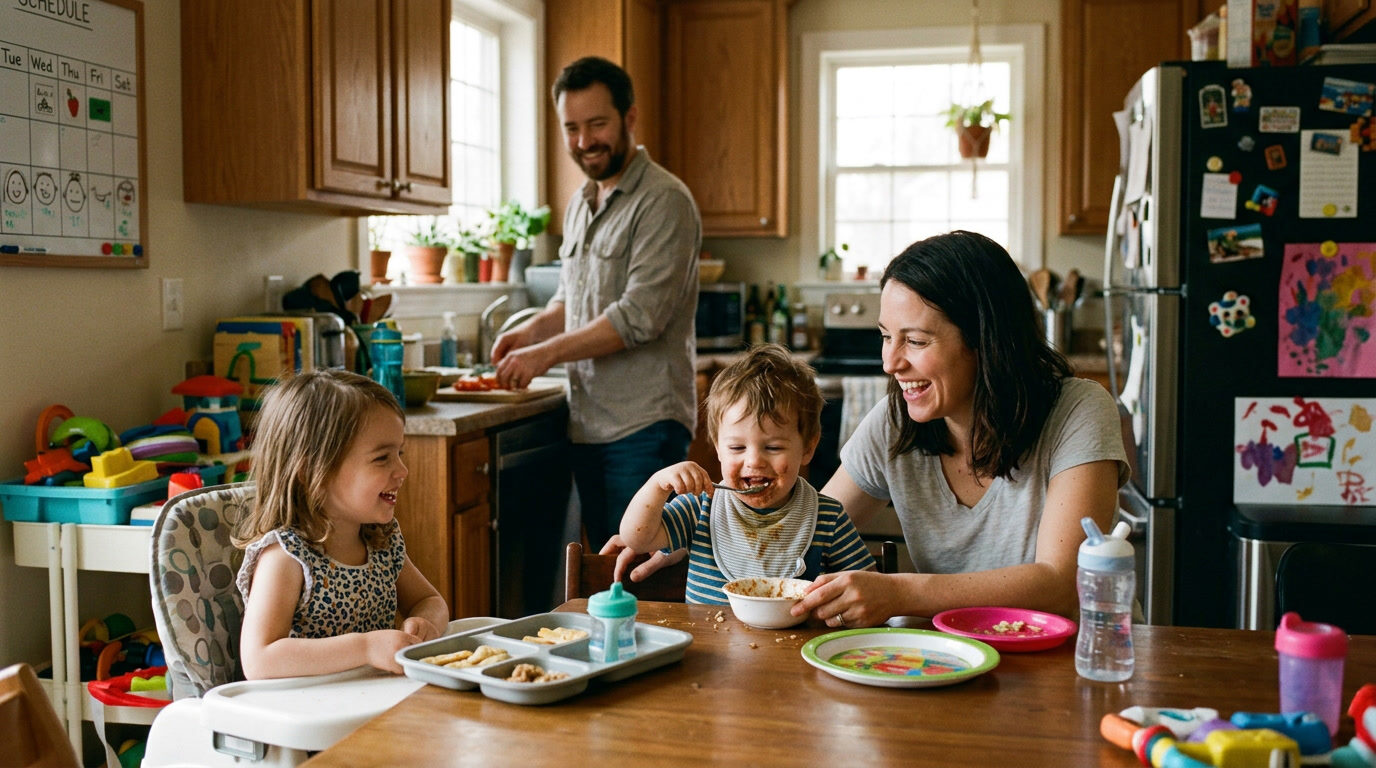
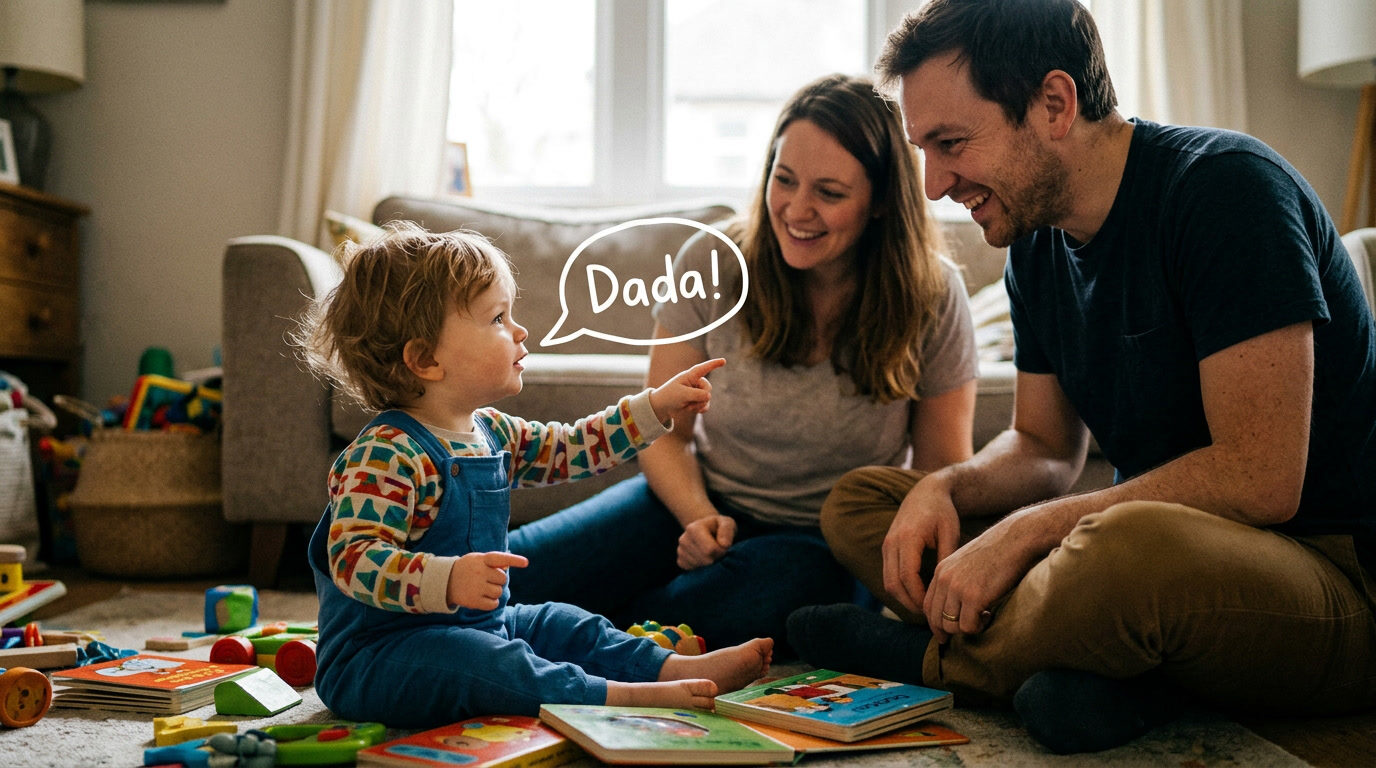
You're standing in the kitchen, coffee in hand, when your two-year-old toddles in, arms up, beaming — and yells "Mama!" at you. You're Dad. You've always been Dad. And yet here you are, answering to Mama for the third time this week.
If this sounds familiar, you're in good company. According to the American Academy of Pediatrics (AAP), most toddlers produce their first recognisable words between 12 and 18 months, and the words they choose — and who they assign them to — can surprise every parent in the house. Language development at this age is a beautiful, messy, non-linear process, and name mix-ups are one of its most common (and most endearing) features.
In this article you'll understand:
1. Why "Mama" and "Dada" Are Every Toddler's First Words (It's Not What You Think)
The reason almost every toddler on earth says "mama" or "dada" first has almost nothing to do with love, preference, or who changes more nappies. It's phonetics.
The sounds /m/, /d/, /b/, and /p/ are bilabial or alveolar consonants — produced at the very front of the mouth, making them the easiest for a developing vocal tract to reproduce. When babies babble, they naturally land on these sounds and then repeat them: "mamama," "dadada," "bababa." Over time, the adults around them get excited and respond, which reinforces those specific sound strings. The word isn't chosen; it's rewarded into existence.
The Babbling-to-Word Bridge
Between roughly 6 and 10 months, babies babble with no semantic meaning. Around 12 months, a shift happens: they begin attaching a consistent sound to a consistent referent. But "consistent" is the operative word. In early word learning, a toddler might use "mama" to mean:
- Their mother - Their father - Any familiar adult - "I need something right now" - A general expression of distress or delight
This is called overextension — using one word to cover a broader category than adults intend. It's not a mistake; it's the brain doing exactly what it should at this stage.
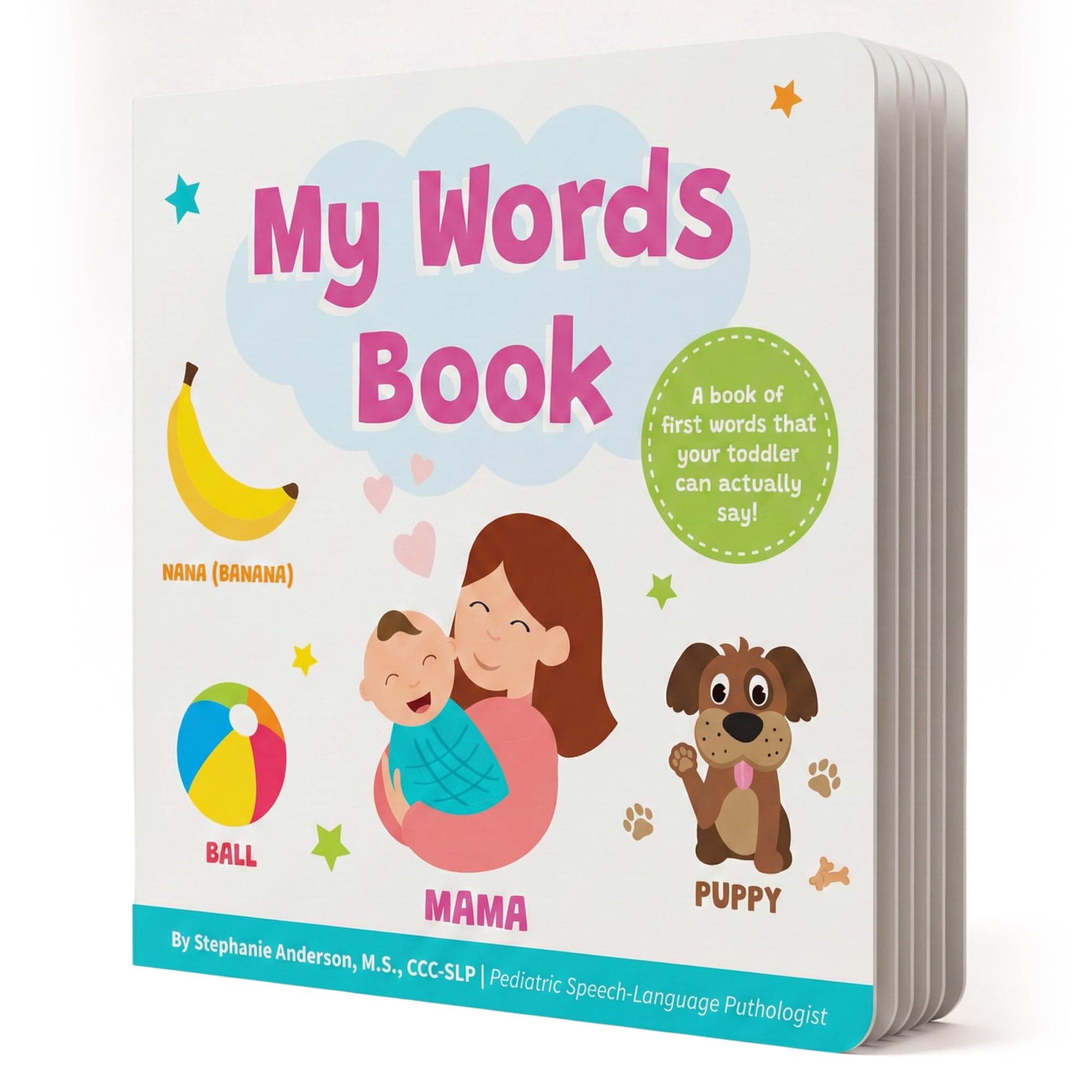
A great tool to support this word-mapping stage at home is My First Learn-to-Talk Book, created by an early speech expert and designed specifically to help toddlers connect images, words, and meaning.
2. How Toddler Brains Map Words to People (The Science of Name Learning)
Word learning in toddlers is not a simple copy-and-paste operation. It involves a cognitive process researchers call fast mapping — the ability to attach a new word to a new concept after just one or two exposures. But names for people are harder than names for objects, because people move, change clothes, appear in different contexts, and — crucially — don't sit still on a shelf labelled "Daddy."
Between 18 and 24 months, most toddlers are adding words at a rate of one to three new words per day (a phase sometimes called the "vocabulary explosion," as noted by the AAP). During this sprint, errors are inevitable. The toddler brain is essentially running a high-speed, low-accuracy first pass at language — volume over precision.
Why the Primary Caregiver's Name Sticks First
Research consistently shows that toddlers learn the name for their most frequent caregiver first — and generalise it outward. If Mum is the primary contact in the early months, "Mama" becomes the default label for "trusted adult who meets my needs." Dad, grandparent, or childminder may temporarily inherit that label until the toddler's vocabulary is refined enough to distinguish.

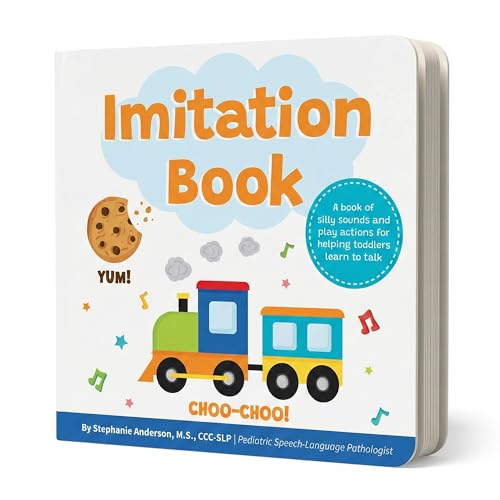
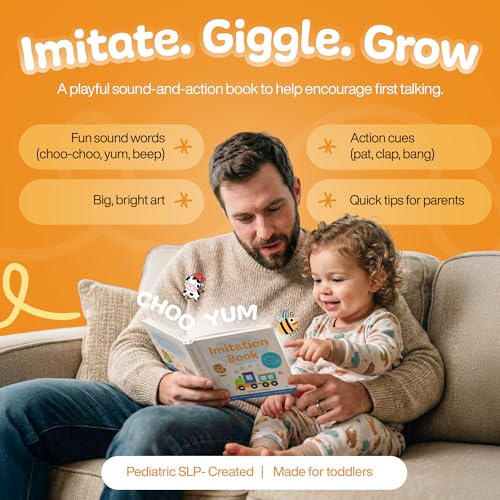
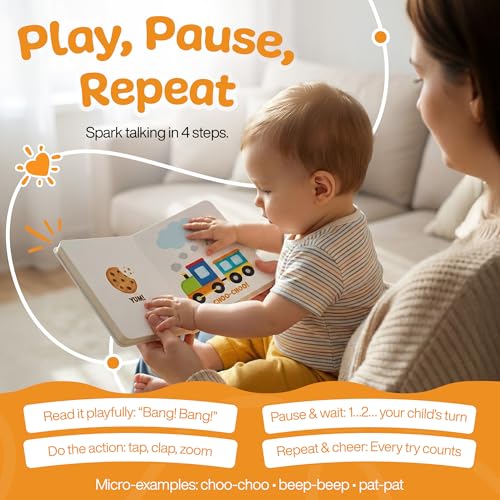

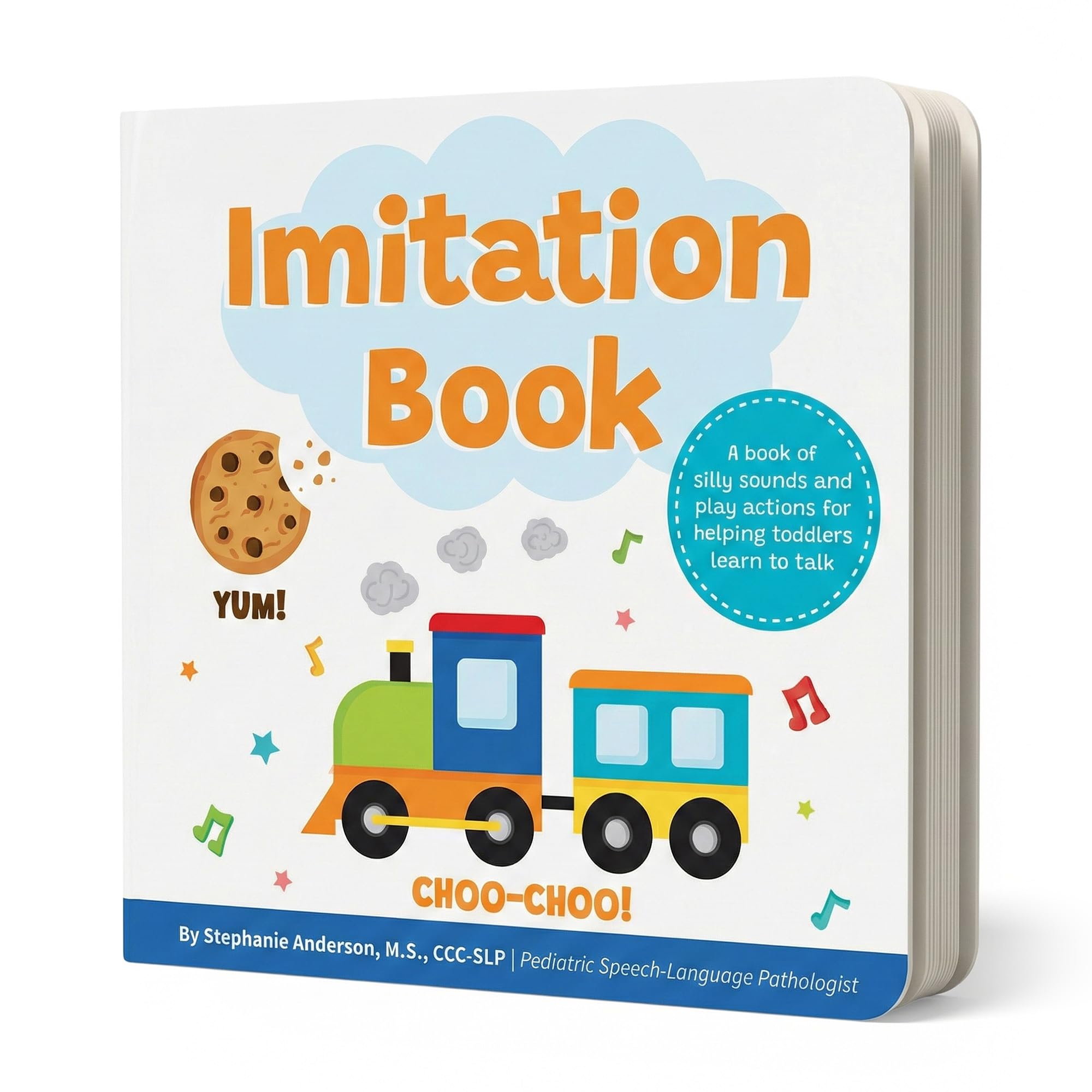
Imitation Book: Interactive & Fun Learn to Talk Board Book For Toddlers Ages 0-4, Written by a Speech Therapist
- Children's Books
- Early Learning
- Image Unavailable Image not available forColor:
Supporting language development with interactive tools accelerates this refinement. The Imitation Book by a Speech Therapist is specifically designed to scaffold the imitation skills toddlers need to move from babble to precise, intentional words.
3. Gender, Caregiving, and the Names Toddlers Choose
Here's the part that's worth sitting with: when a toddler calls their dad "Mama," they're not confused about gender. They don't yet have a firm concept of gender as a social category — that understanding develops gradually through the toddler and preschool years. What they do have is a concept of safety, warmth, and responsiveness.
The word "Mama," in many cultures and languages, is phonetically linked to feeding, comfort, and proximity. A 2014 analysis published in Language and Speech noted that across more than 1,000 languages studied, words for "mother" disproportionately use nasal consonants (m, n) — sounds that are literally produced with a closed mouth, mimicking nursing. "Dada" and "papa" sounds, by contrast, use stop consonants associated with more alert, interactive states.
When a toddler assigns "Mama" to their father, they may be communicating something profound: this person feels like safety to me.
What This Tells Us About Modern Fatherhood
Data from the Pew Research Center (2023) shows that fathers in dual-parent households in the US now spend on average three times as many hours per week on childcare as fathers did in 1965. As caregiving roles become more shared, it makes complete developmental sense that the labels toddlers use would follow function rather than biology.
4. When Should You Gently Correct — And How?
Gentle, consistent correction is appropriate and helpful. The goal isn't to shame your toddler for a developmental phase; it's to give them the accurate input their brain needs to refine its word map.
The Three-Step Correction That Actually Works
1. Acknowledge the need first. Before correcting the label, respond to what they're asking for. If they're reaching up and saying "Mama!" — pick them up. Connection before correction. 2. Model, don't quiz. Say "Daddy's got you" or "Here's Daddy" clearly and warmly. Avoid "No, say Dada" — the word "no" creates stress around language, which slows learning. 3. Repeat in context. Use your name naturally throughout the day: "Daddy's making lunch," "Give it to Daddy," "Daddy loves you." Repetition in context is how toddler brains cement new word-person pairings.
For families where a parent travels or works long hours, books that feature diverse family structures and name different caregivers can reinforce this at bedtime. My First Book of Baby Signs also gives toddlers a parallel channel — signing — to express needs precisely while their spoken vocabulary catches up.



My First Book of Baby Signs: 40 Essential Signs to Learn and Practice
- Children's Books
- Growing Up & Facts of Life
- Friendship, Social Skills & School Life
5. Red Flags vs. Normal Variation: When to Talk to Your Paediatrician
A name mix-up in isolation is almost never a clinical concern. But language development is one of the most important windows into a toddler's neurological health, so knowing the difference between a quirk and a flag matters.
Typical Language Milestones (AAP, 2023)
Seek a Referral if Your Toddler:
- Has no words at all by 16 months - Loses words they previously used (regression after illness or stress can be normal briefly, but persistent regression warrants evaluation) - Does not respond to their own name by 12 months - Rarely points, waves, or makes eye contact alongside speech delays
For parents who want a structured guide to support language at home alongside professional input, Speech Therapy for Toddlers: A Parent's Guide offers practical, SLP-informed strategies you can use every day.
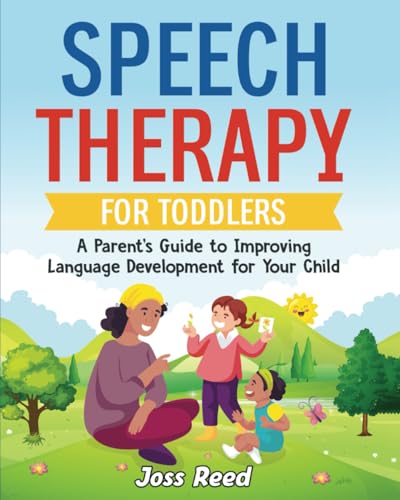


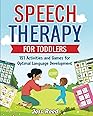
Speech Therapy for Toddlers: A Parent’s Guide to Improving Language Development for Your Child (Toddler Skill-Building)
- Parenting & Relationships
- Early Childhood
- Image Unavailable Image not available forColor:
6. Building a Language-Rich Environment That Speeds Up Word Precision
The single most evidence-backed thing you can do for your toddler's language development is talk to them — a lot, and responsively. A landmark study by Hart & Risley (1995) found that the number of words a child hears in their first three years predicts vocabulary and reading ability years later. More recent research has refined this: it's not just quantity but the back-and-forth conversational turns that matter most.
Five Daily Habits That Make a Difference
1. Narrate your day. "Daddy's washing the dishes. The water is warm. Now the bowl is clean." This builds vocabulary and name recognition simultaneously. 2. Read aloud every day. Even 15 minutes of shared book reading dramatically increases word exposure and comprehension. 3. Pause and wait. After asking a question or making a comment, give your toddler 5–10 seconds to respond. Silence feels long; resist filling it. 4. Expand their utterances. If they say "Mama juice," you say "Yes! Daddy will get you some juice. Here's your juice." 5. Limit background noise. The AAP recommends avoiding background TV for children under 18 months; for toddlers, reducing ambient noise helps them focus on speech sounds.
Speech-therapist-designed books make read-aloud time doubly productive. The Action Book for Learning Verbs and Speech Made Simple board book are both created by SLPs and target the specific vocabulary structures toddlers are building at ages 1–3.
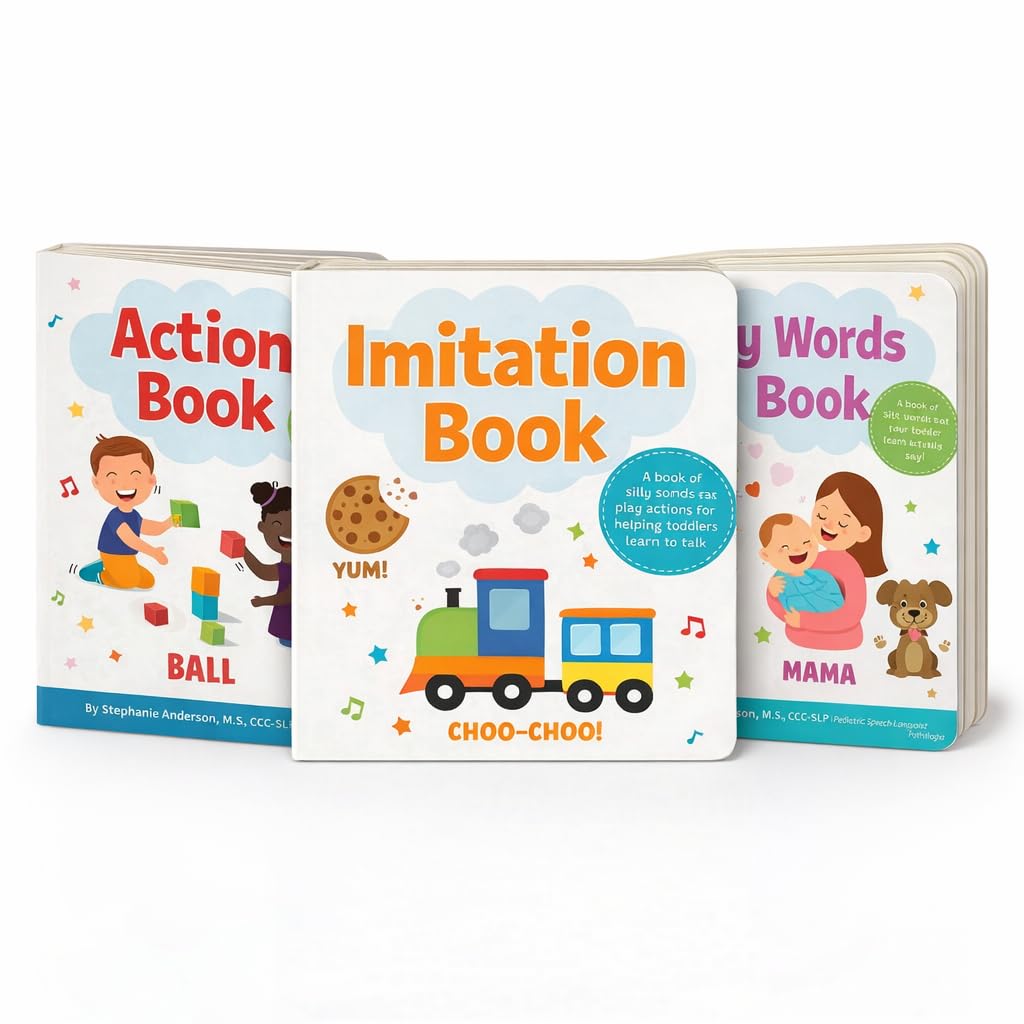
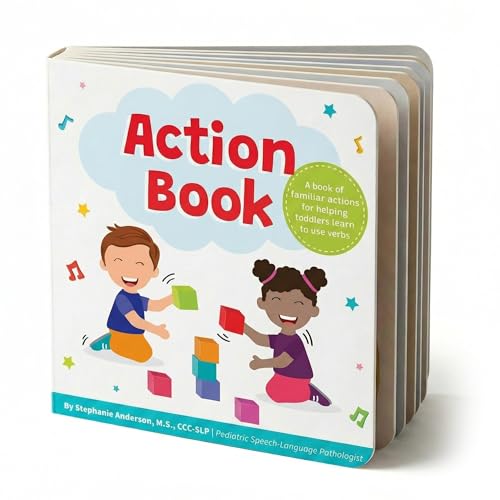
Action Book: Children's Board Book for Learning Verbs For Toddlers Ages 1-4, Written by a Speech Therapist
- Children's Books
- Early Learning
- Image Unavailable Image not available forColor:
7. Embracing the Quirk: What This Phase Teaches Parents
There's a broader lesson tucked inside the "Daddy called Mama" phase, and it's one of the most useful things early parenthood can hand you: your toddler is not following your script, and that's exactly right.
Every parent arrives with some version of how things will go — the first word will be "Dada," the first steps will be at exactly 12 months, the first sentence will be poetic. Toddlers, reliably, do something else entirely. And in that gap between expectation and reality lives one of parenting's most important skills: flexible acceptance.
Calling you the "wrong" name is your toddler's first lesson to you in letting go of the label and trusting the relationship underneath it. The bond you've built — through night feeds, nappy changes, silly songs, and a thousand small moments of showing up — is what made them reach for you and say any word at all.


My First Learn-to-Talk Book: Created by an Early Speech Expert!
- Children's Books
- Early Learning
- Basic Concepts
The My First Learn-to-Talk Book is a wonderful resource to share these language moments together — turning the daily name-learning process into a warm, connected ritual.
Comparison: Language Support Tools for Toddlers 1–3 Years
| Tool Type | Best Age | Primary Benefit | Main Limitation | Recommended Product | Price Range |
|---|---|---|---|---|---|
| Imitation-focused board book | 0–4 yrs | Builds the copying skills behind first words | Requires adult engagement to be effective | Imitation Book by Speech Therapist | ~$16 |
| Baby sign language book | 6 mos–2 yrs | Gives toddlers a way to communicate before words arrive | Requires consistent adult use | My First Book of Baby Signs | ~$10–14 |
| Parent-guide speech therapy book | 1–3 yrs | Structured SLP strategies parents can use at home | Text-heavy; less toddler-facing | Speech Therapy for Toddlers Parent's Guide | ~$12–15 |
| Verb/action board book | 1–4 yrs | Expands beyond nouns into action words (key for sentences) | Narrower vocabulary focus | Action Book for Learning Verbs | ~$16 |
| Early speech expert learn-to-talk book | 12 mos–3 yrs | Broad vocabulary, expert-sequenced concepts | May move quickly for late talkers | My First Learn-to-Talk Book | ~$10–14 |
| CVC/sentence board book | 18 mos–3 yrs | Bridges single words to simple sentences | Best after 50+ word vocabulary established | Speech Made Simple | ~$10–14 |
Expert Insights
The day your toddler graduates from "Mama" to "Daddy" — said clearly, deliberately, with their arms stretched up toward you — will stop your heart in the best possible way. But right now, in this season of mixed-up names and overextended labels, there's something quietly wonderful happening: your child is building language, and they're building it around you. Whatever they call you, you are their safe place. That's the part that lasts.
The label is temporary. The bond it's built on is not.
If this resonated with you, save it for the next time another parent panics about the "wrong" name — and consider sharing it with a dad who needs to hear that being called Mama might just be the highest compliment a toddler can pay.
Sources & References
- American Academy of Pediatrics (AAP). "Language Development: 1 Year." HealthyChildren.org. 2023. https://www.healthychildren.org/English/ages-stages/toddler/Pages/Language-Development-1-Year.aspx
- American Academy of Pediatrics (AAP). "Language Development: 2 Year Olds." HealthyChildren.org. 2023. https://www.healthychildren.org/English/ages-stages/toddler/Pages/Language-Development-2-Year-Olds.aspx
- Hart, B. & Risley, T. R. "Meaningful Differences in the Everyday Experience of Young American Children." Paul H. Brookes Publishing. 1995.
- Cristia, A., Dupoux, E., Gurven, M., & Stieglitz, J. "Child-Directed Speech Is Infrequent in a Forager-Farmer Population." Child Development. 2019. https://doi.org/10.1111/cdev.13026
- Jakobson, R. "Why 'Mama' and 'Papa'?" In Selected Writings, Vol. 1. Mouton, 1962. (Classic phonological analysis of universal first-word sounds.)
- Pew Research Center. "Parenting in America: The Role of Fathers." 2023. https://www.pewresearch.org/social-trends/
- Golinkoff, R. M., & Hirsh-Pasek, K. "Becoming a Word Learner: A Debate on Lexical Acquisition." Oxford University Press. 2000.
- Tamis-LeMonda, C. S., Kuchirko, Y., & Song, L. "Why Is Infant Language Learning Facilitated by Parental Responsiveness?" Current Directions in Psychological Science. 2014. https://doi.org/10.1177/0963721414522813
- Lamb, M. E. (Ed.). "The Role of the Father in Child Development." 5th ed. Wiley. 2010.
- Brown, R. "A First Language: The Early Stages." Harvard University Press. 1973. (Foundational research on early word overextension.)
Frequently Asked Questions
Why does my toddler call me Mama when I'm Dad?
Is it normal for a toddler to mix up Mum and Dad?
Should I correct my toddler when they call me the wrong name?
At what age should a toddler know both parents' names correctly?
Could calling me the wrong name be a sign of a language delay?
Does being a more involved dad affect what my toddler calls me?
What books help toddlers learn parent names and family vocabulary?
Was this helpful?
Thanks — your feedback helps us pick what to write next.