Toddler Development at Ages 2 to 3: Milestones and When to Worry
TL;DR: Quick summaryBetween ages 2 and 3, most children run, climb, build with blocks, put words together, pretend play and feel big emotions they cannot yet manage. Every child moves at their own pace. Worry less about one missed skill and more about lost skills, no word pairs,
In this article
TL;DR: Quick summary
Between ages 2 and 3, most children run, climb, build with blocks, put words together, pretend play and feel big emotions they cannot yet manage. Every child moves at their own pace. Worry less about one missed skill and more about lost skills, no word pairs, or a gut feeling something is off.
What you'll get
About 20 minutes to read. Short on time? Read the bold lines and the Key Takeaways near the end.
Picture a parent at the playground. Another toddler the same age is chattering in full sentences and scrambling up the climbing frame, while your child is happily pointing and saying a handful of words. Your stomach drops a little, and you wonder whether you are missing something.
I hear this worry in clinic almost every week. This guide is for parents and caregivers of children aged 2 to 3 who want to know what is typical, what is worth a closer look, and what they can actually do at home to help.
By the end, you will know what to watch for in movement, thinking, language and feelings. You will also have words to use, routines to try, and a clear sense of when to ask for help. Let's start with the big picture.
What can most children do at ages 2 to 3?
Most children at this age run, climb, join two or more words together, copy what you do, and play near or with other children. Milestones are a rough map, not a test. Your toddler may be ahead in one area and behind in another, and that is usually fine.
What a milestone actually is
Developmental milestones are things most children (75% or more) can do by a certain age. Skills such as taking turns, playing make believe and kicking a ball all count.
Think of a milestone as "what most children can do by about now," not "what every child must do today." That is why the same checklist can be reassuring for one family and a prompt to ask questions for another.
These milestones should be treated as a rough guide, as each child is unique and will develop at their own pace."|NHS, 2 year developmental milestones
Cleveland Clinic says something similar: not all toddlers will master all the skills listed before their third birthday. A missed skill on one list is a reason to keep watching, not a reason to panic.
Which checklist should you use?
Two small rules help you read milestone checklists more fairly for your child.
- If your child's age falls between two checklist ages, use the checklist for the younger age.
- If your child was born more than 3 weeks early, use their corrected age.
Corrected age just means counting from the date your baby was due, not the date they were born. Ask your doctor to help you work it out if you are unsure.
The comparison trap
It is often unhelpful to compare a child to other children or their siblings. Your second child may talk later than your first and still be completely on track.
How do movement and hand skills grow between 2 and 3?
Toddlers get steadier on their feet, run with more control, climb on furniture, kick a ball and use their hands more precisely. They also start feeding and dressing themselves a little. Big movements usually come first, and the small, careful hand skills catch up gradually.
Big movements: running, climbing and kicking
Most children are walking steadily well before 2, and the year after is about polish. You will see faster running, climbing onto the sofa, and the first clumsy kicks at a ball.
Falls are part of learning. A toddler who tumbles often but gets up, laughs and tries again is usually just practising.
Safety matters more now because your child can reach more. Think about stair gates, window locks, furniture that can tip, and supervised climbing. Ask your doctor or health visitor what safety checks suit your home.
Small movements: spoon, crayon and blocks
Eating with a spoon is on the CDC list for age 2. Expect mess, and expect your toddler to switch hands, drop food and sometimes give up and use fingers.
Stacking blocks, turning pages, scribbling and pushing pegs into holes all build the hand strength they will later use for writing. The same goes for drinking from a cup with no lid. If you are choosing one, your toddler's choice of cup can affect how well they practise these skills.
Toys can add variety, though none is essential. A chunky wooden stacking and sorting puzzle is a simple way to practise grasping and balancing, and a peg and parts toy like Mr. Potato Head gives hands a workout while your child decides where the eyes go.

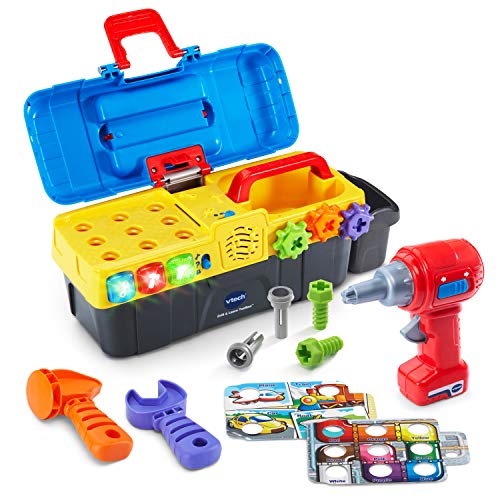


VTech Drill and Learn Toolbox
- Fix and play with the Drill and Learn Toolbox by VTech; open this toddler-friendly toolbox and get ready for…
- Working drill spins the gears and drills screws into the electronic tray's holes; turn the gears to build…
- Press light-up buttons for fun songs and to learn about a variety of tools, how they're used and the sounds…
Everyday ways to build skills
You do not need special equipment. Everyday jobs work well, and your toddler will feel proud to help.
For a toddler who wants to "do it myself," try offering two choices you are happy with, such as "Do you want the red top or the blue top?" This builds independence without a fight.
Signs worth mentioning
Can't walk steadily is one thing UNICEF says to raise with your doctor if your 2 year old shows it. Another is not knowing how to use common objects, such as a cup or a spoon.
If your child seems unusually stiff, floppy or clumsy, or has lost movement skills they had before, mention it at your next visit.
How does thinking and play change at this age?
Toddlers start to pretend, sort, match and solve small problems on their own. They remember routines, copy what you do, and begin to follow simple requests. Play is the main way they learn at this age, so most of the "teaching" can happen while you play.
Pretend play is real work
Playing make believe is a milestone in its own right. When your toddler feeds a teddy bear, "drives" a block like a car or talks into a banana phone, they are practising symbols, memory and language at once.
You can join in without taking over. Follow their lead, add a small idea ("Oh, teddy is hungry. What does he want?") and let them decide what happens next.
Sorting, matching and simple puzzles
Sorting by colour, shape or size is a first step toward maths and logic. Start with two or three choices and add more as your child gets confident.
A colour matching busy book with hook and loop pieces can give a toddler a quiet, hands on activity that practises matching and words for colours. Use it together, not as a way to keep them busy while you cook.
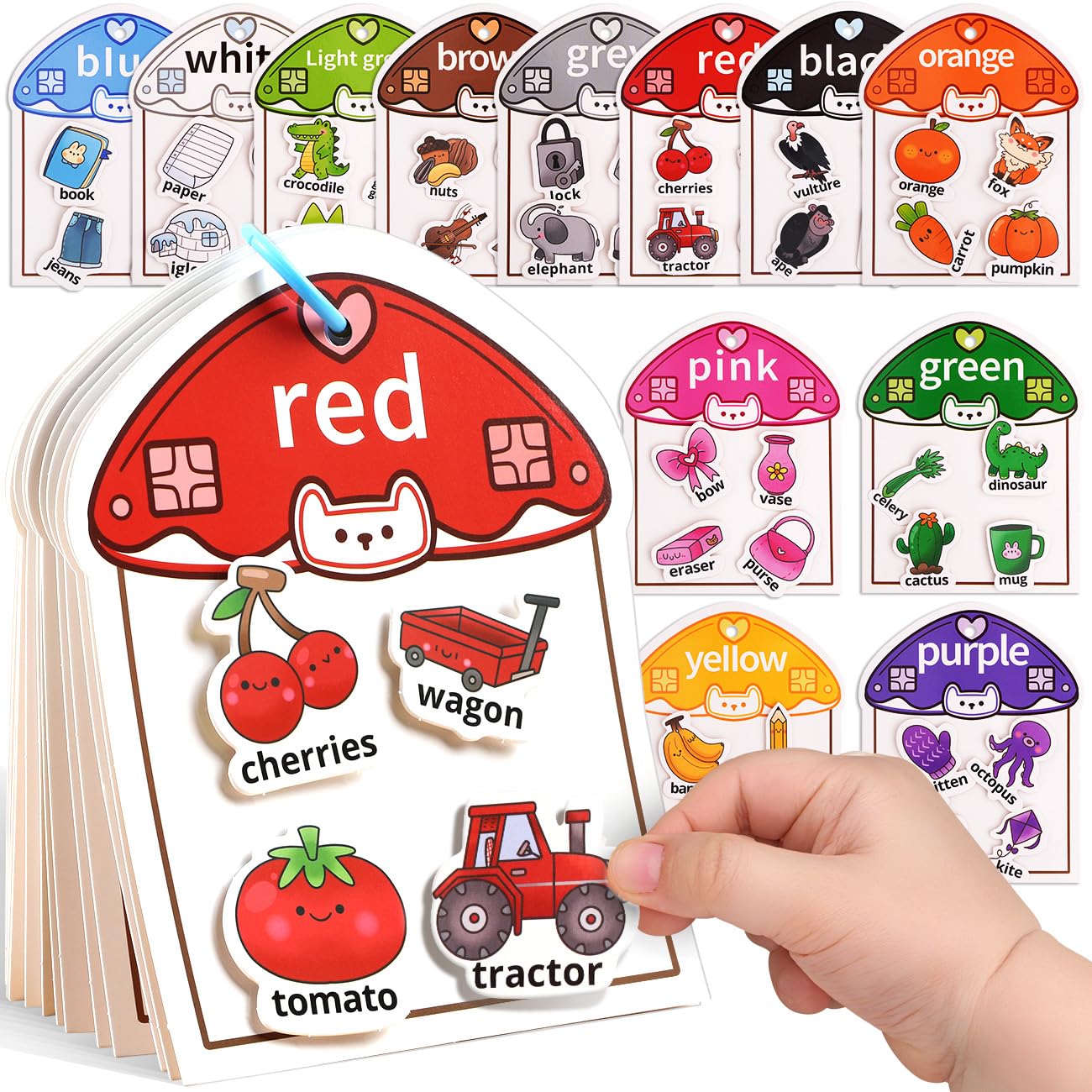
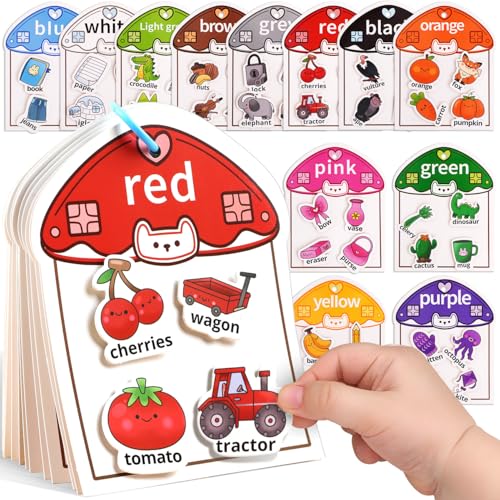
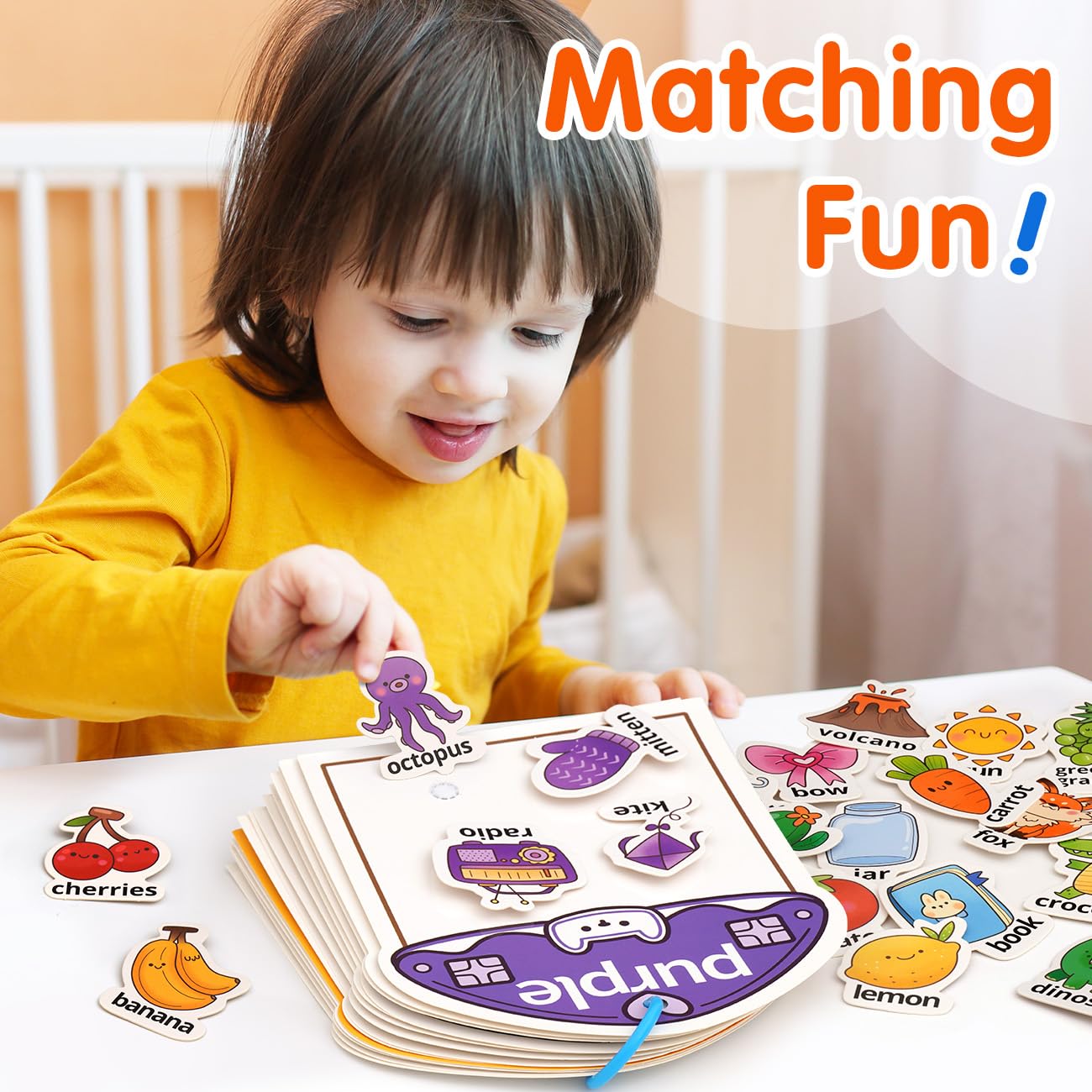
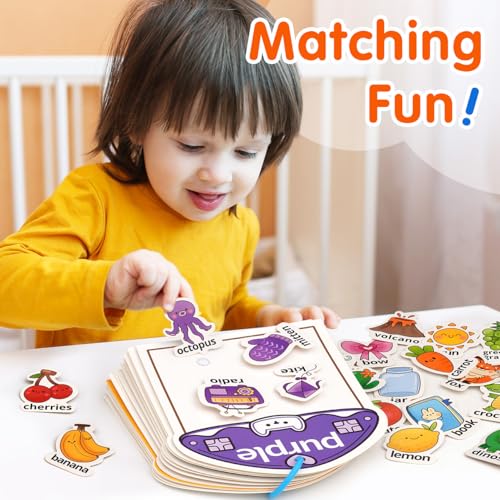
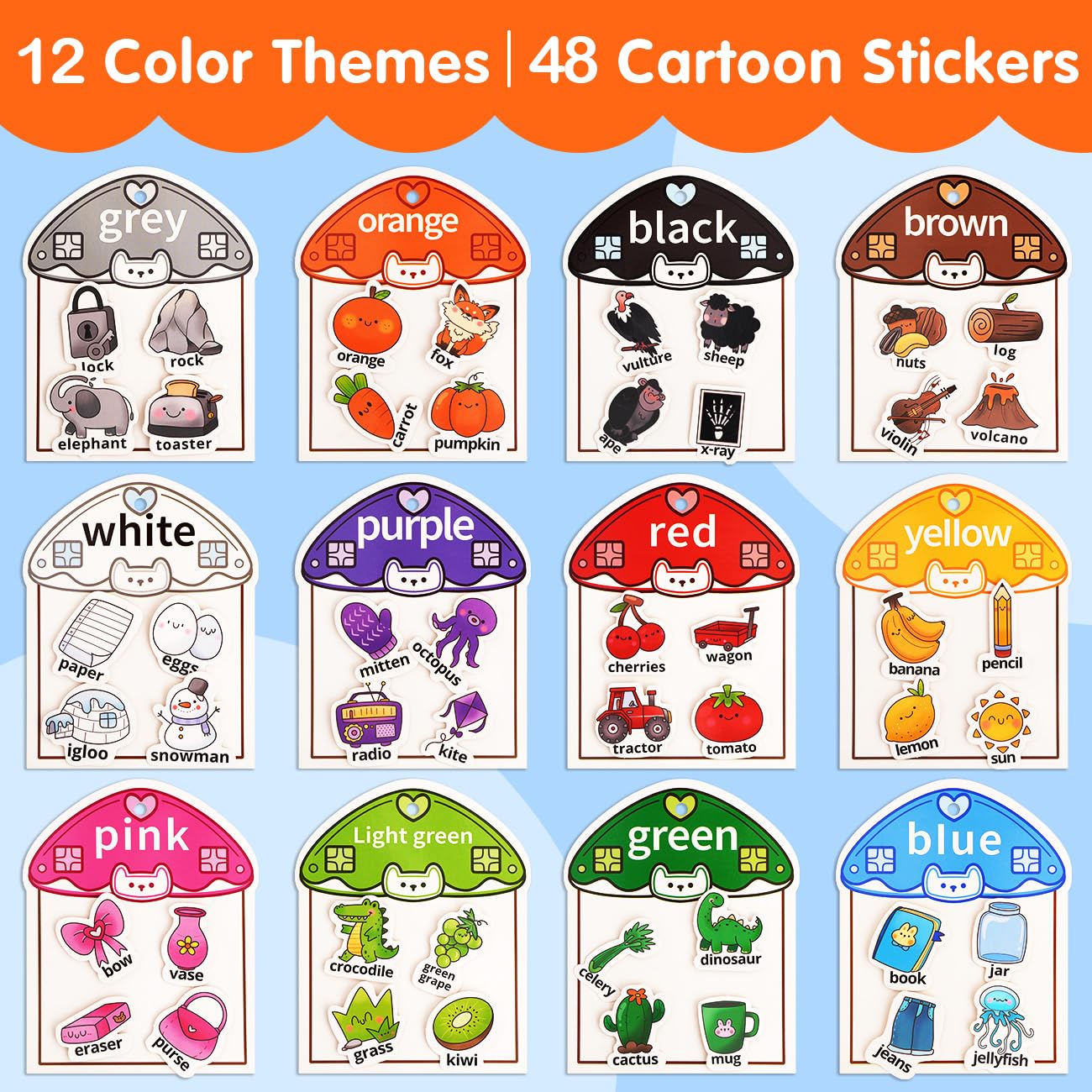
Montessori Busy Book Color Sorting Toys for Toddlers 2-4 Years
- Matching Color Busy Book: Your toddlers will adore mastering 12 colors with our interactive busy book…
- Build Essential Skills: Watch your child's mind grow! This engaging activity is far more than a sorting…
- Spark Joyful Connections & Teamwork: "Wow, you found the red tomato! Great job, sweetie!" This busy book is…
Following instructions
By around this age, many toddlers can do a simple two part request, like "Get your shoes and bring them to me." If this is new for your child, start with one step and slowly add the second.
Here is how it might sound in real life.
- Get down to their level and say their name first.
- Say one short step: "Shoes, please."
- Wait a few seconds before repeating yourself.
- When they do it, add the second step: "Now bring them here."
Screens and gadgets
Toys that talk or light up are fine in small doses. They are not a replacement for you. A toddler often learns more from a short chat over a pile of blocks than from a gadget on its own.
How fast should my toddler's language grow?
Language grows quickly between 2 and 3. Many children move from a handful of single words to short phrases and then simple sentences. By 30 months, they are saying 50 words or more and are understood about half of the time.
What typical talking looks like
By 3 years old, a toddler's vocabulary usually is more than 200 words. That is a big jump, and it often happens in bursts.
By 2, most children are saying at least two words together, like "More milk." At around the same time, many children point to body parts when asked and use gestures beyond waving and pointing, such as blowing a kiss.
By 30 months, they are saying 50 words or more and are understood about half of the time."|kidshealth.org, Toddler Language Development: 2 to 3 years
Notice that "understood about half of the time" is normal. Strangers often find toddler speech hard to follow, even when you can translate perfectly.
Words that help, step by step
You can grow language simply by talking about what you are doing, in short, clear sentences.
- Describe. "You are pouring the water. Splash!"
- Expand. If they say "Dog run," you say "Yes, the big dog is running fast."
- Offer a choice. "Banana or apple?" gives them a word to copy.
- Pause. Wait a few seconds after a question. Toddlers need processing time.
- Read daily. Pick the same favourite books again and again; repetition is how words stick.
A set of talking flash cards can add a bit of variety for naming animals, vehicles and foods, but your voice does most of the work. Use cards as a prompt for conversation, not as a quiz.


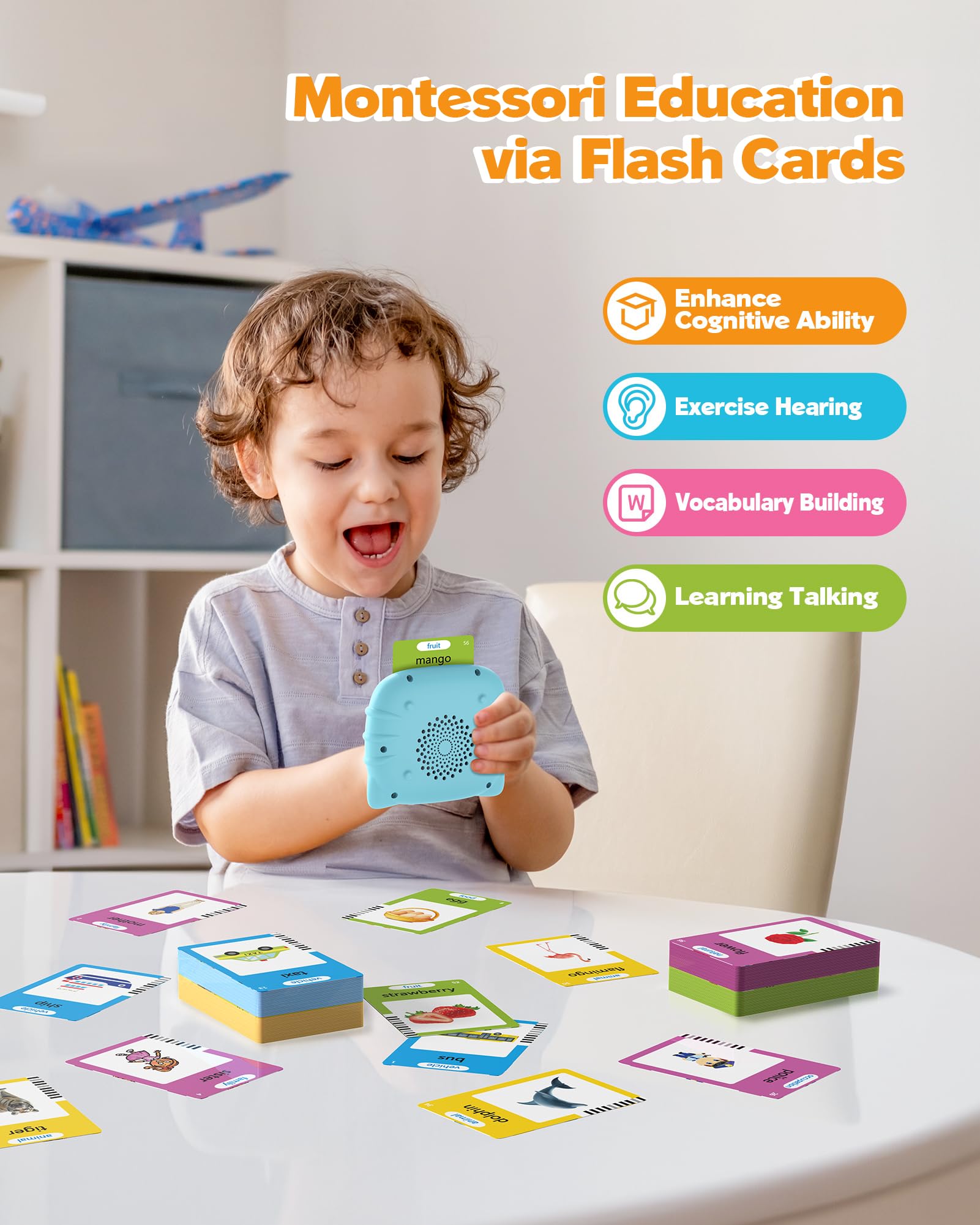
Airbition Talking Flash Cards for Toddlers Ages 1‑4,224 Words English Blue
- Toddler Montessori Learning Toys: This educational talking flash card features 224 colorful illustrations and…
- Speech Therapy and Sensory Toys: Talking flashcards are a valuable tool for children. The sound-image combo…
- Easy to Use: Simply turn on the switch, insert a card into the reader, and hear content in a standard…
Common language mistakes
When talking is a concern
A child who is not putting 2 or more words together by age 2, for example "Red car" or "Me go too," is worth raising with a health professional. By 3, not using three word sentences or not understanding two part instructions is also on the list.
Do not wait for a "wait and see" period if you are worried. Early checks are worth making if you are unsure, and they can lead to useful tips.
Why are tantrums and big feelings so common at this age?
Toddlers feel strong emotions but have few words and little self control to manage them. Tantrums are common because your toddler can't always communicate their needs. They are a normal part of development, not a sign that you are doing something wrong.
What is happening in your toddler's brain
The thinking part of the brain that calms big feelings is still very immature. So a small frustration, like the wrong colour cup, can feel enormous. If you want the science, why toddler emotions are so intense explains it in plain language.
Tiredness, hunger and too much stimulation make everything worse. Many tantrums are really "I need a snack" or "I need a nap" in disguise.
What to do in the middle of a meltdown
Your calm helps your toddler find theirs. If you are struggling with that, how one mom stays steady during tantrums has realistic ideas for caregivers.
- Stay close and stay calm. Lower your voice and your body.
- Name the feeling. "You are so mad. You wanted the blue cup."
- Hold the limit. "I won't let you throw it. I'll keep the cup safe."
- Wait. Don't argue or explain while they are screaming.
- Reconnect. When they calm, offer a cuddle and move on.
Playing with other children
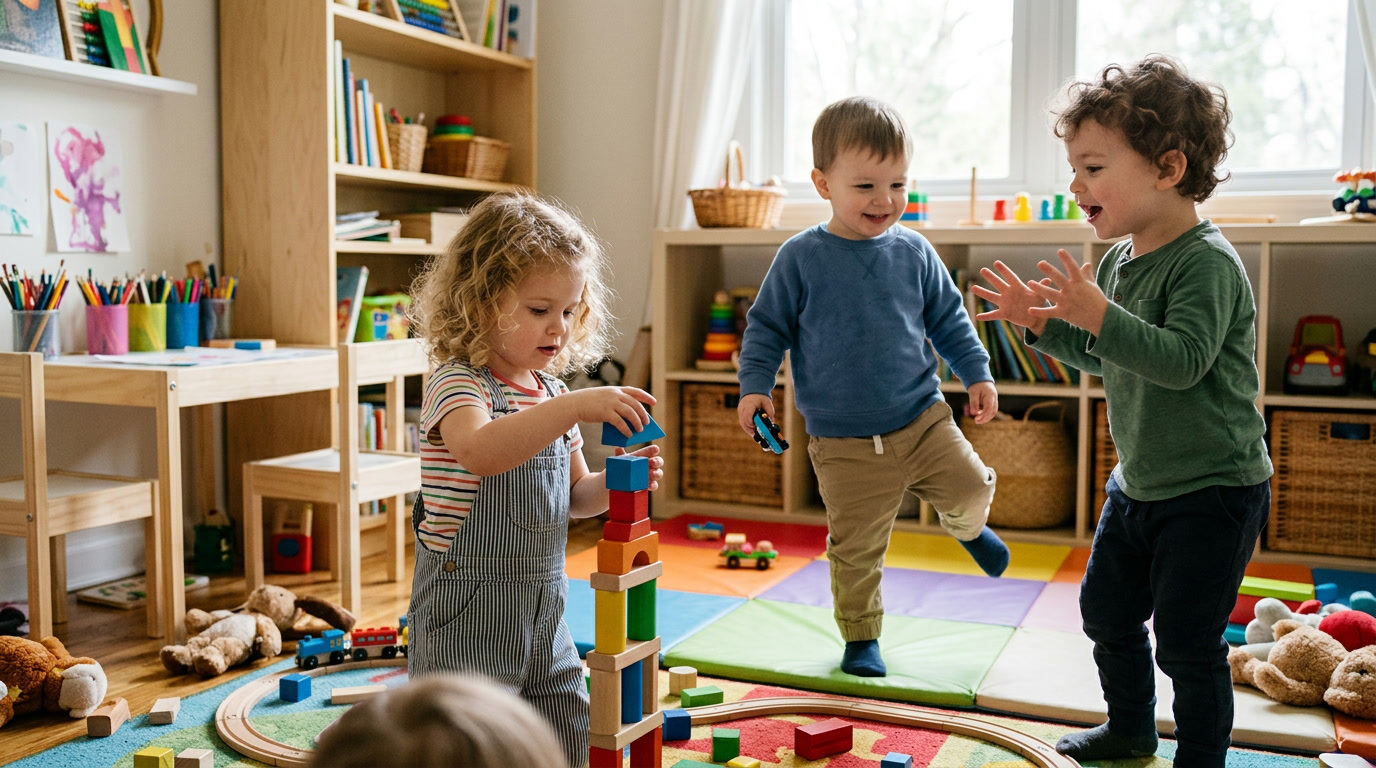
Taking turns is a milestone. At this age, most toddlers still play alongside other children rather than truly together. This is called parallel play, and it is normal.
Sharing is hard. Do not force it. Instead, practise turns with a simple toy that has pieces to pass back and forth, such as a farm train sorting set where you each load a different animal.


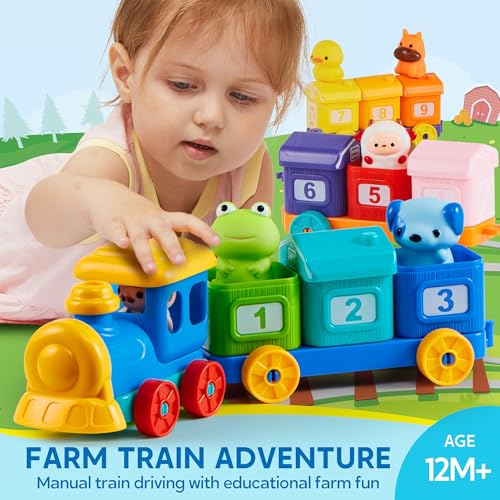

Play-Act Learning Toys for 1 2 3 Years Old, Counting, Matching & Sorting Montessori Learning Farm Train Including 9 Farm Animals, Birthday Gift for Baby Boys Girls
- Colorful Sorting Experience: Explore colors and numbers while enjoying the vibrant sorting activity with 9…
- Open Train for Interactive Play: The train features a detachable roof, allowing children to place figures…
- Explore Colors and Numbers: Engage in loading, unloading, stacking, and sorting with the numbered barns…
Separation and comfort
By 3, many children can calm down within 10 minutes after you leave, like at a childcare drop off. Even so, a wobbly goodbye is normal, especially after illness, a new sibling or a change in routine.
A short, confident goodbye works best. Hug, say "I'll be back after lunch," and go. Sneaking out makes children more anxious.
When should I talk to my doctor about my toddler's development?
Talk to your doctor if your toddler is not meeting one or more milestones, has lost skills, or if you simply feel something is wrong. If your child is not meeting one or more milestones, has lost skills, or you have other concerns, act early.
Red flags worth a call
Even one missed milestone is worth raising with your doctor. A pattern, or a loss of skills, matters more.
Loss of skills is the one I never want parents to wait on. See a child health professional if you notice that your toddler has lost skills they once had.
If your child is not meeting one or more milestones, has lost skills he or she once had, or you have other concerns, act early."|CDC, Milestones by 2 Years
What to say at the appointment
Be specific. "He's slow" is hard to act on. "He says about ten words, doesn't join two together, and doesn't point to show me things" gives your doctor something to work with.
Then ask about developmental screening. Screening is a short, structured set of questions or activities that checks a child's progress. It is not a label.
- Bring your written list of skills you have noticed.
- Mention any hearing, vision or ear infection history.
- Ask: "Can we do a developmental screen today?"
- Ask what to do at home while you wait for any referral.
What is not a red flag
Some things worry parents but are usually part of the normal range.
Toilet training and readiness
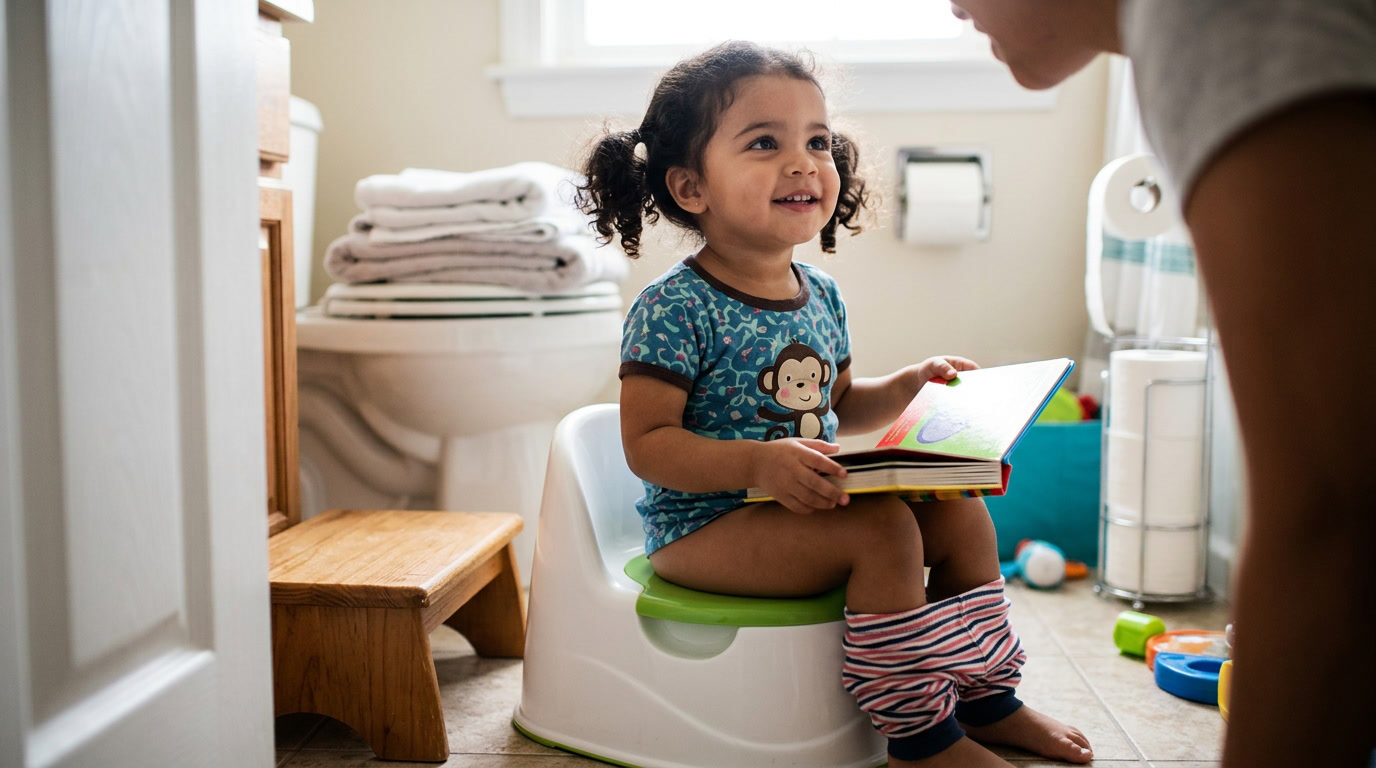
Most children are not able to toilet train until 2 to 3 years old. Starting too early can cause stress and setbacks, which can cause training to take longer.
Look for signs of readiness, such as staying dry for longer stretches, showing interest in the toilet and telling you when they have a wet nappy. If you are unsure, ask your doctor or health visitor what to look for in your child.
How do the ages 2 to 3 stages compare?
Use the table below to see how each area of development looks in daily life and which simple toy might support it. Age ranges are loose, because children differ so much.
| Option | Best Age Range | Primary Benefits | Main Drawbacks | Recommended Product | Price Range |
|---|---|---|---|---|---|
| Big movement and role play | From about 2 years | Practises hand strength, turn taking and copying real life jobs | Pieces can get lost; needs adult play to get the most from it | VTech Drill and Learn Toolbox | $20.99 |
| Colour matching and early words | From about 2 years | Practises matching, fine motor skills and colour words | Pieces are small to store; needs a caregiver to talk along | Montessori Busy Book Color Sorting Toys | $8.95 |
| Language and naming | From about 2 years | Adds variety for naming animals, foods and vehicles | Easy to use as a quiz; does not replace conversation | Airbition Talking Flash Cards | $11.99 |
| Sorting and turn taking | From about 2 years | Practises sorting, counting and sharing pieces | A farm set with many pieces needs a storage plan | Play Act Learning Farm Train | $19.99 |
| Pretend play and fine motor | From about 2 years | Pushing parts in and out builds hand control and imagination | Small parts need supervision | Mr. Potato Head Set with 13 Parts | $7.97 |
| Stacking and shape play | From about 2 years | Practises balance, shapes and hand eye coordination | Can frustrate if the shapes are too hard at first | Montessori Sensory Stacking Puzzle | $7.99 |
Imagine you're at the playground. Another toddler is chatting in full sentences, while yours mostly points, climbs, and says a few words. It's easy to feel a pang, but children often race ahead in one area while another waits its turn.
If a relative comments, you can say, "She's busy mastering climbing right now. The talking is coming." Then compare your child only with their own earlier self. A small notebook of new things you spot each month makes progress easier to see.
A common mistake is drilling a skill, like repeating "Say ball! Say ball!" Instead, name things naturally during play and give your child time to respond.
Talk to your pediatrician if your child seems behind in many areas at once, has lost skills, rarely responds to their name, or seldom seeks to interact with you. Asking early is never an overreaction.
Frequently asked questions
Key takeaways
Key Takeaways
- Milestones are things most children can do by a certain age, and they are a rough guide, not a test.
- Use the younger checklist if your child falls between two ages, and use corrected age if they were born more than 3 weeks early.
- Language grows quickly: many children are saying 50 words or more by 30 months, and over 200 by age 3.
- Tantrums are common because toddlers cannot always say what they need; stay calm, name the feeling and hold the limit.
- Not putting two or more words together at 2, or not using three word sentences at 3, is worth raising with your doctor.
- If your toddler loses a skill they once had, see a child health professional soon.
- Toys such as the VTech toolbox or a colour matching busy book can support play, but your time and talk matter most.
Takeaways help most when you turn them into a small habit. Pick just a single idea to try this week, such as narrating your day out loud. While you make lunch, say, "I'm cutting the apple. Now I'm putting it on your plate."
A sticky note on the fridge can remind you. On Sunday evening, ask yourself what went well and what felt hard, then adjust gently.
The most common mistake is trying to change everything at once. Another is treating these points as a checklist your child must pass. Toddlers learn through repetition, play, and your steady presence, not drills.
If a takeaway leaves you worried, write down real examples, such as "Yesterday he didn't turn when I called his name." Bring your notes to your next checkup, or call sooner if the worry feels heavy. Specific examples help your doctor far more than general feelings.
A last word
The year between 2 and 3 is exhausting, funny and full of leaps. One day your child cannot say your name; a few weeks later they are bossing you around with full sentences. You are doing more right than you think.
The most helpful thing you can do is stay curious. Watch, play, talk and write down your questions, and ask for help early if something nags at you.
Children do not need perfect parents; they need present ones. If this guide helped, save it, share it with a friend who is in the thick of toddler life, and come back for more.
Sources & References
- CDC. "2 Year Online Milestone Checklist."
- my.clevelandclinic.org. "Toddler Developmental Milestones (Age 1 to 3 Years Milestones)."
- NHS. "2 year developmental milestones."
- CDC. "Milestones by 2 Years."
- kidshealth.org. "Toddler Language Development: 2-3 years."
- CDC. "Positive Parenting Tips: Toddlers (2–3 years old)."
- CDC. "Milestones by 3 Years."
- raisingchildren.net.au. "Toddler development at 2-3 years."
- unicef.org. "Your toddler's developmental milestones at 2 years."
Picture the end of a long day. Your toddler melts down over the wrong color cup, and your patience feels thin. Before you react, take a slow breath and lower yourself to their eye level.
Try saying, "You wanted the blue cup. That's hard. I'm right here." Then offer a small choice: "Do you want the green cup or the red cup?" Keep your voice low and your words few.
A common mistake is explaining too much while your child is still upset. They can't take in a lecture yet. Wait until they're calm, then talk briefly.
Be kind to yourself too. If you snap, repair it later: "I got loud earlier. I'm sorry. I love you." That small repair teaches more than perfect calm ever could.
If a worry keeps nagging at you, or your child seems to lose skills they once had, call your pediatrician. You know your child best.
Frequently Asked Questions
Is it normal if my 2 year old only says a few words?
How many words should a 3 year old know?
What if my toddler is behind on some milestones but ahead on others?
Should I use my premature baby's actual age or corrected age?
Why does my toddler have so many tantrums?
When should I start toilet training?
What should I do if my toddler stops doing something they used to do?
Was this helpful?
Thanks — your feedback helps us pick what to write next.