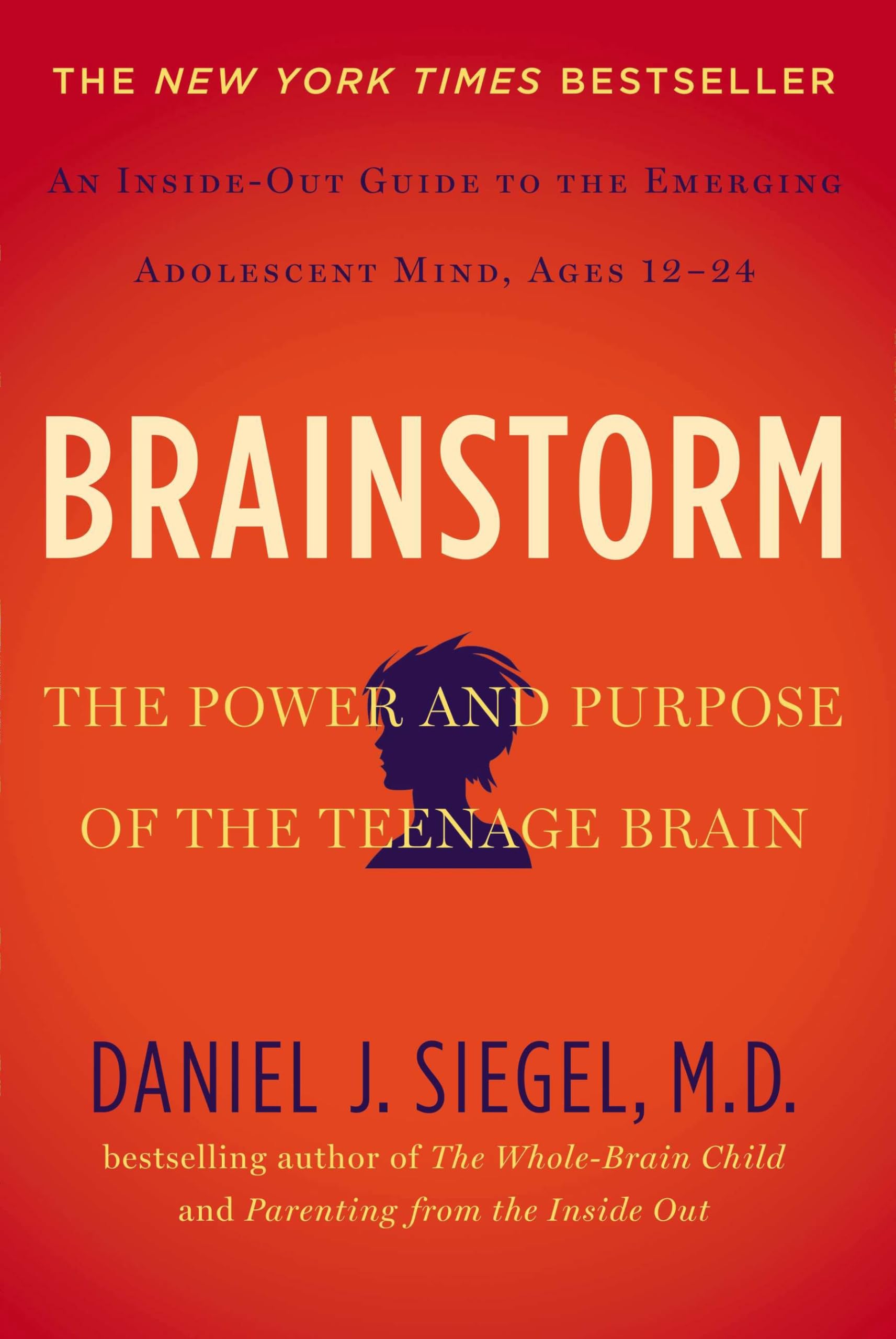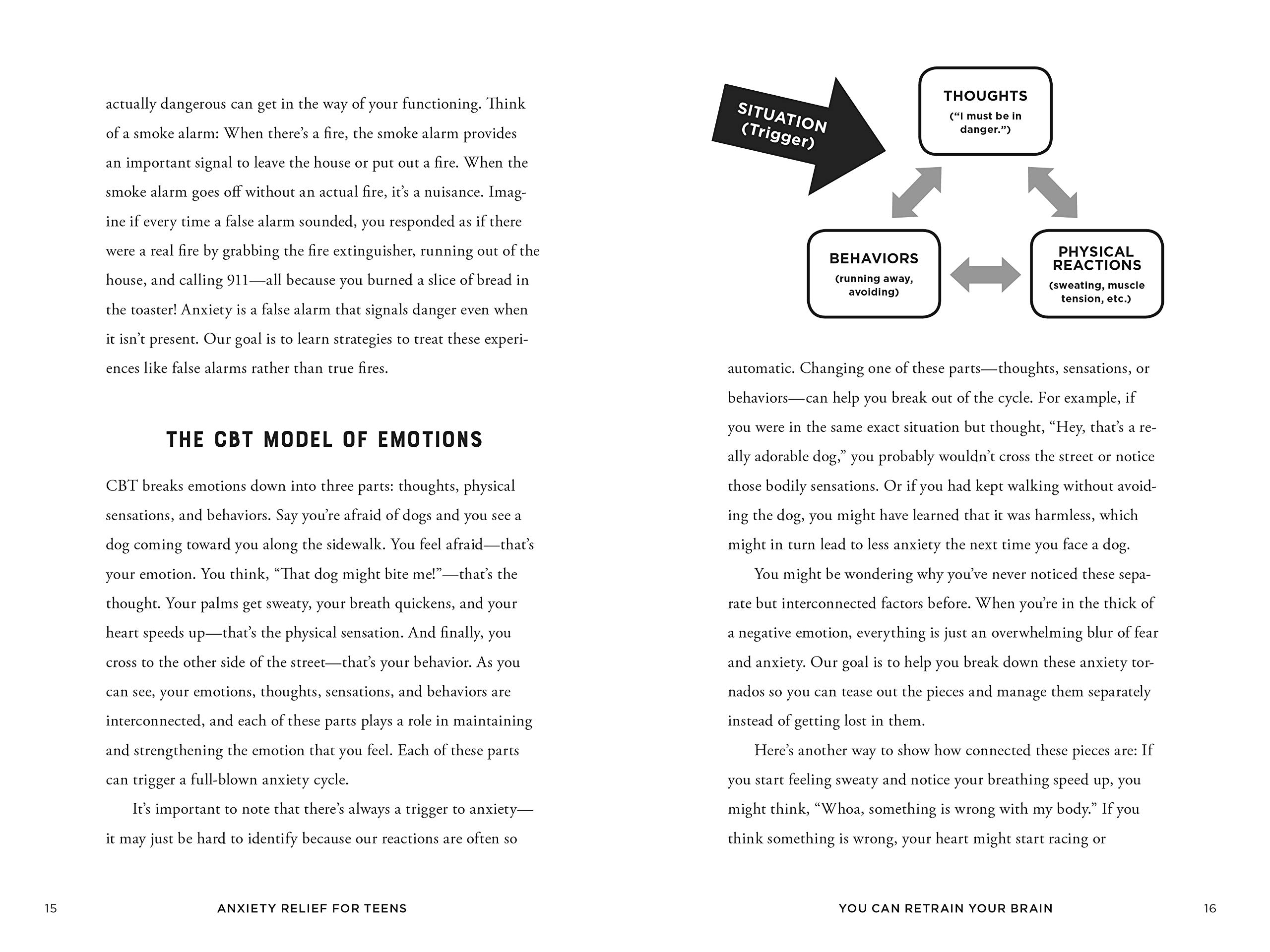
Why the Teenage Brain Is Still Wired for Play
Teens learn best through a mix of active, social, and self-directed experiences — and the right games and tools can sharpen real-world skills while keeping the parent-teen connection alive.

In this article
Picture this: your 15-year-old can beat any opponent at a video game requiring split-second decisions, yet struggles to remember what they revised for yesterday's history test. Sound familiar? You're not imagining a contradiction — you're watching a developing brain in action. According to the National Institute of Mental Health (NIMH), the prefrontal cortex, the region governing planning, impulse control, and complex reasoning, continues maturing well into a person's mid-twenties. That means every year of the teen stage is a genuine opportunity to shape how your child thinks, learns, and engages with the world.
This guide will help you understand:
1. Why the Teenage Brain Is Still Wired for Play
Play is not something teens grow out of — it simply changes shape. The adolescent brain is in a period of synaptic pruning, where neural pathways used regularly are strengthened and unused ones are discarded. This means the activities your teen engages in during these years literally shape the architecture of their adult brain.
The American Academy of Pediatrics (AAP) published a landmark 2018 clinical report emphasising that play — including games, creative pursuits, and unstructured exploration — remains essential for healthy development well into adolescence. The report noted that play builds executive function, resilience, and social competence, all skills that predict long-term wellbeing.
What "Play" Looks Like at 13–17
For teens, meaningful play includes:
- Strategic board and card games that require planning and pattern recognition - Creative projects like music, art, coding, or writing - Physical challenges including team sports, hiking, or dance - Social games that build communication, debate, and quick thinking - Real-world simulations that practise adult skills in a low-stakes setting
The key is that play at this age should involve some element of agency — your teen choosing, deciding, and experiencing consequences. That's what makes it developmental, not just entertaining.
2. Building Critical Thinking Through Strategic Games
Critical thinking — the ability to analyse information, spot patterns, and make reasoned decisions — is one of the most in-demand skills in the modern world, and it can absolutely be practised through the right games.
Research published in the journal Thinking Skills and Creativity (Elsevier, 2019) found that structured game-based learning significantly improved students' analytical reasoning compared to traditional instruction alone. The competitive, turn-based structure of strategy games forces players to anticipate opponents' moves, weigh options, and adapt — exactly the cognitive workout teens need.
Math, Logic, and Pattern Recognition
A game like Matrix Dice Game is a surprisingly powerful tool here. Players roll, calculate, and multiply to pop matching numbers on their pad — it's fast, competitive, and requires mental arithmetic under pressure. For teens who "hate maths," the game format removes the anxiety and replaces it with motivation to win.
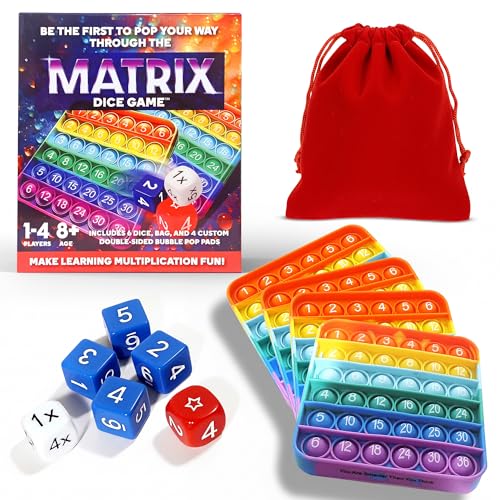

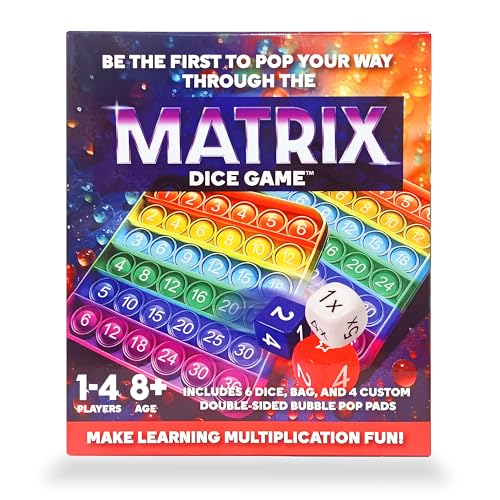
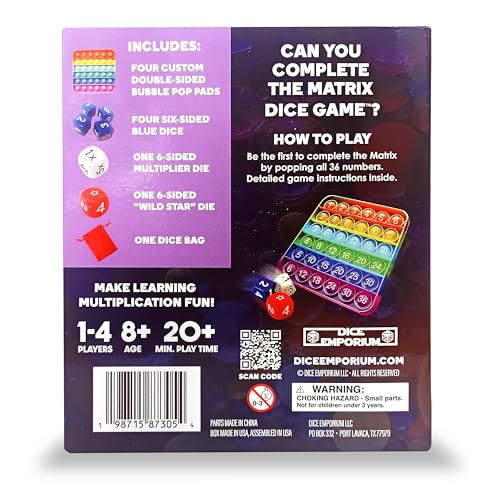
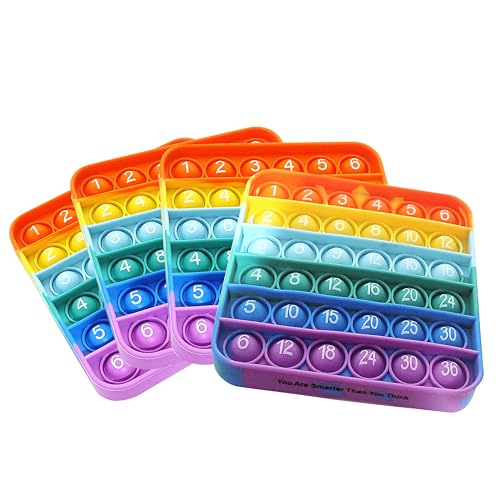
Matrix Dice Game – Pop-and-Play Bubble Pad Educational Math Dice Game – Fun Math Games for Kids 8–12, Teens, Adults, and Seniors – Ideal for Classrooms and Family Board Game Night for 2-4 Players
- Multiply the Fun with Every Roll – Matrix combines strategy and fun in a competitive dice game where players m
- Learn It Fast, Play It for Hours – With simple rules and exciting outcomes, Matrix is a top choice for math ga
- Tactile Design, Durable Quality – Includes 4 reusable double-sided Matrix bubble pads, 4 blue dice, 1 red wild
3. Memory, Attention, and the Case for Fast-Paced Games
Working memory — the ability to hold and manipulate information in your mind — is a cornerstone of academic success. It underpins reading comprehension, problem-solving, and following multi-step instructions. The good news: it can be trained.
Fast-paced, time-pressured games are particularly effective because they force the brain to encode and retrieve information quickly, strengthening the neural circuits involved in attention and short-term memory.

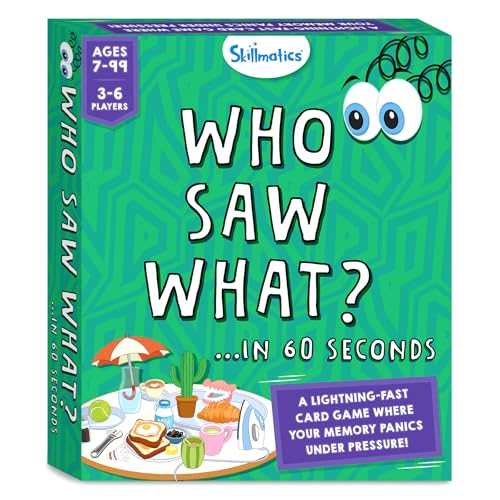
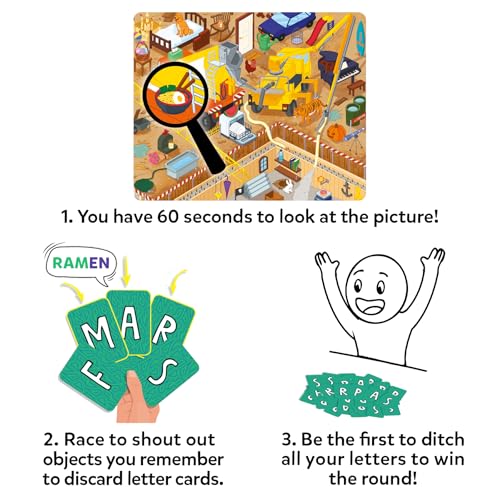
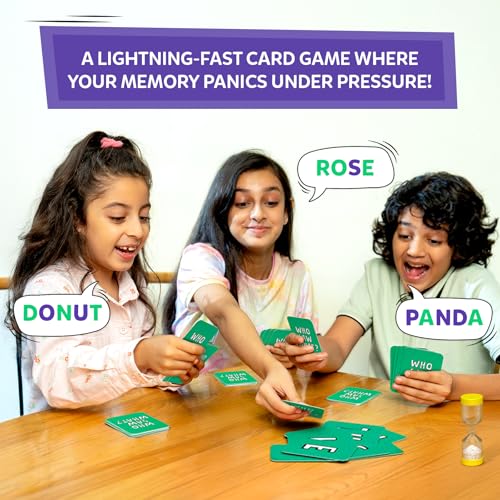
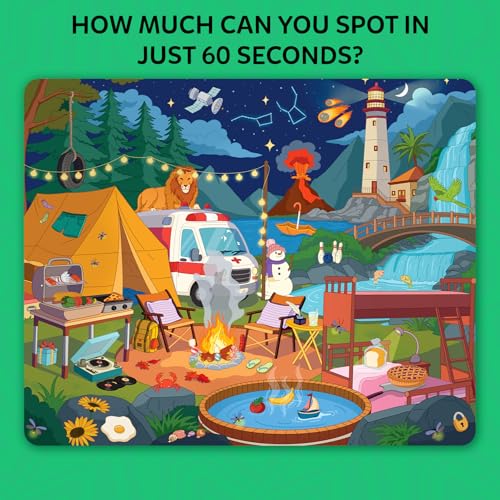
Skillmatics Board & Card Game – Who Saw What? in 60 Seconds, Memory Game for Kids, Teens & Adults, Fast-Paced Family Game Night Fun, Quick-Thinking Party Game, Gift for Ages 7, 8, 9 & Up
- THRILLING MEMORY SHOWDOWN: A lightning-fast challenge where your brain is on the clock! You get 60 seconds to
- INCLUDES: 75 Letter Cards, 20 Picture Cards (1000+ Objects), 1 Sand Timer, and an Instruction Manual.
- HOW TO PLAY: One player acts as the watchdog and flips open a picture for everyone to see and the countdown be
The Who Saw What? memory game is a standout here. Players study a detailed picture for 60 seconds, then race to recall as many objects as possible. It's laugh-out-loud competitive, works for mixed ages, and directly exercises visual memory and attention to detail.
Similarly, Skillmatics Rapid Rumble challenges players to shout category answers against the clock — building verbal fluency, general knowledge retrieval, and quick thinking simultaneously. With over 4,000 reviews and a 4.7-star rating, it's clearly a family favourite.
Why Timed Pressure Helps (in the Right Dose)
Mild time pressure activates the brain's arousal systems without triggering the kind of anxiety that shuts thinking down. This is the "Goldilocks zone" of cognitive challenge — hard enough to stretch, manageable enough to succeed. Games naturally calibrate this because players keep returning until they improve.
4. Real-World Life Skills: The Gap Schools Don't Fill
Here's an uncomfortable truth: most secondary school curricula teach teenagers almost nothing about how to actually function as an adult. How to read a food label, understand a tax form, manage a credit card, or navigate a lease — these are skills most teens pick up (or don't) by accident.
The World Health Organization (WHO) has long advocated for life skills education as a core component of adolescent development, defining it as "the abilities for adaptive and positive behaviour that enable individuals to deal effectively with the demands and challenges of everyday life."
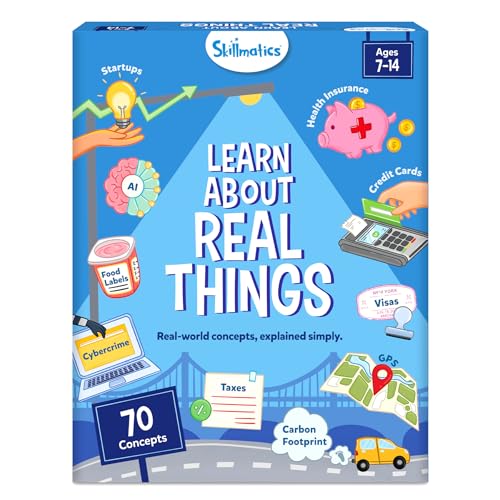
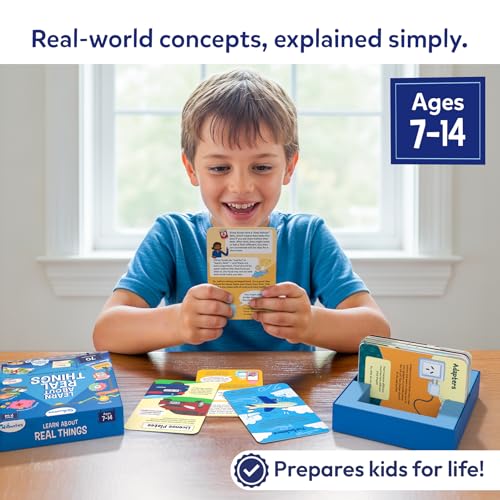
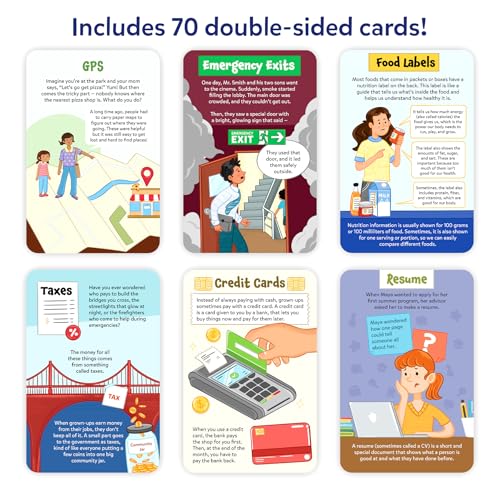
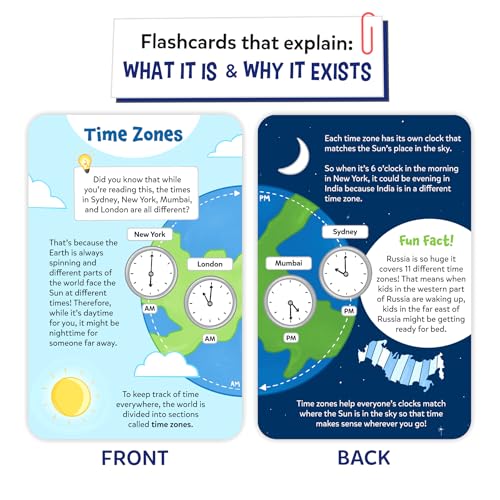
Skillmatics Learn About Real Things – 70 Real-World Learning Flashcards for Kids, Essential Life Skills & Everyday Concepts, Screen-Free Educational Activity & Gift for Ages 7–14
- LEARN ABOUT REAL THINGS: A first-of-its-kind flashcard set that introduces kids to essential real-world topics
- 70 THOUGHTFULLY DESIGNED CARDS: Includes 70 double-sided cards that explain everyday concepts clearly, helping
- TOPICS KIDS AREN’T USUALLY TAUGHT IN SCHOOL: Covers practical subjects like taxes, food labels, credit cards,
This is exactly the gap that Skillmatics Learn About Real Things flashcards are designed to fill. The 70-card set covers practical concepts like taxes, food labels, credit cards, time zones, and allergies — using clear language and relatable examples. For parents who want their teen to be genuinely prepared for adult life, this is a resource worth keeping on the kitchen table.
5. Geography, Culture, and Global Awareness
In an increasingly interconnected world, geographic literacy and cultural awareness are genuine life skills. Teens who understand the world beyond their immediate experience are better equipped for university, work, and citizenship.
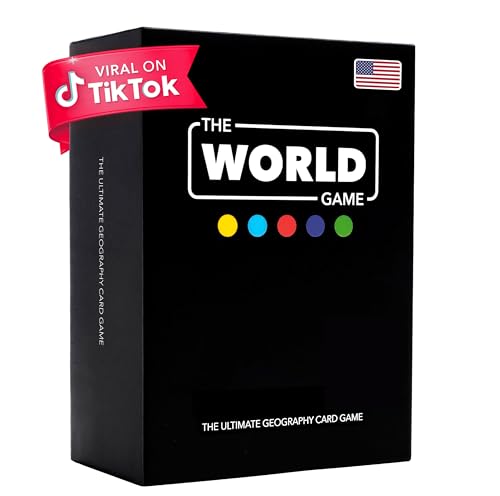
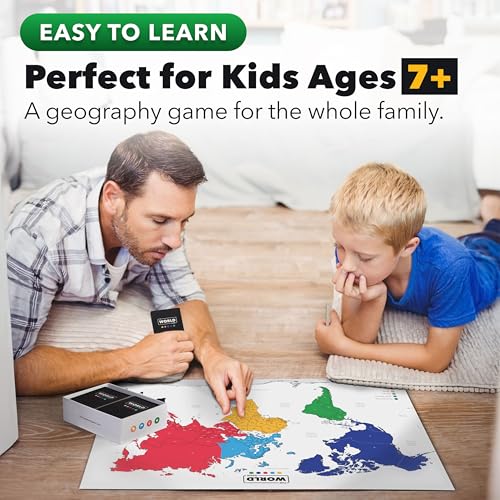
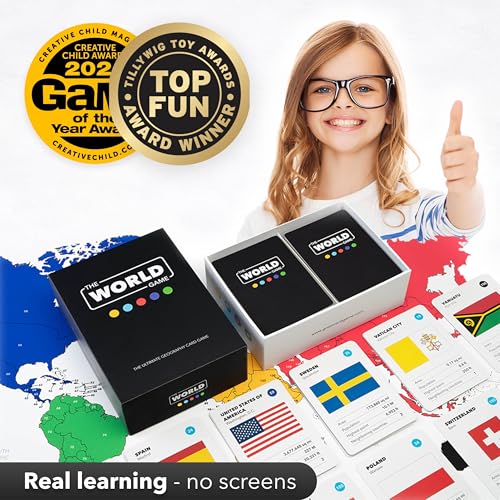
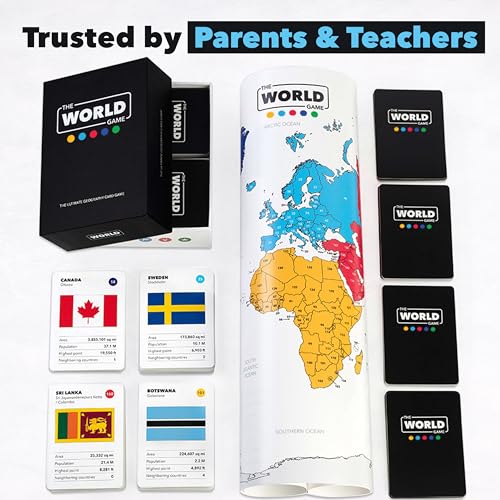
The World Game - Geography Card Game - Educational Games for Kids, Family and Adults - Cool Learning Gift Idea for Teenage Boys & Girls 8-12 with Map
- Flags, Capitals & Location - Show the country on the map, recognize the flags of the world or name the capital
- Family Board Game - Find the strongest fact about the country and win. Train your memory and brain while havin
- For Kids & Adults - For all stages of knowledge. One of the best educational board games for kids 8-12. Smart
The World Game geography card game covers all 194 countries — flags, capitals, and map locations — in a format that's genuinely competitive and fun. With a 4.6-star rating from nearly 3,000 reviewers, it's one of the most-loved educational games for this age group. The included world map adds a visual anchor that helps spatial memory.
Pair The World Game with current events discussions: when a country comes up in the game, spend two minutes talking about what's happening there in the news. This bridges game-based learning with real-world relevance in a way that sticks.
6. Trivia, General Knowledge, and the Joy of Knowing Things
General knowledge is often dismissed as "useless facts," but cognitive science tells a different story. A broad base of background knowledge — what researchers call "crystallised intelligence" — is one of the strongest predictors of reading comprehension, academic achievement, and lifelong learning capacity.

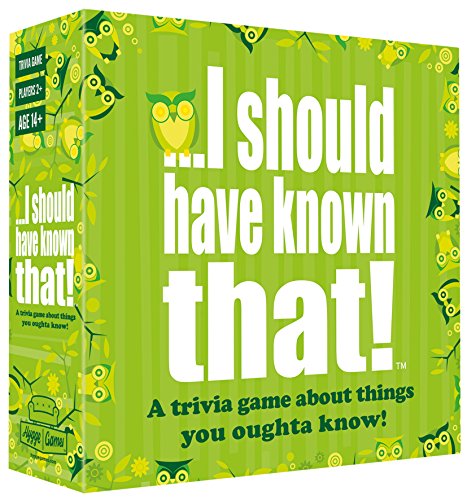

I should have known that! - A Trivia Game About Things You Oughta Know, Green
- Package Quantity :1
- In contrast to traditional trivia formats, you don't receive points for answering questions correctly. Instead
- Contains 110 cards with more than 400 questions about things that you should know
I Should Have Known That! trivia game flips the traditional trivia format in a clever way: instead of earning points for correct answers, you lose points for wrong ones. This creates a fascinating psychological dynamic — players become more thoughtful, less impulsive, and genuinely reflective about what they know versus what they think they know. With over 34,000 reviews and a 4.5-star rating, it's one of the most-played trivia games on the market.
7. Comparison: Best Game Types for Teen Learning Goals
| Game Type | Best Learning Goal | Cognitive Skills Targeted | Best Group Size | Recommended Product | Price Range |
|---|---|---|---|---|---|
| Math dice game | Numeracy & mental arithmetic | Calculation speed, pattern recognition | 2–4 players | Matrix Dice Game | ~$22 |
| Life skills flashcards | Real-world adulting knowledge | Practical literacy, financial awareness | Solo or family | Skillmatics Real Things | ~$15 |
| Memory picture game | Attention & visual recall | Working memory, observation | 3–6 players | Who Saw What? | ~$20 |
| Category speed game | Verbal fluency & general knowledge | Retrieval speed, broad knowledge | 2–6 players | Rapid Rumble | ~$20 |
| Geography card game | Global awareness & spatial memory | Cultural literacy, map reading | 2–4 players | The World Game | ~$25 |
| Trivia penalty game | General knowledge & intellectual humility | Crystallised intelligence, reasoning | 2–6 players | I Should Have Known That! | ~$18 |
Expert Insights
The Bigger Picture
The teenage years can feel like a long goodbye — your child becoming someone you're still getting to know. But they're also one of the richest opportunities you'll ever have to shape how a young person thinks, what they know, and how they engage with the world.
The research is clear: teens who play, explore, and stay curious alongside engaged adults become more resilient, more empathetic, and more capable adults themselves. You don't need a curriculum. You need a Wednesday evening, a cleared kitchen table, and a game that makes everyone forget to check their phones.
The best thing you can do for your teen's learning is make it something you do together.
Save this guide, share it with a co-parent or grandparent, and pick one game to try this week. Small, consistent investments in shared learning pay dividends that last a lifetime.
Sources & References
- National Institute of Mental Health (NIMH). "The Teen Brain: 7 Things to Know." 2020. https://www.nimh.nih.gov/health/publications/the-teen-brain-7-things-to-know
- American Academy of Pediatrics (AAP). "The Power of Play: A Pediatric Role in Enhancing Development in Young Children." Pediatrics, 2018. https://doi.org/10.1542/peds.2018-2058
- World Health Organization (WHO). "Life Skills Education for Children and Adolescents in Schools." 1994, reaffirmed in subsequent adolescent health frameworks. https://www.who.int/publications/i/item/9241544546
- Mayer, R.E. & Johnson, C.I. "Revising the Redundancy Principle in Multimedia Learning." Journal of Educational Psychology, 2008. (foundational game-based learning research)
- Wouters, P., van Nimwegen, C., van Oostendorp, H., & van der Spek, E.D. "A Meta-Analysis of the Cognitive and Motivational Effects of Serious Games." Journal of Educational Psychology, 2013. https://doi.org/10.1037/a0031311
- Mayer, R.E. "Computer games in education." Annual Review of Psychology, 2019. https://doi.org/10.1146/annurev-psych-010418-102744
- Diamond, A. "Executive Functions." Annual Review of Psychology, 2013. https://doi.org/10.1146/annurev-psych-113011-143750
- Jensen, F.E. & Nutt, A.E. The Teenage Brain: A Neuroscientist's Survival Guide to Raising Adolescents and Young Adults. HarperCollins, 2015.
- Hirsch, E.D. Jr. The Knowledge Deficit. Houghton Mifflin, 2006.
- Randel, J.M., Morris, B.A., Wetzel, C.D., & Whitehill, B.V. "The effectiveness of games for educational purposes: A review of recent research." Simulation & Gaming, 1992. (landmark review on game-based learning efficacy)
Frequently Asked Questions
My teen thinks games are "for kids." How do I get them interested?
How much time should a teenager spend on learning-focused play each week?
Are board games actually effective for learning, or is this just marketing?
My teen is a high achiever academically but has no interest in anything outside school. Should I be worried?
What life skills should my teenager have by age 17?
Can family game nights actually improve my relationship with my teenager?
How do I choose between a competitive game and a cooperative one for my teen?
Was this helpful?
Thanks — your feedback helps us pick what to write next.