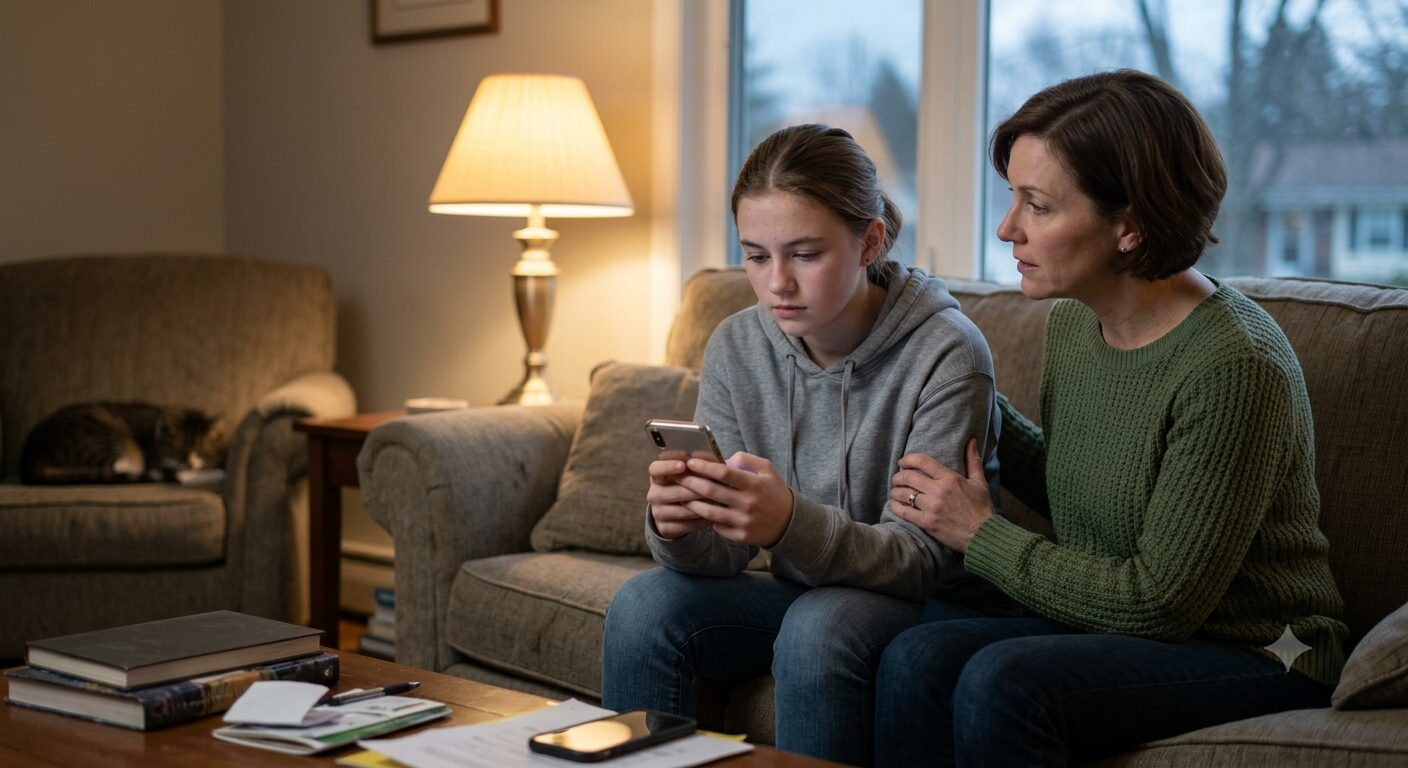
Teen Mental Health This Summer: A Family Support Guide
Summer can be a genuinely healing season for teen mental health, but only if families create structure, connection, and open conversations rather than leaving teens to drift through unscheduled weeks.
In this article
Summer looks like the easy part of the year. No homework, no 6am alarms, no social pressures baked into every school day. And yet, every September I see families who tell me some version of the same story: "She seemed fine in June, but by August we barely recognised her." The American Psychological Association reports that roughly 20 percent of adolescents in the United States meet criteria for a mental health disorder at any given time, and many of those teenagers will tell you that summer, far from being a relief, left them feeling unmoored and increasingly low. Without the scaffolding of school, the quiet anxieties that a busy timetable kept at bay suddenly have room to grow.
This guide is for parents who want to do more than hope for the best. By the time you finish reading, you'll understand:
1. Why Summer Is a Hidden Risk Season for Teen Mental Health
Summer is not automatically good for teenagers, and understanding why matters before you try to fix anything.
School, for all its stresses, does something important: it provides predictable structure. Your teenager wakes at the same time, sees the same people, knows roughly what each hour holds. That predictability is genuinely regulating for the adolescent nervous system. When it vanishes overnight, many teens struggle more than either they or their parents expect. Research published in the Journal of Abnormal Child Psychology found that depressive symptoms in adolescents tend to increase over summer months, particularly in teens who already carry some vulnerability. The researchers described the effect as a "summer slump" in mood, mirroring the way some adults experience seasonal low periods.
There are several overlapping reasons this happens.
Sleep disruption hits harder than parents realise
Teenagers have a biological shift in their circadian rhythm that pushes their natural sleep window later, roughly 11pm to 9am for many adolescents. During the school year, an alarm forces an earlier wake time. In summer, that external cue disappears. Teens drift later and later, accumulating what sleep researchers call social jetlag. Chronic sleep disruption, even mild sleep disruption, is one of the most reliable predictors of low mood and anxiety in young people. You can read more about the biology behind this in our guide to teenage sleep, which covers what actually helps teens shift their sleep window without a battle.
Loss of social connection stings
Not every teenager is visibly social, but most of them get a meaningful dose of peer contact during the school day without having to arrange it. In summer, social connection becomes effortful. It requires planning, transport, and for some teenagers, more initiative than their current mood allows. Social withdrawal and low mood form a particularly vicious cycle: the lower your mood, the less you feel like reaching out, and the less you reach out, the lower your mood falls.
A loss of purpose and identity
School gives teenagers a role. In summer, that role disappears. This sounds minor but it isn't. Adolescence is fundamentally a period of identity formation, and a teenager who has lost their daily structure can find themselves asking uncomfortable questions about who they are when nobody is watching. That existential uncertainty is normal, but it can tip into anxiety or low mood when it goes unaddressed.
What you can do today: Before summer is in full swing, sit down with your teenager and map out what a week could look like. Not a rigid schedule, just a loose skeleton: consistent wake and sleep times, meals together when possible, and one activity per day that gets them out of their room.
2. The Conversations That Actually Help (and the Ones That Backfire)
Talking to your teenager about how they're feeling is the single most important thing you can do for their mental health this summer, but the how matters enormously.
Most well-meaning parents make a version of the same mistake. They see their teenager looking low and open with something like "Are you okay? You seem depressed." The teenager shuts down, the parent feels helpless, and the moment is lost. The problem isn't the concern, it's the framing. Closed questions, diagnostic language, and conversations that feel like interrogations tend to produce monosyllabic answers and a teenager who takes more care to hide how they're feeling next time.
Start with observation, not diagnosis
The most effective opening is one that shows you've noticed without attaching a label. Something like: "You've seemed quieter this week. I'm not worried, I just want to check in. What's been on your mind?" That approach communicates care without making your teenager feel like a clinical case. It also gives them room to direct the conversation rather than feeling pinned down.
Use side-by-side time
Research from the University of Rochester found that adolescents are significantly more likely to open up to parents during shared activities than during face-to-face conversations explicitly framed as "talks." Car journeys, cooking together, walking the dog, folding laundry. Any activity where you're side by side and neither of you has to make sustained eye contact tends to lower the social anxiety around difficult topics and lets conversation emerge naturally.
What to avoid
What you can do today: The next time you're in the car or cooking together, resist the urge to ask "how are you?" and instead share something small about your own day. Emotional openness from you tends to invite emotional openness in return.
3. Building a Summer Routine That Protects Mental Health
You don't need to schedule every hour of your teenager's summer. But the evidence is clear that some structure, particularly around sleep, movement, and social connection, makes a significant difference to how teenagers feel over the long weeks of June through August.
Think of it less as a timetable and more as four anchors.
Anchor 1: Consistent sleep and wake times
Even a rough sleep schedule, going to bed and waking within a one-hour window each day, does more for teenage mood than most parents realise. The goal isn't perfect sleep, it's reducing the social jetlag that builds up when teens sleep until noon on weekdays and then wonder why they feel flat and unmotivated by mid-afternoon. Understanding the biological reasons teenagers struggle with sleep can help you have this conversation with less friction at home.
Anchor 2: Daily movement
The evidence base here is robust. A meta-analysis published in the British Journal of Sports Medicine found that aerobic exercise produced significant reductions in depression and anxiety symptoms in adolescents. The effect size was comparable to some forms of psychotherapy. The dose doesn't have to be intense. A 30-minute walk counts. Swimming, cycling, dancing, even a casual kick around in the garden. What matters is that it happens daily and ideally involves being outdoors.
Anchor 3: Social contact
Aim for at least one meaningful in-person social interaction several times a week. Not a quick wave at the shops. A sustained interaction where your teen is genuinely engaged with another person, a friend, a relative, a coach. For more introverted teenagers who insist they prefer to be alone, even a weekly event they attend with another person can be enough to prevent the social withdrawal spiral.
Anchor 4: A sense of purpose
This can be almost anything. A summer job. Volunteering. Learning a skill. Looking after a pet. The content matters less than the sense that the summer has some meaning beyond Netflix. Teenagers who feel they are contributing to something or working toward something consistently report better mood than those who don't.
What you can do today: Pick one anchor that is currently missing from your teenager's summer and have a conversation about how to add it. Frame it as planning together, not as a prescription from parent to child.
4. Recognising Warning Signs Before They Become a Crisis
Most mental health problems in teenagers don't arrive suddenly. They build gradually over weeks, and the early signs are easy to misread as typical teen behaviour. Knowing what to watch for means you can act earlier, when support is most effective and least disruptive.
Signs that warrant a closer look
These are not causes for panic, but they are signals to turn toward rather than away from:
The signs that require immediate action
If your teenager expresses thoughts of suicide, self-harm, or makes statements that suggest they see no future for themselves, treat this as an emergency. In the US, you can call or text 988, the Suicide and Crisis Lifeline, at any time. In the UK, PAPYRUS (0800 068 4141) and the Samaritans (116 123) both provide immediate support for young people in crisis.
The role of mood tracking
One practical tool worth introducing early in the summer, before any crisis, is a structured mood journal. When teenagers track their mood daily, even briefly, it serves two purposes. First, it gives you and them a more objective picture of how things are trending over time. Second, the act of naming emotions has been shown by neuroscience research from UCLA to reduce the intensity of those emotions. There is something genuinely calming about finding the word for what you're feeling.


Mood Tracker Diary: Mental Health journal For Teens - Track Mood, Ease Anxiety, Set Goals, Promote Positive Thinking & Gratitude.
- Health, Fitness & Dieting
- Mental Health
- Image Unavailable Image not available forColor:
What you can do today: Have a conversation with your teenager now, in a calm moment rather than a worried one, about what they would want you to do if they were struggling. Ask them. Most teenagers have a clear preference, and knowing it in advance makes it easier for them to reach out.
5. Practical Tools: Journals, Workbooks, and Skills Your Teen Can Use at Home
Professional support is sometimes necessary and always worth accessing when it's needed. But the gap between "I notice something is off" and "we have our first appointment" can be weeks or months. In that space, and alongside any professional support, there are genuinely useful tools that teenagers can engage with at home.
CBT based resources
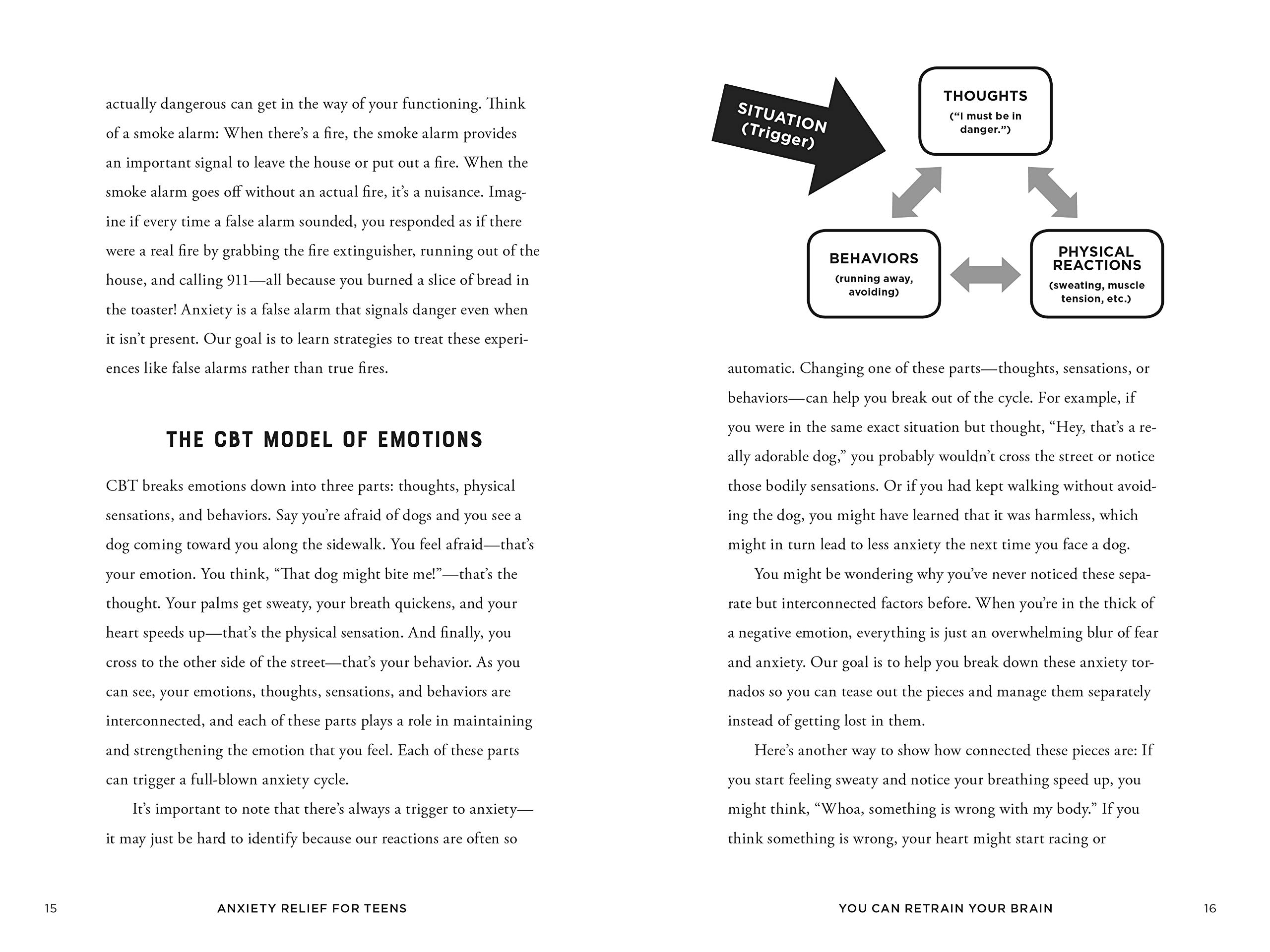
Cognitive Behavioural Therapy (CBT) is the most thoroughly researched psychological treatment for anxiety and depression in adolescents. Its core idea is straightforward: the way we think about events shapes the way we feel and behave, and we can learn to notice and change unhelpful thought patterns. Several high quality resources translate CBT skills into formats teenagers can use independently.


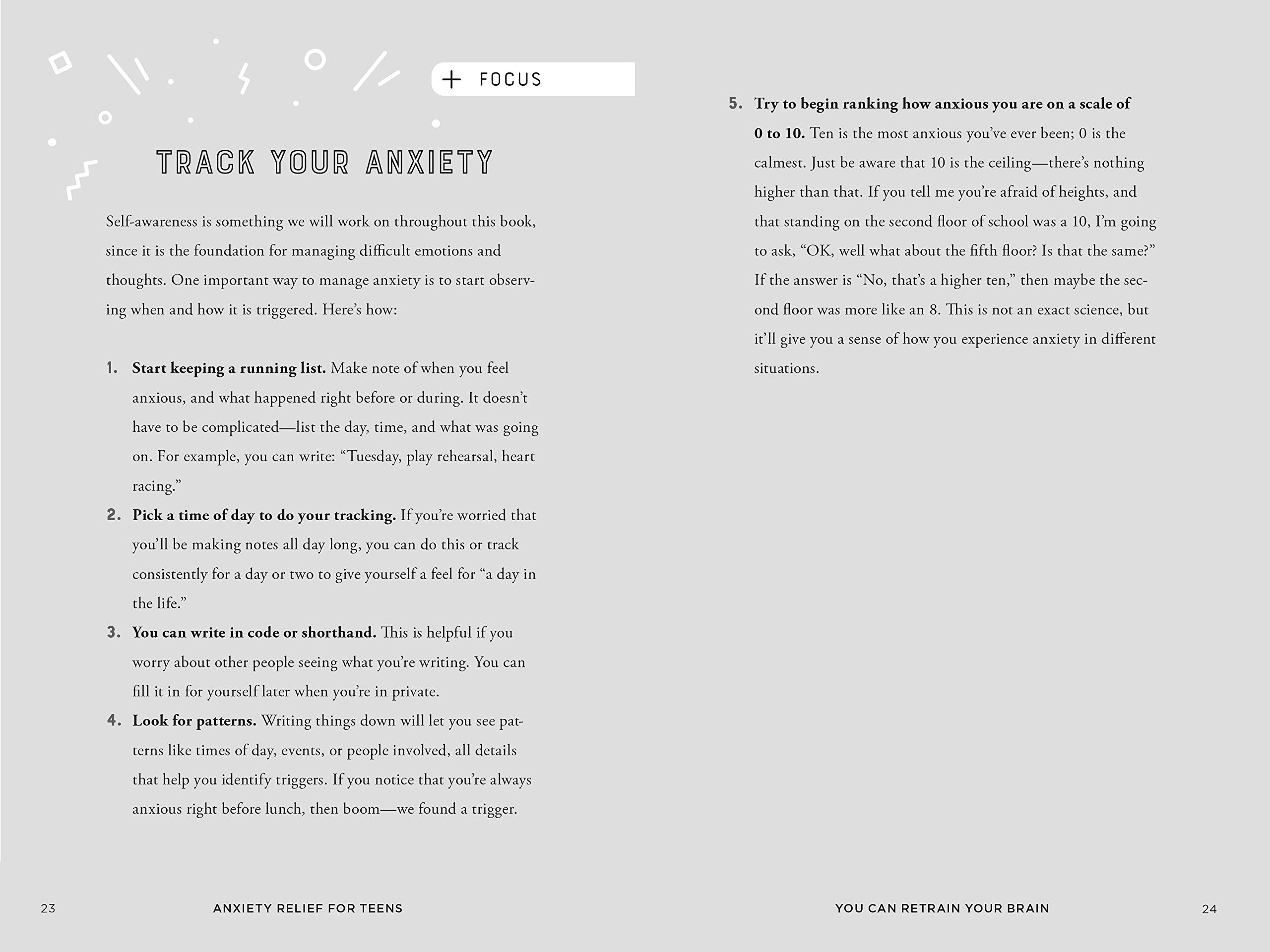

Anxiety Relief for Teens: Essential CBT Skills and Mindfulness Practices to Overcome Anxiety and Stress
- Teen & Young Adult
- Personal Health
- Depression & Mental Health
A workbook like the one above, rated 4.6 stars across nearly 3,000 reviews, walks teenagers through the kind of skill building that would typically happen in a therapist's office: identifying anxiety triggers, challenging catastrophic thinking, practising grounding techniques. For a teenager who is resistant to the idea of "seeing someone," a book that teaches the same skills can be a lower-pressure entry point.


Let That Shit Go Anxiety Journal For Teens: Funny Stress Relief And Anti Anxiety Journal, Mental Health Guided Journal For Self-Reflection, Mental ... Thoughtful Gifts For Teens With Anxiety
- Stress Management
- Image Unavailable Image not available forColor:
- Anxiety Management
Sometimes the tone matters as much as the content. A journal with a lighter, less clinical voice can reach teenagers who would run a mile from anything that looks like a self-help textbook. The straightforward, slightly humorous framing of some of the newer anxiety journals makes them much more likely to actually be used.
Structured journals for mood tracking
There's an important difference between a diary (write whatever you feel) and a structured mood journal (guided prompts that help you notice patterns). For teenagers who are not naturally reflective writers, the guided format is almost always more useful. Look for journals that include prompts around emotional triggers, physical sensations, and one small positive observation each day.



Worry for Nothing: Guided Anxiety Journal, Cognitive Behavioral Therapy Mental Health Journal, Anxiety Relief & Self Care, Journal for Men & Women, Mental Health Gifts
- IMPROVES MENTAL HEALTH: Use this journal to improve mindfulness, uncover triggers, track physical and emotiona
- PERFECTLY DISCREET: Finally a wellness journal that doesn’t spell out “worry” or “anxiety” on the cover. This
- BACKED BY RESEARCH: The exercise in this journal is backed by Cognitive Behavioral Therapists who use these pr
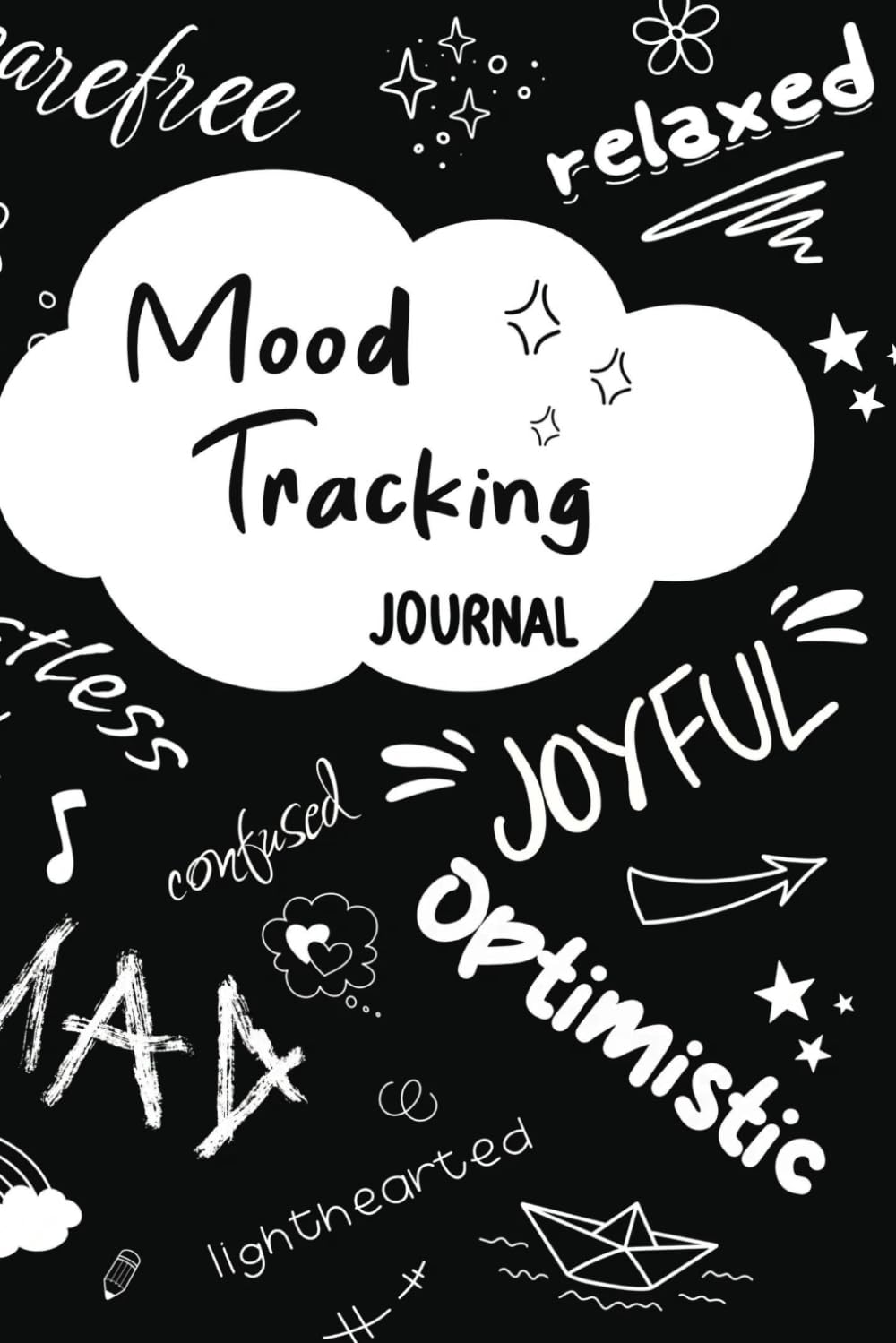
Mood Tracker Journal: Daily Mental Health Diary with Prompts for Teen Girls, Boys and Young Adults: Including activities to relieve anxiety, manage ... and practice positive thinking & gratitude
- Teen & Young Adult
- Personal Health
- Depression & Mental Health

Daily Mood Tracker Journal: Mental Health & Wellness Diary to Address Anxiety & Depression in Teen Girls & Boys & Adult Women & Men
- Health, Fitness & Dieting
- Mental Health
- Image Unavailable Image not available forColor:
Digital tools and apps
Apps like Woebot (CBT-based chatbot), Headspace (mindfulness), and Calm (sleep and relaxation) all have solid evidence bases and are well suited to teenagers who engage better with screens than paper. None of them replace human connection or professional care, but they can be a meaningful supplement.
What you can do today: If your teenager is willing, look at one of the resources above together. Frame it not as "you need help" but as "this is something I thought we could try, it's actually interesting."
6. When to Get Professional Help and How to Make It Happen
Knowing when family support is enough, and when it isn't, is one of the most important calls you'll make as a parent.
The answer depends less on a specific symptom and more on duration, intensity, and impairment. As a general clinical rule: if your teenager has been struggling for two weeks or more, if the distress is interfering with their daily functioning (sleep, eating, relationships, basic self care), or if you are worried about their safety, it's time to involve a professional. This is not a sign of failure. It is the right move made at the right time.
Where to start
In the US, your teenager's paediatrician is almost always the right first call. We can screen for depression and anxiety, rule out any physical causes, and make a warm referral to a child and adolescent mental health professional. In the UK, you can go through your GP for a CAMHS referral, or if waiting lists are long (and they often are), charities like YoungMinds provide immediate online support and guidance for parents.
Getting your teenager on board
The biggest practical obstacle is often not finding a professional, it's convincing your teenager that it's worth trying. A few things help here:
When a teenager knows that at least one adult sees them clearly and believes in them, outcomes improve dramatically, even in serious cases.
— National Institute of Mental Health (2022)
The research on parent-teen relationships is consistent on this point: teenagers who feel securely connected to a parent or caregiver engage more readily with professional support, follow through more reliably, and recover faster. Your relationship isn't peripheral to the treatment. It is part of it.
What you can do today: Look up your teenager's paediatrician's number or your GP's out-of-hours line and save it in your phone. You don't need to call today, but having it ready removes one barrier in a moment of crisis.
7. Keeping Connection Alive When Your Teenager Pushes You Away
One of the cruellest features of adolescent mental illness is that it tends to push away the people who can help most. A depressed teenager becomes harder to reach at the exact moment they most need to be reached. A teenager in the grip of anxiety may snap at you, withdraw, or seem actively hostile. Understanding that this is the illness expressing itself, not your teenager rejecting you, is the foundation of staying connected.
The push-pull is normal and biological
Understanding why the teenage brain processes the world differently makes the push-pull of this period easier to navigate without taking it personally. The adolescent brain is in the middle of a major restructuring process, with the regions governing emotion, reward, and social sensitivity developing ahead of the regions governing impulse control and perspective-taking. Your teenager is not being difficult on purpose. They are neurologically primed to be intensely affected by their emotional world and not fully equipped to manage it.
Staying in the room
The most important thing is to keep showing up even when you're being pushed away. This doesn't mean ignoring your teenager's need for space. It means being reliably present and available rather than withdrawing in hurt or frustration when they're difficult to be around.
Small, consistent acts of connection matter more than grand gestures:
When the pushing becomes too much
If your teenager is consistently hostile, refusing to engage at all, or if family conflict has escalated to the point where ordinary home life feels impossible, family therapy is worth exploring. A family therapist doesn't take sides or assign blame. They help family members hear each other in a space where the usual patterns of argument don't automatically kick in. It can change the dynamic remarkably quickly.
What you can do today: Think of one small shared ritual you've let slip this year. A walk, a meal, a show, anything. Text your teenager today and suggest you bring it back.
| Support Tool | Best For | Key Benefit | Main Limitation | Recommended Product | Price Range |
|---|---|---|---|---|---|
| CBT workbook | Teens with anxiety or low mood who are willing to engage with structured exercises | Teaches real CBT skills; evidence based content | Requires motivation and sustained effort | Anxiety Relief for Teens | ~$8 |
| Guided anxiety journal | Teens who resist formal self-help but will write informally | Low pressure, accessible tone; builds self awareness | Less structured than CBT workbooks | Let That Shit Go journal | ~$12 |
| Structured mood tracker | Teens whose moods fluctuate and who benefit from pattern recognition | Tracks triggers and physical sensations over time | Works best with consistent daily use | Mood Tracker Diary | ~$10 |
| CBT-style worry journal | Older teens or teens with persistent anxious thinking | Backed by practising CBT therapists; discreet cover | More clinical; may feel heavy for younger teens | Worry for Nothing journal | ~$15 |
| Daily mood diary with prompts | Teens new to journalling who need lots of guidance | Built-in activities and positive thinking exercises | Limited depth for teens with more complex needs | Mood Tracker Journal with prompts | Not listed |
| General wellness diary | Teens or parents tracking mental health over a longer period | Flexible; can be used by teen or parent | Less teen-specific in design | Daily Mood Tracker Journal | Not listed |
Expert Insights
Conclusion
Summer won't fix your teenager's anxiety or depression, but it can be a genuine turning point if you use it well. The evidence comes down to one clear truth: teenagers do better when they feel seen, consistently connected to at least one adult who isn't easily scared off by what they share, and anchored by enough routine to give the days some shape and purpose. You don't have to get this perfect. You don't need to become a therapist or craft an ideal schedule or find the right words every single time. You just have to keep showing up, keep the conversations as open as they can be, and trust your instincts when something doesn't feel right.
The one sentence worth writing on a Post-it and sticking somewhere visible this summer: "Your teenager doesn't need you to fix everything. They need to know you'll still be there when you can't."
If this was useful, save it, share it with another parent who might need it, or subscribe to tinymindsworld.com for more clinically grounded guidance written for real families.
Sources & References
- American Psychological Association. "Stress in America: Generation Z." 2018. apa.org/news/press/releases/stress
- Ginsburg, K.R., and Jablow, M.M. "Building Resilience in Children and Teens." American Academy of Pediatrics, 2020.
- Merikangas, K.R., et al. "Lifetime Prevalence of Mental Disorders in U.S. Adolescents: Results from the National Comorbidity Survey Replication–Adolescent Supplement (NCS-A)." Journal of the American Academy of Child and Adolescent Psychiatry. 2010; 49(10): 980-989.
- Rao, U. "Depressive Disorders in Children and Adolescents." Dialogues in Clinical Neuroscience. 2013; 15(2): 187-197.
- Biggs, S.N., et al. "Social Jetlag in Adolescents." Sleep Medicine. 2020.
- Larun, L., et al. "Exercise in Prevention and Treatment of Anxiety and Depression Among Children and Young People." Cochrane Database of Systematic Reviews. 2006.
- Carter, T., et al. "The Effect of Exercise on Depressive Symptoms in Adolescents: A Systematic Review and Meta-Analysis." Journal of the American Academy of Child and Adolescent Psychiatry. 2016; 55(7): 580-590.
- Lieberman, M.D., et al. "Putting Feelings into Words: Affect Labeling Disrupts Amygdala Activity in Response to Affective Stimuli." Psychological Science. 2007; 18(5): 421-428. UCLA.
- National Institute of Mental Health. "Teen Brain: 7 Things to Know." 2020. nimh.nih.gov
- Damour, L. "Under Pressure: Confronting the Epidemic of Stress and Anxiety in Girls." Simon and Schuster, 2019.
- Child Mind Institute. "Anxiety in Teens." childmind.org. Accessed 2024.
- YoungMinds UK. "Parents Helpline and Resources." youngminds.org.uk. Accessed 2024.
- Substance Abuse and Mental Health Services Administration (SAMHSA). "988 Suicide and Crisis Lifeline." 988lifeline.org. Accessed 2024.
- PAPYRUS UK. "HopeLineUK." papyrus-uk.org. Accessed 2024.
Frequently Asked Questions
My teenager says they're fine but they don't seem fine. Should I push the conversation?
How much of this is normal teenage behaviour and how much is a mental health concern?
My teenager is resistant to anything that involves talking about feelings. What else can I try?
Is screen time making my teenager's mental health worse this summer?
Should I tell my teenager's school about their mental health struggles over summer?
What are the most accessible mental health resources for teenagers in the US and UK?
Can a journal or workbook really make a difference to teen mental health?
Was this helpful?
Thanks — your feedback helps us pick what to write next.