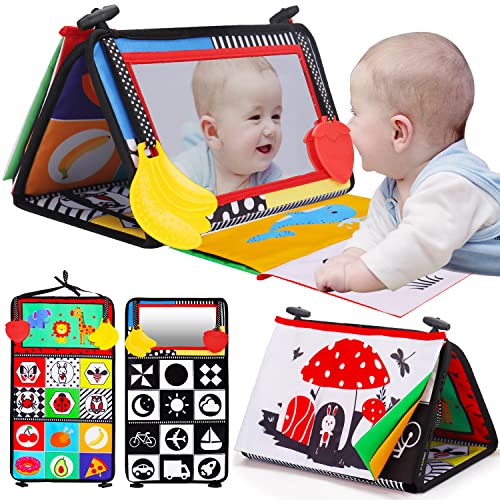
Your Baby's Emotional Milestones: What to Expect Month by Month
Between 3 and 12 months, your baby's emotional world explodes — from basic comfort-seeking to recognisable joy, fear, and frustration — and how you respond in these early months literally shapes the neural architecture behind lifelong emotional health.

In this article
Picture this: it's 4 a.m., your four-month-old has been crying for 40 minutes, you've fed, changed, and rocked them — and you still have no idea what they need. That helplessness is universal, and it has a scientific context. According to the American Academy of Pediatrics (AAP), the first year of life represents the most rapid period of brain development a human being will ever experience, with more than one million new neural connections forming every second in the early months. The emotions your baby expresses — and the way you receive them — are not random noise. They are the raw material of a developing mind.
This guide will help you understand:
1. Your Baby's Emotional Milestones: What to Expect Month by Month
Your infant is not a blank slate — they arrive with a primitive emotional toolkit and spend the first year rapidly expanding it. Knowing what's developmentally on schedule saves enormous parental anxiety.
3–5 Months: The Social Smile and Beyond
By 3 months, most babies produce genuine social smiles — smiles triggered by a human face rather than gas. This is the first clear signal that your baby is emotionally engaged with the world. You'll also notice early cooing and "proto-conversations", where your baby pauses and waits as if expecting you to reply. These exchanges are the embryonic form of emotional communication.
Around 4–5 months, laughter emerges — often triggered by peek-a-boo or exaggerated facial expressions — and babies begin showing clear preferences for familiar caregivers over strangers.
6–9 Months: Social Referencing and Stranger Wariness
At roughly 6 months, a pivotal shift occurs: your baby starts social referencing — glancing at your face to gauge whether a new situation is safe. Walk toward an unfamiliar object with a relaxed expression and your baby will likely explore it; look alarmed and they'll pull back. This is not manipulation; it is sophisticated emotional intelligence in its earliest form.
Stranger wariness typically appears between 6 and 9 months. A baby who happily went to anyone at 3 months may now cry when handed to Grandma. This is a sign of healthy attachment, not regression.
9–12 Months: Separation Anxiety and Intentional Communication
Separation anxiety peaks between 8 and 10 months, as your baby's memory develops enough to know you exist when you're gone — but not yet mature enough to trust you'll return. Protest at your departure is neurologically appropriate and emotionally healthy.
By 10–12 months, babies use pointing, reaching, and vocalising to share emotional states intentionally — a skill developmental scientists call joint attention, which is a strong early predictor of language and social development.
To help your baby begin recognising and naming emotions, Making Faces: A First Book of Emotions is a wonderful board book to introduce from around 4 months — the bold, high-contrast faces are perfectly calibrated for infant vision.



Making Faces: A First Book of Emotions (Baby Loves Books)
- Children's Books
- Growing Up & Facts of Life
- Friendship, Social Skills & School Life
2. Decoding Your Baby's Cries: The Language Before Language
Crying is your infant's primary — and for many months, only — emotional language, and learning to read it is the single highest-leverage skill you can develop in the first year.
The Main Cry Types
While no cry-decoding system is perfect, research and clinical experience consistently identify these patterns:
- Hunger cry: Rhythmic, repetitive, low-pitched; often accompanied by rooting or hand-to-mouth movements - Tired cry: Whiny, nasal, and escalating; often paired with eye-rubbing or ear-pulling - Pain cry: Sudden, high-pitched, with a long initial shriek followed by silence, then another burst - Overstimulation cry: Fussy and hard to settle after a busy period; your baby may turn their head away from stimulation - Boredom/connection cry: Intermittent, more like calling than distress; stops quickly when you appear
When Crying Is a Red Flag
Contact your paediatrician promptly if your baby:
For a deeper dive into how the infant brain generates and processes these emotional signals, What's Going on in There? by neuroscientist Lise Eliot is the most accessible, research-grounded book available for parents.
3. Co-Regulation: Why Your Calm Is Your Baby's Calm
Co-regulation — the process by which a caregiver's regulated nervous system helps an infant regulate theirs — is arguably the most important concept in infant emotional development, and it's one most parents have never heard named.
Your baby's prefrontal cortex, the brain region responsible for emotional regulation, is profoundly immature for the entire first year (and, frankly, for the first two decades of life). Infants are neurologically incapable of self-soothing in any meaningful sense. What looks like self-soothing — thumb-sucking, rocking — is a primitive coping response, not true regulation.
What bridges the gap is you. When you hold a distressed baby against your chest, speak in a slow, low voice, and breathe calmly, you are literally lending your regulated nervous system to theirs through a process called physiological co-regulation. Heart rate, cortisol levels, and breathing patterns in infants synchronise with those of their caregivers — a phenomenon documented extensively in attachment research.
Practical Co-Regulation Strategies
- Skin-to-skin contact remains effective well beyond the newborn period; a fussy 7-month-old often calms fastest chest-to-chest - Prosodic voice — slow, melodic, slightly higher-pitched speech — activates calming circuits in the infant brain - Rhythmic movement (rocking, swaying, gentle bouncing) mirrors the vestibular sensations of the womb - Your own regulation first: if you are flooded with stress, take three slow breaths before picking up your baby — they will feel the difference


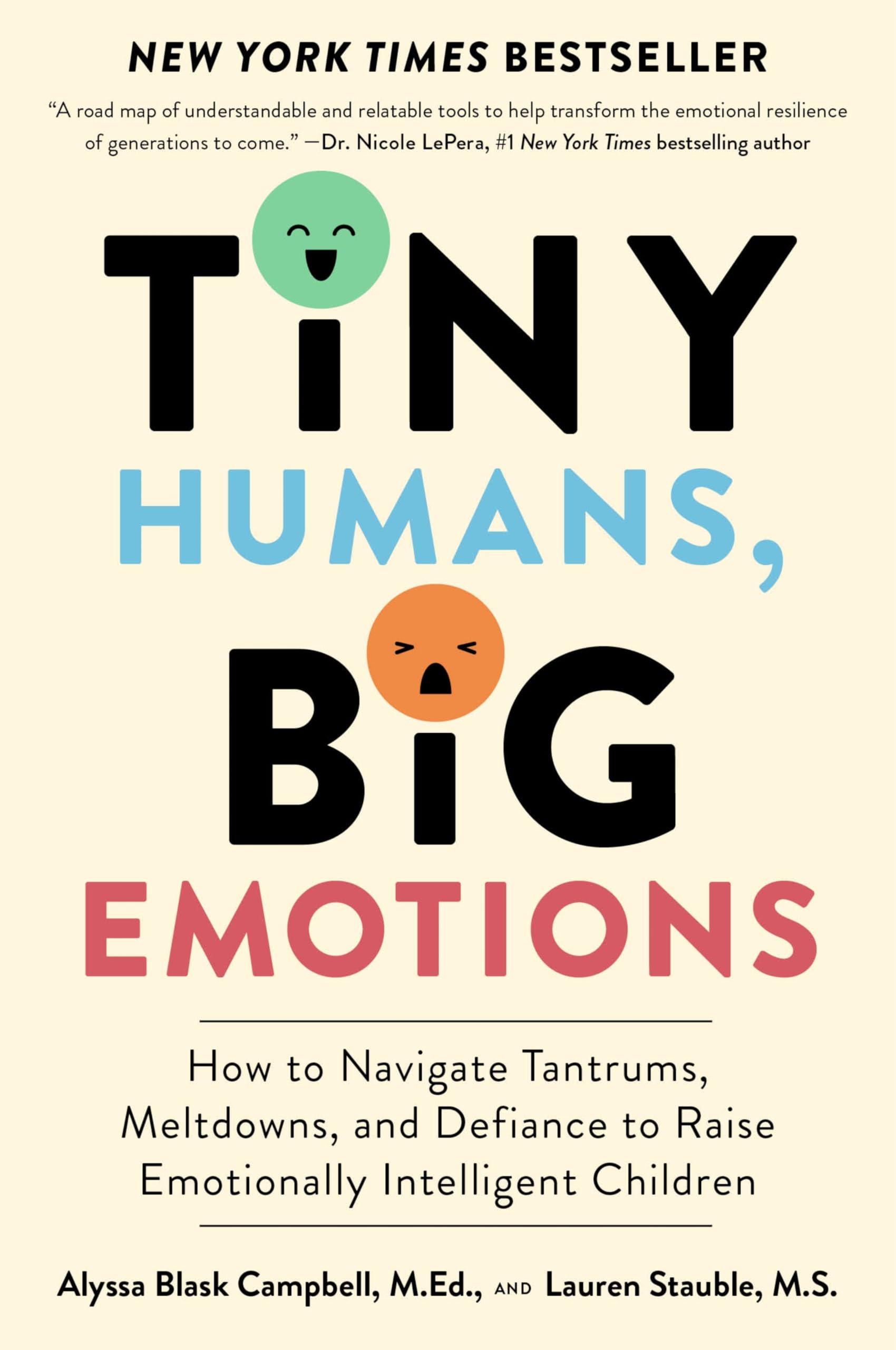

Tiny Humans, Big Emotions: How to Navigate Tantrums, Meltdowns, and Defiance to Raise Emotionally Intelligent Children―An Essential Guide for Caregivers of Children from Infancy to Age Eight
- Relationships
- Conflict Management
- Image Unavailable Image not available forColor:
The book Tiny Humans, Big Emotions by Alyssa Blask Campbell and Lauren Stauble is an excellent resource for understanding co-regulation from infancy through toddlerhood — it's warm, practical, and evidence-grounded.
4. Attachment: The Emotional Foundation Built in Year One
Secure attachment — the confident expectation that a caregiver will respond to distress — is not a parenting philosophy. It is a neurobiological outcome with measurable, long-term effects on mental health, relationships, and even physical health.
The Four Attachment Styles (and What Drives Them)
| Attachment Style | What It Looks Like in Infancy | Primary Driver | Long-Term Outlook | Recommended Resource |
|---|---|---|---|---|
| Secure | Distressed at separation, quickly soothed on return | Consistent, sensitive caregiving | Best outcomes across domains | Neurobehavioral & Social-Emotional Development |
| Anxious/Ambivalent | Highly distressed, hard to soothe on return | Inconsistent caregiver responsiveness | Higher anxiety risk | Tiny Humans, Big Emotions |
| Avoidant | Little visible distress; avoids caregiver on return | Consistently unresponsive caregiving | Emotional suppression patterns | What's Going on in There? |
| Disorganised | Contradictory, confused responses to caregiver | Frightening or unpredictable caregiving | Highest risk; warrants professional support | Neurobehavioral & Social-Emotional Development |
Research from the Minnesota Longitudinal Study of Risk and Adaptation — one of the longest-running attachment studies ever conducted — found that secure attachment at 12 months predicted significantly better social competence, emotional resilience, and academic engagement into adolescence.
For parents who want to understand the neuroscience behind attachment, The Neurobehavioral and Social-Emotional Development of Infants and Children provides a rigorous, clinician-level foundation.
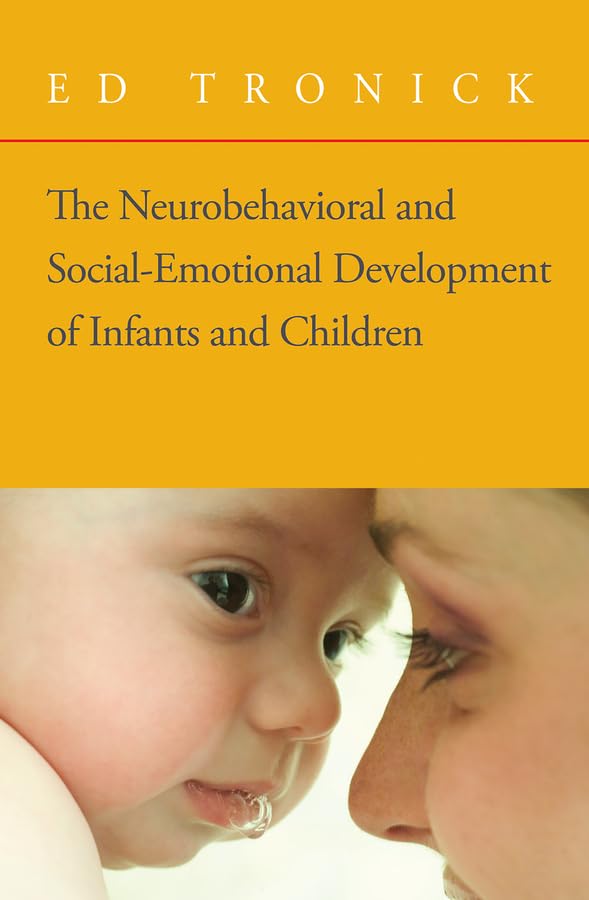

The Neurobehavioral and Social-Emotional Development of Infants and Children (Norton Series on Interpersonal Neurobiology)
- Medical Books
- Internal Medicine
- Pediatrics
5. Temperament: Why Your Baby Responds the Way They Do
Not all babies arrive with the same emotional "settings," and understanding your baby's temperament prevents a lot of unnecessary self-blame.
Developmental psychologists Thomas and Chess identified nine temperament dimensions in their landmark New York Longitudinal Study, which can be broadly grouped into three infant profiles:
The Three Broad Temperament Types
- Easy/Flexible (≈40% of babies): Regular routines, positive mood, adaptable to new experiences - Slow-to-warm (≈15%): Initially withdrawing, low intensity reactions, gradually adapts with repeated exposure - Feisty/Spirited (≈10%): Intense reactions, irregular patterns, slow to adapt; often described as "high-needs" - Mixed (≈35%): Combinations of the above, context-dependent
"Goodness of Fit"
The concept of goodness of fit — how well your parenting style matches your baby's temperament — is more predictive of emotional outcomes than temperament alone. A spirited baby with a calm, patient caregiver typically thrives; the same baby with an equally intense caregiver may struggle.
6. Everyday Practices That Build Emotional Intelligence from the Start
Emotional intelligence is not a trait your baby either has or doesn't — it's a skill set that grows through daily micro-interactions. Here are the practices with the strongest evidence base:
Serve-and-Return Interaction
The Center on the Developing Child at Harvard University identifies "serve-and-return" — responding to your baby's vocalisations, gestures, and expressions — as the single most important driver of healthy brain architecture. Every time your baby "serves" (babbles, reaches, makes a face) and you "return" (respond in kind), a neural connection is reinforced.
- ✓ Narrate your baby's emotions: "You're frustrated — that toy keeps moving away!" - ✓ Mirror facial expressions back with slight exaggeration - ✓ Pause and wait after your response — give them space to "reply" - ✓ Follow their lead on when to engage and when to rest
Emotion Labelling
Even before your baby understands words, hearing emotion labels ("you look so happy right now," "that was scary, wasn't it?") builds the neural pathways that will later support emotional vocabulary and self-regulation. Research published in Psychological Science found that children whose caregivers used more emotion language in infancy had significantly larger emotional vocabularies and better emotional understanding at age 5.
Books and Faces
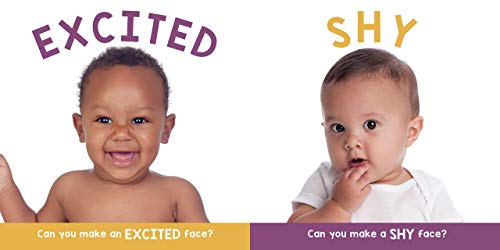
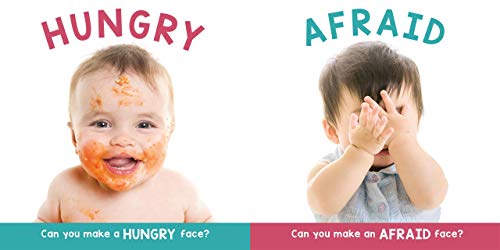
Face-focused books are a surprisingly powerful tool. Baby's Feelings: A First Book of Emotions and Making Faces: A First Book of Emotions both use clear, expressive faces that infants can process — and naming the emotions in the pictures counts as emotion labelling.
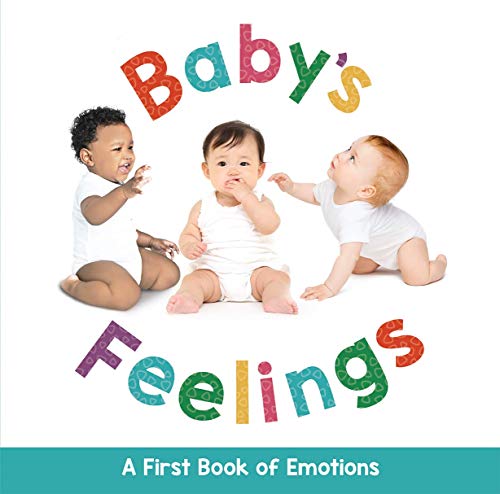
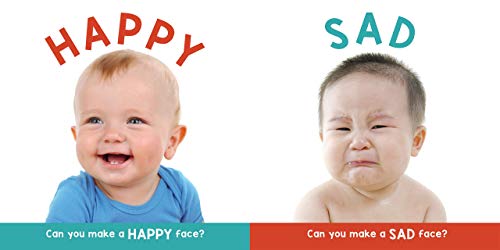
Baby's Feelings - A First Book of Emotions - Educational
- Children's Books
- Growing Up & Facts of Life
- Family Life
Play as Emotional Learning
Play is not just entertainment — it is the primary medium through which infants process and practise emotional states. Infants and Toddlers at Play offers excellent guidance on choosing developmentally appropriate play materials that support emotional as well as cognitive growth.
7. Red Flags: When to Talk to Your Paediatrician
Most variation in infant emotional behaviour is normal. But some signs warrant a prompt conversation with your child's doctor.
Discuss at Your Next Visit If:
Seek Same-Day Advice If:
Expert Insights
The first year is exhausting, exhilarating, and — when you know what to look for — genuinely astonishing. Every time you pick up your crying baby, mirror their smile, or narrate their frustration, you are not just getting through the day. You are building a brain. The most important thing research tells us is also the most reassuring: you don't have to be perfect. You have to be present, responsive, and willing to repair when you get it wrong. That is enough. That is, in fact, everything.
If this guide helped you see your baby's emotional world a little more clearly, save it, share it with your co-parent or caregiver, and come back to it as your baby grows — the roadmap changes fast.
Sources & References
- American Academy of Pediatrics. "Emotional Development in the First Year." HealthyChildren.org. 2023. https://www.healthychildren.org
- Center on the Developing Child, Harvard University. "Serve and Return." 2023. https://developingchild.harvard.edu/science/key-concepts/serve-and-return/
- Center on the Developing Child, Harvard University. "Brain Architecture." 2023. https://developingchild.harvard.edu/science/key-concepts/brain-architecture/
- Thomas, A., & Chess, S. "Temperament and Development." Brunner/Mazel, 1977.
- Sroufe, L.A., Egeland, B., Carlson, E., & Collins, W.A. "The Development of the Person: The Minnesota Study of Risk and Adaptation from Birth to Adulthood." Guilford Press, 2005.
- Tronick, E. "The Neurobehavioral and Social-Emotional Development of Infants and Children." W.W. Norton & Company, 2007.
- Eliot, L. "What's Going on in There? How the Brain and Mind Develop in the First Five Years of Life." Bantam Books, 1999.
- Denham, S.A., et al. "Socialization of Emotion: Learning to Regulate Emotions." Psychological Science, 2003.
- Ainsworth, M.D.S., Blehar, M.C., Waters, E., & Wall, S. "Patterns of Attachment." Lawrence Erlbaum Associates, 1978.
- Brazelton, T.B., & Sparrow, J.D. "Touchpoints: Birth to Three." Da Capo Press, 2006.
Frequently Asked Questions
Why does my 8-month-old suddenly cry when I leave the room?
Can I spoil a baby under 12 months by picking them up too much?
My baby seems much more emotional than other babies the same age. Is something wrong?
When do babies start showing empathy?
How do I know if my baby is securely attached?
Is it normal for my baby to laugh at some things and be terrified of others?
What books or resources do paediatricians recommend for understanding infant emotions?
Was this helpful?
Thanks — your feedback helps us pick what to write next.