18 Ways to Foster Everlasting Love with Partners and Family
Lasting love, whether with a partner or across generations in a family, is built through consistent daily habits, not grand gestures, and research shows these habits can be deliberately practised at every stage of parenthood.

In this article
Did you know that approximately 40 to 50 percent of first marriages in the United States end in divorce, according to the American Psychological Association? Yet in that same population, many couples and families report deeply satisfying, long-term bonds. The difference is rarely luck. It is almost always intentional practice.
This guide covers 18 evidence-informed strategies for building and sustaining love, both with your partner and with your children at every age. Whether you are navigating the fog of the newborn stage, the noise of the primary school years, or the emotional complexity of raising a teenager, the principles here apply, though the application shifts.
By the end of this article, you will understand:
1. Communicate Openly, Then Listen Even More Carefully
The single most protective habit in any close relationship is honest, two-way communication, and most people are better at the talking half than the listening half.
Psychologist Dr. John Gottman at the University of Washington spent decades studying couples in his "Love Lab" and found that how partners communicate during low-stakes moments predicts relationship health more reliably than how they fight. Specifically, small "bids for connection" (a comment about the weather, a shared laugh at the kids) either get turned toward or turned away from, and that pattern matters enormously.
What this looks like at different ages
For parents of newborns and toddlers, communication with a partner often breaks down simply because everyone is exhausted. Scheduling a ten-minute daily check-in, without phones, is not sentimental; it is maintenance. For school-age children, open communication means asking questions that cannot be answered with "fine." For teenagers, it means tolerating silence without filling it anxiously.
Learning active listening skills that strengthen connection is one of the highest-return investments any family can make, because the skill transfers to every relationship in the household.


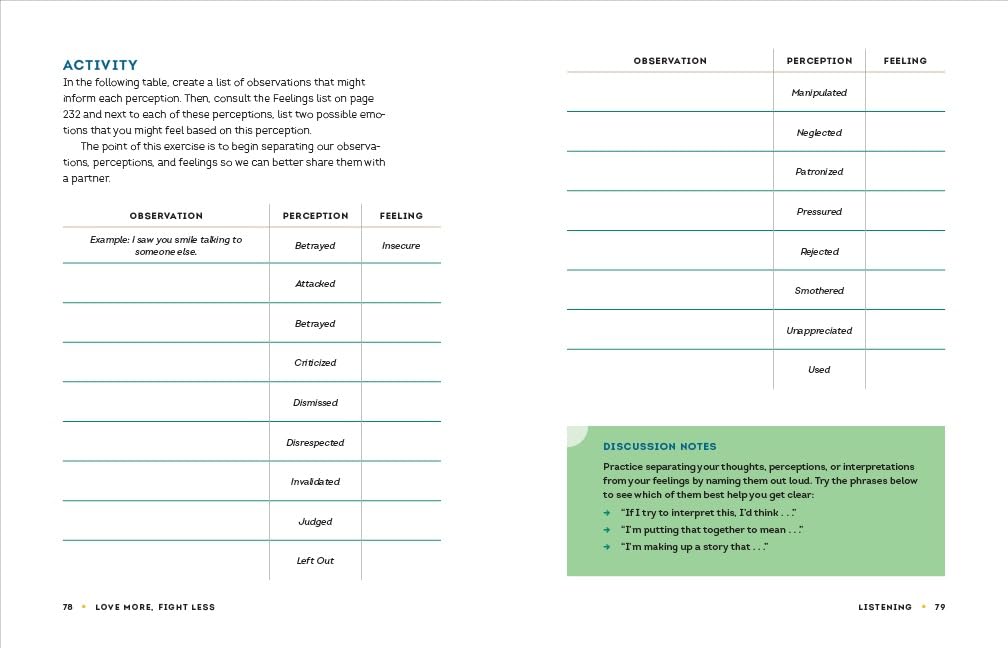
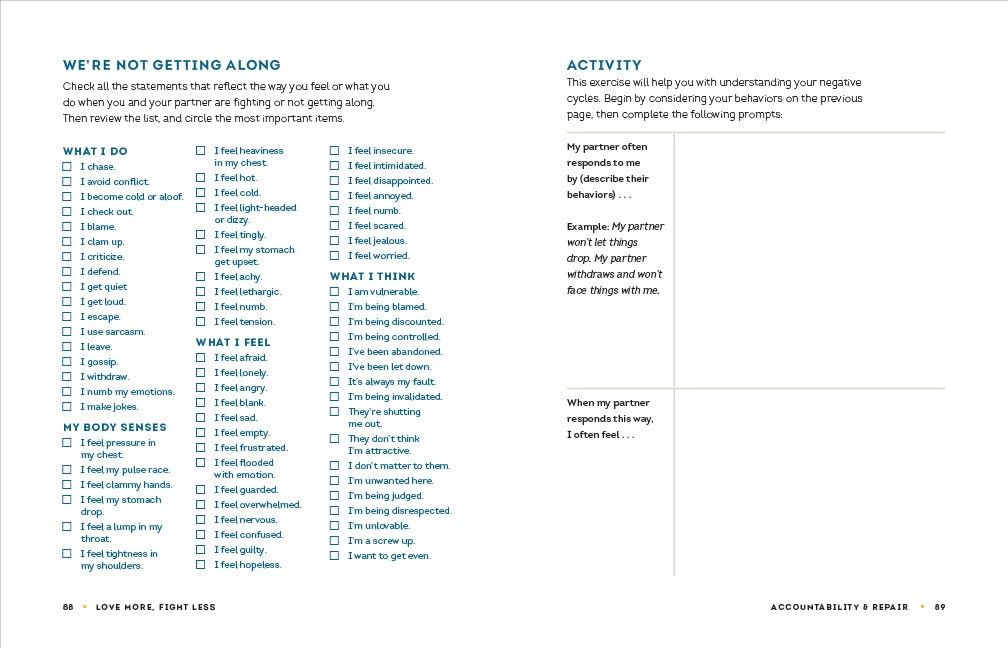
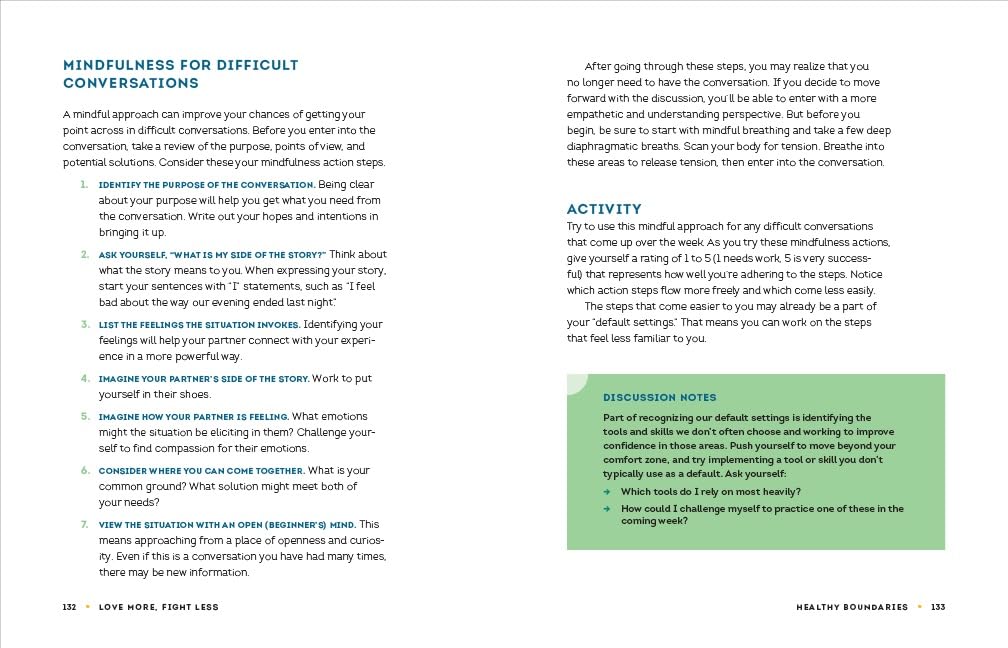
Love More, Fight Less: Communication Skills Every Couple Needs: A Relationship Workbook for Couples
- Relationships
- Image Unavailable Image not available forColor:
- 30 COMMUNICATION SKILLS AND ACTIVITIES for building self-awareness, identifying and interrupting emotional rea
2. Build Trust Through Reliability, Not Declarations
Trust is not built by saying "you can trust me." It is built by doing what you say you will do, repeatedly, in small matters as much as large ones.
For couples, this means keeping low-stakes promises: if you said you would handle the school run, handle it. For parent-child relationships, reliability is the neurological bedrock of secure attachment. The developmental psychologist Mary Ainsworth's research on attachment theory, replicated many times since the 1970s, shows that infants whose caregivers respond consistently develop secure attachment, which predicts better emotional regulation and social competence right through adolescence.

The Seven Principles for Making Marriage Work: A Practical Guide from the Country's Foremost Relationship Expert
- Relationships
- Conflict Management
- Image Unavailable Image not available forColor:
3. Practise Forgiveness as an Active Skill, Not a Passive Event
Forgiveness is not the same as forgetting, condoning, or excusing. It is a deliberate decision to release resentment because carrying it costs you more than it costs the person who hurt you.
Research published by Dr. Everett Worthington at Virginia Commonwealth University describes forgiveness as a learnable, five-step process (the REACH model: Recall, Empathize, Altruistic gift, Commit, Hold on). His randomised controlled trials show measurable reductions in anxiety and depression among participants who completed forgiveness interventions.
For families, the practical lesson is this: model forgiveness explicitly for your children. When you say "I was wrong, and I am sorry," out loud and in front of your kids, you are teaching them one of the most important social skills they will ever use. Equally, when you forgive your partner or child without weaponising it later, you demonstrate what healthy repair looks like.
4. Prioritise Quality Time, Especially When Life Makes It Hard
The periods in family life that feel the busiest (newborn months, double-income preschool years, the homework-heavy primary school years) are exactly the periods when intentional quality time matters most, and feels hardest to carve out.
The American Academy of Pediatrics (AAP) notes that children's social-emotional development is strongly supported by regular, predictable, distraction-free time with their primary caregivers. This does not require expensive outings. Research by Reed Larson at the University of Illinois found that adolescents reported feeling closest to their parents during mundane shared activities: cooking, car journeys, watching something together.
For couples, the Harvard Study of Adult Development (one of the longest-running studies of happiness, spanning over 80 years) consistently found that the quality of close relationships was the single strongest predictor of wellbeing in mid-life and beyond. Not wealth, not fame: relationships.


Questions for Couples Journal: 400 Questions to Enjoy, Reflect, and Connect with Your Partner, Grow Closer & Build A Strong Partnership (Relationship Books for Couples)
- Relationships
- Image Unavailable Image not available forColor:
- ALL KINDS OF CONVERSATIONS: Discuss a variety of questions, from your favorite movies and meals to your most i
5. Support Each Other's Growth Without Losing Your Own
One of the quieter ways love erodes is when one person (often the primary caregiver) shrinks their own ambitions, friendships, or interests to fuel the household. This is neither sustainable nor, in the long run, good for the children watching.
Self-Determination Theory, developed by Drs. Edward Deci and Richard Ryan at the University of Rochester, proposes that all humans have fundamental needs for autonomy, competence, and relatedness. When those needs are chronically unmet, wellbeing declines. Translated for family life: if your partner's professional goals are consistently treated as less important than yours, or if you have not had a conversation about your own needs in months, the relationship is quietly accumulating debt.
Understanding what a healthy parent-child relationship actually looks like also helps here, because parents who model secure autonomy, pursuing interests and maintaining identity outside their parenting role, raise children who do the same.
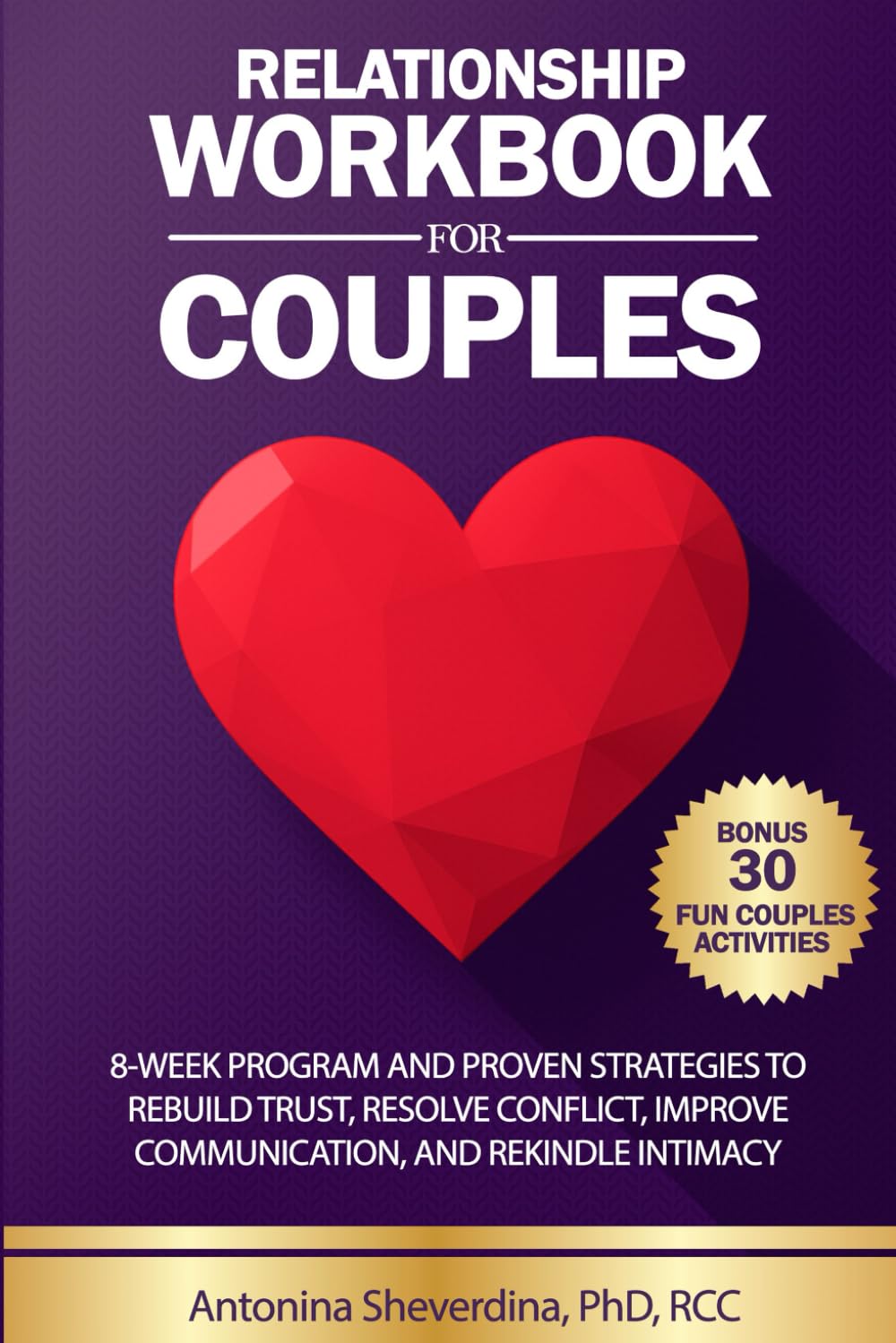
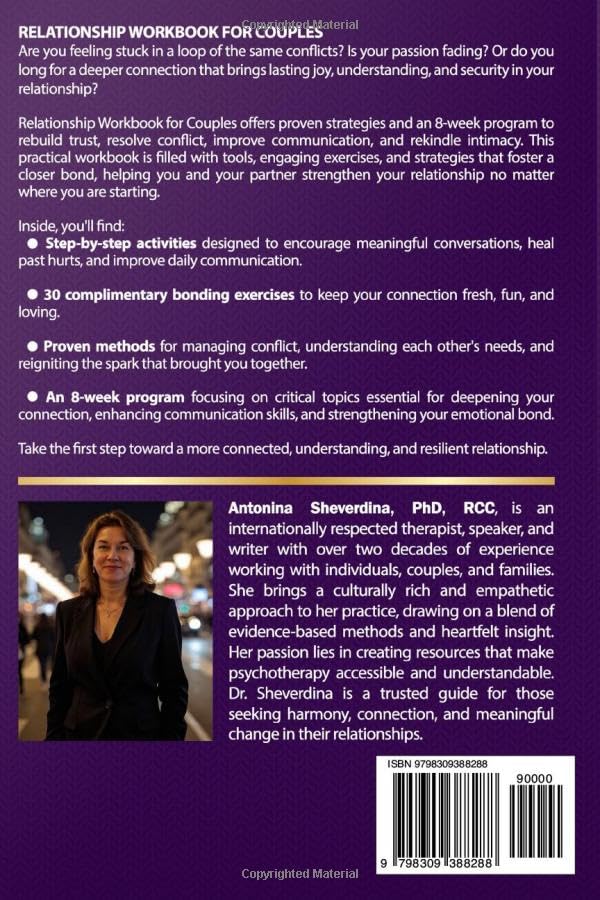
Relationship Workbook for Couples: 8-Week Program and Proven Strategies to Rebuild Trust, Resolve Conflict, Improve Communication, and Rekindle Intimacy
- Relationships
- Interpersonal Relations
- Image Unavailable Image not available forColor:
6. Resolve Conflict Constructively, and Know When to Get Help
Conflict is not the enemy of love. Unresolved, contemptuous, or stonewalled conflict is.
Dr. Gottman's research identified four communication patterns he named "The Four Horsemen," as the most reliable predictors of relationship breakdown: criticism, contempt, defensiveness, and stonewalling. Of these, contempt (eye-rolling, mockery, dismissiveness) was the single strongest predictor of relationship dissolution. The antidote to contempt, his research found, is building a culture of genuine respect and appreciation, consistently, before conflict arises.
For parent-child conflict, the same principle applies at age-appropriate levels. A child who feels respected even when being corrected is far more likely to cooperate than one who feels humiliated.
Age-banded conflict notes
- 0 to 2 years: Conflict between caregivers should never play out in front of infants. Even pre-verbal babies are exquisitely sensitive to adult emotional tone. - 3 to 7 years: Children this age are concrete thinkers. Keep discipline language specific and immediate. - 8 to 12 years: Children can begin to participate in structured family problem-solving; this builds both trust and executive function. - 13 to 17 years: Expect more conflict as autonomy increases. The goal is not to win arguments but to keep the relationship open enough that they come back after the argument.


The Inner Work of Relationships: An Invitation to Heal Your Inner Child and Create a Conscious Relationship Together
- Relationships
- Image Unavailable Image not available forColor:
- How to recognize dysfunctional relationship patterns and how to resolve them
7. Strengthen the Partnership That Anchors the Family
Your relationship with your co-parent is the emotional climate your children grow up in. Research by Cummings and Davies at the University of Notre Dame consistently shows that interparental relationship quality predicts children's mental health outcomes more strongly than most individual parenting behaviours.
This does not mean your partnership must be perfect. It means it must be, as Gottman puts it, "good enough": warm, functional, and openly repaired when it breaks.
Small rituals protect partnerships under parenting pressure: a genuine 6-second kiss (Gottman's recommendation), a shared cup of tea after the children are in bed, a brief check-in text mid-afternoon. None of these require childcare or a Saturday night out. They require only intention.
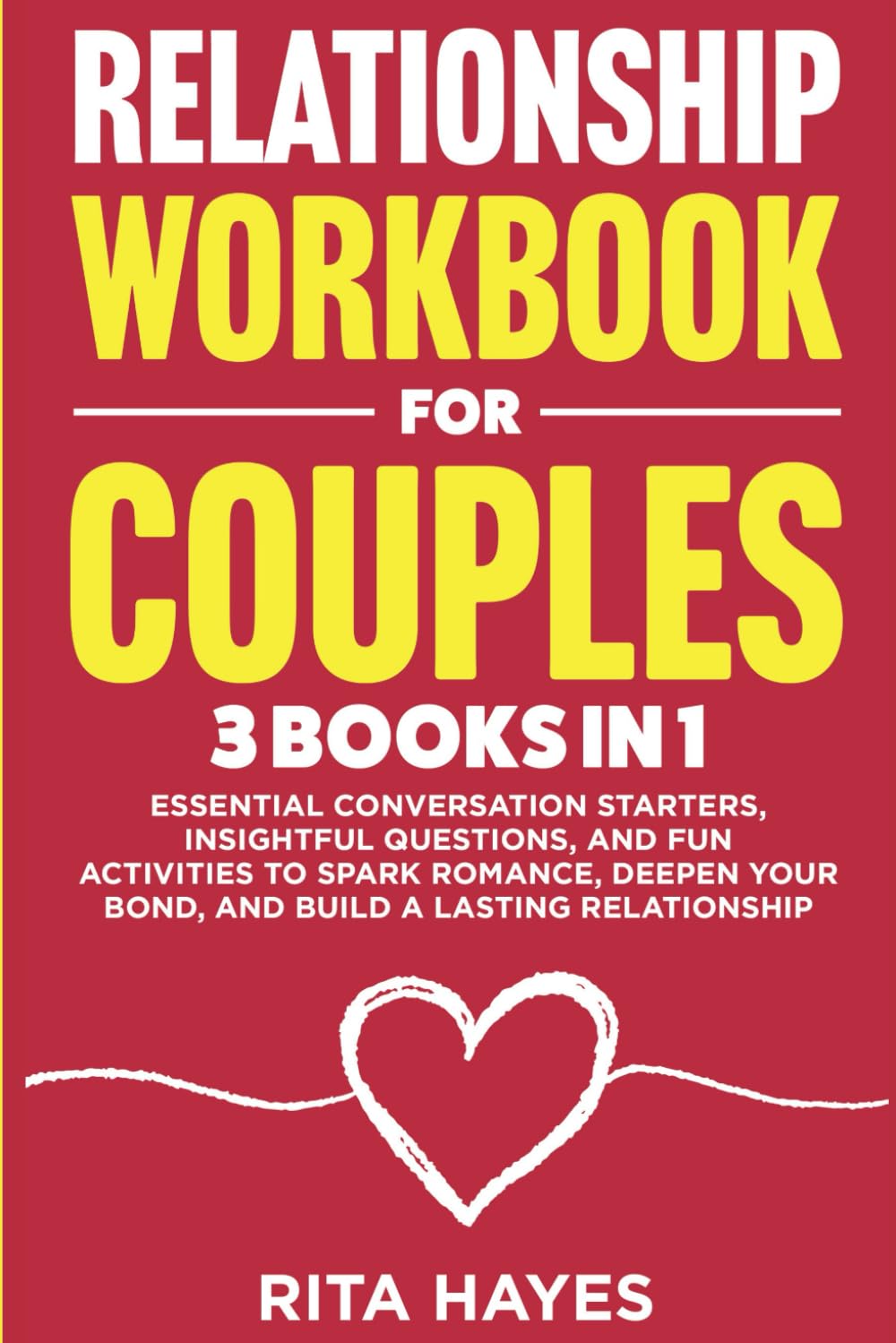
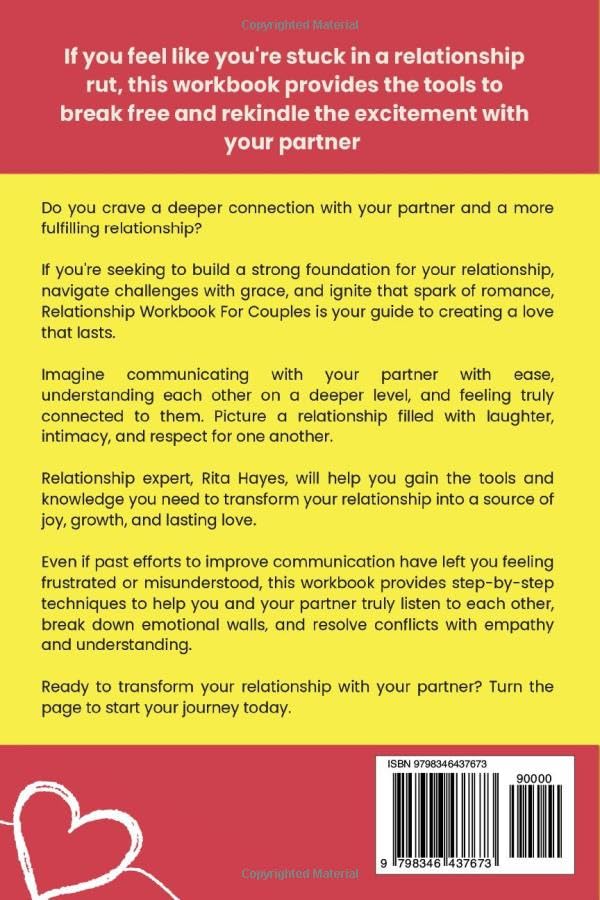
Relationship Workbook For Couples: 3 in 1 - Essential Conversation Starters, Insightful Questions, and Fun Activities to Spark Romance, Deepen Your ... Lasting Relationship (Healthy Relationships)
- Relationships
- Image Unavailable Image not available forColor:
- ASIN : B0DMVL2SV6
Relationship Strategies at a Glance: By Life Stage
| Life Stage | Primary Relationship Focus | Key Strategy | Common Pitfall | Recommended Resource |
|---|---|---|---|---|
| Newborn (0–3 months) | Caregiver–infant bond | Consistent, responsive caregiving to build secure attachment | Overthinking instead of responding instinctively | The Inner Work of Relationships |
| Toddler (1–3 years) | Parent–child connection | Daily child-led floor time; narrate routines | Screen distraction during care windows | Questions for Couples Journal |
| Pre-school (3–5 years) | Both partner and child bonds | Rituals (bedtime, shared meals) that children can predict | Sacrificing couple time entirely | Seven Principles for Making Marriage Work |
| Primary school (6–11 years) | Family communication patterns | Family meetings; emotion labelling; praise specificity | Generic praise ("good job") that doesn't build connection | Love More, Fight Less |
| Pre-teen / Teen (12–17 years) | Autonomy within relationship | Stay curious; avoid lectures; keep the relationship open | Prioritising compliance over connection | Relationship Workbook for Couples |
| Couple (all stages) | Partnership resilience | Daily micro-rituals; annual relationship check-ins | Waiting until crisis to address drift | Relationship Workbook 3-in-1 |
Expert Insights on Lasting Love
Relationships are not destinations you arrive at. They are living systems that need daily tending, honest repair, and genuine curiosity about the other person, whoever that person is to you. The 18 strategies in this guide are not a checklist to complete once; they are habits to return to, especially in the hard seasons of parenthood when love can feel like administration.
If there is one thing 15 years of clinical work has taught me, it is this: the families who thrive are rarely the ones without problems. They are the ones who keep showing up for each other, imperfectly and persistently, and who ask for help before they are desperate.
Save this article, share it with a co-parent, or revisit a single section whenever a particular season of life feels strained. Small, consistent steps are always enough to begin.
Sources & References
- American Psychological Association. "Marriage and Divorce." 2023. https://www.apa.org/topics/divorce-separation
- Gottman, J.M. & Silver, N. "The Seven Principles for Making Marriage Work." Crown Publishers, 1999 (updated 2015).
- Gottman Institute. "The Research." https://www.gottman.com/about/research/
- Ainsworth, M.D.S. "Patterns of Attachment: A Psychological Study of the Strange Situation." Lawrence Erlbaum, 1978.
- Worthington, E.L. "Forgiveness and Reconciliation: Theory and Application." Routledge, 2006.
- Deci, E.L. & Ryan, R.M. "Self-Determination Theory." University of Rochester. https://selfdeterminationtheory.org
- Vaillant, G. "Triumphs of Experience: The Men of the Harvard Grant Study." Harvard University Press, 2012.
- Cummings, E.M. & Davies, P.T. "Marital Conflict and Children: An Emotional Security Perspective." Guilford Press, 2010.
- Center on the Developing Child, Harvard University. "Serve and Return." https://developingchild.harvard.edu/science/key-concepts/serve-and-return/
- Steinberg, L. "We Know Some Things: Parent-Adolescent Relationships in Retrospect and Prospect." Journal of Research on Adolescence, 11(1), 2001.
- American Academy of Pediatrics. "Emotional Development in Children." HealthyChildren.org. https://www.healthychildren.org
- Larson, R. & Richards, M. "Divergent Realities: The Emotional Lives of Mothers, Fathers, and Adolescents." Basic Books, 1994.
- Davila, J. "Skills for Healthy Romantic Relationships." TEDxSBU. Stony Brook University, 2013.
Frequently Asked Questions
How do I keep my relationship with my partner strong after having a baby?
What is the 5:1 ratio in relationships?
How do I connect with my teenager when they push me away?
Is couples therapy only for relationships in serious trouble?
How can I show love to my child in a way that actually reaches them?
What are small daily habits that protect long-term relationships?
When should I be worried about my relationship with my child?
Was this helpful?
Thanks — your feedback helps us pick what to write next.