3 Months Old: Milestones, Red Flags, and What to Do
At three months, most babies are smiling socially, tracking faces and objects, lifting their head during tummy time, and beginning to "talk" back to you with coos and gurgles — but there are specific red flags that warrant a call to your paediatrician.

In this article
Three months is one of my favourite ages to see in clinic. Parents walk in looking slightly less like they've been hit by a truck, and babies walk in (okay, are carried in) looking like actual tiny humans who know what's going on. And that's because they really do. By the end of the third month, your baby has been absorbing the world at an astonishing rate. According to the Centers for Disease Control and Prevention, the brain nearly doubles in volume during the first year of life, with some of the most rapid growth happening right now.
But this is also the age when parent anxiety can peak. "Is she supposed to be doing that?" "Why isn't he rolling yet?" "Should I be worried?"
This article will walk you through exactly what to expect at three months, including:
1. Gross Motor Milestones: What Your Baby's Body Is Learning to Do
By three months, the most visible physical change is head control, and it is genuinely remarkable how far babies come in just 90 days.
At birth, your newborn's head flopped around like a sunflower on a windy day. Now, when you hold her upright on your shoulder, she can hold that head steady for several seconds. When you lay her on her tummy, she can push up onto her forearms and lift her head to roughly 45 to 90 degrees. This isn't just cute; it's the foundation of every motor skill that follows, from rolling to sitting to crawling.
What to look for on tummy time
When your baby is on her stomach, you want to see:
If your baby screams from the moment she touches the mat, you are not alone. Start with just two to three minutes at a time, multiple times a day. Place a rolled towel under her chest just below the armpits to make it easier. Get down on the floor at her eye level so she has a reason to look up.


Infinno Inflatable Tummy Time Mat Premium Baby Water Play Mat for Infants and Toddlers Baby Toys for 3 to 24 Months, Strengthen Your Baby's Muscles, Portable
- Promote your baby's sensory development: The soft, comfortable baby tummy time water mat is the perfect sensor
- Superior quality and 100% leak-proof: Our baby water mats are made from durable, 100% BPA-free and non-toxic,
- Easy to use: Just fill water into the middle of the water mat and inflate the edge of the tummy time water mat
Other gross motor signs at three months
- Brings hands together at midline (in front of the body) - Kicks legs vigorously when lying on back - Bears some weight on legs when held standing (you're doing all the balance work, but the leg stiffening is a good sign) - Opens and closes hands more frequently
The wrist rattles and foot finders from Infinno are genuinely useful here because the bright colors and gentle sounds give your baby a visual and auditory target to reach toward, which encourages that midline hand play.
2. Fine Motor and Sensory Development: Hands, Eyes, and Touch
Three months is the age where babies start to realize they have hands. Watch your baby's face the first time she "discovers" her own fist floating in front of her face. That look of total bewilderment is one of the best things in parenting.
At this stage, fine motor development is really about early grasping and hand-to-mouth awareness rather than pinching or picking up objects. Here's what you'll typically see:
Visual tracking: the eyes are doing heavy lifting
Babies at three months can track a moving object through roughly 180 degrees of arc. That means if you move your face slowly from one side to the other, her eyes should follow you all the way across. They can also focus clearly on objects about 8 to 12 inches away, which is conveniently the distance from your face to hers during feeding.
The American Academy of Pediatrics notes that by three months, most babies show a clear preference for faces over other visual stimuli. Your face is genuinely your baby's favorite thing to look at. Use that.
Supporting sensory development at home
You don't need expensive equipment. What you need is variety in texture, sound, and visual input, little and often.
- Let her touch different fabrics: a silky scarf, a rough towel, a soft stuffed animal - Bring her to different rooms and narrate what you see ("Look at the bright window! That's a plant.") - Give her simple rattles she can accidentally shake and hear
The TOHIBEE sensory toy set is one of the better options at this price point because it has multiple textures and sounds built into one lightweight piece, which is practical when you're trying to keep a three month old engaged for more than 90 seconds.


Baby Montessori Sensory Toys for 0-6 6-12 Months, Baby Teether Teething Toys for Babies 0 3 6 9 12 18 Months, Newborn Infant Learning Developmental Toys Gifts for 1 2 Year Old Boys Girls
- Multi-Sensory Baby Toy: This baby sensory toy uses 12 kinds of bright colors and textured silicone balls to st
- Silicone Baby Teether: This baby teether is made of high quality soft silicone and ABS plastic, which helps re
- Developmental Montessori Toys: Babies will be instantly drawn to this colorful and lightweight infant toy. Imp
3. Communication and Social Milestones: Your Baby Is Talking to You
This is the section that surprises parents the most. Three months old and she's already communicating? Yes, absolutely, and you've probably already noticed it even if you didn't have the language for it.
The social smile
The social smile is the headline milestone of this age group, and it's distinct from the reflex smiles you saw in the first six weeks. A social smile:
- Is triggered by your face, your voice, or familiar stimuli - Involves the whole face (the eyes crinkle, not just the mouth) - Comes with a short delay after you smile first, because she's processing and responding - Is repeatable and somewhat predictable
If your baby is not yet showing a clear social smile by 12 weeks, mention it to your GP or paediatrician at your next check. It's one of the clearest early social milestones we track.
Cooing and proto-conversation
By three months, most babies are producing vowel sounds: "ooh," "aah," and sometimes "eh." More importantly, they're starting to take turns. You talk, she watches your mouth. She coos, you respond. She watches you again. This back-and-forth is called serve and return interaction, and it is fundamentally important for language development.
Serve and return interaction shapes brain architecture. When an adult consistently responds to a child's coos and gestures, it builds connections in the brain that support later learning, behavior, and health.
— Harvard Center on the Developing Child (2023)
If you want a deeper look at how this kind of early communication builds into real language, the article on speech delay red flags by age has a thorough breakdown of what to watch for across the first few years.
4. Sleep at Three Months: What's Normal and What Isn't
Sleep is the question I get most from parents of three month olds, and almost every time, the answer is "yes, that's normal, and no, you're not doing it wrong."
At three months, most babies are sleeping 14 to 17 hours in a 24-hour period, according to the National Sleep Foundation. But here's the critical thing: that sleep is still distributed unevenly. Most three month olds wake two to four times per night. Some wake more. A small number of very developmentally fortunate babies are starting to do one longer stretch of five to six hours, but this is not the norm.
What a typical three month old's sleep looks like
- Total sleep: 14 to 17 hours per day (including naps) - Night sleep: 8 to 10 hours (fragmented, with feeds) - Daytime naps: 3 to 5 naps, each lasting 30 minutes to 2 hours - Beginning to show a slightly more predictable rhythm, but "schedule" is still a strong word
The detailed breakdown of why this happens, and what you can actually do about it, is covered well in the toddler sleep regression explainer, which also applies to this earlier four month pattern.
Safe sleep at three months: the rules haven't changed
The AAP's safe sleep guidelines apply as firmly now as they did on day one:
If your baby is rolling from back to front during sleep (uncommon at three months but not impossible in strong babies), the AAP says you can leave them in whatever position they roll to, as long as you started them on their back.
5. Cognitive Development: How Your Baby Is Thinking
Cognition at three months is not about flashcards or "enrichment programs." It's about cause and effect, recognition, and the very beginnings of memory.
Here's what's actually happening in that rapidly growing brain:
Recognizing familiar faces and voices
By three months, your baby recognizes you. Not just your smell (that was present from birth) but your face and your voice as distinct from other people's faces and voices. She'll often calm down faster when you pick her up than when a stranger does. She'll turn her head toward your voice across a room. This is real recognition, built from thousands of small interactions over 12 weeks.
Early cause and effect awareness
When your baby kicks and the mobile above her jiggles, she will kick again. This is a very early understanding that her actions have consequences. It's rudimentary, but it's the beginning of what will eventually become problem solving, experimentation, and scientific thinking.
You can support this with:


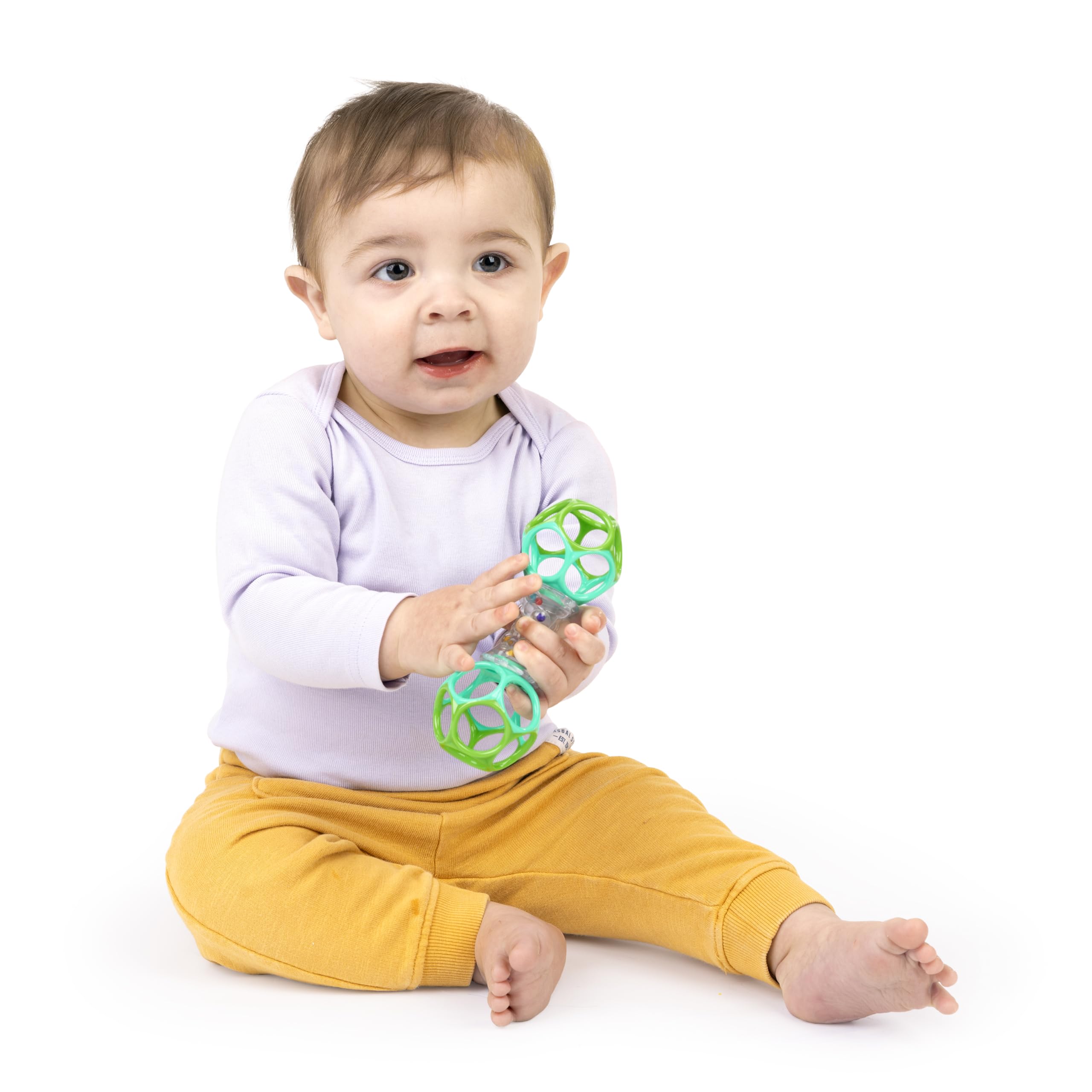
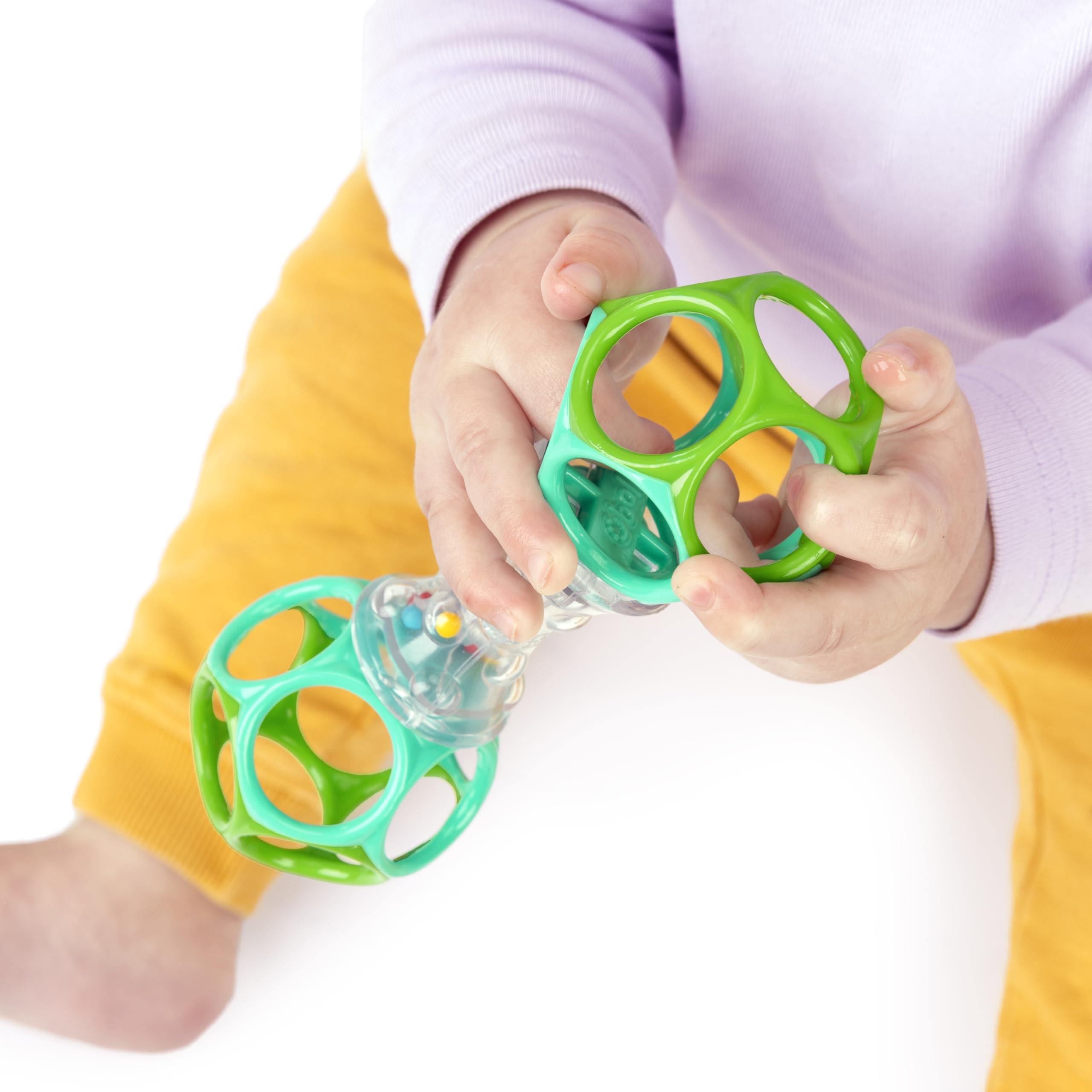
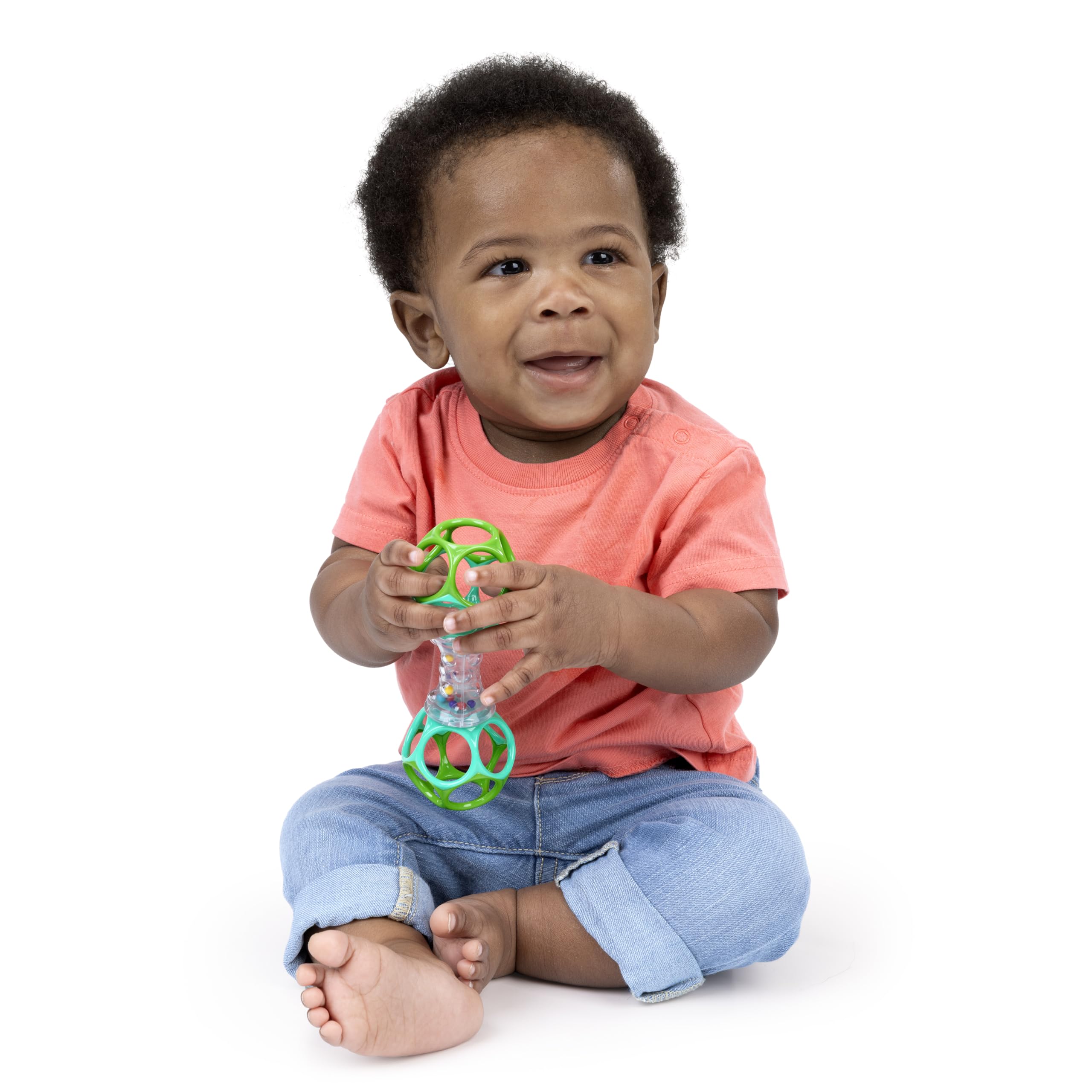
Bright Starts Oball Shaker Rattle Toy, Ages Newborn Plus
- 2 mini flexible, teethable Oballs are easy to hold
- Colorful rattle beads create fun sounds to entertain and delight baby
- Textured rattle is clear so baby can see the colorful beads. BPA Free
The Oball Shaker Rattle is particularly good for this stage because the clear body lets her see the beads rattling when she moves it, connecting the visual and auditory feedback in a way that's genuinely meaningful for cause and effect learning.
Play is doing serious developmental lifting at this age. Research consistently shows that child led, play based interactions build the neural connections that support later thinking and learning. For a broader look at how this plays out across childhood, how imaginative play builds problem solvers is worth bookmarking now even though your baby is months away from pretend play.
6. Red Flags at Three Months: When to Call Your Doctor
This is the section I'd ask every parent to read carefully, even if they feel their baby is doing well. Red flags are not meant to scare you; they're meant to give you a clear checklist so you know when to act rather than wait and hope.
Most babies who show these signs will have a straightforward explanation. But early intervention, when it is needed, makes a significant difference in outcomes. That's not a platitude; it's what the research consistently shows.
Physical and motor red flags
Social and communication red flags
Hearing red flags
Early identification of developmental delays is critical. Intervention before age three, when the brain is at its most plastic, produces dramatically better outcomes than intervention that begins later.
— Centers for Disease Control and Prevention, "Learn the Signs. Act Early." Campaign (2022)
What to do if you spot a red flag
Call your baby's doctor. Don't wait for the next scheduled appointment if you're concerned. Most paediatric practices have same-week or next-day appointments for developmental concerns. A referral to a developmental paediatrician, physiotherapist, or speech and language therapist at this age is not an overreaction; it is exactly what early intervention is designed for.
If a head injury is part of your concern (from a fall from a changing table, for instance), the guidance on what to do after a head injury covers the warning signs that need immediate attention.
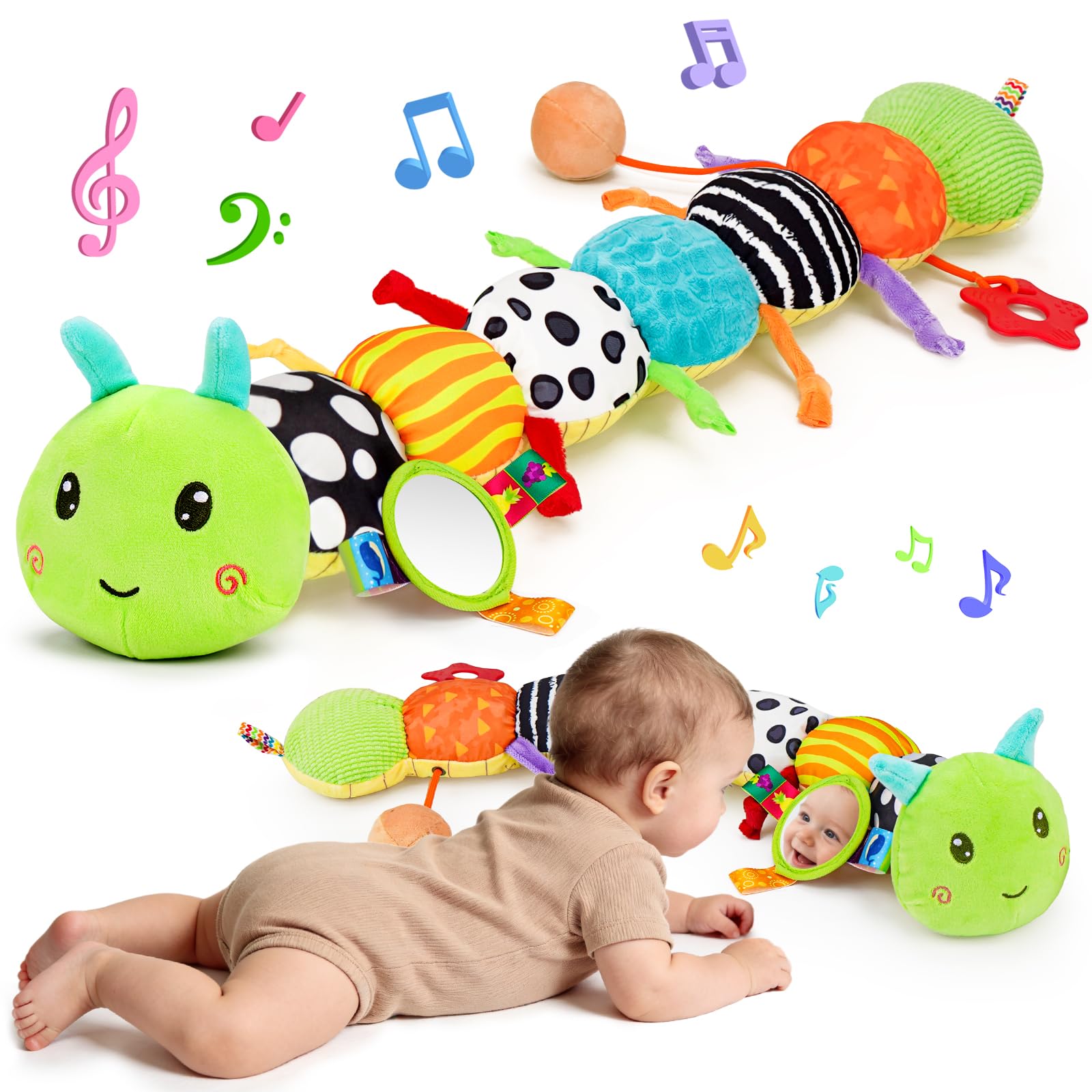

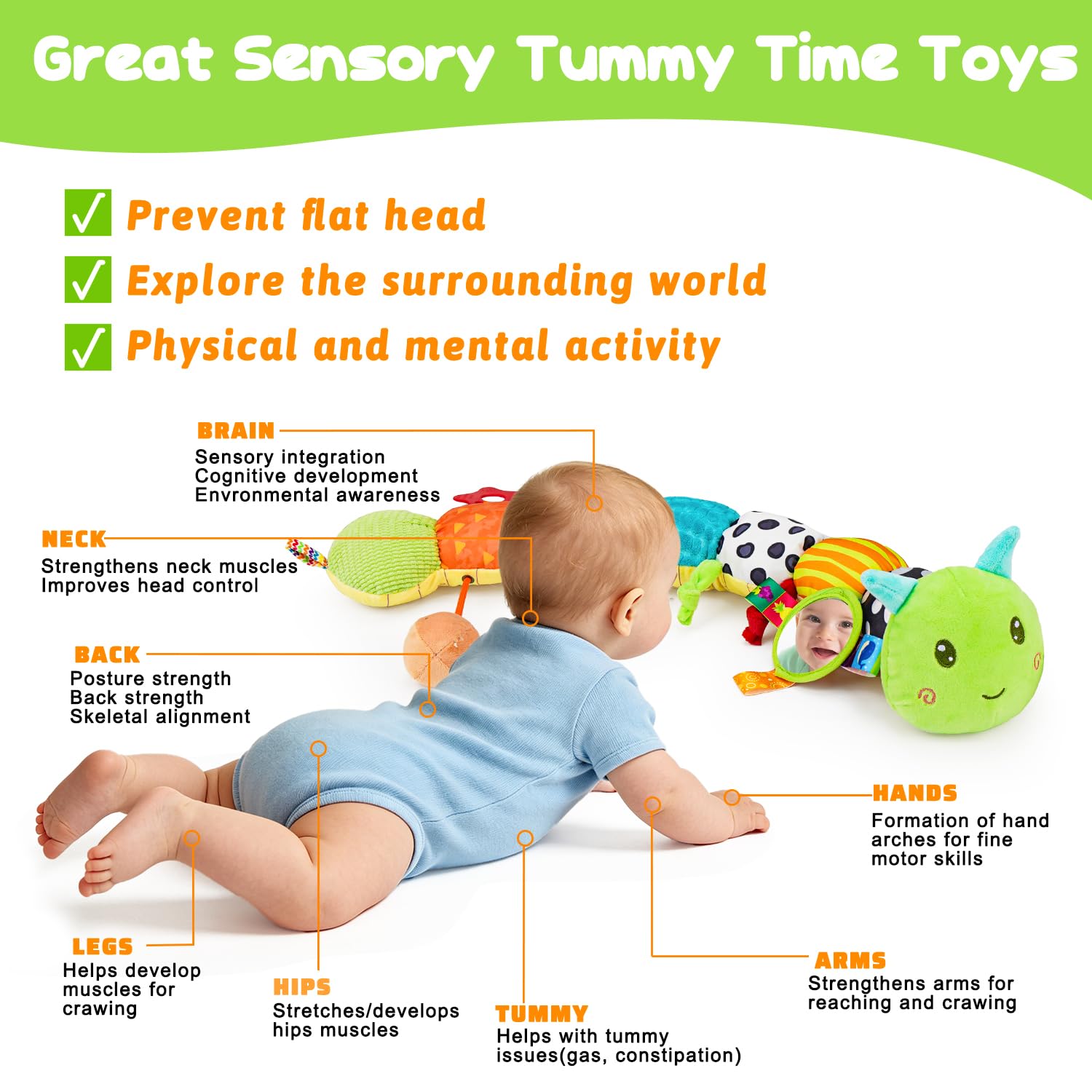

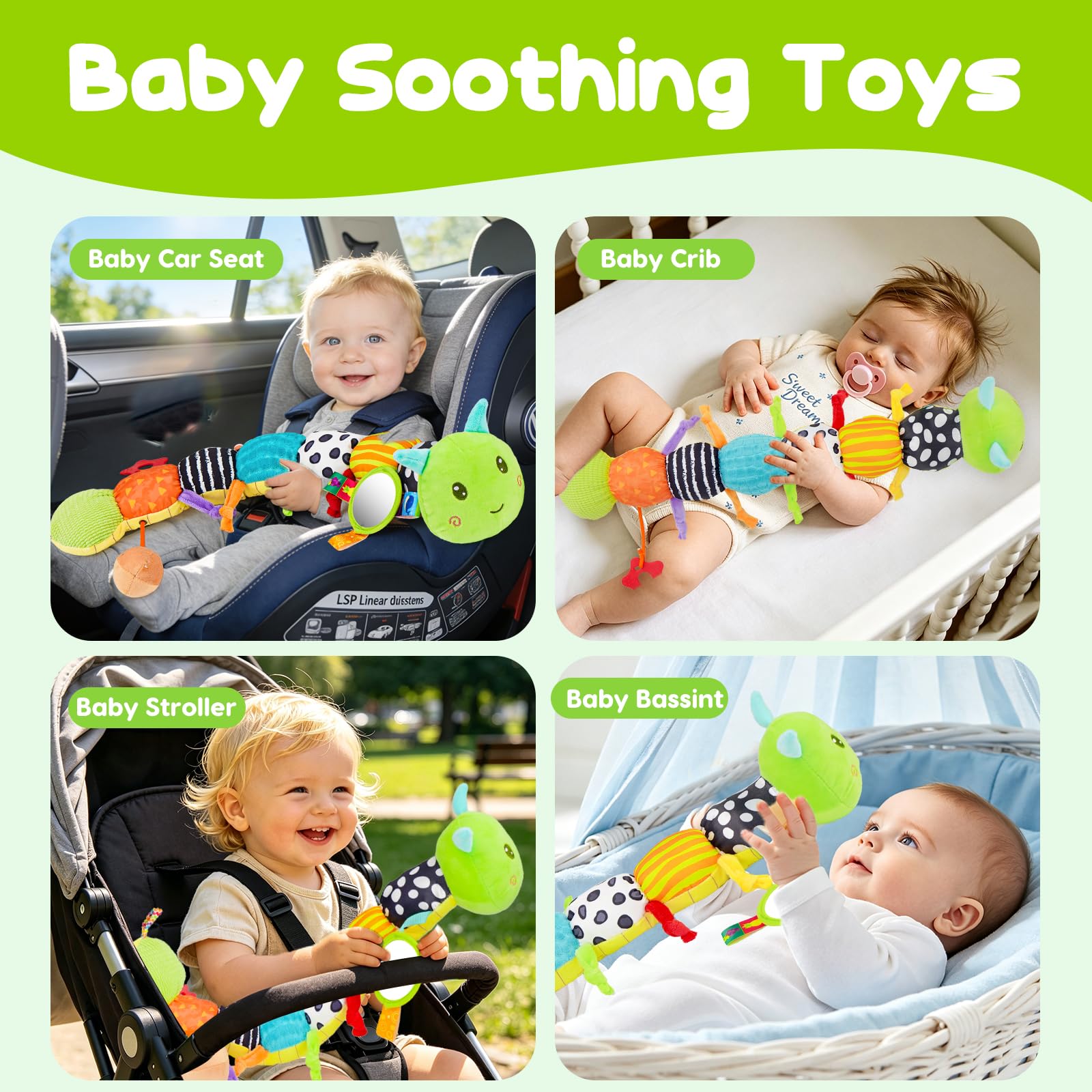
Topsochir Baby Sensory Toys 0-6 Months Music Animal Stuffed Plush Caterpillar Toy for Infant 0-3-6-12 Month Old Tummy Time with Mirror Crinkle Rattle Toys for Newborn Boys Girls Shower Birthday Gifts
- 【4-in-1 Caterpillar Toys】Our infant toys can be used as animal plush toys, musical toys, rattle toys, and crin
- 【Ideal Toy for Tummy Time】The high contrast patterns & different textures can attract the baby's attention for
- 【Multiple Functional Sensory Toys】The newborn girl toys can make 3 different sounds: crinkle paper, bi-bi soun
The Topsochir sensory caterpillar is worth mentioning here because it's useful for observing how your baby responds to different stimuli. The mirror panel, crinkle sounds, and music button each trigger different responses, and watching how your baby reacts (or doesn't react) to each one can be informative.
7. Sensory Play and Activities: What to Do Right Now
You don't need a Pinterest board or an Amazon wishlist to support your three month old's development. You need to be present, responsive, and willing to get down on the floor.
That said, the right toys do make a difference when they're thoughtfully chosen. Here's how to think about play at this age:
The best play activities for three month olds
Tummy time with visual targets. Get down on the floor facing your baby. Hold a high contrast toy about 10 inches from her face and move it slowly left to right. You're combining tummy time with visual tracking practice. Two birds, one moment of floor time.
Face-to-face talking time. Sit her in a bouncy seat or propped position and just talk. Exaggerate your facial expressions (open your eyes wide, raise your eyebrows, pull faces). She is watching every muscle on your face.
Kicking play. Attach a toy or activity gym over her feet so she can kick and see the result. This builds lower body strength and early cause and effect understanding.
Bath time sensory exploration. The warm water, the different temperature, the sound of splashing, your narration throughout. Bath time is a full sensory experience and a great opportunity for connection.

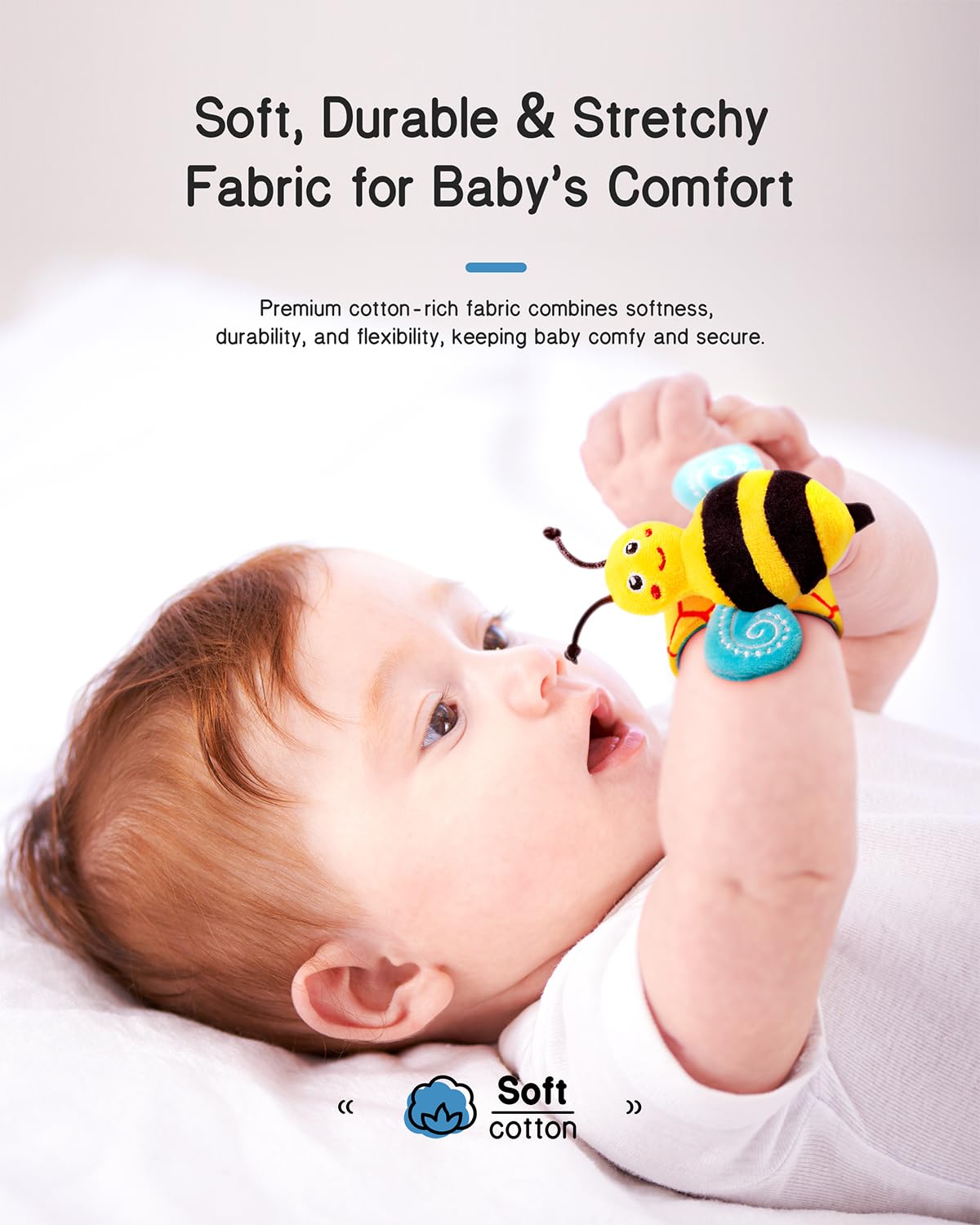


Infinno Baby Wrist Rattle Socks and Foot Finder Set, Perfect Baby Toys for 0-12 Months Newborn Boys and Girls As Shower Gifts, Garden Bug Series
- PROMOTE SENSORY EXPLORATION - The bright colorful rattle socks will promote baby sensory exploration through s
- FIT COMFORTABLY - This set contains two soft wrist rattles and two foot finders. These bright colorful wrist r
- DELIGHTFUL BABY GIFT - Packaged in an exquisite gift box, this rattle socks set makes a delightful baby shower
The Infinno tummy time water mat works brilliantly as a visual target during floor time. The colorful sea creatures inside the mat move when your baby shifts or kicks, which holds attention far longer than a plain mat.


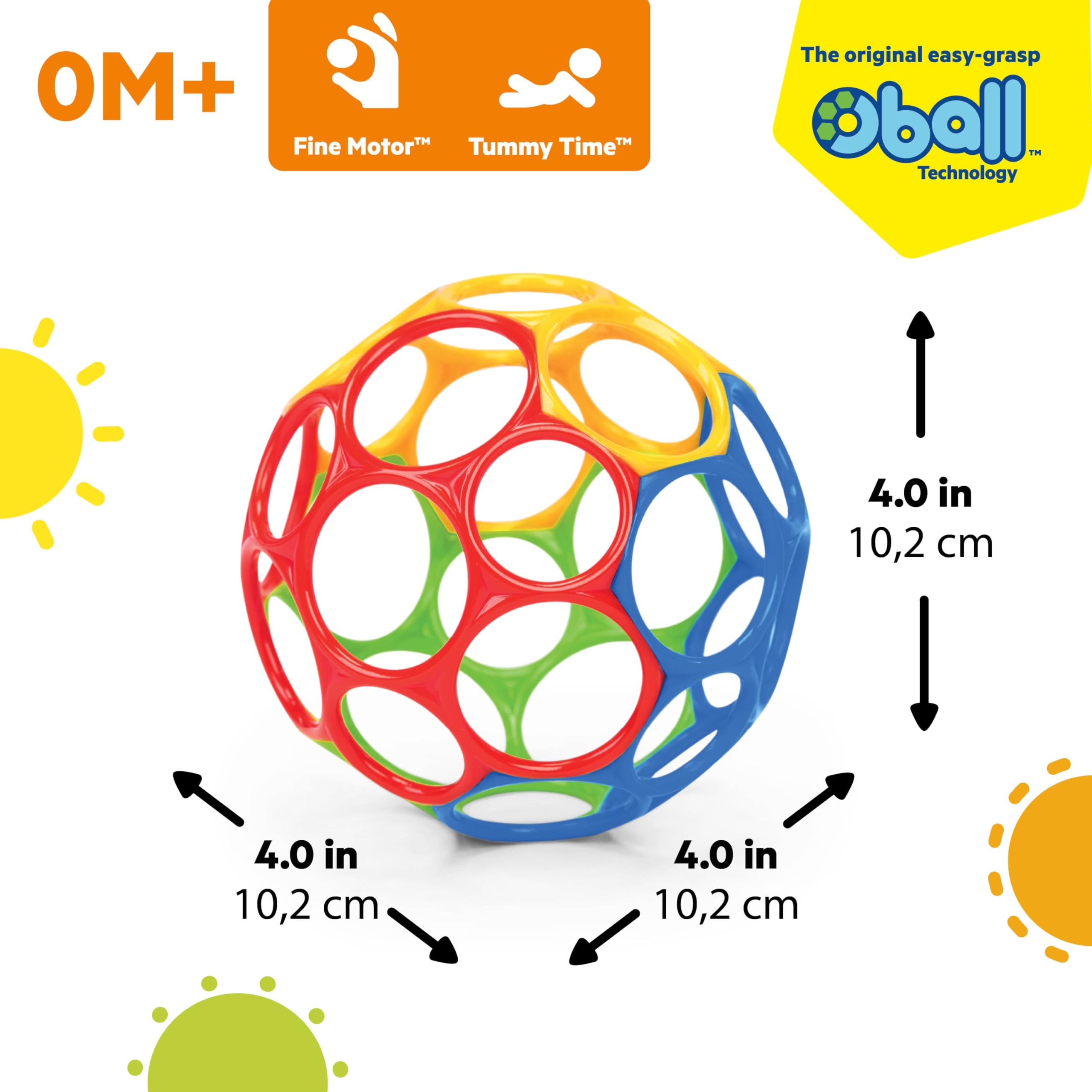


Bright Starts Oball Easy Grasp Classic Ball BPA-Free Infant Toy in Red, Yellow, Green, Blue, Age Newborn and up, 4 Inches
- Bright Starts Oball is a fan-favorite toy ball that has been engaging tiny fingers for over 25 years; flexible
- Get baby moving with this crawl-worthy toy; little ones can’t resist chasing after the classic Oball toy, prac
- Encourages baby’s fine motor skills with easy-grasp design made for little hands; helps build confidence to gr
The Oball Classic Ball is worth having on hand from now through the first year. At three months, it sits in the play gym or gets placed in a loosely open palm. By six months, she'll be gripping it properly. By ten months, she'll be throwing it at you.
How much "activity" does a three month old actually need?
Less than you think. Two to three short tummy time sessions a day (five to ten minutes each), one or two face-to-face talking sessions, and general awake-time observation of the world around her is genuinely enough. Overstimulation at this age is real and results in crying, arching, and looking away (which is your baby's way of saying "I need a break").
Watch for these signs that she's had enough:
When you see these, it's time for a quiet, low-stimulus break. Swaddle, dim the lights, and let her decompress.
Comparison: Three-Month Developmental Milestones by Domain
| Domain | What to Expect at 3 Months | Red Flag | Recommended Product | Price Range |
|---|---|---|---|---|
| Gross Motor | Lifts head 45-90 degrees during tummy time; kicks vigorously | No head lifting at all during tummy time | Infinno Tummy Time Mat | $9.99 |
| Fine Motor | Hands opening and closing; swipes at objects; brief rattle grasp | Hands always fisted; no swiping | Oball Shaker Rattle | $3.99 |
| Sensory and Visual | Tracks objects 180 degrees; prefers high contrast; responds to touch | Does not track moving objects; no response to touch variation | TOHIBEE Sensory Toy Set | $9.99 |
| Communication | Social smile; cooing and vowel sounds; turn-taking vocalization | No social smile by 12 weeks; no vocalizing | Topsochir Sensory Caterpillar | $19.99 |
| Cognitive | Recognizes caregiver face and voice; early cause-and-effect awareness | Does not respond differentially to familiar vs. unfamiliar faces | Oball Classic Ball | $4.74 |
| Social and Emotional | Calms to caregiver voice; engages in face-to-face interaction | Does not make eye contact; does not calm to familiar voice | Infinno Wrist Rattle Socks | $9.99 |
Expert Insights
Conclusion
Three months is the beginning of the part of babyhood that makes all those sleep-deprived weeks feel worth it. Your baby is smiling at you because she knows you. She's cooing because she wants to talk to you. She's lifting her head because she wants to see more of the world. That's not nothing. That's everything.
The milestones matter, and so do the red flags, but most of all, what matters is you: present, responsive, and paying attention. You don't need to optimize every moment or buy every toy. You need to show up, consistently and warmly, and your baby will do the rest.
If this article helped you feel more informed and a little less anxious, share it with a parent who's right in the middle of it. They probably need it too.
Sources & References
- Centers for Disease Control and Prevention. "Learn the Signs. Act Early: Developmental Milestones." 2022. https://www.cdc.gov/ncbddd/actearly/milestones/milestones-3mo.html
- American Academy of Pediatrics. "Safe Sleep: Back to Sleep, Every Sleep." 2022. https://www.healthychildren.org/English/ages-stages/baby/sleep/Pages/A-Parents-Guide-to-Safe-Sleep.aspx
- American Academy of Pediatrics. "Tummy Time." 2022. https://www.healthychildren.org/English/ages-stages/baby/Pages/The-Importance-of-Tummy-Time.aspx
- Harvard Center on the Developing Child. "Serve and Return Interaction Shapes Brain Circuitry." 2023. https://developingchild.harvard.edu/science/key-concepts/serve-and-return/
- National Sleep Foundation. "How Much Sleep Do Babies Need?" 2023. https://www.thensf.org/sleep-guidelines-for-infants/
- American Academy of Pediatrics. "Developmental Milestones: 3 Months." HealthyChildren.org. 2023. https://www.healthychildren.org/English/ages-stages/baby/Pages/Developmental-Milestones-3-Months.aspx
- Gopnik, Alison. "The Gardener and the Carpenter." Farrar, Straus and Giroux, 2016.
- Shonkoff, Jack P., and Deborah A. Phillips, eds. "From Neurons to Neighborhoods: The Science of Early Childhood Development." National Academies Press, 2000.
- World Health Organization. "Nurturing Care for Early Childhood Development." 2018. https://www.who.int/publications/i/item/9789241514064
- NICE (National Institute for Health and Care Excellence). "Developmental follow-up of children and young people born preterm." NICE guideline NG72. 2017. https://www.nice.org.uk/guidance/ng72
Frequently Asked Questions
Is it normal for a three month old to not roll over yet?
My three month old smiles but doesn't coo much. Should I be worried?
How much tummy time does my three month old need each day?
My baby only sleeps on me. Is that okay?
When do I start worrying about vision at three months?
Can I overstimulate a three month old?
My baby barely reacts to loud sounds. Should I be concerned?
Was this helpful?
Thanks — your feedback helps us pick what to write next.