How Imaginative Play Builds Problem Solvers (Ages 0–12)
Imaginative play is one of the most powerful tools children have for developing problem solving, self regulation, and flexible thinking — and it works across every age from infancy through the tween years.
In this article
Think about the last time your child turned a cardboard box into a spaceship. They weren't just having fun. They were problem solving in real time: deciding who goes where, negotiating the rules of the story, figuring out what to do when the plot hit a wall. According to the American Academy of Pediatrics (AAP), play is so fundamental to healthy development that it is now described as a "vital sign" of child health. Yet surveys consistently find that children today have fewer hours of free, unstructured play than any previous generation. That gap matters. In this guide you will learn:
1. What Imaginative Play Actually Is (And Why It's Not "Just" Playing)
Imaginative play, also called pretend play or make-believe, is any play in which a child assigns meaning beyond the literal. A wooden disc becomes a steering wheel. A sibling becomes a patient in a hospital. A set of blocks becomes a city that needs to be saved.
What separates this from other play is the mental work involved. The child must hold a fictional world in mind while also tracking reality, negotiating with other players, and adapting the story when something unexpected happens. That is not a small cognitive load. It is, in fact, very close to the mental work adults do in planning, strategising, and creative problem solving.
The brain during pretend play
Neuroimaging research shows that open ended, imaginative play activates multiple brain networks simultaneously, including areas tied to language, memory, social processing, and the prefrontal cortex. This is the region that manages executive function — the mental toolkit that includes planning, impulse control, working memory, and flexible thinking. A 2018 review published in Child Development Perspectives by Adele Diamond, a cognitive neuroscientist at the University of British Columbia, found that play based activities that required children to follow self-imposed rules (exactly what pretend play involves) were among the most reliable boosters of executive function in early childhood.
2. How Pretend Play Builds Problem Solvers
The connection between imaginative play and problem solving is not abstract. Every time a child encounters a snag in their play narrative — the dragon doesn't want to be tamed, the restaurant runs out of pretend pizza, the building keeps falling down — they face a genuine problem that needs a genuine solution.
There is no answer key. No adult jumping in. Just a child (or a group of children) figuring it out.
Research from Stuart Brown, founder of the National Institute for Play, documents how this unstructured problem solving during play is one of the primary routes through which children develop what he calls "play personality" — a lasting orientation toward curiosity and creative response under pressure.
Decision making in real time
During dramatic play, children make dozens of small decisions every minute. Who does what? What happens next? What if this doesn't work? Each decision requires weighing options, predicting outcomes, and tolerating uncertainty. These are the same cognitive moves required in adult decision making — just rehearsed in a low-stakes, high-engagement environment.
Flexible thinking
When a story goes sideways, children playing imaginatively have to adapt. This builds cognitive flexibility, the ability to shift strategies when the first approach isn't working. A 2020 study in the journal Early Childhood Education Journal found that children with more hours of free pretend play per week scored significantly higher on measures of cognitive flexibility at age 6 compared to children with less.
For parents who want to understand the neuroscience more deeply, creative play's effect on the toddler brain is covered in detail elsewhere on this site — the structural changes are genuinely striking.
3. Age by Age Guide: Nurturing Imaginative Play From Birth to 12
Newborns to 12 months: the foundations
Babies don't "pretend" yet, but the foundations of imaginative play are already being laid. Peek-a-boo is one of the earliest forms of pretend: something disappears, then reappears. That's the seed of narrative. High contrast mobiles, facial expressions, and responsive caregiving all build the attachment and security that makes later exploratory play possible.
From around 9 months, babies begin object permanence play — searching for hidden toys, dropping items to see what happens. This IS proto-problem solving. Encourage it rather than tidying it up.
Ages 1–3: the explosion of pretend
This is when pretend play ignites. Your toddler feeds a teddy, pours invisible tea, talks on a pretend phone. This is called symbolic play, and it marks a huge cognitive leap: the ability to let one thing stand for another. That same mental operation underlies reading (letters stand for sounds) and mathematics (symbols stand for quantities).
Open ended materials are ideal here. 

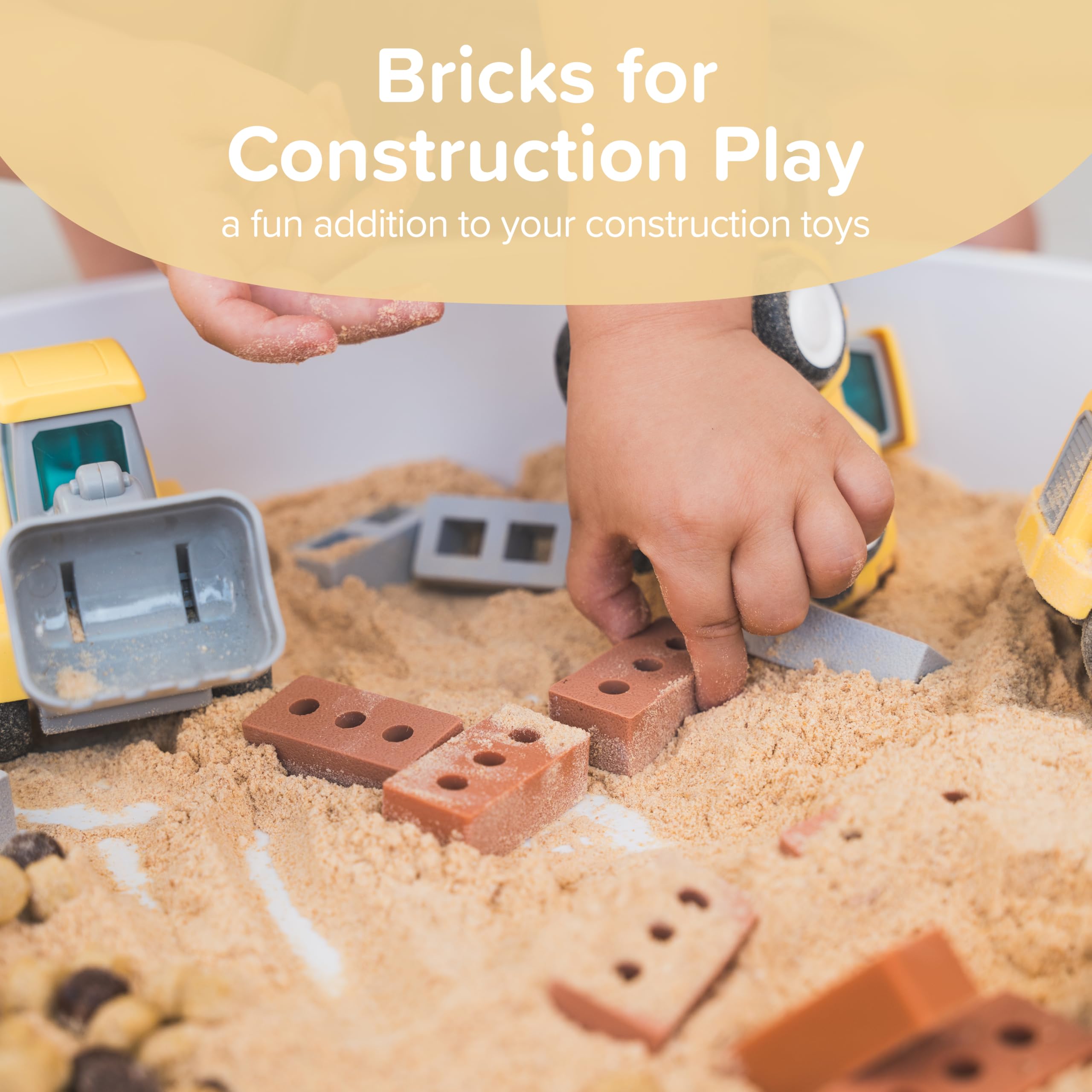


Inspire My Play 25 Mini Silicone Building Bricks for Construction Play Bin - Creativity Sensory Bin Filler
Simple sensory construction materials like the Inspire My Play silicone bricks let toddlers build and rebuild small world scenes without a script, encouraging them to invent their own stories.
Ages 3–6: rich collaborative play
By age 3, children begin playing WITH others rather than alongside them. They negotiate roles, create rules, and sustain complex narratives over time. This is where problem solving, language, and social skills all accelerate together.
Waldorf style open ended figures work brilliantly at this stage. 


Taksa Toys Locomo Family 1 Open-Ended Waldorf Educational Outdoor Play Figures, Wooden Animal Montessori Toys for Kids 3 4 5 6 7+ for Childs Learning & Creativity Year Old, Gifts (Set of 5)
The Taksa Toys wooden animal figures are deliberately understated, without painted-on expressions or prescribed stories, so children project their own narratives onto them. That gap between toy and story is where the cognitive work happens.
Ages 6–9: rules, roles, and real world themes
School age children begin incorporating real world themes into play: schools, hospitals, shops, building sites. They are processing what they observe and making sense of it through narrative. Encourage this even when the play is a little chaotic.
Construction and building play dominates at this age. 


Brain Flakes 500 Piece Set, Ages 3+, Interlocking Plastic Disc Toy for Creative Building, Educational STEM Learning, Construction Block Play for Kids, Teens, Adults, Boys, and Girls
The Brain Flakes 500 piece set is a clinic favourite recommendation for this age. The open format means there is no "right" structure, so children must plan, problem solve, and adapt as they build.
Ages 9–12: when imagination goes underground
By late primary school, overt pretend play gives way to creative writing, gaming, roleplay games, and complex social play. The imaginative capacity is still there and still developing. It just changes form.
Tweens benefit enormously from KADU Classic building sets and STEAM style open ended construction because these let them apply creative thinking to genuine structural challenges. 


KADU Classic 250 Piece Classic Set - STEM/STEAM Building + Construction Toy, for Open + Imaginative Play Ages 5+
4. Open Ended Toys vs Single Purpose Toys: What the Research Says
Not all toys support imaginative play equally. A toy with one function (press button, hear song) gives a child a passive experience. A toy with no prescribed function forces the child to become the author. That authorship is the whole point.
Research published in JAMA Pediatrics (2018) found that infants given open ended toys showed significantly more vocalisation and adult-child interaction during play than infants given electronic toys. The electronic toys effectively replaced the parent. The open ended toys drew the parent in.
| Play Type | Best Age Range | Primary Benefits | Main Drawbacks | Recommended Product | Price Range |
|---|---|---|---|---|---|
| Wooden shape puzzles | Ages 3–8 | Spatial reasoning, problem solving, self directed challenge | May feel repetitive for older children | LiKee Wooden Shape Puzzles | ~$13 |
| Open ended animal figures | Ages 3–7 | Narrative building, nature connection, fine motor | Small parts, outdoor use needs supervision | Taksa Toys wooden animals | ~$28 |
| Loose parts (metal/magnetic) | Ages 3+ | STEAM exploration, sensory discovery, creative thinking | Less structured, needs adult framing initially | SZREGGIO Metal Loose Parts Kit | ~$40 |
| Interlocking disc construction | Ages 3–12 | Spatial intelligence, large scale building, screen free focus | 500 pieces can be hard to organise | Brain Flakes 500 Piece Set | ~$20 |
| Mini sensory building bricks | Ages 2–6 | Small world play, sensory engagement, construction imagination | Only 25 pieces per set | Inspire My Play silicone bricks | ~$20 |
| Interlocking flat tile construction | Ages 5–12 | Open ended STEAM building, large structures, reusable | Not ideal for the youngest builders | KADU Classic 250 Piece Set | ~$16 |


LiKee Open Ended Wooden Shape Puzzles (36 Blocks&60 Cards) for Toddlers 3+ Years Old, Montessori Development Toys Preschool Education Activity Travel Toy Board Games for Kids 4-8 Yrs
- Contains 36 wooden shape pieces, 60 pattern cards and 2 iron tins for storing the pieces
- kids can try to build what is shown on the cards or create their own designs
- Great for developing spatial awareness, color & shape recognition, hand-eye coordination, and problem-solving
5. How Parents Can Actively Support (Without Taking Over)
Your role in imaginative play is more choreographer than performer. The goal is to set conditions that let the child lead, then step back.
Create a "yes" space
A dedicated play space with open ended materials, low shelving the child can access independently, and enough floor space to build and spread out sends a clear message: this is your territory, your choices. It doesn't need to be large. A corner of a room will do.
Follow, don't lead
When you do join play, take a minor role. Be the patient in the hospital, not the doctor. Be the customer in the shop, not the owner. This keeps decision making power with your child. Research from Sandra Russ at Case Western Reserve University shows that children who experience adult play partners who follow rather than lead show higher levels of creative thinking over time.
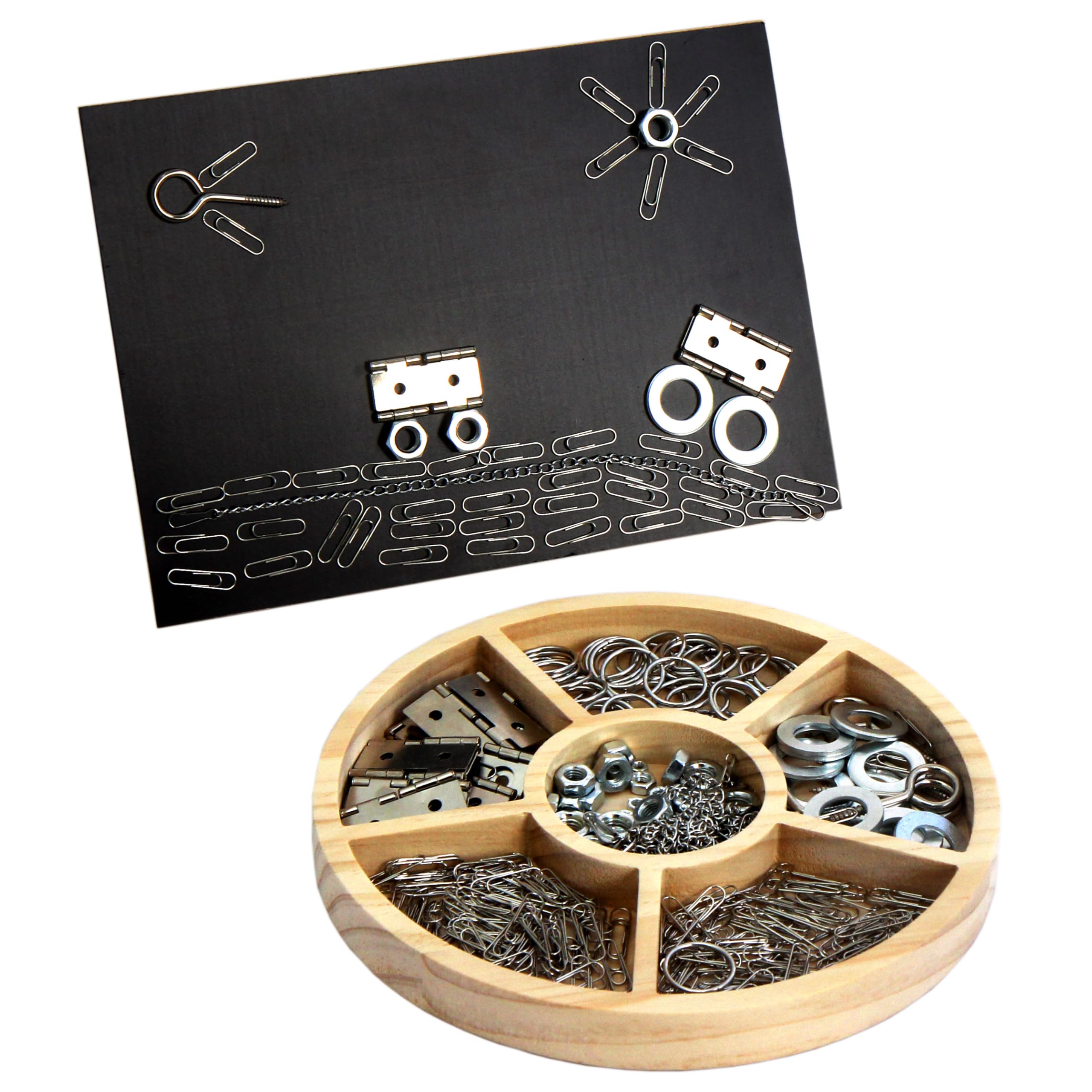
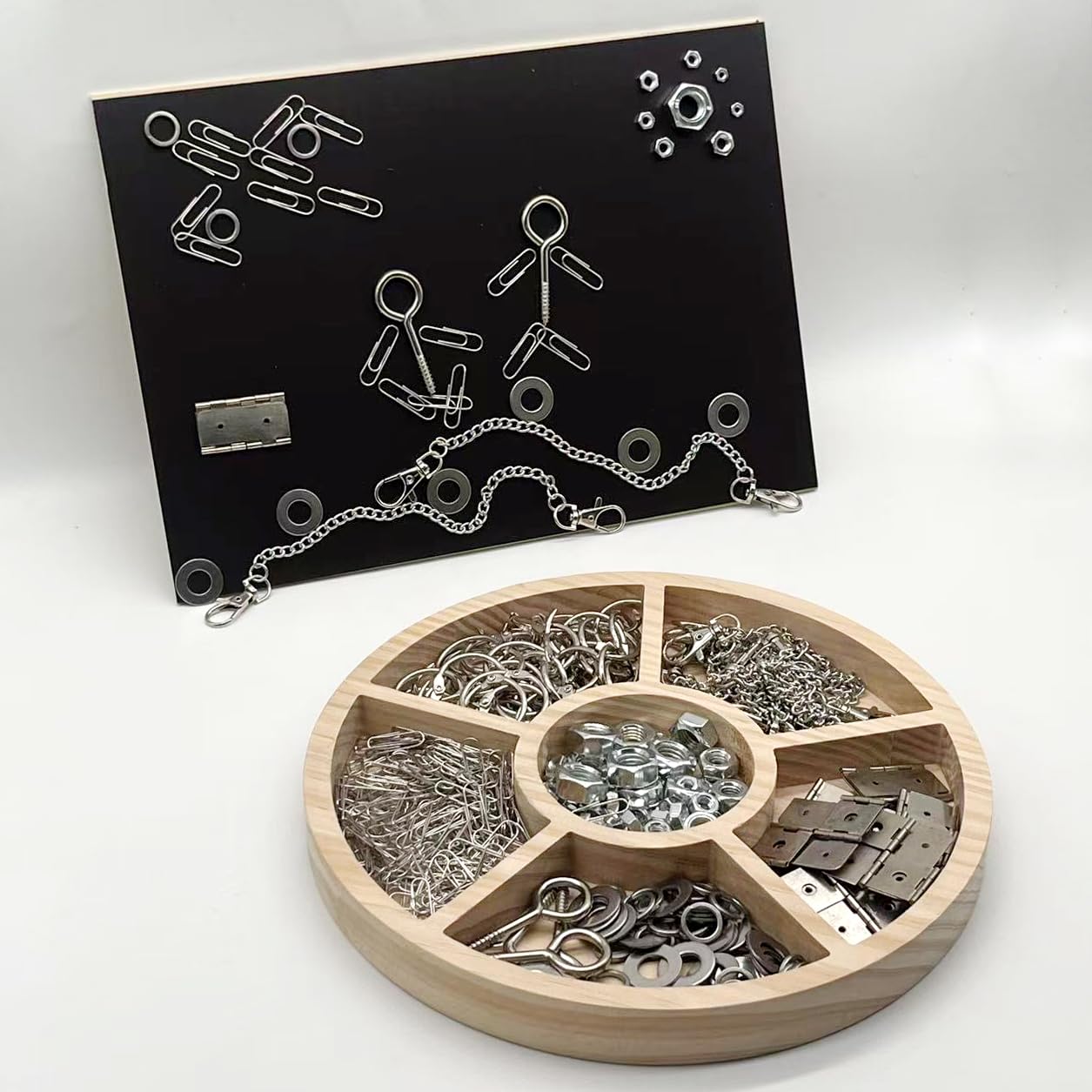
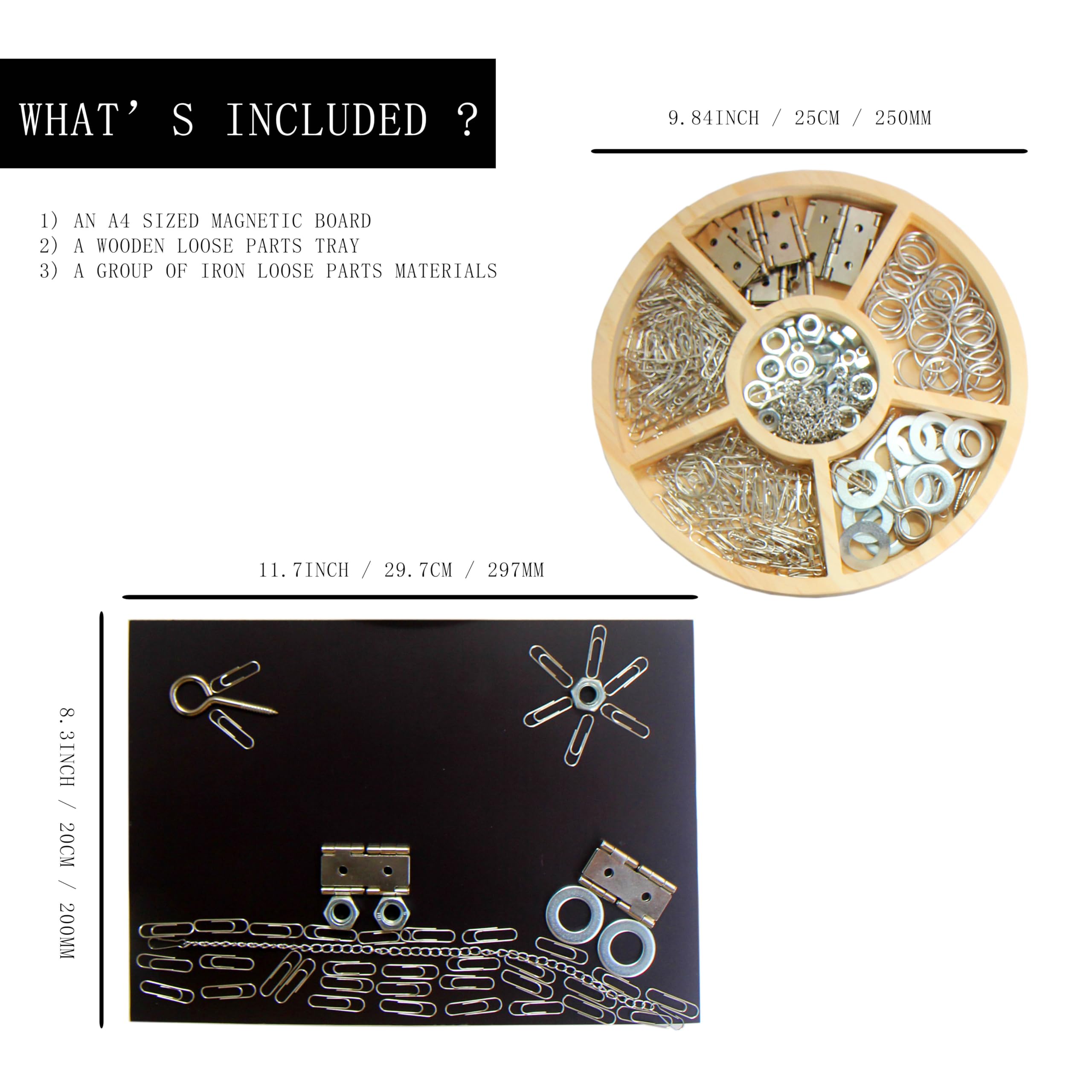
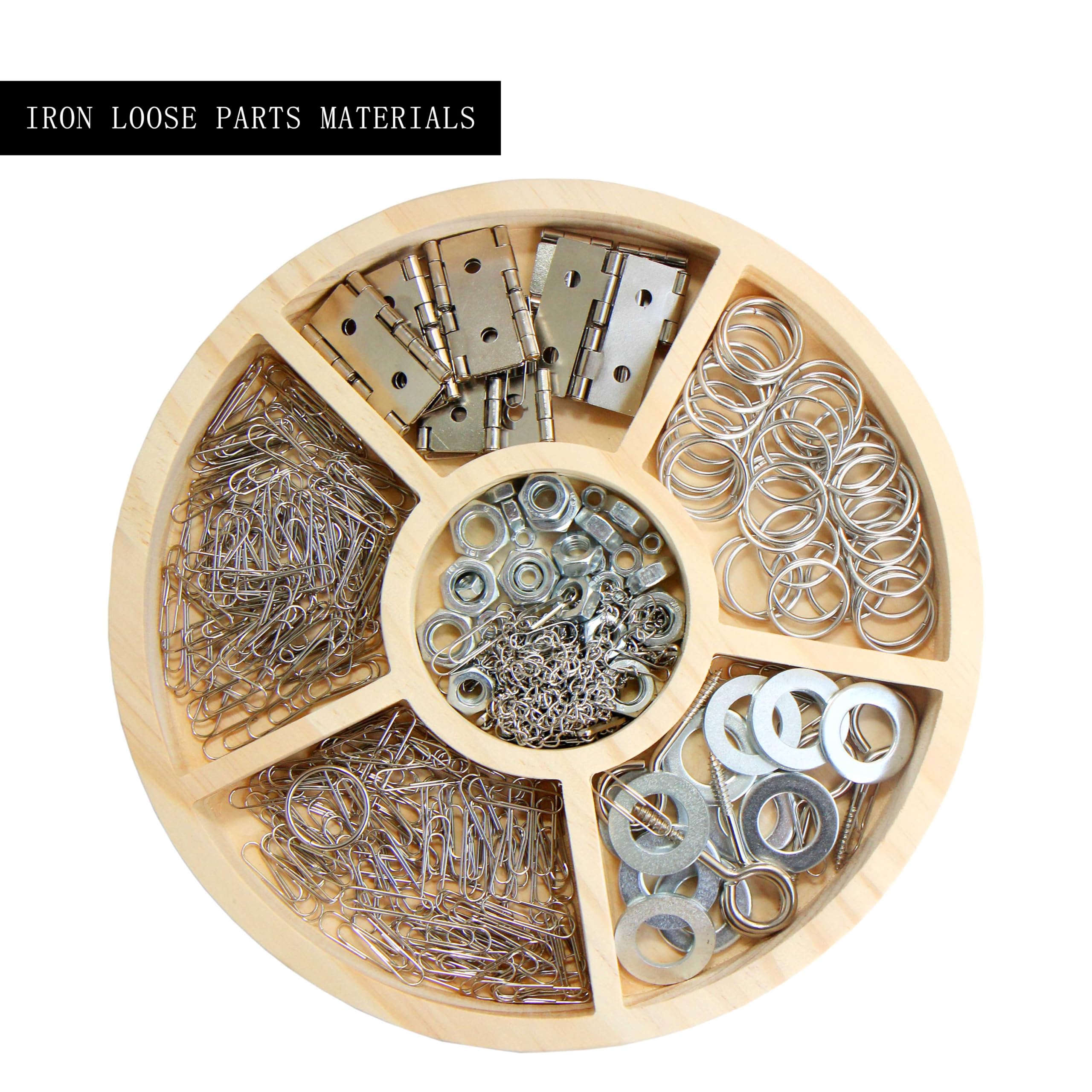
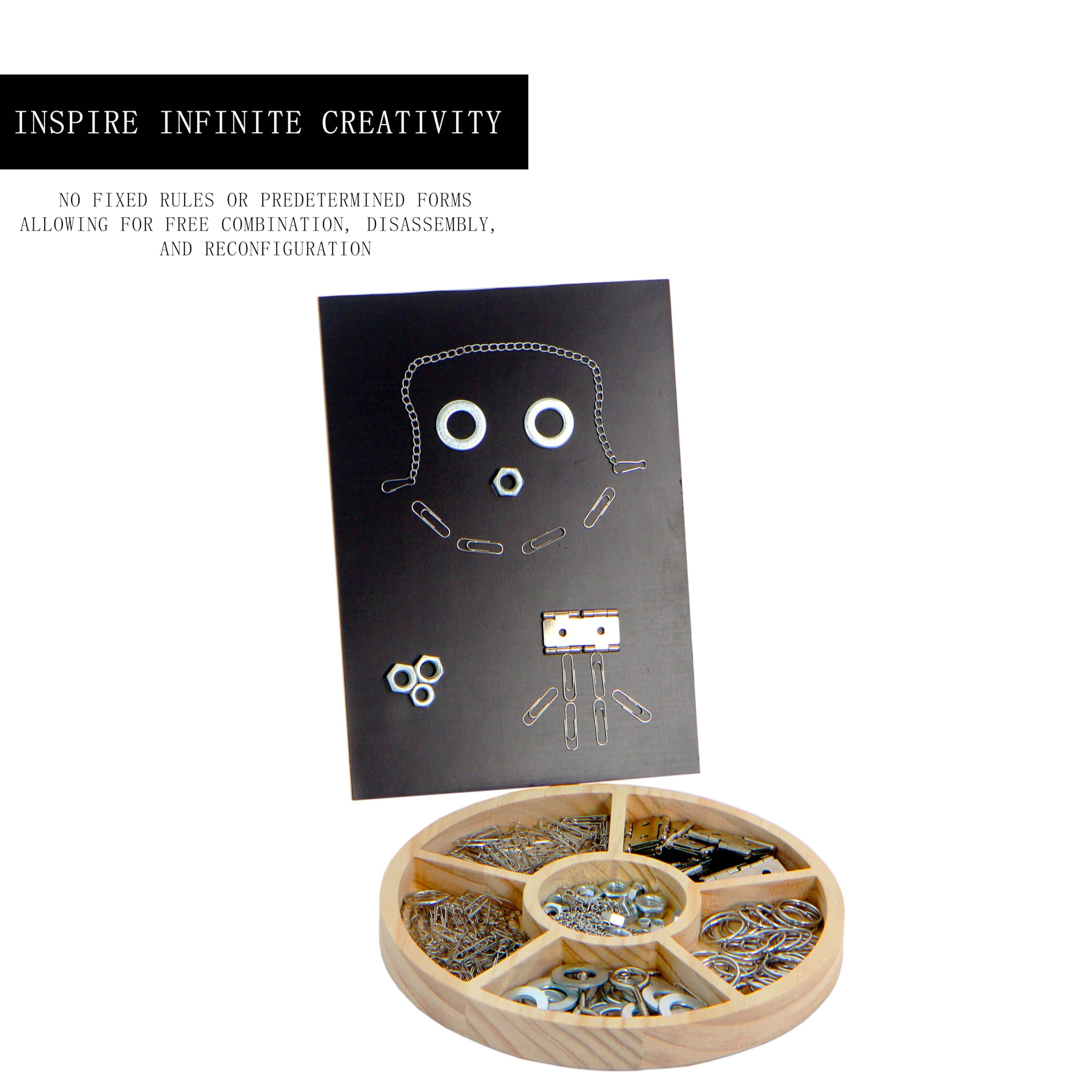
Metal Loose Parts Learning Kit with Magnetic Board and Tray Set, STEAM Activities for Kids Ages 3+, Montessori & Reggio-Inspired Kindergarten Preschool Classroom Materials
- EDUCATIONAL VALUE: Metal loose parts kit designed for STEAM learning activities, perfect for developing fine m
- COMPLETE SET: Includes a black magnetic board and organizing tray for easy storage and interactive play during
- MONTESSORI INSPIRED: Based on proven Montessori and Reggio teaching methods to encourage hands-on exploration
Open ended materials like the SZREGGIO Metal Loose Parts Kit are ideal for this kind of co-play: there's no script for either of you, so you genuinely have to figure it out together.
Protect unstructured time
The AAP recommends that children of all ages have daily time for free, unstructured play. This means time without an agenda, a device, or an adult directing the activity. Even 20 minutes a day makes a measurable difference to creative output and emotional regulation.
If you're curious about how this connects to broader curiosity development, building curiosity in children across childhood is a useful companion read.
6. The Link Between Imaginative Play and Emotional Intelligence
Problem solving and emotional intelligence are more closely linked than most parents realise. When children play out difficult scenarios — the volcano is about to erupt, the patient might not survive, the family is moving house — they are processing real emotional content in a safe container. The story creates enough distance from the feeling that the child can examine it.
This is why play therapy works. And it is why children who are given time and space for imaginative play consistently show stronger empathy and emotional regulation skills.
Emotion regulation through narrative
When a child gives their toy a feeling ("she's sad because no one came to her party"), they are practising emotional labelling. When they then solve that problem in the narrative ("so she made new friends"), they are rehearsing emotional problem solving. These are real mental skills, not just stories.
The connection between imaginative play and a child's broader brain development is well supported by research. Understanding what's happening in the 5 to 8 year old brain can help you see why the nature of play shifts so dramatically during those school entry years.
Expert Insights
Here is the truth about imaginative play: it is not a luxury, and it is not something to squeeze in when the "real" work is done. It is the real work, at least for the developing brain. When your child is building a city out of plastic discs, feeding a wooden horse with a leaf, or announcing that the sofa is now a pirate ship, they are doing something genuinely remarkable. They are rehearsing the cognitive moves that will carry them through school, through relationships, through every problem they will ever face. Your job is simple: make the space, protect the time, and try very hard not to fix the falling tower. The best problem they will ever solve is the one they figure out themselves.
If you found this useful, save it and share it with a parent whose kids could use more box-and-blanket time. The world needs more problem solvers, and it starts on the living room floor.
Sources & References
- American Academy of Pediatrics. "The Power of Play: A Pediatric Role in Enhancing Development in Young Children." Pediatrics, 2018. https://publications.aap.org/pediatrics/article/142/3/e20182058/38649
- Diamond, Adele. "Activities and Programs That Improve Children's Executive Functions." Child Development Perspectives, 2012. https://doi.org/10.1111/cdep.12015
- Russ, Sandra W. "Pretend Play in Childhood: Foundation of Adult Creativity." American Psychological Association, 2014.
- Gray, Peter. "Free to Learn: Why Unleashing the Instinct to Play Will Make Our Children Happier, More Self-Reliant, and Better Students for Life." Basic Books, 2013.
- Vygotsky, Lev. "Mind in Society: The Development of Higher Psychological Processes." Harvard University Press, 1978.
- Brown, Stuart. "Play: How It Shapes the Brain, Opens the Imagination, and Invigorates the Soul." Avery, 2009.
- Healey, Angela & Mendelsohn, Alan. "Selecting Appropriate Toys for Young Children in the Digital Era." Pediatrics (JAMA Pediatrics citation review), 2018. https://publications.aap.org/pediatrics/article/143/1/e20183348/37071
- National Institute for Play. "Research: Science of Play." www.nifplay.org
Frequently Asked Questions
At what age does pretend play usually begin?
How much imaginative play do children actually need?
My child only wants screen time. How do I get them interested in imaginative play?
Is playing alone as beneficial as playing with others?
What if my child's imaginative play involves violent or dark themes?
Do open ended wooden toys really make a difference compared to plastic sets?
How can I support imaginative play without spending much money?
Was this helpful?
Thanks — your feedback helps us pick what to write next.