Baby Food Maker Reviews: Is It Worth It in 2026?
A baby food maker is worth the investment in 2026 if you plan to make homemade purees at least three to four times a week, with potential savings of up to $800 a year compared to commercial pouches.
In this article
You're standing in the baby food aisle doing the maths. Your six month old needs around three servings a day, and the pouches you're holding are $2.49 each. Run those numbers to twelve months and you're looking at roughly $1,600 on pureed vegetables. According to the American Academy of Pediatrics, more than two thirds of parents report feeling the financial pressure of commercial baby food, while close to half raise concerns about what's actually in those little pouches.
The baby food maker market has grown sharply in response, and manufacturers are making big promises. The honest question is whether any of those promises hold up in a real kitchen, on a real Tuesday night, with a hungry baby in the high chair.
Here's what this guide will help you figure out:
1. The Real Cost Breakdown: What You Actually Save
The honest answer is that the savings are real, but they depend entirely on how often you use the machine. Parents who batch cook three to four times a week can save between $600 and $850 over the six to twelve month window when pureed food is the main solid food format.
The maths is straightforward. A single serving of homemade baby food, made with fresh or frozen organic produce, costs roughly $0.30–$0.50 once you account for ingredients, electricity, and storage bags or pots. The average commercial pouch sits at $1.50–$2.50. If your baby eats three servings a day for six months, the difference at the low end is over $600.
Upfront investment
Most quality all in one baby food makers fall in the $50–$130 range. The Bear dual basket steamer blender at $53.98 represents the budget end of a genuinely functional machine, while the Bear NutriEase AllStage maker at $129.99 sits at the premium end with stainless steel construction and age stage programmes. Either way, your break even point arrives within the first four to six weeks of regular use.
Hidden costs worth knowing
- Freezer storage trays (around $10–$15 total, a one time cost) - Organic produce adds roughly $0.10–$0.20 per serving compared to conventional - Electricity use is minimal, typically under $2 a month for regular use
2. Nutrition: Does Homemade Actually Beat the Jar?
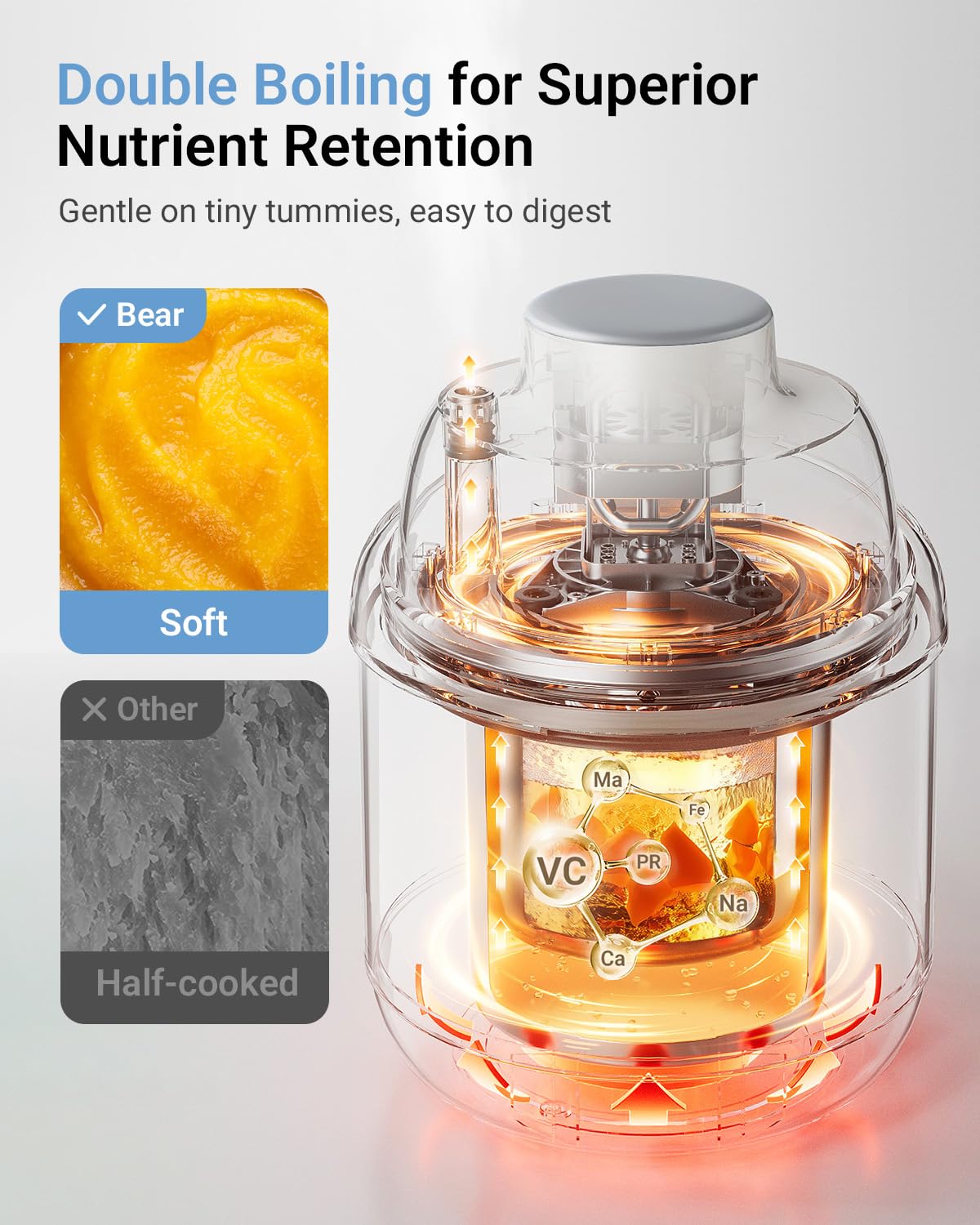
In most cases, yes, but the method matters as much as the intention. The key variable is heat exposure. Boiling vegetables in water causes water soluble vitamins, particularly vitamins B and C, to leach out into the cooking water, which then gets discarded. Steam cooking keeps that water away from the food, so the nutrients stay where you want them.
Research on food processing consistently shows that steaming retains significantly more vitamin C and B vitamins than boiling. Studies cited by the British Nutrition Foundation suggest steamed vegetables can retain up to 90% or more of vitamin C compared to 50–60% when boiled. That gap is meaningful for a baby who is just beginning to build a varied diet.
Commercial baby food goes through high heat pasteurisation to achieve a shelf life of one to two years. That process is safe, but it does affect nutritional density. Homemade food, made fresh or frozen promptly after cooking, sidesteps that entirely.

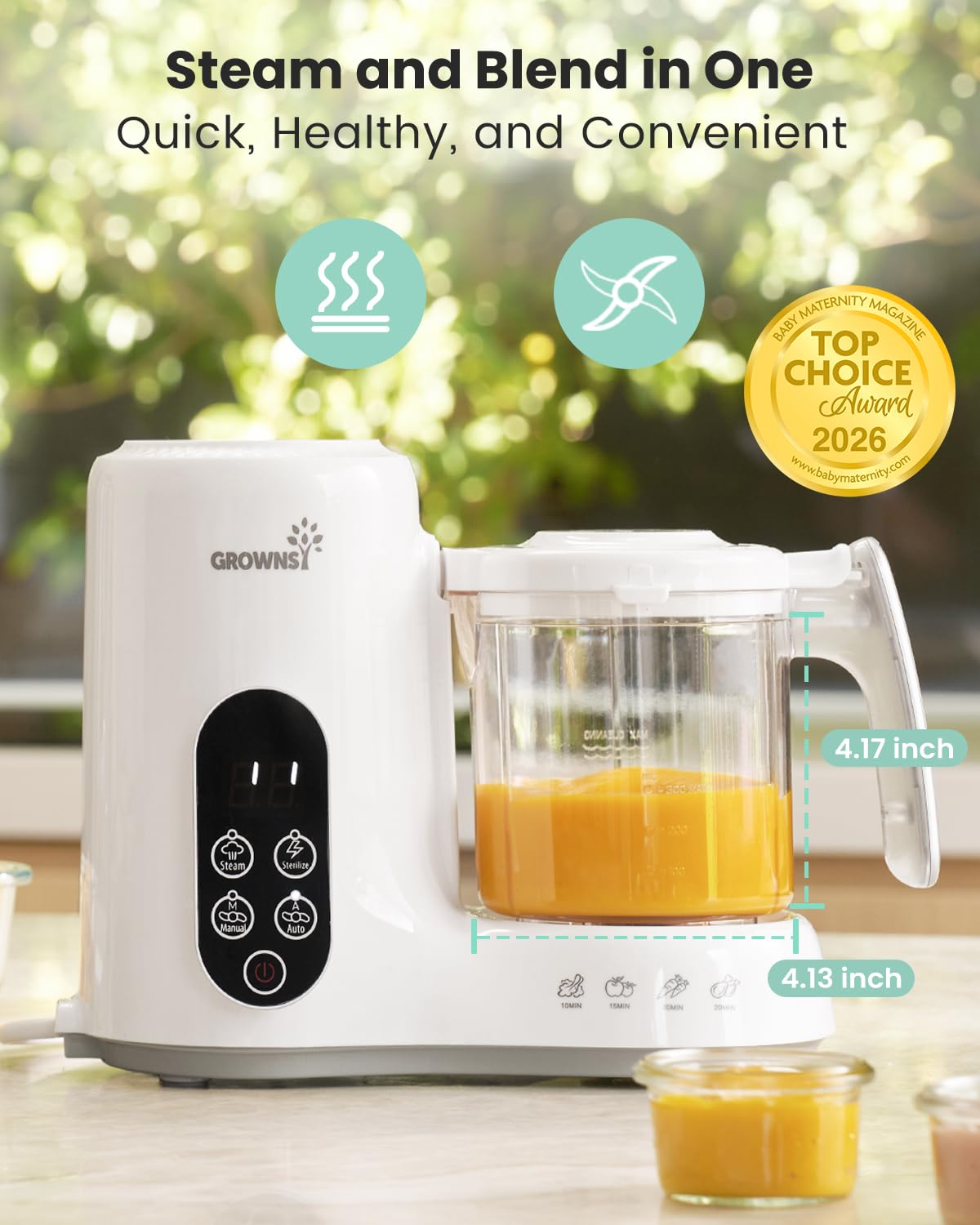

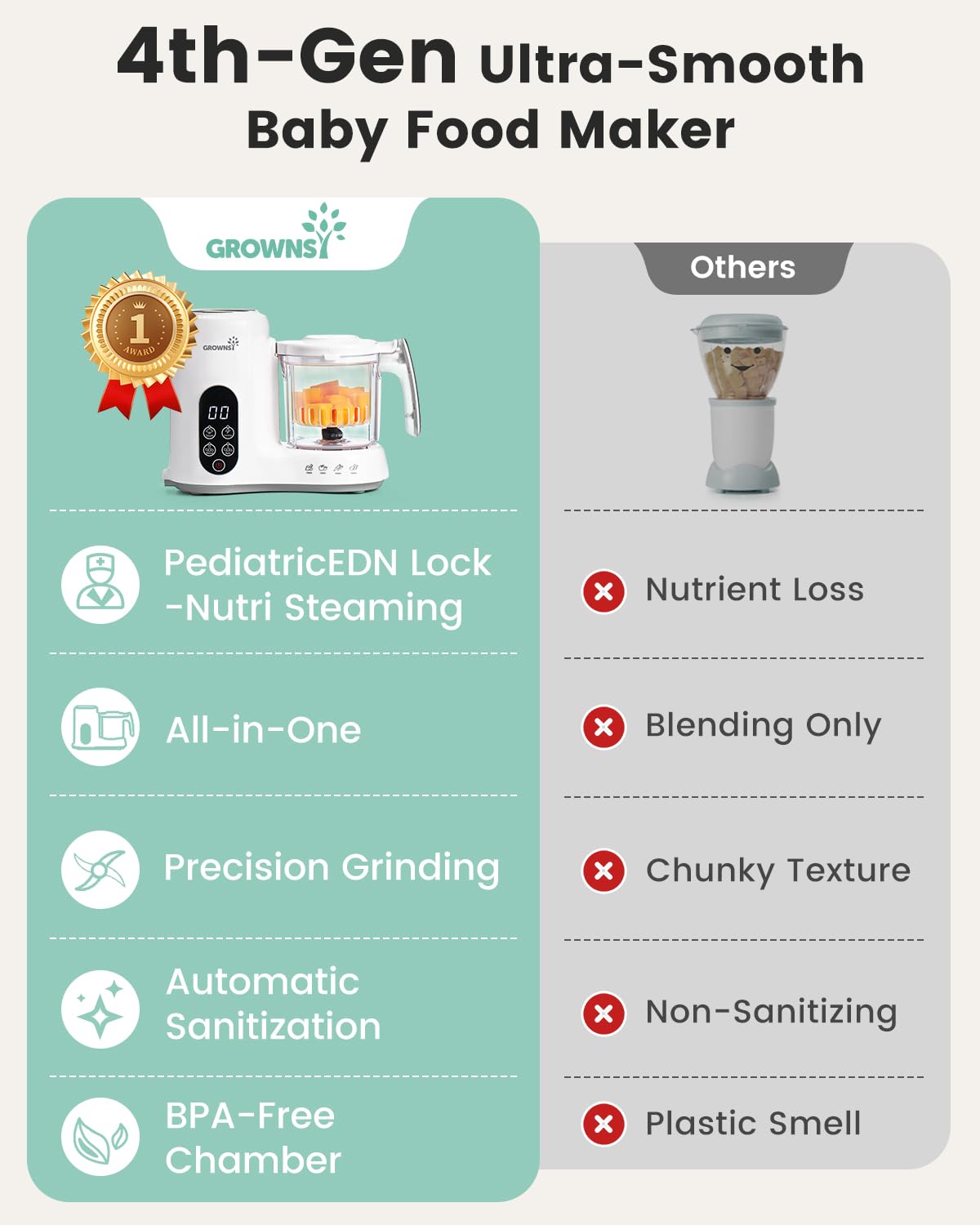

Grownsy Baby Food Maker with Steam Basket, One Step Baby Food Processor Steamer Puree Blender Grinder Mills Machine, Auto Cooking Grinding and Sterili-zing for Healthy Homemade Baby Food, White
- 𝗦𝘁𝗲𝗮𝗺𝗶𝗻𝗴 𝗮𝗻𝗱 𝗕𝗹𝗲𝗻𝗱𝗶𝗻𝗴 𝗶𝗻 𝗢𝗻𝗲: The height of the blender container is 4.13 inches, and the outer diameter is 4.
- 𝗡𝘂𝘁𝗿𝗶𝗲𝗻𝘁-𝗣𝗿𝗲𝘀𝗲𝗿𝘃𝗶𝗻𝗴 𝗦𝘁𝗲𝗮𝗺𝗶𝗻𝗴 𝗕𝗮𝘀𝗸𝗲𝘁: The elevated design of our steaming basket enables true steam cooking, mi
- 𝗧𝘄𝗼 𝗠𝗶𝘅𝗶𝗻𝗴 𝗠𝗼𝗱𝗲𝘀: This baby food steamer and blender simplifies starting solids and everyday baby meal prep wi
What steam based machines do differently
Every model in the 2026 market worth recommending uses steam rather than boiling. The Grownsy baby food maker uses an elevated steam basket design specifically to keep food above the water, protecting those vitamins B and C. The Momcozy AutoMeal food maker circulates steam at 360 degrees with a six blade system to ensure even cooking without hotspots that would degrade nutrients at the surface.
3. Time Investment: The Honest Picture
The marketing usually says 15 minutes. The real picture is closer to 20–25 minutes of active machine time, plus five minutes of prep and a few minutes of clean up. That is still dramatically less than the 45 or more minutes of stovetop cooking, blending, straining, and washing multiple pots that the traditional method requires.
The real time saving is in consolidation. All in one machines steam and blend in the same container, which means you are not transferring hot food between appliances or washing a steamer pot, a blender jug, and a strainer separately.
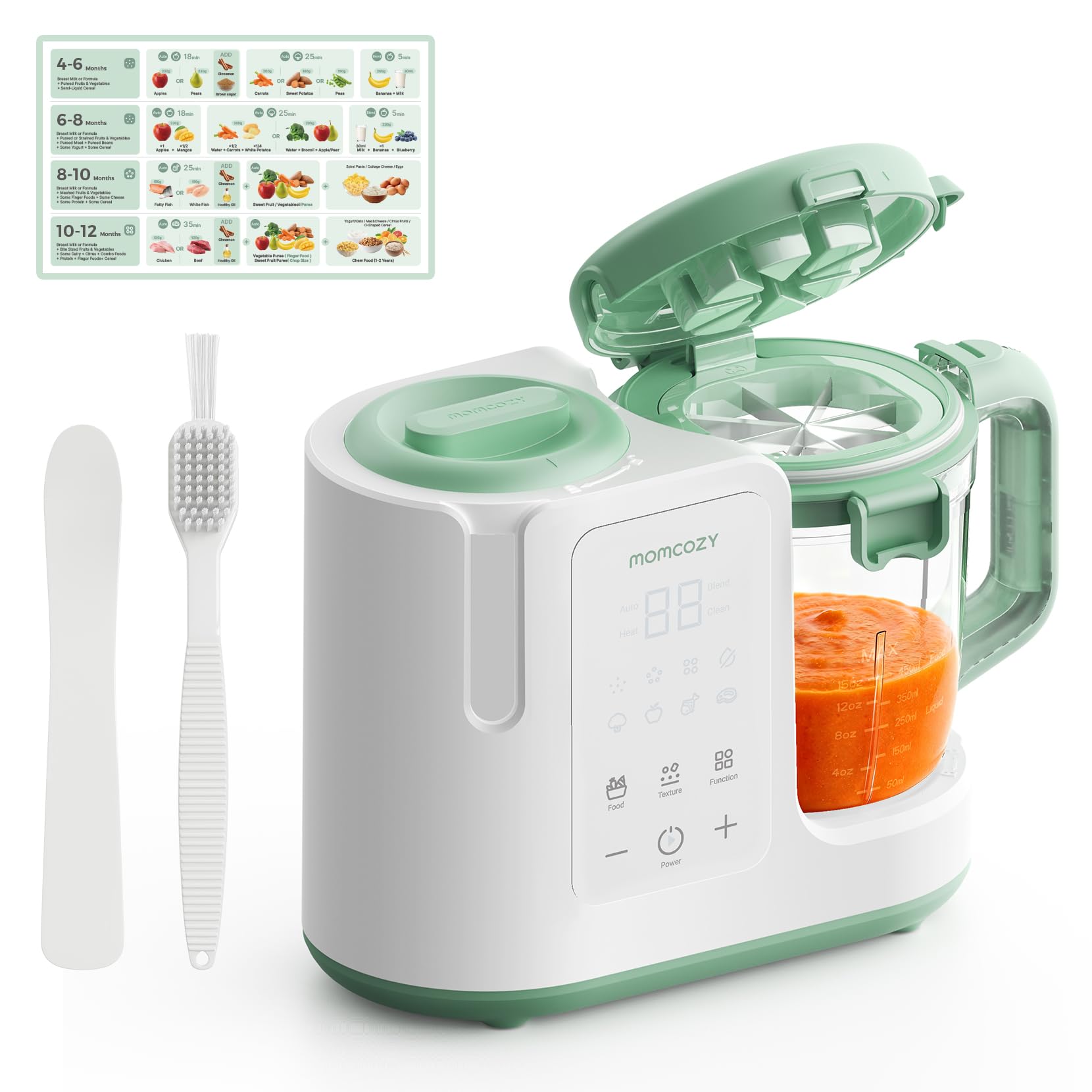
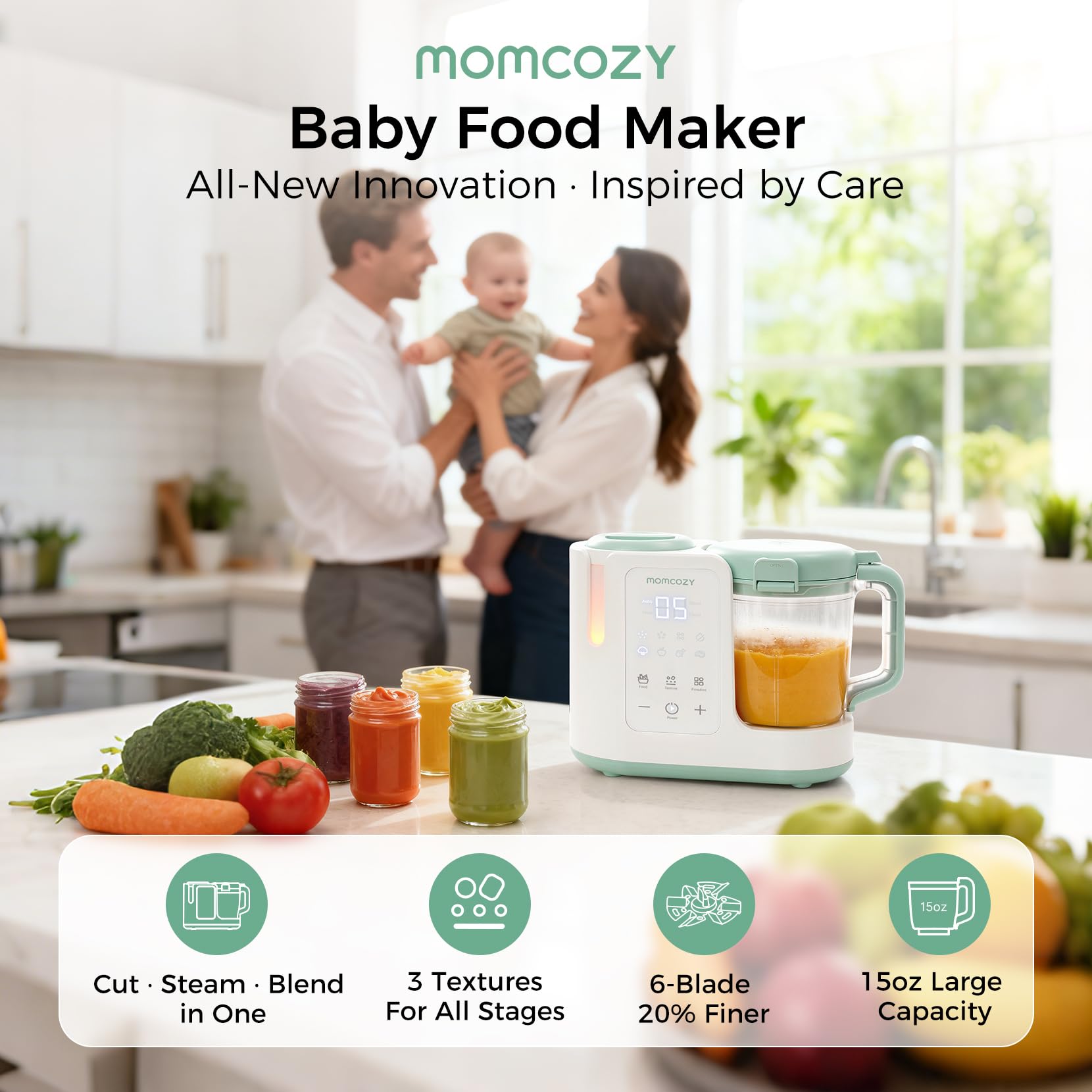
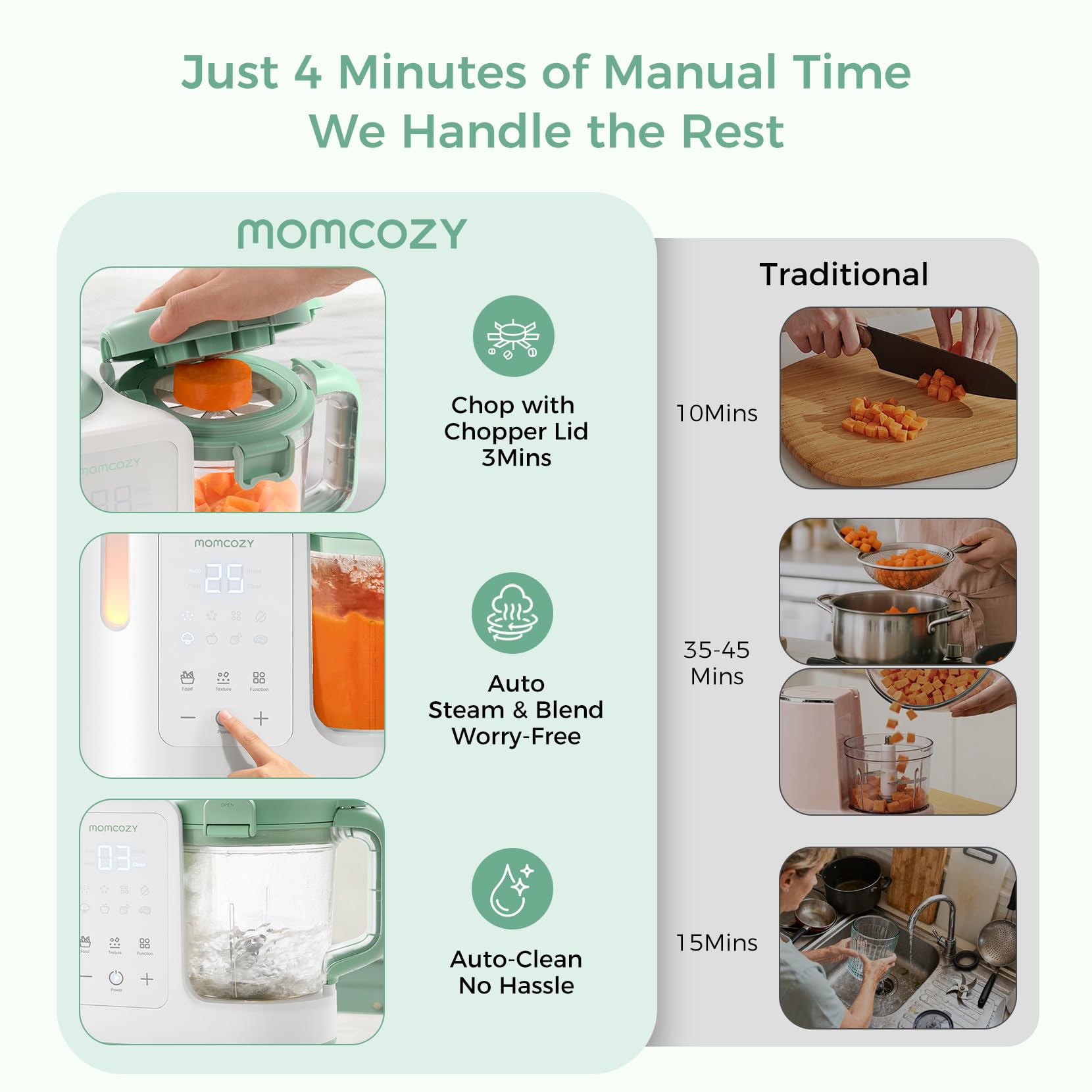
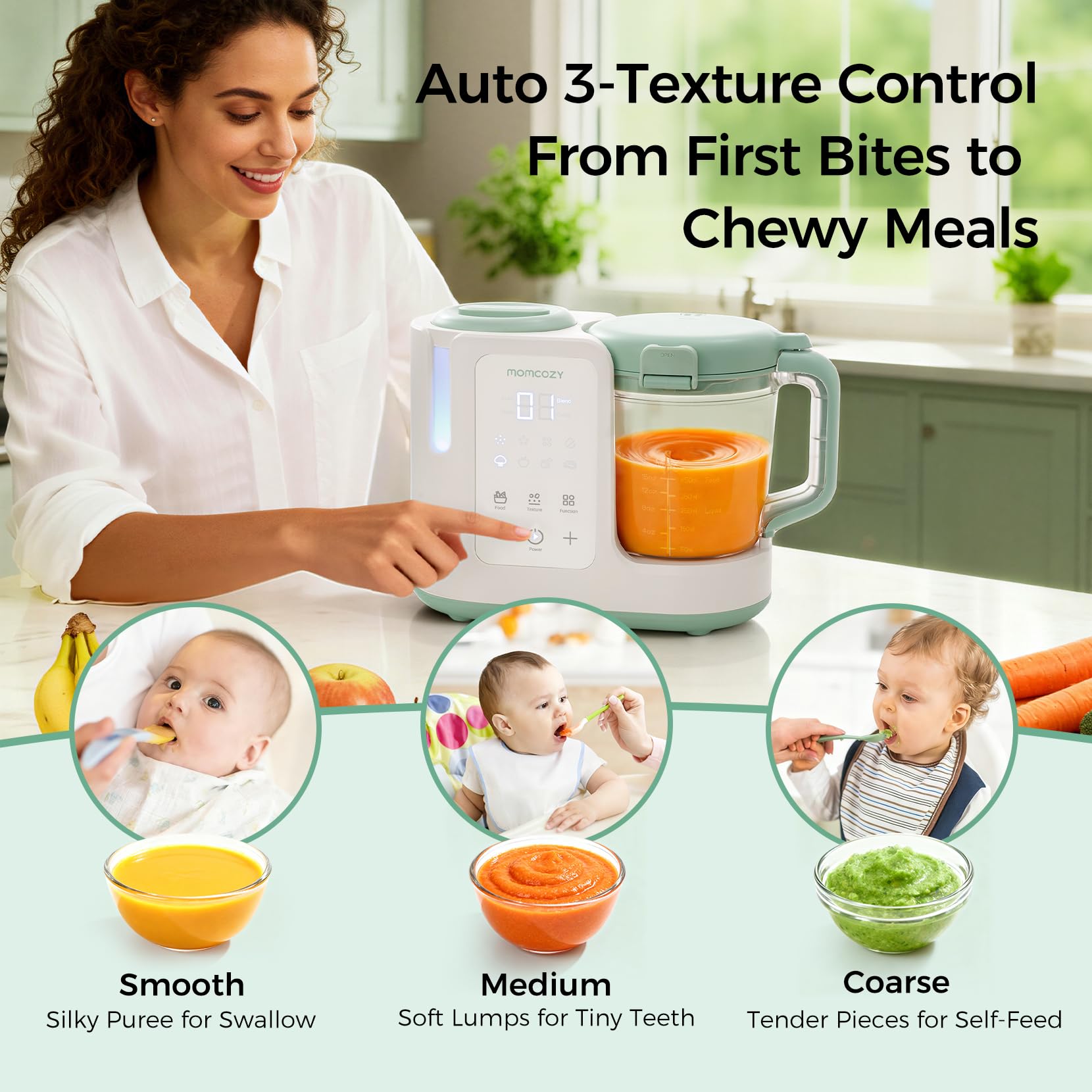
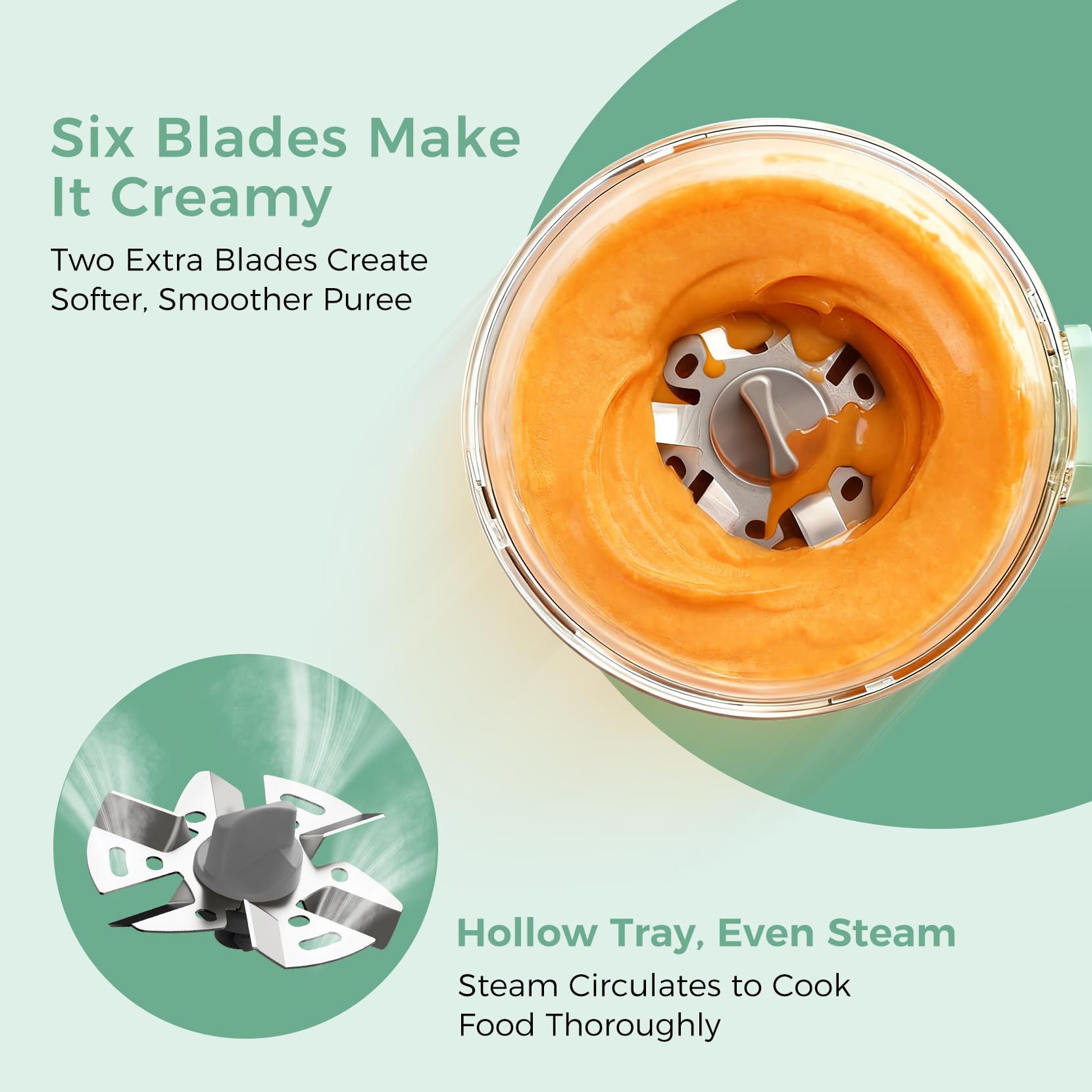
Momcozy AutoMeal Baby Food Maker – One-Step Auto Steam & Blend Food Processor, 15oz Large Cup & 6-Blade Design, Self-Cleaning, Auto 3-Stage Texture Settings for Effortless Homemade Baby Puree
- 𝟑-𝐌𝐢𝐧𝐮𝐭𝐞 𝐏𝐫𝐞𝐩, 𝐈𝐭 𝐇𝐚𝐧𝐝𝐥𝐞𝐬 𝐭𝐡𝐞 𝐑𝐞𝐬𝐭 - Spend just 3 minutes prepping — the Momcozy Baby Food Maker automatically
- 𝐂𝐲𝐜𝐥𝐨𝐧𝐞 𝟔-𝐁𝐥𝐚𝐝𝐞 𝐃𝐞𝐬𝐢𝐠𝐧, 𝐒𝐭𝐞𝐚𝐦-𝐏𝐨𝐰𝐞𝐫𝐞𝐝 𝐒𝐨𝐟𝐭𝐧𝐞𝐬𝐬: Featuring a 6-blade cyclone system, this baby food processor e
- 𝐀𝐮𝐭𝐨 𝟑-𝐓𝐞𝐱𝐭𝐮𝐫𝐞 𝐂𝐨𝐧𝐭𝐫𝐨𝐥 𝐟𝐨𝐫 𝐄𝐯𝐞𝐫𝐲 𝐒𝐭𝐚𝐠𝐞 - Choose from smooth, medium, or coarse textures with one touch. The Mo
The Momcozy AutoMeal is probably the clearest example of this efficiency. You prep for three minutes, press a button, and it steams and blends automatically over 18–25 minutes. The three stage texture setting means you are not guessing whether the puree is smooth enough for a six month old or chunky enough for a ten month old.
Batch cooking changes the equation
The real efficiency win is not the single batch; it is batch cooking. The Bear dual basket steamer blender has an 18.5oz dual layer steam basket, which means you can cook up to five servings at once and freeze the rest in portioned trays. Two sessions a week can cover a baby's full week of solid food.
4. Features That Matter vs. Features That Don't
Not every feature on the box earns its price. After looking at how parents actually use these machines, here is the honest breakdown of what is worth paying for and what is not.
Worth paying for
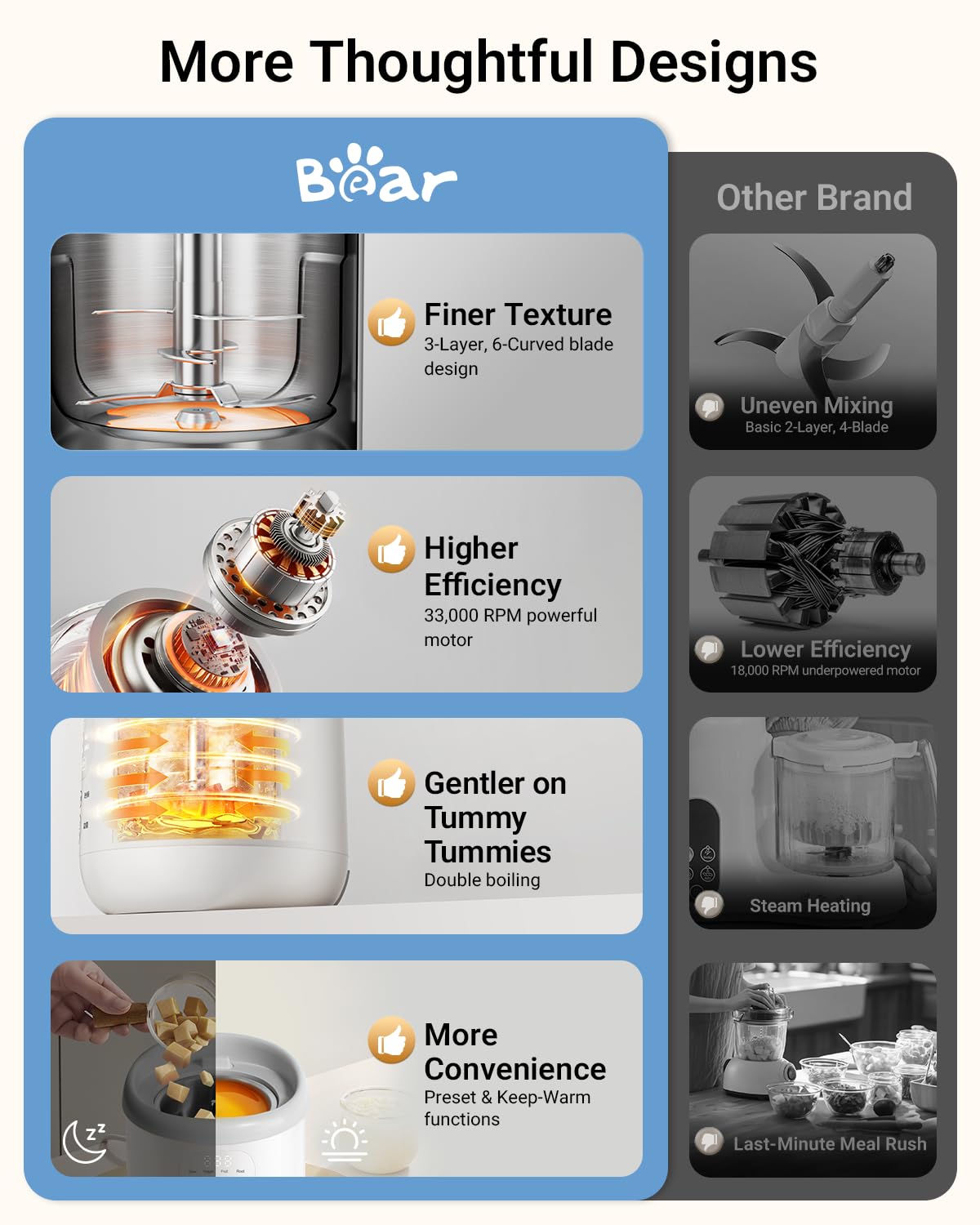
Age stage settings. The Bear NutriEase AllStage maker has three stage settings mapped to 4–7, 8–10, and 11 month plus. This is genuinely useful because the texture your baby needs at six months is very different from what they need at ten months. Not having to guess the right blend duration saves you ruined batches.
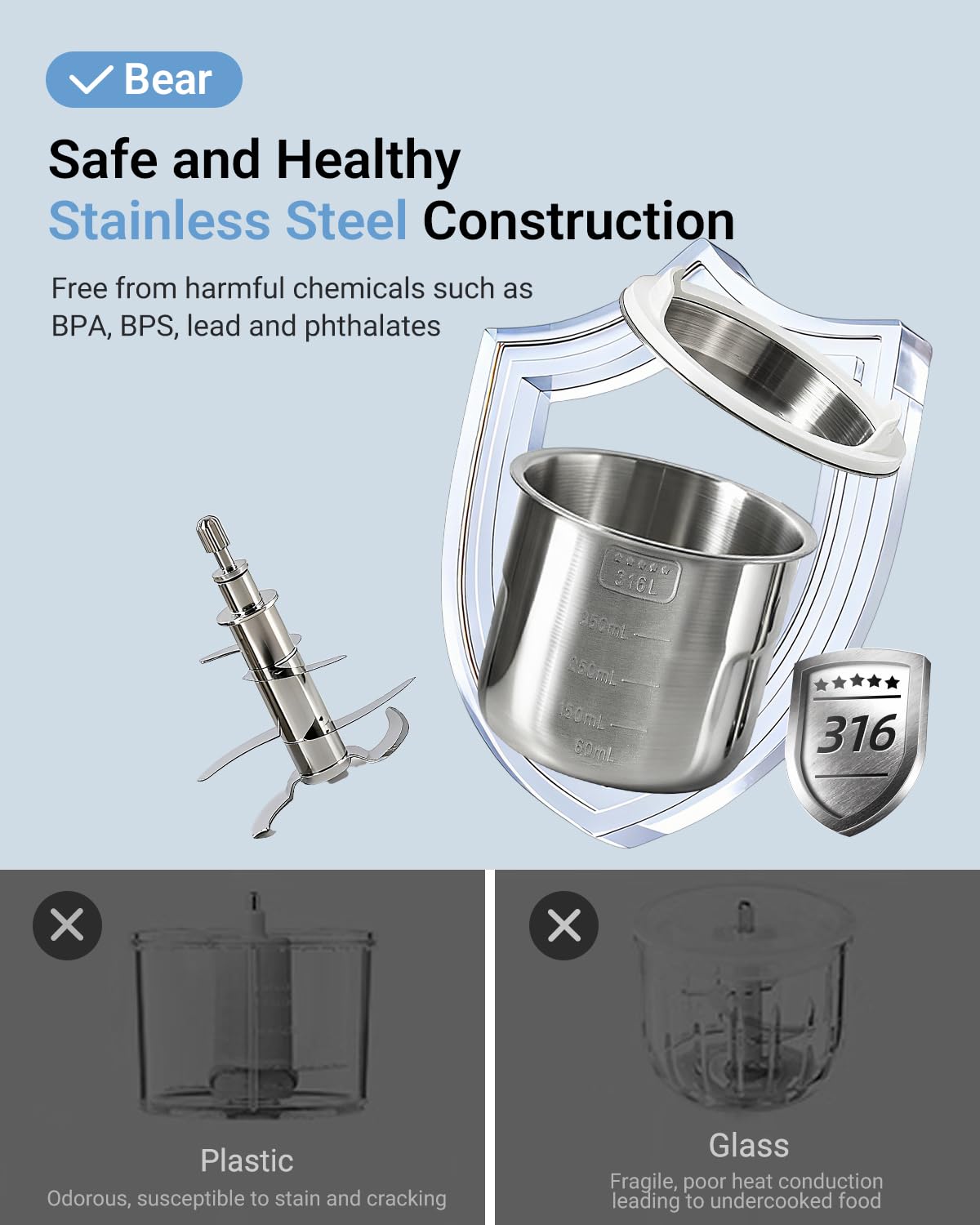
Stainless steel contact surfaces. Plastic bowls and blades raise questions about chemical leaching at high temperatures. The Bear NutriEase uses a stainless steel bowl, lid, and blade, all confirmed BPA, lead, and phthalate free. For food that goes directly into your baby's mouth, this distinction is worth the price difference.
Sterilisation function. Several models, including the Grownsy range and the Bear dual basket, include a bottle sterilisation mode. If you are also formula feeding or pumping, having one device that sterilises bottles and makes food is a genuine space saver.
Self cleaning. The Momcozy AutoMeal has a self cleaning cycle. For anyone who has spent ten minutes trying to clean a blender blade by hand, this feature is not a gimmick.
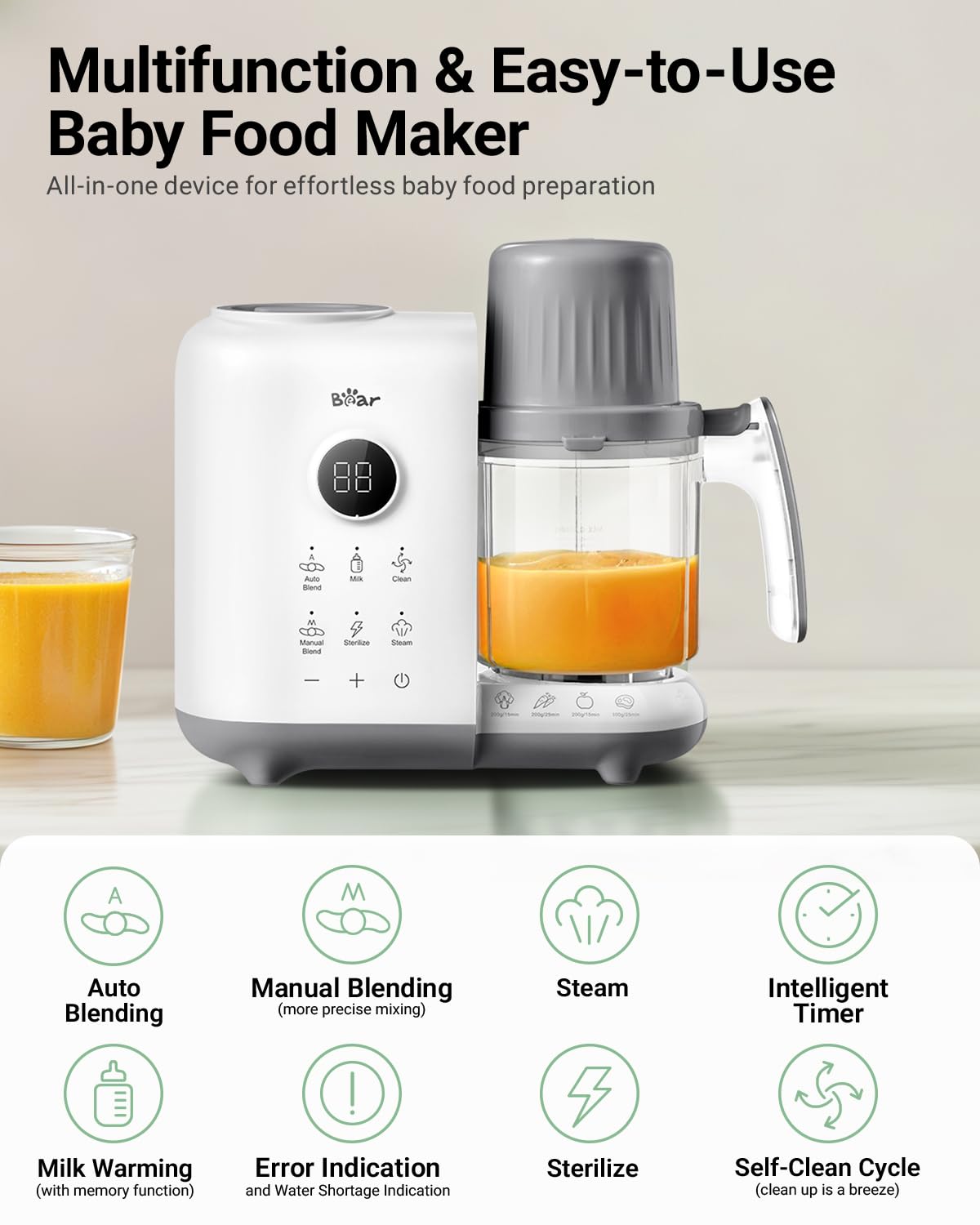
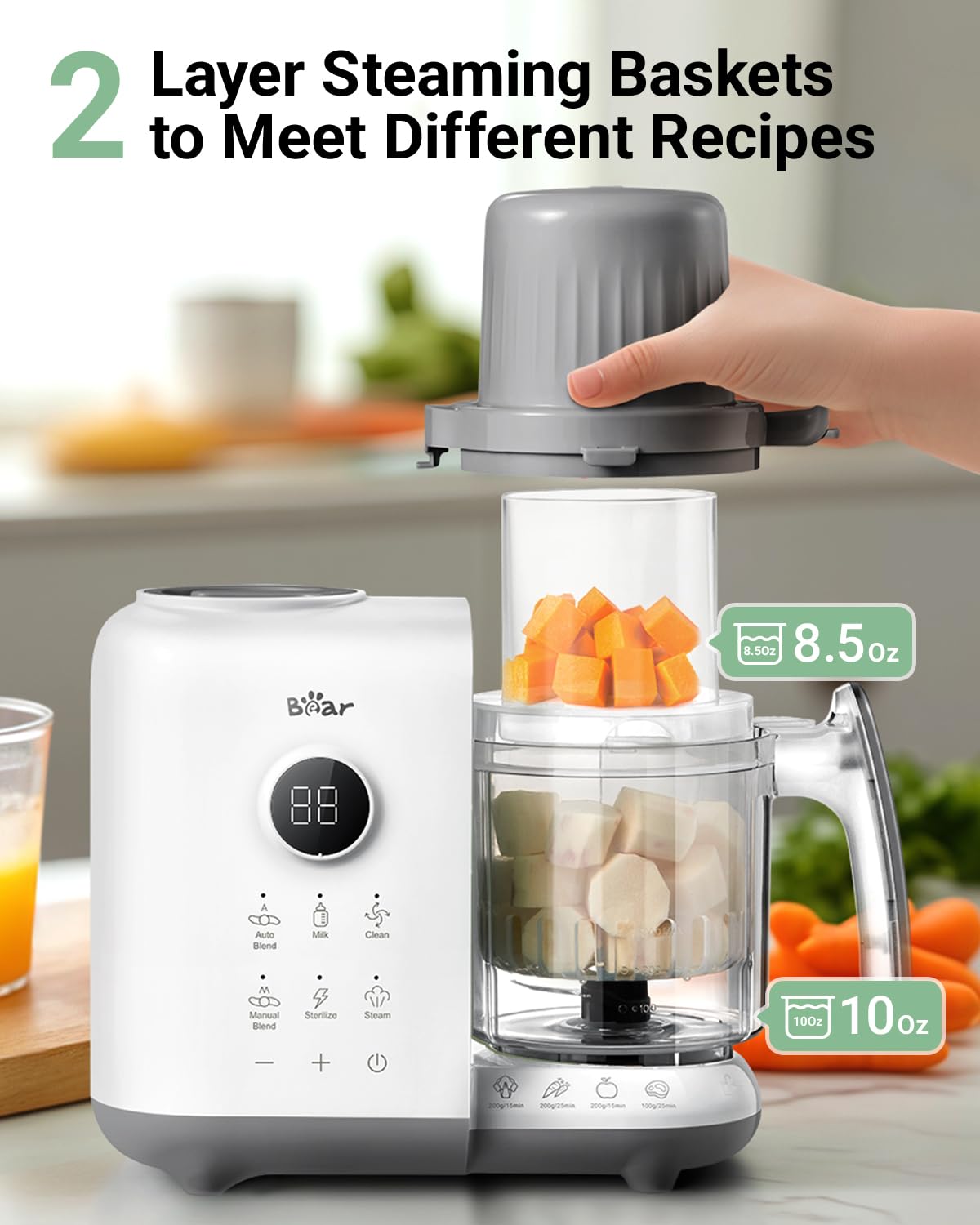
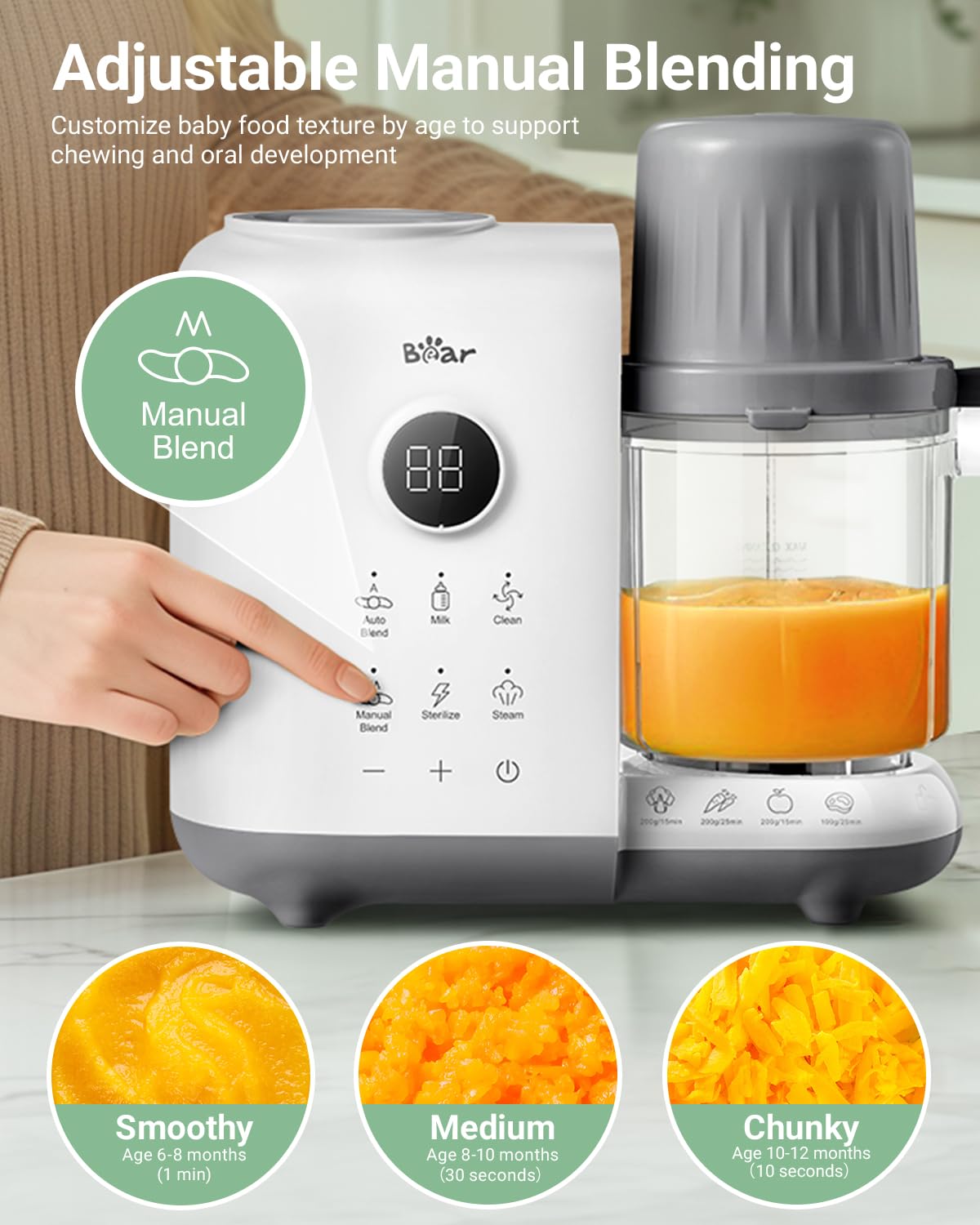
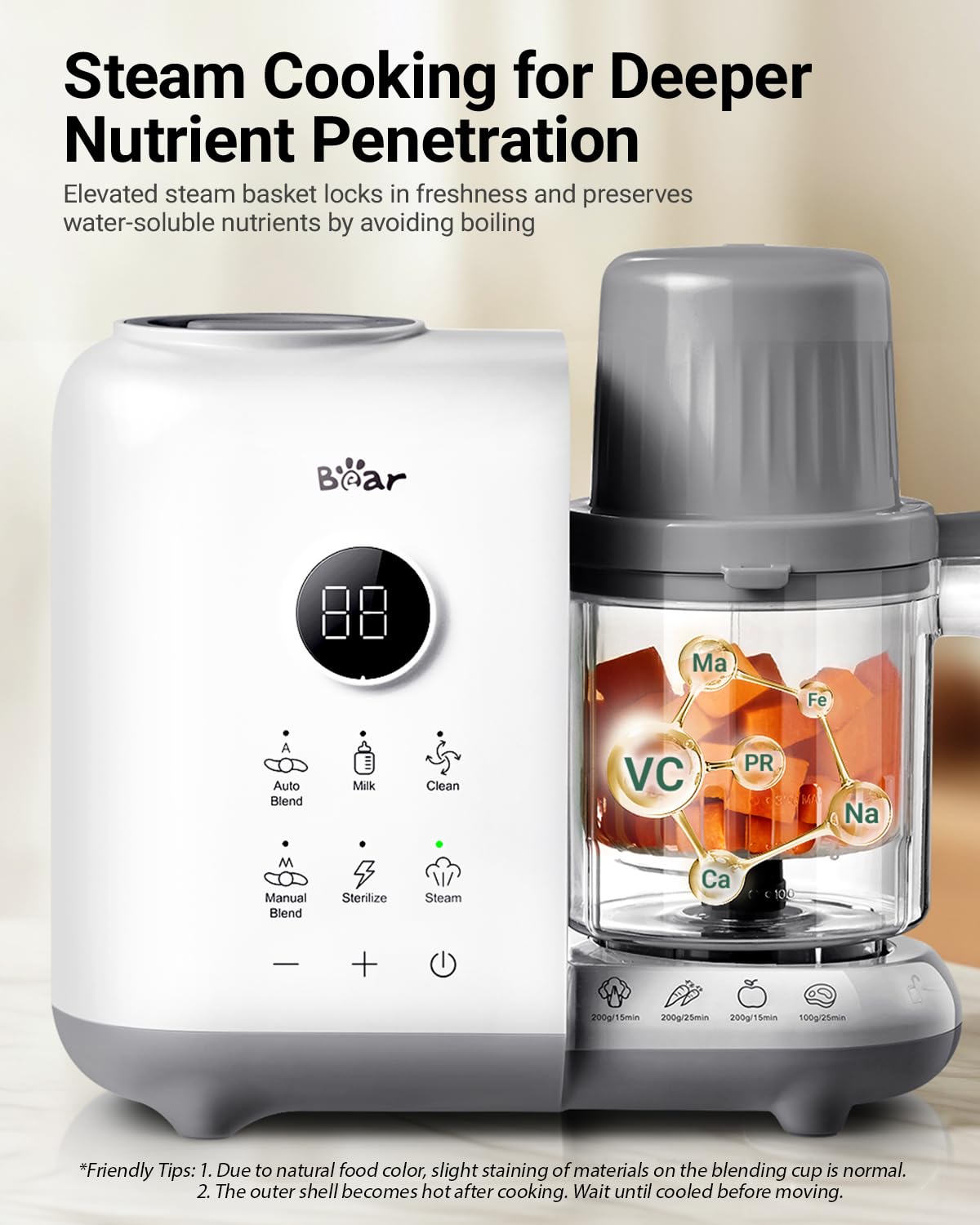
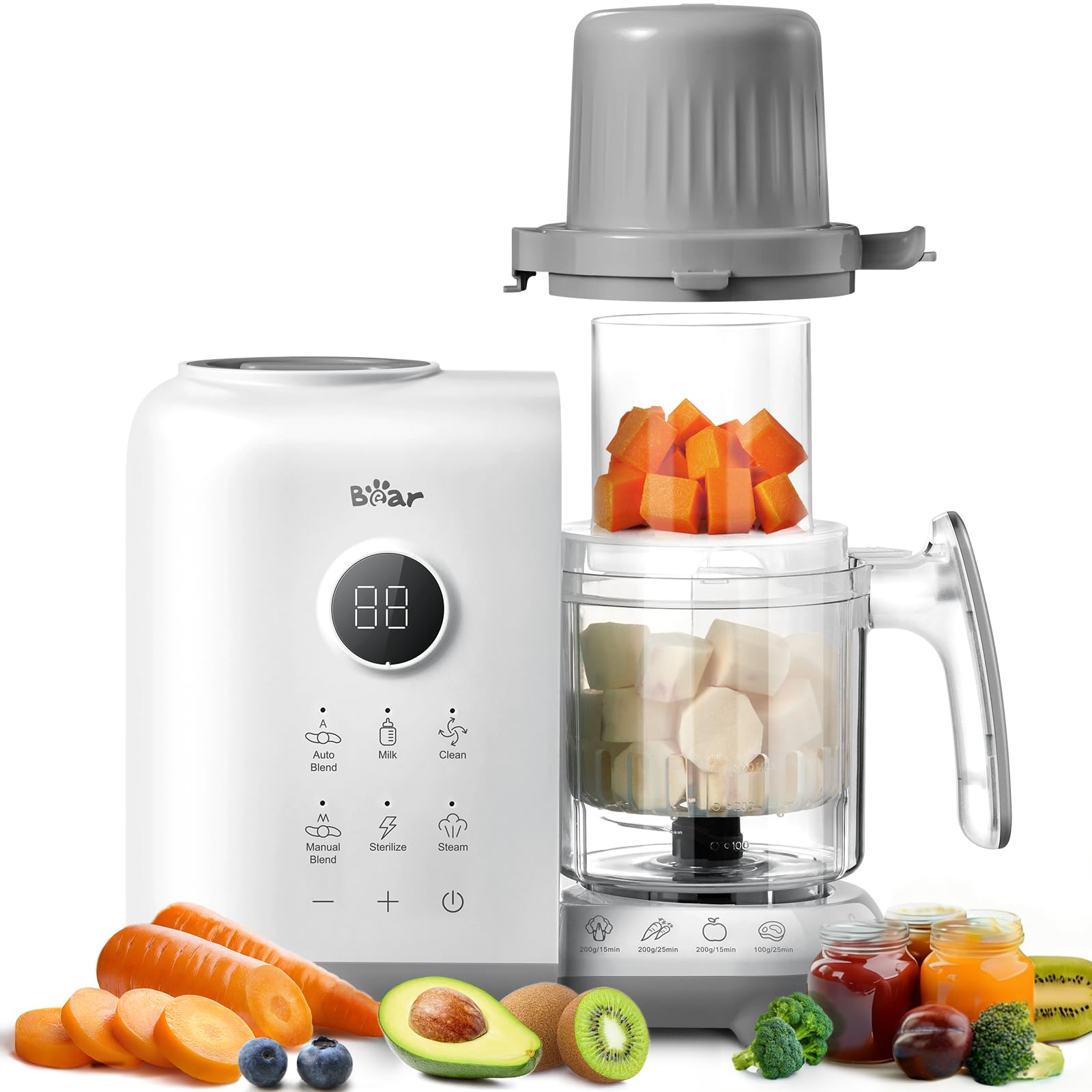
Bear Baby Food Maker with 18.5oz Dual-Layer Steam Baskets, OneStep Baby Food Processor Steamer Puree Blender Grinder Mills, Auto Cooking Grinding&Sterili-zing for Healthy Homemade Baby Food, BPA-Free
- 𝗔𝗹𝗹-𝗶𝗻-𝗢𝗻𝗲 𝗕𝗮𝗯𝘆 𝗙𝗼𝗼𝗱 𝗠𝗮𝗸𝗲𝗿: Say goodbye to kitchen clutter! The Bear baby food maker does it all in one compac
- 𝟭𝟴.𝟱𝗼𝘇 𝗡𝘂𝘁𝗿𝗶𝗲𝗻𝘁-𝗟𝗼𝗰𝗸𝗶𝗻𝗴 𝗗𝘂𝗮𝗹-𝗟𝗮𝘆𝗲𝗿 𝗦𝘁𝗲𝗮𝗺 𝗕𝗮𝘀𝗸𝗲𝘁: Prepare up to five servings at once(for babies 6-8 months)—pe
- 𝗦𝗺𝗮𝗿𝘁 𝗕𝗹𝗲𝗻𝗱𝗶𝗻𝗴 𝗳𝗼𝗿 𝗘𝘃𝗲𝗿𝘆 𝗦𝘁𝗮𝗴𝗲: Whether your baby is starting with smooth purees or exploring chunkier texture
Not worth an extra premium
- Wi-Fi connectivity or app controls: your baby food does not need to be connected to the internet - Recipe library built into the machine: a free app or bookmark will do this better - Very large capacity (over 24oz): unless you are cooking for multiples, you will waste more than you use
5. Top Models in 2026: Honest Comparisons
| Model | Best For | Capacity | Key Feature | Recommended Product | Price |
|---|---|---|---|---|---|
| Bear NutriEase AllStage | Ages 4–12 months, texture progression | Standard single batch | Stainless steel, 3 age stage programmes | Bear NutriEase AllStage | $129.99 |
| Bear Dual Basket | Batch cooking families | 18.5oz dual layer | Cook two ingredients separately at once | Bear Dual Basket Steamer | $53.98 |
| Momcozy AutoMeal | Busy parents, minimal effort | 15oz | Auto steam and blend, self cleaning, 6 blade | Momcozy AutoMeal | $79.99 |
| Grownsy (White) | Value for money, versatile households | Standard | 4.7 star rating, sterilisation included | Grownsy White | $89.99 |
| Grownsy (Dark Grey) | Same features, neutral kitchen aesthetic | Standard | Auto and manual blend modes, sterilisation | Grownsy Dark Grey | $89.99 |
| Grownsy (Green) | Colour preference, same spec | Standard | Identical features to white and grey models | Grownsy Green | $89.99 |
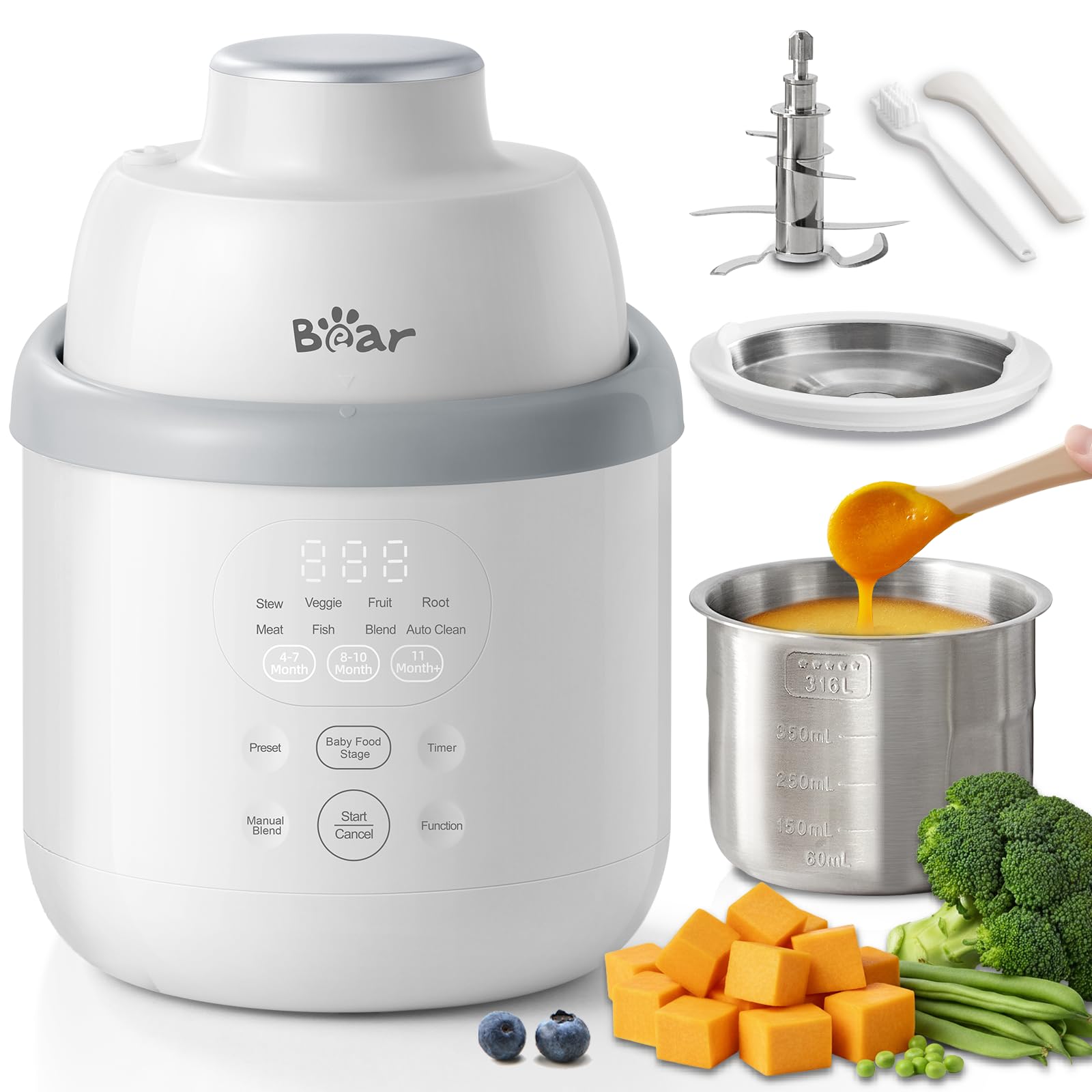
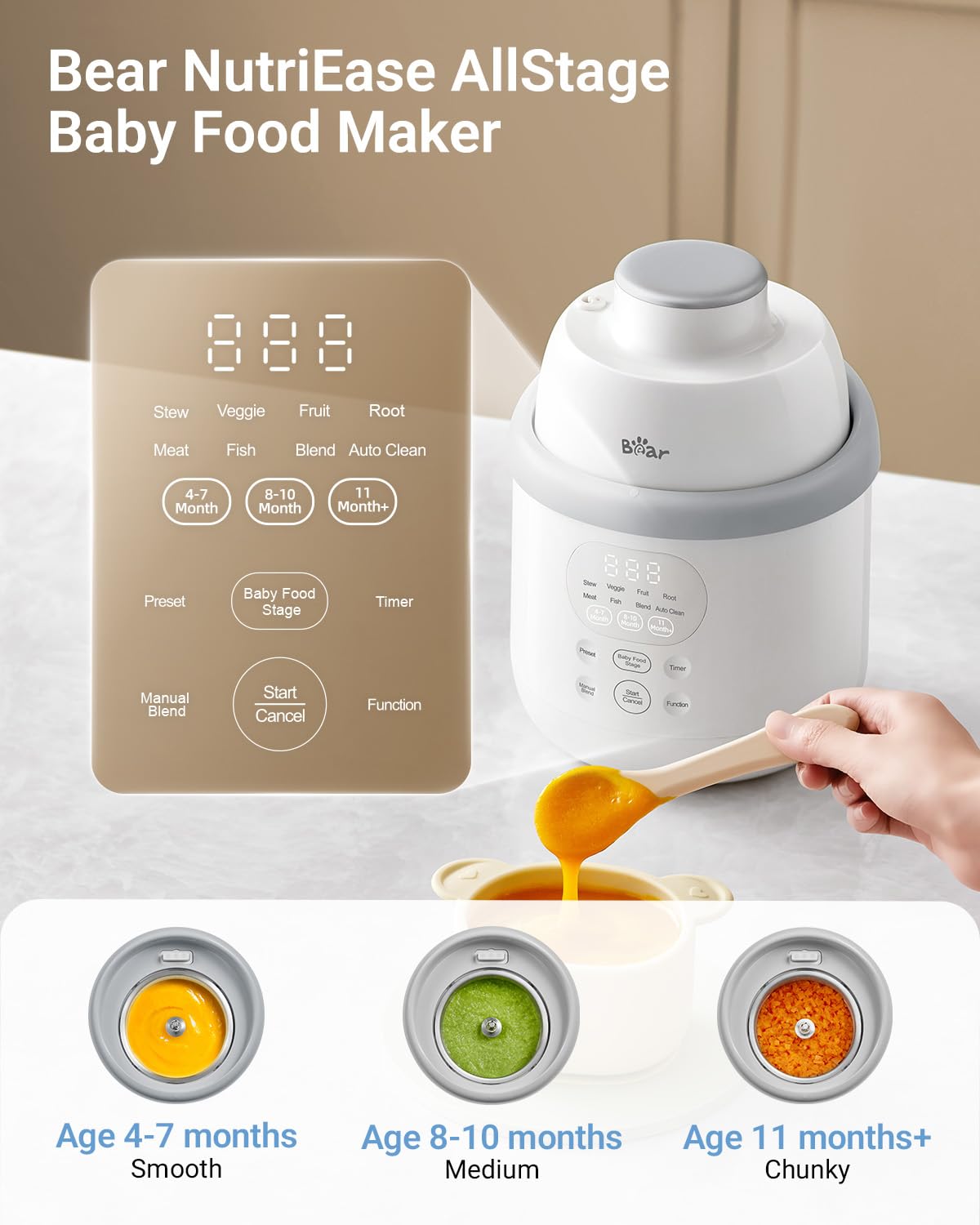
Bear NutriEase AllStage Stainless Steel Baby Food Maker Steamer and Blender, Truly OneStep Baby Food Processor Puree Maker Grinder Mills, Auto Cooking&Grinding for Healthy Homemade Baby Food, BPA-Free
- 𝗧𝗿𝘂𝗹𝘆 𝗔𝗹𝗹-𝗶𝗻-𝗼𝗻𝗲 𝗕𝗮𝗯𝘆 𝗙𝗼𝗼𝗱 𝗠𝗮𝗸𝗲𝗿 – The Bear baby food maker is your ultimate kitchen partner, combining a stea
- 𝗖𝘂𝘀𝘁𝗼𝗺𝗶𝘇𝗲 𝗜𝗱𝗲𝗮 𝗙𝗼𝗼𝗱 𝗖𝗼𝗻𝘀𝗶𝘀𝘁𝗲𝗻𝗰𝘆 – Choose between auto or manual mixing modes to precisely control food consist
- 𝗦𝘂𝗽𝗲𝗿𝗶𝗼𝗿 & 𝗦𝗮𝗳𝗲 𝗦𝘁𝗮𝗶𝗻𝗹𝗲𝘀𝘀 𝗦𝘁𝗲𝗲𝗹 𝗖𝗼𝗻𝘀𝘁𝗿𝘂𝗰𝘁𝗶𝗼𝗻 – Durable, non-toxic, and premium, our stainless steel bowl, cove
6. Who Should Buy One (and Who Should Skip It)
This is the section most reviews skip, and it is the most useful one. A baby food maker is a genuinely good investment for some families and a complete waste of counter space for others.
Buy one if:
Skip it if:
The choice also connects to your broader feeding philosophy. If you are still reading about how much milk your baby needs alongside solids, our overview of how much breast milk or formula your baby needs is a useful companion read before you start introducing purees in earnest.
Expert Insights
Here is what I tell parents in clinic: the best feeding tool is the one you will actually use. A baby food maker is not a moral statement about parenting; it is a kitchen appliance. If having one means your baby gets a wider variety of vegetables this week than they would otherwise, it has done its job. If it makes you feel guilty every time you reach for a pouch instead, it has not.
The families who get real value from these machines are the ones who treat them like a slow cooker: batch cook on the weekend, stock the freezer, and stop thinking about it until Tuesday. If that sounds like you, the investment will pay for itself before your baby's first birthday.
Save this article for when the first puree stage begins. Share it with someone who is still standing in that baby food aisle doing the maths.
Sources & References
- American Academy of Pediatrics. "Starting Solid Foods." HealthyChildren.org. 2024. https://www.healthychildren.org/English/ages-stages/baby/feeding-nutrition/Pages/Starting-Solid-Foods.aspx
- British Nutrition Foundation. "Cooking and Nutrient Retention." Nutrition.org.uk. 2023. https://www.nutrition.org.uk
- Environmental Working Group. "Dirty Dozen: EWG's 2024 Shopper's Guide to Pesticides in Produce." EWG.org. 2024. https://www.ewg.org/foodnews/dirty-dozen.php
- World Health Organization. "Complementary Feeding: Summary of Guiding Principles." WHO.int. 2023. https://www.who.int/nutrition/publications/infantfeeding/9241562218/en/
- NHS. "Your baby's first solid foods." NHS.uk. 2024. https://www.nhs.uk/conditions/baby/weaning-and-feeding/babys-first-solid-foods/
Frequently Asked Questions
At what age should I start using a baby food maker?
Can I use a regular blender instead of a dedicated baby food maker?
How long does homemade baby food last in the fridge and freezer?
Is organic produce worth it for homemade baby food?
Do I need to sterilise a baby food maker before first use?
What consistency should purees be for a six month old versus a ten month old?
Are baby food makers easy to clean?
Was this helpful?
Thanks — your feedback helps us pick what to write next.