
Best Toddler Cups: Straw vs Sippy vs 360 Cups Compared
The best everyday cup for most toddlers is an open cup, which most toddlers should be drinking from by age 2. Sippy cups are fine in moderation, and spill proof cups are handy but may encourage odd jaw and tongue patterns. Aim to finish bottles between 12 and 18 months.

In this article
TL;DR: Quick summary
The best everyday cup for most toddlers is an open cup, which most toddlers should be drinking from by age 2. Sippy cups are fine in moderation, and spill proof cups are handy but may encourage odd jaw and tongue patterns. Aim to finish bottles between 12 and 18 months.
What you'll get
About 30 minutes to read. Short on time? Read the bold lines and the Key Takeaways near the end.
Picture a one year old at the kitchen table. There is a bottle in one hand, and behind you is a cupboard of seven mismatched cups. Two have chewed spouts and one leaks in every bag. You've read three different opinions this week, and each one sounded completely sure of itself.
If that's you, this guide is for you. Which cup, when to switch, and how to say goodbye to the bottle without a meltdown are some of the most common questions parents bring to me.
By the end you will know what each cup type actually does and where each one earns its place. You will also have a simple plan for the switch. I'll be honest about where experts disagree, because they do. You don't need a perfect cup. You need a steady routine and a cup that fits your child's stage.
When should my toddler start drinking from a cup?
Offer a cup when solid foods begin, usually around 6 months, and treat the first months as practice, not a deadline. Aim to complete the move away from bottles sometime between 12 and 18 months. An open cup by about 2 years is the healthy goal.
A rough timeline you can use
Here is how the main sources line up. Think of it as a window, not a test your child can fail.
Notice how much space there is between "first taste of a cup" and "bottles are finished." That gap is deliberate. Cup skills take months to build, and your child does not need to be good at it on day one.
What early practice really looks like
Picture a 7 month old in the high chair. You hold a small cup with a splash of water, tip it gently to her lips, and most of it ends up on her bib. That counts as a win. She just learned what a cup is for.
At this stage, you hold the cup. Your job is to offer, not to measure how much she drinks. Milk or formula still does the heavy lifting, so the cup is simply a new skill at mealtimes.
Why the sources don't match exactly
You'll see small differences between experts. The AAP lists a spouted cup or a cup with a straw as options at 6 months. Cleveland Clinic suggests starting with an open training cup and even skipping the sippy phase.
These are not really in conflict. All of them point to the same destination, which is a child who drinks from an open cup. The route is flexible, and your child's skills and your daily life decide which one you take.
If you want the development angle in more depth, I cover it in why the cup you choose actually matters.
Common mistakes in the early months
When to get help
Most children work out cups without any special help. Ask your pediatrician or a speech language pathologist if your child coughs, gags or chokes on most drinks. Also ask if they refuse every cup you offer, or if feeding seems to be getting harder instead of easier.
Is a sippy cup a good first cup, or should I skip it?
A sippy cup is fine as a short term helper, but it should not be your main plan. Some sources suggest starting with an open training cup and even skipping sippy cups. If you do use one, keep it brief and move on by about 2 years.
What a spout does inside the mouth
Parents love sippy cups for good reason: they keep the couch dry. The trouble is what a spout does to the way your child drinks.
A speech language source explains that a bottle nipple or hard spout rests over the front third of the tongue. That prevents the tongue lifting, which is a movement children need to eat and drink well. Soft spouts bring their own dental concern. Dentists recommend sippy cups with a hard spout or a straw, rather than ones with soft spouts.
In plain terms, a spout cup is closer to a bottle than to a real cup. That is fine for a while, but it is not where you want to stay.
What the AAP and speech specialists say
The AAP is clear about timing.
The AAP also has a view on valves. If you choose a sippy cup, pick one with no valve. A valve is a small flap that stops liquid flowing until your child sucks hard on the spout or straw.
Speech language specialists add a balanced note. A sippy cup of any kind can be offered in moderation, alongside straws and open cups. That is the sensible middle path for most families.
A sippy cup that bridges to a straw
If you want a sippy cup that points towards straw drinking, the [Nuby Flex Straw Easy Grip cups](/#) are one example in this roundup.
I'd treat that valve honestly. The AAP prefers sippy cups without one, so a cup like this works best as a stepping stone, not a forever cup.
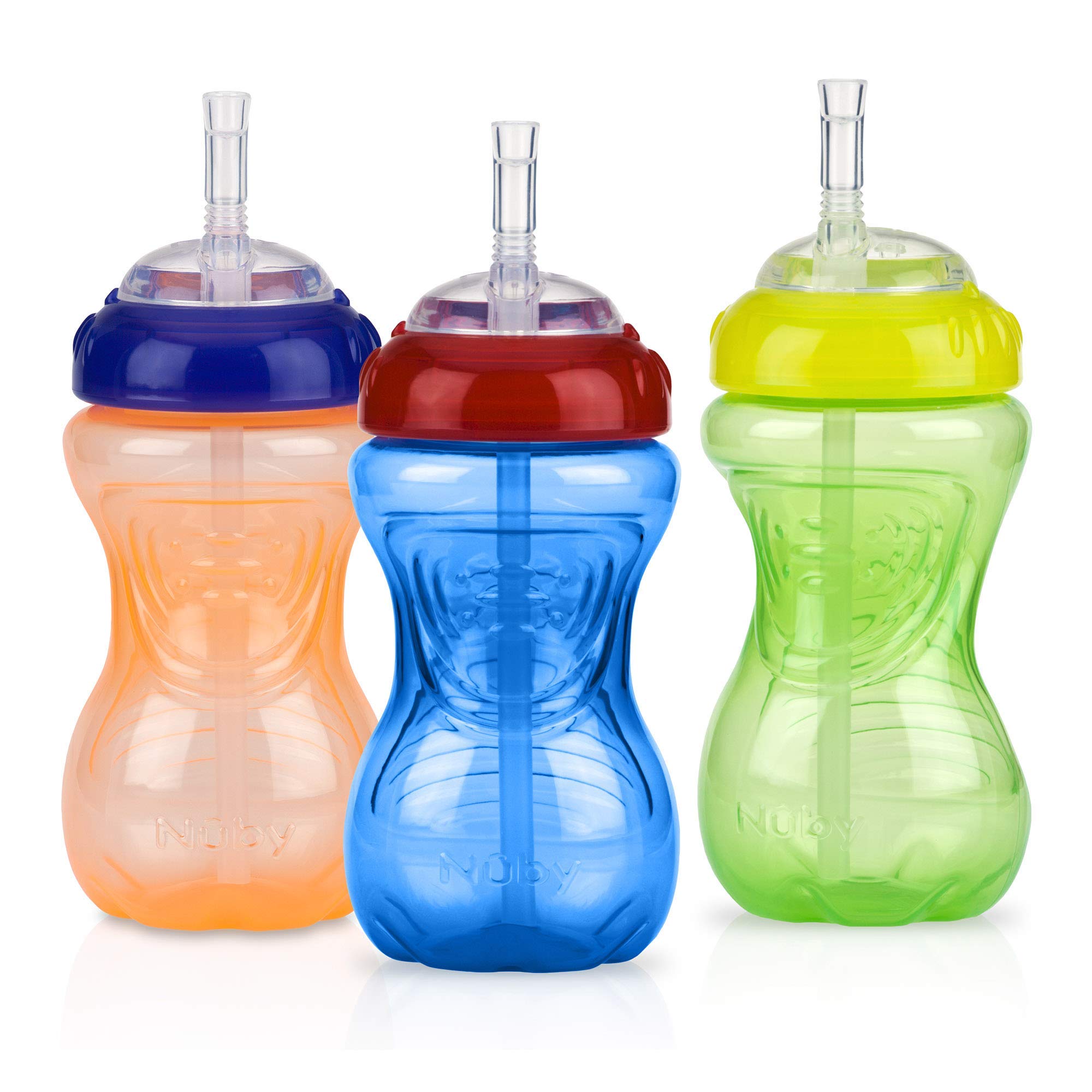

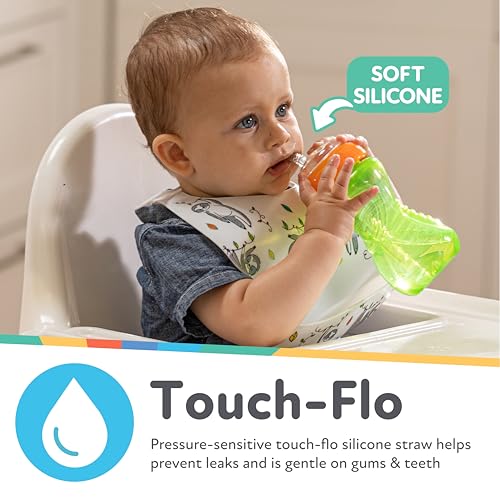

Nuby No-Spill Flex Straw Easy Grip Sippy Cup, 3 Pack, 10 oz, 12M+, Neutral
- SIPPY CUPS FOR 12+ MONTHS: The Nuby No-Spill Easy Grip Cup for Toddlers 12+ Months holds 10 ounces (300 mL)…
- NO-SPILL STRAW CUP: Our Soft Flex straw has a built-in TOUCH-FLO valve that only opens when your toddler sips…
- DESIGNED FOR TODDLERS: The soft silicone straw is gentle on your child's teeth and gums; The curved and…
How to use a sippy cup well
Think of it as one tool among three. Here is a simple pattern that works for many families.
- Use the open cup or straw cup at the table, where you can watch and help.
- Keep the sippy cup for the car seat or a short outing, with plain water in it.
- Retire it as your child gets more confident, aiming for an open cup by about 2 years.
A script that helps toddlers accept the rule: "At the table we use our big kid cup. In the car, you can have your water cup."
Common sippy cup mistakes
Why do so many experts like straw cups?
A straw is closer to how adults drink, so it is a more advanced skill than a spout. Speech specialists suggest giving toddlers chances to try straw cups as they move on from other cups. Sources differ on whether a straw or an open cup comes first, so follow what your child can manage.
Why a straw makes sense
Straw drinking asks your child to close their lips around something and control the liquid. The ASHA (American Speech Language Hearing Association) source puts it simply: straw use is more developmentally advanced, and it is closer to what adults use.
Compare that to a hard spout, which rests over the front of the tongue. A straw usually gives the tongue more room to do its job. That's one reason speech specialists favour it.
Straw first or open cup first?
This is where sources honestly disagree.
So what do you do? If your baby is eating solids and chewing well, try both with your help and see what clicks. If they gag on a straw or struggle with chewing, back off and try again at a later date.
How to teach a straw, step by step
- Sit your child upright at the table, never lying back or moving around.
- Let them watch you drink from your own straw, and say, "Look, I'm sipping."
- Put the straw gently between their lips with a small amount of water in the cup.
- Praise any lip closure or sip: "You did it! That's sipping."
- Keep sessions short. Stop before they get frustrated and try again at the next meal.
If a straw is a total mystery, some parents try a weighted straw cup. The [Munchkin Any Angle Weighted Toddler Straw Cups](/#) are one example of a weighted straw cup.


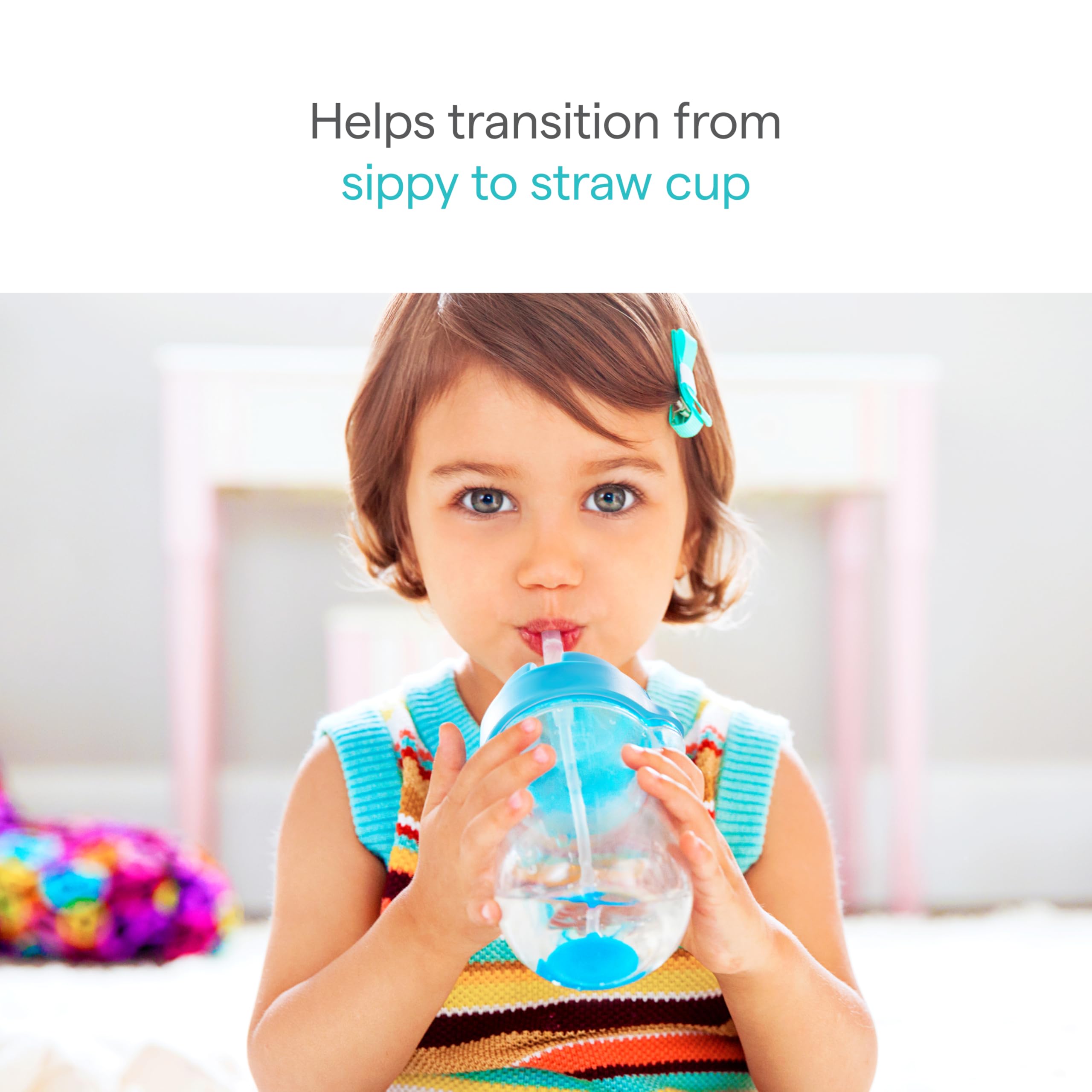
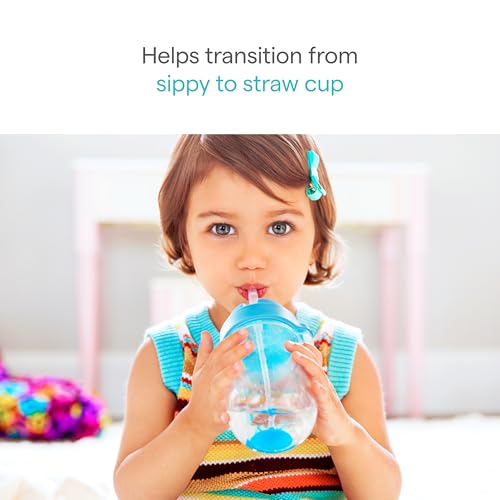
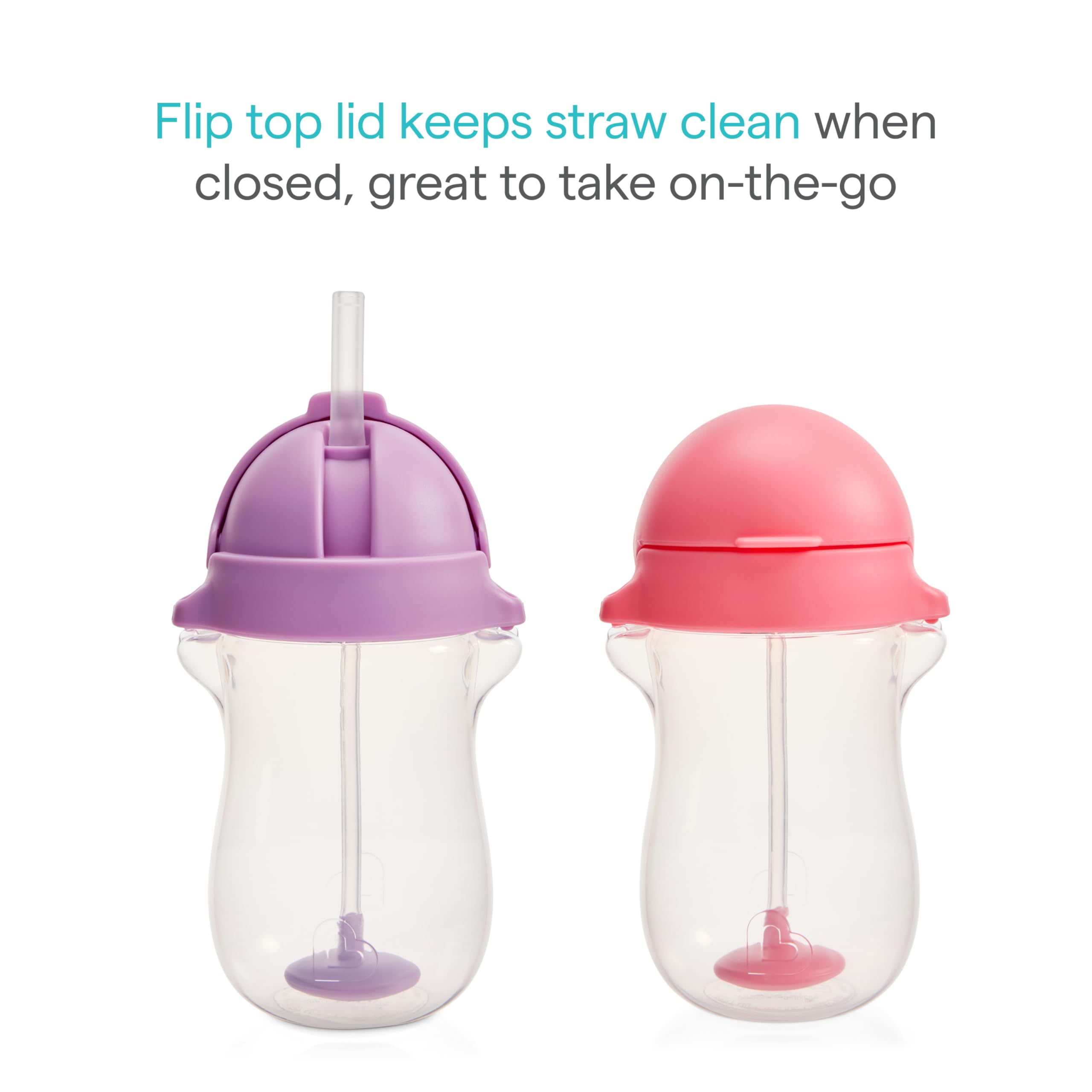
Munchkin Any Angle Weighted Toddler Straw Cups, 10 Ounce, 2 Pack, Blue/Green
- Any Angle Drinking: The weighted straw base allows toddlers to sip from any angle, making it easy to drink…
- Supports Sippy-to-Straw Milestone: Helps Transition from Sippy to Straw Cups
- Spill Proof Seal with Patented Click Lock Technology: Twist the lid until you hear a click, which signals…
Straw length matters
Here's a detail most parents never hear. Once a child has mastered straw drinking, speech specialists suggest cutting the straw down so the tip just reaches the tip of the tongue when the mouth is closed around it. That keeps the tongue able to lift.
Not every cup allows this. Check the manufacturer's instructions first, and ask a speech language pathologist if you're unsure. Cutting a straw may not suit every cup design, so check first.
Common straw mistakes
Are 360 cups and spill proof cups a good idea?
They are a handy tool for car seats and daycare bags, but not a good daily habit. Cleveland Clinic notes that spill proof cups are convenient and make less mess. It also says they can promote unhealthy drinking patterns, like jaw protrusion and unusual tongue placement.
What a 360 cup is
A 360 cup lets your child sip from any point around the rim, a bit like a real cup. It usually has a valve under the lid that stops liquid pouring out unless the lips press on the rim and suck.
Parents love them because they feel more grown up than a spout. Some even call them "training cups" for open cups. I'm not recommending a specific 360 cup in this guide, because none of the cups I can vouch for here is that type.
Why the valve is the real question
The valve is what makes a cup spill proof. It is also why the AAP says that if you choose a sippy cup rather than an open cup (with or without straw), you should choose one with no valve.
If you prefer a sippy cup rather than an open cup (with or without straw), choose one with no valve.
American Academy of Pediatrics, HealthyChildren.org
NHS advice adds a dental angle. It suggests avoiding cups or beakers that require sucking, as liquid can pool around teeth. Most valve cups ask for some sucking, which is the point of the valve.
So are they bad?
No. They are a tool with a job. The trouble starts when the tool becomes the default.
Picture a family on a long car trip. The valve cup in the car seat is a sensible choice, because the alternative is a soaked toddler and a stressed driver. The same cup carried everywhere, all day, at every meal, is a habit worth questioning.
A spill resistant straw tumbler for outings
If you want a cup mostly for outings, the [Owala Tumbler Kids Plastic Water Bottle](/#) is a straightforward option. It is an insulated plastic tumbler with a spill resistant lid and a removable, reusable straw. Ask your doctor or health visitor which checks and vaccines are due for your child.
It isn't a true 360 cup, but it is the closest in this roundup for on the go use. It is a big cup, so I'd fill it only partly for a small child.


Owala Tumbler Kids Plastic Water Bottle 15 oz Watermelon
- 15-ounce insulated plastic tumbler that’s easy to sip and easy to clean
- Spill-resistant lid for less mess and stress; perfect for home, sipping in the booster seat, and chillin in…
- Removable, reusable straw that's easy to clean: To remove the straw gasket, remove the lid, then push the…
A quick test before you buy any spill proof cup
Try the cup yourself with a sip of water. If you have to suck hard to get anything out, your toddler is doing bottle like sucking, and that is the pattern the NHS guidance warns about.
Then ask yourself three questions.
Common mistakes with spill proof cups
How do I protect my toddler's teeth, whatever cup I choose?
Fill the cup with plain fluoridated water between meals, skip sugary drinks in carry around cups, and don't let your child wander with it. Avoid cups that need hard sucking, because liquid can pool around teeth.
How a cup affects teeth
Teeth don't mind the cup itself. They mind what sits on them, and for how long.
NHS guidance explains the problem: cups that require sucking can let liquid pool around the teeth, which gives bacteria a chance to grow. A cup that is sipped from slowly all day keeps that bath going.
Mayo Clinic also flags the habit of toddlers wandering around drinking from a sippy cup filled with sugary drinks, because similar damage can occur. The cup is not the villain. The constant sipping is.
What goes in the cup
The AAP says that when your child is using a sippy cup, you should only fill it with plain fluoridated water without juice or sugar.
That gives you a handy rule: sippy cup equals water. Serve milk and other drinks at the table, in an open cup or a straw cup, then offer water in the carry around cup between meals. For help choosing the right type of milk by age, see milk for kids and how to choose by age.
Spout type matters too
Dentists recommend sippy cups with a hard spout or a straw, rather than ones with soft spouts. Straw cups are a good fit here, as long as the straw is not constantly in the mouth.
If you want a cup that keeps water cool for outings, the [Dr. Brown's Milestones Insulated Sippy Cup](/#) is one option to compare with others before you buy. A cool drink of plain water is a better reason to keep sipping than a sweet one.

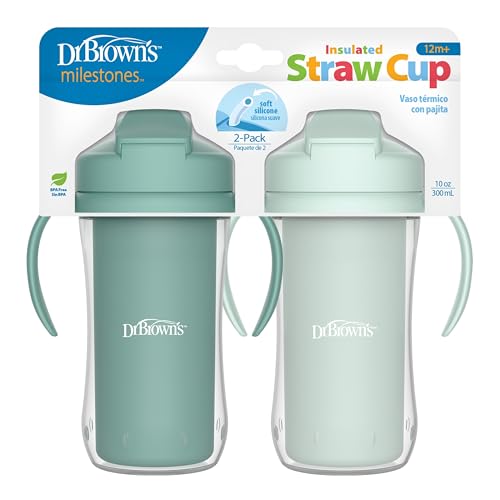

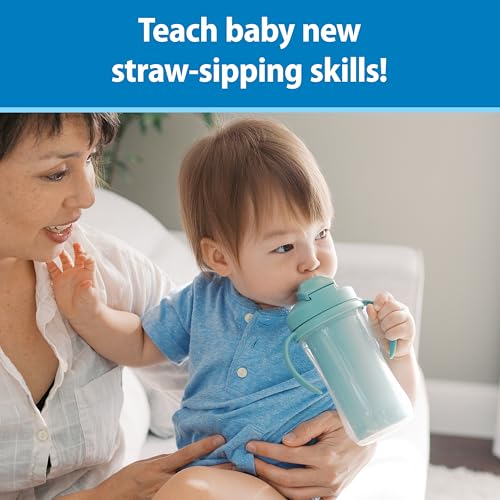

Dr. Brown's Milestones Insulated Sippy Cup, Green, 2-Pack
- INSULATED SIPPY. Dr. Brown's Milestones Insulated Straw Cup with sliding lid helps little ones learn…
- SPILL-PROOF STRAW CUP. A travel-friendly sliding lid keeps the soft silicone straw clean and liquid in the…
- EASY TO GRIP. Built for little hands, the Insulated Straw Cup is lightweight with handles that lock in place…
A teeth friendly cup routine
Picture a two year old who toddles around with a cup of apple juice while you tidy. The cup is refilled twice before lunch. Nobody meant harm, but that's a lot of sugar sitting on tiny teeth. Switching to water in the roaming cup and juice (if at all) at a meal changes the picture without any fuss.
Common dental mistakes with cups
When to get help
Ask your dentist or pediatrician if you notice white or brown spots on teeth, or if your child complains of tooth pain. Early advice makes a big difference, and nobody will judge your cup habits.
How do I actually switch from bottle to cup without a meltdown?
Go slowly. Add cup practice at meals, replace one bottle at a time, and keep the bedtime bottle for last. The AAP suggests finishing the transition sometime between 12 and 18 months. Stay calm, offer choices, and expect some mess.
What the experts say about pace
The AAP says you will reduce the number of bottle feedings slowly, completing the transition sometime between 12 and 18 months. KidsHealth agrees that this window is a good time to fully move to a cup.
"Slowly" is the key word. A gentle change over a few weeks tends to go much better than a sudden stop, because your child keeps the comfort of a familiar routine while learning something new.
A step by step plan
- Start with meals. Offer water or milk in a cup at every meal for a week or so, even if little goes in.
- Pick the easiest bottle to drop first. For many children that is the midday bottle, when they are busy and distracted.
- Swap it for a cup and a cuddle. Sit together, offer the cup, and keep the same cozy position you used for the bottle.
- Move on every few days. Replace one more bottle when the last swap feels easy.
- Leave bedtime for last. Build a new routine: book, cuddle, a last drink at the table, then teeth, then bed.
- Put the bottles away. Out of sight is much easier than a tempting bottle on the counter.
What to say
Toddlers do better with simple, warm words than with long explanations. Here are a few lines you can borrow.
"You're a big kid now. This is your very own cup."
"Bottle time is all done. Would you like the blue cup or the green one?"
"I know you miss it. It's okay to feel sad. Let's cuddle and read a book."
Notice the pattern: you name the feeling, you stay firm on the plan, and you give a small choice. That choice matters, because toddlers crave control. If big feelings arrive, why toddler emotions are so intense explains what's going on in their brain and how to ride it out.
Cheap cups for practice and for daycare
Lots of practice means lots of drops, and cheap cups take the pressure off. With the lid off, they are simple cups for open cup practice.


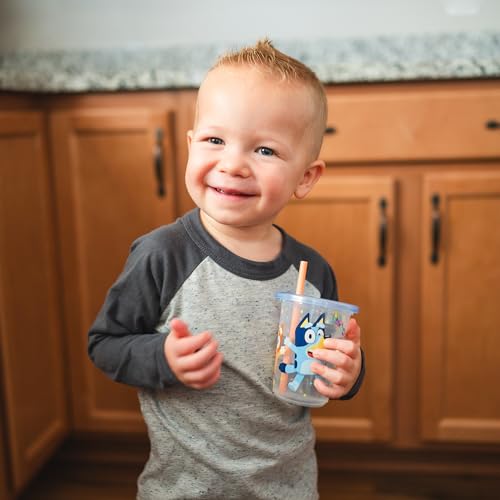

The First Years Take & Toss Bluey Sippy Cups - 10 Count
- Perfect for Families: Your kids will love these cups featuring their favorite Bluey characters and parents…
- Perfect for Travel: The Take & Toss Bluey toddler cups are durable enough to use again and again, but at a…
- Perfect for Parties: Skip the line for Bluey party supplies and grab some colorful Take and Toss cups to…
Common mistakes during the switch
When to get help
If your child refuses every cup for many days, gags or coughs when drinking, or seems unusually distressed at mealtimes, ask your pediatrician or health visitor what to try next. Don't wait until you feel stuck. A speech language pathologist can look at how your child drinks and suggest cups and techniques that suit them.
Which cup should I buy for my family?
Match the cup to the job. Use an open cup or a weighted straw cup for meals, a spill resistant straw cup for the car and daycare, and retire the spout cup first. Start with two cups, not seven, and see what your child actually uses.
Quick picks by situation
Every family's day is different, so here are the cups from this guide, matched to real situations.
A larger, dishwasher safe pair
The [Zak Designs Kelso Toddler Cups](/#) come as a pack of two tumblers with silicone straws. The listing says they are dishwasher safe, can be taken apart for easy cleaning, and have a valve in the straw that keeps liquid in when tipped.
They are big cups. I'd pour in a small amount of water, not a full tumbler, so your toddler is not tempted to sip all afternoon.





Zak Designs Kelso Toddler Cups For Travel or At Home, 15oz 2-Pack Durable Plastic Sippy Cups With Leak-Proof Design is Perfect For Kids (DinoRoar, Zaksaurus)
- SIZE: The set contains two Zak tumblers that are 3.16 inches in diameter and 6.67 inches tall. They have a…
- MATERIAL: The durable tumblers are made of plastic with silicone straws. They're dishwasher safe, can be…
- LEAK-PROOF DESIGN: The silicone straw has a built-in valve that allows liquid to flow when drinking and…
What to look for on the label
Before you buy, run a short checklist.
Notice that several cups in this roundup have a valve in the straw or lid, according to their listings. If you want to follow the AAP's no valve line, check each product page and be ready to use the cup as a helper, not the main cup.
Setting up the table
Posture matters at mealtimes. A child who sits upright with feet supported usually finds drinking easier than one who is slumped or wobbly. If your high chair is a struggle, our guide to budget high chairs that are safe and comfy can help you choose one.
Picture a family with a baby at home, a toddler at daycare and grandparents who love to help. They might keep a weighted straw cup and an open cup at home, a pack of cheap cups at daycare, and one insulated cup in the bag. That is three jobs, three cups, and nobody is arguing about spills.
How to keep cups clean
Cups with straws and valves have lots of small spots where liquid can sit. A simple routine helps.
- Rinse the cup after use, especially after milk.
- Take every part apart, including the straw, lid and any valve or gasket.
- Wash by hand with a bottle brush, or put dishwasher safe parts in the dishwasher, following the maker's instructions.
- Let all parts dry fully before putting the cup back together.
Common buying mistakes
Comparison: which cup does what?
Use this table to compare the cup types at a glance. Prices come from the product listings.
| Option | Best Age Range | Primary Benefits | Main Drawbacks | Recommended Product | Price Range |
|---|---|---|---|---|---|
| Open cup, held by you at first | From about 6 months with help, and the goal by about 2 years | Builds a grown up drinking skill; no valve or spout | Messy at first; needs supervision | Take & Toss Bluey cups, lid off | $14.04 for 10 |
| Weighted straw cup | From around 9 months, as chewing skills allow | A straw bridge to open cups; sips from any angle | Some guidance wants chewing skills first | Munchkin Any Angle Weighted Straw Cups | $11.49 for 2 |
| Straw cup with a valve | From about 12 months | Fewer spills; dishwasher safe parts | The AAP prefers no valve; can need more sucking | Zak Designs Kelso cups | $13.99 for 2 |
| Sippy cup with a soft straw | About 12 months and older, short term | Easy to grip; a first step to straws | Has a built in valve; keep it as a bridge only | Nuby Flex Straw Easy Grip cups | $7.99 for 3 |
| 360 or spill resistant lid cup | Toddlers old enough to manage a lid and straw | Handy for outings and stroller holders | Can promote jaw protrusion and odd tongue placement | Owala Tumbler Kids | $12.99 for 1 |
| Insulated straw cup | Toddlers using a straw | Keeps water cool; removable handles | Not meant to be sipped all day | Dr. Brown's Milestones Insulated cup | $9.98 for 2 |
Age ranges here are loose on purpose. Sources point to a first cup around 6 months, lidless cup practice from about 9 months, and open cup drinking by about 2 years. A straw cup by about 9 months is also described as ideal in one speech language source.
What do the main guidelines say about timing?
When parents ask me when to stop bottles, two sources give the clearest answer.
Both give a window, not a single day. That gives you room to go at your child's speed.
Key Takeaways
- Offer a first cup around 6 months, when solids start, and treat the early months as practice, not a test.
- Aim to finish bottles between 12 and 18 months, reducing feeds slowly, and to reach an open cup by about 2 years.
- Use a sippy cup in moderation, and pick one with no valve if you can.
- Straw cups are a good next step once your child manages a cup, because a straw is closer to how adults drink.
- Spill proof cups may be more convenient for travel, but they are not best for all-day use.
- Keep carry around cups to plain fluoridated water, and don't let your toddler wander with a cup of sugary drinks.
- Match the cup to the job: open cup or straw cup at the table, spill resistant cup for outings, and retire the spout first.
One last thought
Every parent I know has stood in front of a wall of cups and felt a little silly for being stumped. Please don't. This is a small decision with a lot of marketing wrapped around it.
Pick a cup that fits your child's stage, let them practice, and accept some mess along the way. The best cup is the one that helps your child get a little closer to drinking from a plain cup, one sip at a time.
If this guide helped, save it for the next time the cup cupboard overflows, and share it with a parent who's standing in the same aisle.
Sources & References
- American Academy of Pediatrics. "From Bottle to Cup: Helping Your Child Make a Healthy Transition."
- Cleveland Clinic. "When and How To Wean Your Baby Off Bottles and Sippy Cups."
- KidsHealth. "Feeding at 1 to 2 Years."
- CDC. "Fingers, Spoons, Forks, and Cups."
- ASHA. "Sippy Cups: 3 Reasons to Skip Them and What to Offer Instead."
- ASHA. "Skip the Sippy? Coaching Parents on Sippy Cup Use."
- NHS. "Cup Drinking Advice."
- KidsHealth. "Stopping the Bottle."
- NHS. "How to transition away from a dummy and bottle."
- Mayo Clinic. "Cavities and tooth decay: Symptoms and causes."
Frequently Asked Questions
What age should a toddler stop using a bottle?
Can I skip the sippy cup entirely?
At what age can my toddler use a straw?
Are 360 or spill proof cups bad for speech development?
What should I put in my toddler's sippy cup?
Should I cut the straw shorter?
Was this helpful?
Thanks — your feedback helps us pick what to write next.


