Best Baby Carriers for Infants: Safe, Comfortable Picks
TL;DR: Quick summaryThe best baby carrier for your infant holds your baby upright and close, keeps the face visible and clear, supports the thighs with knees spread, fits your body without pain, and meets a recognized safety standard. For most families from 3 to 12 months, a stru

In this article
TL;DR: Quick summary
The best baby carrier for your infant holds your baby upright and close, keeps the face visible and clear, supports the thighs with knees spread, fits your body without pain, and meets a recognized safety standard. For most families from 3 to 12 months, a structured buckle carrier is the easiest place to start.
What you'll get
About 24 minutes to read. Short on time? Read the bold lines and the Key Takeaways near the end.
It is 5 pm. Your baby has decided that being put down is the worst idea anyone has ever had. Your arms ache, dinner has not started, and the carrier someone gave you is sitting in the hallway, a tangle of straps you do not quite trust.
If that sounds familiar, this guide is for you. It is written for parents and caregivers of babies from about 3 to 12 months who want to start babywearing, or who want to replace a carrier that does not work.
We will cover the safety basics, what to look for when you shop, which style suits which stage, how to check the fit, and the mistakes parents commonly make. I will also compare five popular carriers, using their listed features and parent ratings. By the end, you will know what to buy and how to use it with confidence.
Is it safe to carry my baby in a carrier from 3 to 12 months?
Yes, if the carrier fits well and you check your baby's position every time. The main danger is suffocation in young babies, especially those under 4 months, who have limited head control. From 3 to 12 months that risk drops as your baby gets stronger, but your habits still matter.
Think of a carrier as a seat you are wearing. A seat is safe when the person in it can breathe freely, sit in a good position and be watched. A young baby cannot fix their own position, so that job is yours.
Why head control matters
A baby's head is heavy compared with the rest of the body, and neck muscles take months to catch up. If the head drops forward, the chin can press on the chest and narrow the airway. That is why position matters more than any feature on the box.
When using a sling, make sure the baby’s body does not curl into a C shape, which may cause breathing problems."| American Academy of Pediatrics
In plain words, your baby should be upright and open, not folded in half like a sandwich. The neck should stay straight, with the head above the fabric.
Babies who need extra care
Some babies need a conversation with your doctor before you use any carrier. This includes babies under 4 months, babies born early, and babies with a medical condition, who may have poor neck control and a higher risk of suffocation.
Picture a baby born a few weeks early who is now 3 months old by the calendar. Their head control may still be behind that of a baby born at full term. Your doctor or health visitor can tell you whether a carrier makes sense yet, and which kind.
Framed carriers and backpacks are a separate category. They are not recommended for babies under 4 months.
The T.I.C.K.S check
This is the quickest safety routine I know, and it comes from RoSPA, the UK safety charity. Run through it each time you put your baby in.
Common mistakes to avoid:
If you are ever worried about your baby's breathing, take them out of the carrier straight away and get medical help.
What should I look for in a safe, hip healthy baby carrier?
Look for a carrier that spreads your baby's hips so the legs straddle your body, with knees apart, thighs supported and hips bent. For babies under 6 months, look for one designated safe by the International Hip Dysplasia Institute. Also ask which safety standard it meets.
Why hips matter
Hip dysplasia means the hip socket does not form as it should. Young babies have soft, growing joints, and legs held straight and pressed together for long stretches can work against healthy development. A good carrier lets the legs fall open naturally, a bit like sitting astride a barrel.
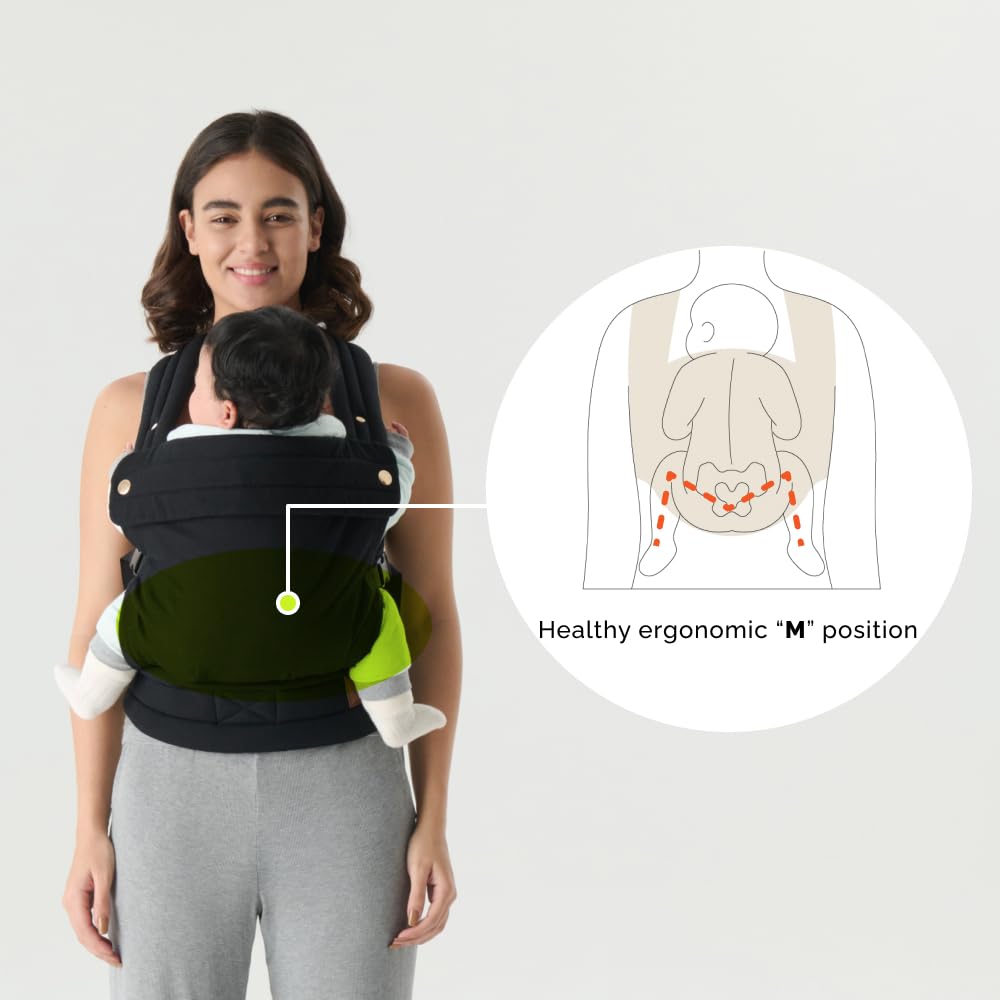
With the hips bent, the knees sit higher than the bottom and the legs form a loose M shape. It is a handy phrase, but check that the fabric actually supports the thighs, not just the bottom.
A simple buying checklist
Words that should make you pause
Be wary of any product described as "womb like" or "cocoon like." These can cover your baby's face or force them into a fetal position. A tight, curled up shape feels cozy to adults, but it is the opposite of what a baby's airway needs.
Watch out for listing language too. A seller can write "safety certified" in a title without telling you which standard they mean. Ask the retailer or manufacturer which standard the carrier meets.
Mistakes to avoid when shopping:
A budget friendly place to start
If you want a simple structured carrier without a big spend, the Infantino Flip carrier is one many parents begin with. Check the weight range listed on the label before you buy, since it tells you when the carrier fits your baby.
A high star rating tells you that parents like a product, not that it is safe. It does not tell you how it was tested, so check the label for a safety standard before you rely on it.
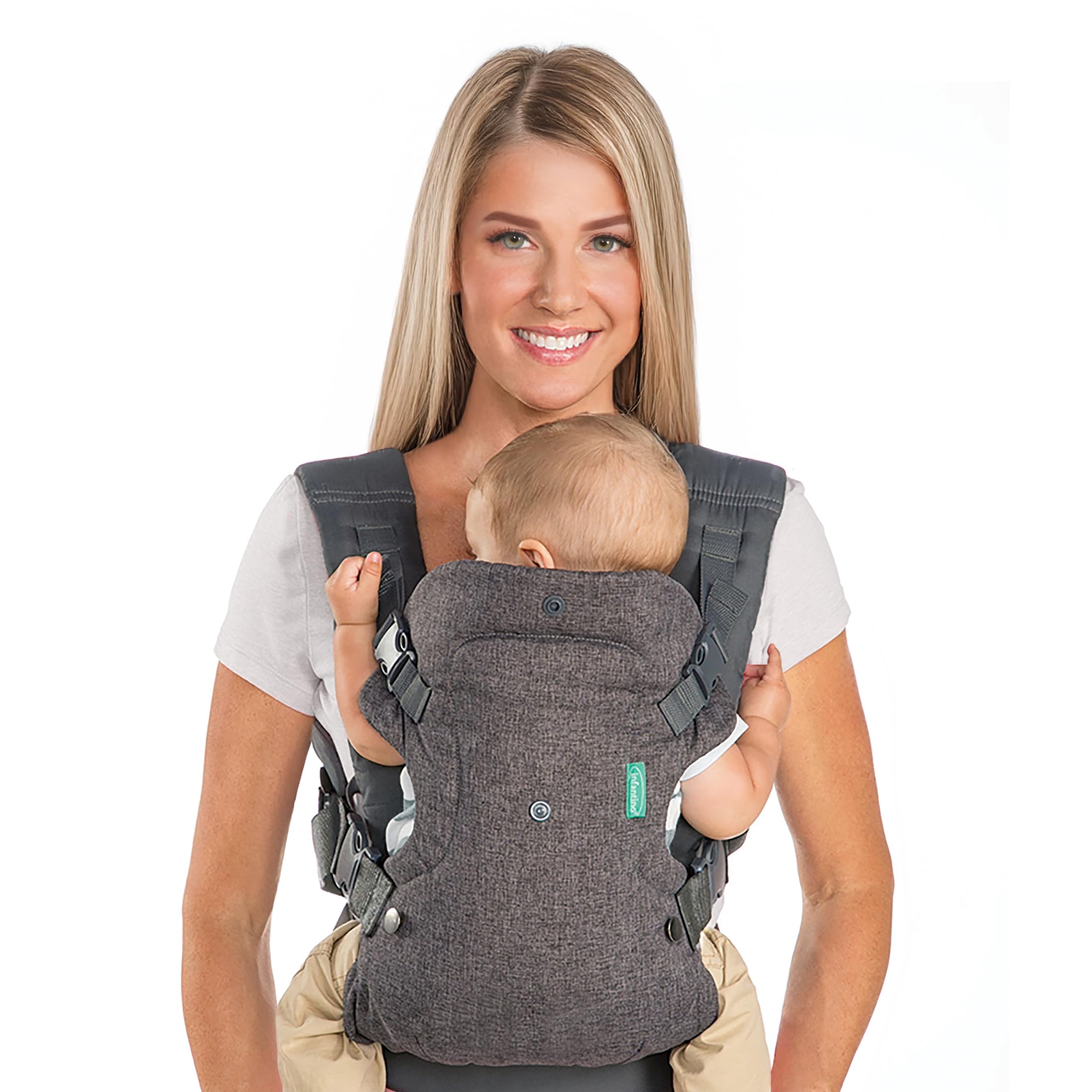


Infantino Flip 4-in-1 Baby Carrier Convertible Ergonomic, Gray
- CLOSE FOR THE MOMENTS THAT MATTER: From coffee runs and grocery trips to neighborhood walks, this baby…
- GROWS WITH YOUR BABY: The adjustable convertible seat supports babies from 8-32 lbs, helping you stay…
- FOUR WAYS TO CARRY: Choose facing-in with a narrow seat, facing-in with a wide seat, facing-out, or back…
Which carrier style fits my baby's age and stage?
For younger babies and babies who cannot hold their heads up or sit well, the best choice is a sling or carrier with your baby facing inward. Backpack carriers are a safe choice once a baby can sit well and hold the head steady, usually at 5 to 6 months.
From 3 to 5 months: close, upright and facing in
At this stage your baby wants to be near your face and heartbeat. Facing in, held upright and snug against your chest, is the position to use.
Head and neck support matters most here, because head control is still growing. If your baby's head flops to one side or drops forward when you hold them upright, do not carry them that way and ask your doctor what to do.
From 5 to 8 months: busy, curious and wriggly
Around this age babies get strong and restless. Babies over 5 months old may become restless in the carrier, so continue to use the restraining straps.
This is also when many babies start sitting. If you are curious about that skill, how babies learn to sit up on their own is worth a read, because sitting well is one of the signals that a baby is ready for a different carry position.
From 9 to 12 months: heavier, faster and nosy
Your baby is heavier now and may want to see the world. Back carry becomes the practical option, because weight sits better behind you than in front. Facing out can be fun for short stretches with an alert, calm baby, but watch for tired or overwhelmed cues and turn them back in. If you want the bigger developmental picture for this stretch, your baby's milestones from 9 months to 1 year explains what to expect.
Structured carrier, sling or wrap?
A structured carrier has buckles and padded straps. It is generally the easiest to learn and the most forgiving for young babies. A wrap is a long piece of fabric you tie yourself. It is soft and snug, but it has a learning curve. A sling carries a baby in one shoulder pouch or ring, and slings need the most care with young babies.
The CPSC, the US product safety agency, specifically warns about the suffocation hazard to infants, particularly those under 4 months, carried in infant sling carriers. If you choose a sling for a baby this young, keep them upright, never curled, and talk with your doctor first.
One example in the sling and buckle category is the vrbabies sling carrier. It lists front facing in, front facing out and back carry positions, mesh fabric for airflow, buckles and adjustable straps, and a weight limit that you should check in the instructions. The listing mentions use from newborn age, but for a baby under 4 months, I would check with your doctor before using any sling.


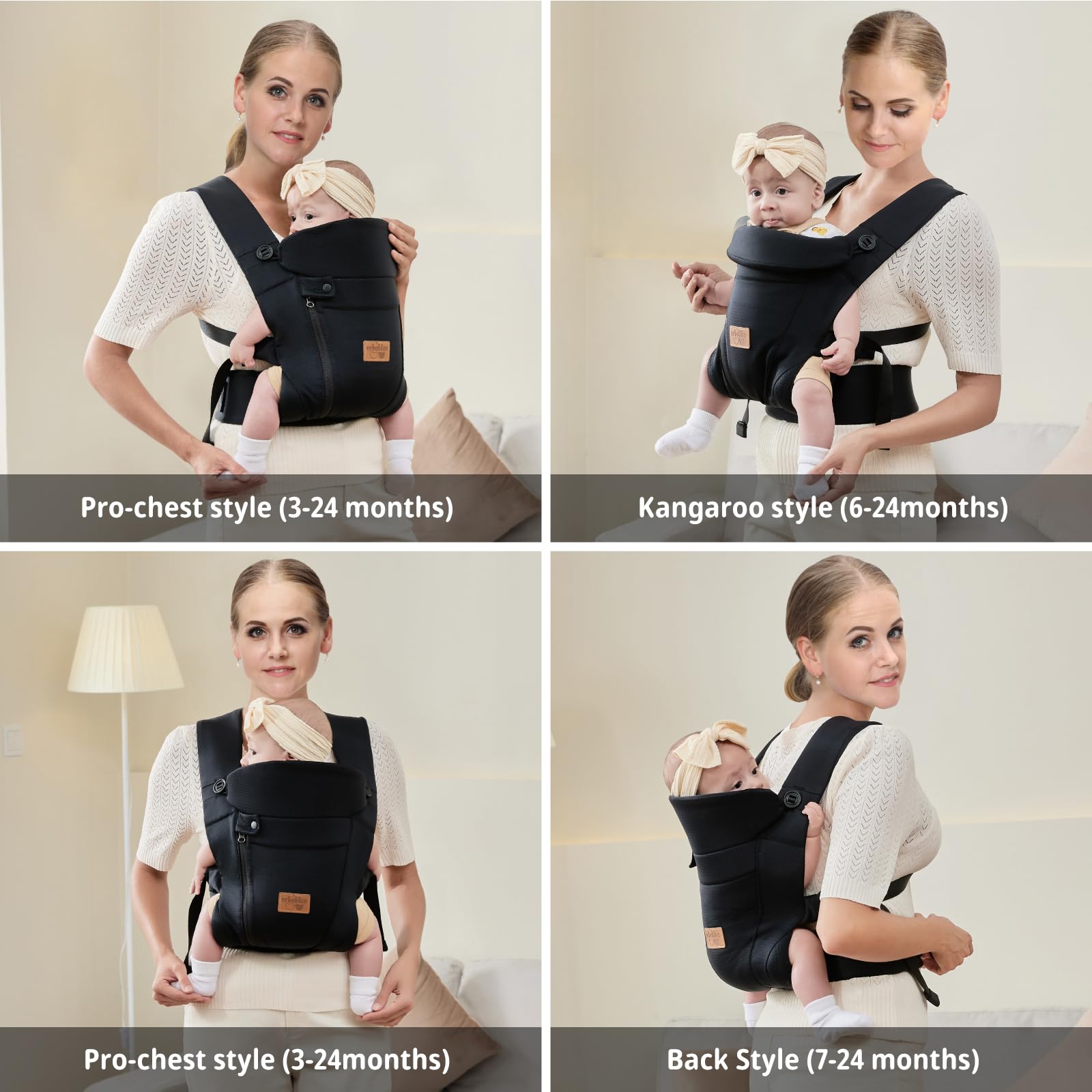
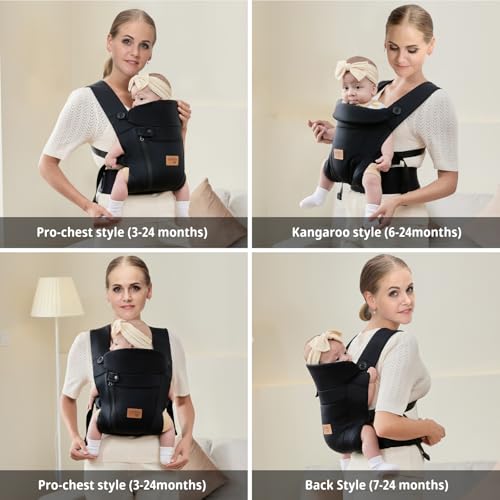
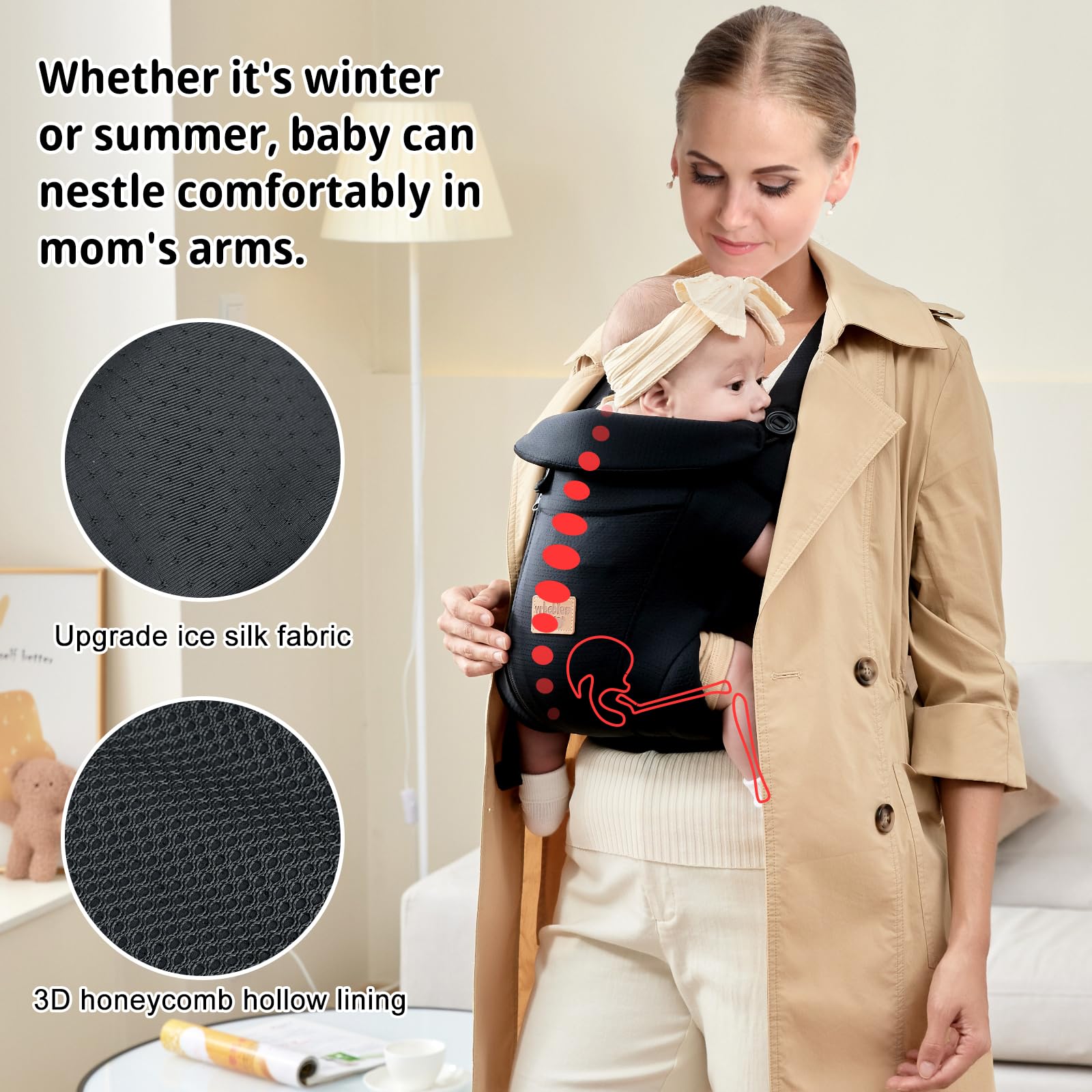
Baby Sling Carrier for Newborn to Toddler, Babies 6-35 lbs(Black)
- 3-in-1 Adjustable Sling Carrier: vrbabies breathable baby sling carrier features 3 carrying positions…
- Cooling Breathable Mesh Fabric: Made with lightweight, breathable mesh and ice silk that feels cool against…
- Ergonomic “M” Position Hip Seat: Unlike traditional wraps, our ergonomic baby carrier promotes healthy hip…
Common mistakes at this stage:
Which baby carriers are worth considering in 2026?
Five popular carriers are worth a look: the Infantino Flip, vrbabies sling, Momcozy PureHug, MOMTORY 6 in 1 and NEST BLANCHE 4 in 1. Each suits a different budget and body. Here is how they stack up on listed features and parent ratings.
I want to be upfront about how I assessed these. I am going by the listed features, weight ranges, prices and parent ratings, not lab testing. Ratings can tell you about comfort and durability. They cannot tell you about safety testing, so use the checklist from earlier in this article before you buy any of them.
Momcozy PureHug: a bigger weight range
The Momcozy PureHug carrier is listed for babies from 7 to 45 lbs and costs $64.99. It has a cotton shell and lining, three adjustable sizing positions, padded straps and waist belt, and padded leg openings. It has 4.5 stars across nearly 6,000 reviews.
It suits parents who want one carrier to last well beyond infancy. The drawback is that a bigger range means more adjustments to get right, so practice with a doll or blanket roll first.
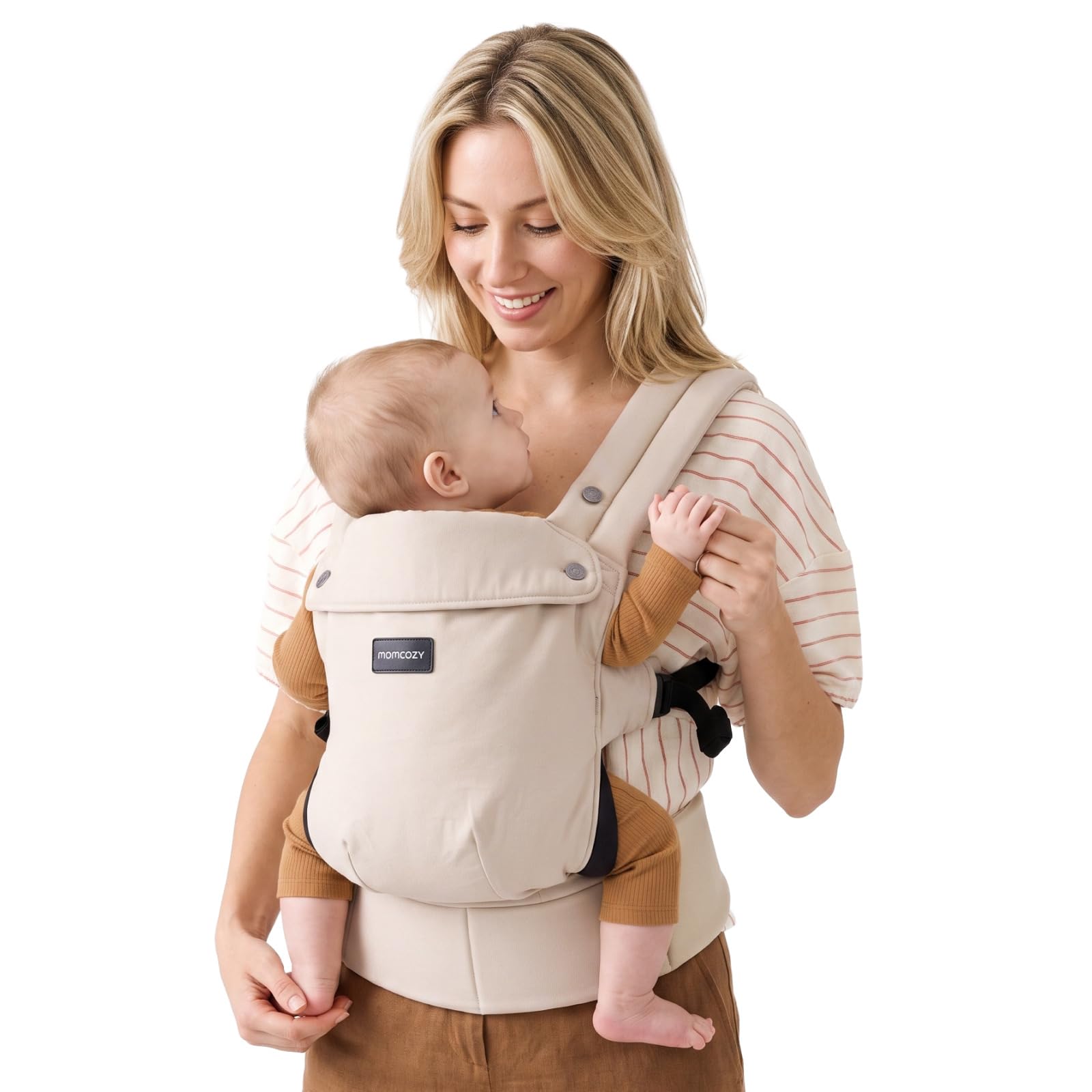
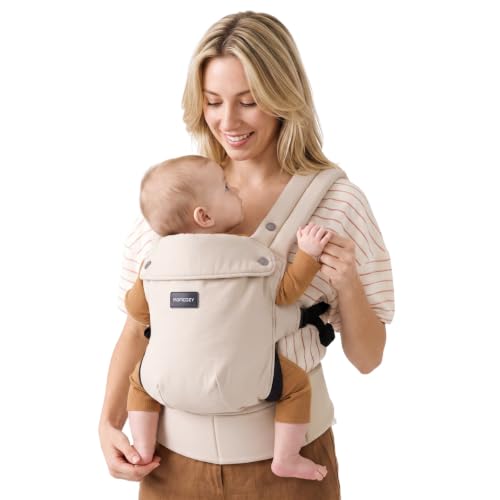
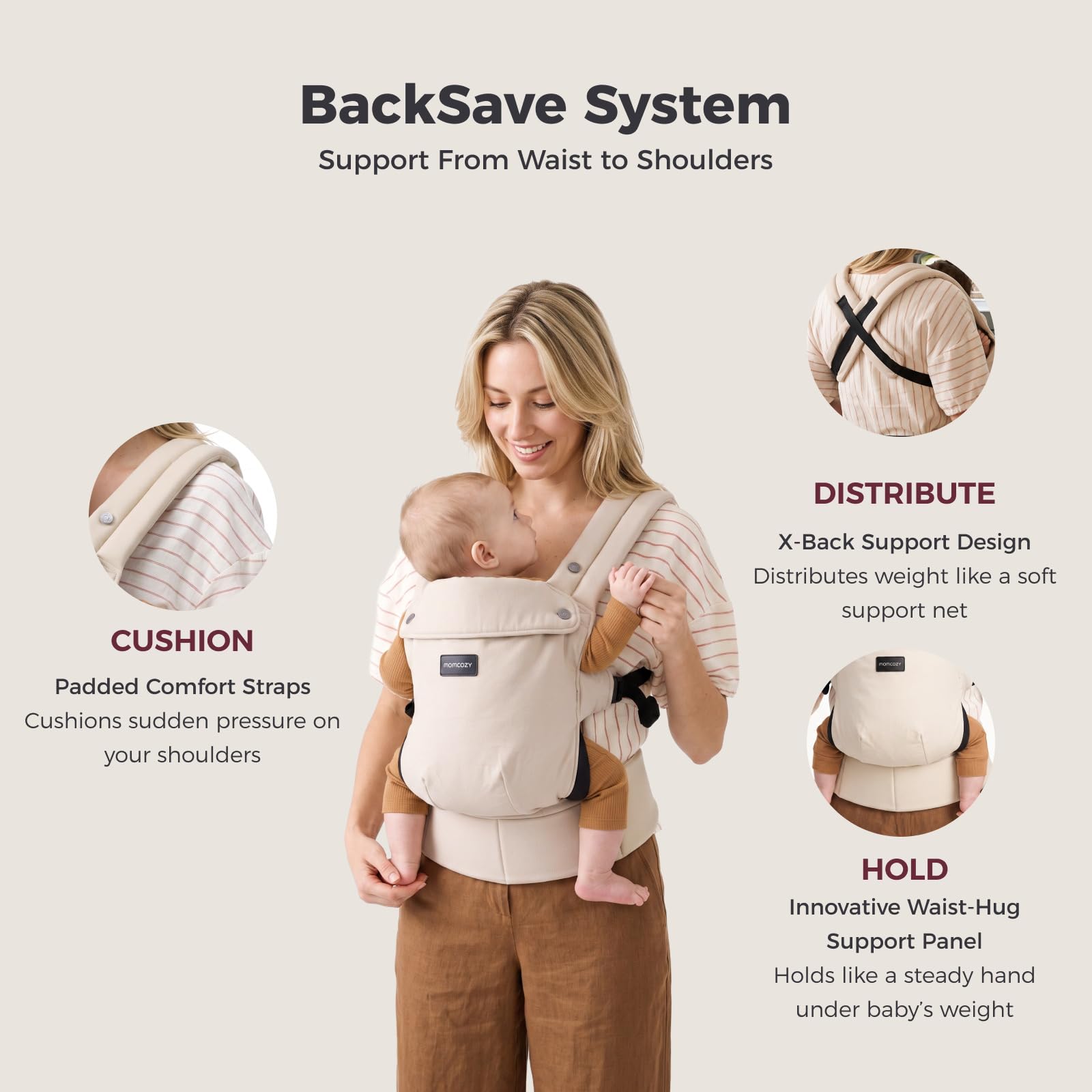
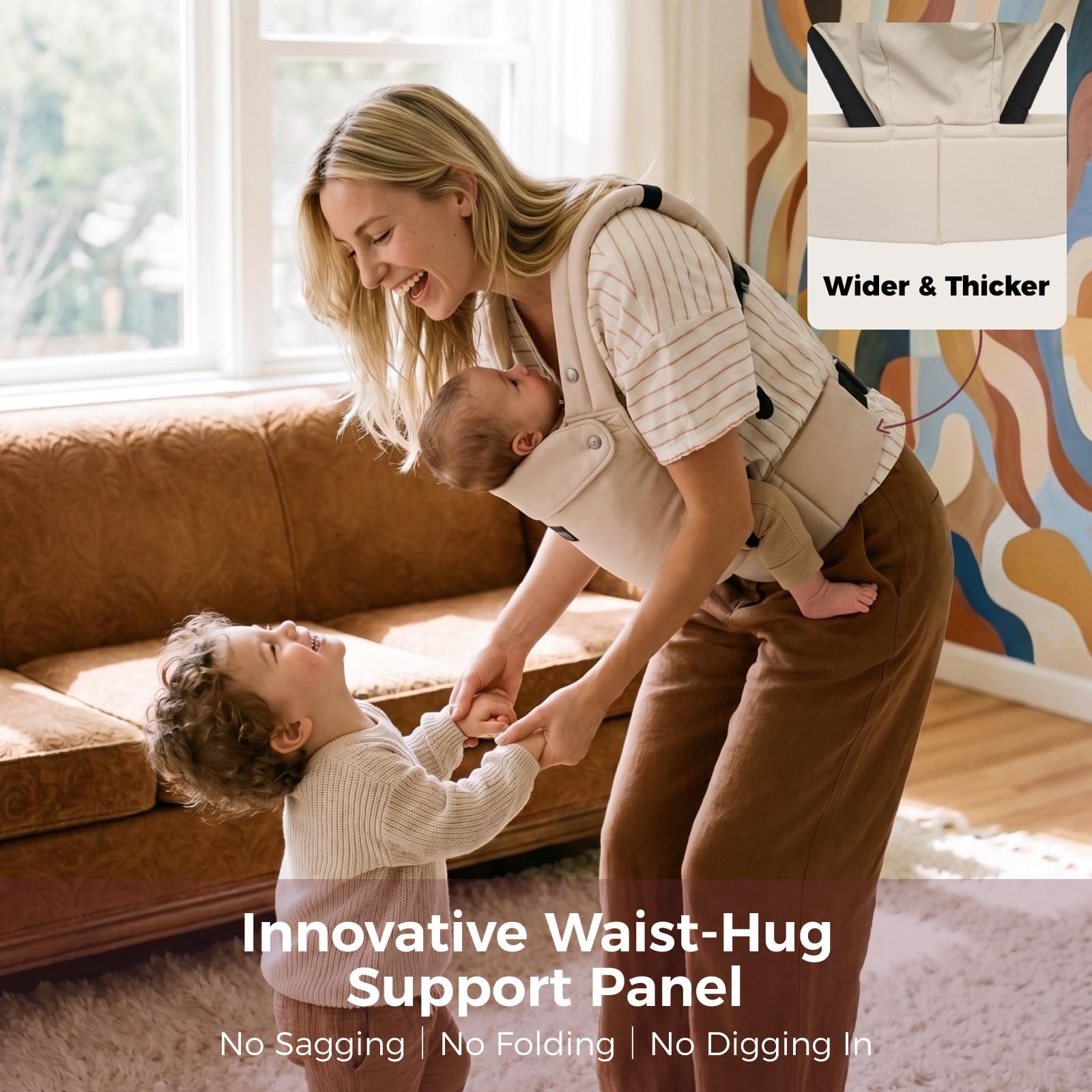
Momcozy PureHug Baby Carrier - Ergonomic, Cozy and Lightweight for 7-45 lbs
- Lining: 100% Cotton, Shell: 100% Cotton, Filling (Waist Belt & Shoulder Straps): 47% Foam, 40% Polyester…
- Hands Free Comfort: This ergonomic Baby Carrier perfect for experiencing hands-free convenience in everyday…
- Tailored to Grow Together: Our carrier features three adjustable sizing positions, catering to your child's…
MOMTORY 6 in 1: a hip seat hybrid
The MOMTORY carrier combines a carrier with a hip seat, and lists six carrying positions. It is $59.99, with 4.6 stars across about 2,000 reviews. The listing mentions a soft tummy protective core meant for parents recovering from a C section, plus a bib for drooling babies.
The "safety certified" wording is in the product title, so ask which standard is meant. More positions also means more ways to get the fit wrong, so stick to the inward facing positions for younger babies.
NEST BLANCHE 4 in 1: comfort and looks
The NEST BLANCHE carrier is $80.99 and is listed for babies from 7 to 35 lbs. The listing highlights an X shaped back design to spread weight, padded shoulder straps and padded leg openings. It has 4.6 stars across about 700 reviews, and it is the priciest of the five.
It suits parents who want a polished look and a design built around parent comfort. If the budget is tight, check which safety standard the carrier meets, because extra cost may buy style and padding rather than a different safety standard.
Quick picks by situation
Common mistakes when comparing:
If a carrier turns out to be too much for a long day out, a stroller can share the load.
How do I put on a baby carrier and check the fit?
Follow the T.I.C.K.S check: tight, in view at all times, close enough to kiss, keep chin off the chest, and supported back. Put the carrier on yourself first, adjust it for your body, then settle your baby in and recheck.
Step by step: front carry, facing in
Every carrier is a little different, so read the manual for your model. These steps cover the basics.
- Do a dry run. Practice with a rolled blanket or a doll, over a bed or sofa, before you use your real baby.
- Put the carrier on yourself. Fasten the waist belt snug and high, then adjust the shoulder straps so they feel even.
- Hold your baby against your chest, with their face turned to you. Support the head and bottom with your hands.
- Lift the seat so your baby's legs sit astride, with knees spread and thighs supported.
- Bring the back panel and the straps around, fasten the buckles, and tighten until your baby is held close and snug.
- Run through T.I.C.K.S. Check that you can see the face, that you could kiss the head, and that the chin is off the chest.
- Walk around the room for a minute, then check again.
How a good fit looks and feels
Your baby's neck should be straight, with the head above the fabric, and the body should not curl into a C shape. Legs should straddle your body, not dangle.
You should feel your baby's weight sitting high on your chest, close to your body. If the weight pulls you forward, the carrier is probably too loose or too low.
Moving safely once your baby is in
Bend at the knees, not the waist, and put a hand on your baby's back when you lean. Re-check the straps after you have bent, sat down or walked a long way, because buckles can creep. Do not trust a quick pat. Look at the face every few minutes.
When someone else wears your baby
A different adult needs to adjust everything again. Straps that fit you will not fit your partner or your mother. Here is something you can say: "Before you start walking, can you check that you can kiss the top of her head and that her chin has some space?"


MOMTORY Safety-Certified 6-in-1 Baby Carrier Newborn to Toddler, Grey
- 𝐃𝐢𝐬𝐜𝐨𝐯𝐞𝐫 𝐭𝐡𝐞 𝐔𝐥𝐭𝐢𝐦𝐚𝐭𝐞 𝟔-𝐈𝐧-𝟏 𝐈𝐧𝐟𝐚𝐧𝐭 𝐂𝐚𝐫𝐫𝐢𝐞𝐫: Say goodbye to the hassle of choosing between a hip seat carrier…
- 𝐑𝐞𝐯𝐨𝐥𝐮𝐭𝐢𝐨𝐧𝐚𝐫𝐲 𝐁𝐚𝐛𝐲 𝐇𝐢𝐩 𝐒𝐞𝐚𝐭: Experience unmatched comfort with our specially crafted baby hip seat. Unlike…
- 𝐇𝐚𝐩𝐩𝐲 𝐌𝐨𝐦, 𝐇𝐚𝐩𝐩𝐲 𝐁𝐚𝐛𝐲: Introducing our game-changing baby carrier. Designed with a soft tummy protective…
If you are a few weeks past a C section, ask your doctor when it is fine to wear a carrier and how much your waist belt should rest on the scar area. Check the MOMTORY carrier listing for any tummy-protection features, but a feature on a listing does not replace medical advice.
Mistakes I see again and again:
If your baby is crying hard, set them down safely on a flat surface, calm them, then try again. Putting a baby in a carrier while you are both upset is when mistakes are more likely.
What mistakes and risks should I avoid while wearing my baby?
Do not feed your baby in the carrier, do not let them sleep in it, do not cook while wearing them on your front, and avoid wearing them in hot weather. These four habits are the ones to watch closely every time you wear your baby.
Sleeping in the carrier
Babies fall asleep in carriers easily. The gentle motion and warmth work like magic. But sleep is where the risk rises, because a sleeping baby's head can fall forward and block the airway.
Never let babies sleep in carriers, car seats, or inclined sleepers."| CPSC
If your baby nods off, move them to a crib, cradle or bassinet. Keep supporting the head as you undo the buckles, then lay your baby on their back on a flat sleep surface. Do not simply keep walking and hope for the best.
If your baby is fighting sleep or waking more often, the 8 month sleep regression has practical ideas that do not involve sleeping in a carrier.
Feeding in the carrier
It can look convenient to feed while you are on the move. But RoSPA does not recommend breast or bottle feeding while the baby is in a sling or carrier, because this does not allow the baby to be positioned correctly.
The NHS says the same: take your baby out first so they are in a safe feeding position. Here is a script you can use with a worried grandparent: "She is fussing because she is hungry. Let me take her out and feed her properly."
Kitchens, hot days and hot drinks
If you are cooking, do not carry your baby in a carrier that sits on your front, because of the risk of burning them. This one surprises parents who picture "hands free" as meaning kitchen friendly. Hands free is for walking, shopping and tidying, not for hot pans.
Hot weather is another trap. Your body heat and the carrier itself raise your baby's temperature, so avoid wearing your baby in hot weather. Some carrier listings talk up warm weather comfort. Breathable fabric may feel cooler, but it does not remove the heat your body and the carrier add.
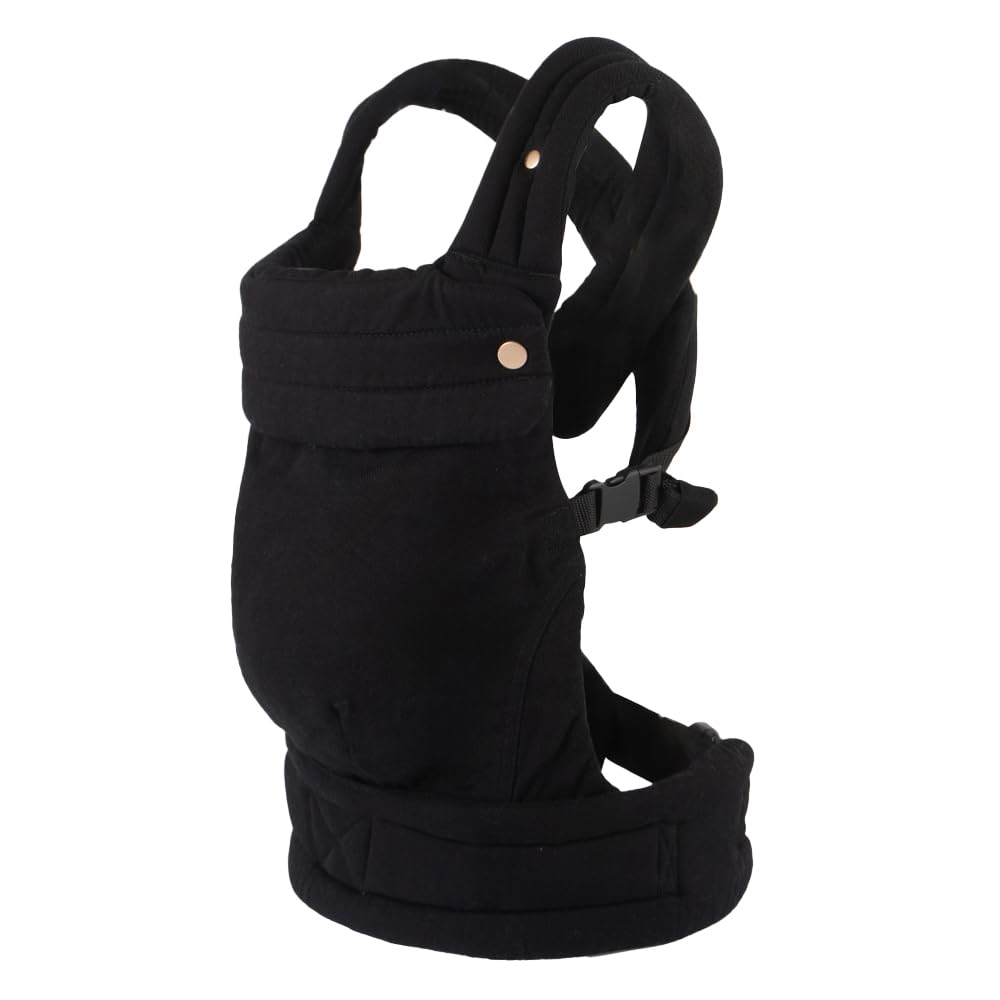

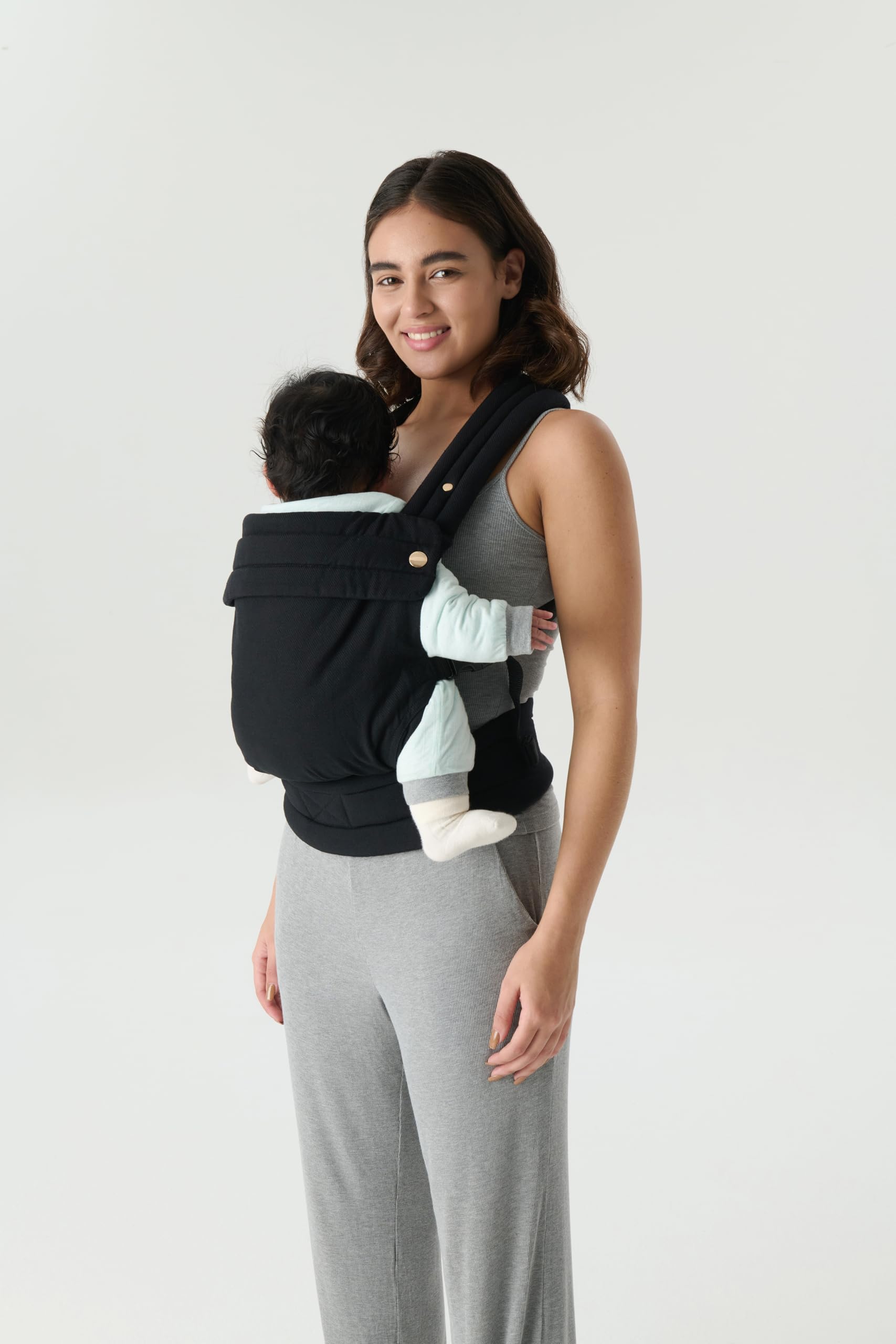
Ergonomic Baby Carrier Newborn to Toddler, Comfort Stylish Cute Easy Use
- This versatile 4-in-1 baby carrier is designed for busy parents who need both convenience and style. Whether…
- Designed to promote healthy hip and spine development, this carrier supports the natural 'M' position…
- The unique X-shaped back design evenly distributes weight, reducing back strain. Padded shoulder straps…
The NEST BLANCHE carrier listing mentions comfort during long wear in warm weather. Treat that as a comfort feature for you, not permission to ignore the heat guidance. Dress your baby lightly, take breaks, and take them out sooner rather than later.
Cars, bikes and other situations
A carrier is not a car seat. If you are shopping for travel gear, the best convertible car seats of 2026 are the place to look. Take extra care on stairs and wet floors, and ask your doctor or health visitor what activities are safe while carrying your baby.
When things go wrong
Mistakes to skip:
How do I keep carrying comfortable for me, and when should I stop?
Comfort comes from your baby's weight sitting high and close to your body, a snug waist belt, padded straps and short sessions at first. Stop using the carrier when your child feels too heavy or uncomfortable to carry safely, and check the product's maximum weight.
Setting yourself up for a comfortable carry
Your back and shoulders will tell you if the fit is wrong. A baby riding too low pulls on your shoulders, and a loose waist belt makes your back do all the work.
Think of a loaded backpack. The best weight is close to your spine and high on your back, not hanging off your shoulders. Babies work the same way on your front.
Build up wearing time slowly
Do not start with a long walk. Start with a short session of a few minutes. Add time over a few days, and notice how your body feels at the end.
If you are recovering from birth, including a C section, ask your doctor or health visitor when it is fine to start and whether anything should be adjusted for you. Your pelvic floor and your scar both deserve patience.
Sharing the carrier with your partner
Different bodies need different settings. A taller partner may need longer straps. A smaller parent may need the waist belt in a different spot. Here is a script that works well: "Can we each try it for ten minutes and say what hurts? Then we can set it for whoever wears it most."
When your baby outgrows it
Check the product's weight limits, because manufacturers can set a higher limit than the usual definition of a child, which the CPSC puts at up to 35 lbs. Your own comfort is the signal. If your baby feels too heavy or the carrier feels uncomfortable, it is time to stop, whatever the label says.
By late infancy your baby is also moving more, climbing, wriggling and leaning. A carrier can feel less secure. A back carry may help, or you may switch to a stroller for longer outings and keep the carrier for short, close moments.
When to get help
If you have back, neck or shoulder pain that lasts after you stop wearing your baby, talk to your doctor. The same goes for numbness or tingling in your hands. And if you have any worry about how your baby's hips or legs look or move, ask your doctor or health visitor.
Common mistakes:
Comparison: five popular baby carriers at a glance
This table uses listed features and prices. It does not replace the safety checks in this article. Age ranges are loose, and babies under 4 months should only be carried after talking with your doctor.
| Option | Best Age Range | Primary Benefits | Main Drawbacks | Recommended Product | Price Range |
|---|---|---|---|---|---|
| Budget structured carrier | From about 4 months, with a steady head | Four carry options, very large review base | Check the safety standard on the label | Infantino Flip carrier | $29.15 |
| Sling style with mesh | From about 4 months, with extra care before then | Breathable mesh, three positions, low price | Slings need extra care for young babies | vrbabies sling carrier | $30.99 |
| Long use carrier | From about 4 months through toddler age | Wide weight range, padded straps and waist belt | Many sizing adjustments to learn | Momcozy PureHug carrier | $64.99 |
| Hip seat hybrid | From about 4 months through toddler age | Hip seat, soft tummy core, six positions | Many positions, so more room for error | MOMTORY 6 in 1 carrier | $59.99 |
| Style and padding focus | From about 4 months through toddler age | X shaped back design, padded straps | Highest price of the five | NEST BLANCHE carrier | $80.99 |
Before you buy any of them, ask which safety standard it meets, and for babies under 6 months look for an International Hip Dysplasia Institute designation.
Frequently asked questions
Key Takeaways
- Babies under 4 months, born early or with a medical condition need a conversation with your doctor before any carrier.
- Position matters most: upright, chin off the chest, neck straight and no C shape curl.
- Choose a carrier that spreads the hips with knees apart and thighs supported, and ask which safety standard it meets.
- Use inward facing carries for younger babies, and add other positions only as head control and sitting improve.
- Never feed in the carrier, never let your baby sleep in it, don't cook while wearing a front carrier, and skip hot weather wear.
- Comfort for you counts: stop when your baby feels too heavy or the carrier feels uncomfortable.
- Before you buy, check the safety standard the carrier meets rather than relying on its comfort or durability ratings.
One last thought
Carrying your baby is one of the oldest ways to say "I've got you." The right carrier makes that easier, and the right habits make it safe. You do not need the fanciest model. You need a good fit, a clear view of your baby's face and a plan for when they fall asleep.
A carrier is a tool for closeness, and the safest closeness is the kind you check. If this guide helped, save it for your next shopping session, and share it with the other adults who carry your baby.
Sources & References
- American Academy of Pediatrics. "Keep babies safe while in carriers, slings."
- American Academy of Pediatrics. "Baby Carriers: Backpacks, Front Packs & Slings."
- raisingchildren.net.au. "Safe babywearing: choosing and using baby carriers, slings and backpacks."
- cpsc.gov. "Sling Carriers Business Guidance."
- raisingchildren.net.au. "Baby airway protection during sleep, travel, play and feeding."
- health.clevelandclinic.org. "Babywearing: What Is It and What Are the Benefits?"
- rospa.com. "Baby sling safety advice."
- canada.ca. "Baby sling and carrier safety."
- NHS. "What to buy for your newborn baby."
- cpsc.gov. "CPSC PSA Archive."
Frequently Asked Questions
When can I start using a baby carrier?
Can my baby sleep in the carrier?
Can I breastfeed or bottle feed in a carrier?
What does "hip healthy" mean on a carrier?
Is it safe to wear my baby in hot weather?
Do I need a carrier that meets a safety standard?
When should I stop using a carrier?
Was this helpful?
Thanks — your feedback helps us pick what to write next.