Do You Love Your Kids More Than Your Partner? What the Research Says
Loving your children intensely does not mean you love your partner less, but consistently deprioritising your relationship has real consequences for the whole family, including your kids.
In this article
A few weeks into new parenthood, many couples quietly notice the same thing: one of them has become entirely invisible. Not unloved, just... moved down the list. A 2022 survey by the Gottman Institute found that 67 percent of couples report a significant drop in relationship satisfaction in the first three years after having a baby. That is not a small dip. That is most of us.
And yet, asking whether you love your kids more than your partner can feel like a trick question, or worse, a guilty one. This article is not here to make you feel bad. It is here to help you understand what is actually happening in your family, why the question matters, and what the research says you can do about it.
By the end, you will understand:
1. Two Kinds of Love: Why Comparing Them Is the Wrong Question
The love you feel for your child and the love you feel for your partner are genuinely different in their biology, not just their intensity. When a parent looks at their newborn, the brain floods with oxytocin, dopamine, and noradrenaline in a pattern that researchers at University College London describe as closer to the neural signature of obsession than to romantic love. It is urgent, visceral, and in the early weeks almost impossible to override. Your partner's needs simply do not trigger the same alarm system.
Romantic love, by contrast, is built over time through shared experience, repair after conflict, and deliberate attention. It requires investment to stay alive. A newborn's needs are loud and immediate. A partner's needs are quieter and easier to postpone.
This distinction matters enormously. If you frame the question as a competition (who do I love more?), you will always feel guilty and you will never actually solve anything. If you frame it as a resource allocation problem (am I investing enough in each relationship?), you have something you can work with.
2. The Newborn to Toddler Years: When Relationships Take the Hardest Hit
The first three years are where most of the damage happens, and most of it is invisible until it has accumulated. Sleep deprivation impairs empathy. One parent (usually, though not always, the mother in heterosexual couples) often absorbs the majority of the physical labour, creating a quiet resentment that neither partner has the energy to name. Intimacy drops. Conversations shrink from dreams and ideas to logistics.
The Gottman Institute's longitudinal research on new parents found that the two biggest predictors of relationship decline after a baby are unequal division of labour and the loss of friendship between partners. Not passion. Friendship. The sense that this person knows me and likes me.
For practical support through this season, the fourth trimester family guide covers the relational shifts that begin even before birth.

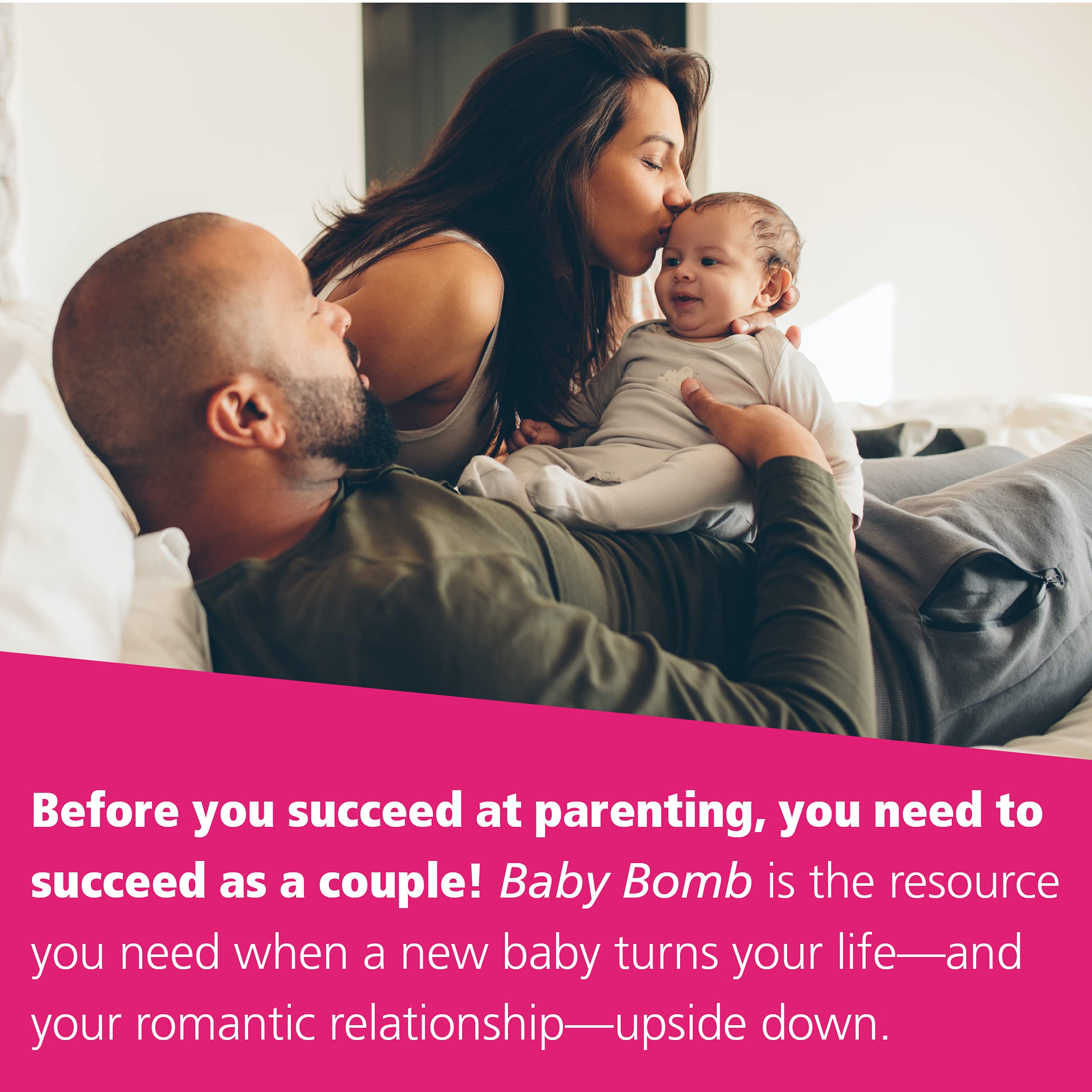
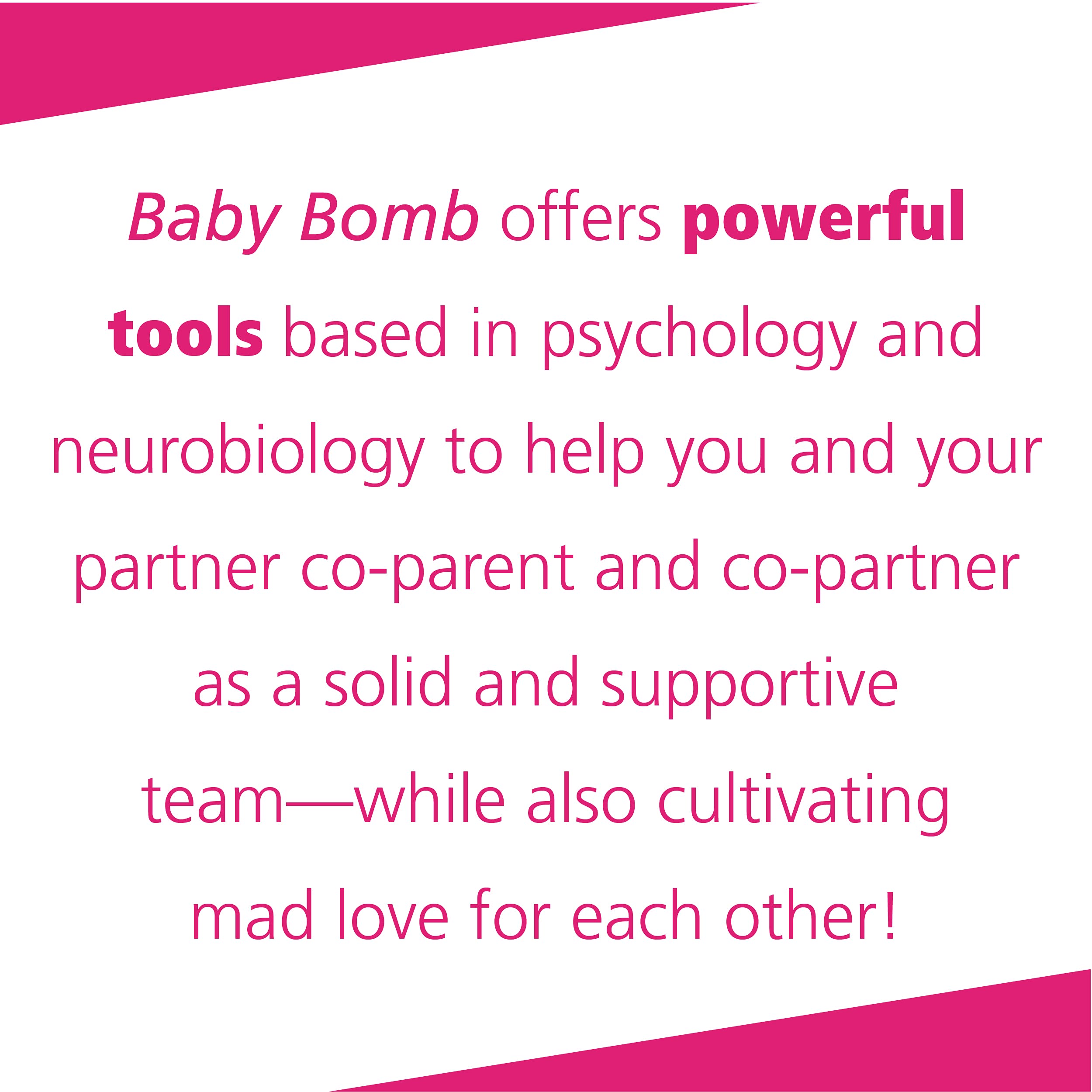

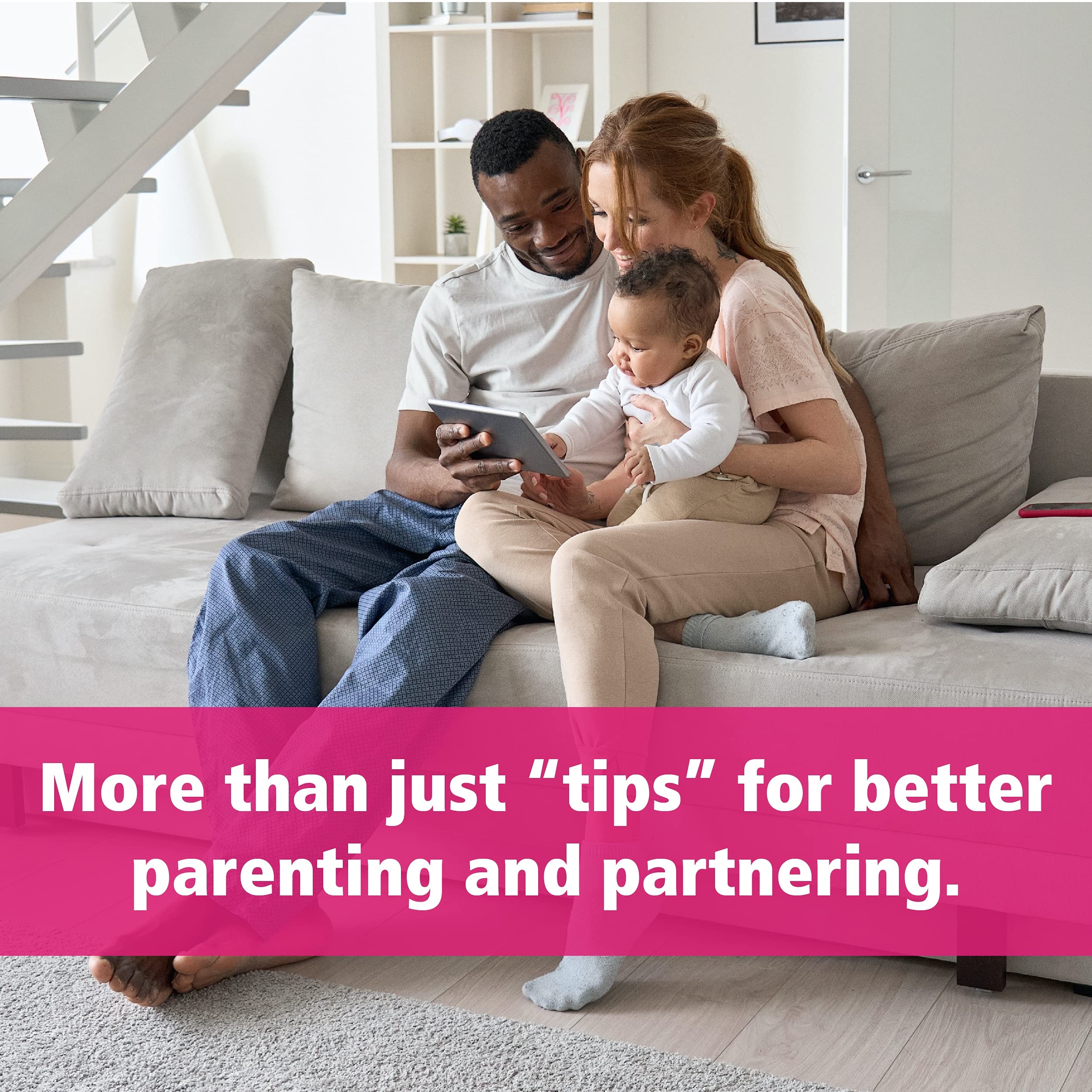
Baby Bomb: A Relationship Survival Guide for New Parents
- Relationships
- Image Unavailable Image not available forColor:
- Baby Bomb: A Relationship Survival Guide for New ParentsMerchant Video
What to actually do in this phase
3. The School Age Years: When Child Activities Colonise Everything
By the time your children reach school age (roughly 5 to 12), the acute physical exhaustion of the baby years has lifted, but a new pattern has often solidified: the whole family's calendar revolves around the kids. Swimming lessons on Tuesday, football on Saturday, homework every evening, birthday parties every other weekend. Your relationship gets whatever is left over, which is usually nothing.
Research published in the Journal of Marriage and Family (2014) found that parents of school age children reported the lowest levels of relationship quality of any life stage, lower even than parents of teenagers. The irony is that this is often the phase where couples feel most stable on the surface, because the acute crisis of new parenthood has passed.
Children in this age group are also watching you closely. They are constructing their model of what a relationship looks like, how adults treat each other, whether conflict gets resolved or buried, whether affection is normal. That model will travel with them into their own adult relationships. How parenting style shapes those daily interactions is something worth reading alongside this.
Still Us: A Couples Workbook for Reconnecting After Kids: 10- Minute Daily Exercises to Keep Your Marriage Alive While Raising Children
- Kindle Store
- Kindle eBooks
- Parenting & Relationships
4. The Teenage Years: When the Relationship Finds Its True Test
Teenagers are developmentally programmed to push their parents away. This is healthy. But if your entire emotional life has been invested in your children for the past decade, the teenage years can feel like a slow abandonment, and couples who have neglected their partnership sometimes find they are strangers to each other by the time the kids need them less.
This is also the phase where teenagers are most acutely aware of the quality of their parents' relationship. A 2019 study in the Journal of Research on Adolescence found that adolescents from homes with high interparental conflict reported significantly higher rates of anxiety and depression than peers, regardless of how involved each parent was individually with the child.
5. The Ripple Effects on Your Children: What the Research Actually Shows
This is the section that sometimes surprises parents. Most of us believe that prioritising our children is always the right call. And in the immediate, physical sense (food, safety, warmth, presence), of course it is. But the research on what children actually need from their home environment is more nuanced.
A landmark study from the University of Illinois, tracking 218 families over five years, found that the quality of the parental relationship was one of the strongest independent predictors of children's social competence and emotional regulation, above and beyond each parent's individual involvement with the child.
The mechanism is not mysterious. A relationship with chronic unresolved conflict, or one that has gone so cold there is no visible warmth, creates a background level of stress that children absorb. They do not always name it or act out dramatically. They just carry it.
Children are not the cause of marital problems after birth, but they are often the context in which pre-existing vulnerabilities become visible.
— The Gottman Institute, "And Baby Makes Three" (2007)
On the other side, children who grow up watching two people navigate conflict with respect, show affection, and choose each other repeatedly across ordinary days have a model for secure attachment in adult life. That is a genuine gift.

The Seven Principles for Making Marriage Work: A Practical Guide from the Country's Foremost Relationship Expert
- Relationships
- Conflict Management
- Image Unavailable Image not available forColor:
6. How to Love Both Well: Practical Strategies That Actually Work
The goal here is not a perfect balance, because that does not exist. Some seasons will be heavily child focused (newborn, illness, exam stress). Some will be more couple focused. What matters is that the partnership never falls completely off the radar for years at a stretch.
The Gottman Institute's research identifies what they call the "magic ratio": roughly five positive interactions to every negative one in a relationship. Partners who maintain this ratio, even through hard seasons, show dramatically better outcomes. You do not need to reinvent your relationship. You need to keep the positive deposits coming.
Developing skills in active listening within the family turns out to be one of the highest leverage things you can do for both your partnership and your parenting.
Strategies that hold up under real life conditions

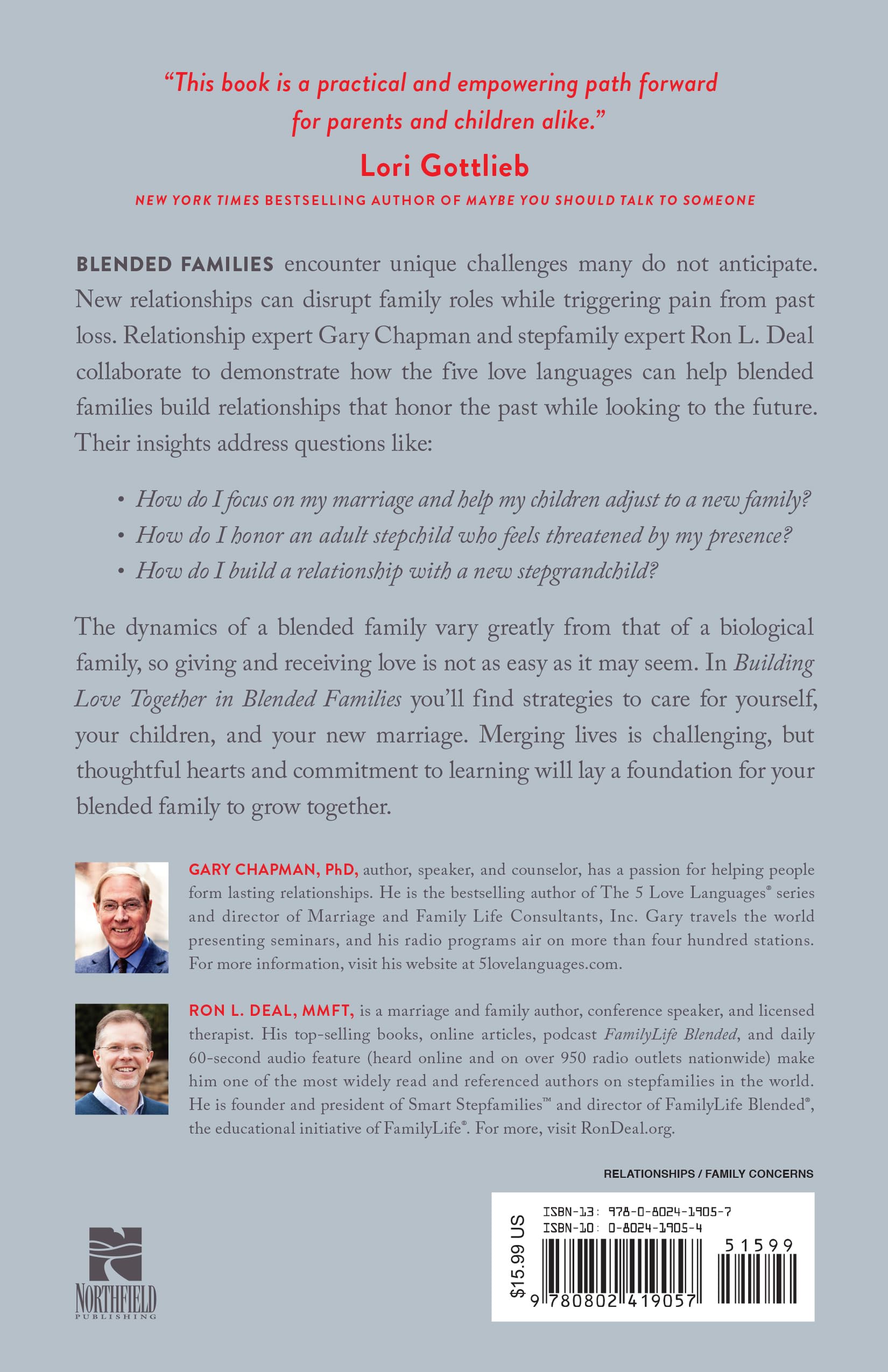
Building Love Together in Blended Families: The 5 Love Languages and Becoming Stepfamily Smart
- Religion & Spirituality
- Christian Books & Bibles
- Christian Living
| Life Stage | Biggest Relationship Risk | What Your Kids Are Learning | Key Strategy | Recommended Product |
|---|---|---|---|---|
| Newborn (0–12 months) | Physical exhaustion erases partnership | That they are the centre of the universe | Protect friendship, share the load explicitly | Baby Bomb: Survival Guide |
| Toddler (1–3 years) | Resentment builds silently | Adults are always stressed with each other | Daily ten minute partner conversation | Still Us Couples Workbook |
| School age (5–12) | Activity overload colonises couple time | Relationships need no maintenance | Put relationship time in the calendar | Seven Principles for Marriage |
| Teenager (13–17) | Emotional life was entirely in children; now they pull away | How adults handle conflict and repair | Reinvest; let them see you choosing each other | Hold On to Your Kids |
| Blended family (any age) | Loyalty conflicts pull partners apart | That loyalty is finite and contested | Explicit agreements about parenting roles | Building Love in Blended Families |
The Bottom Line
There is no trophy for loving one person in your family more than another. The real question is whether the people you love most are actually getting enough of you, and whether the structure of your family life makes that possible.
Your children need a present, warm, attuned parent. They also need to grow up watching two adults who choose each other, repair after conflict, and treat each other with visible kindness. Those are not competing goals. They are the same goal, looked at from different angles.
Start small. One honest conversation this week. One moment of warmth you might otherwise have skipped. The relationship that holds your family together deserves that, and so do you.
If this article resonated, save it and share it with a parent who needs it. The best relationships are built quietly, one ordinary day at a time.
Sources & References
- Gottman, J. and Gottman, J.S. "And Baby Makes Three: The Six-Step Plan for Preserving Marital Intimacy and Rekindling Romance After Baby Arrives." 2007. Crown Publishers.
- Gottman Institute. "Research FAQs." 2022. gottman.com
- Shapiro, A.F., Gottman, J.M., and Carrère, S. "The baby and the marriage: identifying factors that buffer against decline in marital satisfaction after the first baby arrives." Journal of Family Psychology, 2000.
- Trillingsgaard, T. et al. "What predicts responses to the transition to parenthood?" Journal of Reproductive and Infant Psychology, 2014.
- Cummings, E.M. and Davies, P.T. "Marital Conflict and Children: An Emotional Security Perspective." 2010. Guilford Press.
- Damour, L. "Untangled: Guiding Teenage Girls Through the Seven Transitions into Adulthood." 2016. Ballantine Books.
- Johnson, S. "Hold Me Tight: Seven Conversations for a Lifetime of Love." 2008. Little, Brown Spark.
- Journal of Marriage and Family. "Relationship Quality Across the Life Course." 2014. Wiley.
- Journal of Research on Adolescence. "Interparental Conflict and Adolescent Mental Health." 2019. Society for Research on Adolescence.
Frequently Asked Questions
Is it normal to feel more connected to your child than your partner after having a baby?
Can prioritising my relationship actually harm my kids?
My partner says I love the kids more than them. How do I respond?
What if we just genuinely want to focus on the kids right now?
Does this advice apply to single parents?
How much couple time do we actually need?
We have completely lost touch as a couple. Is it too late?
Was this helpful?
Thanks — your feedback helps us pick what to write next.