Math Skills in Ages 5–8: Working Memory and Reasoning Games That Actually Work
Children ages 5 to 8 build stronger math skills when you train the two underlying abilities that power arithmetic: working memory (holding numbers in mind while calculating) and logical reasoning (seeing patterns and rules).
In this article
By the time your child reaches first or second grade, maths stops being about counting fingers and starts demanding something much harder: holding multiple pieces of information in mind at the same time while doing something with them. Research published by the British Journal of Developmental Psychology found that working memory at age 5 is one of the strongest predictors of maths achievement at age 11, stronger even than IQ scores at the same age. That is a big deal, and it means the games you play at the kitchen table right now genuinely shape how your child handles numbers for years to come.
In this guide you will understand:
1. What Working Memory Is (and Why Maths Breaks Without It)
Working memory is your child's mental whiteboard: the space where they hold numbers, words, or instructions just long enough to use them. When your seven year old reads "Sara had 14 apples and gave away 6," she has to keep 14 and 6 active in mind, recall what subtraction means, and execute the calculation before those numbers fade. If her working memory capacity is small, one of those steps falls off the whiteboard and she gets stuck.
Working memory is a better predictor of academic success than IQ, and it is also more amenable to environmental influence.
— Tracy Alloway, University of North Florida (2010)
The key insight here is that working memory is not fixed. It responds to practice, especially playful, low stakes practice that feels nothing like drilling.
How working memory breaks down in early maths
2. Reasoning Skills: The Engine That Drives Pattern and Problem Solving
Working memory holds the numbers; reasoning decides what to do with them. Reasoning tasks ask children to notice patterns, apply rules consistently, and make logical deductions. These are not abstract skills reserved for gifted children. They develop through regular exposure to puzzles, games, and structured play between ages 5 and 8, precisely when the prefrontal cortex is going through a major pruning and refinement phase.
Children who receive regular exposure to patterning activities in early school years show measurably stronger algebraic thinking by grade 3.
— Journal of Educational Psychology (2019)
Think of reasoning as the bridge between knowing that 6 + 8 = 14 and understanding why that fact helps you solve 16 + 18. Pattern recognition lets your child see the structure, not just memorise the answer.
Three reasoning skills worth targeting at ages 5 to 8
Pattern recognition: Can your child predict what comes next in a number or shape sequence? This is early algebraic thinking.
Deductive reasoning: Given two facts, can they draw a logical conclusion? ("All squares have 4 sides. This shape has 4 equal sides and square corners. What is it?")
Relational reasoning: Can they understand that 7 is both 3 more than 4 and 2 less than 9 simultaneously? This underpins number sense.
For a deeper look at how play physically shapes the brain circuits behind these abilities, the research covered in how creative play builds the toddler brain gives a compelling neurological picture that applies into the early school years too.


Edulok Math Games for Kids 5-7, Addition and Subtraction Educational Games, Kindergarten Learning Activities, Classroom Must Haves
- Self-correcting Design: Each puzzle has unique interlocking joints that fit only if they match, which is great
- Let Children Make Progress: The addition and subtraction puzzle is designed to improve kindergarten readiness
- Learn basic math knowledge: Combining vivid illustrations and engaging ways, the puzzle helps children natural
3. Memory Games That Double as Maths Practice
The most effective working memory exercises for this age band are the ones that feel like play. Research from the University of Cambridge's Centre for Neuroscience in Education consistently shows that children who perceive a task as a game engage more deeply, repeat it more often, and retain gains longer than children doing formal drills.
Card based memory games
The classic "Concentration" card game, where you flip pairs and remember where matching cards are, is a genuine working memory workout. You can adapt it for maths by using a deck where each pair is a maths problem and its answer, your child has to hold the problem in mind, mentally solve it, and then find the card showing the correct number.
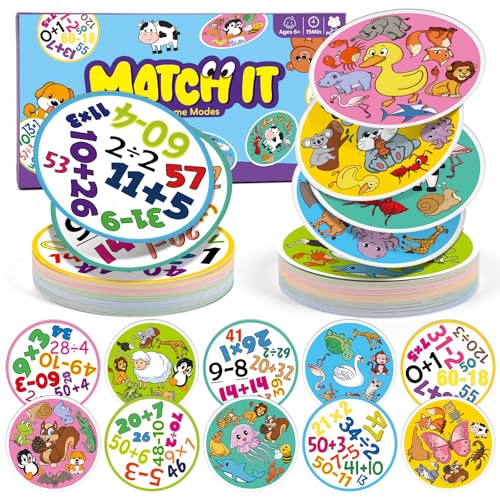
The Edulok Match Game takes exactly this approach. Its 57 double sided cards put animal matching on one side and maths matching on the other, so you get a pure memory game and a maths facts game from the same deck. At $11.99 and rated 4.9 stars across 103 reviews, it earns its spot in the drawer.
Sequence and verbal memory games
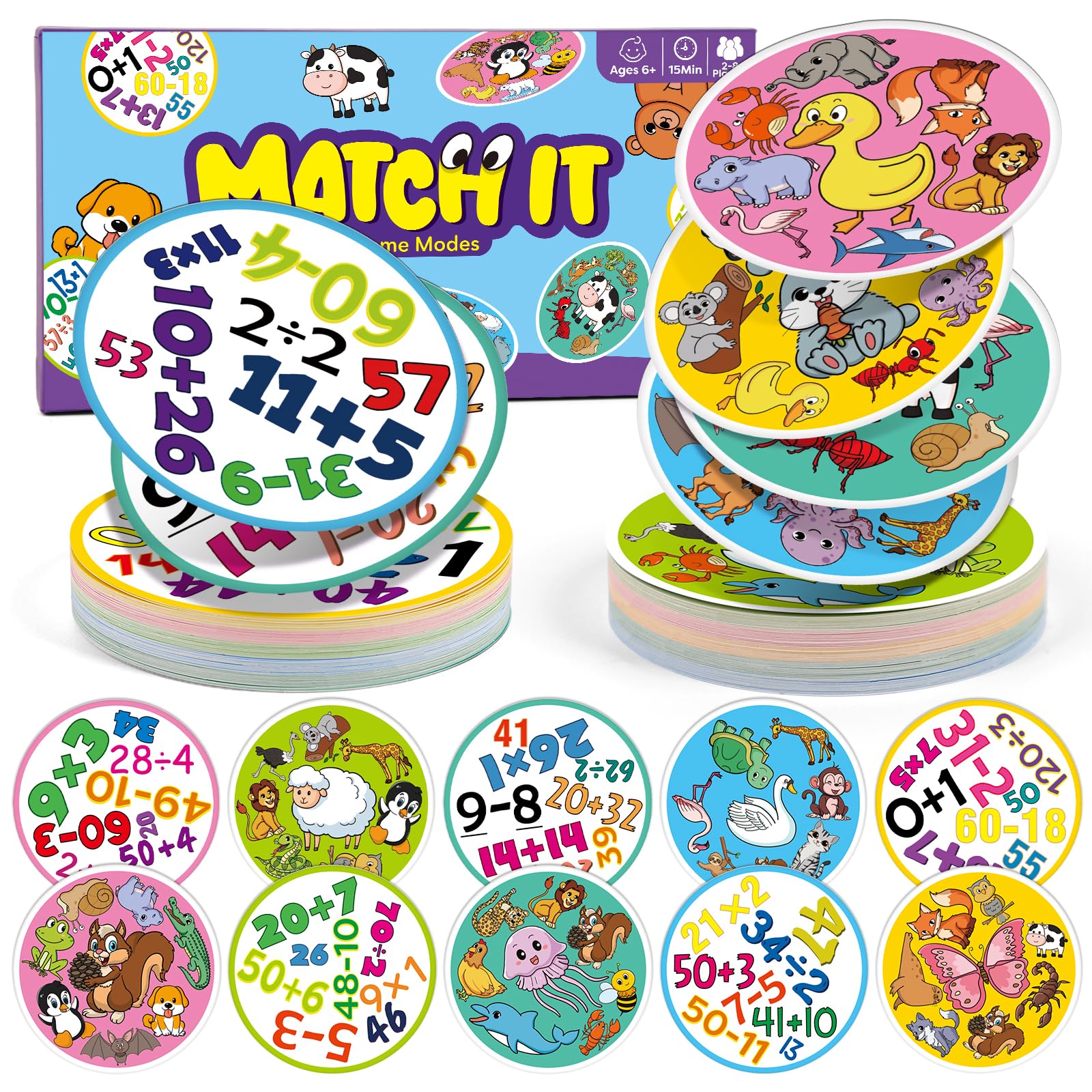
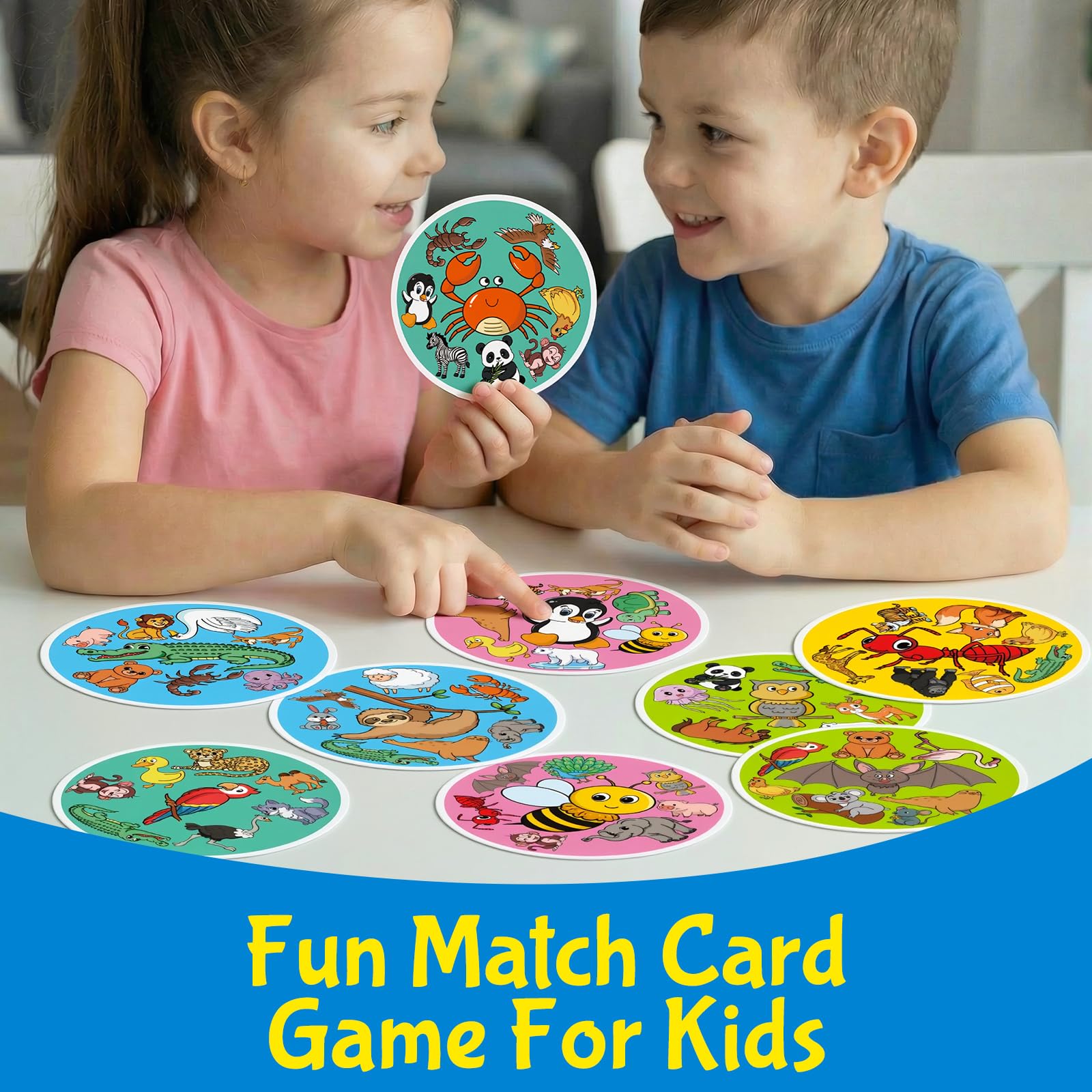
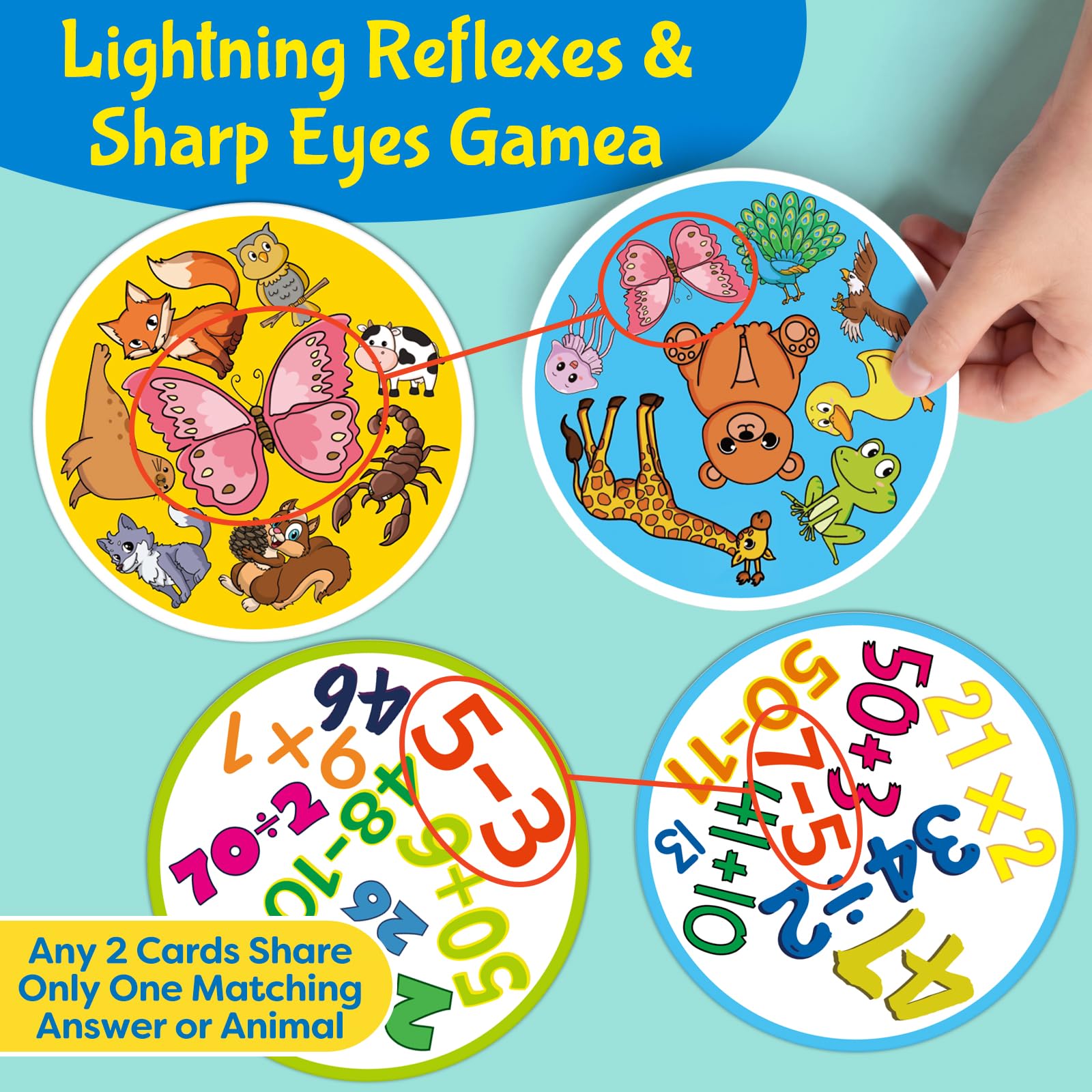
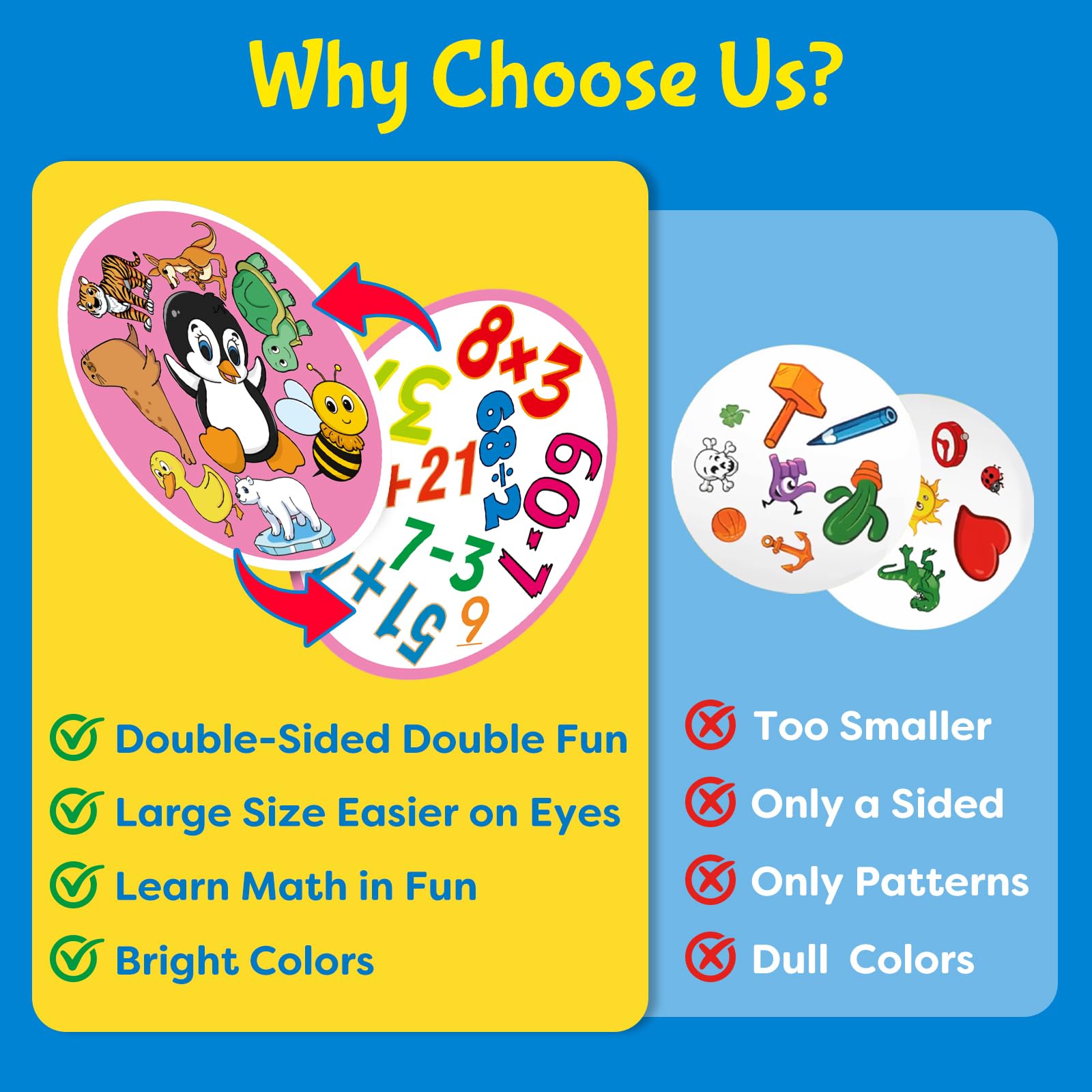
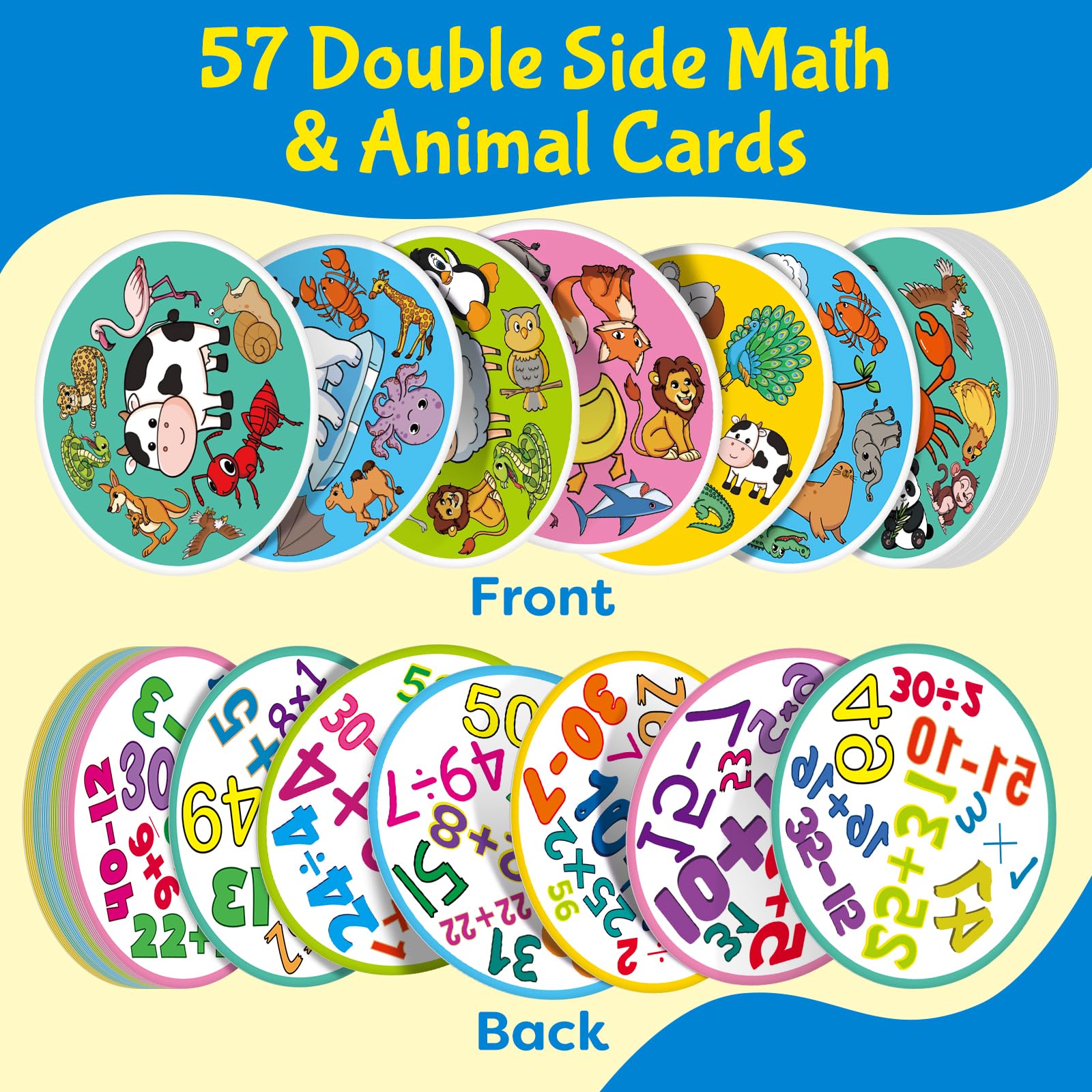
Edulok Match Game Quick Memory Card Game,Fun Math Learning Card Math Game,Quick Reflexes Cards Animal Table Piles Games,Visual Perception Family Games,Preschool Classroom Homeschool Supplies
- 【Match Game Memory Card Game】The 57 double-sided cards match game aim to help kids develop memory observationa
- 【Make Learning Math Interesting】This match cards game features a math problem theme on one side,kids can play
- 【5 IN 1 Versatile Gameplay Game】Designed to engage 2 to 8 players,with animal card mode and math number mode,t
4. Puzzles and Logic Games That Build Reasoning Directly
Puzzles are one of the most research supported tools for developing reasoning in this age group because they are self-correcting: the child gets immediate feedback without an adult having to say "wrong." That combination of challenge, feedback, and autonomy is exactly what builds the persistence and reasoning habits that transfer to classroom maths.
What to look for in reasoning games for ages 5 to 8
The Edulok Math Games set is built around exactly this principle. Its interlocking puzzle pieces physically cannot connect unless the maths problem and answer match, so the child gets tactile, immediate confirmation of whether they are right. This is the kind of self correcting design that research consistently flags as more effective than a worksheet checked the next morning.
For dice based games, PlaySmart Dice Deluxe offers 11 different maths games in one compact set. The dice mechanic introduces a randomness element that keeps reasoning active: your child cannot memorise the "right" sequence because each game state is different. At $12.92 it is one of the best value reasoning tools I have come across for this age band.




Semper Smart Games PlaySmart Dice Deluxe Math Game – Educational Arithmetic Dice Activity for Kids 6+, Fun Family Learning Game with 11 Math Games for Mental Calculation, Classroom, Home & Travel
- FUN & ENGAGING MATH LEARNING GAME Ditch flash cards and master math the fun way with this award-winning math d
- 11 MATH GAMES FOR ALL SKILL LEVELS Includes 11 different math games for learners ages 6 and up, with gameplay
- BUILD MENTAL MATH & NUMBER SKILLS Helps improve speed, accuracy, and confidence by targeting harder-to-learn n
Understanding what coding really means for a young child's brain is worth a read here too, because the underlying reasoning skills are nearly identical, sequencing, rule following, and error checking, whether the context is maths or early programming.
5. Making Everyday Life a Working Memory Workout
You do not need a special game for every session. The daily environment of a 5 to 8 year old is packed with natural working memory and reasoning opportunities that most parents walk straight past.
Practical everyday exercises
Cooking and baking: Ask your child to halve or double a recipe. This is genuine proportional reasoning, not worksheet maths. Hold the original number in mind, apply the operation, check the result. All three working memory stages in one task.
Shopping: Give your child a budget (say, £5 or $5) and three items to choose between. Can they work out which combination fits? They have to hold prices in mind, add them, compare to the budget, and revise if needed.
Navigation: When driving, describe two or three turns ahead and ask your child to hold the sequence in mind. "Left at the church, right at the school, straight at the lights." Purely verbal working memory, no screen required.
Telling the time: Analogue clocks are a reasoning workout in ways digital clocks simply are not. Asking "how many minutes until half past?" requires holding the current time, calculating the gap, and expressing it in a different format.
For children who want a portable practice tool, the Educational Insights Math Whiz handheld device is genuinely useful during car journeys or waiting rooms. Its three game modes include a drill mode and a challenge mode, and it covers all four operations with multiple skill levels for about $25.


Educational Insights Math Whiz - Electronic Math Games for Kids Ages 6-8, Handheld Math Game, Addition and Subtraction Toys, Multiplication and Division Games for First Graders, Kids Learning Game
- MATH FACT FLUENCY GAME: Math Whiz is a handheld math game for kids that practices addition, subtraction, multi
- THREE DIFFERENT LEARNING GAMES: Solve a progressively more difficult sequence of problems with Drill Mode, pla
- PORTABLE MATH LEARNING: Take math practice on the go with this compact, all-in-one game; play anywhere, from t
6. Choosing the Right Tools: A Practical Parent Framework
Not every product marketed as "educational" actually trains working memory or reasoning. Here is how to sort the useful from the flashy.
Ask these three questions before buying: 1. Does the child have to hold more than one piece of information in mind at the same time? 2. Is there a reasoning or decision making element, or is it purely drill? 3. Does it give feedback that the child can act on immediately?
If yes to at least two of three, it is worth considering.
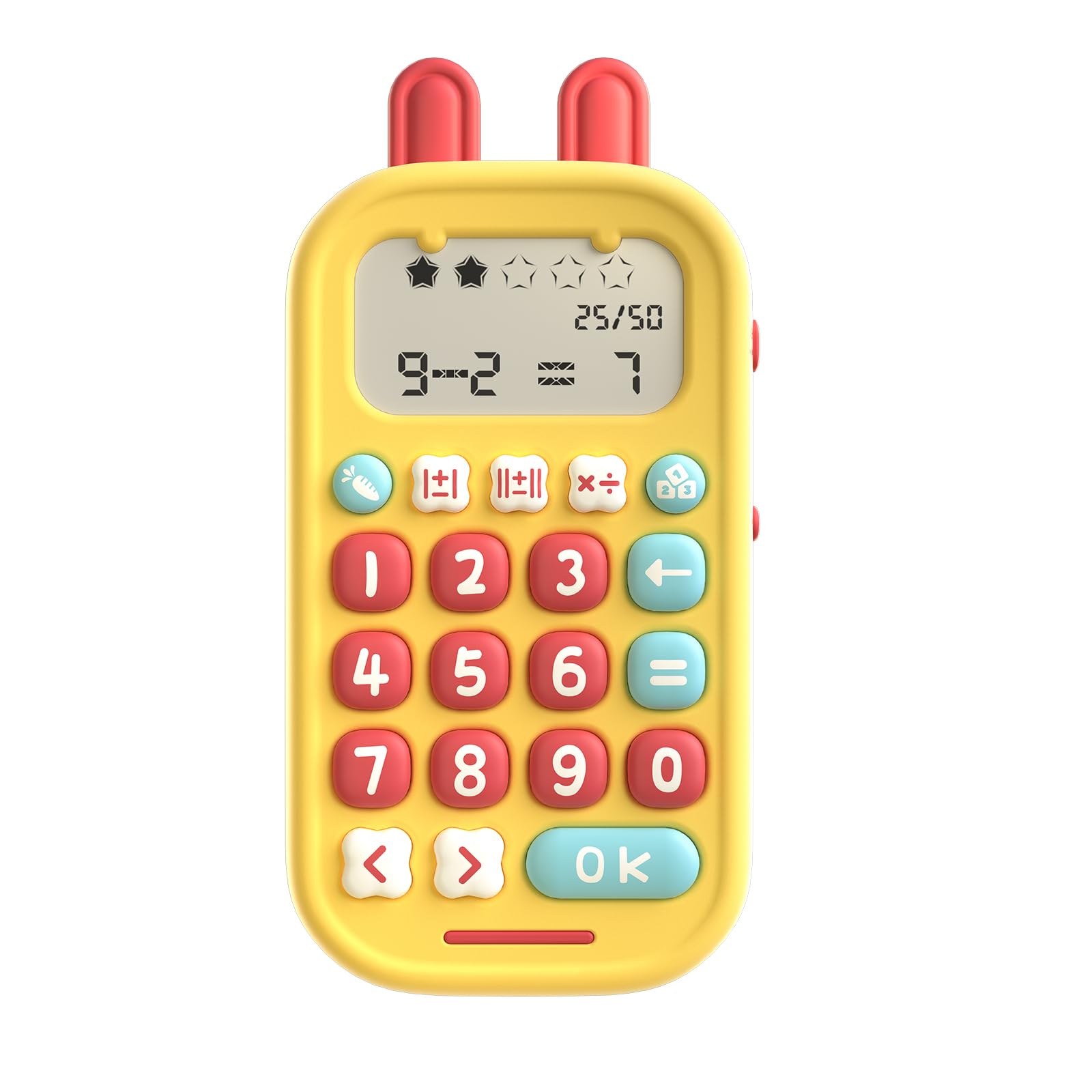
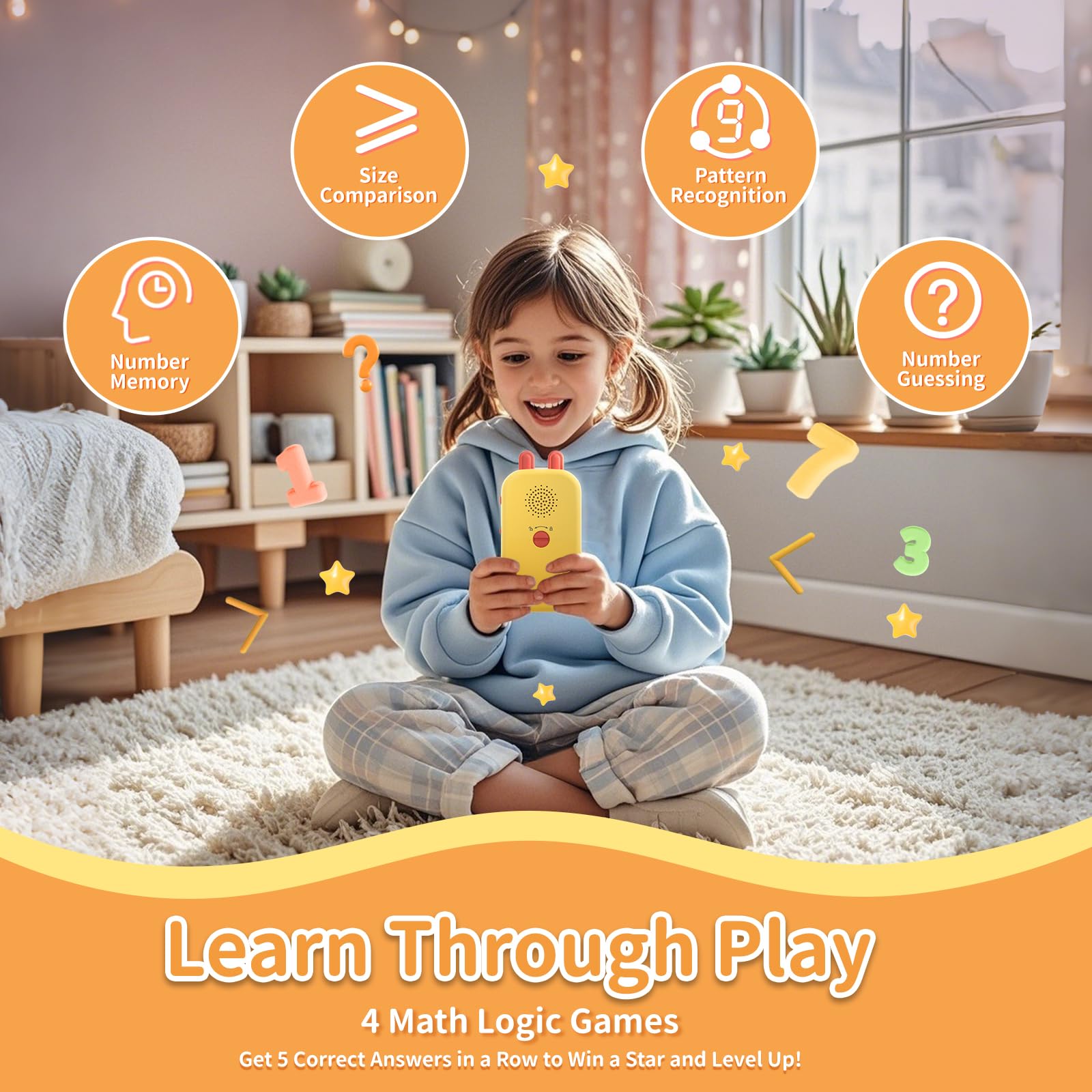
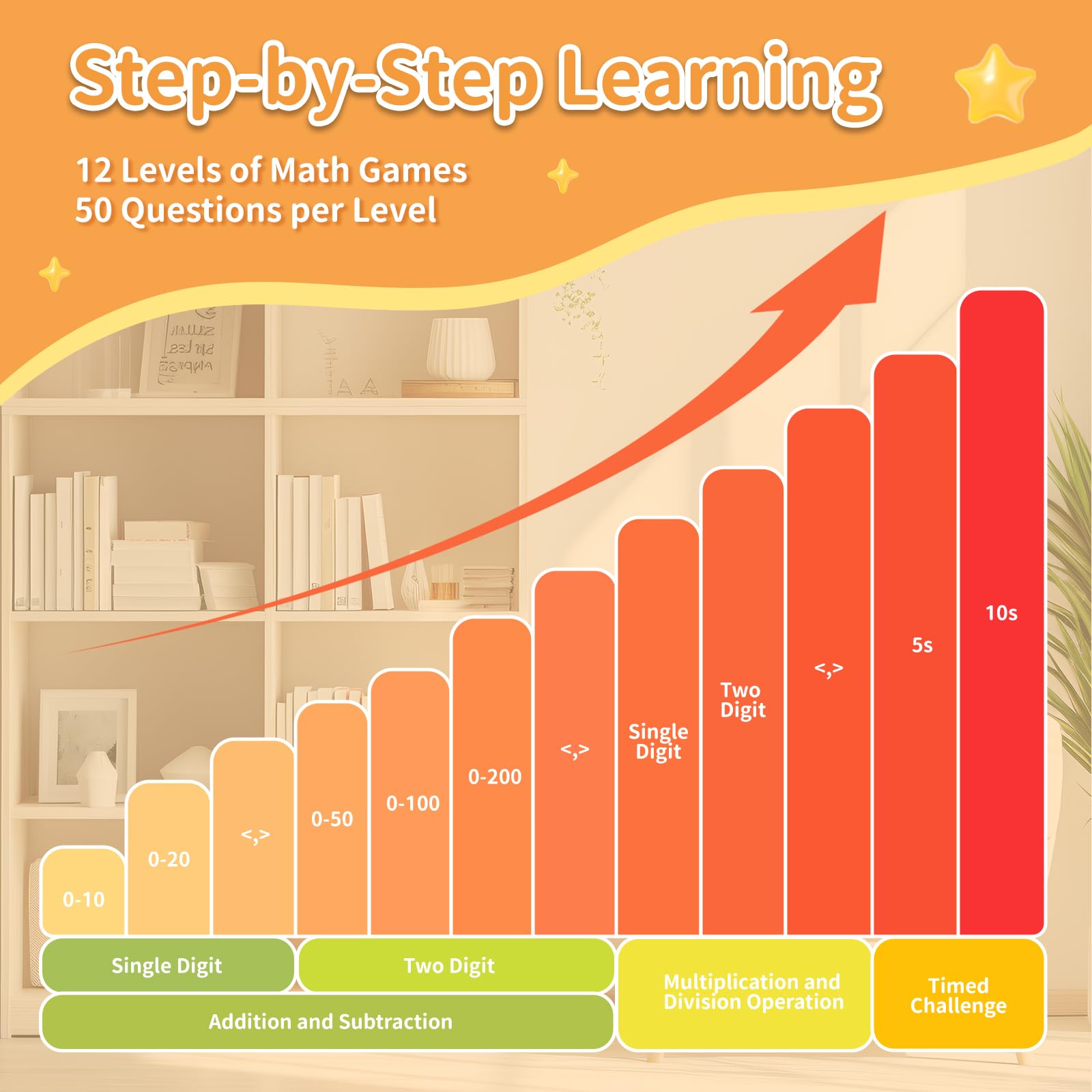
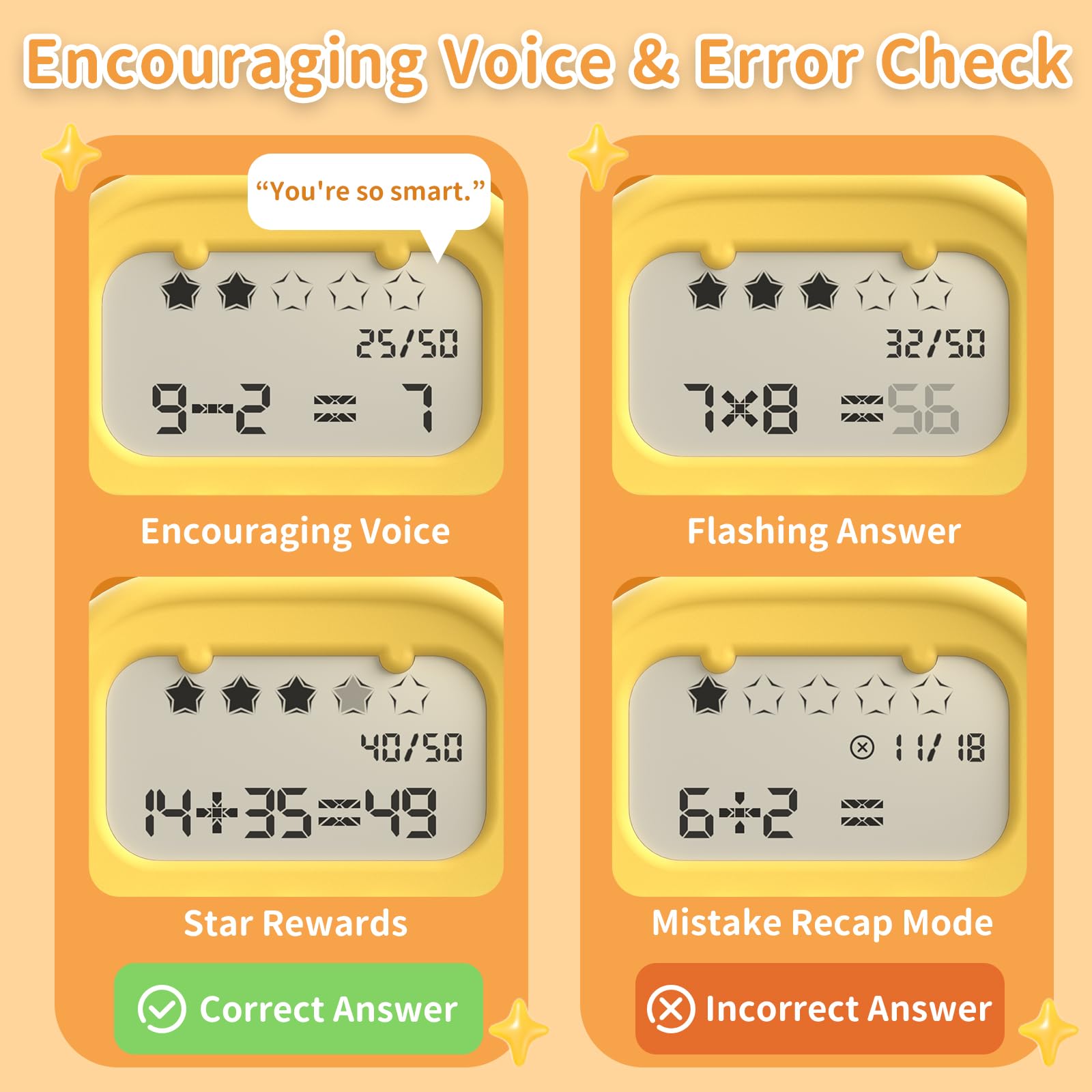
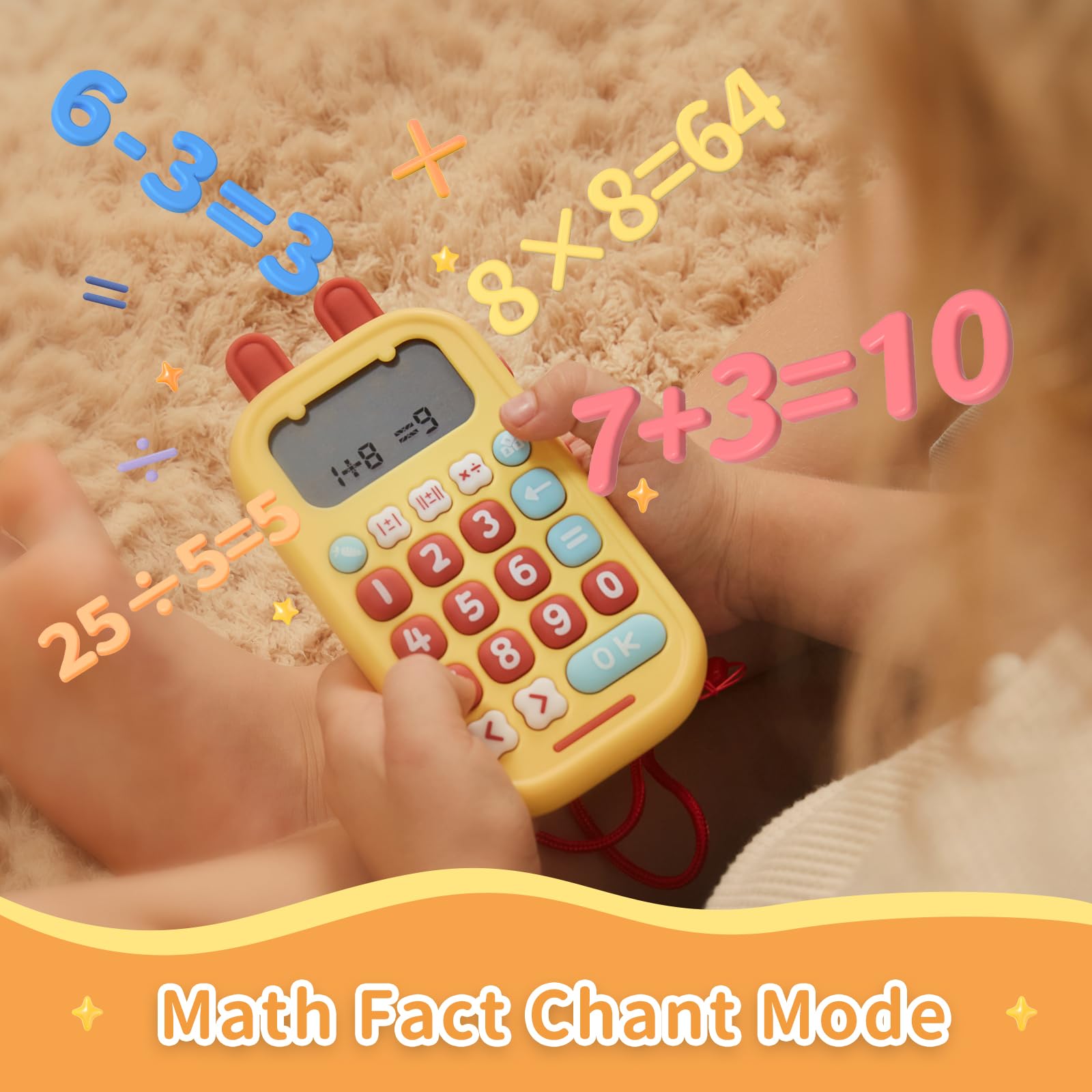
alilo Math Games for Kids Ages 5-12, Portable Math Toys for Practicing Addition, Subtraction, Multiplication and Division, Fun Educational Toy with 5 Modes, 19 Math Games, and 50K Math Questions
- 【19 Math Game for Kids】The alilo math toy features 19 interactive games to build kids' logic and math skills.
- 【Learn with Rewards & Encouragement】Kids receive instant voice encouragement after answer, helping them unders
- 【Error Check & Correction】The alilo kids math games automatically checks for mistakes and provides correct ans
The alilo Math Toy is worth highlighting for parents who want one device that spans arithmetic, logic, and pattern recognition. Its 19 game modes include number memory, size comparison, pattern recognition, and a timed challenge mode, with 50,000 maths questions across all four operations. At $23.99 with 539 reviews at 4.5 stars, it is well tested and covers the full 5 to 12 age range so it grows with your child.
7. How Much Practice Is Enough (Without Burning Them Out)
The most common mistake I see parents make is confusing volume with quality. A 30 minute slog through worksheets after school is far less effective for this age group than three separate 10 minute play sessions across the day.
Research from the AAP (American Academy of Pediatrics) consistently emphasises that children aged 5 to 8 learn best through play that they choose or co-design, not through extended passive instruction. Their sustained attention window for adult-directed tasks is roughly 10 to 15 minutes before the cognitive load tips into frustration.
Children learn most effectively when instruction is embedded in play, socially engaging, and timed to natural attention rhythms.
— American Academy of Pediatrics, Council on School Health (2013)
A realistic weekly rhythm for ages 5 to 8
The goal is consistency across weeks and months, not intensity on any single day. Small, regular deposits into the working memory bank add up significantly by the end of the school year.
| Game Type | Best For | Working Memory Demand | Reasoning Demand | Recommended Product | Price Range |
|---|---|---|---|---|---|
| Self-correcting puzzle | Ages 5 to 7, arithmetic basics | Medium (holds problem + answer) | Medium (shape matching + calculation) | Edulok Math Games | $15–16 |
| Memory card game | Ages 5 to 8, visual memory + maths facts | High (spatial + numeric recall) | Low to medium | Edulok Match Game | $11–12 |
| Dice game (11 modes) | Ages 6 to 8, mental arithmetic speed | Medium (running totals) | Medium (rule application) | PlaySmart Dice Deluxe | $12–13 |
| Strategy dice game | Ages 8+, mental maths + tactics | High (opponent + own calculation) | High (strategic planning) | Math-Tac-Toe Game | $29–30 |
| Handheld device | Ages 6 to 8, portable practice | Medium (sequence of problems) | Low to medium | Math Whiz | $25–26 |
| Multi-mode logic toy | Ages 5 to 12, all four operations | High (19 game modes) | High (pattern + number logic) | alilo Math Toy | $23–24 |
Expert Insights
The truth is, you do not need a specially designed curriculum to boost your child's maths skills between ages 5 and 8. You need games that make their brain work just a little harder than is comfortable, repeated often enough to build a habit, and framed as fun rather than school work. The research on this is remarkably consistent: children who play with numbers, reason about patterns, and hold information in mind during games develop stronger maths foundations than children who only drill facts. Start with one game this week. Notice how your child engages. Then keep showing up at the table.
If this article helped, save it for the next time maths homework feels like a battle, and share it with another parent who needs a different approach.
Sources & References
- Alloway, Tracy P., and Ross G. Alloway. "Investigating the Predictive Roles of Working Memory and IQ in Academic Attainment." Journal of Experimental Child Psychology, 2010.
- Peng, Peng, et al. "A Meta-Analysis of Mathematics and Working Memory: Moderating Effects of Working Memory Domain, Type of Mathematics Skill, and Sample Characteristics." Psychological Bulletin, 2016.
- Rittle-Johnson, Bethany, et al. "Patterning and Mathematical Learning." Journal of Educational Psychology, 2019.
- American Academy of Pediatrics, Council on School Health. "The Crucial Role of Recess in School." Pediatrics, 2013.
- Klingberg, Torkel. "Training and Plasticity of Working Memory." Trends in Cognitive Sciences, 2010.
- Boaler, Jo. "Mathematical Mindsets." Jossey-Bass, 2016.
- Dowker, Ann. "Individual Differences in Arithmetic: Implications for Psychology, Neuroscience and Education." Psychology Press, 2005.
- Ansari, Daniel. "Numbers in the Brain." The Psychologist, British Psychological Society, 2012.
Frequently Asked Questions
Why does my child understand maths in class but fall apart on tests?
At what age should I start working memory exercises?
Do working memory games help children with ADHD?
Are apps and screens as effective as physical games for building these skills?
How do I know if my child has a working memory problem worth investigating?
My child hates maths. Will these games actually help?
How does this connect to what my child's teacher is doing in class?
Was this helpful?
Thanks — your feedback helps us pick what to write next.