
Routines Are the Invisible Architecture of Family Life
The ages 5–8 are a pivotal window when family routines, communication habits, and sibling dynamics shape a child's emotional security for years to come — and small, consistent changes at home make the biggest difference.
In this article
Picture this: it's 7:42 a.m. on a Tuesday. One child can't find their left shoe, another is crying because their toast is "too brown," and you haven't had a sip of coffee yet. Sound familiar? The early school years (ages 5–8) are gloriously chaotic — but they're also one of the most formative stretches of family life you'll ever navigate together.
According to the American Academy of Pediatrics (AAP), the quality of the home environment during the early school years is a stronger predictor of long-term academic and emotional outcomes than almost any school-based factor. In other words, what happens at your kitchen table matters more than what happens in the classroom.
In this guide, you'll understand:
1. Routines Are the Invisible Architecture of Family Life
Predictable daily routines are not just convenient — they are neurologically protective for children aged 5–8. When your child knows what comes next, their stress-response system stays calmer, freeing up cognitive bandwidth for learning, creativity, and connection.
Research published in Pediatrics (2020) found that children with consistent bedtime and morning routines showed significantly lower rates of emotional and behavioural problems compared to peers without those anchors. The effect was especially strong for children who had experienced any family disruption — divorce, a new sibling, a house move.
Morning Routines
The morning is where most family friction lives. Keep it simple: - Post a visual checklist at child height (dressed, breakfast, teeth, bag, shoes) - Build in five minutes of buffer — always - Let your child tick off the list themselves; ownership reduces nagging
Evening Routines
The hour before bed is your relationship investment window. A consistent wind-down sequence — dinner together, calm activity, bath, story, lights out — signals safety to a developing brain.
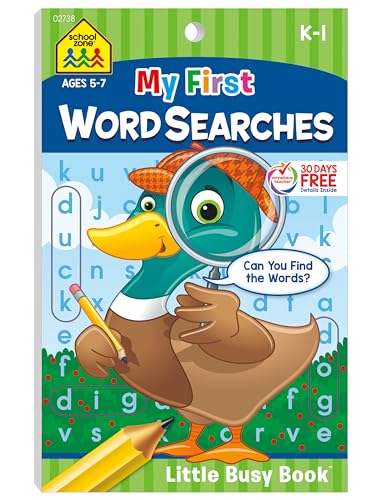
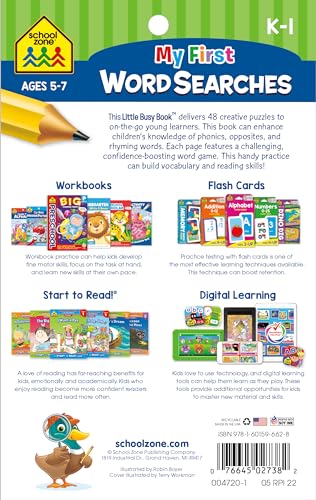
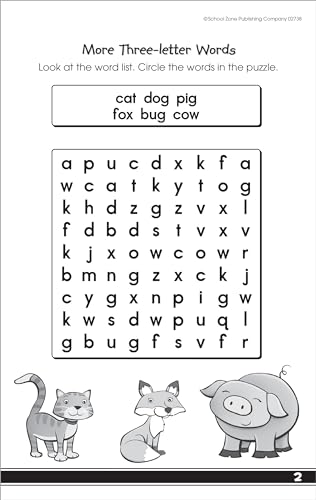
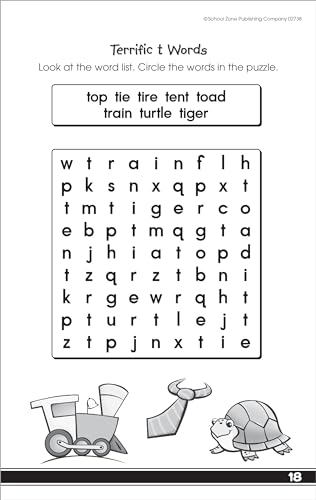
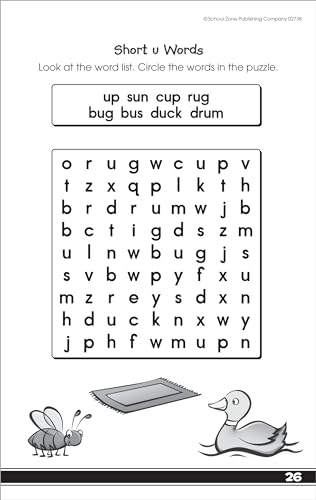
School Zone My First Word Searches Workbook: 48 Pages, Kindergarten, 1st Grade, Activity Pad, Search & Find, Word Puzzles, Ages 5 to 7 (Little Busy Book Series)
- Children's Books
- Activities, Crafts & Games
- Activity Books
2. Talking With Your 5–8-Year-Old: Communication That Actually Works
Children in this age band are concrete thinkers who are just beginning to understand that other people have inner lives different from their own. That means the way you talk to them shapes how they learn to talk about themselves.
The AAP recommends "sportscasting" — narrating what you observe without judgment — as a powerful tool for this age group. Instead of "Why did you hit your brother?" try "I saw you hit Jake. Your fists were clenched. What was happening inside you?"
Listening So They'll Talk
- Get physically low — crouch or sit beside them, not above them - Reflect feelings before problem-solving: "That sounds really frustrating" before "Next time you could…" - Use car journeys strategically — side-by-side conversations (no eye contact pressure) unlock more disclosure than face-to-face ones
Talking About Hard Topics
Divorce, death, school worries, news events — children this age are sponges. Keep explanations honest, age-appropriate, and brief. Invite questions rather than delivering monologues. And always end with what stays the same: "Our family still loves you, and you are safe."
3. Managing Big Emotions — Theirs and Yours
Five-to-eight-year-olds are still building the prefrontal cortex circuitry needed for impulse control. Meltdowns, tearful outbursts, and door-slamming are developmentally normal — not signs of bad parenting.
What is within your control is how you respond. The CDC's "Essentials for Parenting" programme highlights that calm, consistent parental responses to emotional outbursts reduce their frequency over time more effectively than punishment.
The Regulate-Relate-Reason Framework
1. Regulate first — wait until the storm passes before problem-solving 2. Relate — name the emotion and validate it ("You were so disappointed") 3. Reason — only then discuss what happened and what to do differently
When to Be Concerned
Seek professional support if your child: - Has meltdowns lasting more than 30 minutes regularly - Shows aggression that injures others or themselves - Expresses persistent sadness, hopelessness, or school refusal




Ultimate Puzzle Challenge!: 125+ Brain Games for Kids, Mazes, Brain Teasers, Word Searches, Crossword Puzzles, Sudoku, Logic Puzzles and More, Kids Activity Book (Highlights Jumbo Books & Pads)
- Children's Books
- Activities, Crafts & Games
- Image Unavailable Image not available forColor:
4. Screen Time, Family Media, and Finding the Balance
Screen time is the parenting flashpoint of our era — and the research is more nuanced than the headlines suggest.
The AAP's Family Media Plan guidance (updated 2023) moves away from strict hour-counts for school-age children and toward quality and context. Co-viewing, discussing content, and protecting sleep and face-to-face time matter more than hitting a precise daily minute total.
That said, the AAP still recommends: - No screens during meals or the hour before bed - Consistent "off" times that the whole family observes (yes, including adults) - Prioritising interactive, educational content over passive consumption
Practical Alternatives That Kids Actually Choose
When screens go off, children need something to go to — not just a void. Stock the house with genuinely engaging alternatives:
- Age-appropriate puzzle books (the School Zone My First Codes & Puzzles Workbook for ages 6–8 layers in logic and language skills) - Art supplies at a permanently accessible level - A dedicated "boredom box" with rotating activities

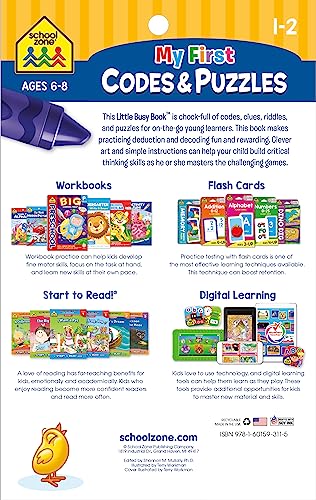


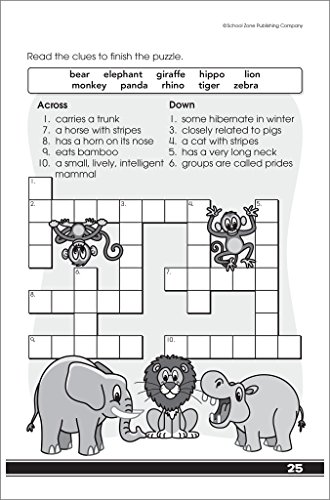
School Zone My First Codes & Puzzles Workbook: 48 Pages, 1st Grade, 2nd Grade, Activity Pad, Crossword Puzzles, Word Search, Riddles, Ages 6 to 8 (Little Busy Book Series)
- Children's Books
- Activities, Crafts & Games
- Activity Books
The Family Media Agreement
Sit down together and write three to five household rules about screens. When children help make the rules, compliance is dramatically higher. Post it on the fridge. Revisit it every school term.
5. Sibling Relationships: Your Most Underrated Parenting Job
If you have more than one child, you are simultaneously managing one of the most complex social laboratories in your child's life. Sibling relationships are the training ground for negotiation, empathy, fairness, and repair — but only if you actively facilitate them.
University of Illinois research found that children with warm sibling relationships in early childhood showed better peer relationships and lower rates of loneliness in adolescence. The quality of sibling bonds at age 6–7 was a significant predictor.
Reducing Rivalry
- Avoid comparison entirely ("Why can't you be tidy like your sister?") - Give each child a protected one-on-one slot with you each week — even 20 minutes counts - Teach conflict resolution scripts: "I feel ___ when you ___. Can we try ___?"
Encouraging Cooperation
Shared activities build bonds faster than anything. A puzzle or activity book they work through together — like the Ultimate Activity Book for Kids Ages 6-8 — creates natural collaboration without competition.



Ultimate Activity Book for Kids Ages 6-8: 100 Fun-Filled Pages of Mazes, Dot to Dot, Word Search, and Crossword Puzzles
- Children's Books
- Activities, Crafts & Games
- Activity Books
6. Protecting Your Own Wellbeing as a Parent
You cannot pour from an empty cup — and this is not a platitude, it's physiology. Parental burnout is a recognised clinical syndrome, described in research by **Moïra Mikolajczak and Isabelle Roskam (2018, Clinical Psychological Science)** as distinct from general burnout and workplace stress. It is characterised by emotional exhaustion specific to the parenting role, emotional distancing from your children, and loss of parenting efficacy.
The early school years are a high-demand period: logistics multiply (school runs, after-school clubs, homework), while the child's growing independence can paradoxically create more conflict, not less.
Practical Self-Care That Fits Real Life
- Micro-recovery: 10-minute solo walks, five minutes of quiet before the house wakes up - Social connection: even one adult friendship maintained actively buffers burnout significantly - Shared load: explicitly divide household and parenting tasks with a partner or support network — unspoken imbalance is a primary driver of parental exhaustion
When to Ask for Help
If you notice persistent irritability with your children, emotional numbness, or a sense that you're "going through the motions," speak to your GP or a family therapist. Asking for help is the highest-leverage parenting move you can make.
7. Activity-Rich Family Time: Building Connection Through Play
Shared leisure is not a nice-to-have — it is the connective tissue of family life. The Harvard Study of Adult Development, one of the longest-running studies of human wellbeing, consistently finds that the quality of close relationships is the single strongest predictor of life satisfaction and health in adulthood. Those relationships are built, brick by brick, in ordinary family moments.
For 5–8-year-olds, the sweet spot is activities that feel playful but build real skills: reading together, cooking simple meals, board games, crafts, and — particularly valuable for this age — puzzle and activity books that the whole family can dip into.

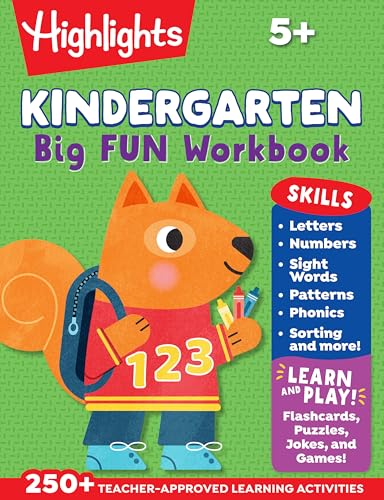
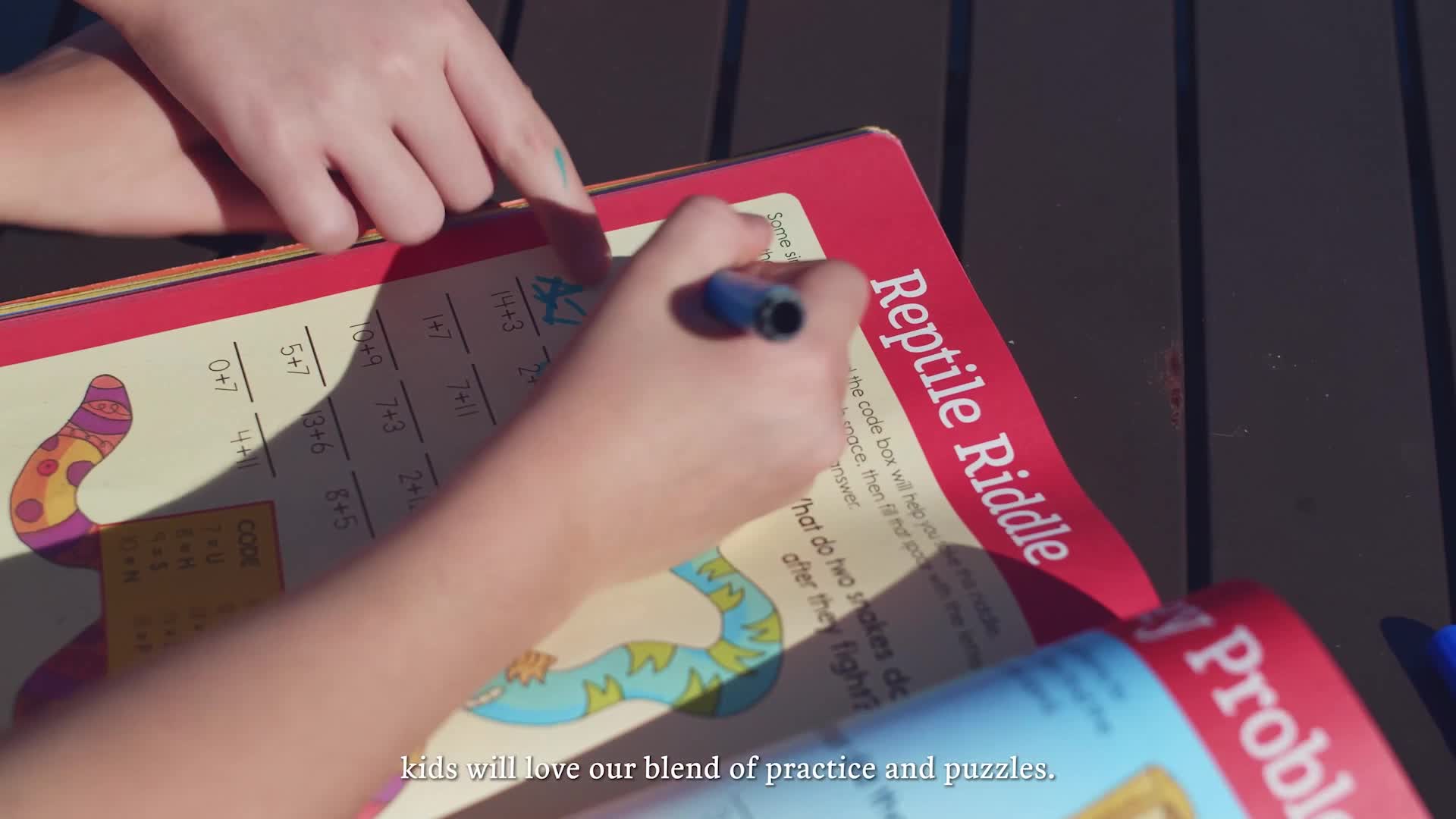
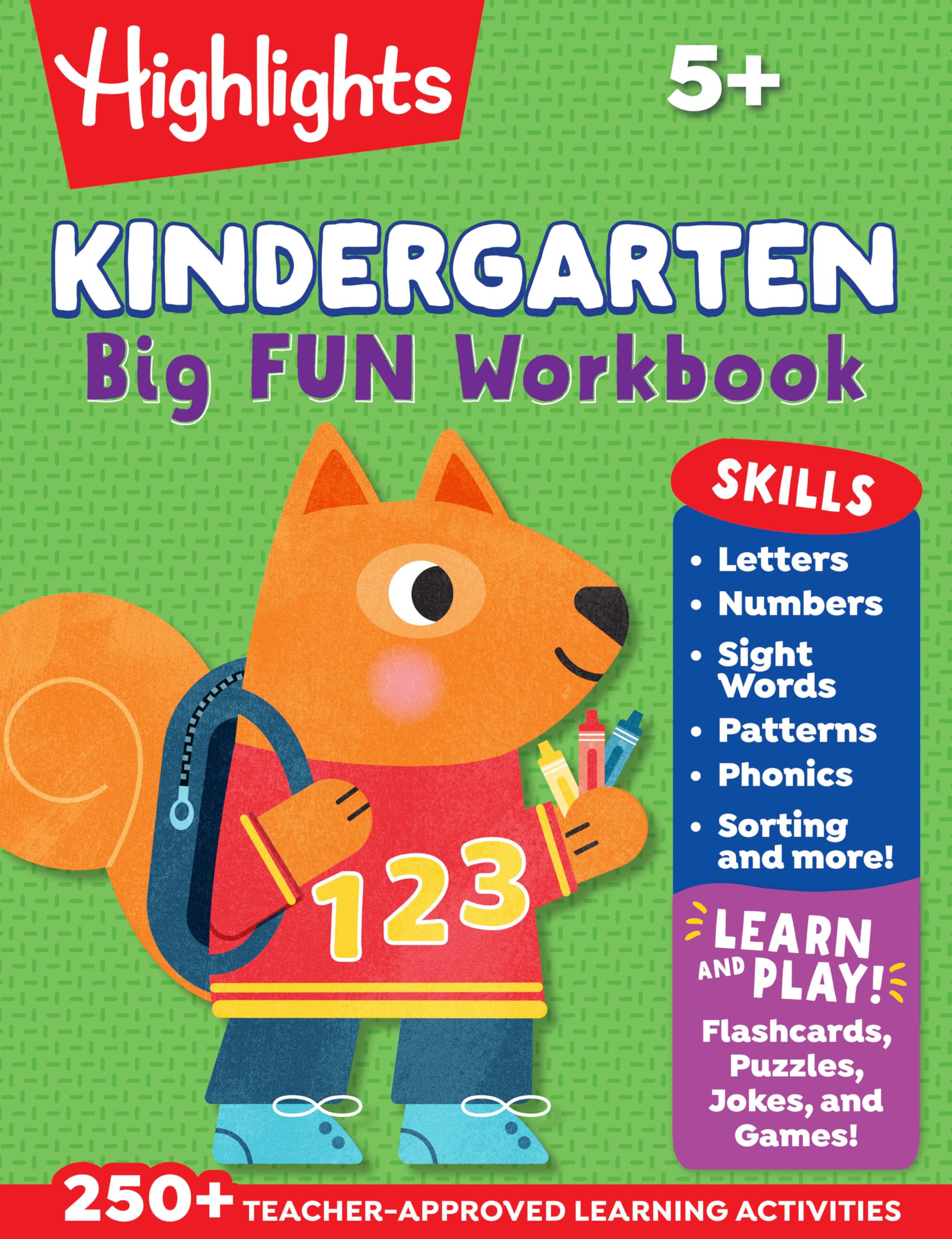
Kindergarten Big Fun Workbook: Kids Workbook with Tracing Worksheets, Alphabet Practice, Math Activities and Puzzles for Kindergarten Prep and Learning
- Children's Books
- Growing Up & Facts of Life
- Friendship, Social Skills & School Life
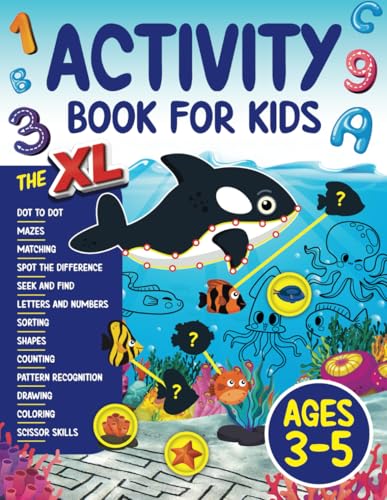
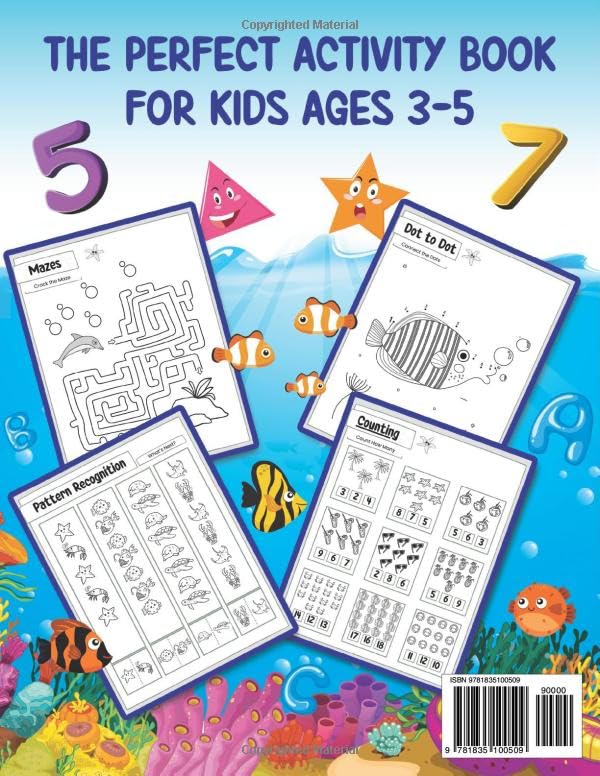
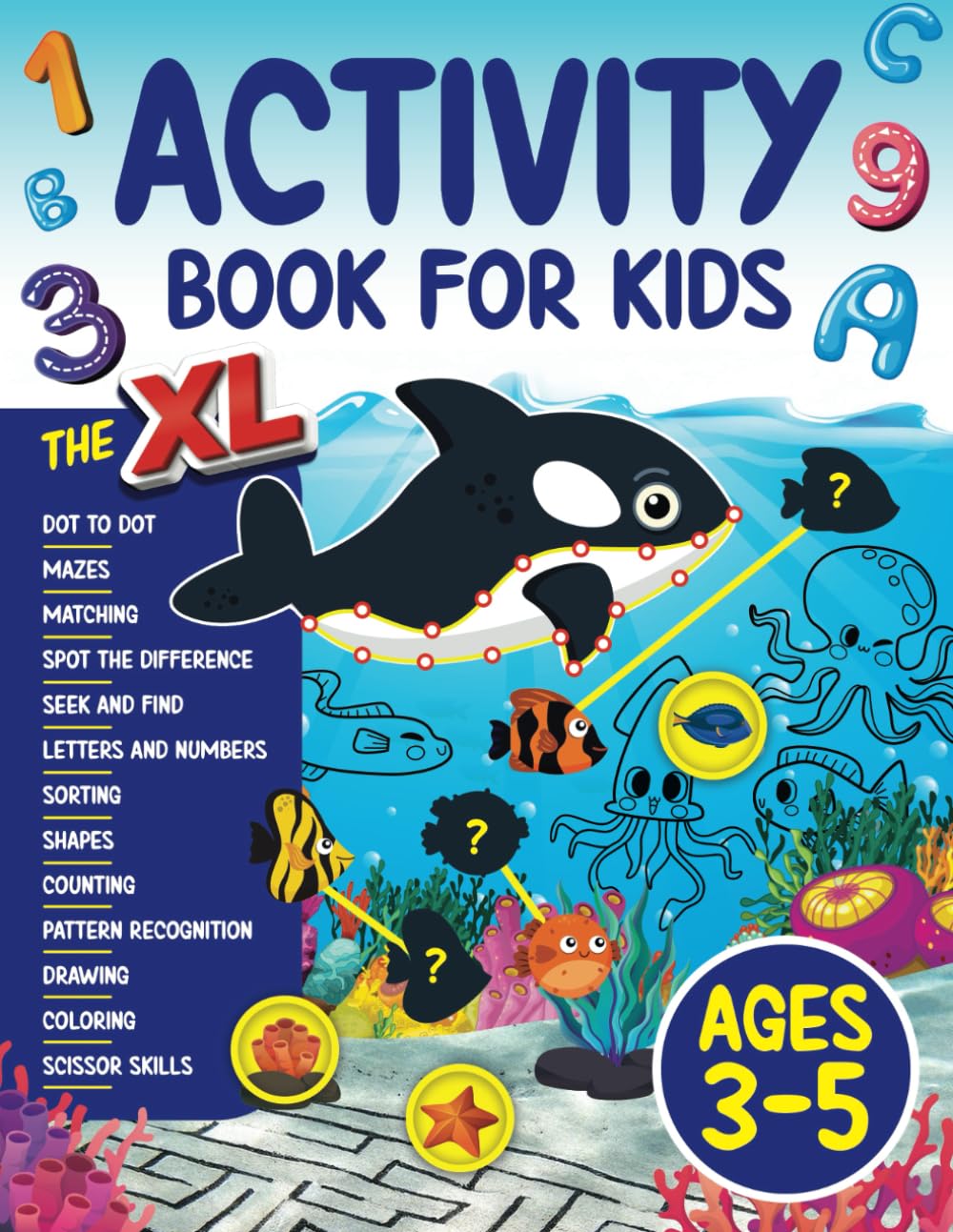
The XL Activity Book for Kids ages 3-5: Puzzles, Early Learning and Creative Fun | Activities for Travel and at Home
- Children's Books
- Early Learning
- Basic Concepts
Ideas for Weekly Family Connection
- Friday film night with a no-phones rule (adults included) - Sunday cooking project — let your child own one step of the recipe - "Rose and Thorn" at dinner: everyone shares one good thing and one hard thing from their day - Monthly family meeting: 15 minutes to plan the month, celebrate wins, and raise concerns
Comparison Table: Activity Options for Family Bonding Time (Ages 5–8)
| Activity Type | Best Age Range | Primary Benefits | Main Drawbacks | Recommended Product |
|---|---|---|---|---|
| Word search & find puzzles | 5–7 yrs | Builds vocabulary, focus; calm wind-down activity | Less collaborative unless shared | School Zone My First Word Searches |
| Brain games & mixed puzzles | 6–9 yrs | Broad cognitive challenge; keeps older siblings engaged | May frustrate younger end of range | Ultimate Puzzle Challenge! |
| Workbook activities (letters, numbers) | 5–6 yrs | Reinforces school skills; boosts confidence | Can feel too "school-like" if overused | Kindergarten Big Fun Workbook |
| Early learning activity books | 3–5 yrs | Bridges gap for younger siblings; travel-friendly | May be too easy for 6+ | XL Activity Book ages 3-5 |
| Codes, crosswords & riddles | 6–8 yrs | Develops logic and language together | Requires some adult support initially | School Zone Codes & Puzzles Workbook |
| Mazes, dot-to-dot & word games | 6–8 yrs | High variety keeps interest; great for mixed-age groups | Less depth per activity type | Ultimate Activity Book Ages 6-8 |
Expert Insights
Conclusion
The ages 5–8 will feel, in retrospect, like they went impossibly fast. Right now they feel like an endless series of logistics, negotiations, and small fires to put out. Both things are true — and neither cancels the other out.
What the research keeps showing, across decades and study designs, is that children in this window don't need perfect parents. They need present ones. Parents who show up, repair when they get it wrong, and keep the family table — literal or metaphorical — a place worth coming home to.
The most quotable truth in child development is also the simplest: connection is the curriculum.
If this guide helped, save it, share it with another parent in the thick of it, or bookmark it for the next time Tuesday morning goes sideways. You've got this.
Sources & References
- American Academy of Pediatrics. "The Importance of Family Routines." HealthyChildren.org. 2023. https://www.healthychildren.org
- American Academy of Pediatrics. "Family Media Plan." HealthyChildren.org. 2023. https://www.healthychildren.org/English/media/Pages/default.aspx
- Kitsaras, G., et al. "Bedtime Routines, Child Wellbeing and Development." BMJ Open. 2018. https://bmjopen.bmj.com
- Mikolajczak, M., & Roskam, I. "A Theoretical and Clinical Framework for Parental Burnout." Clinical Psychological Science. 2018. https://doi.org/10.1177/2167702617724321
- Kramer, L., & Kowal, A.K. "Sibling Relationship Quality from Birth to Adolescence." Journal of Family Psychology. 2005. University of Illinois.
- Waldinger, R., & Schulz, M. The Good Life: Lessons from the World's Longest Scientific Study of Happiness. Simon & Schuster. 2023. (Harvard Study of Adult Development)
- Centers for Disease Control and Prevention. "Essentials for Parenting School-Age Children." CDC.gov. 2023. https://www.cdc.gov/parents/essentials
- Siegel, D., & Bryson, T.P. The Whole-Brain Child. Delacorte Press. 2011.
- Fishel, A. Home for Dinner: Mixing Food, Fun, and Conversation for a Happier Family and Healthier Kids. AMACOM. 2015.
- Greene, R. The Explosive Child. HarperCollins. 2014.
Frequently Asked Questions
How much quality time do I actually need to spend with my 5–8-year-old each day?
My children fight constantly. Is that normal for this age?
How do I handle my child lying to me?
My 6-year-old still has meltdowns like a toddler. Should I be worried?
How do I balance attention between siblings of different ages?
What's the best way to reduce morning chaos with school-age children?
Is it okay to let siblings work out their own conflicts without stepping in?
Was this helpful?
Thanks — your feedback helps us pick what to write next.


